ChatGPT
 Google AI
 Grok
 Claude

Shout a word and you get noise. Sing it forte in music and you get meaning. That single Italian word, alongside its family of dynamics symbols, turns flat note-reading into living performance. This guide explains exactly what music dynamics are, walks through every marking from whispered pianissimo to thunderous fortissimo, and shows how crescendo and decrescendo shape a phrase's emotional arc. You'll also get real practice exercises, common beginner mistakes, and a history stretching from Baroque Italy to your own front room. Turn the volume knob in your head off; real dynamic contrast starts with understanding, not shouting.
What Does Forte Actually Mean?
 Forte is Italian for strong or loud, pronounced FOR-tay, and in sheet music it appears as a single italic letter f beneath the staff. It instructs performers to play or sing with increased volume and, crucially, increased intensity of feeling.
Here's the distinction beginners miss: forte isn't a ceiling of maximum noise, it's a character setting. A forte passage should sound confident, present, and full, not simply loud for loudness's sake. Volume serves the story; it never replaces one.
Why Music Dynamics Are Written in Italian
Italy dominated musical innovation through the Baroque and Classical eras, so composers everywhere, Bach in Germany and Handel in London alike, adopted Italian terms as shared professional shorthand. One vocabulary, every nationality, zero translation arguments at rehearsal.That international convention survives entirely intact today. Open any score in Tokyo, Toronto, or London and forte still means forte. Learning this small set of Italian musical terms instantly grants you fluency in a genuinely global performance language.
The Word Behind the Piano's Name
Even your piano owes forte its full name: pianoforte, literally soft-loud, because unlike the harpsichord it replaced, this new instrument could finally play both extremes. The keyboard in your front room is named after music dynamics themselves.
The Full Dynamics Family: From Whisper to Roar
Between silence and shouting sits a beautifully graded ladder. Six core markings cover nearly everything you'll meet in **sheet music**, from the barely-there **pianissimo** to the room-filling **fortissimo**. Learn the ladder once and every score becomes readable.Notice the pattern: piano markings use p, forte markings use f, and doubling the letter intensifies the instruction. That elegant logic means you're never really memorising six unrelated symbols, just one clever doubling rule applied twice.
Piano: Forte's Quiet Twin
Piano, pronounced pee-AH-no, is forte's opposite number: an italic p asking for softness and intimacy. Where forte projects, piano invites listeners closer. Ballads and tender passages lean on it constantly, and mastering piano is honestly the harder skill.
Playing quietly with full tone, rather than simply playing weakly, takes real technique. Singers control breath pressure; pianists control key velocity precisely. Our vocal techniques guide covers breath control that makes convincing piano dynamics possible.
Where Dynamics Sit on the Page
Composers place dynamics symbols directly beneath the staff, aligned precisely with the note where the change begins. Vocal scores tuck them under the lyric line instead, so singers never confuse a dynamic marking with a syllable mid-phrase.
Reading ahead matters enormously here. Scan two bars forward while playing so a sudden forte never catches you unprepared. Our guide to musical notation basics builds the wider reading fluency that makes spotting dynamics automatic rather than a frantic last-second scramble.
Dynamics in Different Editions
Not every mark on a modern score came from the original composer. Editors frequently add suggested dynamics to older manuscripts that used far fewer markings. Comparing a Henle urtext edition against a heavily edited one reveals how much interpretation sits between composer and performer.
Training Your Ear to Hear Dynamics
Reading symbols is only half the skill; recognising volume changes by ear completes it. Listen to any orchestral recording with eyes closed and try naming the dynamic level every fifteen seconds. This single habit sharpens musical listening faster than most formal exercises.
Record yourself performing a simple piece, then graph the volume changes on paper afterward. Comparing your intended dynamic contrast against what actually happened is often humbling and always instructive. Ears develop through honest feedback, not wishful thinking.
The Three-Version Listening Test
Find three recordings of the same piece by different performers and compare only their dynamic choices, ignoring tempo and tone entirely. You'll discover forte is never one fixed volume; it's a character choice each musician interprets slightly differently within the score's instruction.
Dynamics Across Musical Genres
Classical notation treats dynamics with scholarly precision, but every genre negotiates volume differently. Jazz musicians often ignore written dynamics entirely, building music dynamics spontaneously within live improvisation based on the room and the moment.
Pop and rock production handles dynamics through mixing and arrangement rather than performer discretion: a quiet verse, an exploding chorus, engineered rather than notated. Film scores blend both worlds, using precise classical notation to support moment-by-moment emotional cues on screen.
Dynamics in Indian Film Music
Bollywood orchestration frequently mirrors Western dynamic storytelling: a tender mukhda building into a soaring antara chorus. Composers like A.R. Rahman layer traditional Indian instruments against Western dynamic architecture, proving forte in music translates beautifully across cultural boundaries.
Mezzo: The Comfortable Middle Ground
Mezzo means medium, and mezzo piano or mezzo forte describe the conversational volume most music actually lives in. Extremes grab attention in theory; in practice, most phrases sit politely in this middle territory, doing quiet emotional work.
Beginners often skip straight to loud and soft, ignoring mezzo markings entirely. That's a mistake. The middle ground is where phrasing nuance lives, and ignoring it flattens performances into two-setting robots: loud or quiet, nothing between.
Beyond ff: The Extreme Markings
Romantic and modern composers weren't satisfied with six steps, so they added extremes: pianississimo, marked ppp, whispers below even pianissimo, while fortississimo, marked fff, demands orchestral thunder. Tchaikovsky and Mahler both reached for these regularly.
Treat triple markings as rare punctuation, not everyday vocabulary. When a score does ask for ppp or fff, it's signalling something genuinely exceptional. Respect that rarity and the moment lands with the weight the composer intended entirely.
Sforzando: The Sudden Accent
Sforzando, abbreviated sfz, means a sudden forceful accent on a single note within an otherwise different dynamic level, a jolt rather than a sustained change. Beethoven loved deploying it to startle listeners mid-phrase, and it still works exactly that well.
Crescendo and Decrescendo: Dynamics in Motion
Static markings tell you where to start; **crescendo** and **decrescendo** tell you how to travel. A crescendo, shown as an opening wedge or the word itself, gradually increases volume. Decrescendo, or diminuendo, gradually reduces it.These gradual markings create music's most powerful dynamic contrast tool: the slow build. Think of any film score's tension-mounting scene, or a pop chorus swelling from verse to hook. That's a crescendo doing exactly its job.
Reading the Hairpin Symbols
The visual hairpins make this intuitive: an opening wedge, wide at the right, means crescendo, growing louder as it widens. A closing wedge means decrescendo, narrowing toward quiet. Composers literally draw the volume shape onto the page for you.
A Short History: How Dynamics Entered Written Music
Early music barely notated dynamics at all; performers judged volume by instinct and context. The Baroque era began introducing terraced dynamics, sudden shifts between loud and soft blocks, well suited to the harpsichord's binary volume options.
Everything changed with the pianoforte's arrival in the early 1700s. Suddenly a single instrument could crescendo smoothly within one phrase, and composers rushed to notate that new expressive range. Forte in music gained a true home at exactly that moment.
The Classical and Romantic Explosion
Haydn and Mozart used dynamics with elegant restraint; Beethoven blew the doors open, famously shocking premiere audiences with sudden fortissimo outbursts. By the Romantic era, composers like Tchaikovsky treated the full dynamic range as core storytelling, not mere decoration.
How Dynamics Work Differently Across Instruments
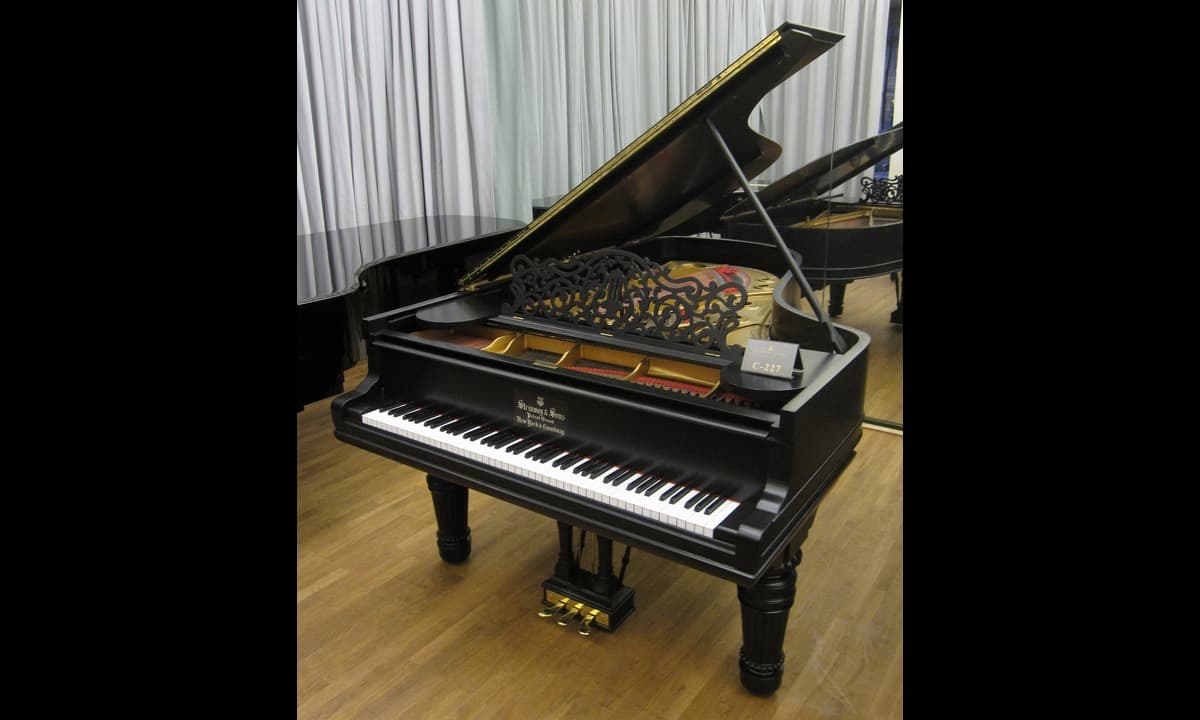 A forte marking means something distinct on every instrument. Pianists strike keys faster and harder for volume; string players increase bow pressure and speed; singers manage breath support and resonance rather than simply straining the throat.
Understanding your instrument's specific mechanism prevents the single most common beginner injury: forcing volume through tension instead of technique. Our piano keys layout guide explains touch sensitivity for pianists working on convincing dynamic range.
Dynamics on the Voice
Singers achieve genuine forte through breath support and open resonance, never throat pressure. Pushing volume from the throat causes strain and, over time, real vocal damage. Healthy forte feels effortful in the diaphragm, not tight in the neck.
Dynamics on Strings and Winds
Violinists add bow weight and speed for forte, easing both for piano. Wind and brass players adjust air pressure and embouchure firmness. Every family reaches the same expressive destination through completely different physical roads, which is worth remembering when switching instruments.
Dynamics and Rhythm: Partners in Expression
Volume never works alone. A forte passage paired with driving rhythm feels triumphant; the same forte marking over a slow pulse feels weighty and solemn instead. Dynamics and tempo constantly negotiate the emotional outcome together.
Composers exploit this partnership deliberately. Study any dramatic film cue and you'll find crescendo building alongside accelerating rhythm, doubling the tension. Understanding both elements together explains why certain musical moments hit so hard emotionally.
Dynamics Working Alongside Articulation
Volume alone doesn't finish the job. A forte note played with a sharp staccato attack feels aggressive; the same forte held with a smooth legato slur feels grand and sustained instead. Our articulation guide explains how these two expression systems interlock constantly.
Composers rarely specify dynamics in isolation. Look closely at any well-marked score and you'll find volume, articulation, and tempo instructions clustered together around dramatic moments, each reinforcing the others toward one unified expressive intention rather than working as separate rules.
Dynamics and Time Signature: An Unexpected Partnership
Strong and weak beats within a bar naturally invite subtle dynamic shading even without written markings. In four-four time, beat one typically carries slightly more weight than beat three, a micro-dynamic pattern skilled musicians apply instinctively.
Our time signatures guide explains how metre creates this built-in emphasis pattern. Layer written dynamics symbols on top of that natural pulse and phrases gain the layered, breathing quality that separates mechanical playing from genuinely musical performance.
Syncopation and Sudden Dynamics
Off-beat accents often pair naturally with sudden dynamic emphasis, since both techniques work by defying listener expectation. A sforzando landing on a syncopated off-beat creates double surprise, a favourite trick across jazz, funk, and contemporary classical writing alike.
Practising Dynamics: Exercises That Build Real Control
Start with a single note. Play or sing it at pianissimo, then gradually crescendo to fortissimo across eight slow counts, then reverse. This unglamorous exercise builds the muscular and breath control that convincing dynamic contrast absolutely requires.
Next, take any simple melody and perform it three ways: entirely piano, entirely forte, then with your own dynamic markings pencilled in. Comparing the three versions teaches more about musical storytelling than any lecture on music dynamics theory could.
The Terraced Echo Drill
Play a short phrase forte, then immediately repeat it piano, like an echo. Baroque composers used exactly this terraced technique constantly. The drill trains instant dynamic switching, a skill orchestral and ensemble players need every single rehearsal.
Common Mistakes When Playing Forte
Mistake one: equating forte with maximum physical force, which produces harsh, uncontrolled tone rather than musical power. Mistake two: forgetting that forte is relative to context; a solo guitar's forte differs wildly from an orchestra's forte in raw volume.
Mistake three: ignoring the phrase's shape and blasting every note at identical volume. Real forte in music still breathes, still shapes individual notes within the loud passage. Mistake four: neglecting piano passages, since dynamic contrast needs both ends of the spectrum equally.
Dynamics Beyond Western Notation
Indian classical music achieves comparable expression without identical symbols: volume and intensity emerge through ornamentation, meend, and a singer's felt connection to the raga rather than printed dynamics symbols. The emotional goal matches; the notation method differs completely.
Both traditions ultimately chase the same target: sound that moves listeners rather than merely fills a room. Understanding Western dynamics alongside Indian expressive techniques gives students a genuinely complete toolkit for musical storytelling across any style they choose to explore.
How Conductors Communicate Dynamics Without Words
Watch any conductor closely and you'll see dynamics translated into pure gesture: larger, more emphatic arm movements signal forte, while small, contained motions request piano. This silent vocabulary lets an entire orchestra shift volume together in a single instant.
Amateur ensemble directors can borrow these gestures immediately. Even a simple raised palm for louder and a lowered, flattened hand for softer gives choir or band members visual dynamic cues that supplement, and sometimes replace, verbal rehearsal instruction entirely.
Facial Expression as a Dynamic Cue
Experienced conductors also widen their eyes and open their expression for forte passages, narrowing focus for piano ones. Musicians watching absorb emotional intention alongside literal volume instruction, proof that dynamic contrast communicates through the whole body, not gesture alone.
The Psychology Behind Loud and Soft
Human brains respond to volume changes with genuine physiological reactions: sudden forte triggers mild startle responses, while gradual crescendo builds anticipation and tension the same way a thriller film's rising score does. Composers have exploited this biology for centuries, knowingly or not.
Quiet passages, meanwhile, force listener attention inward, creating intimacy that loud sections simply cannot replicate. Film composers understand this precisely: the quietest moment in a scene often lands more emotionally than the loudest, because silence demands active listening rather than passive absorption.
Why Silence Is a Dynamic Too
A full rest marked immediately after fortissimo creates dynamic contrast through absence rather than sound. That dramatic pause, used constantly in film scoring and live performance alike, proves that music dynamics include the spaces between notes as much as the notes themselves.
Famous Moments Built Entirely on Dynamics
Some music earns legendary status purely through dynamic drama. Haydn's Surprise Symphony plants a sudden fortissimo chord inside a quiet passage specifically to jolt dozing audiences awake, a joke that still lands perfectly two centuries later.
Ravel's Bolero builds one relentless crescendo across fifteen unbroken minutes, starting near-silent and ending at overwhelming fortissimo without ever changing its melody. Study these landmark examples and you'll hear dynamic contrast doing the entire emotional job alone.
Beethoven's Fifth Symphony
Those famous opening four notes arrive fortissimo, instantly establishing drama before a single theme develops. Beethoven understood that forte in music placed at the very start of a piece announces intent louder than any tempo marking ever could.
Balancing Dynamics in Ensembles
Playing forte in a solo bedroom practice session means something entirely different from playing forte inside a twelve-piece band. Ensemble dynamics require constant listening: your personal forte must still let the melody instrument cut through clearly.
Conductors and band leaders spend enormous rehearsal time balancing exactly this. A drummer's comfortable forte can bury an acoustic guitar completely. Learning to adjust your own music dynamics relative to bandmates is advanced musicianship every gigging musician eventually masters.
Dynamics in a Home Recording Setup
Home recordists face a modern version of this problem: microphones capture dynamic range unevenly, so a beautiful crescendo can clip and distort digitally. Practising controlled dynamic contrast before recording saves hours of frustrated post-production levelling afterward.
Teaching Dynamics to Beginners
Young students grasp forte and piano fastest through physical metaphor rather than abstract explanation. Ask a child to make themselves tall and wide for forte, small and quiet for piano. The body teaches the ear what words alone struggle to convey.
Games work beautifully too: clap forte, then immediately clap piano, back and forth, turning dynamics symbols into a call-and-response contrast game. Our piano lessons for beginners guide builds naturally on exactly this playful foundation.
Avoiding the All-Loud Trap
Beginners left unchecked default to playing everything at one comfortable medium-forte volume, flattening every phrase identically. Gently insist on at least one genuinely soft passage per piece from day one. That single habit prevents years of monotone playing later.
Dynamics in Grade Exams and Assessments
Music examination boards score dynamic awareness explicitly, and examiners notice immediately when a candidate ignores printed markings entirely. Two technically identical performances routinely receive different marks purely on dynamic contrast and expressive shaping.
Practise exam pieces with an examiner's ear specifically: exaggerate dynamics slightly beyond your instinct, since nervous performance energy tends to flatten expression under pressure. What feels theatrical in the practice room often reads as merely adequate on assessment day.
Do Different Musical Modes Suit Different Dynamics?
Bright modes like Ionian and Lydian often invite bolder forte treatment, while darker modes such as Phrygian or Aeolian frequently suit restrained, introspective piano playing. This isn't a strict rule, simply a tendency worth noticing as your ear develops.
Our music modes explained guide dives deeper into how each mode carries its own emotional colour. Pairing mode awareness with dynamic awareness gives composers and improvisers a genuinely rich expressive palette to draw from in any style.
A 30-Day Plan to Master Dynamic Control
Week one: daily crescendo and decrescendo drills on a single held note, eight counts each direction. Week two: apply the terraced echo drill to one short phrase from your current repertoire, alternating forte and piano deliberately.
Week three: record yourself weekly and graph your actual dynamic range against your intended markings. Week four: perform one full piece focusing exclusively on dynamics, ignoring pitch accuracy entirely for that single run-through. Isolation practice like this builds skills faster than combined practice ever can.
Signs Your Dynamic Control Is Improving
Listen for these markers: your piano passages stay in tune and full-toned rather than thin, your forte passages stay controlled rather than harsh, and listeners start commenting on your expression specifically. That feedback is the real scoreboard, more reliable than any self-assessment.
A Recording Engineer's View of Dynamics
In the studio, dynamics take on a technical second life. Engineers measure dynamic contrast in decibels, and modern loudness-war production sometimes compresses that range so heavily that a recorded forte and piano sound nearly identical in volume, robbing the performance of expressive shape entirely.
This is precisely why classical and acoustic recordings are typically mixed with a lighter touch, preserving the natural distance between quiet and loud sections. Musicians recording at home should resist the urge to compress everything flat; genuine music dynamics are worth protecting through the entire signal chain, from the first take through to the final master.
Headroom: Giving Forte Room to Breathe
Recording engineers leave headroom, spare volume space below digital clipping, specifically so a performer's fortissimo has somewhere to go without distorting. Home recordists should set input levels using their loudest planned passage, not their average volume, to avoid nasty surprises later.
A quick test before any serious recording session: run through your loudest planned passage once at full intended volume while watching the input meter. If it peaks near the red zone, back the gain off slightly. Five seconds of caution saves an entire ruined take.
A Quick Reference Glossary
Beyond the core six markings, several related terms appear regularly in scores and rehearsals. Keep this glossary nearby until the vocabulary becomes second nature; every working musician eventually stops needing to check it at all.
Notice how many of these terms modify or combine the core forte and piano vocabulary rather than introducing entirely new concepts. Once the base system is solid, these additions become intuitive extensions rather than fresh material to memorise separately.
Term Meaning Sforzando (sfz) Sudden strong accent on one note Fortepiano (fp) Loud attack, immediately soft Crescendo poco a poco Increasing volume little by little Subito piano Suddenly soft, no gradual transition Morendo Dying away, fading to near silence Con forza With force, similar intensity to forte
Dynamics for Singers Specifically
Vocalists face a unique challenge: their instrument is also their body, so mismanaging forte doesn't just sound bad, it can genuinely injure the voice over time. Proper breath support, not throat tension, must generate every increase in vocal volume.
Practise the messa di voce exercise, a single sustained note that swells from pianissimo to fortissimo and back to pianissimo without any break in tone. Opera singers have trained on this exercise for centuries because it simultaneously builds breath control, tone consistency, and genuine dynamic range together, all from one deceptively simple held note.
Warming Up Before Big Dynamic Ranges
Never attempt fortissimo singing cold. Spend at least five minutes on gentle piano-level warm-ups first, gradually working toward louder singing only once the voice feels genuinely warm. Skipping this step is the single most common cause of vocal strain among enthusiastic beginners.
Dynamics Games for Group Classes
Music teachers managing classrooms full of energetic students find dynamics genuinely easy to teach through games. Try a volume dial game: hold up a hand at different heights representing the dynamic ladder, and have the group adjust their singing or playing to match instantly.
Musical statues works beautifully too, where students freeze on a sudden piano cue after energetic forte movement. Both games build instant dynamic responsiveness while keeping young learners genuinely engaged, proving that serious musical skill and genuine fun were never actually opposites, whatever strict old-fashioned method books might quietly imply otherwise.
### Frequently Asked Question1. What does forte mean in music?
Forte is Italian for loud or strong, marked with an italic f in sheet music, instructing performers to play or sing with greater volume and intensity. It represents one point on a full scale of music dynamics ranging from pianissimo to fortissimo.
2. What are the dynamics in music from softest to loudest?
The standard ladder runs pianississimo, pianissimo, piano, mezzo piano, mezzo forte, forte, fortissimo, then fortississimo. Most everyday music uses the middle six markings, reserving the triple extremes for genuinely exceptional moments.
3. What is the symbol for forte?
A single italic lowercase f placed beneath the staff at the point where louder playing begins. Doubling it to ff signals fortissimo, very loud. The symbol stays consistent across every instrument and every country's sheet music.
4. Why are music dynamics written in Italian?
Italy led European musical innovation through the Baroque and Classical periods, so composers everywhere adopted Italian musical terms as shared professional shorthand. The convention stuck permanently, giving musicians worldwide one common dynamics vocabulary regardless of native language.
5. How do I play forte without shouting or forcing my instrument?
Build volume from proper technique, not raw force: singers use breath support, pianists use arm weight and key speed, string players add bow pressure. Genuine forte in music always stays controlled, resonant, and musical rather than harsh or strained.
6. What is the difference between forte and fortissimo?
Forte means loud; fortissimo, the doubled marking, means very loud, one full step more intense. Composers use fortissimo sparingly to mark true climactic moments, so its emotional impact depends partly on forte not being overused beforehand.
Final Thoughts
Six symbols, one elegant doubling rule, and centuries of composers using them to make silence and sound tell stories. Understanding this system properly transforms mechanical note-playing into genuine expression, the exact shift every serious musician eventually makes.
Practise the ladder this week: one note, eight counts, whisper to roar and back again. When you're ready for guided feedback on genuine dynamic contrast, Art Gharana's instructors teach expressive technique live, one-on-one, across every instrument and voice, right here in the UK and beyond.