ChatGPT
 Google AI
 Grok
Grok Claude
Understanding music modes can transform the way you hear and create music. Many musicians spend years practicing scales but never fully understand how musical modes shape melody, harmony, and emotion. In modern modes in music theory, modes are simply different ways of organizing notes from a parent scale, most often the major scale. These modal scales create distinct tonal colors that composers and improvisers use to build atmosphere, tension, and character.
When exploring what are modes in music, it becomes clear that modes are not mysterious formulas but natural extensions of the diatonic scale modes used throughout Western music. The 7 modes of the major scale—Ionian, Dorian, Phrygian, Lydian, Mixolydian, Aeolian, and Locrian—each create a unique emotional landscape. Through this guide on musical modes explained, you will learn how interval patterns in music, tonal relationships in music, and modal harmony theory combine to produce expressive musical language.
Introduction to Modes in Music
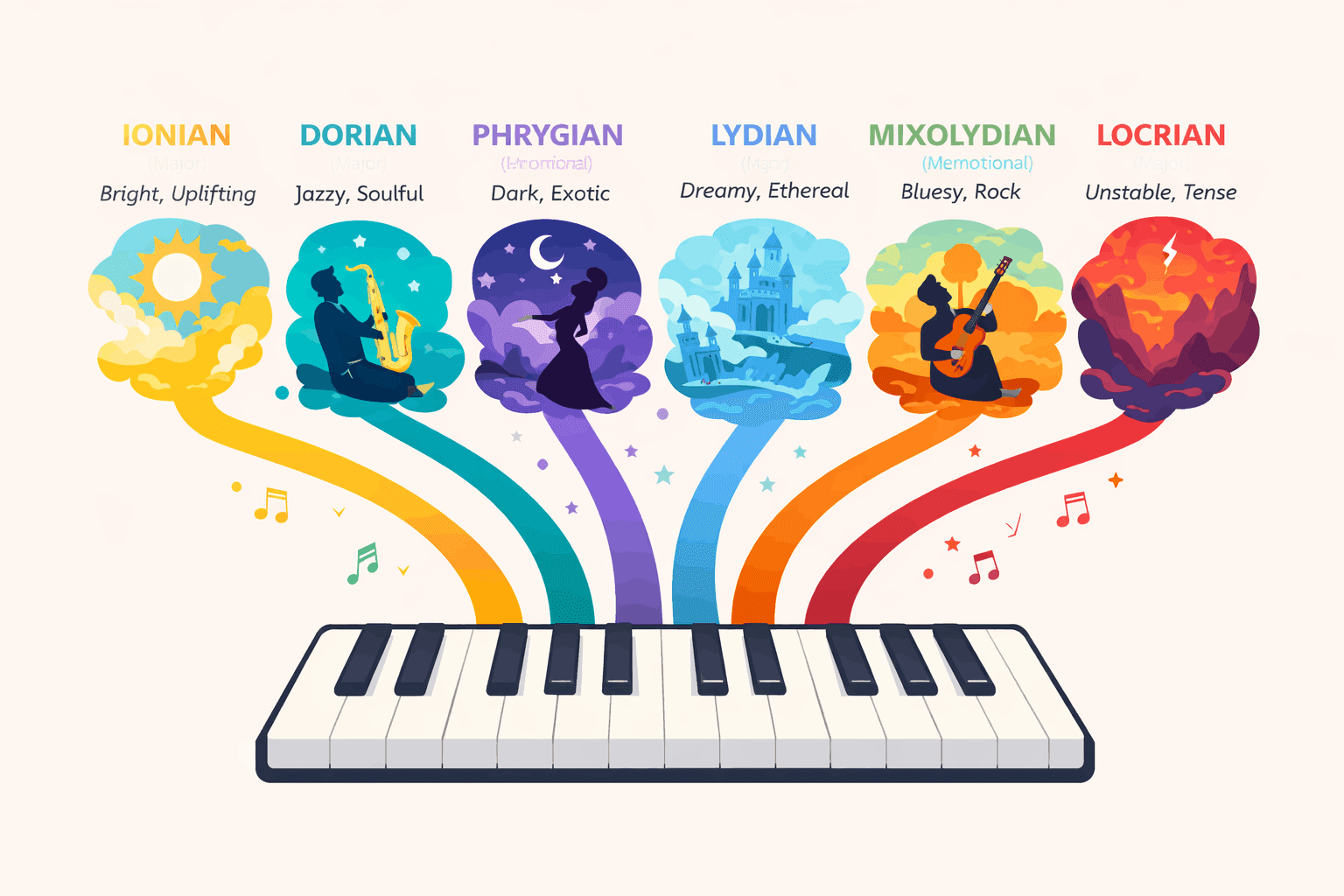 Modes have existed for centuries and form the backbone of many musical traditions. In early western music theory modes, composers relied on greek modes in music to organize melodies before the major and minor system became dominant. Today these modal scales still influence jazz improvisation, film music, rock riffs, and even modern pop harmony.
Understanding music theory modes helps musicians recognize how a single parent scale can produce several different emotional effects. Each mode changes the tonal structure of scales by shifting the starting note, which alters the scale degrees and the resulting modal tonality. As a result, identical notes can create dramatically different moods within modal music theory.
Why Modes Matter in Modern Music
In modern songwriting, understanding music modes allows musicians to expand beyond basic major and minor scales while maintaining familiar scale patterns in music, and this deeper awareness of modal harmony helps composers control the emotional direction of melodies, chord progressions, and improvisations while shaping the distinctive modal sound in music.
How Modes Shape the Mood of Music
Each of the modes of the major scale changes one or two scale degrees, which shifts the tonal color in music and produces different feelings ranging from bright optimism to dark tension, demonstrating how small changes in interval patterns in music can dramatically influence the emotional identity of a melody.
Where You Hear Modes in Popular Songs
Many popular songs secretly rely on diatonic modes, where artists use modal harmony theory to craft memorable riffs and atmospheric melodies, and when musicians study musical scale variations and modes derived from major scale, they begin recognizing these modal sounds in rock, jazz, cinematic scores, and modern experimental music.
What Exactly Are Music Modes?
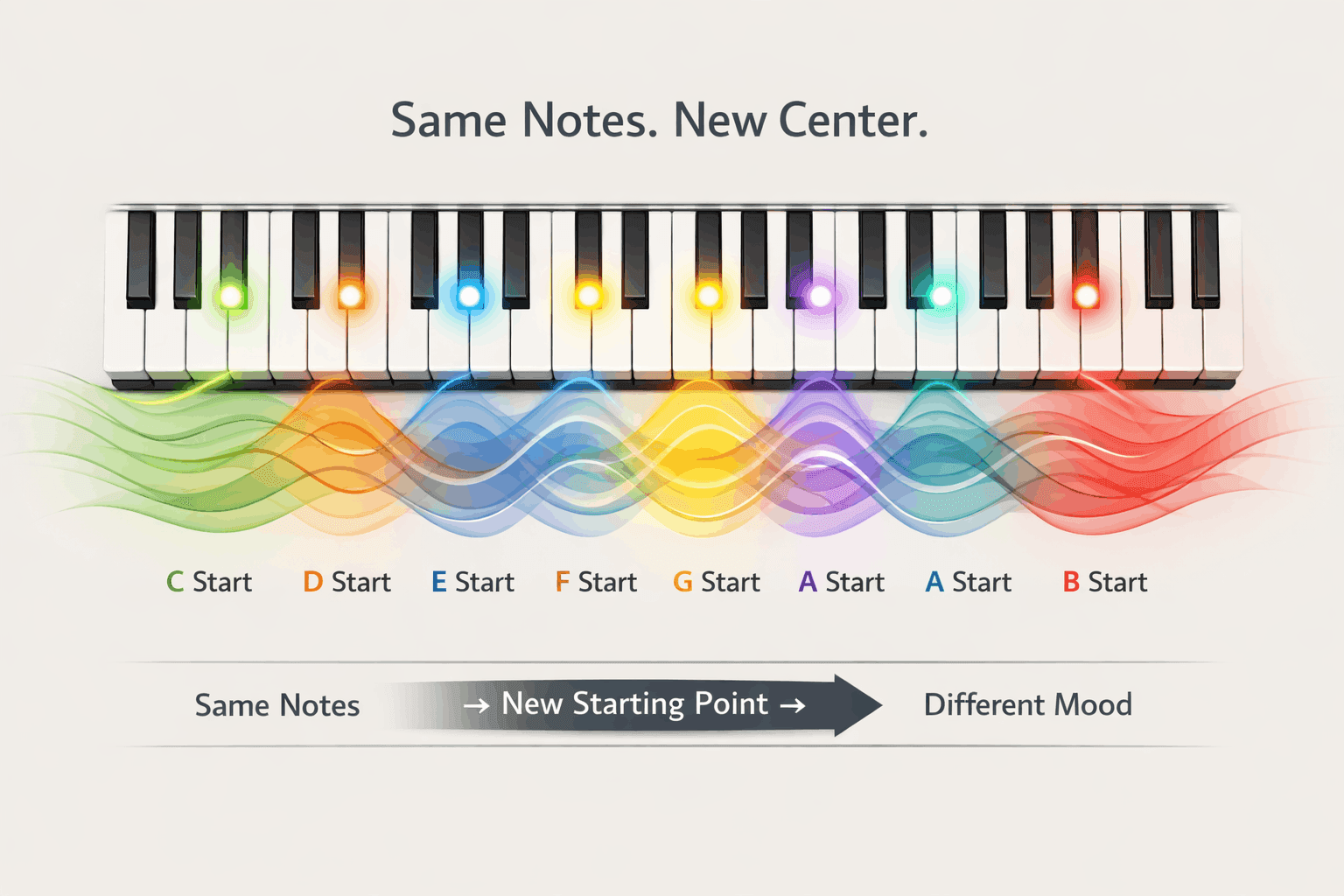 At the most basic level, music modes are variations of a single scale that start on different notes. Instead of creating an entirely new scale, modes reorganize the scale degrees of an existing parent scale. This process produces seven unique modal scales, each with its own tonal center and emotional identity.
Within modal music theory, the most common modes come from the major scale mode system. These are called the 7 modes of the major scale. Each one maintains the same notes but changes the tonal relationships in music by shifting the tonal center. This simple adjustment alters the modal tonality, creating new possibilities for modal composition and modal improvisation.
Simple Definition of a Musical Mode
In simple terms, what are modes in music can be understood as rotations of a parent scale where the same notes form new modal scales, changing the tonal structure of scales and producing different musical identities while maintaining consistent interval patterns in music.
How Modes Evolved in Western Music
Historically, greek modes in music influenced early medieval chant traditions, and over centuries these western music theory modes gradually evolved into the structured system of diatonic scale modes, shaping the development of harmony, melody, and the modern framework of music theory modes.
The Relationship Between Modes and Tonality
Modes affect modal tonality by shifting the tonal center of a parent scale, which alters the perception of stability and tension within tonal relationships in music, ultimately allowing composers to manipulate the emotional character of melodies through subtle changes in scale patterns in music.
Scales vs Modes: Understanding the Key Differences
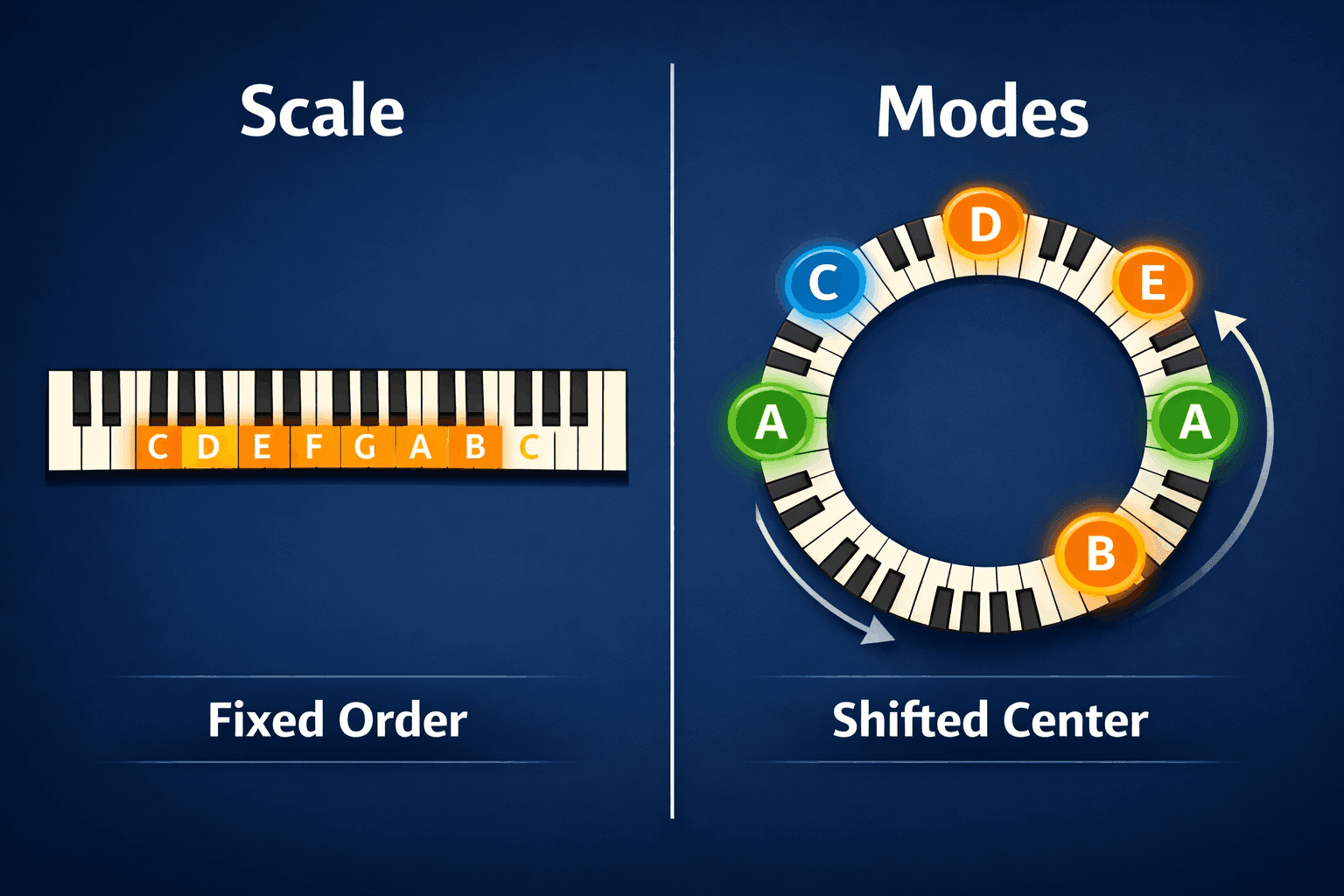 Many beginners confuse musical scales with musical modes, yet the difference lies in how the notes are organized and perceived. A scale presents notes in a fixed order beginning from a root, while modal scales reinterpret those same notes by shifting the starting point. This shift transforms the tonal structure of scales and creates new melodic possibilities.
Understanding the difference between scales and modes is essential for mastering modal harmony theory. Scales define the available notes within a key, while diatonic modes redefine the emotional center within those notes. This distinction allows musicians to explore richer tonal color in music and create more expressive modal composition.
What Is a Musical Scale
A musical scale is a structured sequence of notes arranged according to specific interval patterns in music, forming the foundation of scale patterns in music that determine melody and harmony in both classical and modern western music theory modes.
How Modes Are Derived from Scales
Modes are created when the scale degrees of a parent scale are reordered so that each note becomes the new starting point, producing different modes derived from major scale while preserving the same notes within the original diatonic scale modes.
Why Modes Sound Different Even With the Same Notes
Although the notes remain identical, the shift in tonal center changes the modal tonality, altering the listener’s perception of tension and resolution within modal harmony, which is why musical modes explained often emphasize the importance of tonal focus rather than note selection.
The Seven Modes Derived From the Major Scale
The 7 modes of the major scale form the most widely used group of diatonic scale modes in western music theory modes. Each mode begins on a different scale degree of the same parent scale, yet the shift in tonal center transforms the modal tonality and emotional identity of the music.
These musical scale variations demonstrate how simple adjustments to interval patterns in music influence the modal sound in music. Even though the notes remain identical, the resulting modal harmony produces new tonal colors that composers use to expand the expressive range of melody and harmony.
Overview of the Major Scale Modes
The modes of the major scale include Ionian, Dorian, Phrygian, Lydian, Mixolydian, Aeolian, and Locrian, and each represents a unique major scale mode or minor modes in music, illustrating how the parent scale generates seven distinctive modal scales used throughout modal music theory.
Understanding the Order of Modes
The order of diatonic modes follows the ascending scale degrees of the major scale, meaning each successive mode begins on the next note of the parent scale, creating different tonal relationships in music while maintaining the same pitch collection.
How Each Mode Changes the Emotional Character
Small changes within the interval patterns in music redefine the tonal color in music, demonstrating how altering a single scale degree can transform the emotional identity of a melody within modal harmony theory.
The 7 Modes of Music Explained
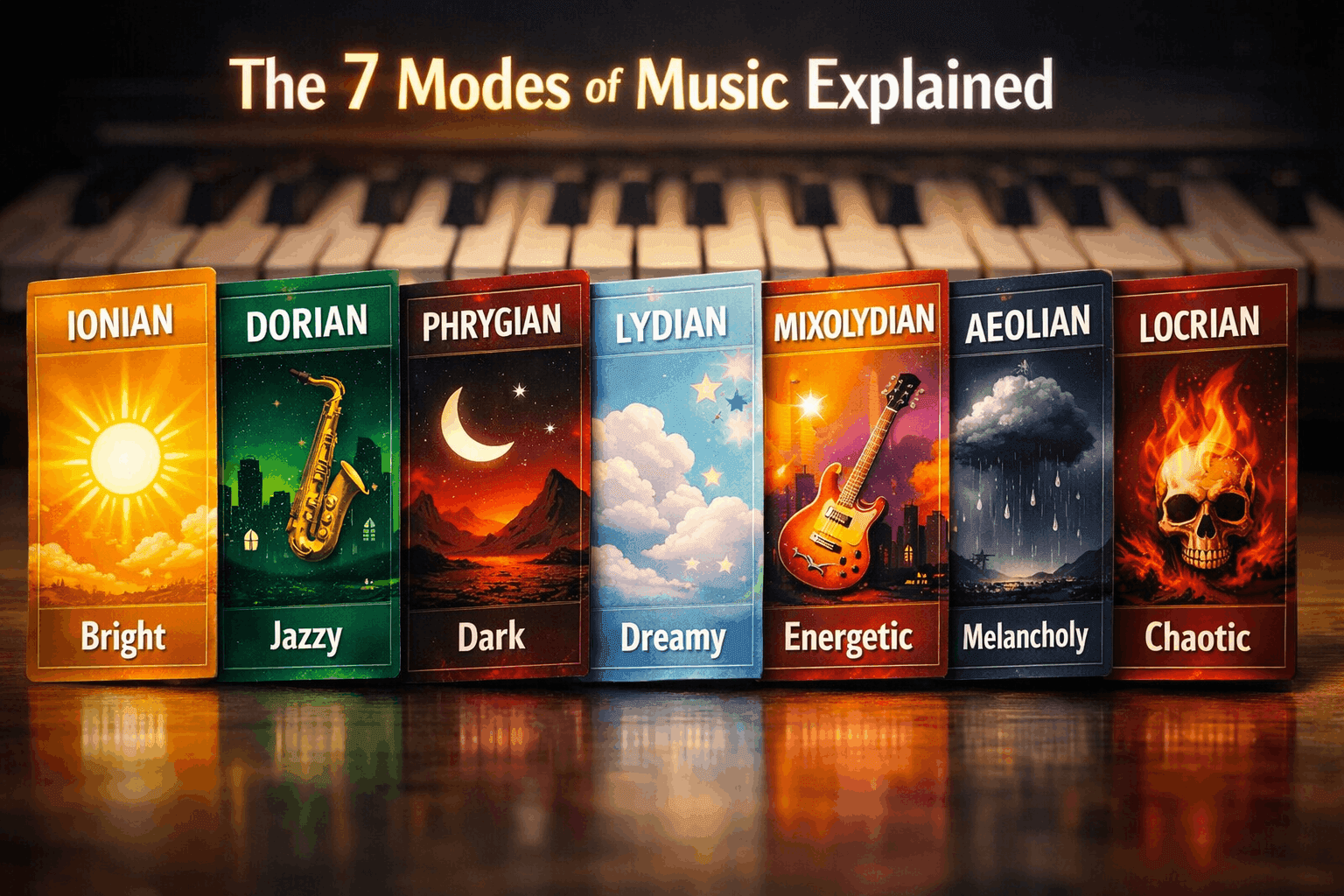 Each of the music theory modes carries a distinct tonal identity shaped by its interval patterns in music and the position of its scale degrees. These modal scales represent the core structure of modal composition, and understanding them allows musicians to explore richer harmonic and melodic possibilities.
The seven modes collectively illustrate the flexibility of diatonic scale modes in shaping the modal sound in music. When studying musical modes explained, musicians learn how these patterns influence improvisation, chord construction, and the overall tonal relationships in music.
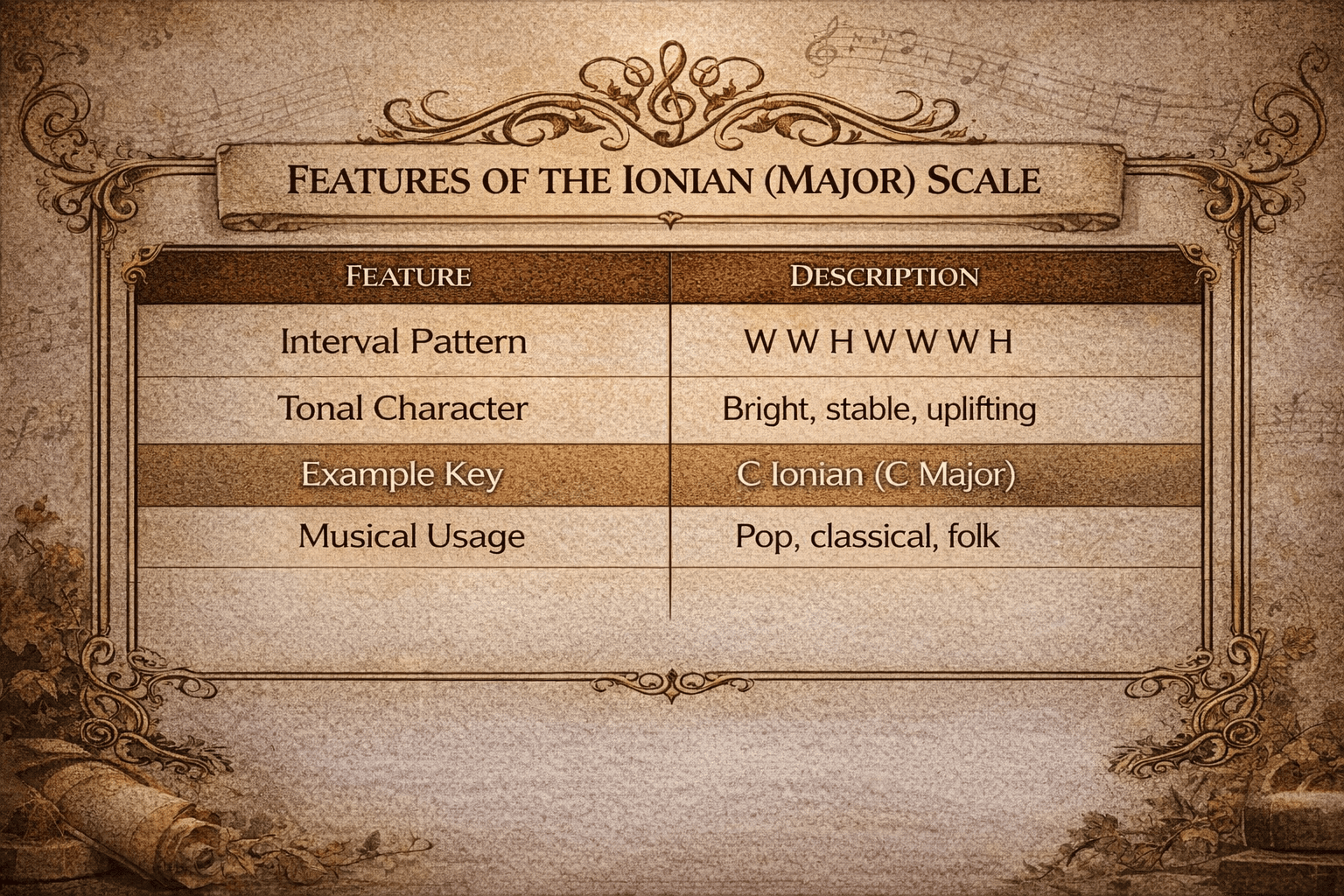
Ionian Mode – The Foundation of Major Tonality
The Ionian mode represents the traditional major scale mode, serving as the foundation of tonal harmony in Western music and demonstrating how balanced interval patterns in music create a stable and bright modal tonality that supports countless melodies and chord progressions.
Dorian Mode – The Minor Mode With a Bright Twist
The Dorian mode is one of the most popular minor modes in music, combining the darker quality of a minor scale with a raised sixth scale degree, which creates a distinctive tonal balance widely used in jazz improvisation and modal rock compositions.
Phrygian Mode – The Dark and Exotic Sound
The Phrygian mode stands out among diatonic modes due to its flattened second scale degree, producing a mysterious and dramatic modal tonality that frequently appears in flamenco music, cinematic soundtracks, and experimental modal composition.
Lydian Mode – The Dreamy and Floating Mode
The Lydian mode modifies the major scale mode by raising the fourth scale degree, which creates a bright and expansive tonal color in music often used in film scores and modern jazz harmony to evoke a sense of wonder and openness.
Mixolydian Mode – The Blues and Rock Favorite
The Mixolydian mode introduces a flattened seventh scale degree, producing a relaxed modal sound in music that forms the harmonic foundation for many blues, rock, and funk progressions within modal harmony theory. Aeolian Mode – The Natural Minor Scale The Aeolian mode corresponds directly to the natural minor scale, making it one of the most familiar minor modes in music and a common framework for emotional melodies within both classical and contemporary modal music theory.
Locrian Mode – The Most Unstable Mode
The Locrian mode contains a diminished fifth above the root note, which destabilizes the tonal structure of scales and makes it the least commonly used of the diatonic modes in traditional tonal harmony.
Interval Patterns of All 7 Modes
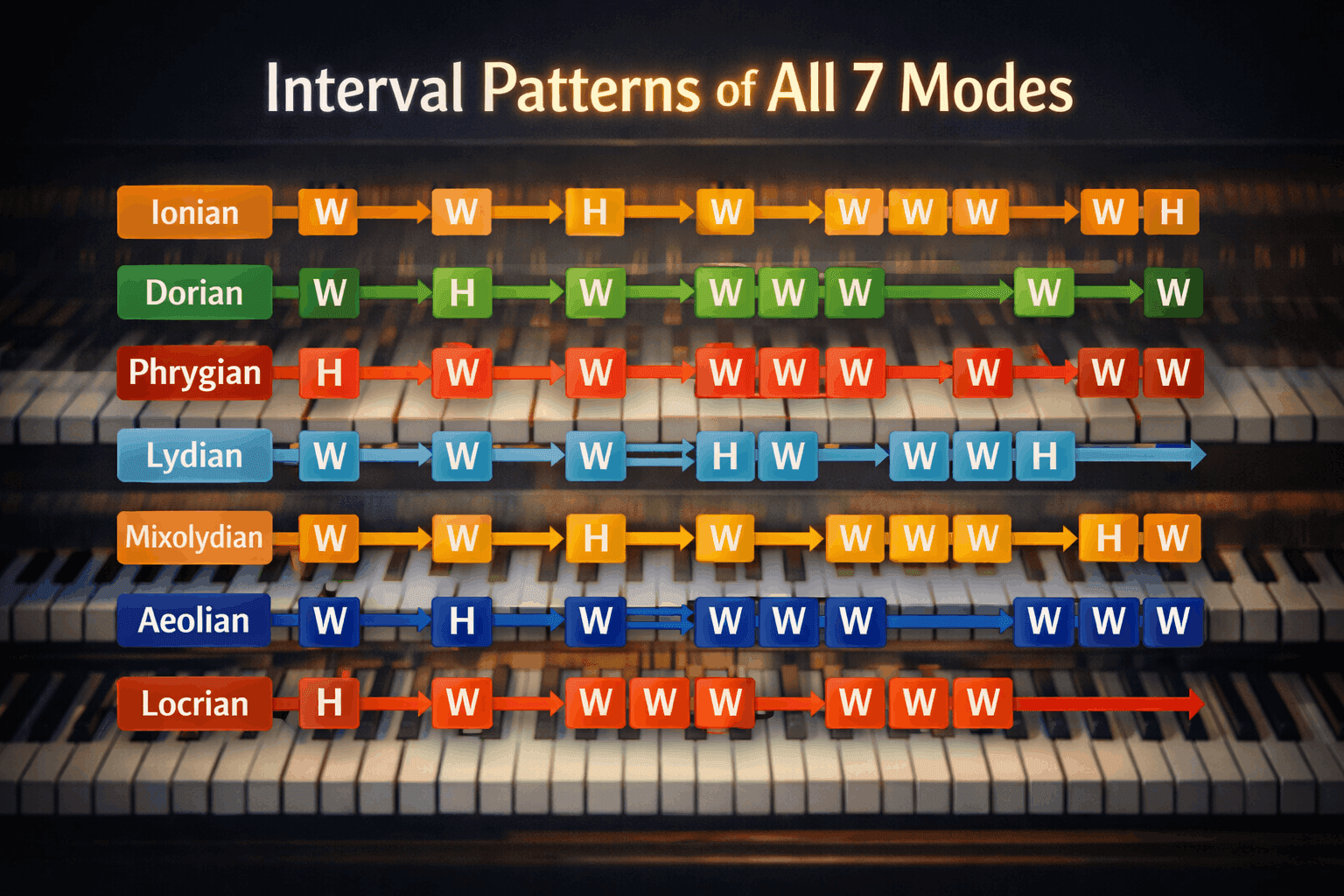 The emotional character of each mode comes from its unique arrangement of whole steps and half steps, known as interval patterns in music. These patterns form the blueprint for all modal scales and explain why each mode creates a different musical atmosphere.
Learning these patterns is essential for mastering modal improvisation, modal harmony, and advanced music theory modes. By comparing the scale patterns in music, musicians can quickly recognize how modes derived from major scale transform the tonal identity of a melody.
Step-by-Step Interval Formula
Each mode follows a specific sequence of whole and half steps that defines its modal tonality, demonstrating how interval patterns in music shape the structural identity of every diatonic mode.
Whole and Half Step Structure
Whole steps move two semitones while half steps move one semitone, and their arrangement within modal scales determines the tonal relationships in music that define each mode’s emotional character.
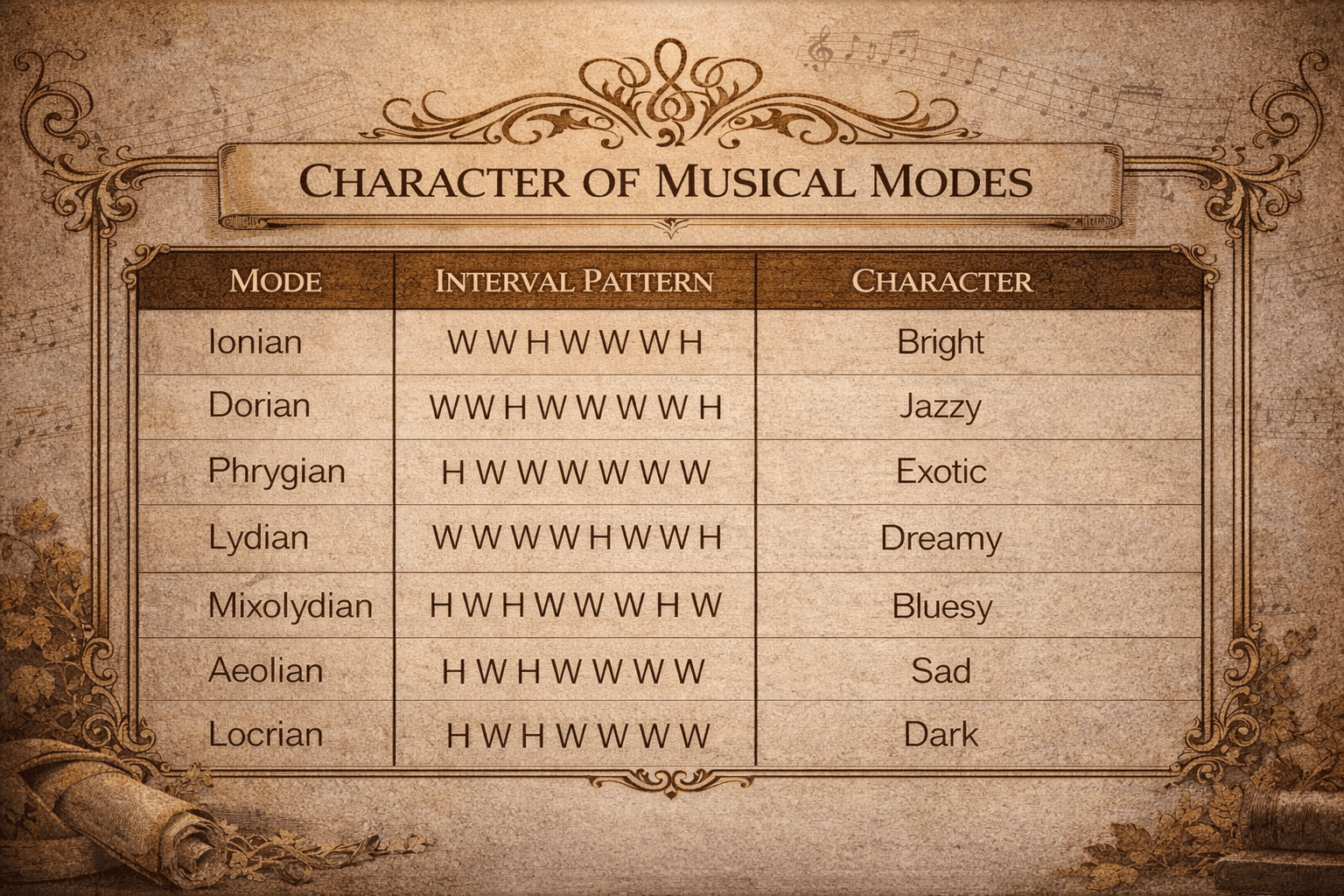
Comparing Mode Patterns in a Table
The following table summarizes the 7 modes of the major scale, their interval patterns, and the resulting modal sound in music.
Quote from Music Theory Research
“Modes represent one of the earliest systems for organizing pitch in Western music.” — Harvard Dictionary of Music
Source: https://www.harvard.edu
Understanding Modes Using the C Major Scale
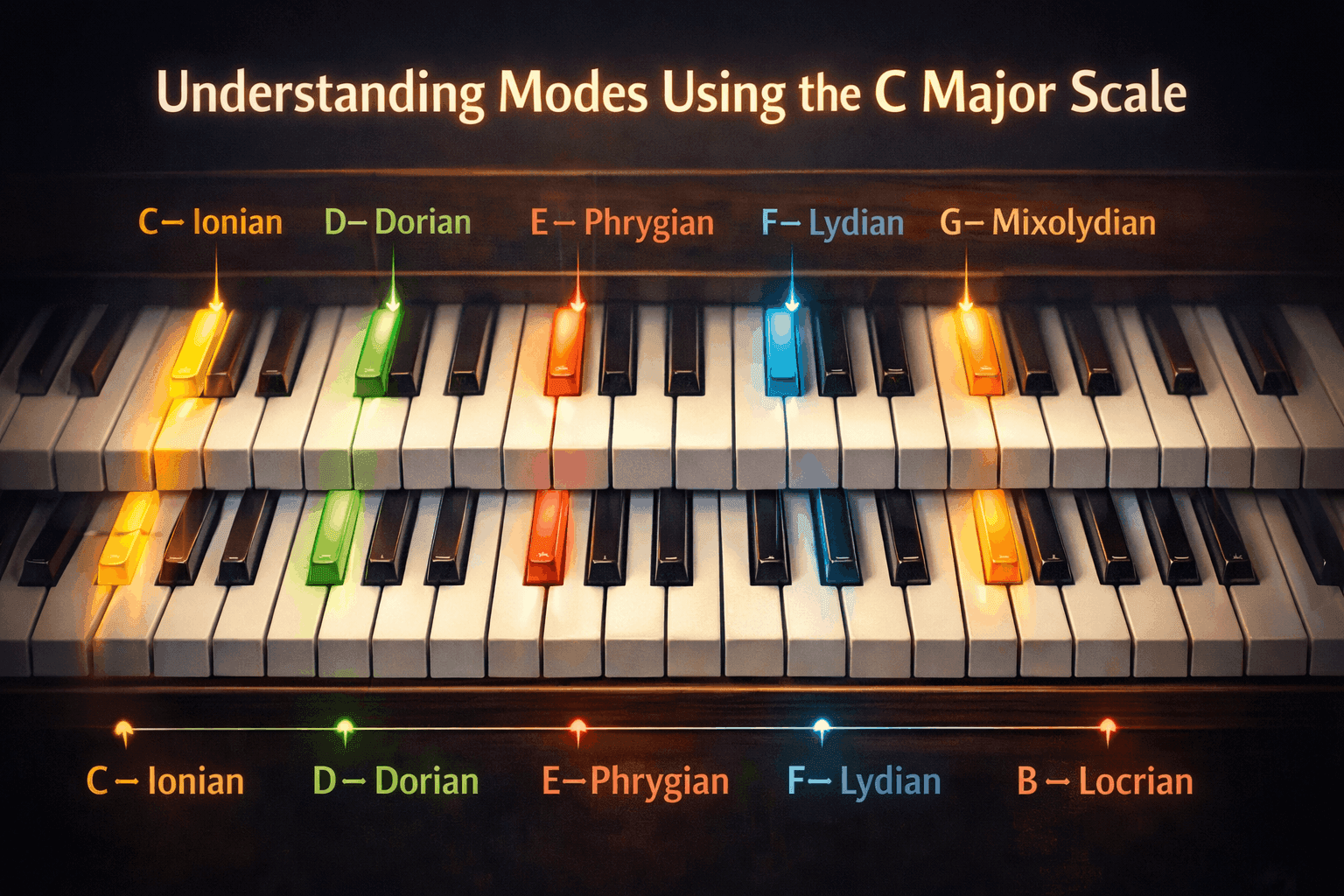 The C major scale serves as the simplest demonstration of music modes because it contains the natural notes C, D, E, F, G, A, and B. When musicians rotate the scale degrees of this parent scale, they produce the modes derived from major scale that form the basis of modal music theory.
This example clearly reveals how musical scale variations emerge from the same note collection. Although every mode uses identical notes, shifting the tonal center changes the modal tonality and the resulting tonal color in music. This simple concept explains why diatonic scale modes feel dramatically different even when played on the same instrument.
Why C Major Is the Easiest Way to Learn Modes
Because the C major scale contains no accidentals, the scale patterns in music become visually simple, allowing students to focus on interval patterns in music and modal harmony theory rather than complex notation.
Building Each Mode From C Major
Each of the 7 modes of the major scale begins on a different scale degree of the C major parent scale, creating a sequence of modal scales that demonstrate how tonal relationships in music change when the tonal center moves.
Notes of Each Mode on the Piano
The following table shows the modes derived from major scale using C major as the parent scale, illustrating the structure of the diatonic modes.
Mode Notes Musical Identity Ionian C D E F G A B Major scale Dorian D E F G A B C Minor with raised sixth Phrygian E F G A B C D Dark minor sound Lydian F G A B C D E Bright major sound Mixolydian G A B C D E F Dominant sound Aeolian A B C D E F G Natural minor scale Locrian B C D E F G A Diminished mode
This simple rotation of the parent scale forms the core idea behind musical modes explained in modern music theory modes.
How to Play Modes on Piano
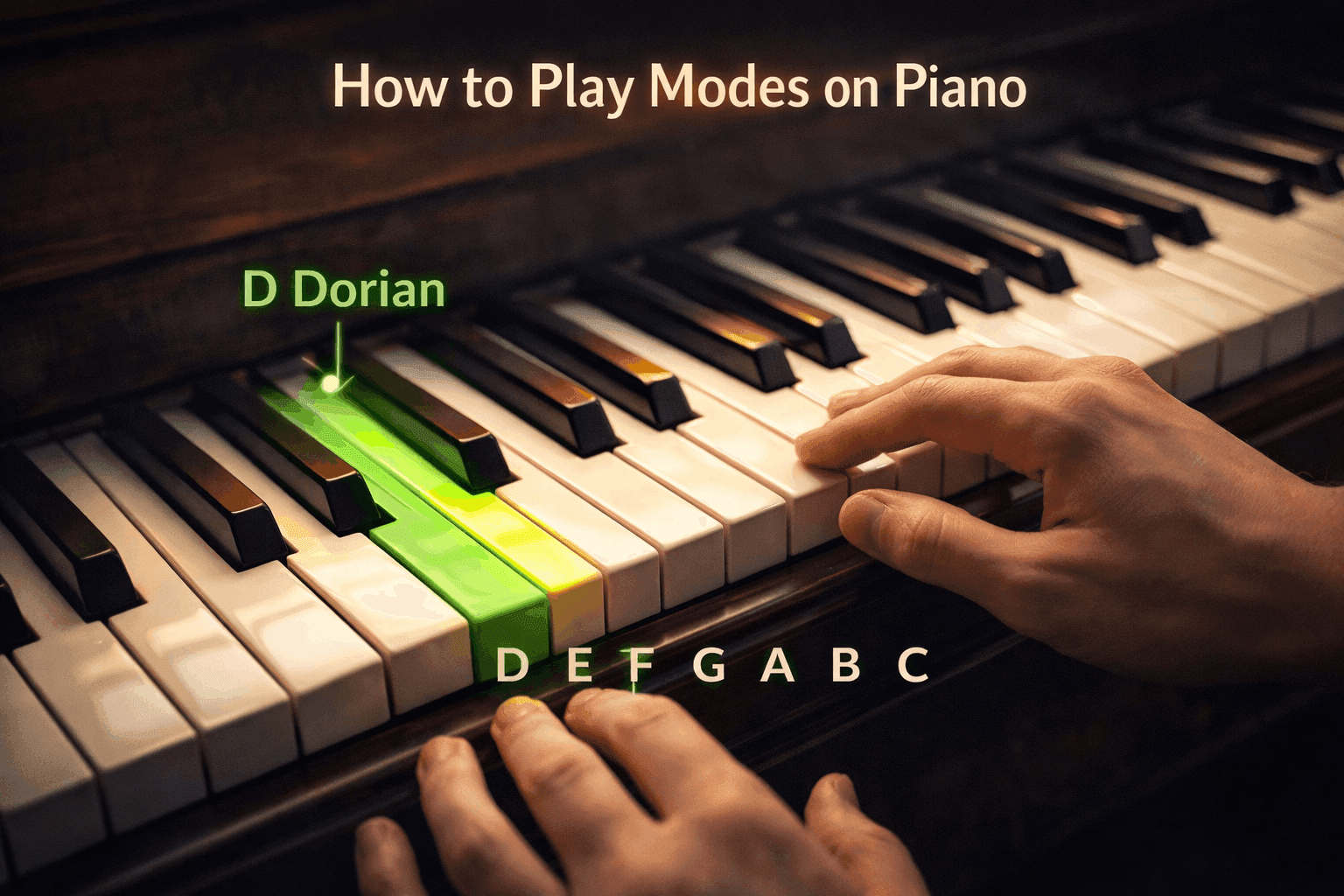 Learning modes in piano music involves practicing each modal scale across the keyboard while maintaining the correct interval patterns in music. Pianists often begin slowly so the ear can recognize the subtle differences between each modal tonality.
When musicians practice these diatonic scale modes, they begin to hear how each pattern produces a different tonal color in music. Over time, this listening awareness helps players use modal harmony naturally during improvisation and composition.
Finger Patterns for Beginners
Proper fingering allows pianists to maintain smooth movement across the keyboard while practicing modal scales, ensuring that the scale patterns in music remain consistent regardless of the starting note.
Practicing Modes Across the Keyboard
Repeating each mode of the major scale through multiple octaves strengthens the ear’s recognition of modal sound in music, helping musicians internalize the subtle differences between major scale mode and minor modes in music.
Tips for Smooth Mode Transitions
Practicing transitions between different diatonic modes helps musicians understand how tonal relationships in music change when the tonal center shifts within the same parent scale.
Major Modes vs Minor Modes
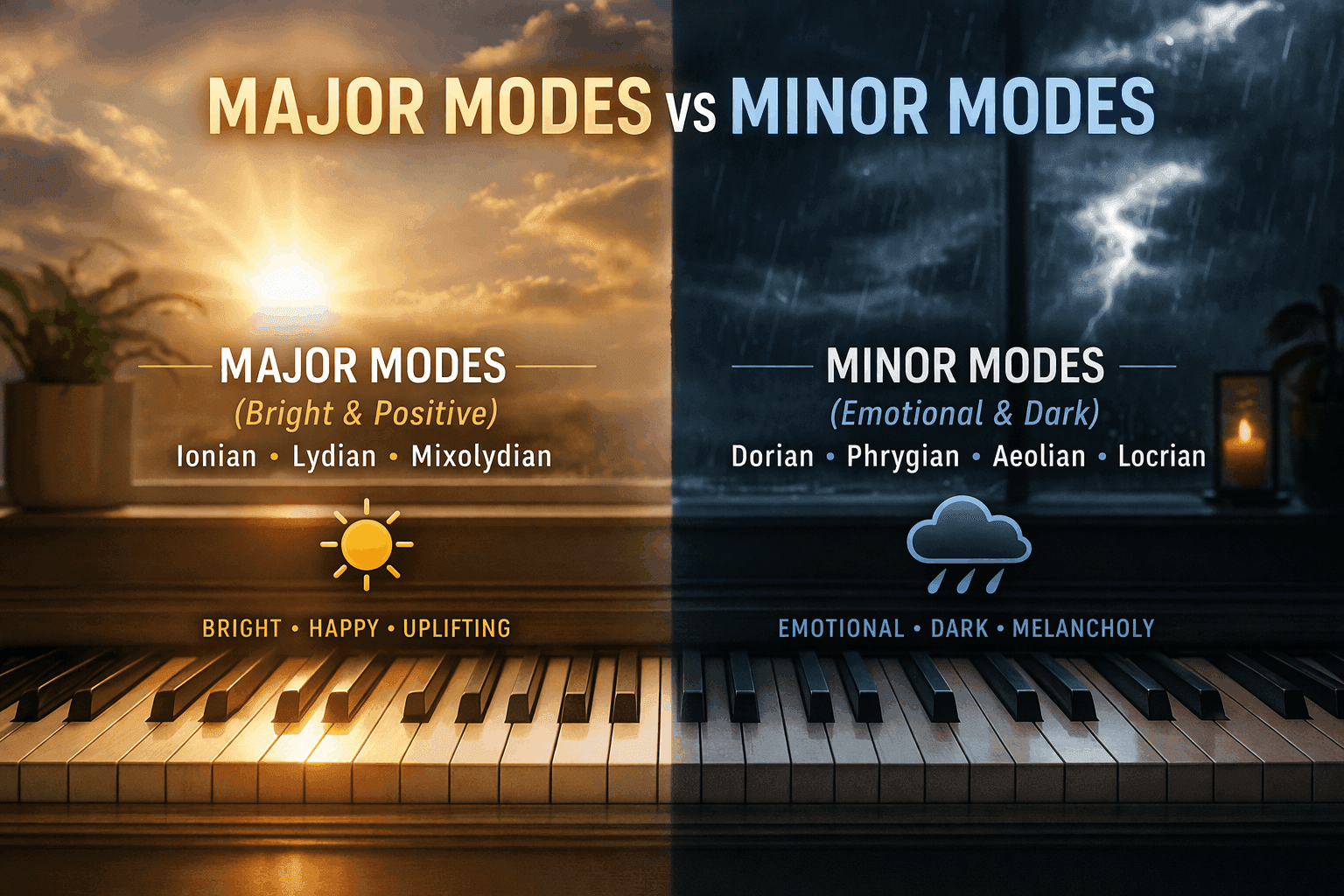 Within modal music theory, the seven modes naturally divide into two tonal families based on the position of the third scale degree. Modes with a major third belong to the major scale mode category, while those with a minor third belong to the minor modes in music.
This distinction plays an important role in modal harmony theory because the third scale degree strongly influences the tonal color in music. Understanding this difference helps composers choose the correct modal scales for emotional storytelling in modal composition.
The Three Major-Type Modes
Ionian, Lydian, and Mixolydian are considered major scale modes because each contains a major third above the root, producing a brighter modal tonality within diatonic scale modes.
The Four Minor-Type Modes
Dorian, Phrygian, Aeolian, and Locrian are classified as minor modes in music because they include a minor third, which gives them a darker modal sound in music compared with major modes.
How Mood Changes Between Them
The difference between major and minor scale degrees dramatically changes the tonal relationships in music, showing how small adjustments in interval patterns in music create distinct emotional qualities within modal harmony.
Modal Harmony and Chord Relationships
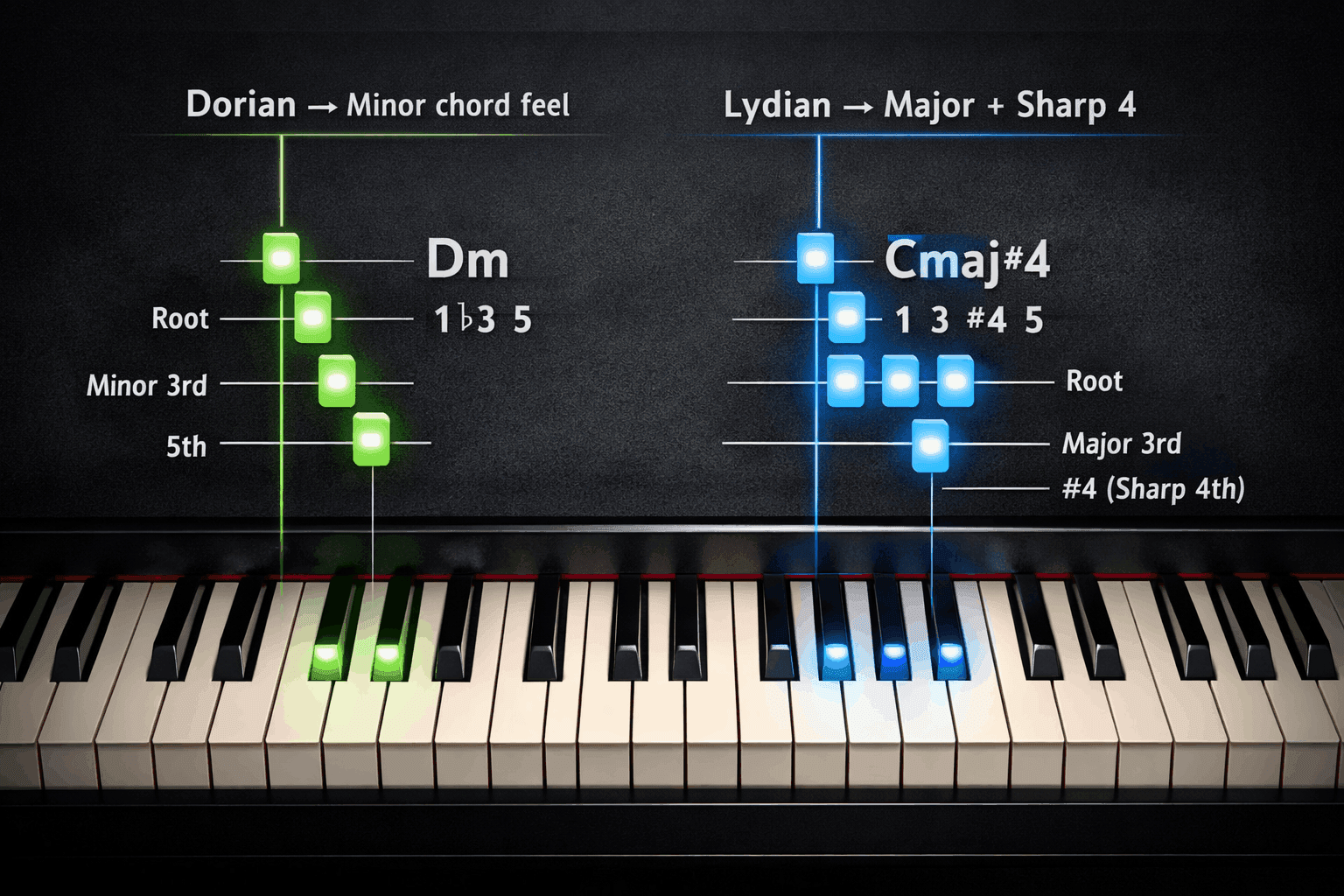 Understanding modal harmony is essential for musicians who want to apply music theory modes in real compositions. Every modal scale generates its own series of chords based on the scale degrees of the parent scale.
These chords form the harmonic framework for modal composition and modal improvisation. Instead of relying on traditional major and minor keys, modal harmony allows musicians to build chord progressions that highlight the unique modal tonality of each scale.
Chords That Naturally Occur in Each Mode
Each diatonic mode produces a unique set of chords based on its scale patterns in music, creating different harmonic environments within modal harmony theory.
Using Modes Over Chord Progressions
Musicians frequently match modal scales with chord progressions that highlight specific scale degrees, allowing improvisers to emphasize the distinctive modal sound in music.
Improvisation Techniques for Musicians
Advanced players often practice modal improvisation by focusing on the characteristic notes of each mode of the major scale, which strengthens their understanding of tonal structure of scales and expressive phrasing.
Case Study: Modal Harmony in Film Music
Film composers frequently use Lydian mode to create a sense of wonder and adventure. One famous example appears in the score of “E.T. the Extra-Terrestrial” by composer John Williams.
The raised fourth note of the Lydian mode produces a floating quality that enhances cinematic storytelling. This demonstrates how modal composition can shape emotional perception through carefully chosen musical scale variations.
Practical Examples of Modes in Music
 Many famous compositions demonstrate how music theory modes influence melody, harmony, and mood. When musicians recognize the modal sound in music, they begin hearing the subtle differences between major and minor tonal systems and the expressive possibilities of modal scales.
Studying these examples strengthens understanding of modal music theory because real compositions reveal how scale patterns in music function in context. Each mode of the major scale creates a distinctive tonal landscape, allowing composers to craft unique musical atmospheres.
Identifying Modes in Well-Known Pieces
Musicians often analyze melodies to identify the diatonic modes used in a composition, which helps reveal the underlying tonal structure of scales and the role of scale degrees in shaping the melodic contour.
How Different Genres Use Modal Sounds
Genres such as jazz, progressive rock, and film scoring frequently rely on modal harmony to expand the emotional palette beyond traditional major and minor keys.
Modal Writing in Jazz, Rock, and Film Music
Jazz improvisers often explore Dorian mode and Lydian mode, while rock musicians favor Mixolydian mode, demonstrating how modal improvisation and modal composition shape modern musical language.
How to Practice Music Modes Effectively
 Learning music modes requires consistent listening and practice because the ear must recognize the subtle differences between each modal scale. Practicing slowly allows musicians to internalize the interval patterns in music and the resulting modal tonality.
Effective practice also involves applying diatonic scale modes in real musical contexts. By improvising melodies and building chord progressions, students develop a deeper understanding of modal harmony theory and the expressive tonal color in music.
Practice Method 1: Start From One Root Note
Practicing all modes of the major scale from a single root note helps musicians understand how shifting scale degrees changes the tonal relationships in music.
Practice Method 2: Move Through Interval Patterns
Focusing on interval patterns in music strengthens theoretical understanding and helps musicians recognize each mode of the major scale by sound.
Practice Method 3: Apply Modes to Songs
Applying modal scales to existing melodies helps players hear how modal tonality influences musical expression.
Exploring Modes Beyond the Major Scale
 While the 7 modes of the major scale form the foundation of modal music theory, advanced musicians often explore additional modal systems derived from other scales. These systems expand the possibilities of modal harmony and improvisation.
Many jazz musicians study these advanced musical scale variations because they provide richer harmonic colors and new melodic ideas. Exploring additional modes deepens understanding of tonal relationships in music and strengthens overall musical creativity.
Modes of the Melodic Minor Scale
The melodic minor scale produces several advanced modal scales widely used in jazz harmony and modern modal composition.
Why Jazz Musicians Use Advanced Modes
Jazz improvisers rely on complex music theory modes because these musical scale variations provide greater flexibility when navigating extended chord progressions.
Expanding Your Modal Vocabulary
Studying additional modal scales strengthens understanding of modal harmony theory and expands the creative possibilities of modal improvisation.
Common Mistakes When Learning Music Modes
 Many beginners struggle with music modes because they focus on memorization rather than understanding the underlying tonal structure of scales. Without recognizing how scale degrees influence harmony, the concept of modes can feel confusing.
Avoiding these mistakes helps musicians develop a stronger foundation in modal music theory. When students connect interval patterns in music with real melodies, the concept of musical modes explained becomes much easier to understand.
Memorizing Without Understanding
Simply memorizing diatonic modes without studying tonal relationships in music prevents musicians from applying modes creatively.
Ignoring Musical Context
Modes make sense only when applied within real musical settings such as melodies, chord progressions, and modal harmony.
Not Practicing With Real Music
Using modal scales in improvisation and composition helps musicians internalize the modal sound in music.
Learn Music Theory and Piano at Art Gharana
 Learning music theory modes becomes far easier when students study with structured guidance. Art Gharana provides a learning environment where students explore music modes, instruments, and creative expression through carefully designed lessons that combine theoretical knowledge with practical playing experience.
Students at Art Gharana practice modes in piano music, explore modal harmony theory, and apply concepts such as diatonic scale modes through guided exercises and musical examples. This balanced approach helps learners understand how modal tonality, scale patterns in music, and tonal color in music work together in real performances.
Final Thoughts on Mastering Music Modes
 Understanding music modes opens a new dimension of musical creativity. These musical scale variations reveal how subtle changes in scale degrees create entirely different emotional landscapes within music.
When musicians study musical modes explained, they begin to hear the deeper tonal relationships in music that shape melodies and harmonies. Mastering these concepts allows composers, performers, and improvisers to explore richer modal harmony and expressive modal sound in music.
Frequently Asked Questions About Music Modes
Are modes the same as scales
Modes are variations of scales because they reorganize the scale degrees of a parent scale, creating different modal scales and new tonal relationships in music.
What is the easiest mode to learn
The Ionian mode is the easiest to learn because it corresponds directly to the familiar major scale mode.
Which mode is used in jazz music
Jazz musicians frequently use Dorian mode, Lydian mode, and other advanced music theory modes during improvisation.
Why is Locrian rarely used
The Locrian mode contains a diminished fifth, which weakens the tonal center and creates an unstable modal tonality.
How long does it take to learn modes
Understanding basic diatonic modes can take a few weeks, but mastering modal improvisation and modal harmony theory often requires months of consistent musical practice.