ChatGPT
 Google AI
 Grok
Grok Claude
Understanding time signatures in music gives you control over rhythm. It helps you feel steady while playing. Many beginners struggle because rhythm feels invisible. Once music time signatures become clear, everything starts to lock in. This guide explains the time signature in music using simple words, real examples, and practical ideas rooted in Western music theory.
Music lives inside time. Notes move forward because beats repeat. When you understand how rhythm and meter work together, reading sheet music feels natural. This article builds a rhythm roadmap of music so you can play with confidence, clarity, and a strong rhythmic foundation.
The Concept of Time Signatures Explained Simply
Time signatures in music act like traffic signals. They tell you how rhythm is organised before the music even starts. Without this guide, bars and measures would feel confusing. A time signature in music creates order so musicians can keep the beat together.
At its core, musical rhythm depends on structure. Time signatures define beats per measure and guide musical pulse. This structure helps you feel safe while playing. It gives music a steady and grounded rhythm instead of chaos.
What a Time Signature Represents in Music
A time signature represents how many beats live inside each measure. It also shows which note value receives one beat. This simple sign controls counting beats in music and shapes the rhythmic structure of a piece.
Think of it as a rhythm contract. Every musician agrees to follow it. When you read piano sheet music reading correctly, this symbol becomes your rhythmic compass.
Rhythm, Meter, and Musical Timing
Rhythm describes movement. Meter describes organisation. Together, they create musical meter. Rhythm patterns in music depend on strong and weak beats repeating in cycles.
This repetition creates a musical pulse. That pulse allows playing in sync with others. Without meter, rhythm loses direction and clarity.
Why Time Signatures Exist in Music Theory
Western music theory needed a shared system. Time signatures solved that problem. They allowed composers to write rhythm clearly across generations.
They also support reading and interpreting notation accurately. This system ensures rhythmic clarity across styles, instruments, and skill levels.
How to Read Time Signatures Step by Step
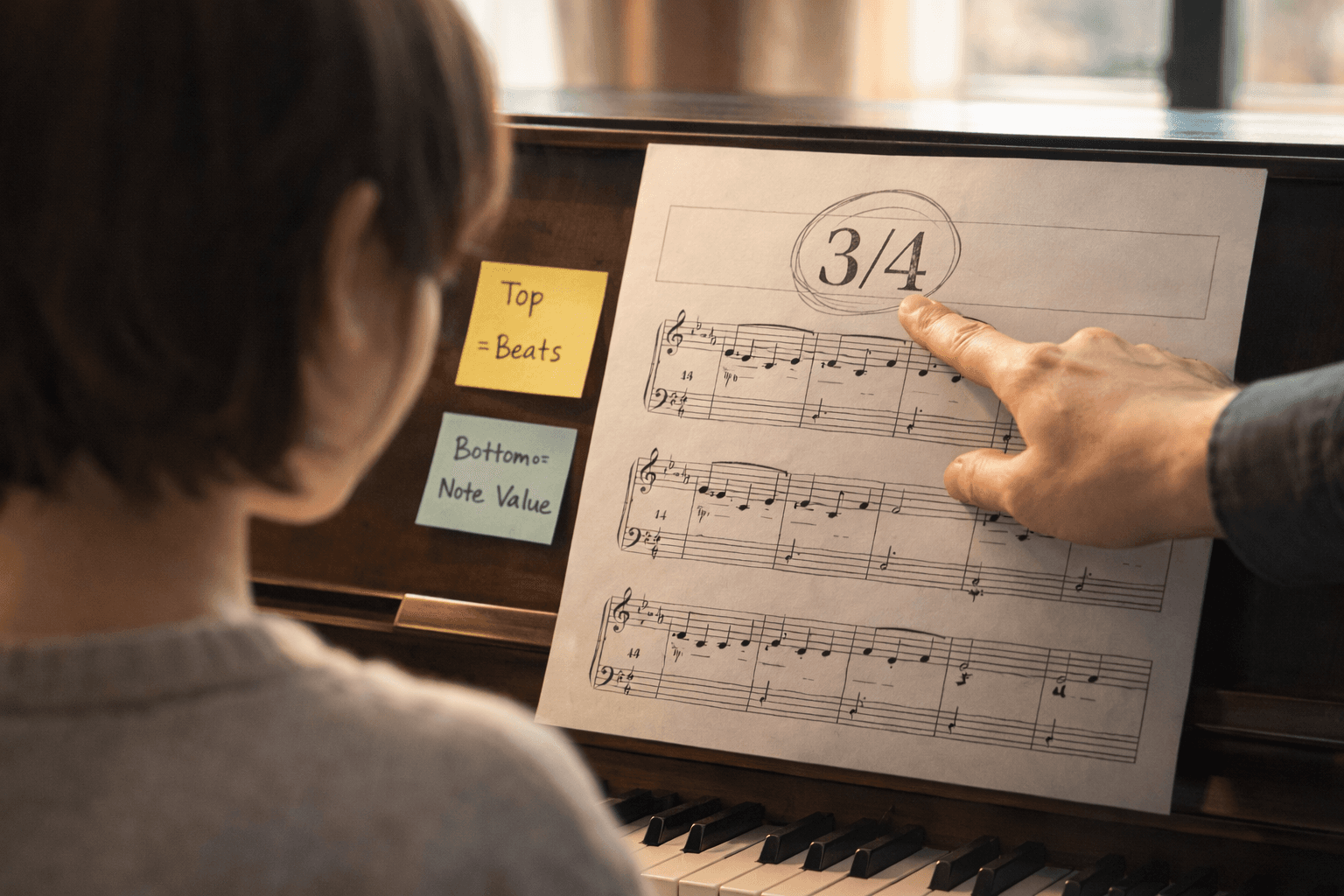 Reading sheet music becomes easier once you decode the numbers. Music time signatures use two numbers stacked vertically. Each number carries a clear role.
Understanding these numbers helps you count music correctly. It builds rhythmic confidence and removes guessing while playing.
The Top Number – Beats in Each Measure
The top number shows how many beats per measure exist. A 4 means four beats. A 3 means three beats. This number shapes beat grouping and accent on the first beat.
It tells you where the music breathes. That breath creates musical phrasing and groove of a song.
The Bottom Number – Note Value of Each Beat
The bottom number shows the note value that counts as one beat. A 4 means a quarter note. An 8 means an eighth note.
This number changes the feel of the music. It affects speed perception and rhythmic interpretation.
How Time Signatures Appear on Sheet Music
Time signatures appear at the start of sheet music symbols. They sit after the clef and key signature. They also appear again when rhythm changes.
These symbols guide bars and measures. They help with mastering beats and measures visually.
Understanding the “C” and Cut-Time Symbols
The letter C means common time signature. It represents the 4/4 time signature. Cut time music uses a symbol with a line through C.
Cut time feels faster. The 2/2 cut time focuses on two strong beats instead of four.
Categories of Time Signatures Every Musician Should Know
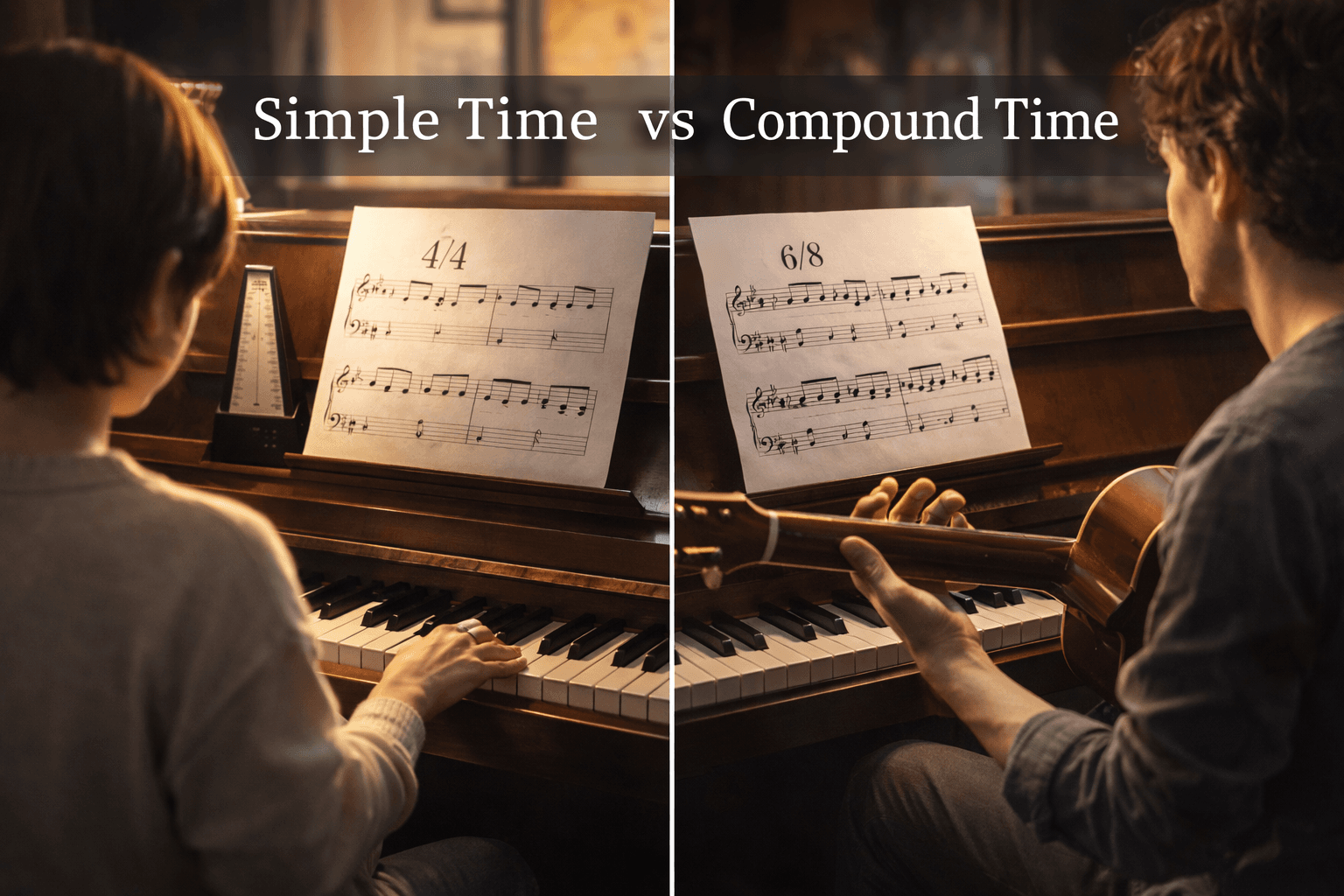 Time signatures in music fall into categories. These categories explain how beats divide. They also explain why some rhythms feel natural and others feel surprising.
Knowing categories helps with beginner music theory and long-term rhythm skills.
Simple Time Signatures
A simple time signature divides beats into two equal parts. Examples include 2/4 time signature and 3/4 time signature.
How Simple Time Feels While Playing
Simple time feels balanced. The pulse of the music stays clear. It supports piano rhythm basics and early learning.
Compound Time Signatures
A compound time signature divides beats into three parts. The 6/8 time signature is the most common example.
How Compound Rhythm Is Grouped
Compound rhythm creates a flowing and lilting feel. Beats group naturally into patterns of three.
Irregular and Odd Time Signatures
Odd time signatures do not divide evenly. These include patterns like five or seven beats.
Why These Time Signatures Sound Unusual
They create an off-balance rhythmic feel. Listeners notice an unexpected rhythmic twist immediately.
Commonly Used Time Signatures in Music
 Certain time signatures dominate musical styles. Learning them first builds rhythmic foundation faster.
These signatures appear constantly in piano sheet music reading.
4/4 – The Most Popular Time Signature
The 4/4 time signature appears everywhere. It supports a steady and grounded rhythm. Most popular songs use it.
2/4 – March-Style Rhythm
The 2/4 time signature creates a marching rhythm. It feels direct and strong.
3/4 – Waltz and Flowing Patterns
The 3/4 time signature creates a waltz-like sway. The first beat feels heavy. The next two feel light.
2/2 – Cut Time and Faster Feel
The 2/2 cut time reduces clutter. It supports faster tempos and clean phrasing.
6/8 – Rolling and Lyrical Rhythm
The 6/8 time signature feels circular. It supports expressive playing and smooth motion.
9/8 and 12/8 – Layered Compound Feel
These compound meters add richness. They allow complex rhythmic interpretation while keeping flow.
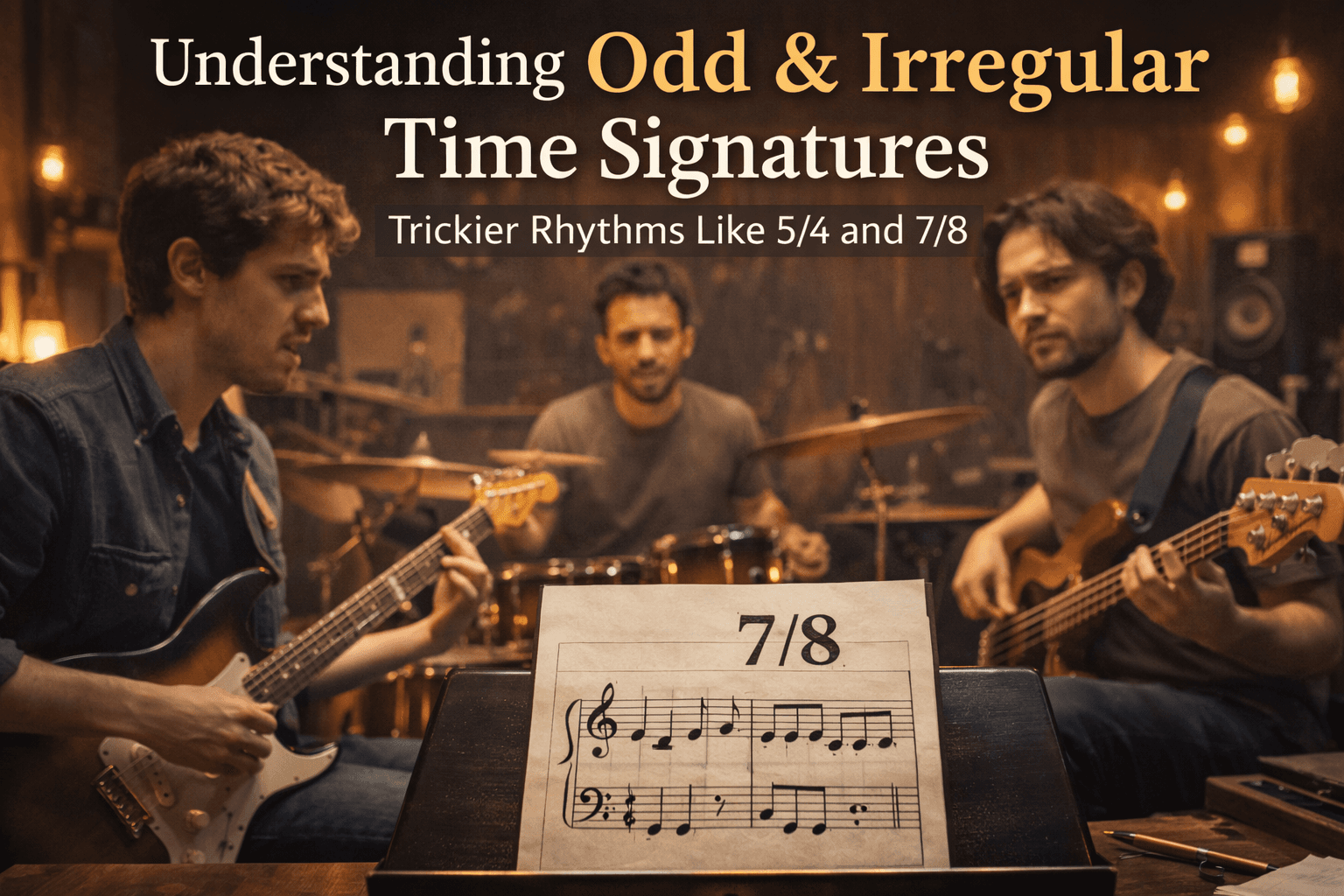
Understanding Odd and Irregular Time Signatures
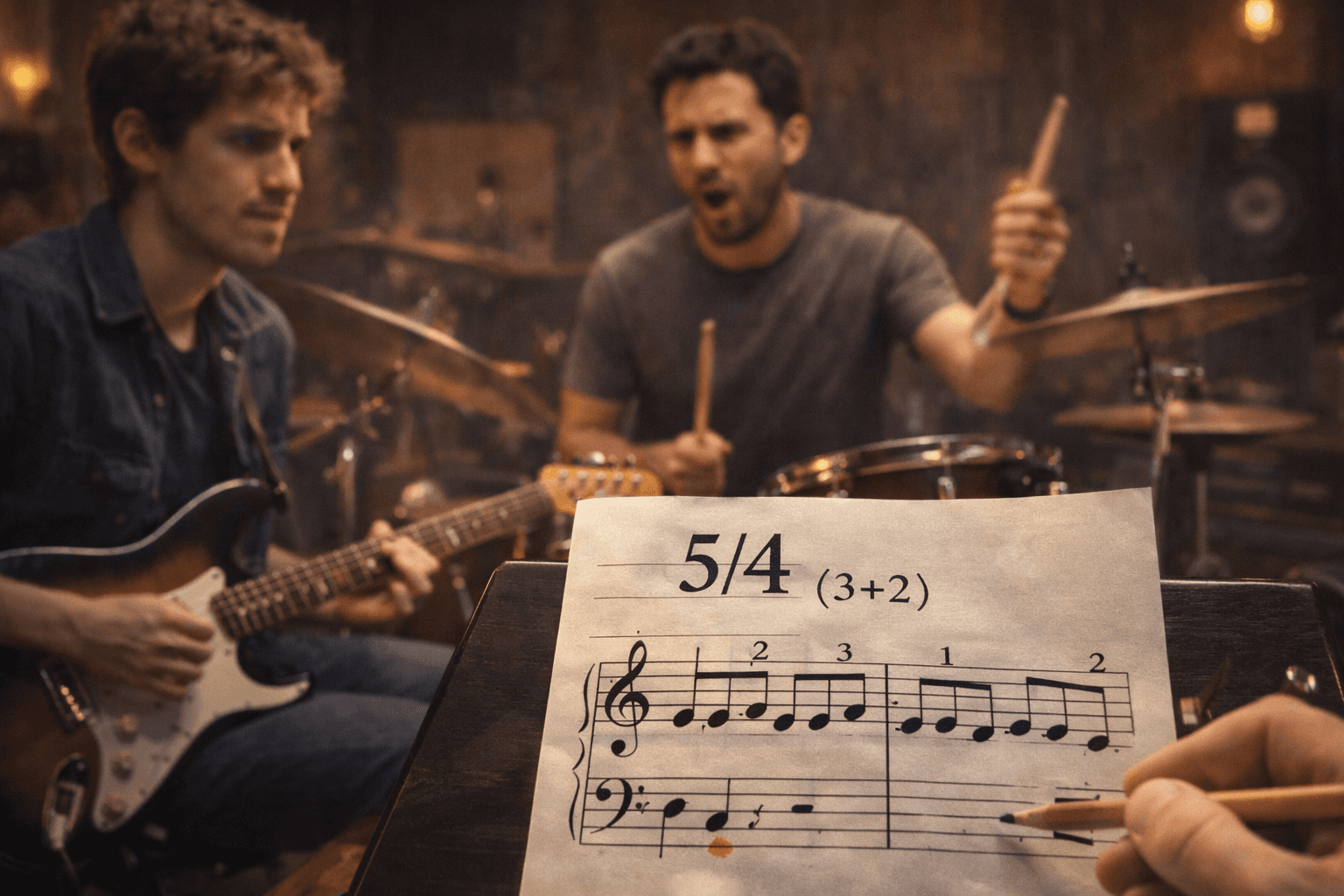 Odd time signatures challenge comfort. They force deeper listening and stronger internal pulse.
They appear often in advanced compositions and modern styles.
5/4 Time Signature Explained
Five beats usually group as three plus two. This grouping helps counting out loud.
7/4 and 7/8 – Counting and Feel
Seven-beat patterns feel tense. They require strong rhythmic clarity to stay grounded.
How Musicians Learn to Count Odd Meters
Musicians break beats into chunks. Movement and clapping help build rhythmic confidence.
Simple Time vs Compound Time – Key Differences
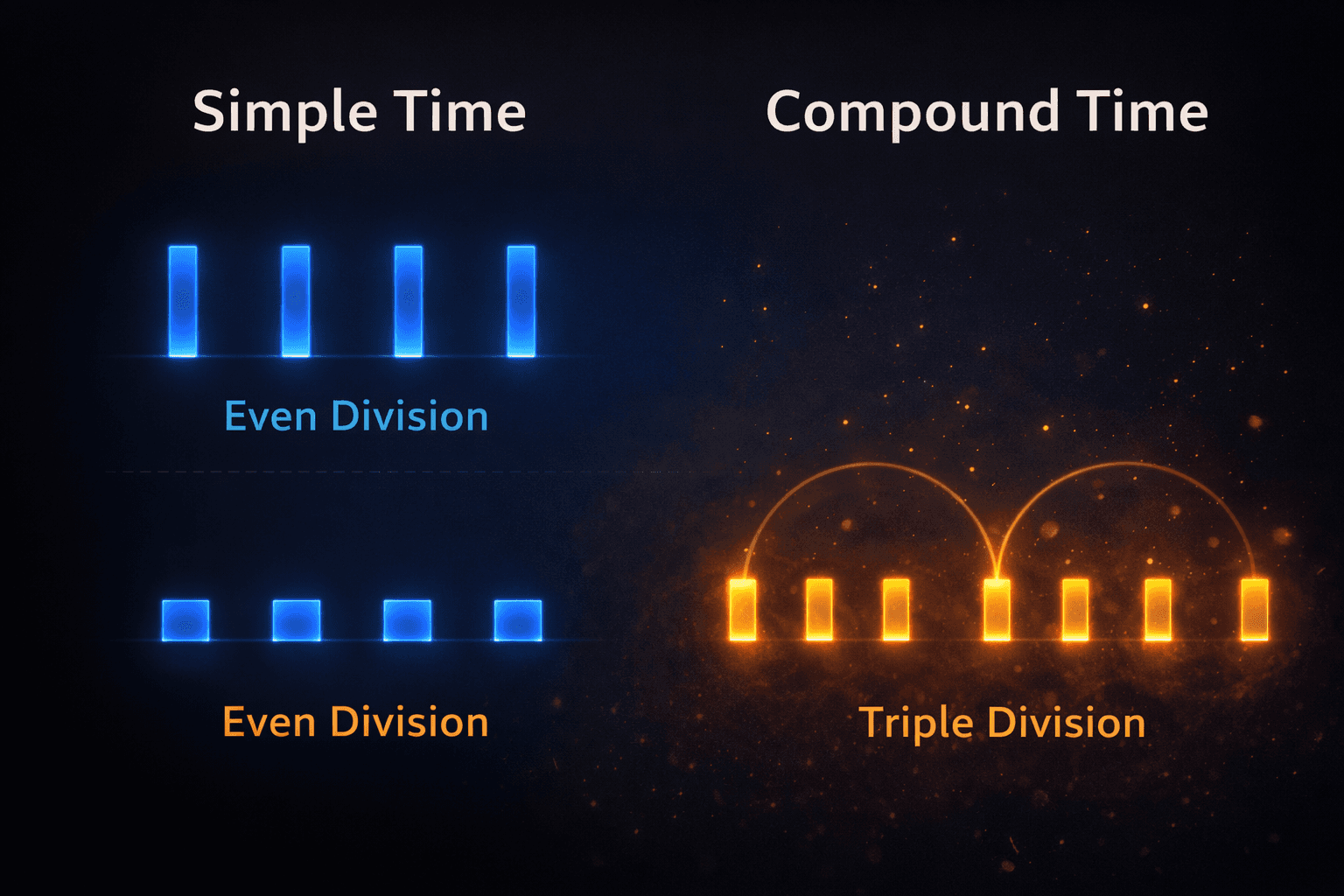 Simple and compound time feel different in the body. One feels square. The other feels round.
Recognizing this difference improves understanding rhythm deeply.
Beat Division and Accent Patterns
Simple time splits evenly. Compound time rolls forward. Accents define groove.
Listening Examples to Tell Them Apart
Listening reveals patterns faster than counting. The ear notices pulse quickly.
How to Identify Them in Sheet Music
Visual spacing and note groupings give clues. Reading becomes faster with practice.
How Time Signatures Shape Musical Expression
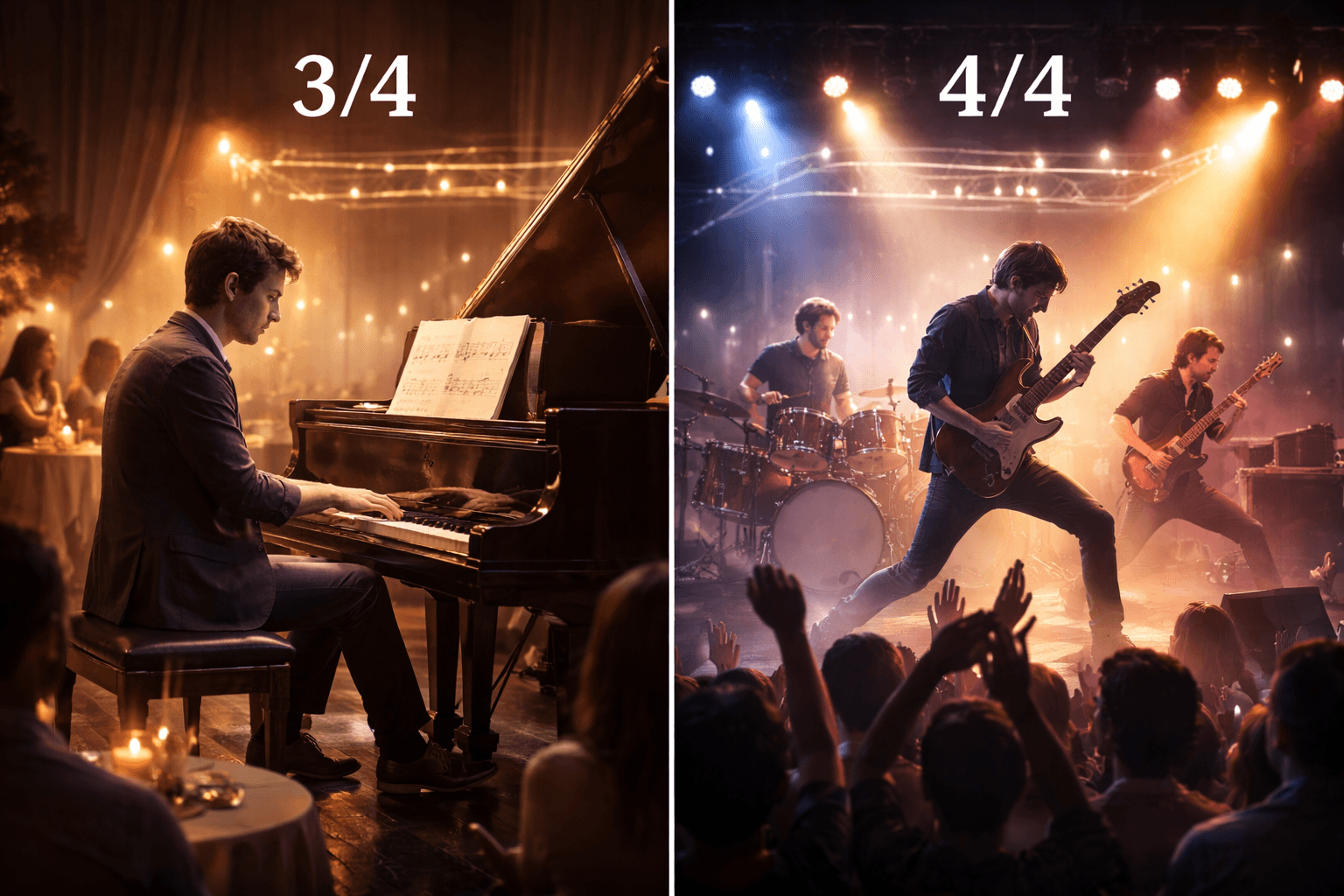 Time signatures shape emotion. They influence tempo, groove, and phrasing.
Changing meter changes the feel of the music instantly.
Emotional Impact of Different Time Signatures
Certain meters feel calm. Others feel urgent. Emotion follows rhythm naturally.
Tempo, Groove, and Feel
Tempo interacts with meter. Groove emerges when rhythm locks perfectly.
Why the Same Melody Sounds Different in Another Meter
Meter reframes melody. Notes stay same. Expression changes completely.
Famous Songs and Music Styles by Time Signature
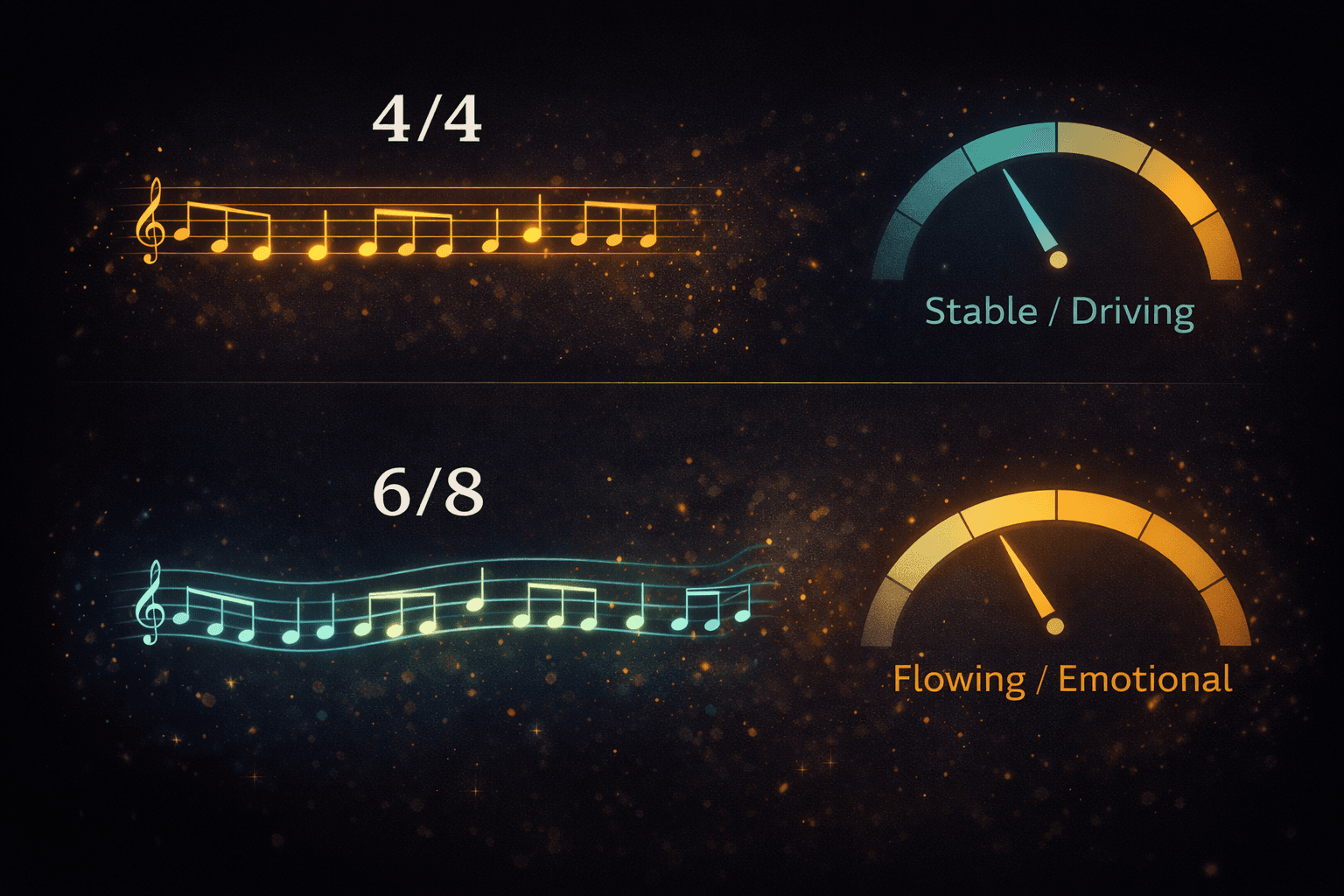 Styles evolve around rhythm. Time signatures influence genre identity.
They define how listeners move and feel.
Songs in 4/4 and 3/4
Most popular songs sit here. Familiar rhythms feel safe and inviting.
Popular Music Using 6/8
Ballads often use compound time. They feel emotional and smooth.
Advanced Compositions Using Odd Time Signatures
Progressive music explores irregular meters for creativity.
Practical Tips to Learn Time Signatures Faster
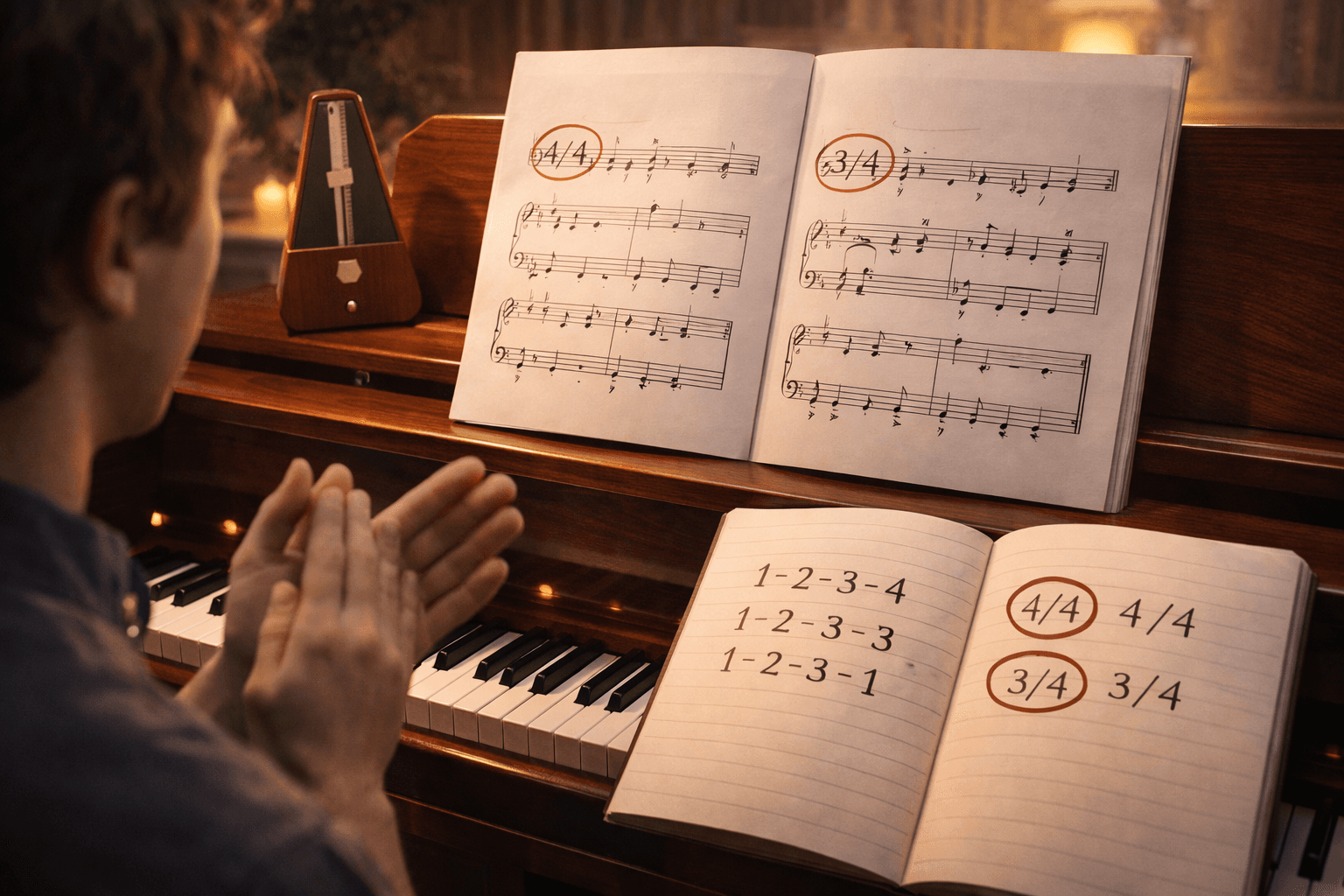 Practice builds rhythm skills faster than theory alone.
Consistent methods create lasting progress.
Clapping and Counting Exercises
Clapping builds internal pulse. Counting music correctly strengthens timing.
Practicing with a Metronome
Metronomes sharpen precision. They support playing in sync.
Common Beginner Mistakes to Avoid
Ignoring accents causes confusion. Rushing breaks musical pulse.
How Piano Students Can Practice Time Signatures Effectively
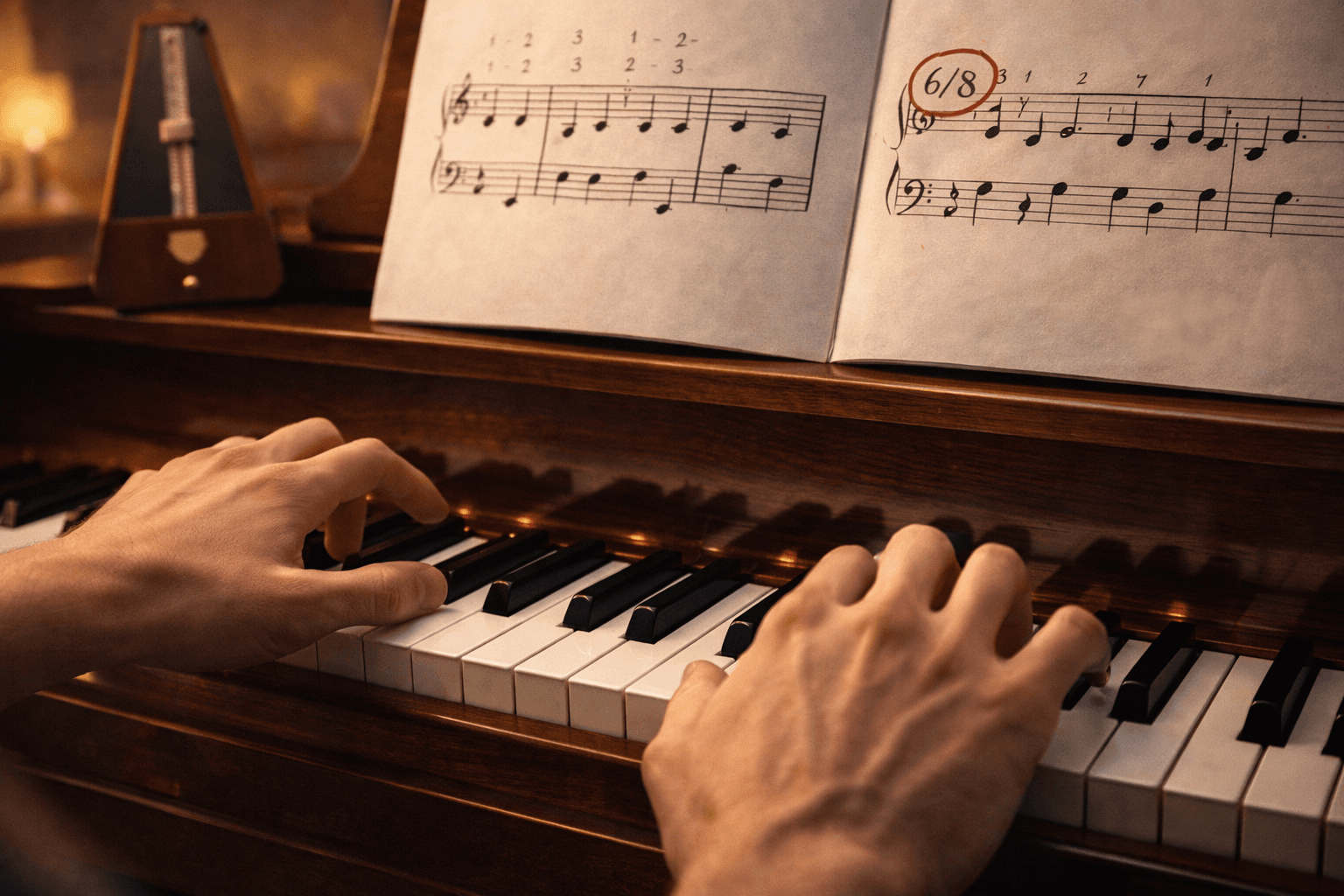 Piano requires coordination. Rhythm controls both hands.
Structured practice improves musical meter quickly.
Applying Time Signatures While Playing Scales
Scales become rhythm tools. Timing improves naturally.
Using Simple Pieces to Master Rhythm
Simple pieces reveal rhythm clearly. Complexity comes later.
Transitioning Between Different Time Signatures
Switching meters builds flexibility. Awareness increases control.
Learning Rhythm the Right Way at Art Gharana
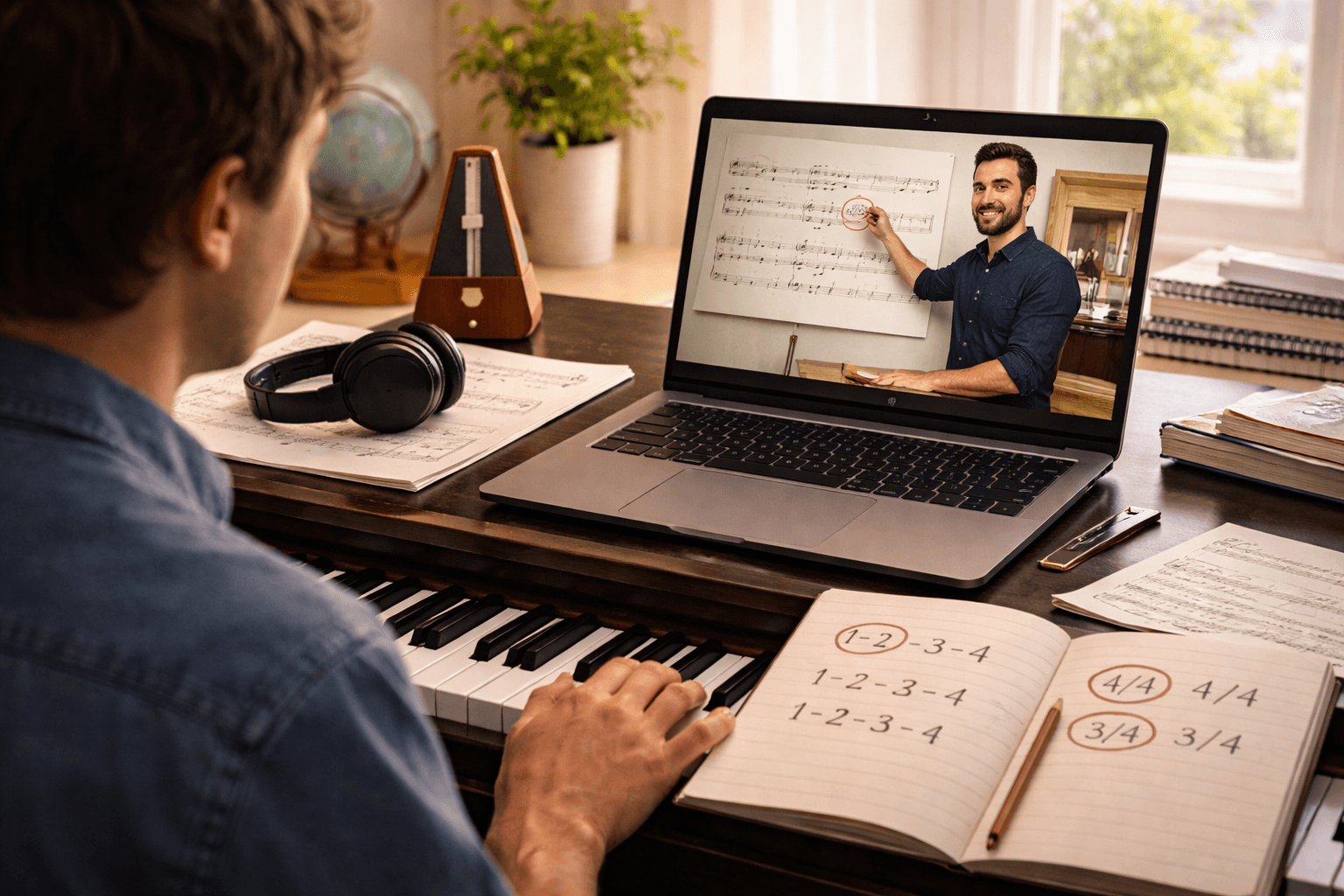 Structured learning strengthens rhythmic foundation. Clear progression removes confusion.
Focused rhythm training builds expressive playing.
How Art Gharana Teaches Time Signatures Step-by-Step
Concepts unfold gradually. Students build confidence early.
Beginner-Friendly and Advanced Rhythm Training
Lessons adapt to skill levels. Growth remains steady.
Online Piano Classes Focused on Strong Musical Foundations
Online formats allow consistent rhythm practice. Guidance stays structured.
Key Takeaways for Mastering Time Signatures
 Rhythm shapes music completely. Time signatures provide the map.
Mastery comes through patience and repetition.
What Every Music Student Should Remember
Feel matters more than math. Listening sharpens rhythm.
How Consistent Practice Improves Timing
Daily rhythm work builds accuracy. Confidence follows naturally.
Frequently Asked Questions About Time Signatures
What is a time signature in music theory?
It defines beats per measure and note value. It guides rhythm.
How do I know if music is in 3/4 or 6/8?
Listen for grouping. Three feels even. Six feels rolling.
What does the “C” symbol mean in sheet music?
It means common time signature or 4/4.
Are odd time signatures hard to learn?
They feel tricky at first. Practice makes them natural.
Why are time signatures important for piano players?
They ensure rhythmic clarity. They support expressive and accurate playing.