ChatGPT
 Google AI
 Grok
 Claude

Small enough to fit between your knees, loud enough to anchor an entire band. Bongo drums are among the most recognisable hand percussion instruments on earth, born from Afro-Cuban music and now heard everywhere from salsa clubs to school music rooms. This guide covers everything scattered thinly elsewhere: full anatomy, tuning bongos properly, genuine playing technique including the essential martillo pattern, and a beginner's roadmap most sources skip entirely. Sit down, tuck the drums between your knees, and let's actually learn to play them, not just name their parts.
Beyond Martillo: Other Essential Patterns
 Once martillo feels genuinely comfortable, three additional patterns expand your vocabulary considerably. Each serves a distinct musical moment, and knowing when to shift between them separates a competent player from a genuinely musical one within any ensemble.
Learn these gradually rather than simultaneously. Rushing multiple patterns before any single one feels automatic tends to blur them together, producing muddy, inconsistent playing that undermines the crisp precision Afro-Cuban percussion traditionally demands.
Manoteo
Manoteo uses simpler alternating strokes, often serving as an accessible entry pattern before martillo's full complexity. Many teachers introduce it first specifically to build basic hand independence without overwhelming absolute beginners immediately.
Repique
Repique refers to improvised rhythmic flourishes bongoseros insert during instrumental breaks and song transitions, departing from steady martillo to add excitement and rhythmic commentary. This improvisational skill develops gradually through careful, patient listening and experimentation.
Bongos Compared to Other Hand Drums
Beyond congas, several other hand percussion instruments share overlapping territory with bongos. Understanding these distinctions helps beginners choose their first instrument wisely and helps intermediate players expand their broader percussion vocabulary intelligently. Each instrument below solves a slightly different musical problem. Djembes prioritise dynamic range and volume; cajons prioritise portability and versatility; bongos prioritise bright, cutting articulation suited specifically to fast, intricate patterns within a full ensemble mix.What Are Bongos, Exactly?
A pair of small, open-bottomed hand drums, joined by a wooden or metal bridge and always played together, never separately. Bongos produce a bright, penetrating tone that cuts through a full band mix despite their genuinely compact size.One drum, the hembra, meaning female, is larger and lower-pitched. Its partner, the macho, meaning male, is smaller and higher-pitched. Played as a pair, they create the syncopated, conversational rhythms central to Cuban Latin percussion traditions.
Anatomy of a Bongo Drum
Traditional shells are carved from oak, though modern instruments use various hardwoods or synthetic materials. Each drum's open bottom, uncovered by any membrane, gives bongos their characteristically bright, resonant projection compared to closed-bottom drums.
Drumheads were traditionally rawhide, stretched taut and secured with metal lugs, tuning rings, and a bearing edge. Modern synthetic heads increasingly replace animal skin, offering more stable tuning across changing weather and humidity conditions.
The Bridge Connecting Both Drums
The wooden or metal block joining hembra to macho isn't merely structural. It sets the fixed distance players grip between their knees during performance, and its material subtly affects how vibration transfers between the two connected drum shells.
A Short History: Born in Eastern Cuba
Bongos emerged in eastern Cuba during the late 1800s, likely descended from larger ancestor drums still played today in changüí music. Early bongos were considerably bigger than modern versions, gradually shrinking as the instrument moved into popular dance ensembles.By the early 1900s, bongos had become fixtures of son cubano, the genre that eventually evolved into salsa. Cuban musicians carried the instrument through New York's mid-century Latin jazz scene, cementing its place in global Latin percussion vocabulary permanently.
The Bongosero's Role
A dedicated bongo player, called a bongosero, traditionally held a specific ensemble role: driving the groove during verses with the martillo pattern, then shifting to freer improvisation and rhythmic commentary during instrumental sections and solos.
Tuning Bongos Properly
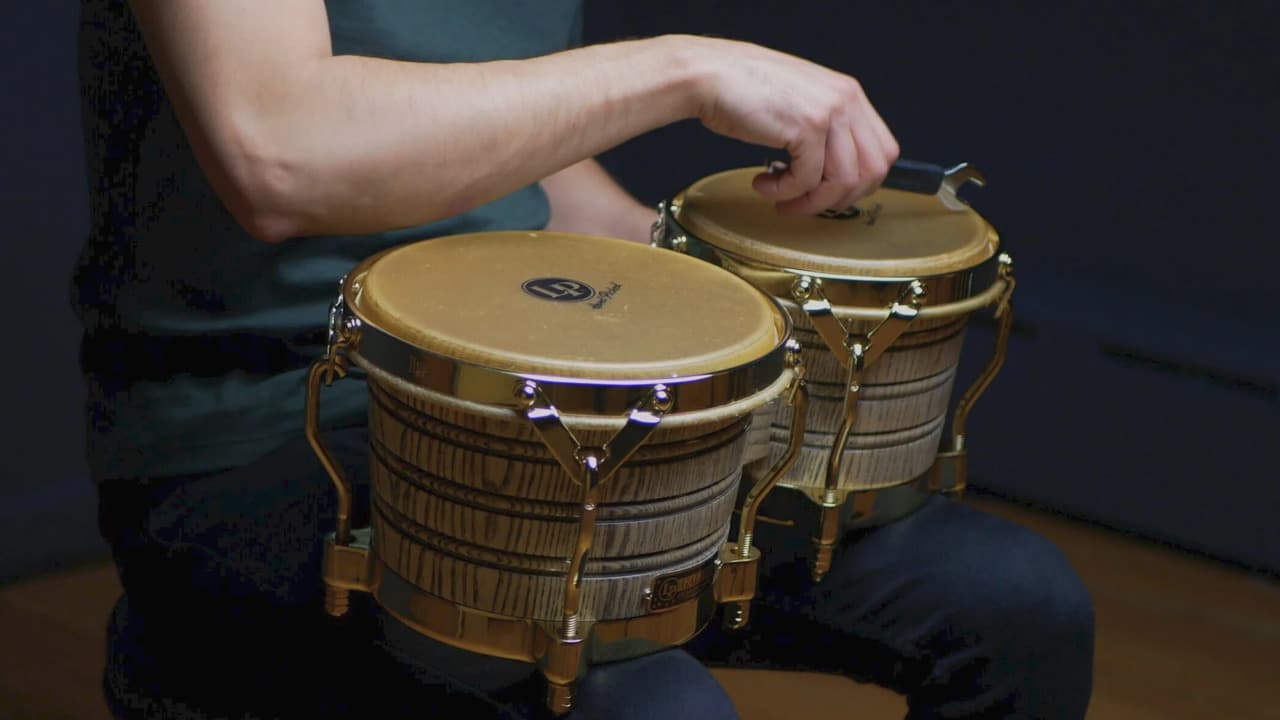 The macho tunes considerably higher than the hembra, typically around one octave apart. Tightening the lugs evenly around each rim raises pitch; loosening them lowers it. Uneven tightening causes warping and inconsistent tone across the drumhead's surface.
Crucially, animal-skin heads need detuning after every session, loosening tension slightly to protect against humidity and temperature swings that can warp or split rawhide overnight. Synthetic heads skip this step entirely, holding tune far more reliably.
A Simple Tuning Routine
Tap near each lug while tightening gradually, listening for even pitch around the whole rim rather than one loud spot and one dull spot. Compare macho against hembra by ear until roughly an octave separates them, adjusting gradually rather than all at once.
A 30-Day Beginner Practice Plan
Week one: seated posture and the three basic strokes in isolation, five minutes each daily, no patterns yet. Week two: alternate open and bass tones slowly with a metronome, building even timing before attempting any real speed whatsoever.
Week three: introduce martillo at half tempo, counting the eight-stroke cycle aloud throughout. Week four: gradually increase tempo while maintaining evenness, and begin experimenting with simple manoteo variations once martillo feels genuinely automatic and comfortable.
Daily Ten-Minute Structure
Two minutes stroke isolation, three minutes martillo at controlled tempo, three minutes playing along with a recorded salsa track, two minutes free improvisation. This balanced split builds technique and musicality together rather than treating them as separate, disconnected skills.
Building Hand Independence
Bongo technique ultimately demands each hand operating somewhat independently, one often maintaining a steady pulse while the other adds syncopated accents. This coordination challenge trips up many beginners transitioning from single-drum practice into full patterns.
Practice each hand's part separately first, extremely slowly, before combining them. Clapping one hand's rhythm while tapping the other's on a tabletop, away from the actual drums entirely, builds this coordination faster than attempting everything on the instrument immediately.
A Simple Independence Drill
Tap steady quarter notes with your weaker hand while your stronger hand adds simple accents on off-beats. Swap hands weekly. This unglamorous drill, borrowed from broader rhythm pedagogy, pays dividends across every percussion instrument you'll ever study.
How to Hold and Sit With Bongos
Tuck the drums between your knees while seated, hembra on your dominant side for most players, angled slightly forward. This position keeps both drumheads accessible to relaxed hands without hunching your shoulders or straining your back during extended playing.
Some players use a floor stand instead, particularly for standing performance or when seated positioning feels uncomfortable. Either approach works; consistency matters more than which specific setup you eventually settle on for regular practice.
Hand Position Basics
Fingers stay relaxed and slightly curved, striking near the drumhead's edge for the open tone and closer to centre for the bass tone. Tension is the enemy here; loose, bouncing hands produce far better sound than rigid, forced striking.
The Three Basic Strokes
Every bongo pattern builds from three fundamental sounds: the open tone, ringing and resonant, struck near the rim; the bass tone, deep and muted, struck near centre; and the slap, sharp and percussive, produced with tensed fingers snapping off the rim quickly.
Master each stroke in isolation before combining them. Spend a full week just alternating open and bass tones slowly, listening carefully for genuine tonal contrast between the two before ever attempting to add speed or complexity.
Learning the Martillo Pattern
Martillo, meaning hammer, is the essential eight-stroke pattern every bongosero learns first. It alternates between both drums in a continuous cycle, providing the steady rhythmic foundation beneath salsa, son, and countless other Afro-Cuban musical styles.
Learn it slowly with a metronome, well under performance tempo, focusing entirely on evenness between strokes rather than speed. Rushing this foundational pattern before it's genuinely solid causes sloppy technique that's difficult to correct later.
Practising Martillo Step by Step Count the eight-stroke cycle aloud while playing slowly, gradually increasing tempo only once each repetition sounds identical to the last. Record yourself weekly; martillo's evenness is much easier to judge by listening back than by feel alone during practice.
Bongos in Music Education
Schools and community programmes increasingly use bongos as an accessible first percussion instrument, given their compact size, relatively low cost, and immediate, satisfying sound production even from complete absolute beginners on their very first attempt.
Teachers particularly value the instrument for building foundational rhythm literacy before students move toward more complex kit drumming or orchestral percussion. The hand independence bongos develop transfers directly to nearly every other percussion instrument students encounter afterward.
Bongos for Young Children
Smaller hands can genuinely struggle with full-size adult bongos initially. Junior-sized sets exist specifically for younger students, and many teachers recommend starting children around age seven or eight, once basic hand coordination has developed sufficiently.
Common Mistakes Beginners Make
Mistake one: gripping too tightly, which deadens tone and causes hand fatigue quickly. Relaxed hands produce better sound and last considerably longer during extended practice sessions than tense, forced striking ever manages to achieve.
Mistake two: rushing martillo before it's genuinely even. Mistake three: ignoring the bass tone entirely, overusing only the brighter open tone and slap. Mistake four: skipping regular tuning checks, letting drumheads drift gradually out of their proper relative pitch relationship.
The Posture Mistake Nobody Mentions
Hunching forward to see your hands better strains the back within minutes and becomes a genuinely hard habit to break later. Trust your hands to find the drums by feel; keep your spine upright from your very first practice session onward.
Practising Without Disturbing Neighbours
Bongos are genuinely loud for their size, which can complicate apartment practice considerably. Practice pads or a folded towel placed over each drumhead significantly dampens volume while preserving enough feedback for genuine technique development to continue productively.
Early morning or midday practice windows generally cause fewer neighbour complaints than evening sessions. Some players invest in a practice-specific low-volume head, swapped in temporarily whenever quieter practice becomes genuinely necessary for household harmony.
Hand Development and Physical Adjustment
New players develop calluses gradually on fingertips and palms, particularly where the slap and bass tones make repeated contact. Early sessions can leave hands genuinely sore; this is normal adaptation, not injury, provided sharp pain never occurs.
Keep initial sessions short, ten to fifteen minutes, gradually extending duration as hands adapt over several weeks. Rushing longer sessions before calluses develop properly risks blisters that then force frustrating breaks from practice entirely.
Stretching Before and After
Simple wrist rotations and finger stretches before playing, repeated afterward, reduce strain considerably. This small habit, borrowed from broader percussion pedagogy, protects hands across years of regular practice rather than just single individual sessions.
Recording Yourself for Honest Progress Tracking
Phone recordings reveal timing inconsistencies your hands feel but your ears somehow miss during actual playing. Record a simple martillo pattern weekly and compare recordings monthly; evenness improvements become genuinely obvious once you can actually hear them played back.
Share recordings with a teacher or experienced player for feedback when possible. Self-assessment has real limits, and experienced ears catch subtle timing and tone issues that beginners typically cannot yet identify reliably on their own without guidance.
Famous Bongo Players Worth Studying
Recorded history credits numerous skilled bongoseros with shaping the instrument's modern vocabulary, blending traditional Cuban patterns with jazz improvisation and Latin big-band arrangement across decades of recorded Afro-Cuban and salsa music.
Listening to skilled players reveals how much expressive range exists within seemingly simple patterns. What sounds straightforward on paper becomes remarkably nuanced once you hear a master's subtle dynamic and timing variations layered on top.
José Mangual Jr.
A respected bongosero within New York's Latin jazz and salsa scene, Mangual Jr. carried forward techniques passed through generations of Afro-Cuban percussion tradition, contributing to countless recordings across the genre's mid-to-late twentieth century golden era.
Modern Session Players
Contemporary Latin and jazz recordings continue relying on skilled bongoseros, often uncredited on liner notes yet instantly recognisable to trained ears. Studying session discographies rewards curious students with a deep well of technique to absorb by careful listening.
Bongos vs Congas: What's the Difference?
Beginners frequently confuse these related Afro-Cuban drums. Bongos are small, paired, and gripped between the knees; congas are tall, played standing or on stands, and typically used in sets of two or four rather than a fixed permanent pair.
Their musical roles differ too. Bongos generally handle intricate, syncopated patterns during verses; congas provide steadier, deeper grooves throughout an entire arrangement. Many ensembles use both together, each filling a distinct rhythmic space.
Bongos Beyond Latin Music: Unexpected Contexts
Twentieth-century composers occasionally incorporated bongos into orchestral and chamber works, drawn to their distinctive bright timbre and portable size. Contemporary minimalist and experimental composers have continued this tradition, valuing the instrument's percussive clarity.
This crossover into concert music demonstrates how far the instrument travelled from its specific Cuban origins. What began in eastern Cuban dance halls now appears in symphony programmes, film scores, and experimental recordings across radically different musical contexts entirely.
Bongos in Different Musical Genres
Beyond traditional son cubano and salsa, bongos found homes in jazz ensembles, 1950s exotica recordings, and beat poetry performances that romanticised hand drumming as bohemian cultural shorthand throughout that particular cultural moment.
Today they appear in pop production, film scoring, and world music fusion projects. Understanding music genres broadly helps explain how a regionally specific Cuban instrument became globally recognisable percussion vocabulary within roughly a single century.
Bongos in Dance Music
Salsa dancers rely on the bongosero's improvised commentary to accent choreography, and studying dance rhythm patterns alongside bongo technique deepens both skills simultaneously for students pursuing Latin dance and percussion together.
Cultural Significance in Cuban Identity
Beyond pure musicality, bongos carry genuine cultural weight within Afro-Cuban communities, representing a fusion of African rhythmic tradition and Spanish colonial-era instrument-making that produced something distinctly, unmistakably Cuban in character and sound.
Understanding this history adds depth to learning. You're not simply acquiring a technical skill; you're engaging with a specific cultural lineage that deserves genuine respect and curiosity about its origins, evolution, and ongoing living tradition worldwide.
A Listening Exercise for New Students
Before advancing technique further, spend focused time simply listening. Find three recordings: traditional son cubano, a modern salsa track, and a Latin jazz recording. Notice how the bongosero's role shifts subtly across these related but distinct genres.
This listening practice trains your ear to recognise martillo, repique, and improvised commentary in real musical context, not just isolated practice-room drilling. Understanding broader music genres this way accelerates genuine musical comprehension considerably faster than technique alone.
What to Listen For Specifically
Track how the bongosero interacts with the bass and piano montuno, entering and receding rather than playing constantly at one fixed volume. This conversational quality, listening and responding rather than simply keeping time, is advanced musicianship worth studying closely and repeatedly.
Combining Bongos With Other Instruments
Home ensembles and jam sessions often pair bongos with guitar, piano, or vocals. Learning basic chord accompaniment alongside your bongo studies opens collaborative playing opportunities considerably sooner than pursuing percussion in complete isolation ever would.
Many community music groups welcome bongo players specifically, since the instrument adds authentic rhythmic character without requiring amplification or complex setup. This makes bongos a genuinely social instrument, rewarding players who seek out ensemble opportunities early and often.
Choosing Your First Set of Bongos
Beginner sets typically use synthetic heads for tuning stability and easier maintenance, an excellent choice for new players still developing consistent technique. Wood shells generally outperform plastic for tone quality, even at modest beginner price points.
Check that both drums tune easily and hold pitch reasonably well without constant slipping. A comfortable, secure fit between your knees matters more than cosmetic finish when selecting your very first practice instrument.
Budget vs Quality Considerations
Entry-level sets serve beginners perfectly well for the first year or two. Upgrade to professional-grade shells and heads once your technique has developed enough to genuinely benefit from, and actually notice, the tonal improvement better materials provide.
A Beginner's Gear Checklist
Beyond the drums themselves, a few accessories genuinely improve early practice considerably. A drum key for tuning adjustments, a soft carrying bag for transport, and a practice pad or towel for quiet sessions cover most beginner needs completely.
Skip expensive accessories initially. A metronome app on your phone works perfectly well for timing practice, and dedicated bongo stands remain optional until you've committed to standing performance or find seated positioning genuinely uncomfortable long-term.
Troubleshooting Common Sound Problems
Buzzing or rattling sounds usually trace to loose hardware, a shifting bridge connection, or a warped head needing replacement. Check every lug systematically before assuming the drum itself requires professional repair or complete replacement.
Muddy, indistinct tone often means the head has dried out unevenly or lost proper tension entirely. Dull, lifeless sound after previously bright tone usually signals a head genuinely due for replacement rather than simply requiring further tuning adjustment.
When to Seek Professional Repair
Cracked shells, permanently warped rims, or persistent tuning instability despite careful adjustment all warrant professional assessment. Most percussion shops or experienced teachers can diagnose these issues quickly, often for minimal cost compared to full replacement.
Caring for Your Bongos
Store away from direct heat sources and extreme humidity swings, both of which stress natural materials considerably. Wipe heads gently after playing, and always detune animal-skin drums between sessions to prevent overnight warping or splitting.
Check hardware periodically for loose lugs or a shifting bridge connection. A few minutes of routine maintenance monthly prevents most common problems long before they become expensive repairs or complete replacements down the line.
Learning Bongos in the UK
Latin music communities across major UK cities offer workshops, jam sessions, and structured lessons, often connected to broader salsa dance scenes. These social settings provide excellent practice motivation alongside formal, structured technical instruction.
Online lessons increasingly bridge the gap for students outside major cities, offering the same structured progression as in-person teaching. Combining online guidance with occasional in-person jam sessions gives UK students genuinely the best of both learning worlds.
Connecting Bongos to Broader Rhythm Training
Every stroke pattern you learn on bongos strengthens general rhythm skills that transfer directly to other percussion instruments. Students studying tabla fundamentals alongside bongos often report each practice accelerating progress on the other considerably.
This cross-training works because rhythmic subdivision and hand independence are universal skills, regardless of which specific drum eventually carries them. Explore our guiro guide for another accessible entry point into Latin percussion vocabulary.
From Practice Room to Performance
Once martillo and basic manoteo feel genuinely solid, seek out low-pressure performance opportunities: community jam sessions, open mic percussion circles, or simply playing along with recordings while friends dance. Real playing context accelerates learning beyond solo practice alone.
Many players find their timing and confidence improve dramatically once performing alongside others, even informally. The pressure of keeping time within a group, impossible to fully simulate through solo practice, sharpens skills that rhythm drills alone simply cannot replicate.
Keep a metronome habit alive even after performing regularly. Professional bongoseros still practise with click tracks between gigs, since timing discipline erodes quietly without ongoing maintenance, regardless of how experienced or confident a player eventually becomes.
### Frequently Asked QuestionsWhat are bongo drums used for?
Bongos primarily provide rhythmic accompaniment in salsa, son cubano, and Latin jazz ensembles, with the bongosero playing patterns like martillo during verses and improvising freely during instrumental sections. They also appear widely in pop, film, and world music production.
How do you play bongo drums?
Tuck both drums between your knees, hembra on your dominant side, and strike using three core techniques: open tone near the rim, bass tone near centre, and slap with tensed fingers. Master these individually before combining them into patterns like martillo.
What is the difference between bongos and congas?
Bongos are small, always paired and joined by a bridge, played between the knees. Congas are taller, usually played standing in sets of two to four, and handle steadier, deeper grooves compared to the bongos' intricate syncopated patterns.
Are bongo drums easy to learn?
Basic strokes and simple patterns are genuinely accessible within weeks for motivated beginners. Achieving the speed, subtlety, and improvisational fluency of an experienced bongosero, however, takes years of consistent, guided practice like any serious percussion discipline.
How do you tune bongo drums?
Tighten lugs evenly around each rim, tuning the macho roughly one octave above the hembra. Animal-skin heads need detuning after each session to prevent weather damage; synthetic heads hold their tuning considerably more reliably across varying conditions.
What music uses bongo drums?
Son cubano, salsa, and Latin jazz form their traditional home, though bongos also appear across pop production, film scoring, and world music fusion. Their bright, penetrating tone makes them a popular accent instrument well beyond strictly Afro-Cuban genres today.
Final Thoughts
Two small drums, one wooden bridge, and over a century of rhythmic history packed into an instrument you can hold between your knees. Bongo drums reward patient practice with genuinely satisfying, danceable grooves within just weeks of consistent effort.
Start with the three basic strokes this week, then build toward martillo once each tone feels genuinely distinct and controlled. When you want structured guidance, Art Gharana's percussion instructors teach bongos and broader rhythm foundations live, one-on-one, right across the UK, from your very first tentative tap through to confident ensemble playing.