ChatGPT
 Google AI
 Grok
Grok Claude
Rhythm in music explained clearly helps you feel music instead of just hearing it. Every song moves through a pattern of sound and silence, guiding your body and mind together. From simple clapping games to complex compositions, musical rhythm controls the flow of a song and creates connection across cultures in Canada and beyond.
When you begin understanding rhythm, music stops feeling confusing. Timing becomes natural. Confidence grows. This guide walks you from rhythm basics in music to advanced ideas, using easy English, real examples, and clear explanations that support beginners and experienced learners alike.
Rhythm in Music – Meaning and Core Concept
 Rhythm in music refers to how sounds and pauses repeat over time. It is the organized musical time that shapes movement and emotion. You hear rhythm when footsteps repeat, waves hit the shore, or a song makes you tap your foot without thinking.
In rhythm in music theory, rhythm works as a structure that holds melody harmony and rhythm together. Without rhythm, music has no direction. It would feel scattered and unstable, like sentences without punctuation.
What Rhythm Really Means in Music
At its core, rhythm means the recurrence of notes and rests in a steady pattern. You experience it as motion. This motion creates stability and expectation, helping listeners follow the story of sound.
Rhythm for beginners starts with feeling the beat. Once you sense the musical pulse, everything else builds naturally. This is why rhythm basics in music always begin with listening and counting.
Rhythm vs Beat vs Tempo (Clear Difference Explained)
Beat and rhythm often sound similar, yet they differ clearly. The beat is the steady pulse. Rhythm is how sounds move around that pulse. Tempo controls speed, measured in beats per minute.
Think of walking. Your steps mark the beat. Your walking style creates rhythm. Your speed reflects tempo in music. Together, they shape timing in music and overall balance.
How Rhythm Shapes Melody and Expression
Rhythm gives melody personality. The same notes feel joyful or sad depending on rhythm. Fast rhythms feel exciting. Slow rhythms feel calm and reflective.
This connection explains why melody harmony and rhythm must work together. Rhythm adds emphasis in music, shaping emotional impact and musical storytelling.
Why Rhythm Is the Backbone of All Music
 Rhythm acts as the rhythmic backbone supporting every musical style. It keeps performers aligned and helps listeners stay engaged. Without rhythm, coordination collapses.
Across cultures, rhythm builds community. Drumming circles, choirs, and orchestras rely on rhythm to create shared experiences and musical confidence.
Role of Rhythm in Vocal and Instrumental Music
Singers depend on rhythm to phrase lyrics clearly. Instrumentalists rely on it for precision. The rhythm section in music, including drums and bass, anchors the entire ensemble.
Whether using rhythm instruments or voice, rhythm ensures consistent musical timing and coordination during performance.
How Rhythm Improves Timing, Coordination, and Musical Confidence
Practicing rhythm strengthens internal timing. Hands, voice, and breath begin working together. This builds rhythmic confidence and reduces performance anxiety.
Students who focus on rhythm exercises often improve faster. Accuracy increases. Mistakes decrease. Music starts flowing naturally.
Importance of Rhythm Across Music Styles (Classical, Western, Indian)
Rhythm in western music follows structured notation. Rhythm in Indian music uses cyclical systems. Both rely on strong and weak beats for balance.
From symphonies to tabla solos, rhythm shapes identity and cultural expression through rhythmic structure in music.
Fundamental Elements That Create Rhythm
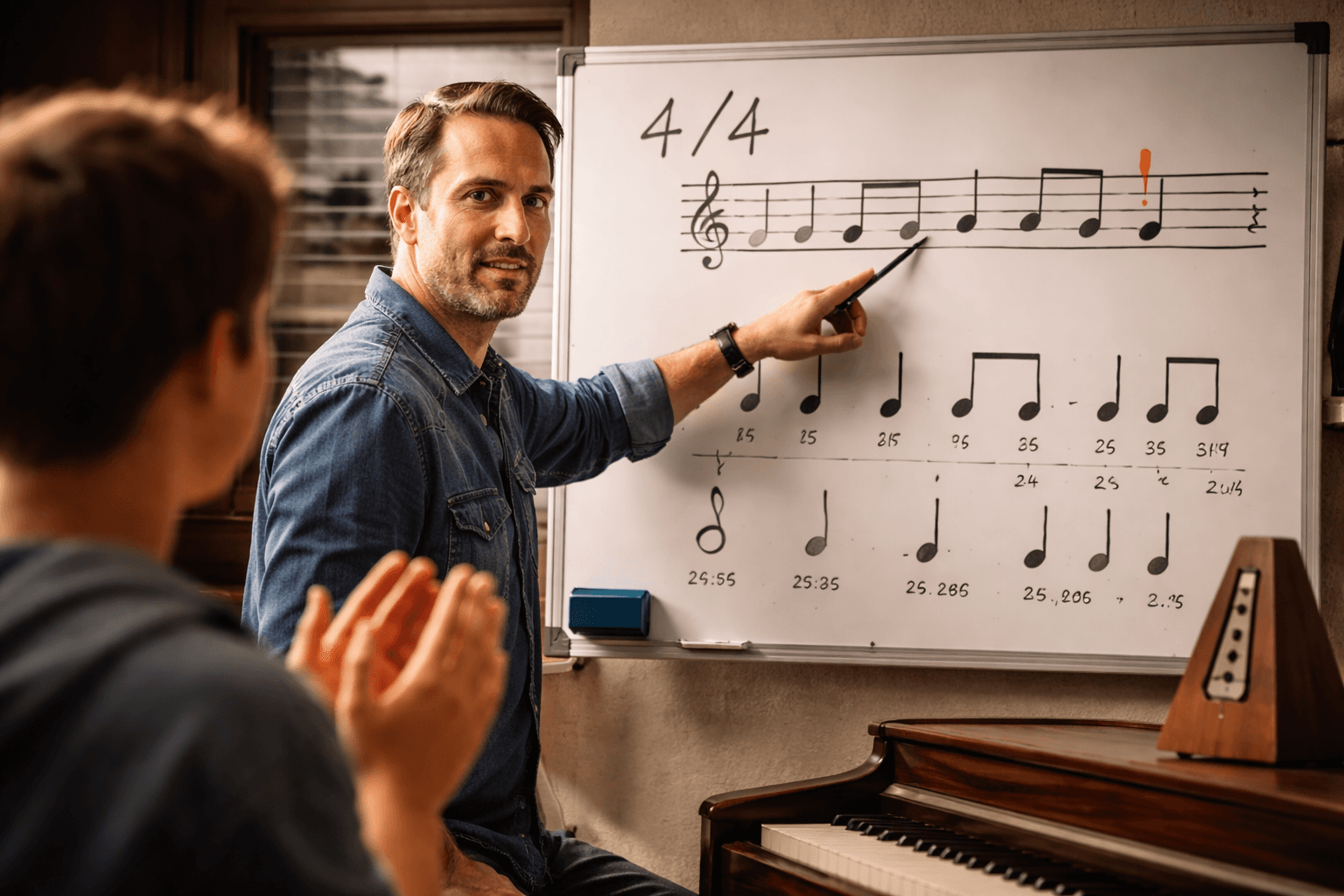 The elements of rhythm work together like gears. Each part supports the next. Understanding these elements helps musicians read, feel, and perform music accurately.
These building blocks include time, speed, emphasis, and grouping. Together, they form rhythmic patterns that guide performance.
Time Signatures – How Music Is Structured
A time signature in music shows how many beats fit into each measure. It organizes rhythm visually and mentally.
Time signatures explain beats per measure and how music repeats in cycles.
Meter – Grouping Beats into Patterns
Musical meter groups beats into predictable patterns. Common meters include duple triple quadruple meter. This grouping helps musicians feel balance and anticipate accents naturally.
Tempo – Speed and Flow of Music
Tempo in music controls pace. Slow tempos feel relaxed. Fast tempos create excitement and drive the flow of a song.
Tempo changes can completely alter emotional impact.
Strong Beats and Weak Beats
Strong beats provide stability. Weak beats create motion. The downbeat marks the strongest moment in each measure.
This balance forms the groove listeners feel instinctively.
Accents – Emphasizing Beats
Accented beats stand out. Rhythmic accents add energy and clarity to performance.
Accents help highlight important musical moments.
Syncopation – Playing Off the Beat
A syncopated rhythm emphasizes off-beat rhythm patterns. This creates surprise and movement.
Jazz, pop, and funk rely heavily on syncopation.
Polyrhythms – Multiple Rhythms at the Same Time
Polyrhythm combines layered rhythms moving together. African drumming rhythms showcase this beautifully.
These layered rhythms create depth and excitement.
Understanding Note Durations in Rhythm
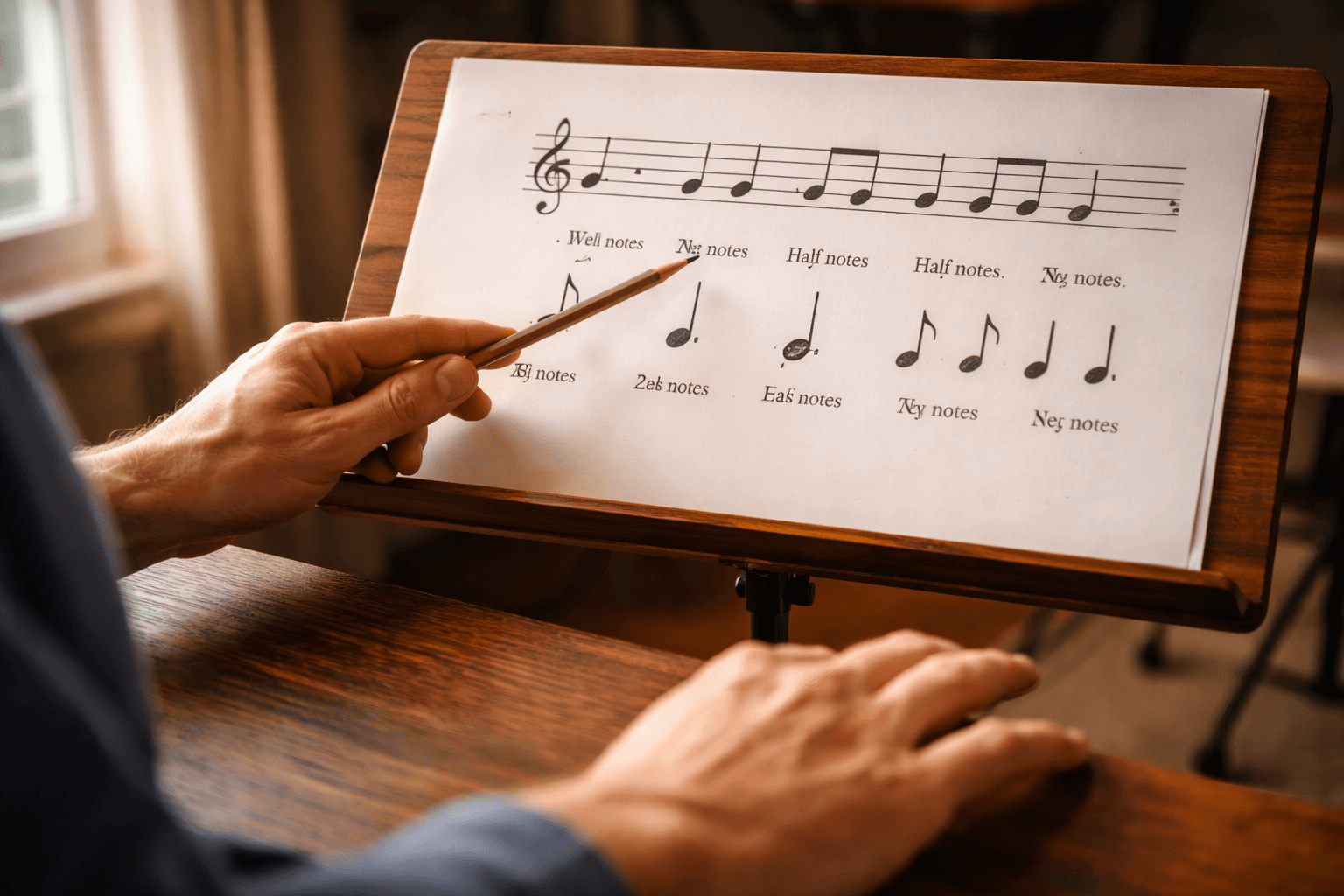 Note durations define how long sounds last. Note length in music shapes texture and space within rhythm.
Rests and silences matter equally. Silence gives music room to breathe.
Long Note Values and Sustained Rhythms
Long notes create calm. A whole note duration sustains sound across time.
Sustained rhythms help express emotion and stability.
Short Note Values and Fast Rhythmic Patterns
Short notes like eighth notes and sixteenth notes create motion.
Fast rhythms add energy and excitement to musical phrases.
Subdivisions – Breaking Beats into Smaller Parts
Rhythmic subdivisions divide beats into smaller units. This includes beat subdivision into halves or quarters.
Counting eighth notes and counting sixteenth notes improves precision.
How Counting Helps in Rhythm Accuracy
Counting rhythm aloud builds control. Rhythmic accuracy improves when counting matches movement.
This habit supports strong rhythmic performance.
Dotted Notes and Extended Rhythmic Patterns
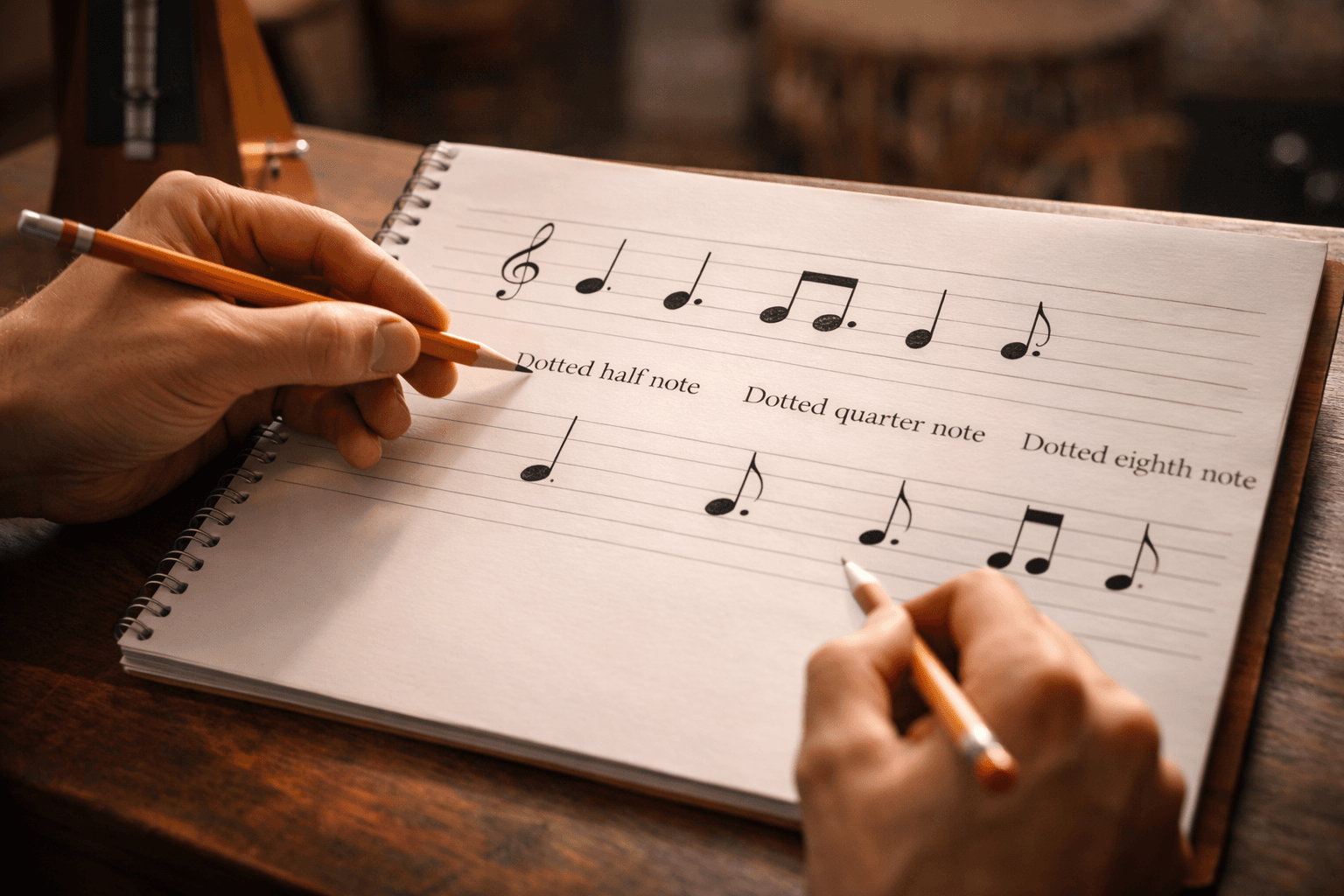 Dotted notes in music extend duration by half their value. They create three-beat rhythms and expressive flow.
Dotted rhythm adds swing and elegance to music.
What Are Dotted Notes in Music?
A dot increases note length. This creates extended note duration without complexity.
Dotted notes feel natural once understood.
Common Dotted Note Values
Note Type Duration Description Dotted whole note Lasts six beats Dotted half note Lasts three beats Dotted quarter note Lasts one and a half beats Dotted eighth note Adds bounce Dotted sixteenth note Adds sparkle
Combining Dotted Rhythms in Real Music
Songs often mix dotted rhythms with regular notes. This contrast adds interest and groove.
Dotted patterns appear across styles.
Beams and Partial Beams – Reading Grouped Notes
Beams show grouping visually. They help musicians read rhythmic values faster.
Partial beams indicate subdivisions clearly.
Triplets and Advanced Subdivisions
Triplets in music divide beats into three equal parts. They create a flowing feel.
Triplets challenge timing and coordination.
Understanding Triplets in Rhythm
Triplets squeeze three notes into space usually held by two. This creates rhythmic tension.
Listeners hear a rolling effect.
Simple vs Compound Feel
Simple rhythms divide into twos. Compound rhythm feel groups beats in threes.
This difference shapes musical character.
Longer Triplet Patterns
Half note triplets and quarter note triplets stretch rhythmic ideas.
They add complexity without speed.
Faster Subdivisions
Eighth note triplets, sixteenth note triplets, and sextuplets increase density. These appear in advanced rhythmic passages.
How Time Signatures Organize Rhythm
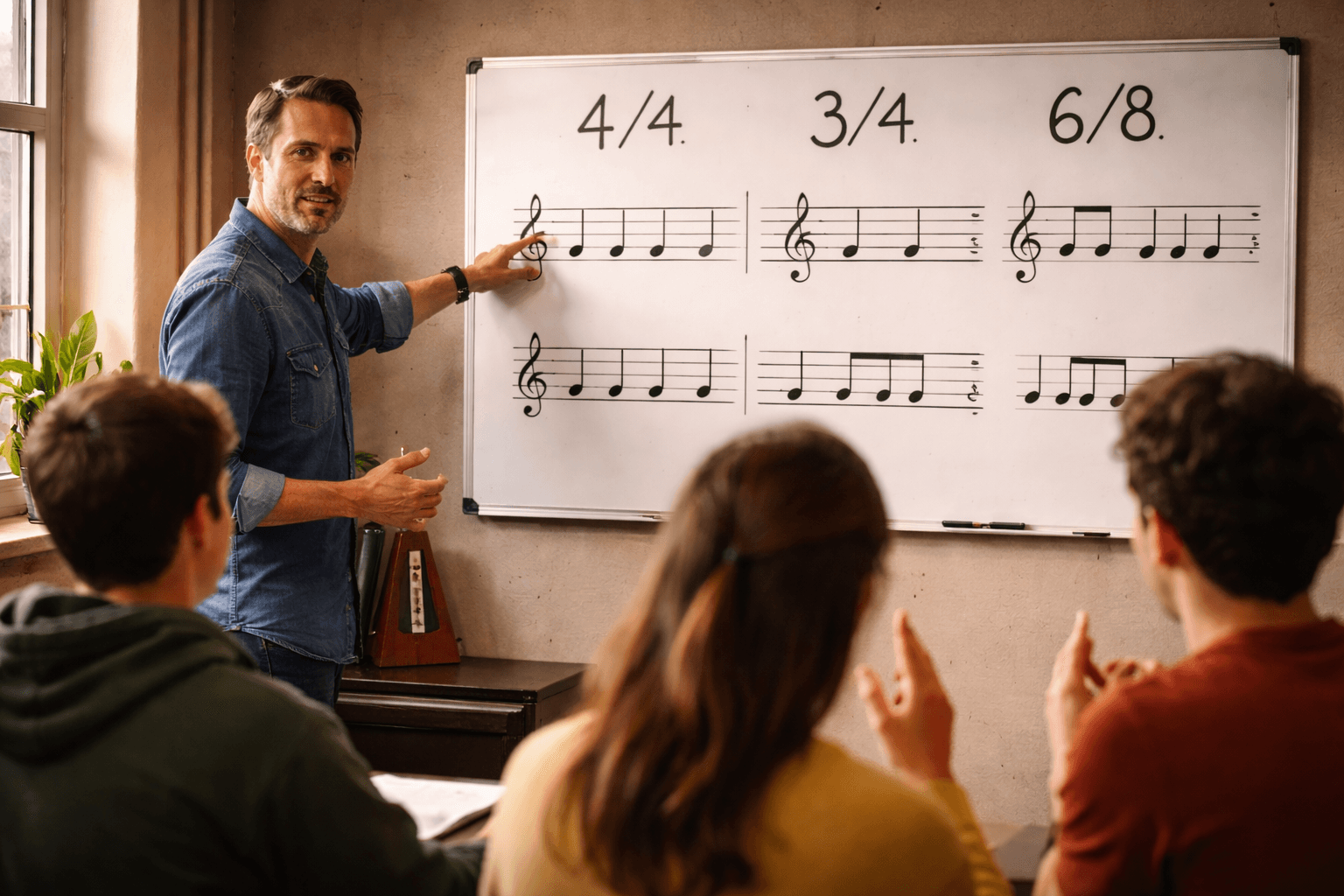 Time signatures guide musicians through structure. They act as road signs.
Clear understanding prevents confusion.
What Time Signatures Tell a Musician
The top number shows beats per measure. The bottom number shows note value.
This clarity supports ensemble playing.
Simple Time vs Compound Time
Simple time divides evenly. Compound time groups beats in threes.
Each creates a different groove.
Common Time Signatures Used in Music Learning
Most beginners start with 4/4. Others include 3/4 and 6/8.
These appear across genres.
How to Practice Rhythm Effectively
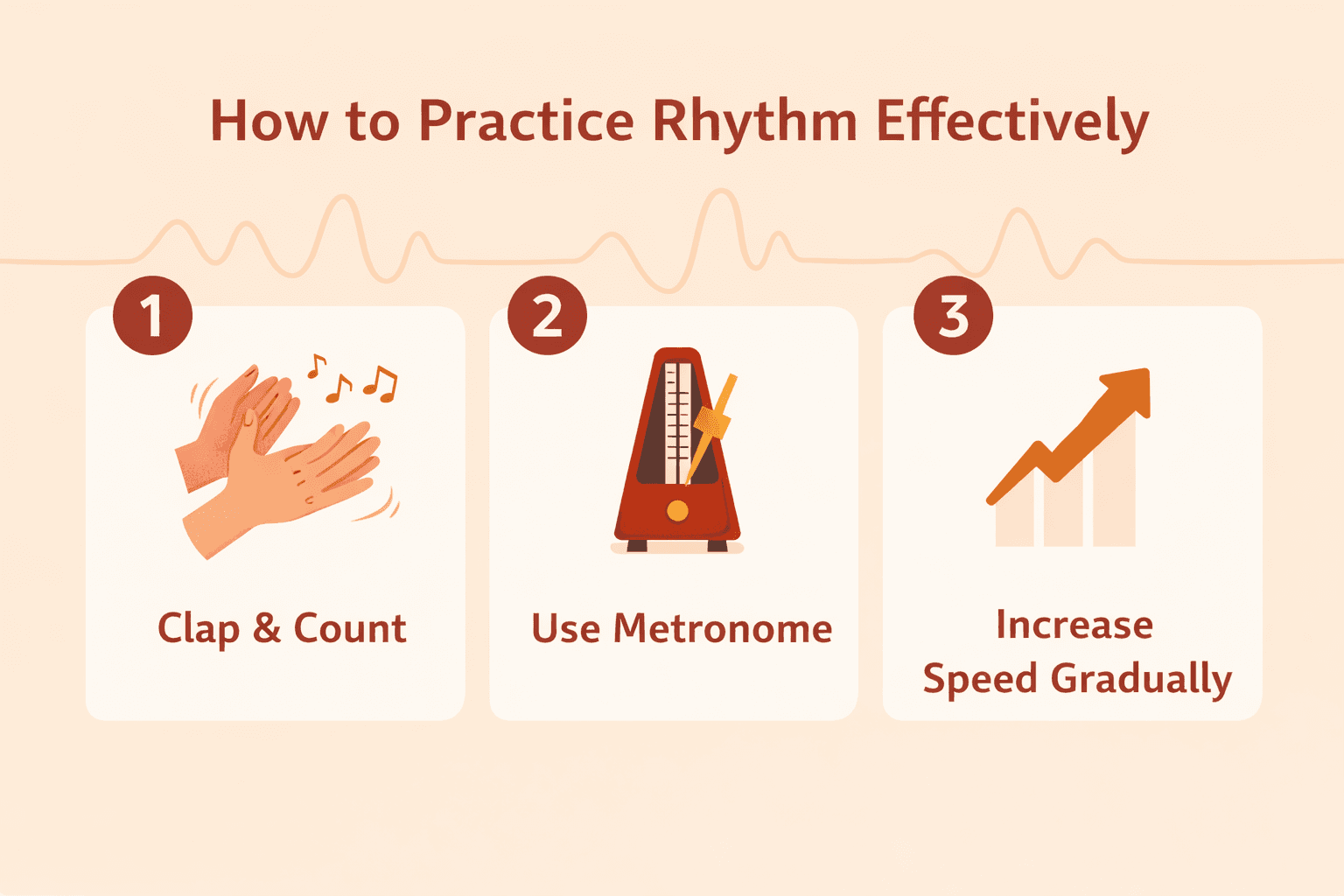 Rhythm practice requires consistency. Short daily sessions work best.
Accuracy matters more than speed.
Clapping and Counting Techniques
Clapping reinforces feeling the beat. Counting aligns mind and body.
This builds rhythmic confidence.
Using a Metronome Correctly
A metronome trains steady pulse. Start slow. Increase gradually.
Control improves naturally.
Rhythm Practice for Beginners vs Advanced Learners
Beginners focus on basics. Advanced learners refine precision.
Both benefit equally from rhythm exercises.
Learning Rhythm Through Indian and Western Music
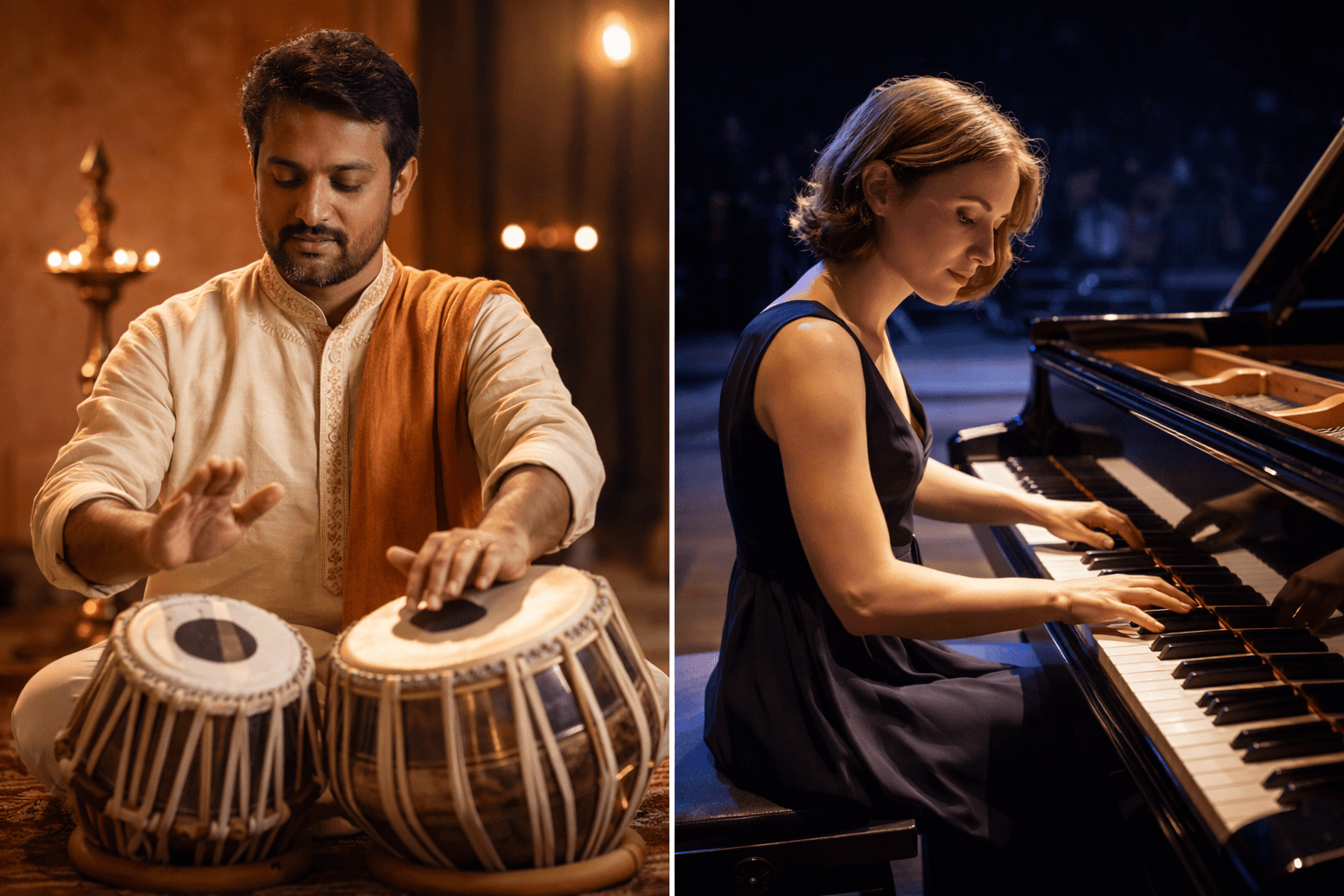 Different systems teach rhythm differently. Both offer valuable insights.
Cross-training improves versatility.
Rhythm in Hindustani and Carnatic Music
Indian rhythm uses tala cycles. These cycles teach discipline and memory.
They deepen understanding rhythm deeply.
Rhythm in Western Classical and Contemporary Music
Western systems use notation. Precision and reading skills develop strongly.
Structure remains clear and logical.
How Rhythm Training Improves Overall Musicality
Strong rhythm sharpens listening. Expression improves. Confidence grows.
Musicality becomes natural.
Learn Rhythm the Right Way with Art Gharana
 Art Gharana offers structured rhythm learning for global students.
Canadian learners benefit from flexible online access.
Structured Rhythm Training for Beginners
Lessons build gradually. Concepts stay clear and practical.
Confidence grows steadily.
Expert Teachers and Personalized Guidance
Teachers adapt to student pace. Feedback stays supportive.
Progress remains consistent.
Rhythm Learning for Vocals, Piano, Guitar, Tabla & More
Each instrument applies rhythm differently. Training stays customized.
Understanding rhythm improves performance.
Online Music Classes Designed for Global Students
Online learning removes location limits. Quality remains high.
Global rhythm education becomes accessible.
Frequently Asked Questions About Rhythm in Music
Common questions reflect shared challenges.
Clear answers reduce frustration.
Is rhythm hard to learn for beginners?
Rhythm feels hard at first. Practice makes it natural.
Consistency matters most.
How long does it take to master rhythm?
Basic rhythm develops quickly. Mastery takes time.
Growth never truly ends.
Can rhythm be learned online?
Yes. Guided online lessons work well.
Structure ensures success.
Why do musicians struggle with timing?
Lack of counting causes issues. Awareness solves most problems.
Training restores balance.
Final Thoughts on Mastering Rhythm in Music
Rhythm shapes everything you play or sing. Strong rhythm supports creativity.
Mastery transforms musical experience.
Why Strong Rhythm Skills Make You a Better Musician
Rhythm improves accuracy, expression, and confidence.
Music feels alive and controlled.
Next Steps to Improve Your Rhythm Journey
Practice daily. Listen actively. Stay patient.
Rhythm will become your strongest musical ally.