ChatGPT
 Google AI
 Grok
 Claude
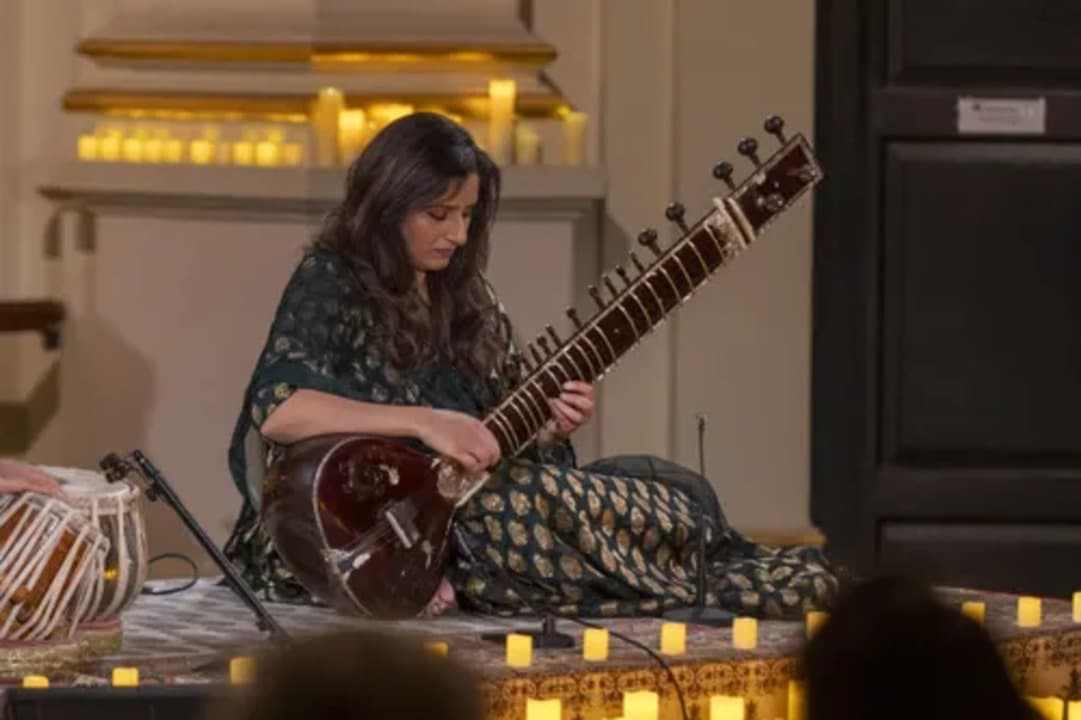
One instrument turned an entire nation's classical tradition into a global sound. The sitar carries a shimmering, buzzing resonance unlike anything in Western music, produced by sympathetic strings that hum along beneath every note you actually pluck. This guide covers everything scattered across the internet in pieces: full sitar history, every part of its anatomy, correct sitar posture, the Ravi Shankar versus Vilayat Khan style debate, and a genuine beginner's roadmap into raga performance. Whether you're curious or ready to start lessons, settle in; this beautiful instrument deserves a proper introduction.
What Is a Sitar, Exactly?
A **sitar** is a long-necked plucked **stringed instrument** central to Hindustani classical music, built around a large gourd resonator, a wide hollow neck, and a distinctive set of strings you never directly touch while playing.What makes it instantly recognisable isn't just its size but its sound: a shimmering, slightly buzzing sustain that no Western instrument quite replicates. That signature comes from careful engineering choices refined over roughly three centuries of continuous development.
The Anatomy of a Sitar
Seven or more main playing strings run the instrument's melodic and drone work, while beneath them, eleven to thirteen sympathetic strings resonate automatically whenever a nearby pitch sounds, without ever being plucked directly by the player.
This double-string system is the sitar's real secret. Western guitars have nothing comparable. The sympathetic strings create a natural, ambient shimmer around every note, which is precisely why recordings feel so hauntingly alive even in complete silence otherwise.
The Gourd Resonator (Tumba)
A large dried gourd, called the tumba, forms the instrument's main resonating chamber, typically resting against the player's right knee during performance. Larger, well-seasoned gourds generally produce deeper, richer tone than smaller or younger replacements.
The Neck and Frets
The wide, hollow neck carries moveable metal frets, curved to allow the deep pitch-bending technique called meend. Unlike a guitar's fixed frets, sitar frets can be repositioned slightly to match different ragas' precise tuning requirements before performance.
The Bridge (Jawari)
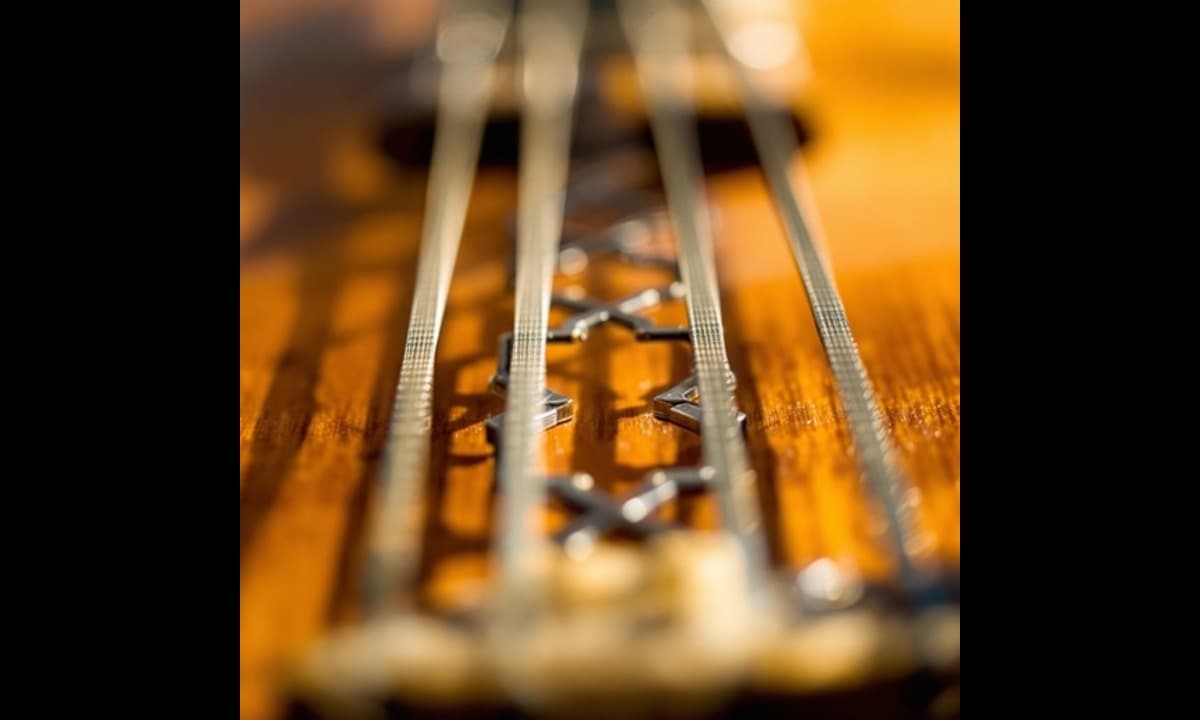
The specially carved bridge, called the jawari, is shaped to create the instrument's characteristic buzzing resonance. Skilled instrument makers spend years perfecting jawari curvature, since even tiny adjustments dramatically change the sitar's entire tonal character.
Tuning a Sitar: The Basics
Tuning happens through wooden tuning pegs for the main strings and small fine-tuning beads for the sympathetic strings underneath. Each raga traditionally calls for slightly different tuning, since certain notes shift depending on which scale a performance will explore.Beginners typically learn one standard tuning first, usually built around the tonic Sa, before gradually exploring raga-specific variations. A tanpura or electronic drone app helps enormously here, giving students a steady reference pitch to tune against accurately every practice session.
Why Tuning Takes Longer Than Expected
With over twenty strings total, full tuning genuinely takes practice to execute efficiently. Experienced players tune in under ten minutes; beginners should budget considerably longer initially. This patience-building exercise is itself a valuable part of early technical training.
The Sitar in Fusion and Global Music
Beyond classical concert halls, the instrument found surprising homes in 1960s rock, contemporary film scoring, and modern electronic fusion projects. George Harrison's Beatles recordings introduced millions of Western listeners to its sound for the very first time.
Contemporary artists continue this cross-pollination: film composers layer sitar textures beneath orchestral scores, and electronic producers sample its distinctive resonance into entirely new genres. The instrument's voice keeps finding fresh contexts well beyond its original classical setting.
Should Beginners Start With Fusion or Classical?
Nearly every serious teacher recommends classical foundations first, regardless of a student's ultimate genre interests. Fusion playing draws constantly on classical technique and raga vocabulary, so skipping straight to experimental styles usually stalls progress rather than accelerating it.
Sitar History: Three Centuries in the Making
Rather than one inventor's single moment of genius, the **sitar** evolved gradually across the 1700s and 1800s, blending Persian instrument-making traditions with existing Indian stringed instruments through generations of court musicians and craftsmen experimenting together.Its current form solidified across the 1800s and early 1900s, as court musicians and instrument makers refined proportions, string counts, and the jawari bridge shape into the design largely still used today across serious performance and teaching contexts.
How the Name Travelled
The name likely derives from the Persian setar, meaning three strings, referencing an earlier, simpler ancestor instrument. Centuries of Indian innovation transformed that modest three-string original into today's elaborate multi-string masterpiece entirely unrecognisable from its humble origin.
Sitting Posture: Getting Comfortable Before You Play
Correct posture matters enormously given the instrument's considerable size and weight. Sit cross-legged, one leg folded inward, the other resting over it, back straight and shoulders relaxed, exactly as any seasoned teacher will insist from lesson one.The gourd's wide base rests against your right knee for stability, while your left foot tucks beneath the neck for additional balance and support. Take time perfecting this position; rushing past posture fundamentals causes frustrating technical problems later on.
Why Posture Cannot Be Skipped
An unstable sitar wobbles mid-performance, disrupting both tone and confidence simultaneously. Spend your entire first practice week purely on posture and holding the instrument correctly before attempting a single note. Patient foundations prevent months of correcting bad habits afterward.
Women Sitarists Breaking Ground
Historically male-dominated concert stages have gradually opened to remarkable female performers. Anoushka Shankar remains the most internationally visible, but numerous other women now hold prominent teaching and performing positions across India and the diaspora community worldwide.
This shift matters for UK students particularly, since representation influences who feels welcome pursuing serious study. Seeing accomplished women performers normalises the instrument as genuinely open to any dedicated student, regardless of gender or cultural background.
Gharanas: The Teaching Lineages Behind the Instrument
Like most Hindustani instruments, sitar playing developed through gharanas, family and lineage-based teaching traditions passing style, repertoire, and technique from guru to student across generations, each house carrying subtly different interpretive priorities and aesthetic values.
The Imdadkhani gharana produced the Vilayat Khan lineage's melodic, vocal-imitating style, while the Maihar gharana, founded by Baba Allauddin Khan, produced Ravi Shankar's more expansive instrumental approach. Understanding these lineages deepens appreciation of any recording considerably.
Why Lineage Still Matters Today
Modern students, even learning online, typically train within one lineage's stylistic framework rather than mixing approaches randomly. This structured inheritance preserves subtle technical and interpretive details that informal, undirected learning would likely lose within a single generation.
Buying Your First Sitar: What Beginners Should Know
Beginner instruments typically cost considerably less than professional concert models, and renting first is often wiser than purchasing outright before committing to lessons. A qualified teacher's guidance when selecting an instrument prevents costly early mistakes considerably.
Check for even fret spacing, a stable gourd free of cracks, and strings that hold tune reasonably well without constant slipping. UK-based students can often source instruments through specialist importers or established teachers with reliable supplier relationships built over years.
Signs of a Poor-Quality Instrument
Watch for warped necks, buzzing strings unrelated to the intentional jawari resonance, and pegs that slip constantly during tuning. A knowledgeable teacher can inspect any prospective purchase before money changes hands, saving considerable frustration during those crucial early learning months.
How the Sitar Is Played
Players pluck strings using a wire plectrum called a mizrab, worn on the right index finger, while the left hand presses strings against curved frets and pulls sideways across them to bend pitch dramatically, a technique called meend.
This sideways-pulling technique is what allows a sitar to glide between notes the way a human voice does, rather than jumping cleanly from pitch to pitch the way most fretted Western instruments must.
Meend: The Signature Bend
Meend lets a single fretted note glide smoothly into another pitch without re-plucking, mimicking the vocal slides central to Hindustani singing. Mastering controlled meend separates genuinely musical playing from merely technically accurate note-hitting.
Gamak and Ornamentation
Beyond simple bends, players layer rapid oscillations called gamak onto sustained notes, adding texture and emotional intensity. These ornaments aren't decorative extras; they're structurally essential to how ragas are traditionally interpreted and performed.
Vilayat Khan Style vs Ravi Shankar Style
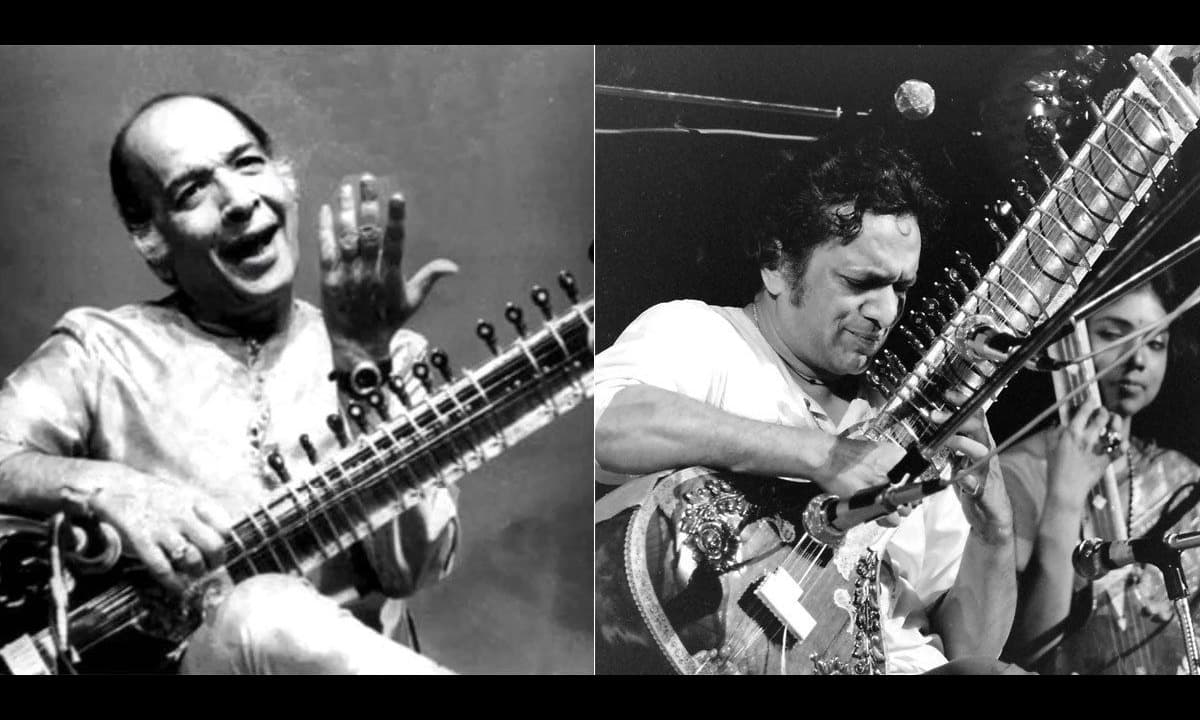 Two dominant schools shape how modern sitars are built and played. The Vilayat Khan style favours a lighter instrument with fewer strings, optimised for vocal-imitating melodic playing called gayaki ang, prioritising singing-like expression over volume.
The Ravi Shankar style, developed within the Maihar gharana tradition, uses a larger instrument with additional strings, built for fuller, more orchestral sound and greater rhythmic complexity suited to elaborate solo concert performance and instrumental improvisation.
Famous Sitar Players Everyone Should Know
A handful of masters carried this instrument from regional court music into global concert halls. Understanding their contributions helps new listeners know exactly what to listen for across different recordings and performance styles available today. Our Carnatic vs Hindustani guide explains where the sitar's northern tradition sits within India's broader classical landscape.
Each artist below represents a distinct lineage and philosophy, exactly the two schools compared above made audible. Sampling all three offers a genuinely complete introduction to the instrument's expressive range within a single listening session.
Pandit Ravi Shankar
The instrument's most famous global ambassador, Ravi Shankar performed at Woodstock, collaborated with George Harrison, and effectively introduced millions of Western listeners to Hindustani classical music for the first time in history through decades of international touring.
Ustad Vilayat Khan
Developer of the gayaki ang vocal-imitation style, Vilayat Khan prioritised melodic, singing-like phrasing over technical showmanship, famously declining certain honours he felt inadequately recognised his artistic standards and lifelong contribution to the tradition.
Anoushka Shankar
Trained exclusively by her father Ravi Shankar, Anoushka carries the instrument into film scores, electronic collaborations, and boundary-pushing fusion projects while maintaining rigorous classical foundation, proving the tradition remains genuinely alive rather than merely preserved.
Ustad Shahid Parvez Khan
A contemporary Imdadkhani lineage torchbearer, Shahid Parvez continues the gayaki ang tradition with remarkable technical fluency and emotional depth, regularly touring internationally and teaching a new generation of students the melodic, vocal-imitating approach his lineage champions.
A Beginner's Listening Guide
Before touching an instrument yourself, spend focused time simply listening. The table below sequences an ideal first week, moving from accessible introductory pieces toward more demanding, extended concert-length performances as your ear adjusts to the sound.
Notice how differently each recording treats silence and pacing. Hindustani instrumental music unfolds slowly by design, and learning to appreciate that unhurried pacing is itself part of genuinely understanding this tradition rather than merely tolerating it.
Sitar vs Other String Instruments: A Quick Comparison
 New learners often ask how this instrument compares to more familiar Western options, or to India's own related instruments. The table below offers a quick, honest comparison across the qualities beginners care about most when choosing an instrument.
Notice the learning curve column particularly. The sitar demands more patience upfront than a guitar, but rewards that patience with an expressive range few other instruments can match.
How Sitar Connects to Raga and Swara Learning
Every sitar student learns the seven swaras first, exactly as vocalists do, before ever touching an instrument. This shared foundation means sitar learning is really raga learning with strings attached. Explore the basics in our swaras guide before your first lesson.
Once basic notes feel secure, students progress into simple ragas, then gradually incorporate meend and gamak ornamentation. Our full raga music guide explains this melodic framework that every sitar performance is ultimately built upon entirely.
Why Learning Voice First Helps Sitar Students
Students with some vocal training progress faster on sitar, since they already understand pitch relationships and ornamentation conceptually. Our Hindustani classical guide offers an excellent parallel starting point alongside instrumental lessons for serious beginners.
What the Instrument Is Made Of
Traditional construction uses toon or tun wood for the neck and body, paired with a dried gourd resonator sourced specifically for size and tonal quality. Frets are typically brass or steel, curved specifically to enable meend's characteristic sideways pull.
Master craftsmen, often working within family workshops passed down through generations, spend weeks on a single high-quality instrument. This handmade tradition means no two sitars sound quite identical, each carrying subtle tonal fingerprints from its specific maker and materials.
Regional Building Traditions
Miraj in Maharashtra and Calcutta both maintain renowned instrument-making traditions, each with subtly different proportions and tonal preferences. Serious students often develop preferences for instruments from specific workshops, much as violinists develop preferences among different luthiers' work.
The Drone Connection: Sitar and Tanpura
Solo performances typically include a tanpura playing continuously in the background, providing the constant drone every raga performance tunes against. Understanding this relationship, explored further in our shruti box guide, clarifies why Indian classical music sounds so distinctly different from Western harmony.
Without this constant drone anchor, much of the sitar's melodic wandering would lose its harmonic reference point entirely. The drone isn't background decoration; it's the fixed star every improvised phrase ultimately orients itself against throughout a performance.
Sitar in Indian Film Music
Bollywood composers have used the instrument's distinctive voice for decades, from romantic melodic themes to dramatic tension-building underscores. Its shimmering resonance carries emotional weight film audiences instantly recognise, even without any formal classical training or context.
Composers like A.R. Rahman continue this tradition, layering sitar textures alongside orchestral and electronic elements in contemporary soundtracks. This ongoing film presence keeps the instrument culturally visible well beyond dedicated classical concert audiences and enthusiasts.
Spotting Sitar in Everyday Listening
Once you know its sound, you'll start noticing it everywhere: film scores, meditation playlists, and even Western pop production occasionally borrow its texture. Training your ear to spot it turns casual listening into an ongoing, genuinely rewarding recognition game.
Physical Demands and Hand Health
Learning involves genuine physical adaptation: fingertips develop calluses from constant string pressure, and the left hand builds specific strength for meend's sideways pulling motion. Early practice sessions should stay short to avoid strain during this adjustment period.
Experienced teachers recommend gentle stretching before and after practice, particularly for the left hand and wrist. Discomfort during the calluses-forming phase is normal; sharp pain is not, and should prompt an immediate pause and technique review with your instructor.
Preventing Repetitive Strain
Vary practice content within each session rather than repeating identical movements for extended periods. Mixing right-hand plucking drills with left-hand fretwork, and taking short breaks every twenty minutes, protects against the repetitive strain injuries any string instrument can potentially cause.
What to Expect in Your First Year of Learning
Early months focus almost entirely on posture, right-hand plucking technique, and basic note production, often without touching meend or ornamentation at all. This patient foundation-building frustrates impatient beginners but prevents serious technical problems later.
By month six, most dedicated students play simple compositions in beginner-friendly ragas. Full expressive control, particularly convincing meend and gamak, typically takes several years of consistent practice under experienced guidance to develop properly.
A Realistic Weekly Practice Structure
Fifteen minutes daily beats one long weekly session considerably. Focus early weeks purely on posture and right-hand mizrab technique, adding left-hand fretwork only once the plucking hand feels genuinely comfortable and consistent across repeated attempts.
Cultural Symbolism and Meaning
Beyond pure musicality, the instrument carries deep cultural weight in India, often symbolising spiritual devotion, artistic discipline, and connection to centuries of unbroken tradition. Learning it means inheriting something considerably larger than mere technical skill alone.
Many students describe their studies as spiritual practice as much as musical training, given how deeply raga performance connects to meditative and devotional traditions. This dimension distinguishes it meaningfully from purely secular Western instrumental study for many practitioners.
Setting Realistic Expectations as a Western-Trained Beginner
Students arriving with Western musical backgrounds sometimes expect rapid progress based on prior instrumental experience, only to discover Hindustani learning follows a notably different, more gradual pedagogical structure emphasising oral transmission over written notation and rapid repertoire acquisition.
Embrace this difference rather than fighting it. The patient, relationship-based teaching model, learning directly from a guru rather than primarily through method books, ultimately produces deeper, more authentic musicianship than rushed, notation-heavy alternative approaches typically achieve.
Unlearning Western Assumptions
Concepts like fixed harmony and rehearsed ensemble arrangement work differently here. Raga performance is substantially improvised within structured rules, closer to jazz than to reading a symphony score. Adjusting these expectations early prevents unnecessary frustration during initial lessons.
Caring for a Sitar
Keep the instrument away from direct sunlight and extreme humidity changes, both of which stress the wood and gourd over time. Store it horizontally on a padded stand, and wipe strings gently after each practice session to prevent corrosion.
Restringing and jawari maintenance require specialist expertise; most students rely on their teacher or a qualified instrument technician for these periodic adjustments. Our Indian classical instruments guide covers general care principles across the wider instrument family.
Sitar and Tabla: A Musical Partnership
Solo sitar performance almost always includes tabla accompaniment, the two instruments engaging in intricate rhythmic conversation across a performance's faster sections. Understanding basic rhythm and tala concepts helps listeners appreciate this dynamic interplay considerably more.
The relationship works almost like structured conversation: the sitarist proposes melodic ideas, the tabla player responds and elaborates rhythmically, and both musicians build toward increasingly complex, thrilling improvised exchanges as any given performance progresses toward its climax.
Formal Assessment and Grading in the UK
Unlike Western classical instruments with established grade exam boards, Hindustani instrumental assessment traditionally happens through guru evaluation and performance opportunities rather than standardised written examinations, though some UK institutions now offer structured certificate pathways.
Students seeking formal recognition should ask prospective teachers about available certification routes, since options vary considerably between individual teachers and larger cultural institutions offering more structured, examination-based progression frameworks for serious long-term students.
Learning Sitar in the UK Today
British Asian communities across major UK cities maintain strong sitar teaching traditions, with established teachers offering both in-person and online instruction. Online lessons particularly suit UK students without easy access to specialist teachers in smaller towns.
Cultural organisations, temple associations, and dedicated music schools increasingly offer structured sitar curricula alongside broader Hindustani classical training. This growing infrastructure makes serious study considerably more accessible than it was even a decade ago across Britain.
What to Look for in a Teacher
Seek instructors who can clearly explain their gharana lineage and teaching philosophy, offer structured progression rather than random song-teaching, and provide honest feedback on posture and technique from your very first lesson onward, not just after problems compound.
Frequently Asked Questions
1. What is a sitar and how does it work?
A sitar is a long-necked plucked string instrument central to Hindustani classical music, producing sound through both directly plucked melody strings and a separate set of sympathetic strings that resonate automatically beneath them.
2. How many strings does a sitar have?
Most sitars carry six or seven main playing strings plus eleven to thirteen sympathetic strings that vibrate automatically without being plucked, bringing the total string count to roughly twenty on a full concert instrument.
3. Is sitar hard to learn?
Genuinely challenging, yes, particularly mastering meend and gamak ornamentation, which typically take years of guided practice. However, basic notes and simple compositions become achievable within the first several months of consistent, well-taught beginner lessons.
4. Why does sitar sound different from guitar?
The sympathetic strings create sitar's signature shimmering resonance, something guitars simply don't have. Additionally, curved frets allow dramatic pitch-bending through meend, producing sliding, voice-like phrases impossible on a fixed-fret Western guitar.
5. How long does it take to learn sitar?
Basic posture and simple notes take a few months. Playing straightforward compositions confidently takes around a year. Genuine expressive mastery, including convincing meend and raga improvisation, typically requires several years of dedicated, consistently guided practice.
6. What is the difference between sitar and veena?
Both are plucked Indian string instruments, but veena, particularly the Saraswati veena, associates primarily with Carnatic music from South India, while sitar belongs to the Hindustani tradition of the north, with a distinctly different tone and playing technique.
Final Thoughts
Three centuries of refinement produced an instrument capable of sounds nothing else quite replicates: shimmering, bending, singing through strings you never even touch directly. The sitar rewards patience with a genuinely unmatched expressive voice.
Start by simply listening this week, one Ravi Shankar recording and one Vilayat Khan recording, and notice the philosophical difference. When curiosity turns serious, Art Gharana's instructors teach sitar and Hindustani foundations live, one-on-one, right across the UK.