ChatGPT
 Google AI
 Grok
Grok Claude
Every culture on earth invented drums, and none of them consulted each other. That's why the world of types of drums is so gloriously huge: thundering drum kit setups, singing tabla pairs, festival dhol barrels, and campfire djembe circles all solve the same beautiful problem differently. This guide organizes twenty-five drums into six clear families, explains how each makes its sound, and helps you choose which hand percussion or stick-played drum fits your musical goals. Expect origins, famous players, and honest difficulty ratings throughout. By the end, you'll never hear a rhythm section the same way again.
How Drums Actually Make Sound
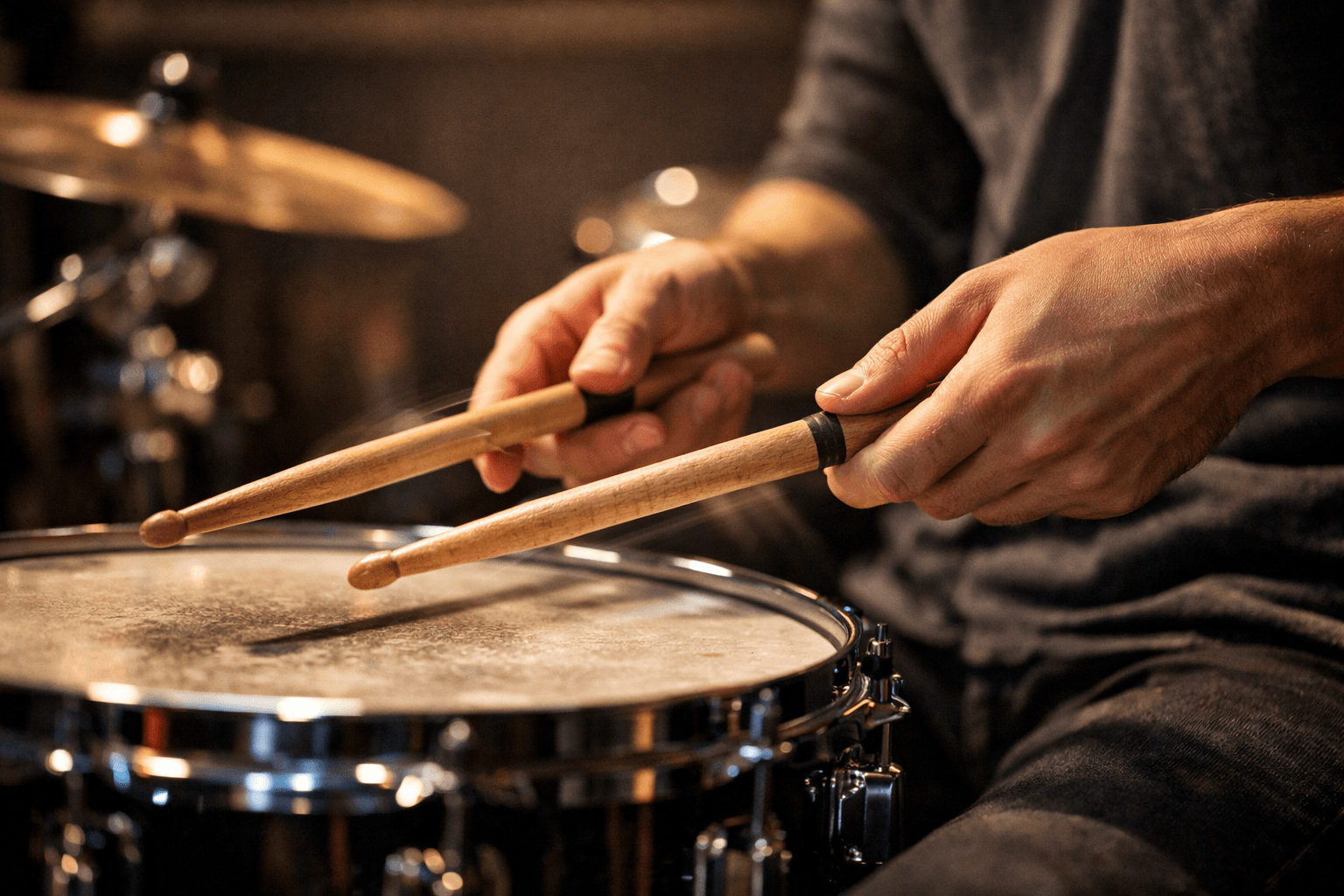 Nearly every drum is a membranophone: a stretched skin or synthetic drumhead vibrating over a hollow body when struck. Tension controls pitch, shell size controls depth, and striking spot controls tone. Three variables, infinite personalities across cultures.
Strike near the edge for bright overtones, dead center for deep thud. Tighten the head and pitch rises. Once you hear these physics, every drum from timpani to tabla becomes an experiment you already understand. Percussion is science wearing party clothes.
Nearly every drum is a membranophone: a stretched skin or synthetic drumhead vibrating over a hollow body when struck. Tension controls pitch, shell size controls depth, and striking spot controls tone. Three variables, infinite personalities across cultures.
Strike near the edge for bright overtones, dead center for deep thud. Tighten the head and pitch rises. Once you hear these physics, every drum from timpani to tabla becomes an experiment you already understand. Percussion is science wearing party clothes.
Anatomy of a Drum in Sixty Seconds
 Meet the parts you'll hear named everywhere: the shell forms the body, the drumhead stretches across it, hoops and tension rods clamp everything, and lugs receive the tuning key. Snares add rattling wires beneath; kick drums add a pedal-driven beater.
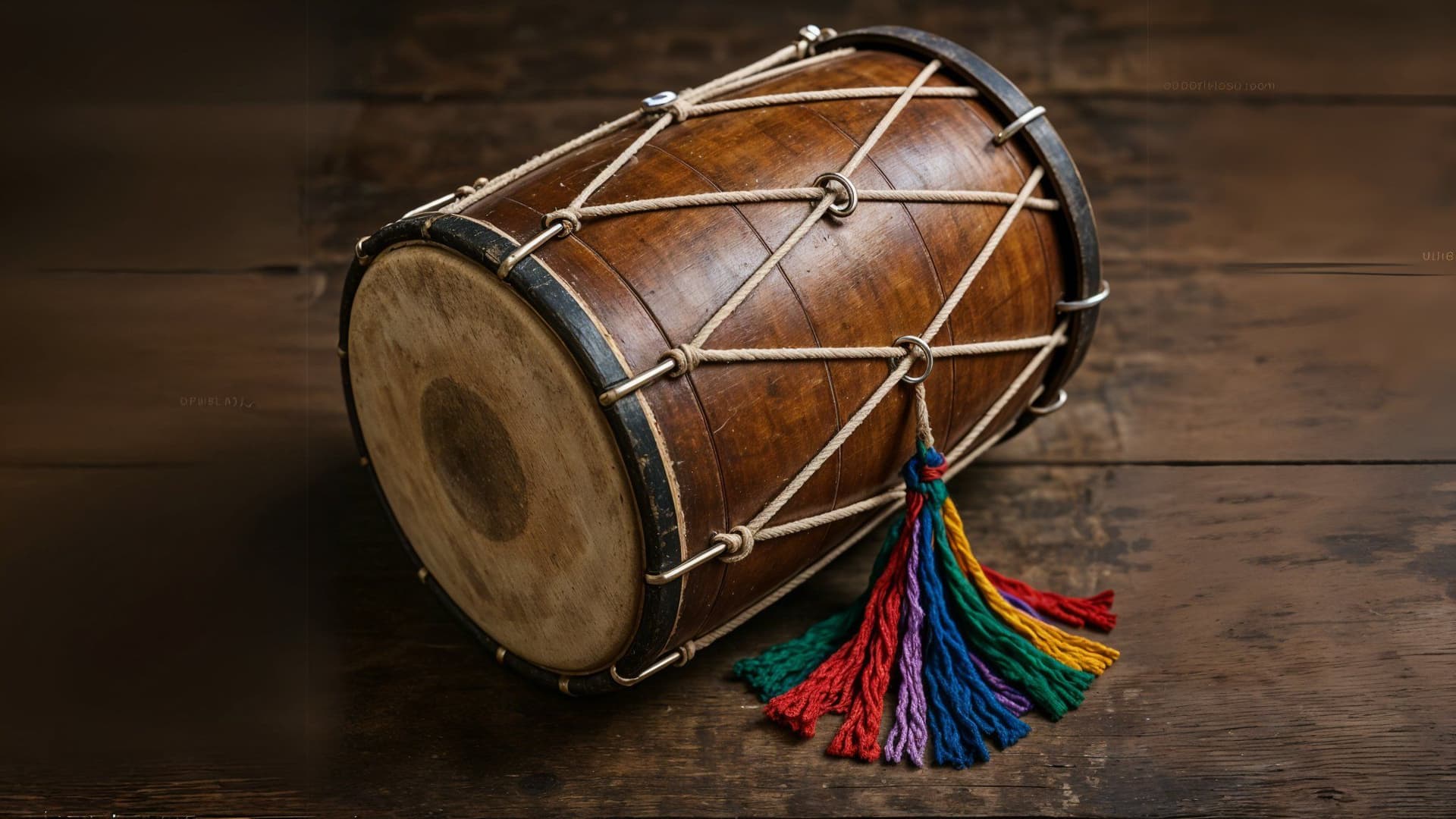
Indian drums swap hardware for tradition: leather straps or laced rope adjust tension, and the famous black syahi paste on tabla heads bends overtones into that liquid, speaking tone. Different engineering, same physics, wildly different accents. Craftsmanship becomes sound.
Meet the parts you'll hear named everywhere: the shell forms the body, the drumhead stretches across it, hoops and tension rods clamp everything, and lugs receive the tuning key. Snares add rattling wires beneath; kick drums add a pedal-driven beater.
Indian drums swap hardware for tradition: leather straps or laced rope adjust tension, and the famous black syahi paste on tabla heads bends overtones into that liquid, speaking tone. Different engineering, same physics, wildly different accents. Craftsmanship becomes sound.
Tuned vs Untuned Drums
Some drums play definite pitches: timpani tune to actual notes, tabla dayans tune to the soloist's key. Others, like snares and djembes, deliver pitched-ish colors rather than notes. Knowing which family you're hearing instantly sharpens your listening everywhere.
Family 1: The Drum Kit
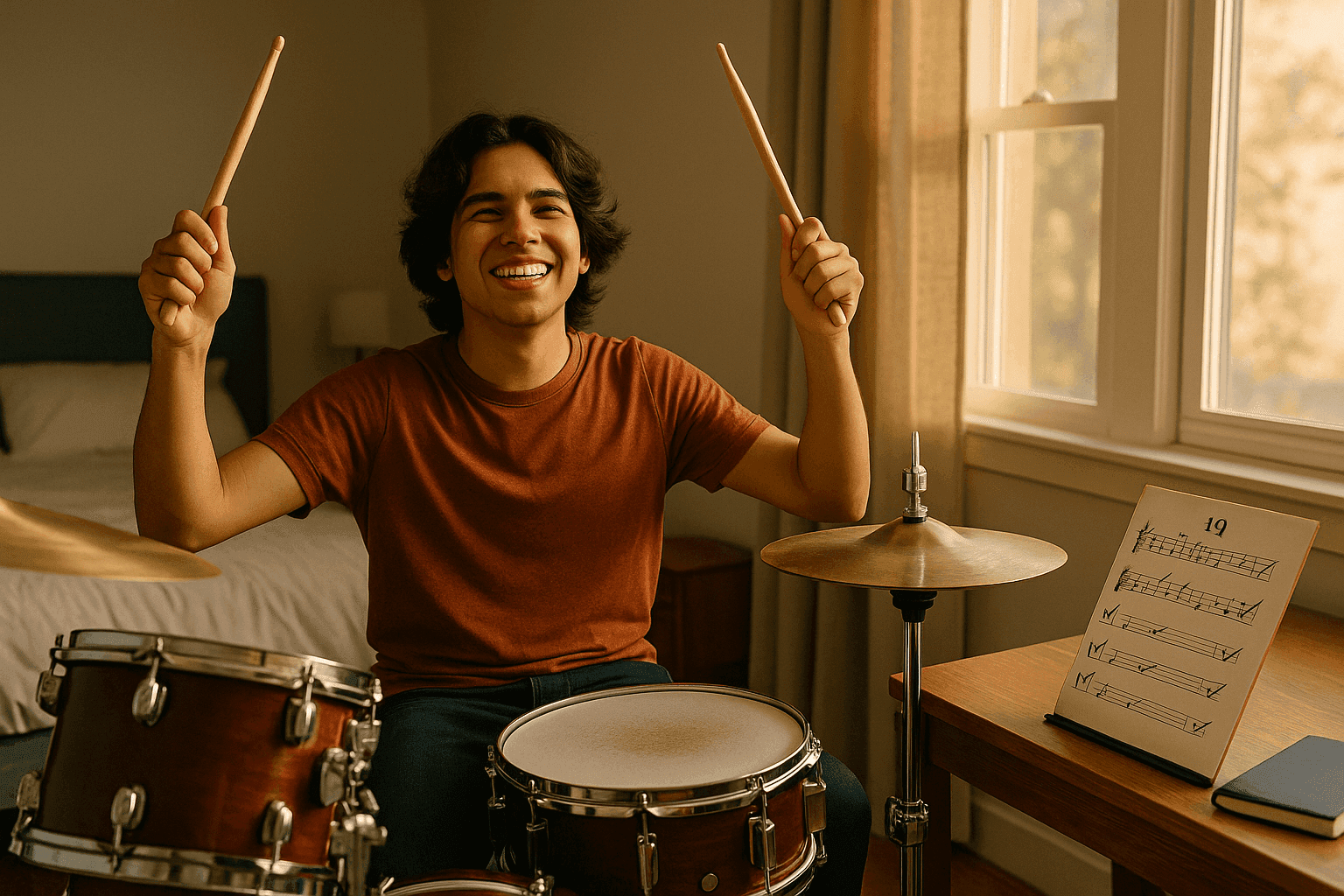
The modern drum kit is really five-plus drums and cymbals hired as one band employee, assembled in early 1900s New Orleans so a single player could cover a whole percussion section. Rock, pop, jazz, and funk all run on it.
Kits teach limb independence: four limbs, four jobs, one groove. Start with the money beat, kick on one and three, snare on two and four, hi-hat eighths on top. That single pattern powers half of recorded music, genuinely.
Snare Drum
The kit's sharp-tongued spokesperson. Metal wires stretched under the bottom head buzz with every hit, producing the crack that marks the backbeat. Military marching bands used snares for centuries before jazz borrowed them. Rimshots add exclamation points when choruses land.
Bass (Kick) Drum
The kit's heartbeat, played by foot pedal, felt in the chest before heard by ears. Its steady pulse anchors dancers and bands alike. Beater choice and tuning move it from jazzy boom to hip-hop punch. Low end equals leadership.
Tom-Toms
The melodic middle children, mounted high and mid with a floor tom standing beside. Toms carry the rolling fills that carry you between song sections. Their descending pitches let drummers sketch mini-melodies. Every dramatic film-trailer roll you've heard was toms working overtime.
Cymbals: The Kit's Shimmer
Technically metal idiophones rather than drums, hi-hats, rides, and crashes complete the kit's vocabulary. Hi-hats whisper subdivisions, rides ping steady patterns, crashes announce arrivals. A kit without cymbals is a sentence without punctuation: functional, strangely breathless.
Family 2: Indian Drums, the Deepest Bench in Percussion
Here's the section most Western drum guides shrink to one paragraph. India's rhythm tradition spans millennia, and its drums speak actual syllables, bols, that drummers recite before playing. Explore the wider family in our Indian classical instruments guide.
Indian percussion splits by region and role: classical concert drums, folk celebration drums, and temple drums. Together they form the richest single tradition among all types of drums, and several now headline global fusion stages from Coachella to Carnegie.
Tabla
The paired kings of Hindustani music: the wooden dayan under the right hand speaks crisp syllables while the metal bayan under the left bends deep bass with palm pressure. Zakir Hussain carried them to three Grammys. Start with our tabla beginner's guide.
Dhol
Punjab's barrel-shaped joy machine, slung over the shoulder and attacked with two different sticks for bass and treble sides. The dhol powers bhangra, weddings, and every baraat procession. Nobody stands still near one; resistance is physiologically impossible.
Mridangam
The ancient double-headed heart of Carnatic concerts, carved from jackfruit wood with references dating back over two thousand years. Its resonant bass and crisp treble converse with vocalists in intricate tala mathematics. South India's answer to everything rhythmic.
Dholak
The friendly folk cousin found at every North Indian celebration, film song session, and devotional gathering. Two heads, endless warmth, and forgiving technique make it a beloved first drum. Compare instruments with our dholak buying guide before purchasing one.
Pakhawaj
The mridangam's northern sibling and tabla's ancestor, laid horizontally and played for dhrupad, the oldest surviving Hindustani style. Its majestic, cavernous tone suits temples and slow royal rhythms. Legend says the tabla was born when a pakhawaj split in two.
Nagada
Kettle-shaped drums struck with sticks, once announcing kings and battles, now announcing Ganesh processions and Rajasthani folk nights. Usually played in pairs, big and small. The nagada's boom carries across entire villages, which was precisely the original job description.
Chenda
Kerala's cylindrical thunder, slung vertically and struck with sticks during temple festivals and Kathakali theater. Massed chenda ensembles called melams build hypnotic waves of accelerating rhythm for hours. Hearing two hundred chendas peak together is a genuine bucket-list experience.
Kanjira
South India's pocket-sized powerhouse: a small frame drum with lizard-skin heritage, now made with synthetic heads, plus one jingle. Carnatic masters coax impossible bass bends by wetting the head. Proof that drum size and drum depth are unrelated quantities.
How Indian Drums Speak: The Language of Bols
 Indian percussion runs on spoken syllables called bols: dha, dhin, na, tin, ta. Students recite compositions aloud before hands touch skin, so rhythm enters as language first. That's why tabla players can perform entire solos vocally, astonishing first-time listeners.
The system builds transferable genius. Konnakol, the Carnatic art of spoken rhythm, now appears in Berklee classrooms and prog-metal albums alike. Learn ten bols and complex rhythm patterns become pronounceable, memorable, and portable across every drum you'll ever touch.
Your First Four Bols
Try this now: say dha dhin dhin dha, dha dhin dhin dha, evenly, eight counts. You've just spoken the skeleton of teentaal, Hindustani music's most common sixteen-beat cycle. Congratulations: your mouth is officially ahead of your hands.
A Short History of Drumming
Drums are humanity's first instrument after the voice. Archaeologists date skin drums back roughly five thousand years to ancient China, while cave art suggests percussion accompanied ritual far earlier. Every ancient civilization, from Mesopotamia to the Indus Valley, drummed enthusiastically.
Function drove design everywhere: temple drums summoned gods, war drums synchronized armies, and talking drums literally carried news across West African distances. Only recently did drums become entertainment first. Beneath every modern groove, those older jobs still faintly echo.
Drums Arrive in America
The American drum kit itself is an immigration story: African rhythmic tradition, European military drums, Turkish cymbals, and Chinese toms met in New Orleans around 1900. Jazz assembled them into one instrument. Every genre since has been remixing that meeting.
Family 3: World Hand Drums
Hands-on-skin is humanity's oldest musical technology, and every continent perfected its own version. Hand percussion rewards beginners fast: no sticks, no pedals, just palms learning bass, tone, and slap. Community drum circles across America run on these instruments nightly.
Technique transfers generously between them. Learn the three basic strokes on one drum and cousins worldwide open up within days. Pair any of these with our rhythm guide and a metronome for honest, steady progress.
Djembe
West Africa's goblet-shaped gathering drum, carved from a single tree and capable of whisper-to-thunder dynamics. The djembe leads drum circles on every American campus. Bass in the center, tone and slap at the rim: three sounds, infinite conversations.
Congas
Tall Cuban barrels, usually played in pairs or trios, delivering the rolling heartbeat of salsa, rumba, and Latin jazz. Open tones, muffled bass, and sharp slaps combine into patterns like the classic tumbao. Havana's gift to dance floors everywhere.
Bongos
The congas' small, chatty cousins: two little drums, macho and hembra, gripped between the knees. Bongos cut through Latin ensembles with bright, popping accents. Cheap, portable, and apartment-friendly, they make an excellent first hand percussion purchase.
Cajon
Peru's wooden box you literally sit on, slapping the front plate for bass and edges for snare-like snap. Enslaved musicians invented it when drums were banned; flamenco later adopted it. Today every acoustic gig and unplugged session owns one.
Darbuka
The goblet drum of the Middle East and North Africa, held under one arm and played with fast fingertips rather than full palms. Its crisp doum and tek strokes drive belly dance rhythms. Lightweight, ornate, and startlingly loud for its size.
Frame Drums and the Daf
The world's oldest drum design: a skin stretched over a shallow ring. Ireland's bodhran, the Middle Eastern daf with jingling rings, and India's kanjira all belong here. Ancient, meditative, and enjoying a massive revival among percussionists everywhere.
Talking Drum
West Africa's pitch-bending marvel: squeeze the hourglass body's lacing under your arm and the drum's pitch swoops, mimicking speech patterns. Messages once traveled village to village this way. Played with a curved stick, it remains Nigeria's most eloquent instrument.
Family 4: Orchestral and Concert Drums
Symphony percussion trades groove for drama. These drums punctuate climaxes, whisper tension, and occasionally play actual melodies. Classical percussionists read fully notated parts and often cover a dozen instruments per concert. Precision is the entire job description here.
Listen for them in film scores especially: Hollywood borrowed the orchestral toolkit wholesale. That heartbeat under every trailer? Concert bass drum. The rising roll before the reveal? Timpani. You've been loving these drums for years without their names.
Timpani
The copper kettledrums that tune to real pitches via foot pedals, letting orchestras place thunder on specific notes. A timpanist retunes mid-performance while counting hundreds of rest measures. Beethoven made them famous; every epic movie score keeps them employed.
Concert Snare and Bass Drum
The orchestral versions of kit staples: a deeper snare for crisp military articulation, and a giant suspended bass drum whose soft rolls create dread better than any synthesizer. One quiet stroke can silence two thousand listeners instantly.
Family 5: East Asian Power Drums
East Asia built drums as spectacle: ensemble instruments where choreography, discipline, and thunder merge. Japan's taiko tradition turned drumming into full-body theater, and modern taiko groups now train and perform in most major American cities. Fitness disguised as music.
Korea's janggu hourglass drum and China's tanggu barrel drums extend the family, each anchoring folk and festival traditions. If Indian drums speak syllables, East Asian drums shout kiai. Same skins, entirely different philosophies of power and ensemble unity.
Taiko
Massive Japanese barrel drums struck with thick bachi sticks in athletic, synchronized routines. The largest odaiko drums require full arm swings and years of stance training. Watching a taiko ensemble live rearranges your understanding of what drums can be.
Janggu
Korea's hourglass drum wears two contrasting heads: a thick skin for deep tones under the palm, a thin skin for sharp cracks under a bamboo stick. It anchors samulnori folk ensembles whose interlocking grooves regularly steal world music festival headlines.
Family 6: Electronic Drums and Pads
Digital pads trigger samples when struck, putting a thousand types of drums inside one silent apartment-friendly kit. Headphone practice at midnight, instant genre switching, and built-in metronome coaches make electronic kits the modern beginner's pragmatic choice.
Producers extend the family further with pad controllers and drum machines, finger-drumming entire tracks. Purists debate feel endlessly, yet stadium tours now run hybrid kits nightly. The skin-versus-sensor argument is over; both won, and drummers everywhere gained options.
Master Table: 25 Drums at a Glance
Here's the whole percussion planet on one page. Difficulty ratings assume adult beginners with weekly practice; origins list birthplace rather than every adoptive home. Scan, shortlist two favorites, and sample their sounds tonight on streaming before choosing anything.
Notice how many entries mark easy starts. Drums welcome beginners faster than melodic instruments because rhythm lives in everyone already. Your heartbeat has been practicing since before you were born; the different types of drums below simply amplify it.
Drum Family Origin Beginner Friendly? Snare Drum kit Europe/USA Yes Kick drum Drum kit USA Yes Tom-toms Drum kit USA Yes Hi-hat/cymbals Drum kit Turkey/USA Yes Tabla Indian classical North India Moderate Dhol Indian folk Punjab Yes Mridangam Indian classical South India Moderate Dholak Indian folk North India Yes Pakhawaj Indian classical North India Challenging Nagada Indian folk North India Yes Chenda Indian temple Kerala Moderate Kanjira Indian classical South India Moderate Djembe World hand drum West Africa Yes Congas World hand drum Cuba Yes Bongos World hand drum Cuba Yes Cajon World hand drum Peru Yes Darbuka World hand drum Middle East Yes Bodhran Frame drum Ireland Yes Daf Frame drum Persia Yes Talking drum World drum West Africa Moderate Timpani Orchestral Europe Challenging Concert bass drum Orchestral Europe Moderate Taiko East Asian Japan Moderate Janggu East Asian Korea Moderate Electronic pads Electronic Global Yes
Building Your First Practice Space
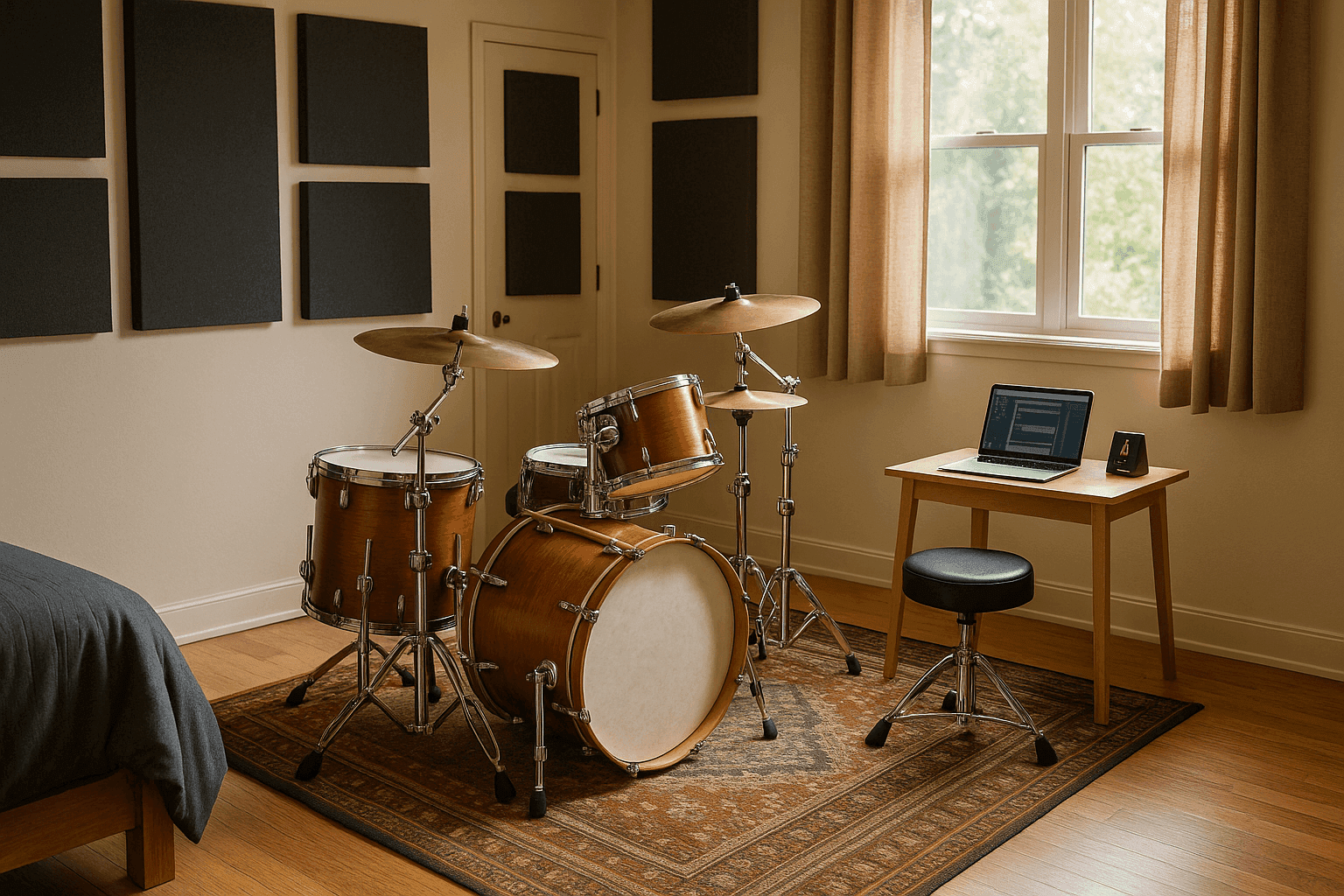 Drums are loud; solutions are cheap. A rug under the kit stops creep and tames boom, a folded blanket inside the kick softens neighbors' opinions, and practice pads let stick players drill anywhere silently. Hand drummers barely need anything beyond a chair.
Set the space for friction-free starts: drum visible, sticks on top, metronome app on the home screen. Practice happens when starting takes ten seconds. Hide the drum in a closet and watch motivation follow it inside. Environment beats willpower.
Apartment Survival Kit
Mesh-head electronic kits, low-volume cymbals, and rubber practice pads form the peace treaty between drummers and thin walls. Add headphones and midnight practice becomes genuinely silent. Every famous drummer's neighbor unknowingly co-produced their career; yours can nap through it instead, blissfully unaware of your progress.
Honest Tradeoffs: Acoustic vs Electronic
Acoustic drums win on feel, dynamics, and the irreplaceable physics of moving air. Electronic kits win on volume control, sound variety, and built-in coaching tools. Beginners with noise limits should choose electronic without guilt; the skills transfer almost entirely.
The hybrid future already arrived: pads sit beside snares on professional stages, and tabla players trigger loops mid-concert. Choose whichever gets you practicing daily this month. The other side of the drumhead divide will still welcome you later.
Which Drum Should You Learn First?
 Match the drum to your music, not the other way around. Love rock and pop? The drum kit or electronic pads. Drawn to Bollywood and bhajans? Dholak or tabla. Craving community over solo practice? Djembe circles welcome absolute beginners weekly.
Apartment dwellers, hear this: cajon, bongos, and electronic kits keep neighbors friendly. Budget matters too; bongos cost less than dinner for two, while a full acoustic kit needs real space and investment. Start cheap, fall in love, upgrade later.
A Simple Decision Path
Ask three questions: which music do I actually stream, how much noise can my home absorb, and do I want hands or sticks? Your answers point to one obvious drum. Book one trial lesson there before buying anything. Certainty costs one hour.
The First Month on Any Drum
Whatever you choose, month one looks identical: master three basic strokes, lock them to a metronome at slow tempo, and learn one simple groove until it survives conversation. Fifteen daily minutes beats weekend marathons, every single time.
Train your ears alongside your hands. Clap along with songs, counting beats aloud, and steal fills by humming them first. Rhythm patterns enter through listening faster than through reading. Drummers are made in the kitchen, dancing while dinner cooks, honestly.
Drums vs Other Percussion: A Quick Boundary
Purists reserve the word drum for skin-headed membranophone instruments. Shakers, bells, and scrapers like the guiro are idiophones, vibrating their own bodies instead. Cymbals sneak into kits despite being idiophones. Music, as usual, ignores tidy borders.
Why care about the boundary? Vocabulary precision helps you shop, search tutorials, and talk with teachers accurately. Ask for hand percussion lessons and you'll get djembe or congas; ask for auxiliary percussion and you'll get the fun rattling toybox instead.
Famous Drummers Worth Studying
Great players are free masterclasses. Watch their hands on video at half speed, steal one idea weekly, and your vocabulary compounds quietly. The three below span traditions deliberately: study across families and your own playing gains accents nobody else has.
Notice what they share despite different drums: relaxed grip, effortless dynamics, and grooves that serve songs before egos. Technique impresses drummers; feel moves everyone else. Every legend below chose feel first, which is exactly why the world learned their names.
Zakir Hussain (Tabla)
The late maestro made tabla a global language, from classical concerts with Ravi Shankar to fusion with Shakti and his historic three-Grammy night in 2024. Watch his solo recitals for a masterclass in making drums literally sing syllables.
Sivamani (World Percussion)
India's percussion showman plays anything with a surface: kits, ghatams, suitcases, and water buckets, often within one A.R. Rahman concert. Sivamani proves the whole percussion planet is one instrument. Curiosity, his career argues, is a drummer's greatest technique.
Buddy Rich (Drum Kit)
Jazz's untouchable drum kit virtuoso, famous for blinding single-stroke speed and big-band swing that never sacrificed groove for fireworks. His filmed solos remain the standard technical reference. Watch once for awe, twice for the relaxed wrists behind it.
Sheila E. (Percussion and Kit)
The Queen of Percussion moves between congas, timbales, and full kit within single songs, powering decades of pop and funk history alongside Prince and beyond. Her career proves versatility across hand percussion and sticks multiplies a drummer's opportunities enormously.
Drum Tuning Basics
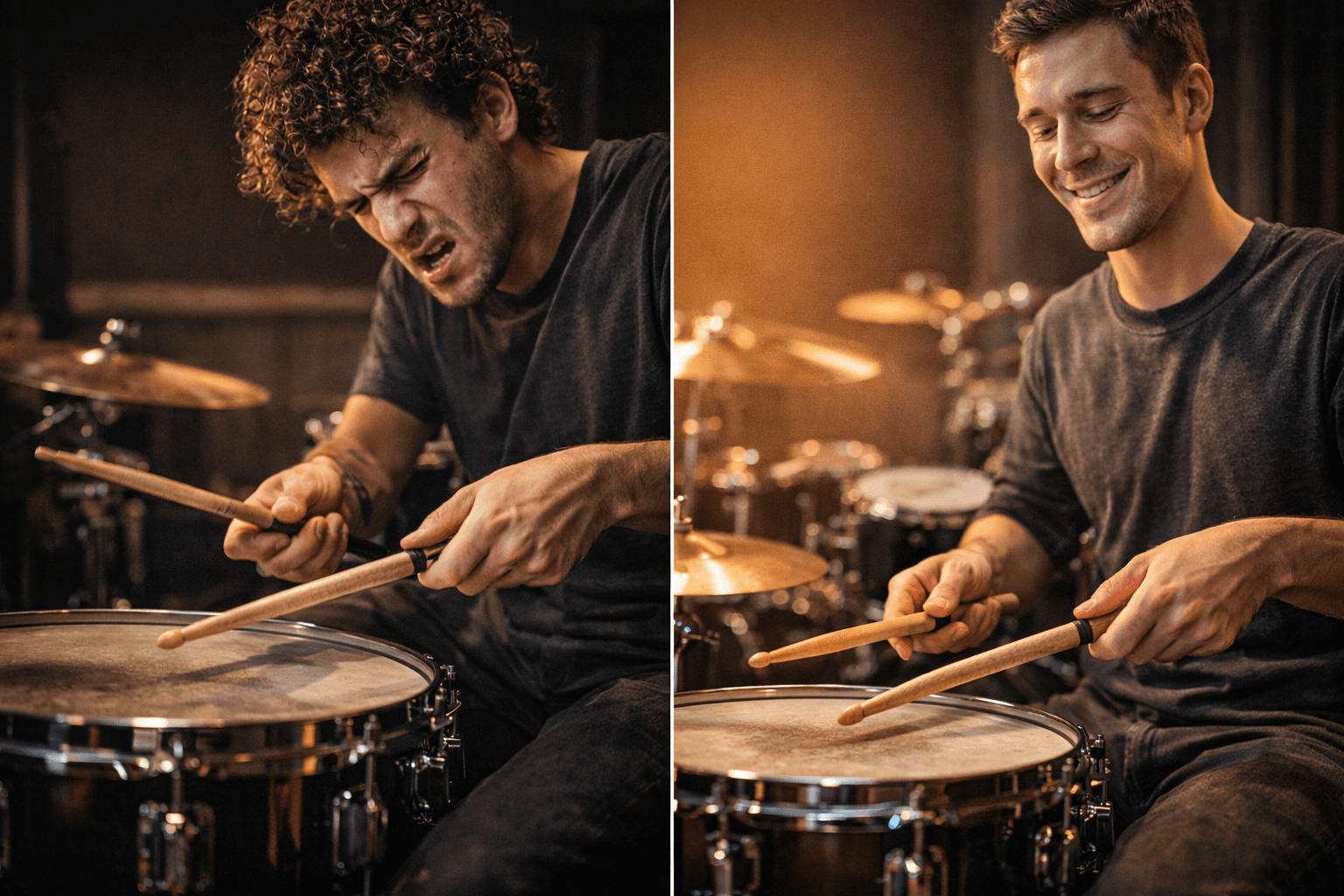 Tuning transforms cheap drums and ruins expensive ones, so learn the ritual early. On kit drums, tighten lugs in a star pattern, small equal turns, tapping beside each until pitches match around the drumhead. Even tension equals pure tone.
Indian drums tune differently: tabla players tap the gajra braid with a hammer and slide wooden dowels, tuning the dayan to the singer's key. Rope-laced drums like dhol tighten by adjusting rings. Every tradition, same goal: a head in agreement with itself.
The Pitch-Match Trick
Tuning ears develop fast with one habit: hum the pitch you want, then adjust until the drum agrees. Apps help verify, but humming trains internal hearing that outlasts any phone battery. Thirty seconds before each practice session compounds into real skill.
Caring for Your Drum
Skins hate extremes: keep drums away from radiators, direct sun, and damp basements. Wipe heads after playing, loosen natural-skin drums slightly in humid seasons, and transport everything padded. A cared-for drum holds tune longer and simply sounds happier.
Hands need care too. Hand drummers should build calluses gradually and stop before blisters open; stick players should check grips before blaming blisters on practice volume. Sore muscles are normal; sharp joint pain is feedback. Rest counts as practice sometimes.
Why Drumming Is Good for You
Research keeps confirming what drum circles always knew: rhythmic playing lowers stress hormones, and synchronizing with others boosts mood and social bonding measurably. Drumming is cardio wearing headphones, working the arms, core, and coordination simultaneously. Gym membership, disguised as joy.
The brain benefits stack higher. Keeping time strengthens executive function, and learning rhythm patterns builds the same neural timing networks language uses. Therapists now use drumming for everything from motor rehabilitation to team building. Prescription: fifteen minutes, daily, joyfully.
Drumming for Kids
Children take to drums instantly because success arrives on hit one. Rhythm training sharpens focus, math readiness, and patience, and group drumming teaches turn-taking better than lectures ever will. Start kids on dholak, djembe, or pads around age six.
Drums in Bollywood and Film Music
Listen closely to any film soundtrack and you'll hear this entire guide: dhol driving the wedding number, tabla under the romantic verse, kit and electronic pads powering the club remix, and timpani swelling beneath the emotional climax. Composers hire every family.
That layering explains Bollywood percussion's global addictiveness. A.R. Rahman famously stacks traditional and programmed drums in single songs, honoring folk roots while chasing modern punch. Train your ears by naming every drum in one favorite song tonight. Prepare for surprises, because film mixes routinely hide six percussion layers where casual ears count two.
Tala Meets Time Signature
Western drummers count measures; Indian drummers ride cycles. A tala is a repeating rhythmic circle, like teentaal's sixteen beats, with claps and waves marking landmarks. The downbeat, called sam, lands like a homecoming every cycle. Learn more in our rhythm guide.
Both systems describe identical physics with different maps. Four-four equals a sixteen-beat cycle squinted at; six-eight breathes like dadra's six. Bilingual rhythm readers improvise across genres effortlessly, which is precisely why modern drummers increasingly study both systems together.
The Steelpan Exception
Trinidad's steelpan deserves an honorary mention: hammered oil-drum surfaces playing full melodies, technically an idiophone yet culturally drum royalty. Born from banned skin drums, like the cajon, it proves percussion always finds a way. Innovation under pressure, literally.
Train Your Ears: The One-Song Exercise
Here's tonight's homework, and it's fun: pick one favorite song and identify every percussion voice inside it. Find the kick's pulse first, then the snare backbeat, then shakers, claps, and any hand percussion hiding in the corners of the mix.
Repeat weekly across genres: a bhangra track for dhol, a salsa tune for congas, a film score for timpani. Within a month you'll hear arrangements in layers, the exact skill producers and drummers share. Listening is free tuition; enroll nightly.
Frequently Asked Questions
1. How many types of drums are there?
Hundreds worldwide, but they organize neatly into six families: drum kit, Indian classical and folk drums, world hand percussion, orchestral drums, East Asian ensemble drums, and electronic pads. This guide's twenty-five drums cover every family's essential members.
2. What are Indian drums called?
The famous names are tabla, dhol, dholak, mridangam, pakhawaj, nagada, chenda, and kanjira. Tabla rules Hindustani classical music, mridangam rules Carnatic, and dhol plus dholak power weddings and folk celebrations across every region and diaspora gathering.
3. Which drum is easiest to learn?
For most beginners, the cajon and djembe deliver satisfying grooves within days: no sticks, no tuning stress, immediate sound. Dholak follows closely for Indian music lovers. Easiest ultimately means the drum whose music you'll happily practice daily.
4. What drums are in a drum kit?
The standard five-piece: kick drum, snare, two mounted toms, and a floor tom, plus hi-hat, ride, and crash cymbals. Jazz players often shrink to four pieces; metal players expand toward double kicks and forests of cymbals.
5. What is the oldest drum in the world?
Frame drums and simple skin-over-shell designs appear in archaeology thousands of years old, with alligator-skin drums from ancient China dating back roughly five millennia. India's mridangam tradition claims references over two thousand years old. Drumming predates written music entirely.
6. Which drum should a beginner choose for Bollywood music?
Dholak first: forgiving technique, instant film-song compatibility, and every gathering welcomes it. Graduate to tabla when classical depth calls, using our buying and beginner guides. Electronic pads work too, letting you load Bollywood kits and practice silently.
Final Thoughts
Twenty-five drums, six families, one shared truth: rhythm is the most democratic doorway in music. Whichever of these types of drums called to you while reading, that pull is real information. Follow it to a trial lesson this week, before the feeling cools.
Art Gharana's percussion instructors teach tabla, dholak, and rhythm foundations live, one-on-one, to students across the USA. Bring your curiosity, borrow our structure, and let your first steady groove arrive faster than you expect. The drumhead is waiting.