ChatGPT
 Google AI
 Grok
Grok Claude
The guiro is a popular percussion instrument in Latin and world music. Its distinctive scraping sound creates rhythm and texture in various musical genres. Often used in salsa, cumbia, and orchestral pieces, the guiro contributes to the groove, adding energy and excitement to every performance.
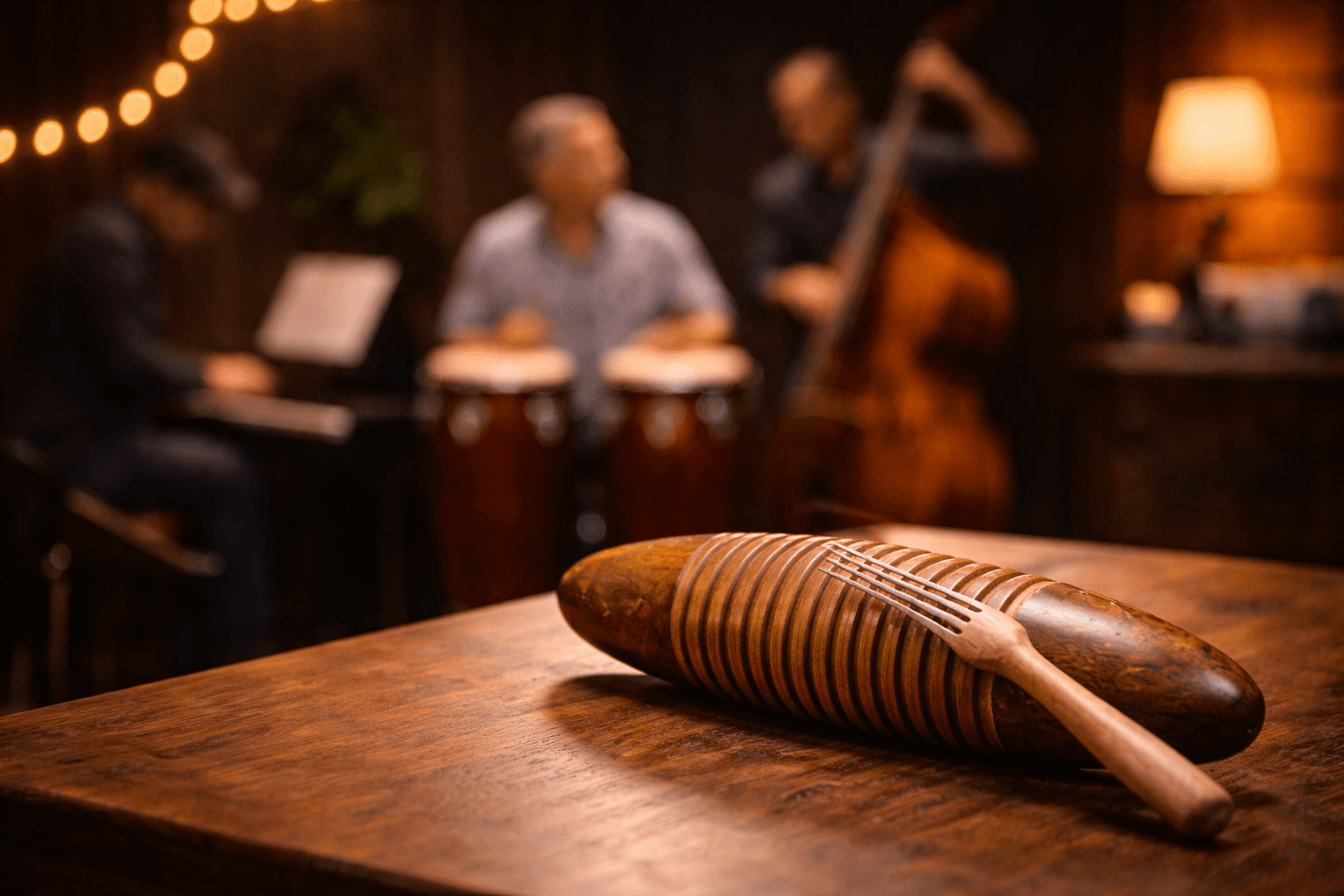
The instrument consists of a hollow gourd or wooden body with parallel ridges along its surface. By scraping a stick or tines along these ridges, musicians produce a rhythmic sound that complements drums, timbales, and other percussion instruments. Understanding the guiro’s role helps musicians and listeners appreciate its cultural and musical significance.
The Origins and History of the Guiro

The Roots of the Guiro in Latin Music
The guiro originates from indigenous cultures in the Caribbean and Latin America. Historically, gourds were hollowed out and ridged to create natural resonators. Musicians used them in ceremonial music and storytelling, creating rhythms that mimicked nature and human motion. Over time, this instrument became central to Afro-Caribbean music traditions.
As Latin music spread, the guiro found its way into Cuban, Puerto Rican, and Colombian music. Its presence in orchestras and ensembles reflects the blending of indigenous, African, and European musical influences. Today, it’s celebrated as a versatile instrument in both folk and professional music settings.
Evolution Through Modern Music
Modern guiros are made from wood, fiberglass, or metal to ensure durability and consistent sound. Percussionists can choose different sizes and textures to match the desired tonal effect. The instrument is now widely used in Latin jazz, popular music, and educational settings, making it a key tool for rhythm training and ensemble performance.
What Is a Guiro?
Meaning and Structure of the Guiro
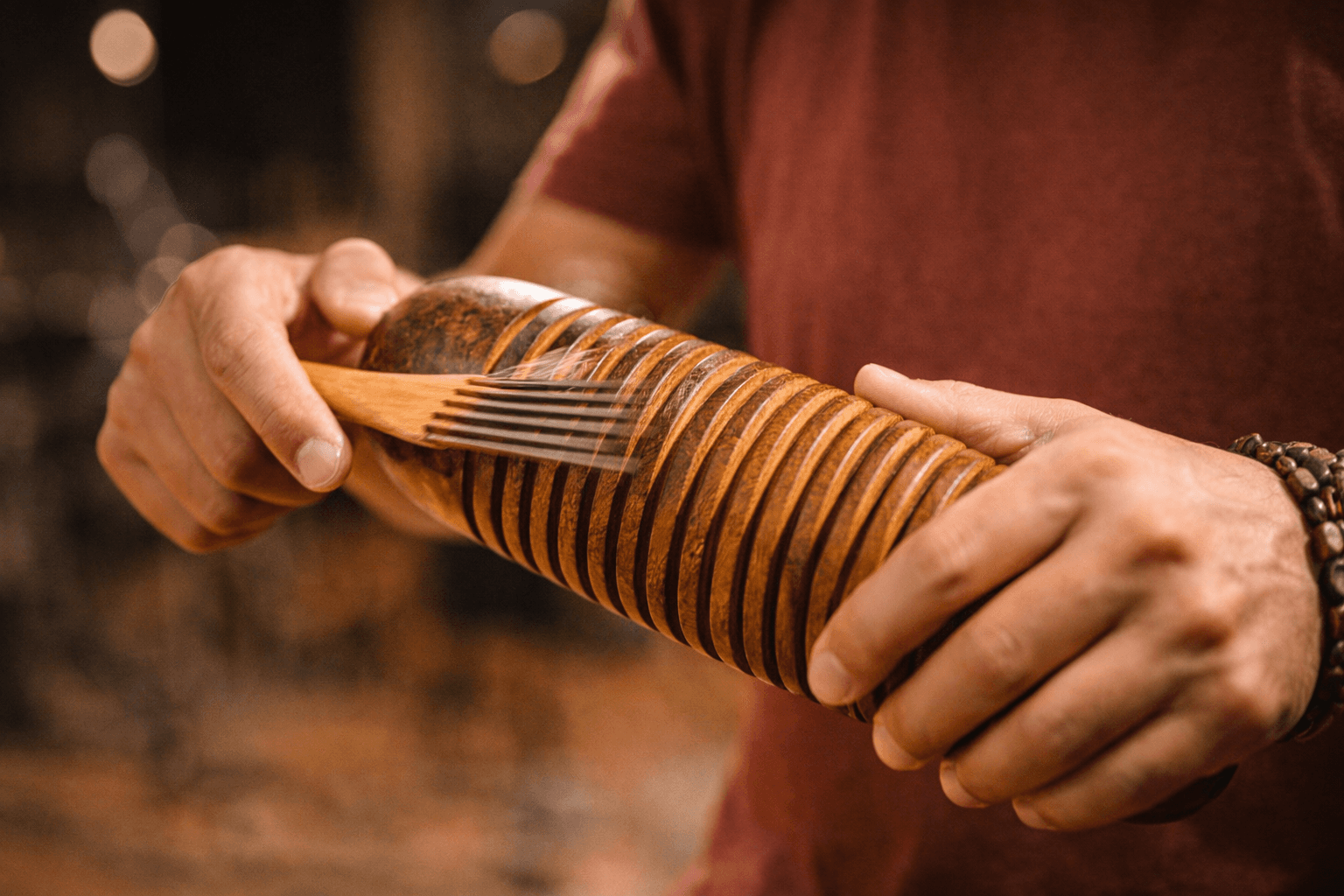
A guiro is a scraped idiophone, meaning it produces sound when its surface is rubbed or scraped. Its body typically has ridges or grooves, and players use a stick, metal rod, or scraper to generate rhythmic patterns. The sound can be soft and subtle or sharp and cutting, depending on how it’s played.
Guiro as a Rhythm Instrument
In ensembles, the guiro keeps time, adds accents, and enhances the groove. Its unique texture complements drums and bass, providing a syncopated rhythm that can transform simple beats into intricate polyrhythms. Percussionists often coordinate with other instruments to create layered rhythmic textures that energize the music.
Types of Guiro
Traditional vs Modern Guiros
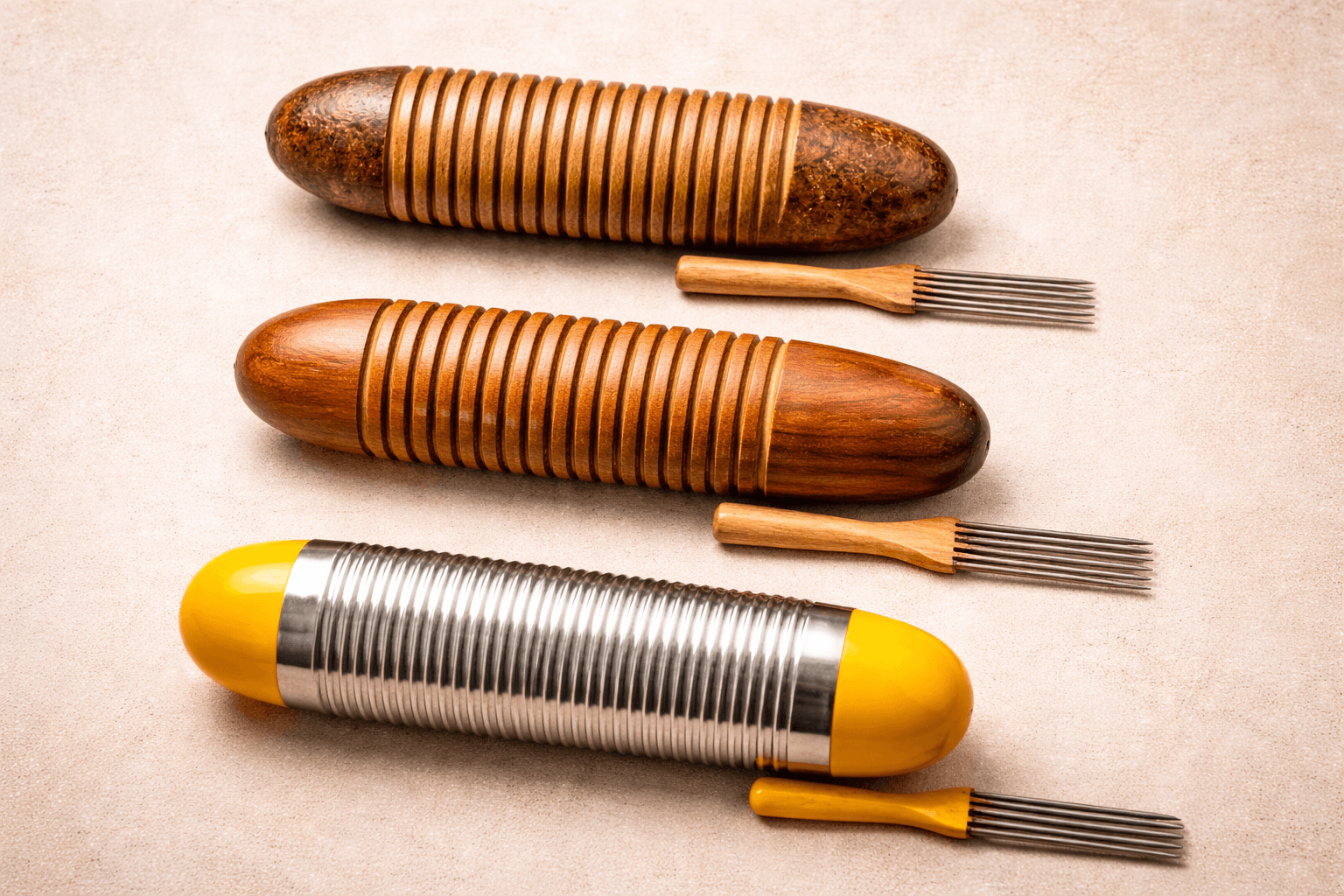
Traditional guiros are made from hollow gourds, maintaining an authentic earthy sound. Modern versions may use wood, fiberglass, or synthetic materials, offering consistency, durability, and ease of tuning for performances and recordings.
Variations by Size and Sound
Guiros come in different sizes, affecting their pitch and tone. Smaller guiros produce sharper, higher-pitched scraping sounds, while larger ones give deeper, fuller tones. Some guiros also feature adjustable ridges or removable scrapers to allow musicians to customize the sound.
Playing Techniques for the Guiro
Basic Scraping Techniques
The primary technique involves holding the guiro with one hand while scraping the ridges with the other. The direction, speed, and pressure of the scrape determine the sound’s intensity. Beginners often start with steady, even strokes to master rhythm consistency.
Advanced Rhythmic Patterns
Advanced players incorporate rhythmic variations, such as alternating strokes, double scrapes, and syncopated accents. These patterns create complex polyrhythms, making the guiro essential in salsa, merengue, and Latin jazz ensembles. Musicians also coordinate with drums, congas, and timbales to produce intricate interlocking rhythms.
Guiro in Solo and Ensemble Settings
While primarily an ensemble instrument, the guiro can also be featured in solos. Solo performances highlight its expressive potential, including subtle dynamic changes, accentuated grooves, and creative interplay with other percussion instruments. Its versatility allows performers to explore both traditional and modern interpretations.
Role of the Guiro in Latin Music

Complementing Percussion in Ensembles
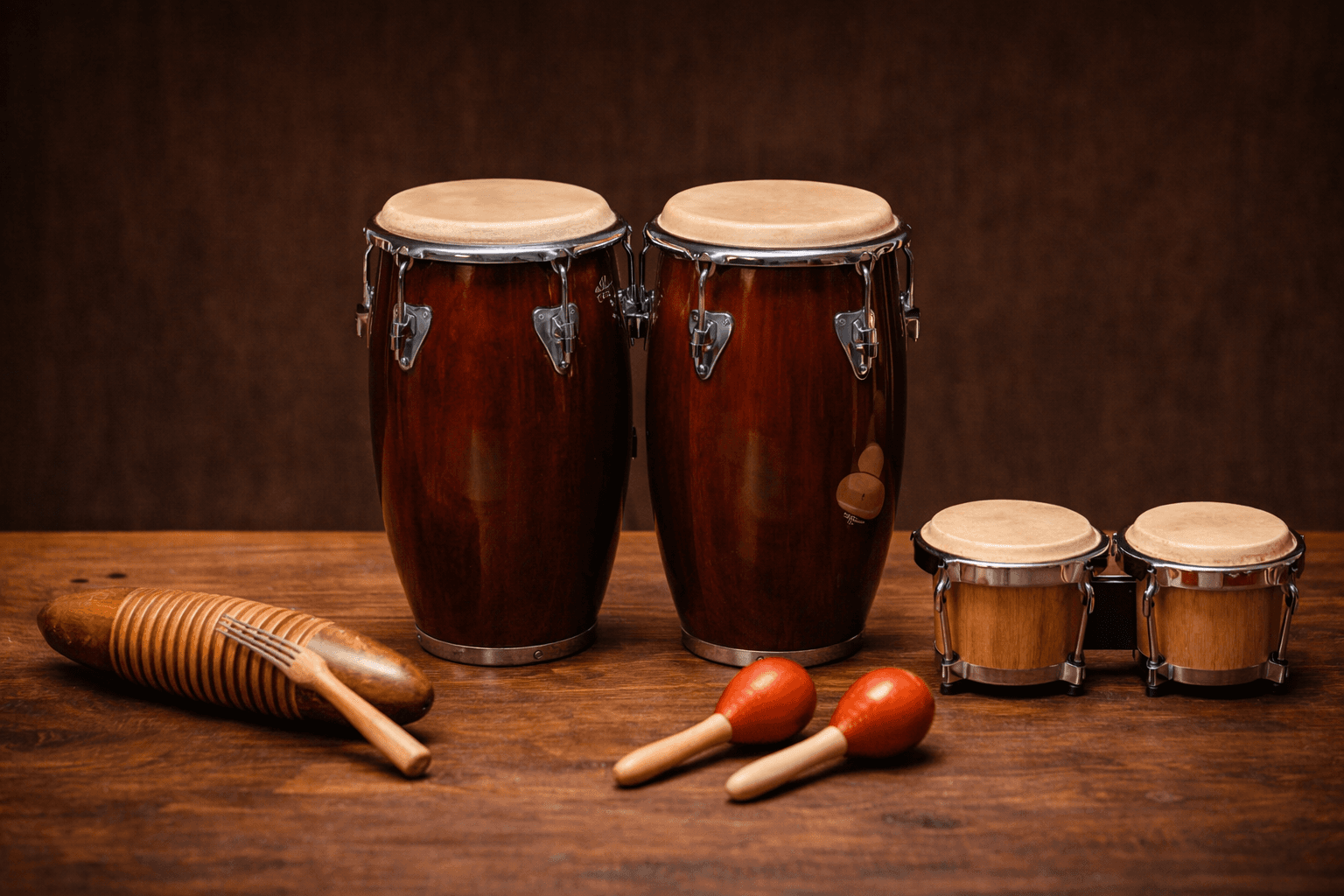
The guiro often serves as a rhythmic anchor in Latin music. It supports congas, bongos, timbales, and other percussion instruments by providing continuous grooves that maintain the song’s momentum. Its scraping sound cuts through melodies, giving music clarity and excitement.
Enhancing Dance Rhythms
In dance music like salsa, cumbia, and merengue, the guiro provides a syncopated rhythm that guides dancers. Its accents signal shifts in movement, emphasizing beats and enhancing the overall groove. Without the guiro, Latin dance music would lose a key element of its rhythm and texture.
The Guiro and Rhythm Patterns
Common Rhythmic Patterns
Musicians use standard rhythmic patterns on the guiro to complement various Latin styles. In salsa, the guiro often plays continuous sixteenth-note patterns, while in cumbia, alternating accents create a swinging feel. These patterns are learned by ear, practice, and through formal percussion training.
Reading Guiro Notation
While many Latin music traditions rely on oral instruction, some modern scores include guiro notation. Symbols indicate scraping direction, stroke length, and accent placement, helping musicians maintain consistency in ensemble settings. Understanding these notations allows percussionists to integrate seamlessly with other instruments.
Guiro in Orchestral and Contemporary Music
Integration into Classical Ensembles
The guiro has found a place in contemporary orchestras and chamber music. Composers use it to add unique textures and exotic rhythms, bridging Latin and Western classical traditions. Its versatility allows composers to experiment with tone, dynamics, and syncopation.
Modern and Fusion Music
In fusion music, the guiro blends with jazz, pop, and world music. Artists use it to create layered rhythms, complement electronic percussion, and produce innovative grooves. This modern adaptation has expanded the guiro’s role beyond traditional Latin music.
Maintenance and Care of a Guiro
Cleaning and Storage
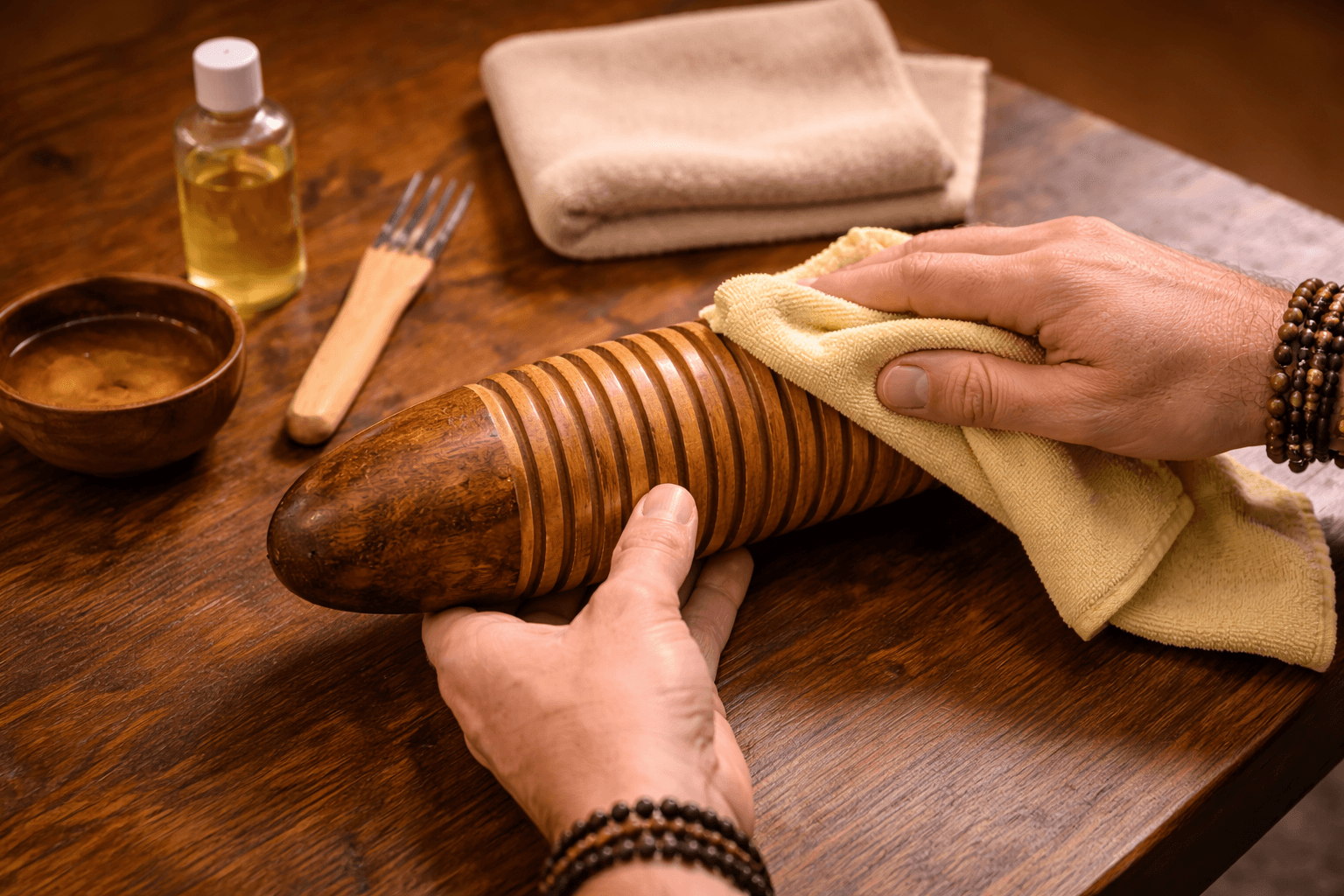
A guiro requires proper cleaning to maintain sound quality. Wooden guiros should be wiped with a dry cloth and stored in a stable environment to prevent cracking. Synthetic guiros can be cleaned with a damp cloth and mild soap. Avoid exposing the instrument to extreme heat or humidity.
Choosing the Right Scraper
The scraper significantly affects the guiro’s sound. Wood, metal, or plastic scrapers produce different tonal qualities. Musicians often experiment to find the scraper that matches the desired style, volume, and texture.
Learning the Guiro

Tips for Beginners
New players should focus on holding the guiro correctly, maintaining even pressure, and developing steady rhythm. Practicing along with recordings helps internalize grooves and timing. Mastery requires patience, repetition, and listening skills.
Advancing to Complex Patterns
Advanced players explore syncopation, polyrhythms, and dynamic variations. Learning different Latin music styles exposes percussionists to diverse techniques. Collaborating with other musicians enhances timing, coordination, and creativity.
Famous Guiro Players and Contributions

Influential Artists
Artists like Mongo Santamaría and Willie Bobo popularized the guiro in jazz and Latin music. Their recordings showcase the instrument’s rhythmic versatility and expressive potential, inspiring generations of percussionists.
Contributions to Music Education
Guiro education is now part of percussion programs worldwide. Schools and online courses teach rhythm patterns, coordination, and ensemble integration, preserving the instrument’s cultural and musical heritage.
Guiro vs Other Percussion Instruments
Comparing Sound and Function
Unlike congas or bongos, which produce pitched drum tones, the guiro creates a scraping sound. Its role is primarily rhythmic and textural, enhancing grooves rather than melody. It complements other percussion instruments, adding contrast and rhythmic interest.
Integration with Ensemble
In an ensemble, the guiro interacts closely with other percussion and melodic instruments. It can emphasize beats, create syncopation, or provide a subtle background groove. Its versatility makes it an essential component of Latin and fusion music ensembles.
Conclusion – The Enduring Significance of the Guiro
The guiro is more than a simple percussion instrument. Its scraping sound, rhythmic versatility, and cultural heritage make it essential in Latin, classical, and contemporary music. Learning the guiro enhances timing, rhythm understanding, and ensemble skills.
By exploring traditional techniques, modern adaptations, and ensemble roles, musicians can fully appreciate the guiro’s unique contribution. Whether used in salsa, jazz, or orchestral settings, it continues to enrich music with its unmistakable texture and groove.
Frequently Asked Questions (FAQs)
Q1: What is a guiro in music?
A guiro is a Latin percussion instrument that produces sound by scraping its ridged surface with a stick or scraper. It is commonly used in salsa, cumbia, and jazz.
Q2: How is a guiro played?
The player holds the guiro in one hand and scrapes the ridges with a stick or scraper, varying pressure, speed, and direction to create different rhythms and textures.
Q3: What is the origin of the guiro?
The guiro originated in the Caribbean and Latin America, where indigenous people used hollow gourds to produce rhythmic scraping sounds for ceremonies and music.
Q4: Can the guiro be used in classical music?
Yes, contemporary composers incorporate the guiro into orchestras and chamber music to add unique textures, syncopation, and rhythmic variety.
Q5: What are the types of guiro?
Guiros can be made from hollow gourds, wood, fiberglass, or synthetic materials. Variations differ in size, texture, and pitch, allowing musicians to choose based on sound preference.
Q6: How do beginners learn the guiro?
Beginners focus on holding the instrument correctly, producing steady rhythms, and practicing along with recordings to internalize grooves and timing.
Q7: What is the role of the guiro in Latin music?
It provides rhythmic texture, supports dance grooves, complements drums, and emphasizes beats, making music more energetic and engaging.
Q8: Can the guiro be used in fusion music?
Yes, the guiro is used in jazz, pop, world music, and electronic music, providing rhythmic layers and unique textures for cross-genre collaborations.
Q9: How should a guiro be maintained?
Wooden guiros should be cleaned with a dry cloth and stored carefully to prevent cracks, while synthetic versions can be wiped with a damp cloth. Avoid extreme heat or humidity.
Q10: Who are famous guiro players?
Mongo Santamaría and Willie Bobo are celebrated guiro players known for their contributions to Latin jazz and popular music.