ChatGPT
 Google AI
 Grok
Grok Claude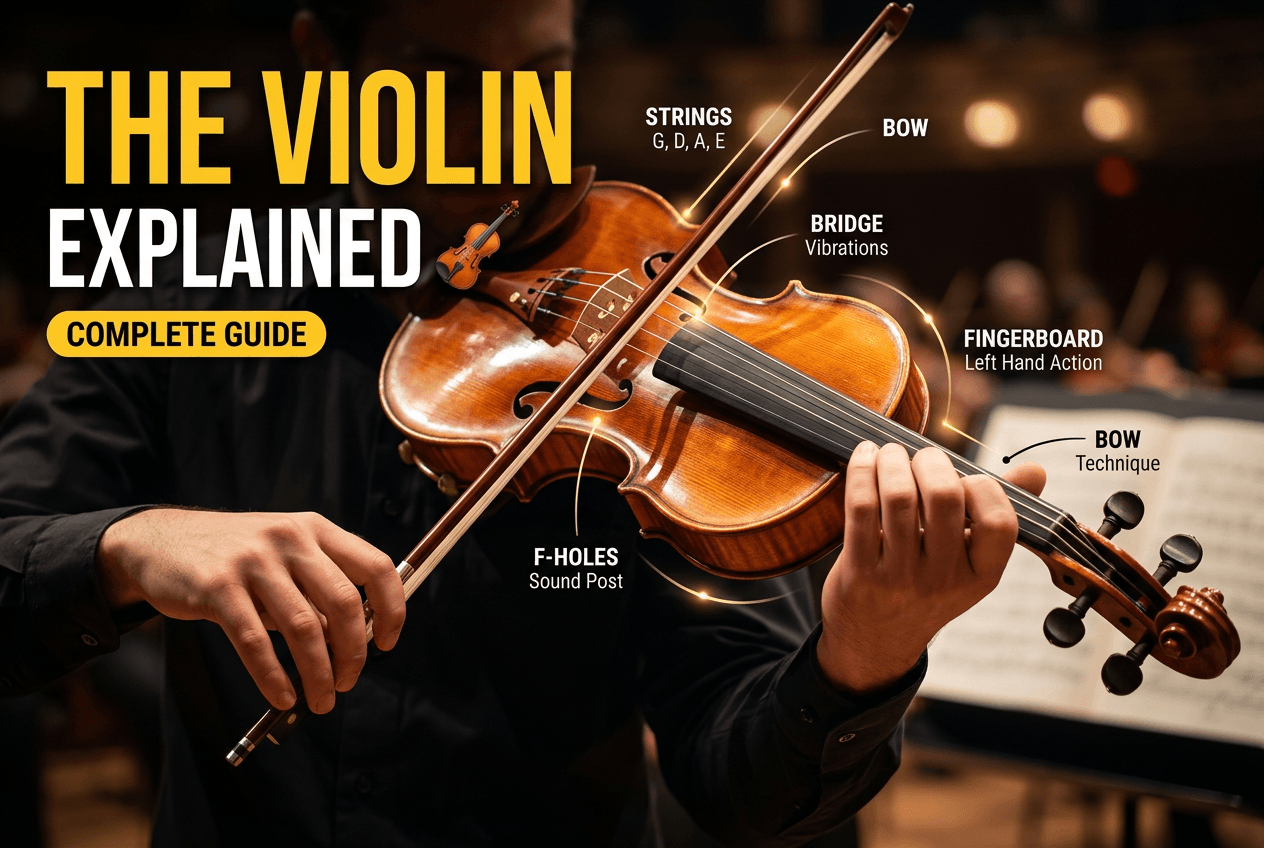
The violin is one of very few instruments that belongs completely to two entirely separate classical traditions. In Europe it has been the leading voice of orchestral and chamber music for four centuries. In South India it has been the standard melodic accompaniment to Carnatic vocal performance for over two hundred years, held in a different position, tuned to different notes, and played with a completely different ornamental vocabulary. Most guides cover one of those and pretend the other does not exist. This one covers both, and if you are mapping the wider landscape first, the guide to Indian classical music instruments is a useful companion.
What follows is the full picture: every part of the instrument and what it actually does, how the sound is produced, why the bow and the rosin matter more than beginners expect, the fractional sizes and how to choose one, an honest assessment of the difficulty, and a substantial section on the Carnatic violin, which is the part almost nobody writes properly. For context on where that tradition sits, the beginner guide to Carnatic music sets out the system the instrument serves.
One framing worth having early. The violin has no frets, which means the player is responsible for the exact position of every note. That single fact explains almost everything about why it is difficult, why it takes longer to sound good than most instruments, and why it is also capable of a continuous sliding expressiveness that fretted instruments simply cannot produce. It is the reason the instrument was adopted so readily into Carnatic music, where continuous pitch movement is not decoration but grammar.
What Is a Violin?
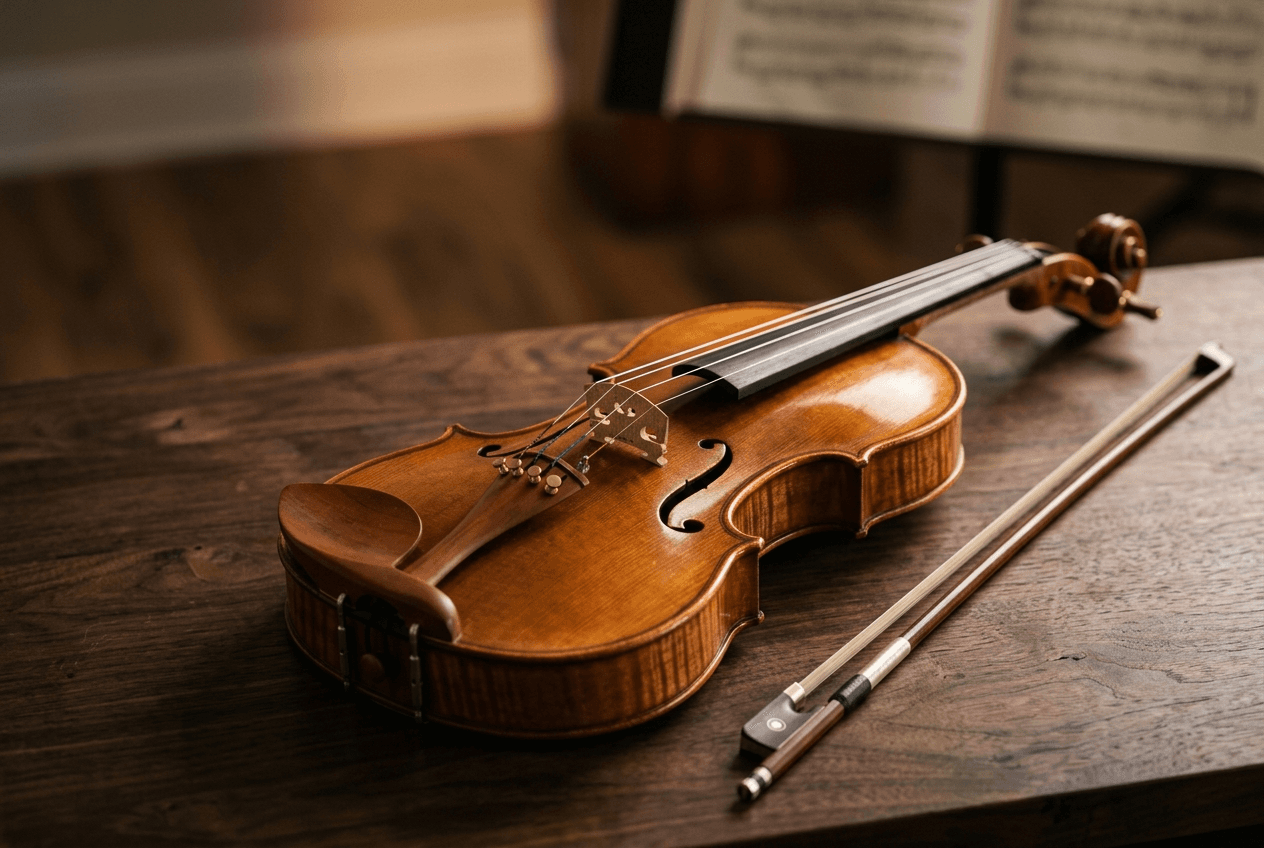 A violin is a four-stringed bowed instrument, the smallest and highest-pitched member of the Western string family, with a hollow wooden body and no frets. Its strings are tuned in perfect fifths to G, D, A and E, and it is played by drawing a horsehair bow across the strings while the left hand stops them against the fingerboard to change pitch. It emerged in northern Italy in the sixteenth century and is central to Western classical, folk and popular music, as well as to South Indian Carnatic music.
The Parts of a Violin
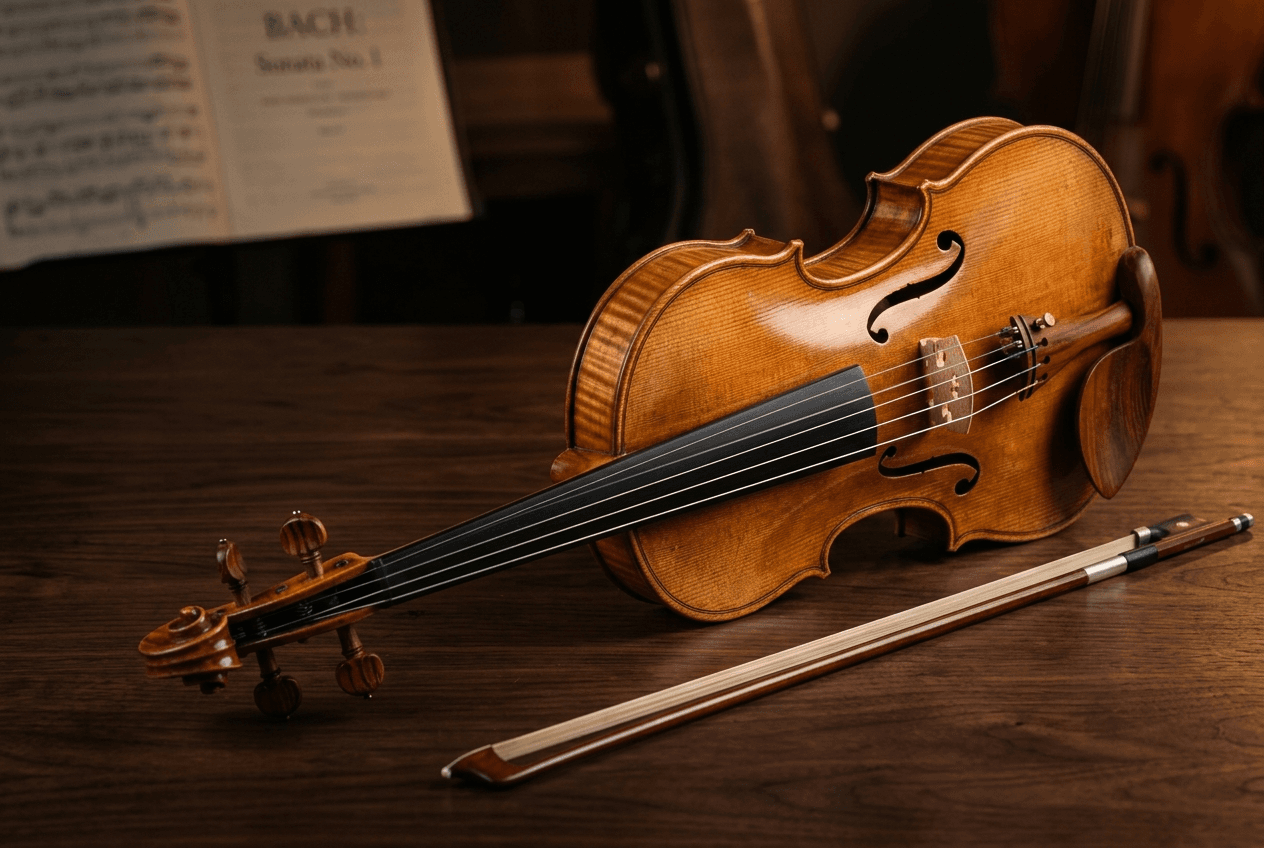 Around seventy separate pieces go into a well-made violin. These are the ones that matter to a player.
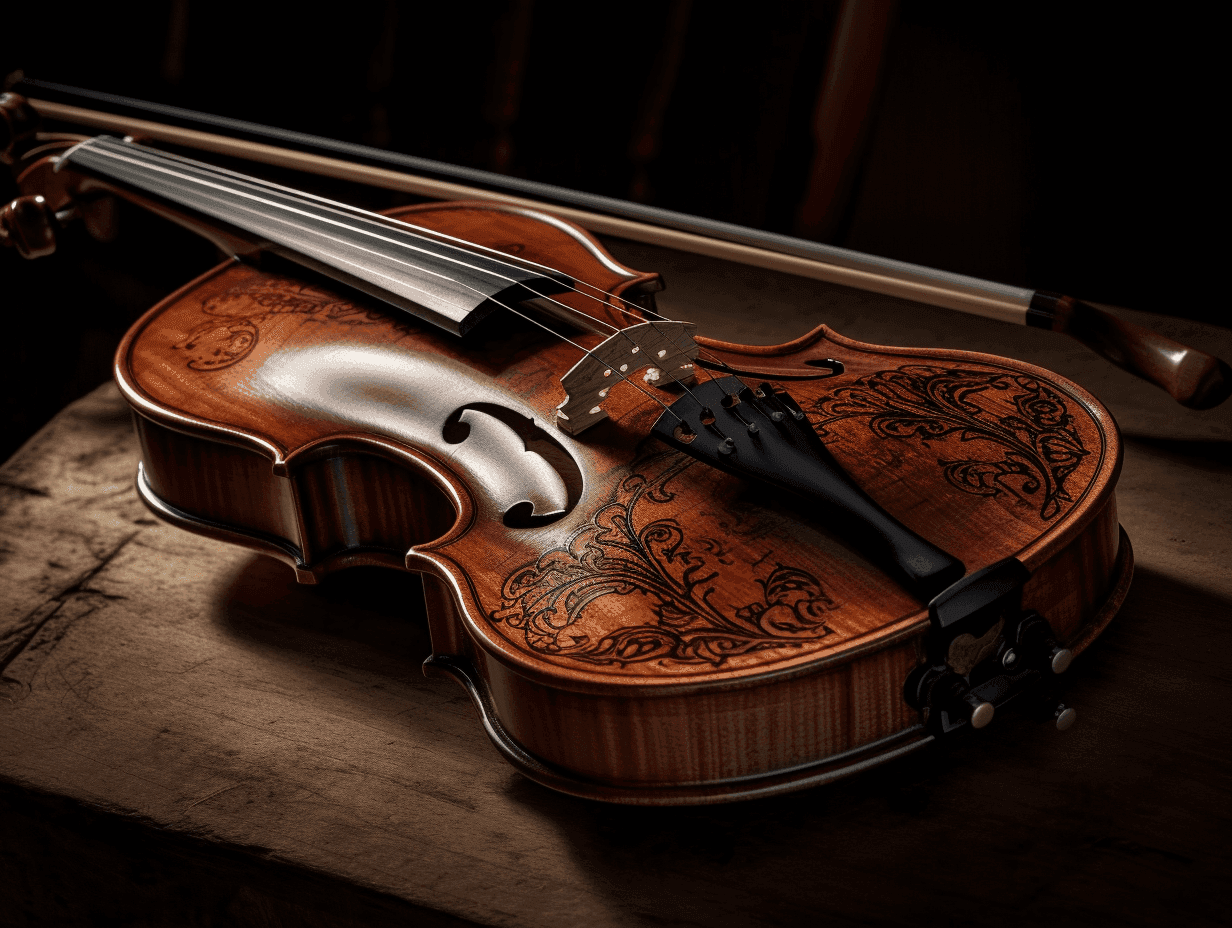
Part What it does Scroll The decorative carved end. Purely ornamental, and a maker's signature. Pegbox and pegs Holds the four tuning pegs, which are friction-fitted and turned to tune. Nut A small ridge at the top of the fingerboard setting string height and spacing. Neck Connects the pegbox to the body and supports the fingerboard. Fingerboard Ebony surface the strings are pressed against. Unfretted, so pitch depends entirely on finger placement. Strings Four strings tuned G, D, A and E in fifths. Gut, synthetic core or steel. Body The hollow resonating chamber, usually spruce top and maple back and sides. F-holes The two openings in the top. Let air move and allow the top to vibrate freely. Bridge Unglued, held by string tension. Transmits string vibration into the body. Soundpost A small dowel inside the body under the bridge. Moving it slightly transforms the tone. Bass bar A strip glued under the top, spreading vibration and supporting string tension. Tailpiece Anchors the strings at the lower end, often carrying fine tuners. Fine tuners Small screws for precise tuning adjustments. Essential for beginners. Chinrest Where the jaw rests. Shape and height are a genuine comfort variable. Endpin or button The anchor at the base holding the tailgut and taking the string tension.
Two of those deserve emphasis. The soundpost is the single most consequential component in the whole instrument, a small unglued dowel held in place by pressure, and shifting it by a millimetre audibly changes the tone. Luthiers call it the soul of the instrument for good reason. The bridge is similarly unglued, standing under string tension alone, which means it can shift or fall if the strings are loosened carelessly.
How a Violin Makes Sound
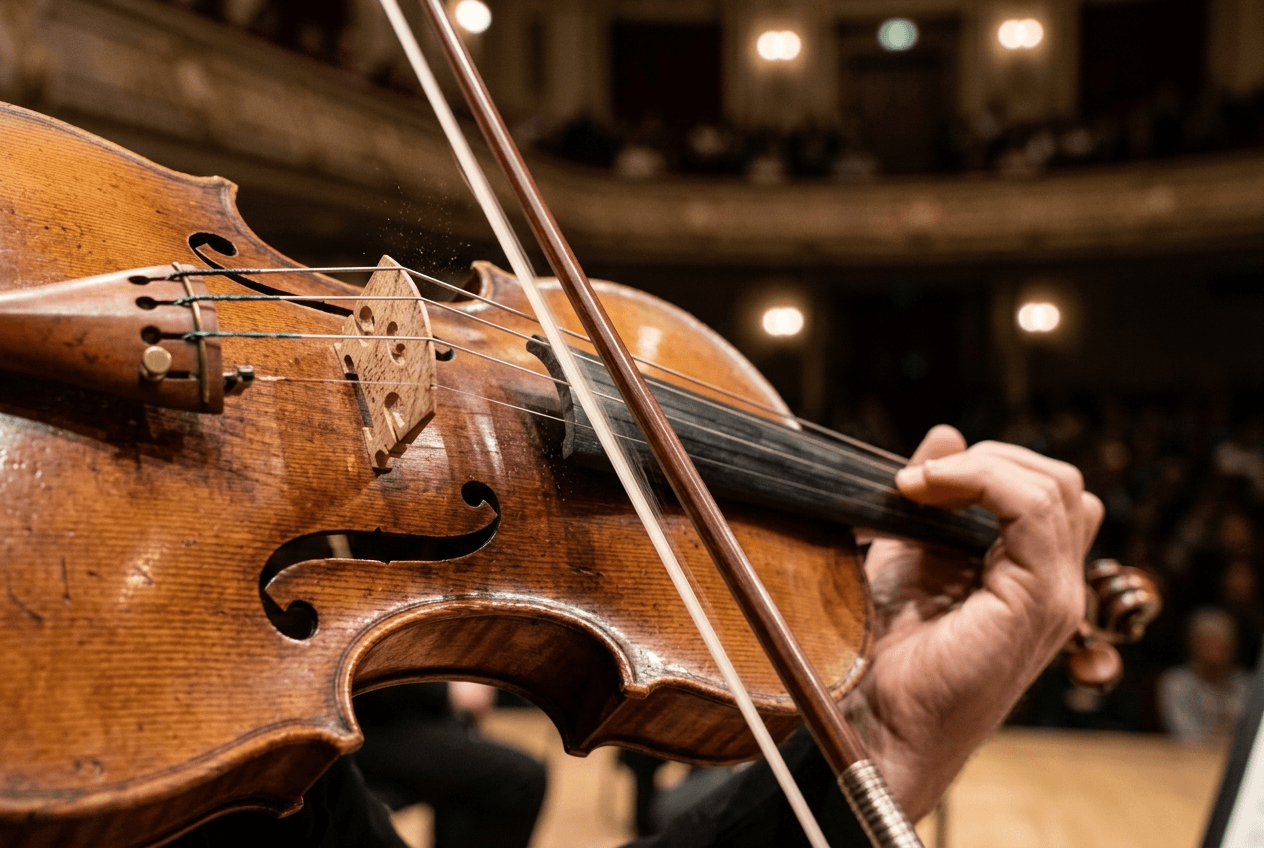 The bow does not simply rub the string. Rosin makes the horsehair sticky, and the hair grips the string, pulls it sideways, then releases as tension overcomes the grip, then grips again. This stick-slip cycle repeats hundreds of times a second, which is what keeps the string in continuous motion and allows a bowed note to sustain indefinitely, unlike a plucked one that begins decaying immediately.
That vibration passes through the bridge into the top of the instrument. The bass bar spreads it across the top plate, the soundpost transmits it to the back, and the whole body resonates, moving air inside the chamber which escapes through the f-holes. The wood is doing the amplification, which is why the species, age, thickness and varnish of the timber all affect the sound, and why old instruments from the Cremonese makers command the prices they do.
Pitch comes from the length of the vibrating string, which the left hand controls by pressing it against the fingerboard. With no frets there is no mechanical guide, so accuracy depends entirely on trained muscle memory and ear.
The Bow and the Rosin
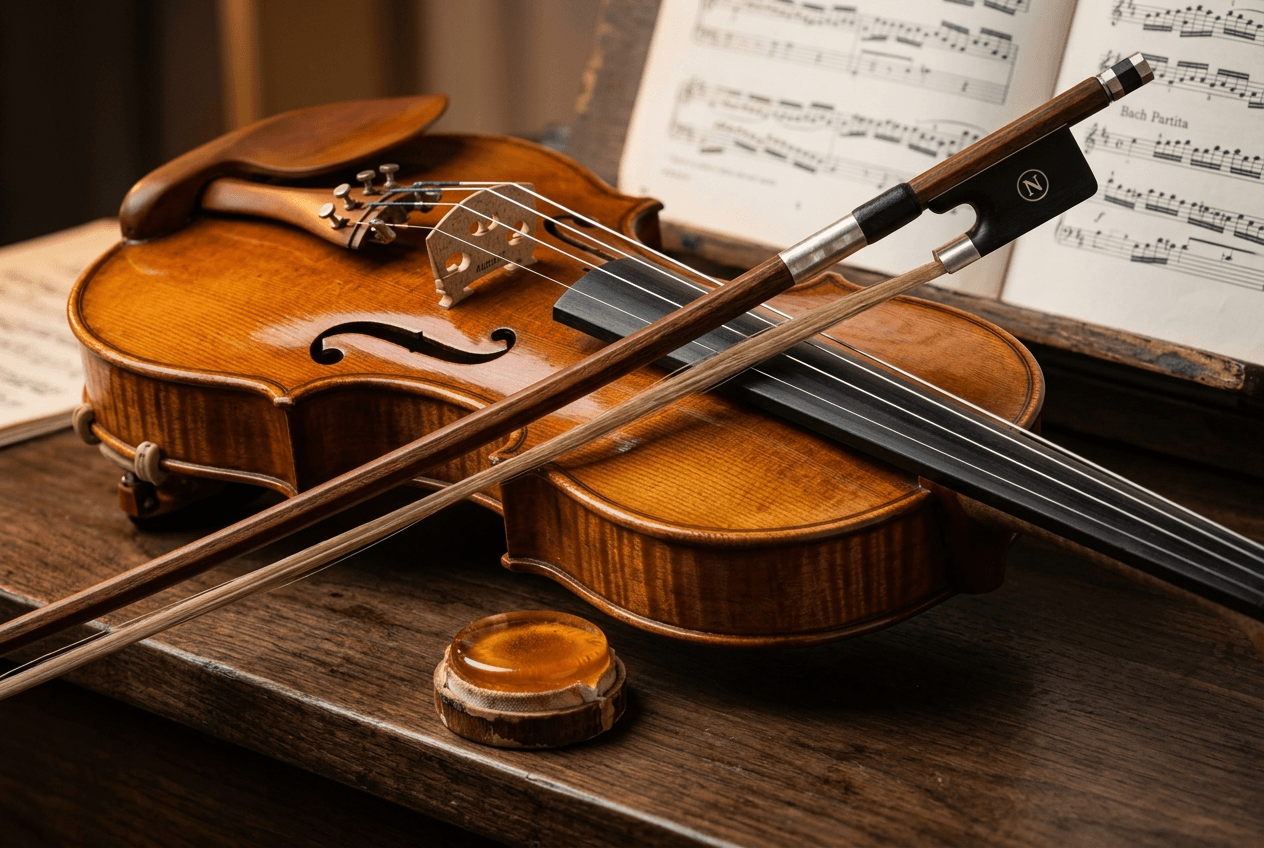 Beginners think of the bow as an accessory. Professionals think of it as half the instrument, and they are right. The bow determines volume, tone colour, articulation and the entire character of a phrase, while the left hand only determines which notes.
A bow is a stick of pernambuco wood, brazilwood or carbon fibre, held under tension against a ribbon of horsehair. The frog at the lower end houses a screw that adjusts tension, and the hair must be loosened after every session, since leaving a bow tightened warps the stick permanently. This is the most common piece of damage beginners inflict on their equipment.
Rosin is hardened tree resin, and without it the bow slides across the strings producing almost nothing. New bow hair needs generous rosining before it will speak at all, which catches out beginners who assume their instrument is faulty. Too much rosin, on the other hand, produces a scratchy tone and a cloud of dust on the instrument top, which should be wiped off after each session.
The Violin Family and Fractional Sizes
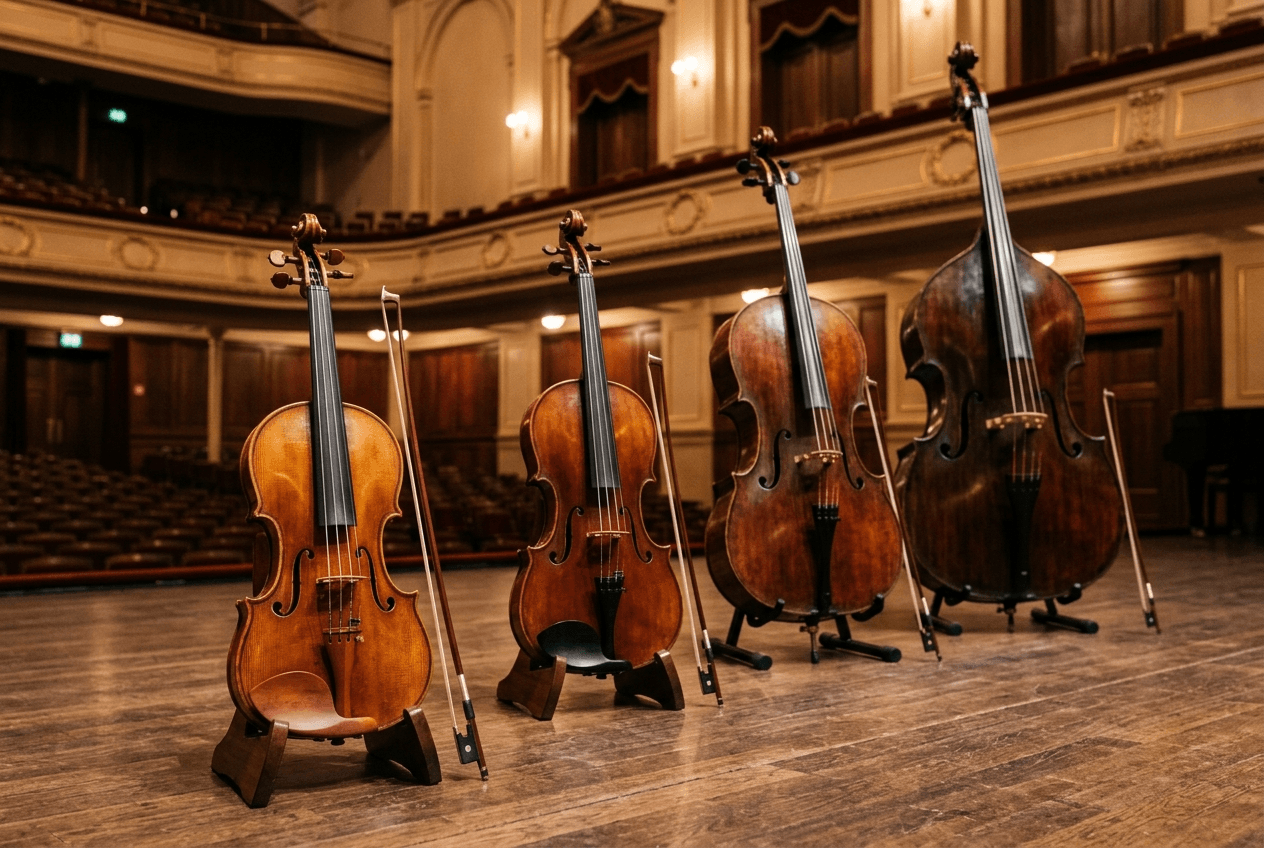 The violin is the highest voice in a family that descends through the viola, the cello and the double bass. All four share the same principles and differ in size, pitch range and tuning, with the viola, cello and bass each sitting progressively lower.
Violins also come in fractional sizes for children, running from a full size, written as four quarters, down through three quarters, one half, one quarter, one eighth, one tenth and smaller. These are not toys. They are properly made instruments scaled down so a child's arm can reach the scroll comfortably with a slight bend at the elbow, which is the standard sizing test. Playing an instrument that is too large forces the arm to overextend, which produces poor technique and, over time, strain injuries.
A Short History of the Instrument
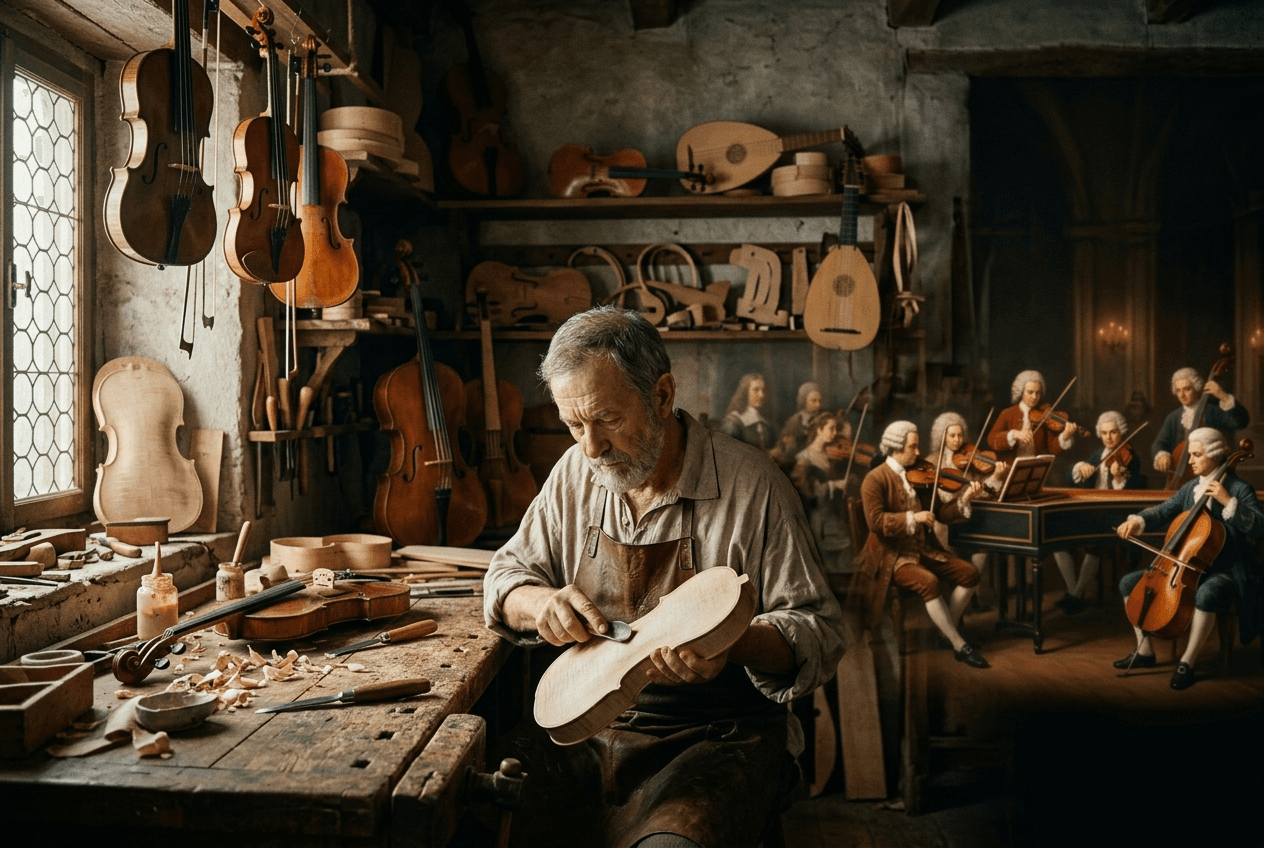 The instrument took its modern form in northern Italy in the sixteenth century, emerging from earlier bowed instruments including the rebec and the medieval fiddle. Andrea Amati, working in Cremona, is generally credited with establishing the shape that has barely changed since, which is itself remarkable given how much other instruments were redesigned over the following centuries.
The golden age ran through the late seventeenth and early eighteenth centuries, when Antonio Stradivari and Giuseppe Guarneri del Gesu, both also working in Cremona, produced instruments that have never been convincingly surpassed. A great deal of research has gone into explaining why, with theories ranging from the density of the timber grown during a cold climatic period to varnish composition to simple accumulated craft. No explanation is settled, and surviving instruments from these makers now sell for sums that put them beyond working musicians and into the hands of institutions and foundations who lend them out.
The instrument spread through European court and church music, became the backbone of the orchestra as that ensemble developed, and then travelled everywhere European trade and empire went. In most places it was adopted as a foreign instrument playing foreign music. In South India something different happened, which is the subject of the next section, and it is the more interesting story.
Why the design never changed
A modern instrument differs from an eighteenth-century one in small ways. The neck sits at a slightly steeper angle, the fingerboard is longer, and strings are usually synthetic core rather than gut. That is close to the whole list. The reason is straightforward: the original design solved the acoustic problem so completely that later changes offered no improvement. Very few manufactured objects of any kind have that property.
The Carnatic Violin
 This is the section most guides skip, and it covers a tradition in which the violin is not a Western import being borrowed but a fully naturalised instrument with its own posture, tuning, technique and repertoire. A Carnatic violinist and a Western violinist hold the same object and do almost nothing the same way with it.
How it arrived
The instrument entered South Indian classical music in the late eighteenth century, a period when European musicians were present in colonial courts and their instruments were heard by Indian musicians. Baluswami Dikshitar, brother of the composer Muthuswami Dikshitar, is the figure most associated with adapting it to Carnatic use, alongside the court musician Varahappayyar. Within a few generations it had become the standard melodic accompaniment for vocal concerts, a position it still holds.
The reason it was adopted so completely is worth understanding. Carnatic music is built on gamaka, the continuous oscillation and sliding between pitches, and it is fundamentally vocal in conception, with instruments expected to imitate the voice. A fretless bowed instrument capable of sustaining a note indefinitely while sliding continuously between pitches is close to an ideal match. It could do what the voice does in a way that fretted or plucked instruments could not.
How it is held
This is the most visible difference. A Carnatic violinist sits cross-legged on the floor and rests the scroll of the instrument against the ankle or the top of the foot, with the body of the instrument against the chest and collarbone. The Western player stands or sits on a chair with the instrument horizontal, held between the jaw and the shoulder.
The seated position is not merely traditional. It anchors the scroll firmly, which frees the left hand entirely from any responsibility for supporting the instrument. That matters enormously, because Carnatic technique requires the left hand to slide continuously along the string over long distances, and a hand that is also holding the instrument up cannot do that freely. The posture is a technical solution, not a cultural quirk.
How it is tuned
Western tuning is fixed at G, D, A and E. Carnatic tuning is relative and follows the pitch of the lead performer, usually a singer, since Indian classical music has no absolute concert pitch and every performance is built around the soloist's tonic.
The four strings are typically tuned to tonic and fifth in two octaves, meaning Sa, Pa, Sa, Pa, so the outer pairs duplicate the same two notes an octave apart rather than continuing upward in fifths. That layout gives the player the tonic and the fifth of the raga available in two registers at once, which suits an accompanist who must move quickly between octaves to follow a vocalist. The drone underneath it all comes from a tanpura or a shruti box, against which the tuning is set.
Gamaka instead of vibrato
Western violin technique treats vibrato as an expressive colouring applied to a note that is fundamentally stationary. Carnatic technique treats movement between pitches as the substance of the music itself. Gamaka encompasses a family of oscillations, slides and inflections, and in many ragas a note is essentially never played straight, because a plain note would be recognisably wrong rather than merely plain.
The practical consequence is that a trained Western violinist cannot simply play Carnatic music, and vice versa. The left-hand technique differs, the finger positions differ, the concept of what constitutes a correct note differs. Players who work across both traditions describe them as two instruments that happen to share a shape.
The accompanist's job
In a Carnatic concert the violinist has a defined and demanding role. During the vocalist's improvisation the violinist follows, shadowing the melodic line closely and often in near-unison. Then the vocalist pauses and the violinist responds, improvising a passage of their own in the same raga, before handing back. This exchange continues throughout the concert.
What that requires is remarkable. The accompanist must know the raga thoroughly, anticipate where an improvising singer is going, reproduce phrases they have never heard before within moments of hearing them, and then generate original material in the same idiom on demand. It is closer to real-time conversation than to accompaniment as Western musicians would understand the term, and it is why Carnatic violinists are regarded as among the most technically formidable musicians in Indian music.
The players to hear
Lalgudi Jayaraman, M S Gopalakrishnan and T N Krishnan are frequently referred to together as the violin trinity of Carnatic music, and between them they defined the modern instrument's role. Kunnakudi Vaidyanathan brought a distinctive popular showmanship to it. L Subramaniam took the instrument into global fusion and orchestral collaboration. Ganesh and Kumaresh, performing as a duo, and A Kanyakumari are among the leading names of the following generations. The broader context is covered in the guide to famous Carnatic musicians.
The Hindustani Violin
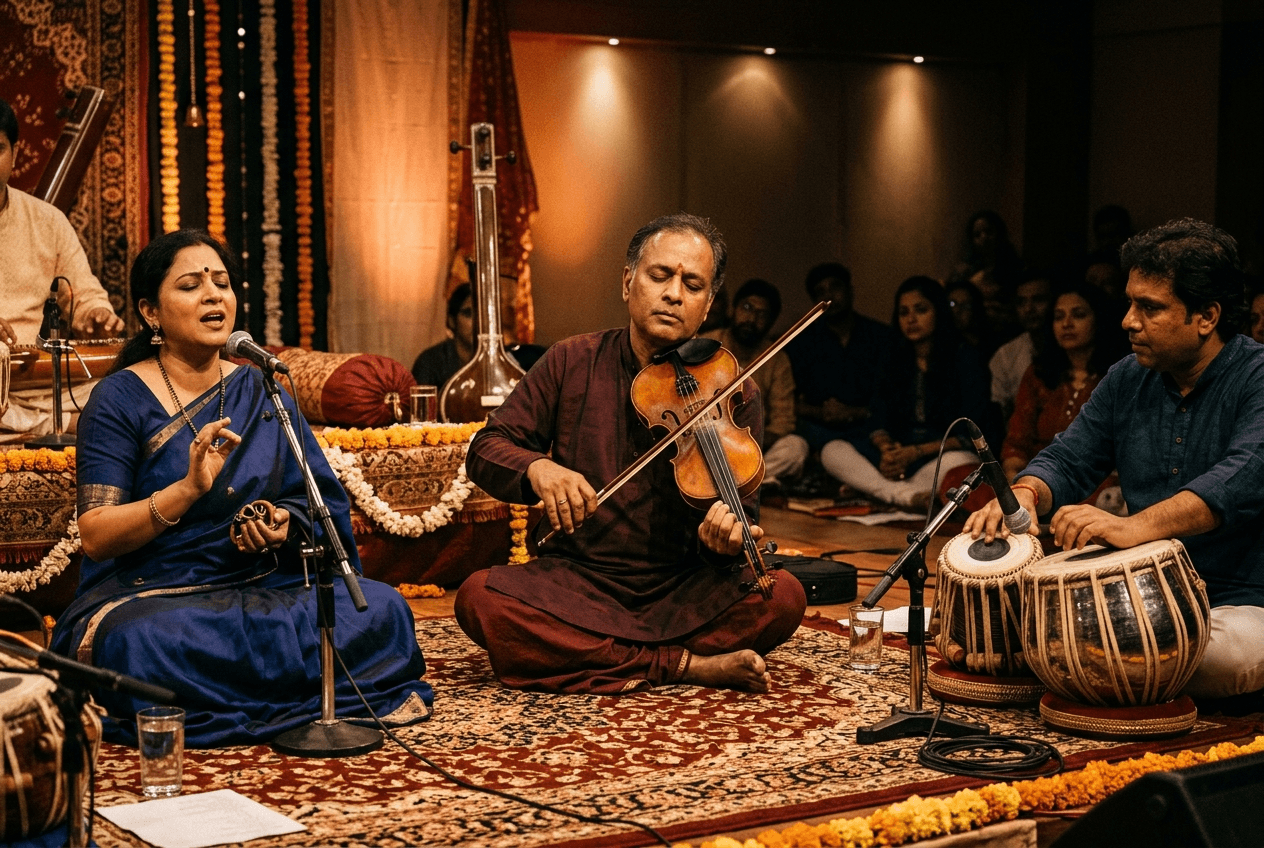 North Indian classical music adopted the instrument considerably later and less universally, and it remains a less central instrument in Hindustani music than in Carnatic, where it is close to indispensable.
Hindustani violin technique differs again, closer to the vocal gayaki style, with players seeking to reproduce the phrasing of a khayal singer including long meend glides between notes. V G Jog was central to establishing the instrument in the North, and N Rajam is among the most celebrated exponents of the gayaki approach. The instrument is usually held in the seated Indian position here too.
Western Violin and Carnatic Violin Compared
Is the Violin Hard to Learn?
Yes, the violin is genuinely hard, and it is worth being honest about why rather than encouraging someone into a false expectation.
Three things make it genuinely difficult at the start. There are no frets, so every note has to be placed by ear and memory, and a beginner will play out of tune constantly for months. Bowing is a separate physical skill involving speed, pressure, angle and contact point, all of which must be controlled simultaneously and none of which is intuitive. And the two hands are doing entirely unrelated jobs, which takes time to coordinate.
The result is that the violin has an unusually harsh early period. A beginner pianist sounds acceptable in week one. A beginner violinist does not, and everyone in the household knows it. That gap between effort and reward is the single biggest cause of people giving up, and knowing it is coming makes it survivable.
What makes it worth it is the other side of the same coin. Because nothing is fixed, everything is available. Continuous pitch, infinite dynamic gradation, and a tonal palette that responds to the smallest change in bow pressure. No fretted instrument can approach it for expressive range, which is why it has been central to two entirely separate classical traditions for centuries.
A realistic timeline
With consistent daily practice of twenty to thirty minutes, most learners produce a clean tone on open strings within a few weeks, play simple tunes recognisably within three to six months, and sound genuinely pleasant to a listener somewhere around the first year. Intonation stops being a constant battle around the second year. Vibrato is usually introduced only after basic intonation is secure, often a year or more in, since adding it earlier disguises pitch problems rather than solving them.
Practising against a fixed pulse from early on matters more here than on most instruments, because bow control and rhythm are physically linked. A metronome used with a proper method is worth more to a violin beginner than any equipment upgrade.
Starting Out: Practical Advice
Size before everything
Have the player sized properly rather than guessing. The standard test is to extend the left arm and cup the scroll in the palm with a slight bend at the elbow. If the arm is straight or straining, the instrument is too big. Children move up sizes as they grow, which is why renting is common and sensible for the early years.
Rent before you buy
For a child, renting avoids buying three instruments in four years. For an adult, renting for the first few months means you find out whether you will stick with it before committing. Many teachers can advise on local rental schemes, and school music programmes frequently run their own.
What to check on any instrument
The bridge should stand straight and vertical rather than leaning toward the fingerboard, since it creeps over time and eventually falls. Pegs should turn smoothly and hold rather than slipping or sticking. The fingerboard should be free of grooves. There should be no open seams where the top or back meets the ribs, which show as a fine line and buzz audibly. And the bow should have a full even ribbon of hair with no significant gaps.
Care and Australian conditions
Wooden instruments respond to humidity, and Australia presents both extremes depending on where you live. Dry inland heat and air conditioning can shrink the timber and open seams, while coastal and tropical humidity in Queensland and the Northern Territory can swell it and affect the glue. Keep the instrument in its case when not being played, avoid leaving it in a car under any circumstances, and wipe rosin dust off the top and strings after every session. A humidity control device in the case is a small cost and prevents the most common damage.
Learning Violin in Australia
 Western violin teaching is well established across Australia, with school strings programmes in many states, private studios in every capital, and a strong Suzuki teaching presence. A child who joins a school strings programme frequently gets an instrument supplied, group instruction and a peer group, which is the strongest predictor of continuing past the first year.
Carnatic violin is a different situation. Teachers exist in Melbourne, Sydney and Perth where the South Indian community is largest, and they are thinly spread everywhere else, so families in smaller cities and regional areas frequently have no local option. Online instruction has effectively solved this, and the instrument suits it reasonably well provided the camera shows both hands and the seated posture clearly. For families weighing when and how to start a child, the Carnatic music for kids guide covers the structure of that learning path.
One practical note for families in the Tamil, Telugu, Kannada and Malayalam communities across Australia. Many Carnatic vocal students take up the violin as a companion instrument, and there is a real advantage in that order, since the vocal training supplies the raga knowledge and the ear, and the instrument then becomes a way of expressing something already understood rather than two subjects learned at once.
Frequently Asked Questions
1. What are the parts of a violin?
The main parts are the scroll, pegbox and pegs, nut, neck, fingerboard, four strings, hollow body, f-holes, bridge, soundpost, bass bar, tailpiece, fine tuners, chinrest and endpin. The soundpost and bridge are both unglued and held by tension, and the soundpost in particular has an outsized effect on tone.
2. How is Carnatic violin different from Western violin?
Almost everything except the instrument itself. Carnatic players sit cross-legged with the scroll on the ankle, tune relative to the soloist's tonic rather than to fixed pitches, treat continuous pitch movement as the substance of the music rather than as decoration, learn by ear rather than from notation, and improvise as a core part of every concert.
3. How is a Carnatic violin tuned?
Relative to the lead performer's tonic rather than to absolute pitch, typically as tonic and fifth across two octaves, meaning Sa, Pa, Sa, Pa. This gives the accompanist the two most important notes of the raga in two registers, which suits following a vocalist who moves between octaves.
4. Is the violin hard to learn?
Yes, more so than most instruments at the start. It has no frets, so every note is placed by ear, bowing is a separate physical skill with several variables controlled at once, and the two hands do unrelated jobs. Most learners sound genuinely pleasant around the one-year mark with consistent daily practice.
5. How does a violin work?
Rosin makes the bow hair grip the string, pulling and releasing it hundreds of times a second, which keeps it vibrating continuously. That vibration passes through the bridge into the hollow wooden body, which resonates and projects the sound through the f-holes. Pitch comes from where the left hand stops the string.
6. What age should a child start violin?
Around five or six is common, and fractional-size instruments exist down to very small sizes for younger starters. What matters more than age is whether the child can concentrate for a short structured session and whether a correctly sized instrument is available, since playing one that is too large produces poor technique.
7. Why does my violin sound scratchy?
Usually too much rosin, bow pressure that is too heavy, or the bow drifting toward the fingerboard or over the bridge instead of staying in the sounding point between them. New bow hair that has never been rosined produces the opposite problem, which is almost no sound at all.
8. Do I need to loosen my bow after playing?
Yes, every time. Leaving a bow under tension warps the stick permanently, and it is the most common avoidable damage beginners cause. Loosen it until the hair is slack but not floppy, and retighten before playing.
9. Should I rent or buy a first violin?
Rent for a child, since they will outgrow two or three sizes, and rent for the first few months as an adult to confirm you will continue. Buying makes sense once the size is stable and the commitment is clear.
10. Can I learn Carnatic violin if I trained on Western violin?
You can, and you will need to rebuild a good deal. The posture, tuning, left-hand technique and the entire concept of what a correct note sounds like all differ. Existing bow control transfers well. Players who work across both traditions typically describe them as two instruments sharing a shape.
Final Thoughts
What makes the violin remarkable is exactly what makes it hard. Nothing is fixed, nothing is guided, and every note is the player's responsibility, which is why it takes a year to sound good and why nothing else quite matches it once you do.
If you are choosing between traditions, the honest advice is to choose by the music you actually want to play rather than by which seems more accessible, because the early difficulty is comparable either way and motivation is what carries you through it. Art Gharana teaches violin in both Western and Carnatic traditions, live and one-to-one, across Australian time zones, with a free first lesson.