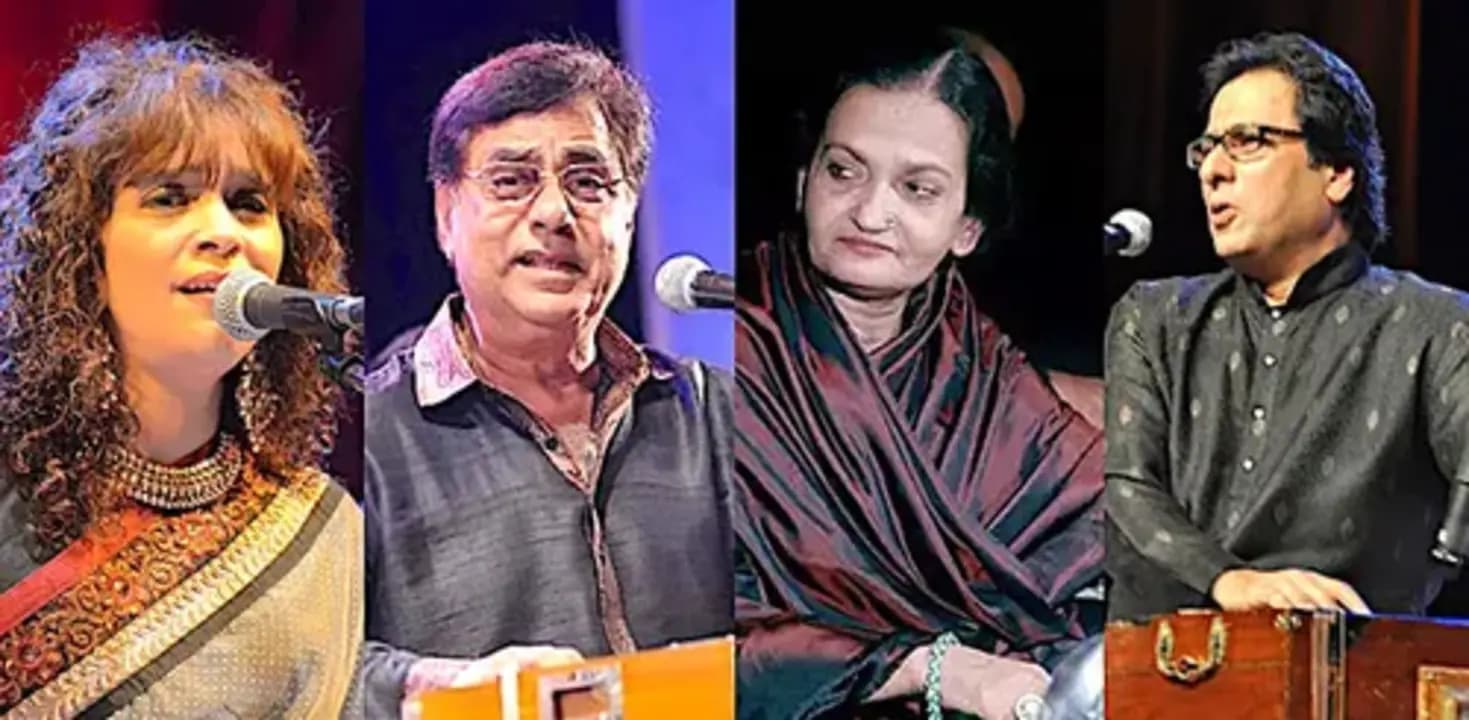
ChatGPT
 Google AI
 Grok
Grok Claude
Swaras in Hindustani music form the soul of Indian melody. Each note has its own personality, tone, and emotional depth. Without Swaras, no composition or Raga can exist. When you listen to a beautiful Raga like Yaman or Bhairav, you're actually hearing carefully arranged Swaras creating a distinct emotion. These seven basic Swaras — Sa, Re, Ga, Ma, Pa, Dha, and Ni — are known as the Sapta Swaras in Indian music.
Understanding Swara in Hindustani music isn't just about hitting the right pitch. It's about learning how each note connects with others to form a meaningful pattern. This foundation helps students build a deep sense of musical awareness, rhythm, and emotional balance. To begin your learning journey, explore Hindustani Classical Music.
What Are Swaras and Why Are They Important?
The word Swara refers to a musical sound that is pleasing to the ear. Every Swara represents a specific frequency, and when arranged in sequence, they create melodies. These notes are the foundation of Indian classical music, just as A, B, C, D, E, F, and G form the base of Western music. Without Swaras, melody would be formless — like a painting without color.
Origin and Meaning of the Word "Swara"
The term Swara comes from the Sanskrit root Svar, meaning "to sound" or "to shine." Ancient texts such as the Natya Shastra describe Swara as the vocal vibration that evokes emotion. It's not just a note but an expression of the soul — a connection between sound, emotion, and spirituality.
Difference Between Swara, Shruti, and Raga
A Shruti is a microtone — the smallest audible pitch difference in Indian music. A Swara is made up of several Shrutis, while a Raga is a structured set of Swaras arranged in ascending (Aaroh) and descending (Avaroh) patterns. So, Shruti builds Swara, and Swara builds Raga — the hierarchy of Hindustani melody.
Understanding the Basics of Swara
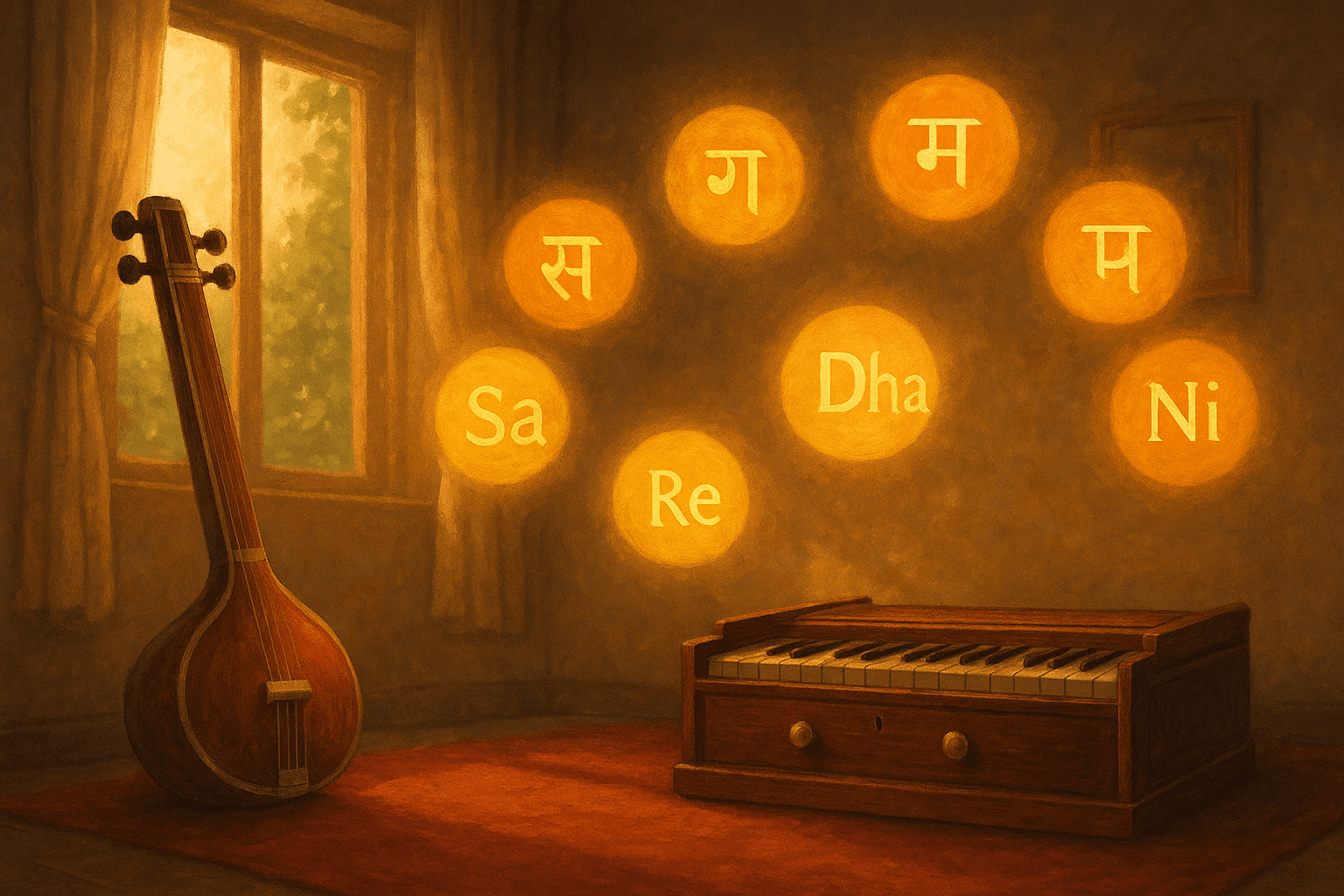
A Swara in Hindustani music is a single note that defines pitch. The definition of Swara lies in its ability to remain stable and resonate naturally within the human voice. The tonal foundation of Hindustani music depends entirely on these stable points, making it both mathematical and spiritual at once.
When learning, it's crucial to grasp the musical scale in Indian classical music. This includes twelve tones — seven Shuddha (natural) and five altered notes — just like in Western notation. To deepen your understanding of Swaras and their tonal beauty, read Indian Classical Music Journey.
The Concept of Natural, Flat, and Sharp Notes (Shuddha, Komal, Tivra)
There are three variations of Swaras — Shuddha (natural), Komal (flat), and Tivra (sharp). Re, Ga, Dha, and Ni can be Komal, while Ma can be Tivra. Shuddha Swaras form the basic Sa Re Ga Ma Pa Dha Ni scale. Komal and Tivra Swaras introduce color and emotion into Ragas.
How Swaras Create the Foundation of Melodies
Every melody begins with Swaras. They shape the identity of each Raga and bring life to a composition. When sung correctly, Swaras connect the listener to both rhythm and feeling — this is the spiritual aspect of Indian music that makes it timeless.
The Seven Basic Swaras (Sapta Swaras)
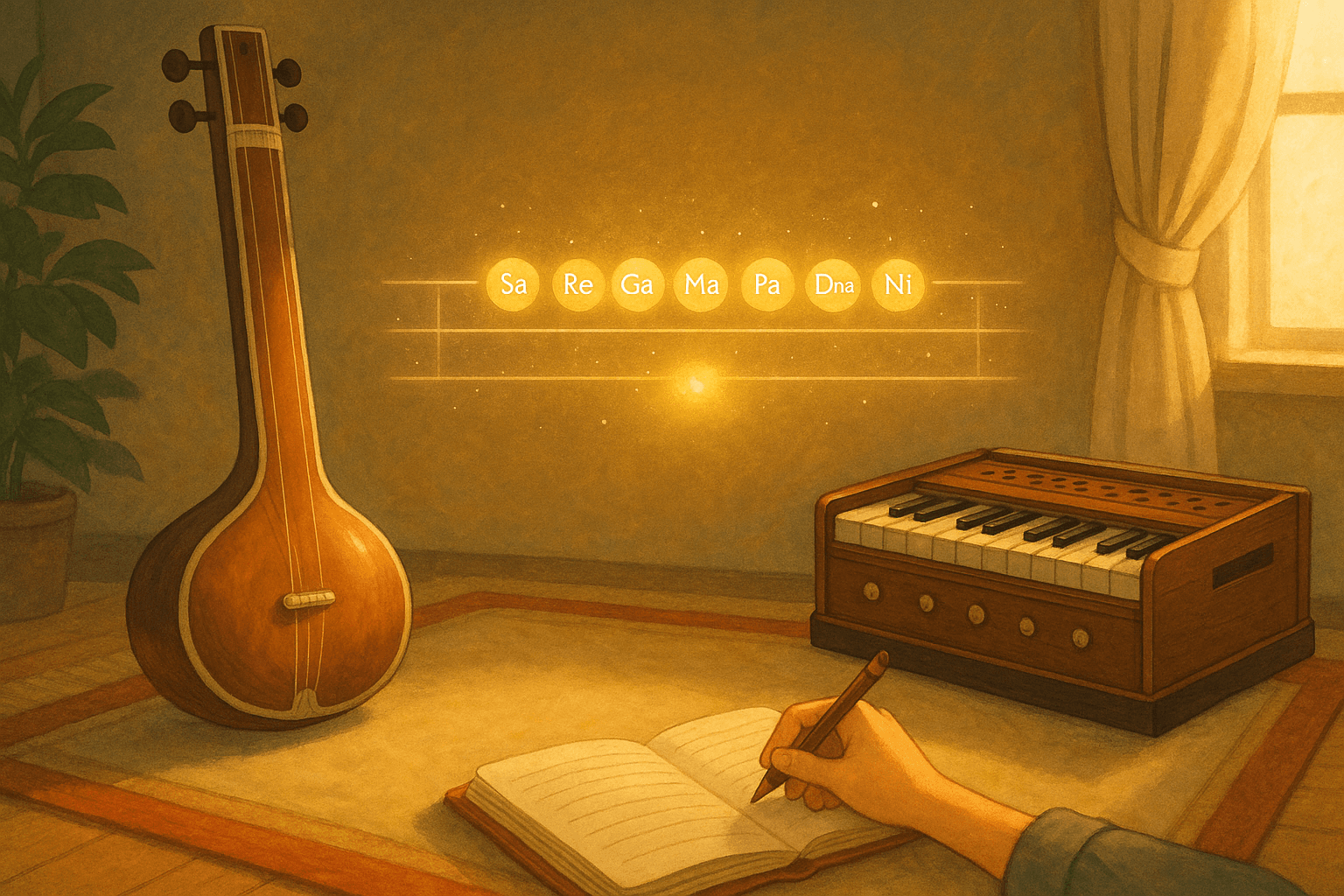
The Sapta Swaras in Indian music are the seven building blocks of melody. Each has a distinct tonal character, emotion, and symbolic meaning. They correspond to the seven notes in Western music but differ in emotional depth and intonation.
Here's a table showing the seven basic Swaras with their approximate frequencies and Western equivalents:
| Swara | Sanskrit Name | Frequency (Hz) | Western Equivalent | Character |
|---|---|---|---|---|
| Sa | Shadja | 240 | C | Foundation, stability |
| Re | Rishabh | 270 | D | Devotion, calmness |
| Ga | Gandhar | 300 | E | Joy, energy |
| Ma | Madhyam | 320 | F | Balance, thoughtfulness |
| Pa | Pancham | 360 | G | Strength, clarity |
| Dha | Dhaivat | 405 | A | Grace, compassion |
| Ni | Nishad | 450 | B | Longing, introspection |
Sa (Shadja)
Sa is the tonic note — the anchor of all music. It represents stability and foundation. No matter how complex a Raga becomes, it always returns to Sa. In Indian philosophy, Sa symbolizes the universal sound — the primordial vibration.
Re (Rishabh)
Re brings a sense of devotion and calmness. In Komal form (flat Re), it evokes deep emotions and is often used in morning Ragas. Shuddha Re is brighter and more energetic.
Ga (Gandhar)
Ga represents joy and energy. Komal Ga has a melancholic touch, while Shuddha Ga is uplifting. Many famous Ragas like Yaman and Bhairav use Ga to create emotional contrast.
Ma (Madhyam)
Ma is the middle note — a bridge between lower and higher Swaras. Shuddha Ma is natural, while Tivra Ma (sharp Ma) adds intensity and drama. Tivra Ma is essential in Ragas like Marwa and Puriya.
Pa (Pancham)
Pa is the fifth note and the second most stable Swara after Sa. It represents strength and clarity. Pa is fixed and never altered (no Komal or Tivra). It forms the harmonic center alongside Sa.
Dha (Dhaivat)
Dha conveys grace and compassion. Komal Dha is used in evening Ragas to evoke softness, while Shuddha Dha brings brightness. It's a crucial Swara in Raag Bhimpalasi and Raag Darbari.
Ni (Nishad)
Ni is the seventh note, symbolizing longing and introspection. Komal Ni brings sadness and depth, while Shuddha Ni is uplifting. Ni leads back to Sa, completing the melodic cycle.
Understanding Sargam in Hindustani Classical Music
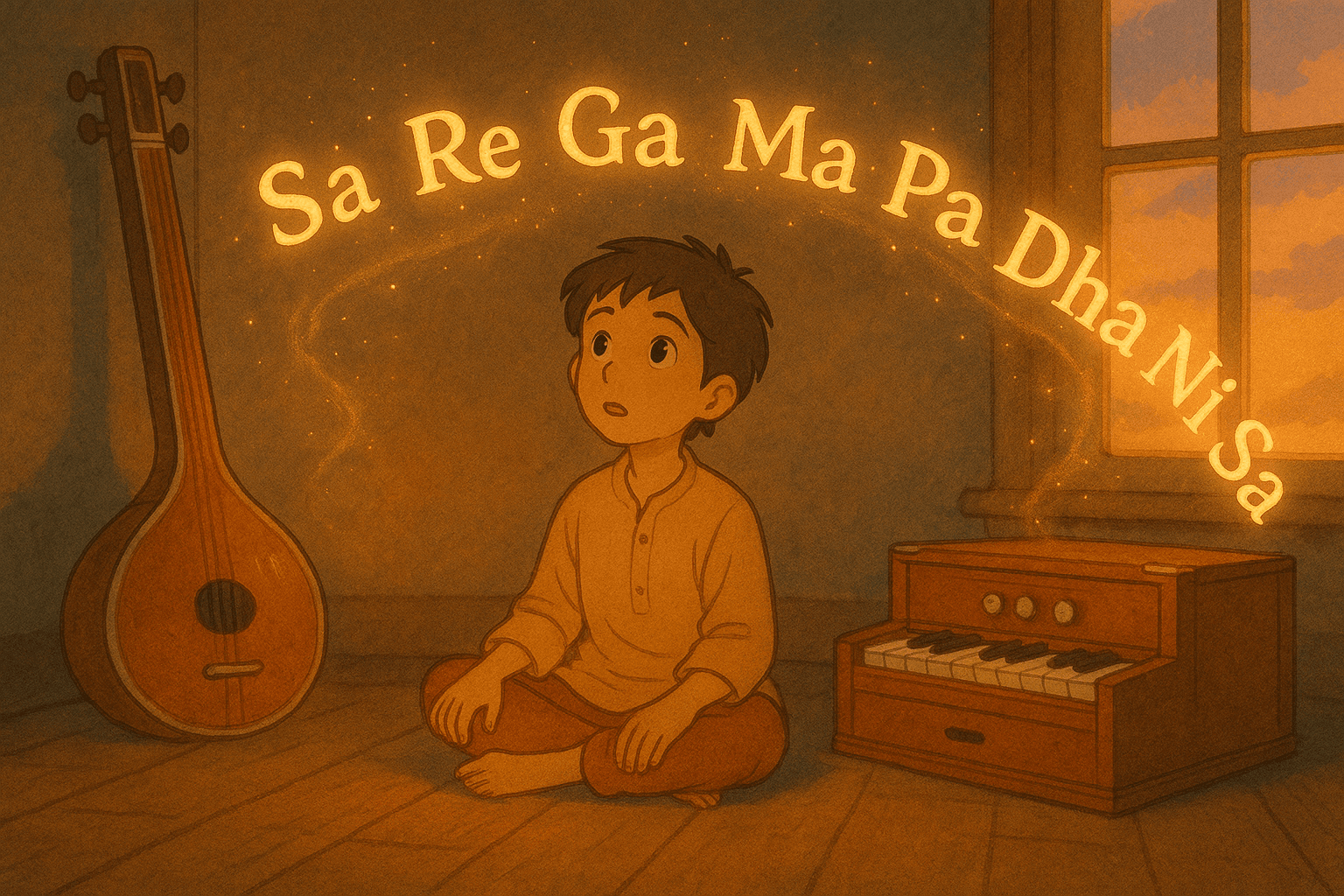
Sargam is the practice of singing note names — Sa, Re, Ga, Ma, Pa, Dha, Ni, Sa. It's equivalent to solfege in Western music (Do, Re, Mi, Fa, Sol, La, Ti, Do). Sargam training helps students develop pitch accuracy, voice control, and melodic memory.
How to Practice Sargam
- Start with Shuddha Swaras (natural notes) in a slow tempo
- Practice Aaroh (ascending) and Avaroh (descending) patterns
- Gradually introduce Komal and Tivra variations
- Use a tanpura or harmonium to maintain pitch reference
- Focus on breath control and clear pronunciation
The Role of Swaras in a Raga
A Raga is not just a scale — it's a melodic framework with specific rules. Each Raga uses a unique combination of Swaras to create a distinct mood and emotion. The Vadi Swara (most important note) and Samvadi Swara (second most important) define the Raga's character.
Examples of Ragas Based on Swara Usage
- Raag Yaman: Uses Tivra Ma, creating a serene and devotional mood
- Raag Bhairav: Uses Komal Re and Komal Dha, evoking solemnity
- Raag Bhimpalasi: Uses Komal Ga and Komal Ni, expressing tenderness
- Raag Darbari: Uses Komal Ga, Komal Dha, Komal Ni, conveying grandeur
Swara Patterns and Their Use in Compositions
Swaras are arranged in specific patterns called Taans, Alankars, and Pakads. These patterns help identify Ragas and add ornamentation to melodies.
Vadi, Samvadi, and Anuvadi Swaras
- Vadi Swara: The king note — the most prominent Swara in a Raga
- Samvadi Swara: The queen note — supports the Vadi
- Anuvadi Swaras: Helper notes that add color
- Vivadi Swaras: Dissonant notes that create tension
Techniques to Practice Swaras
- Daily Sargam Practice: Sing Sa Re Ga Ma Pa Dha Ni Sa with correct pitch
- Listening and Repetition: Listen to classical performances and identify Swaras
- Using Tanpura or Harmonium: Maintain pitch reference while practicing
- Voice Culture and Breathing: Develop breath control for sustained notes
Learn Classical Music: Why Mastering Swaras Is Essential
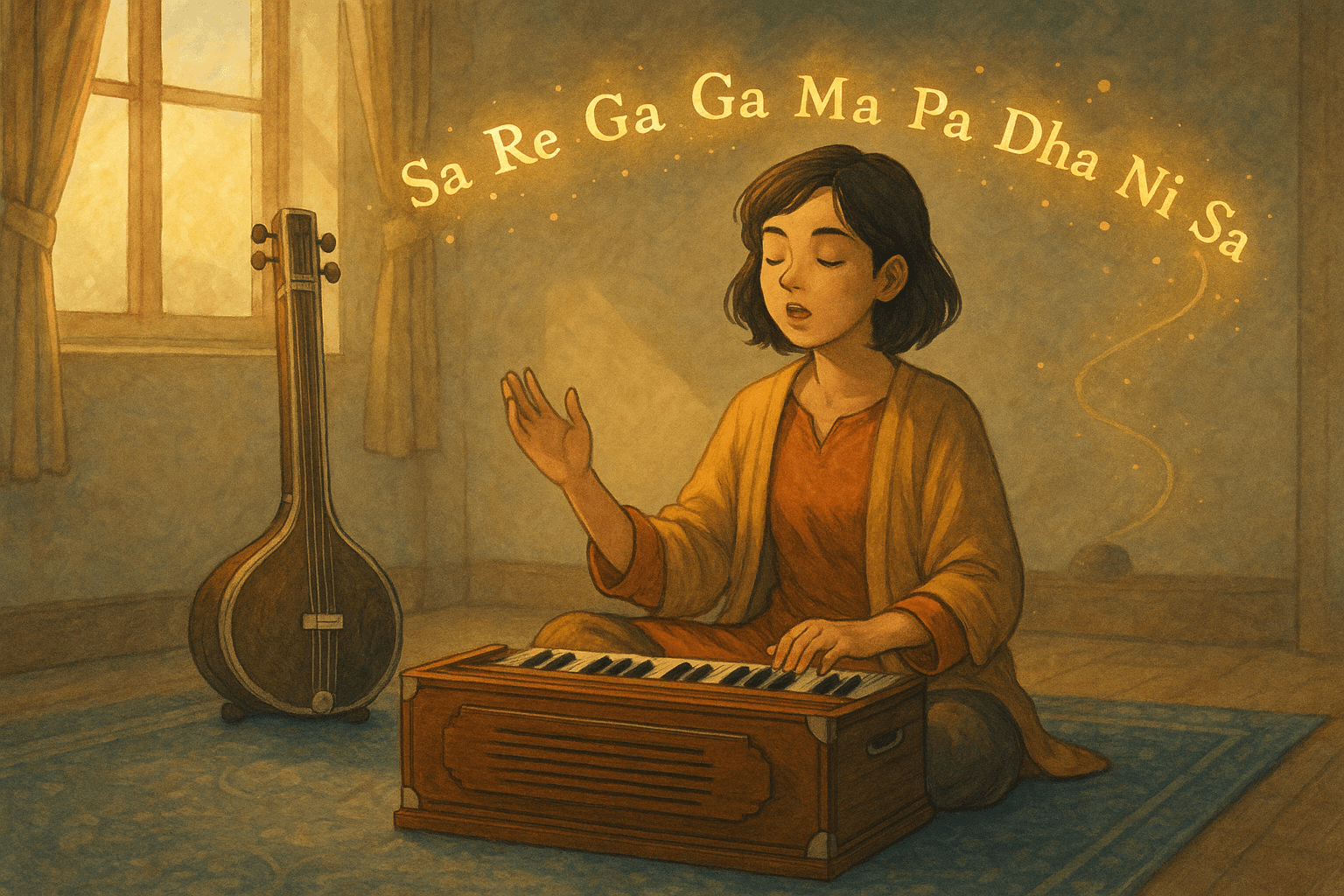
Mastering Swaras is the foundation of learning Indian classical music. Whether you're learning Hindustani or Carnatic music, understanding Swaras helps you:
- Recognize Ragas by their Swara patterns
- Improve vocal technique and pitch accuracy
- Compose melodies with emotional depth
- Appreciate the spiritual aspect of music
Role of a Guru in Teaching Swaras
In Indian classical music, the Guru-Shishya Parampara (teacher-student tradition) is sacred. A Guru doesn't just teach notes — they transmit the soul of music. Learning Swaras from a Guru ensures proper intonation, phrasing, and emotional expression.
Online Learning Resources
Today, learning Swaras is accessible through online music classes. At Art Gharana, we offer structured courses in Hindustani Classical Music with live guidance, practice routines, and personalized feedback. Whether you're a beginner or an advanced student, mastering Swaras is the first step toward musical excellence.
Frequently Asked Questions About Swaras
1. How Many Swaras Are There in Indian Classical Music?
There are seven basic Swaras — Sa, Re, Ga, Ma, Pa, Dha, and Ni. Together they form the Sapta Swaras in Indian music.
2. What Is the Difference Between Swara and Note?
A note in Western music is a fixed frequency. A Swara includes emotional color, microtonal variation, and spiritual depth.
3. What Are Komal and Tivra Swaras?
Komal means flat, and Tivra means sharp. They modify the pitch to express varied moods.
4. Can Beginners Learn Swaras Online?
Absolutely. Beginners can learn Swaras through Art Gharana's online Hindustani music classes, which include live guidance and practice routines.