ChatGPT
 Google AI
 Grok
Grok Claude
Choosing your first guitar feels exciting because it opens the door to music, confidence, and personal expression. This complete buying your first guitar guide helps you understand every detail so you can make a smart choice without feeling confused. You will learn how guitar playability, guitar action height, tuning stability, build quality, and construction quality shape your experience from the moment you touch the instrument. You will also find helpful links such as the beginner guitar tuning guide that support your learning.
Many beginners struggle with questions about the best guitar for beginners, whether to buy a guitar online, how to check guitar neck straightness, or how to judge tone quality. This beginner guitar guide simplifies everything for you. You will see examples, facts, comparisons, and even a guitar sizing chart to make your choice much easier. By the end, choosing the first guitar for beginners will feel natural and enjoyable.
Choosing the Right Guitar for Your Journey
 Every journey begins with clarity, so understanding the type of guitar you want is the first step. Your choice shapes your tone quality, sound projection, fretboard accessibility, and beginner guitar comfort. Many players start with acoustic guitar for beginners because it is simple and expressive, while others prefer electric guitar for beginners because it offers flexible sound control and easier string action. When you explore guitar types slowly and understand the differences, you gain confidence and avoid wrong purchases.
Before buying your first guitar, notice how guitar setup, string action, guitar hardware quality, and scale length vs total length affect your experience. A well-chosen instrument keeps you motivated, improves your learning speed, and forms a strong foundation. You can explore beginner-friendly lessons through Art Gharana online guitar classes to support your progress.
Acoustic Guitar
Many beginners favor the acoustic guitar because it offers natural tone and strong sound projection. This steel-string acoustic design works well for singing, songwriting, and folk melodies. Acoustic guitar for beginners helps you develop finger strength and rhythm because the sound comes directly from your hands, not from electronics. Its simplicity makes it a popular choice for self-learning and casual practice.
Some players enjoy how the acoustic guitar encourages expressive strumming and fingerstyle guitar patterns. The wooden body responds to touch and helps you understand tone shaping from the start. Acoustic guitars work well for social gatherings, home practice, and travel moments where quick music adds warmth to the environment.
Advantages of an acoustic guitar
The main advantage is its natural and warm tone. You do not need amplifiers or cables, so you can play it anywhere easily. The steel-string acoustic design also supports strong rhythm creation and helps beginners feel connected to their music. Many singers prefer it because the tone blends smoothly with vocals.
It is also more durable and requires lower maintenance. You only need occasional cleaning and new strings to keep it sounding bright. An acoustic guitar also teaches discipline because it requires a bit of finger strength, helping your skills grow naturally with time.
Disadvantages of an acoustic guitar
The main disadvantage is the slightly higher tension on a steel-string acoustic model. Beginners may feel finger pain during the first week. The larger body may also feel uncomfortable for small players or young children. Because it has no built-in electronics, you cannot adjust volume or tone settings for recordings or performances.
Another issue is limited sound shaping compared to electric models. You depend completely on your strumming style and finger pressure, which may feel difficult early on. However, regular practice usually solves this.
Electric Guitar
The electric guitar for beginners offers light strings, smooth playing comfort, and easier chord shapes. It is an excellent choice for rock, pop, jazz, and metal music because it supports effects, distortion, and tone shaping. With low string action, beginners find it easier to press notes clearly without extra pressure.
Electric guitars rely on pickups and guitar electronics check systems, so learning basic pickup testing is useful. You will enjoy how an electric guitar creates long sustain, sharp clarity, and a dynamic range suitable for many modern songs.
Classical Guitar
A classical guitar for beginners uses nylon-string guitar material that feels soft and gentle on your fingers. Its wide neck gives each string enough space, making it perfect for fingerstyle guitar, flamenco guitar, Latin music, and traditional melodies. Beginners who enjoy calm, expressive music often choose this instrument first.
The warm, mellow tone encourages emotional playing and teaches players to use their fingertips with precision. Classical guitars are also great for kids because nylon strings reduce finger pain during early practice.
Hybrid & Acoustic-Electric Guitars
A hybrid guitar blends the body of an acoustic with certain electronic features to help you record, amplify, or perform on stage. This model works well for musicians who want both natural tone and advanced sound control. It allows you to explore modern effects without losing the beauty of wooden resonance.
These guitars support flexible playability and work well for traveling performers, recording artists, or hobby players who want more control. The dual nature makes them reliable companions for long-term growth.
What is an acoustic-electric guitar?
An acoustic-electric guitar is an acoustic model fitted with a built-in preamp, pickup system, and equalizer. The electronics let you connect to speakers or interfaces for recording and concerts. It behaves like a regular acoustic when unplugged and becomes a versatile sound machine when connected.
Many players choose it as their first guitar because it handles multiple playing situations effortlessly. You can play softly at home or loudly on stage with the same instrument.
Comparing Guitar Types: Which One Should You Choose?
Selecting the best guitar type becomes easier once you understand your goals, music taste, hand comfort, and desired tone. An acoustic feels natural and organic, while an electric supports long sessions with minimal finger strain. A classical guitar adds warmth and encourages soft, expressive music. A hybrid model gives you the flexibility to grow across different styles. When you compare them slowly, you see which option matches your body size, strength, and learning plan.
The first guitar for beginners should feel comfortable, stable in tuning, and easy to hold. If you like singing along, choose acoustic. If you love rock tones, choose electric. If you want fingerstyle guitar, choose classical. If you want versatility, pick hybrid guitar. Start simple and focus on learning basic chords using the beginner chord chart to build confidence.
What to Look for When Choosing a Guitar Type
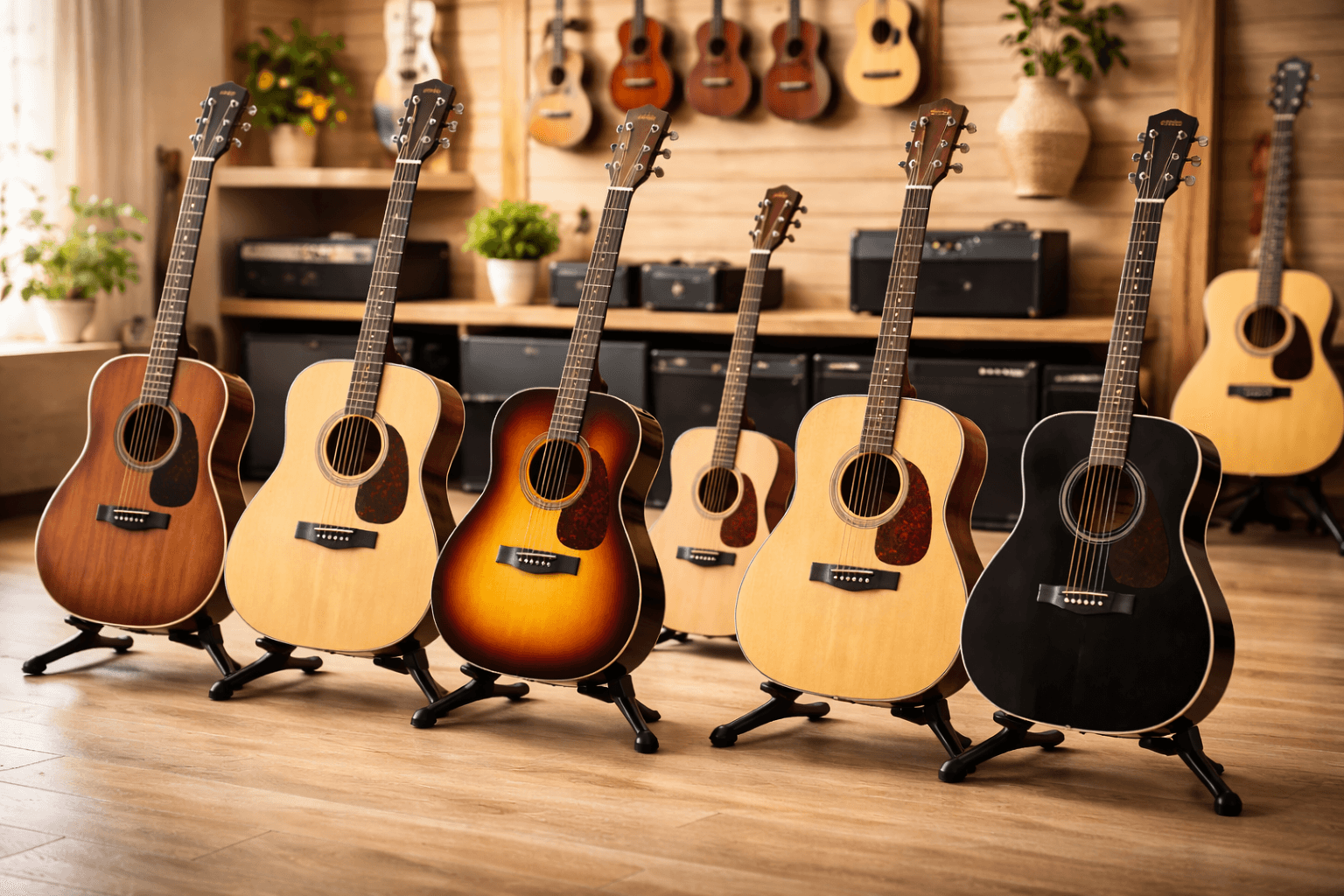 The first factor is the type of music you want to play because genres shape color, tone, and style. Your second factor is hand comfort because neck thickness, body size, string type, and guitar action height influence your practice time. The third factor is your budget because different guitars have different materials, hardware, and electronics.
Your last factor is long-term goals. Acoustic suits songwriting. Electric suits modern bands. Classical suits emotional playing. Hybrid suits performing musicians. Knowing these helps you decide confidently.
Acoustic vs Electric: Which Is Best for Beginners?
Both are great depending on your goals. Acoustic guitar for beginners builds strength and tone control, making it ideal for singing and storytelling musicians. Electric guitar for beginners offers easier playability, lighter strings, and creative sound effects, making it ideal for fast progress.
If you want discipline and natural tone, choose acoustic. If you want comfort and modern tones, choose electric. There is no wrong choice because both inspire unique journeys.
Which Guitar Should a Child Start With?
Children need a guitar size for kids that fits their height and arm length. Nylon-string guitar models feel soft, making classical guitars a strong choice for young learners. If the child wants bright strumming sounds, a small steel-string acoustic works well too.
The main focus should be beginner guitar comfort. A child-friendly body size encourages better posture, better finger movement, and more enjoyable learning sessions.
What is a 12-string guitar?
A 12-string guitar uses paired strings to create full, shimmering sound. Folk, rock, and world music often use this rich tone. Beginners should start with a regular six-string model, then explore the 12-string guitar once finger strength and control improve.
The 12-string design adds depth but requires more tuning stability and careful handling. It is best for intermediate players.
Selecting the Right Guitar Size
 Finding the right guitar size affects comfort, posture, and long-term progress. A guitar that is too large reduces fretboard accessibility and will cause hand strain. A guitar that is too small may limit sound projection and confidence. The best guitar for beginners always fits the player’s body naturally, helping them practice longer with joy.
Understanding scale length vs total length helps you pick the right model. Scale length affects tension and finger pressure, while total length affects hold and balance. Use the guitar sizing chart below to guide your choice.
Guitar Size & Fit: Why It Matters
The correct guitar size shapes your entire learning experience. A comfortable model allows clean chords, faster transitions, and correct wrist movement. A poorly sized guitar causes frustration, slow learning, and early fatigue.
Proper size improves tuning stability, reduces shoulder strain, and enhances tone quality. Beginners notice smooth improvement when the body and neck feel aligned with natural reach.
Guitar Sizing Chart by Age and Height
Here is a helpful guitar sizing chart suitable for kids and adults:
Age Height Recommended Size
4–6 Under 3.9 ft 1/4 size 6–9 3.9–4.5 ft 1/2 size 9–12 4.5–4.9 ft 3/4 size 12+ and Adults 5 ft and above Full size
Total Length vs. Scale Length Explained
Total length measures the entire guitar from top to bottom. Scale length measures the vibrating string length between the nut and saddle. Scale length affects tension, tone, and finger pressure, which influence beginner guitar comfort.
A shorter scale length offers lower tension and easier playability. A longer scale length produces sharper tone and stronger projection. Both matter when choosing your first guitar.
What to Look for When Buying a Guitar (Beginner Checklist)
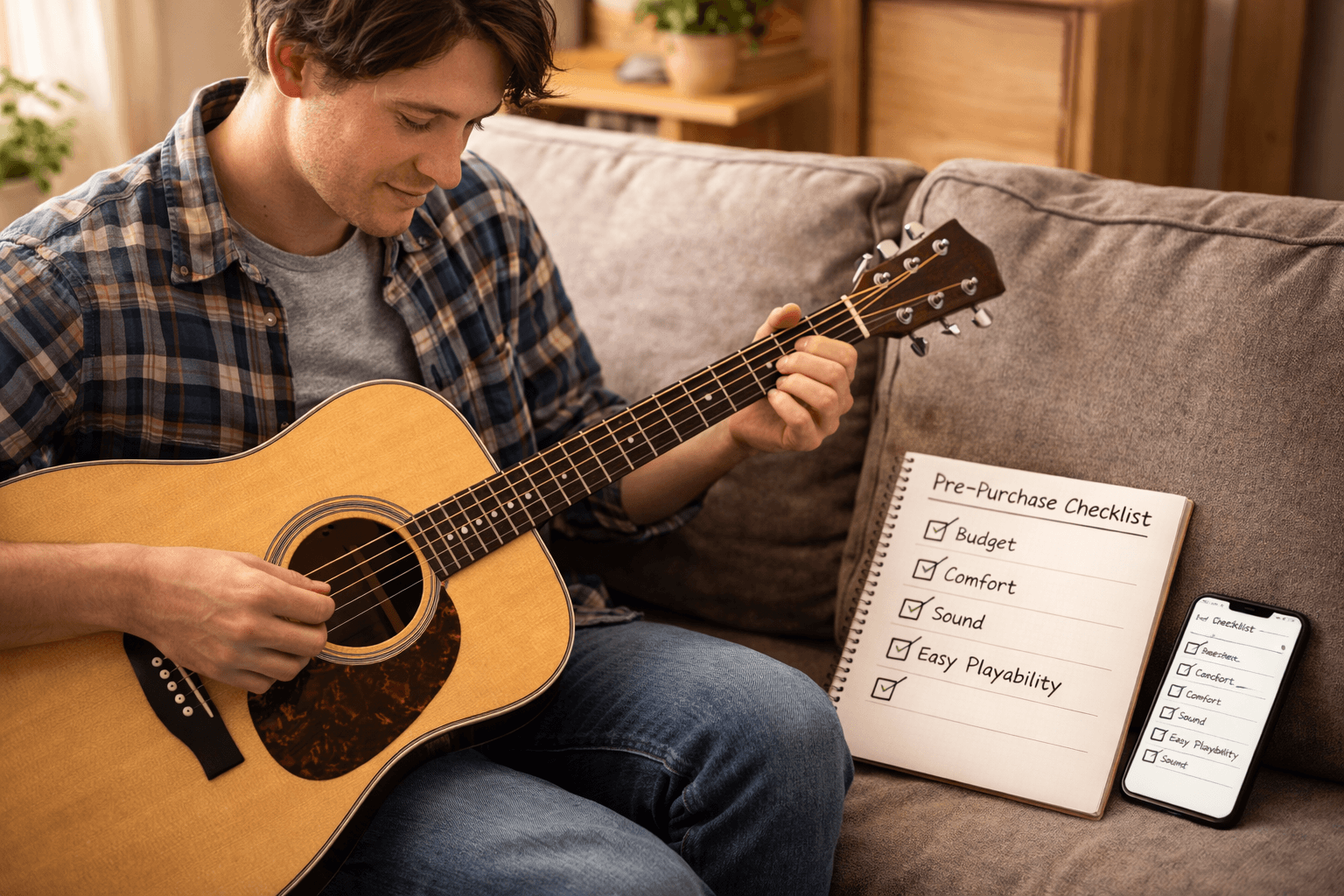 A strong guitar buying guide ensures that your new instrument feels smooth, stable, and inspiring. Always check tuning stability, neck alignment, fret levelling, build quality, and guitar setup before purchasing. These factors decide how comfortable the early days of practice will be. Many new players skip these checks and later feel frustrated by bad sound or stiff strings.
Understanding guitar hardware quality and construction quality helps you avoid poor instruments. Good materials last longer, maintain clear tone, and stay in tune through practice sessions. A reliable guitar also motivates you to learn faster and enjoy playing daily.
1. Does the guitar stay in tune?
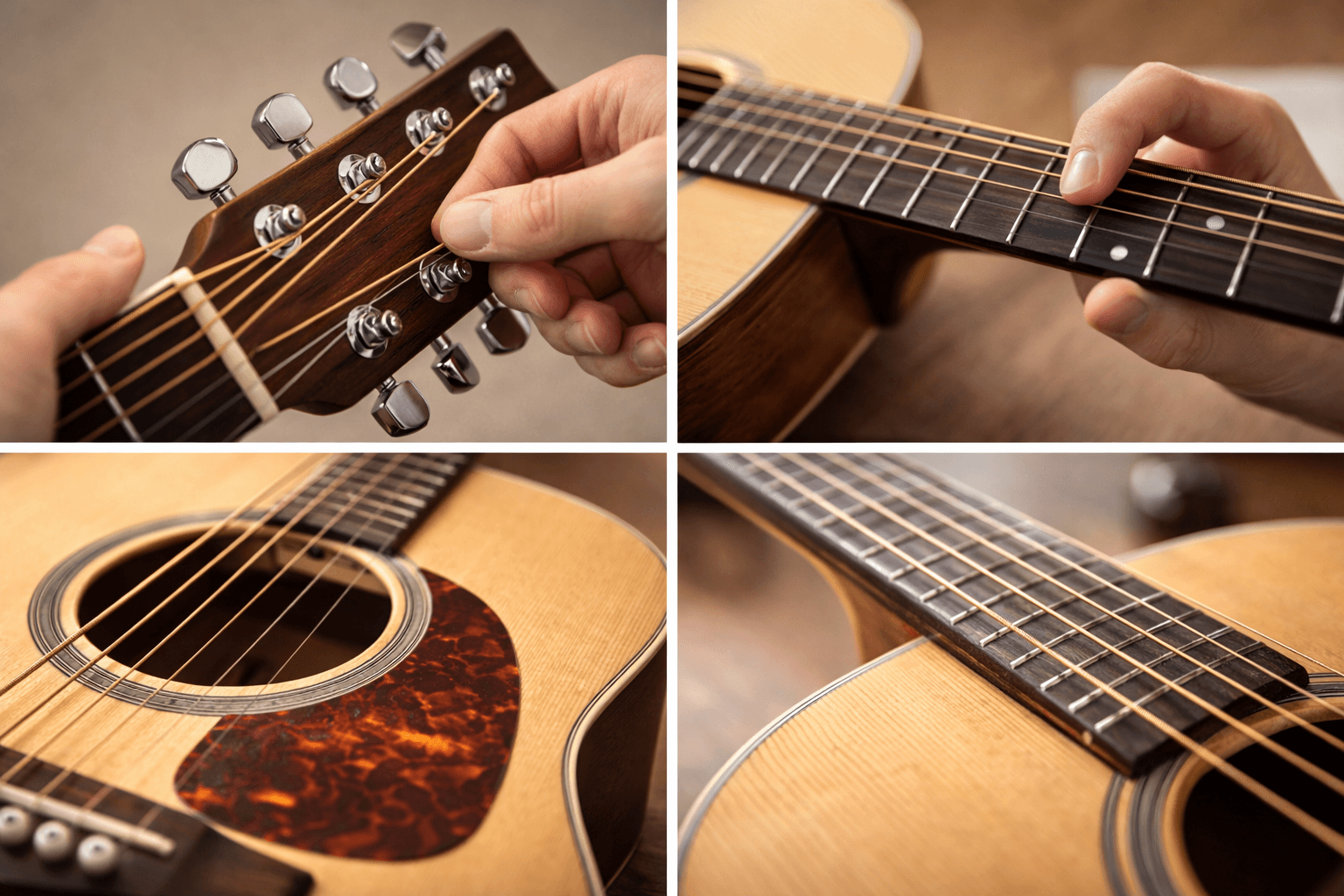
Tuning stability is the first sign of good quality. Test how long the guitar holds pitch because frequent tuning slows learning. Stable tuners, strong strings, and proper construction quality help the instrument stay clear and accurate for longer periods.
A guitar that stays in tune makes practice enjoyable, especially when learning using the beginner tuning guide.
2. Is the guitar neck straight?
Neck alignment controls sound clarity and comfort. A straight neck avoids buzzing, uneven notes, or stuck frets. You can check it by looking down the neck from the headstock to the body.
Proper neck alignment also supports clean chords, fast transitions, and consistent tone. A twisted neck requires professional repair and should be avoided.
3. How far are the strings from the fretboard?
String action refers to how high the strings sit above the frets. Lower action offers easier playability, especially for beginners. High action makes pressing chords harder and reduces motivation.
Smooth guitar action height improves finger control, reduces pressure, and supports relaxed playing. Begin with low to medium action for comfort.
4. Can you comfortably reach the entire fretboard?
Fretboard accessibility determines how easily you can move your hand up and down. A comfortable guitar fits your reach and allows clean transitions. If the guitar feels too long or wide, it may limit progress.
Your fingers should travel smoothly between frets without strain. This gives confidence when learning new chord shapes through Art Gharana beginner lessons.
5. Are the electronics in good condition? (For electric/hybrid guitars)
Check pickup testing, switches, output jack, and tone knobs for smooth operation. Good electronics produce clean tone without noise. Faulty wiring affects sound projection and may disrupt recordings or performances.
Always test tone quality with simple playing patterns to ensure every note feels clear and balanced.
Essential Accessories for Beginner Guitarists
 Accessories enhance comfort, sound, and learning. Picks help beginners gain control. Straps support better posture. Capos simplify chord shapes for new songs. These small accessories transform the experience and bring more joy to daily practice sessions.
Extra strings, tuners, metronomes, and cleaning kits keep your guitar healthy. Learn to change strings early because it boosts confidence and improves tone quality. Accessories also protect your guitar from damage and extend its lifespan.
Picks, Straps, and Capos
Picks help beginners strike strings cleanly. Straps support correct posture. Capos allow you to shift keys quickly without learning new shapes. These tools also improve rhythm and simplify many songs.
Each accessory supports faster progress and helps you explore new music styles with confidence.
Guitar Bag or Hard Case
A good case protects your guitar from heat, dust, and accidental bumps. A padded bag suits casual players. A hard case suits travelers and performing musicians.
Protection ensures long-term build quality and reliable tone.
Tuner and Metronome
A tuner supports accurate pitch, while a metronome improves rhythm. Both tools help early growth and maintain discipline. Use them regularly for best results.
Together they create a solid foundation for musical timing and precision.
Extra Strings
Breaking strings is normal for beginners. Keep spare sets ready to avoid interruptions. New strings also refresh tone and improve sound projection.
Changing strings builds confidence and deepens your understanding of guitar mechanics.
Cleaning & Maintenance Kit
A clean guitar sounds better and lasts longer. Use polishing cloths, string cleaners, and fretboard oil. Regular care prevents dust buildup and warping.
A well-maintained guitar stays comfortable and inspiring.
Buying a New vs. Used Guitar
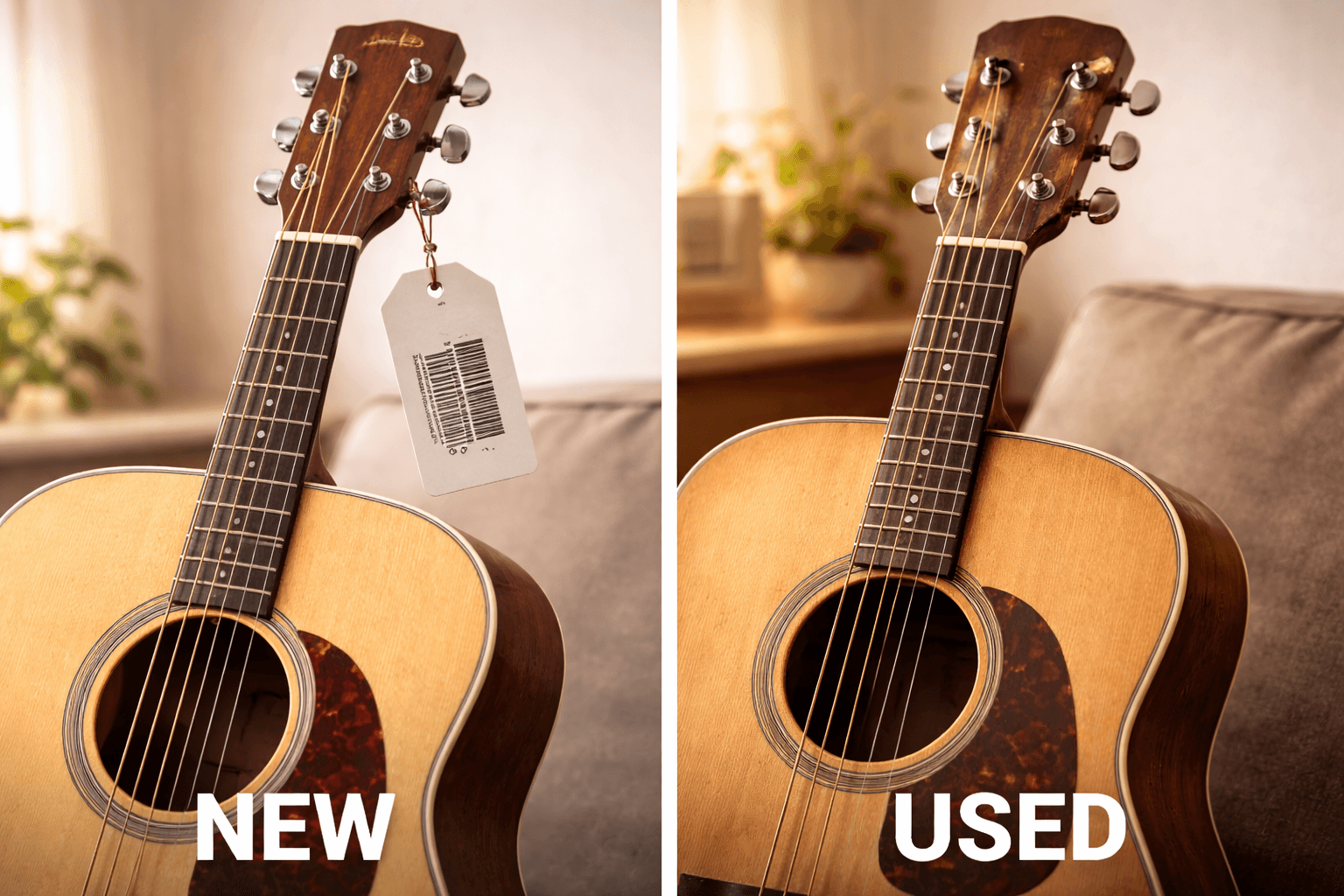 Choosing between new and used models depends on budget, condition, and goals. New guitars offer reliable build quality and fresh components. Used guitars offer affordability and sometimes richer tone from seasoned wood. Both options can work for buying your first guitar if inspected carefully.
New models come with warranties. Used ones require checking for guitar neck straightness, fret levelling issues, or cracks. When you inspect properly, you avoid future repairs and enjoy smooth progress.
Advantages of Buying a New Guitar
New guitars offer clean tone, perfect construction quality, and full warranties. They have fresh electronics, stable tuning, and strong playability. Beginners feel confident knowing the instrument is flawless.
New models create excitement and motivate daily practice.
Advantages of Buying a Used Guitar
Used guitars offer lower prices and sometimes better tone due to aged wood. They may already be set up well by previous owners. This works for budget buyers.
However, inspection is important to avoid repair costs.
Things to Inspect Before Buying a Used Guitar
Look for cracks, warped necks, sharp frets, loose tuners, and broken electronics. Check tuning stability and string action. Test sound projection. Ensure fret levelling feels smooth.
If everything feels clean and comfortable, the guitar can be a great value.
Best Beginner Guitars & Guitar Brands
 This guitar buying guide India and USA-focused section explains how beginners can choose top-quality models. Focus on comfort, tone, durability, and learning goals. Avoid confusing specs and choose simple designs that help you progress. The best guitar for beginners always feels easy to play and holds tuning well.
Different brands offer different tones, neck shapes, and styles. Choose one that suits your hand size, music taste, and growth plan.
Best Beginner Guitar in India
Beginners in India often choose simple, comfortable models with soft action and strong durability. Many learners prefer steel-string acoustic models for singing and home practice. For classical or Bollywood melodies, nylon-string guitars are popular.
This guide helps all beginners choose wisely regardless of location.
Fender Squier vs. Gibson Epiphone – The Classic Comparison
This comparison gives you insight into two popular styles without naming competitors directly. One style focuses on bright tones and smooth necks. The other focuses on warm tones and thick sustain. Each has benefits depending on your goal.
Choose based on hand fit, tone preference, and music style.
Other Good Guitar Brands for Beginners
Many companies produce beginner-friendly models with lightweight bodies and smooth fretboards. Look for guitars with stable tuners, clear tone, and comfortable action. Choose wood types like spruce, mahogany, or cedar for balanced sound.
Pick any brand that offers consistency and durability.
Budget-Friendly Guitar Options
Affordable guitars work well when chosen carefully. Test comfort, tone, and tuning stability. Even low-cost models can perform well when set up properly. Beginners should focus on feel, not just price.
Invest wisely for long-term progress.
Where to Buy Your Guitar?
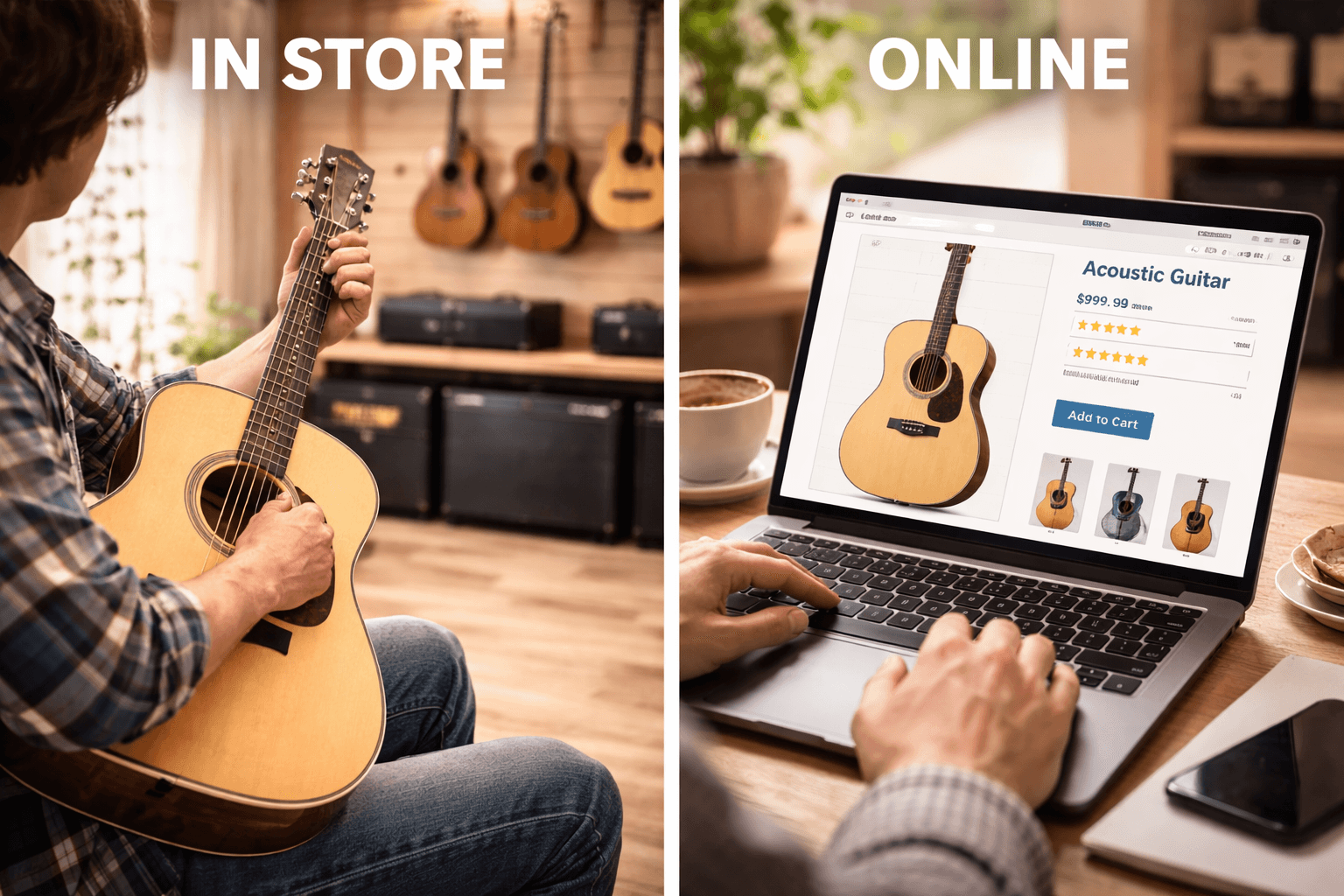 Finding the right store ensures a smooth buying experience. A trusted shop provides clear information, proper guidance, and genuine products. Beginners gain confidence when they test guitars with expert help. Buying your first guitar becomes simple when you choose the right seller.
You can buy a guitar online or visit stores near you. Online platforms offer convenience and variety. Physical stores offer touch-and-feel experience. Choose based on comfort and availability.
Buying from Local Physical Music Stores
Local stores allow you to test guitars personally. This helps you understand playability, tone quality, and comfort. Staff can guide you based on hand size, skill level, and goals.
Try multiple guitars to compare feel and sound before choosing.
Buying Online (E-commerce Platforms)
Many learners prefer to buy a guitar online because it offers wide choice and easy delivery. Reading reviews, comparing specs, and checking ratings helps you choose wisely. Make sure the seller provides clear return policies.
Choose platforms that show detailed photos, videos, and descriptions.
How to Buy a Guitar Online Safely
Always check seller ratings, product reviews, and refund options. Look for clear images and full descriptions that explain guitar size, action height, and neck alignment details. Contact the seller if something feels unclear.
A careful online purchase ensures a safe and satisfying experience.
Pre-Purchase Checklist: Your Buying Roadmap
Before paying, confirm the guitar neck is straight, tuning stability is strong, and all frets produce clean notes. Ensure the strings feel comfortable, the action height suits your fingers, and tone quality feels inspiring. Test electronics, tuners, and build quality whether you buy online or offline.
A good guitar should feel like an extension of your body. Always check sound projection, fretboard accessibility, and overall balance. Your confidence will grow once you choose the perfect model.
Starting Your Musical Education
Learning guitar becomes easier with guidance. Beginners progress faster when they follow structured lessons and practice plans. Many learners enjoy free content and online classes to build early skills. Explore Art Gharana online guitar lessons for expert support.
Music also improves mental health, confidence, and creativity. You can read about this in the health benefits of playing guitar guide.
Should You Take Classes as a Beginner?
Yes. Classes help you avoid mistakes, build good habits, and stay motivated. A teacher guides your posture and technique. This saves time and speeds up progress.
Structured lessons give you clear goals and steady improvement.
How to Learn Guitar Online
Online learning is flexible and comfortable. You can practice anytime and follow simple videos or guides. Many beginners use online resources to learn chords, songs, and techniques.
Choose platforms that offer step-by-step lessons and clear instructions.
Many learners enjoy trial lessons before joining full courses. You can explore a free session through Art Gharana to understand teaching style, structure, and guidance. This helps you start with confidence and learn smartly.
A trial class builds strong foundations and helps beginners avoid confusion.
Ready to Play Your New Guitar?
 Once you choose your instrument, begin your journey slowly and joyfully. Start with basic chords using the beginner chord guide. Learn strumming patterns, rhythm control, and comfortable posture. Each small achievement boosts motivation and keeps you moving forward.
Play simple songs first, then explore tuning methods using the tuning guide. With regular practice, even tough chords become easy.
Getting Comfortable with Your First Chords
Start with simple shapes like C, G, D, and Em. Practice slow transitions and listen for clean notes. Over time, your fingers build memory and strength. Regular playing helps you create music that feels natural and expressive.
Use easy chord charts to stay on track and enjoy your early progress.
Setting Up a Beginner Practice Routine
Consistency matters more than long sessions. Practice fifteen minutes daily and include tuning, warmups, chords, and simple rhythms. A routine helps you grow faster and stay motivated.
Track your progress weekly and celebrate small improvements.
You can explore helpful topics such as stage presence tips, alternate tunings, and choosing the best beginner guitar through Art Gharana’s music guide collection.
FAQs
What should I look for when buying a guitar?
Look for comfort, tuning stability, neck alignment, tone quality, and strong build quality. Test string action and sound projection.
How to buy a guitar for beginners?
Start with a simple design. Choose a size that fits your body. Pick a style based on your favorite music. Focus on comfort.
How to buy a guitar online?
Check seller ratings, refund policies, product details, and photos. Choose trusted stores like Art Gharana.
How do I choose a guitar online?
Look at size, scale length, action height, wood type, and hardware quality. Compare customer reviews.
What is a 12-string guitar?
A guitar with paired strings that creates rich, full tone. Best for intermediate players.
Which is the best guitar for beginners, acoustic or electric?
Both are good. Acoustic builds strength. Electric offers easy playability. Choose based on music taste.
What kind of guitar should a child start with?
A nylon-string or small-sized acoustic is ideal. Check the guitar size by age and height for accuracy.
What are the must-have guitar accessories?
Picks, straps, tuner, metronome, extra strings, and cleaning kits support better learning.