ChatGPT
 Google AI
 Grok
 Claude
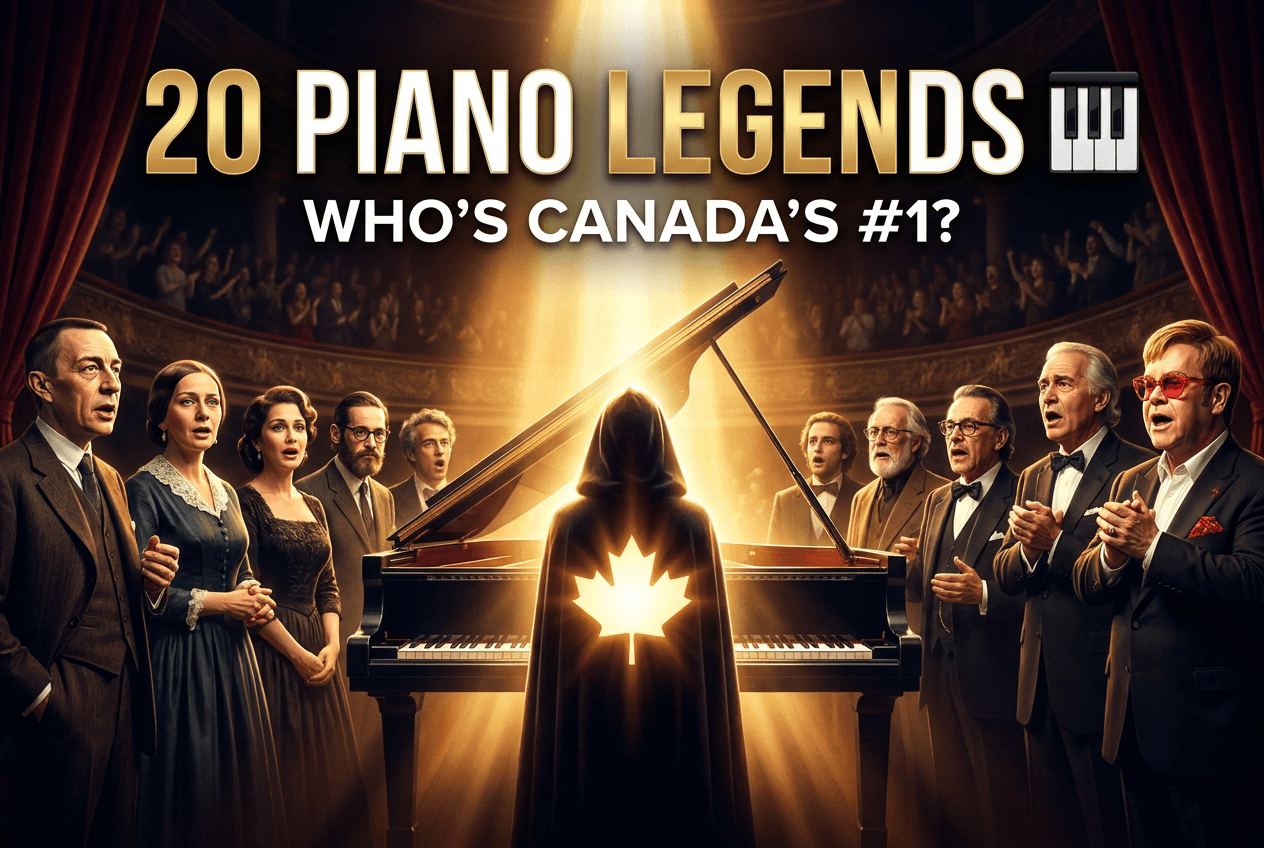
Eighty-eight keys, infinite possibility. The famous piano players profiled here turned that simple mechanism into one of music's most expressive instruments, from Baroque counterpoint through Lisztomania to modern concert pianist superstardom. This guide covers twenty legends across four centuries, including a dedicated section on famous pianists Canada itself produced, led by a genuinely eccentric genius most global lists inexplicably overlook. You'll get their signature style, defining recordings, and a beginner's listening roadmap. Sit back; these fingers earned every ounce of their fame.
What Separates a Great Pianist From a Merely Skilled One
Technical accuracy gets you through a piece; genuine musicality makes listeners forget they're hearing an instrument at all. The **famous piano players** below combined both in ways that fundamentally changed how audiences understood the piano's expressive range.Many also composed their own defining repertoire, meaning their fame rests on creation as much as interpretation. Understanding this dual legacy explains why certain names dominate every serious greatest piano player of all time conversation across generations.
How the Instrument Itself Shaped These Careers
The modern piano evolved considerably across the centuries these artists worked within. Early instruments offered lighter touch and quieter dynamics; the fully modern concert grand, developed through the 1800s, enabled the thunderous power Liszt and Horowitz exploited.
This mechanical evolution directly shaped compositional and performance style. Beethoven's later, more dramatic sonatas partly reflect the increasingly powerful instruments becoming available during his own lifetime, expanding what was physically possible at the keyboard.
Touch and Technique Across Eras
Baroque players used gentler, more articulated touch suited to harpsichord-adjacent instruments. Romantic virtuosos developed the weighted, powerful touch modern concert grands reward. Understanding this evolution helps explain stylistic differences between eras beyond pure taste alone.
Baroque and Classical Foundations
Before the piano as we know it fully matured, these composers established the technical and structural vocabulary every later virtuoso would build upon. Their keyboard writing still forms the backbone of every serious student's early training.
Studying this era matters even for purely contemporary players. The formal structures and harmonic logic established here quietly underpin virtually all Western piano music that followed across the subsequent three centuries of development.
1. Johann Sebastian Bach
Though writing primarily for harpsichord, Bach's keyboard works, particularly the Well-Tempered Clavier, remain foundational study material for every serious pianist. His contrapuntal complexity still challenges advanced players centuries after composition.2. Wolfgang Amadeus Mozart
A child prodigy who composed and performed with equal genius, Mozart's piano sonatas and concertos established clarity and elegant structure as core pianistic values, influencing virtually every composer who followed him directly.
3. Ludwig van Beethoven
Unquestionably among the greatest piano players of all time, Beethoven pushed the instrument's emotional and technical boundaries relentlessly. Remarkably, he continued composing and performing after losing his hearing, relying on the piano's physical vibrations.The Romantic Virtuosos
The nineteenth century transformed piano performance into genuine spectacle. These artists didn't just play technically demanding music; they became celebrities in ways that anticipated modern stardom by well over a century.
Their showmanship shouldn't overshadow genuine substance, though. Each combined dazzling technique with real musical depth, proving virtuosity and artistry could coexist rather than one necessarily sacrificing the other entirely.
4. Franz Liszt
Liszt's concerts sparked genuine Lisztomania, with audiences screaming and swooning as though attending a contemporary pop concert. His Hungarian Rhapsodies and Transcendental Études remain among the most technically demanding compositions ever written for the instrument.
5. Frédéric Chopin
Despite a short life shadowed by illness, Chopin composed an extraordinary body of concertos and chamber pieces that redefined Romantic piano writing. His close friendship with Liszt produced genuine mutual artistic influence between the two legends.
6. Clara Schumann
A formidable performer and composer in her own right, frequently overshadowed historically by her husband Robert. Clara's concert career and compositions proved women could achieve genuine virtuoso status despite considerable nineteenth-century social barriers.
Piano Competitions That Launch Careers
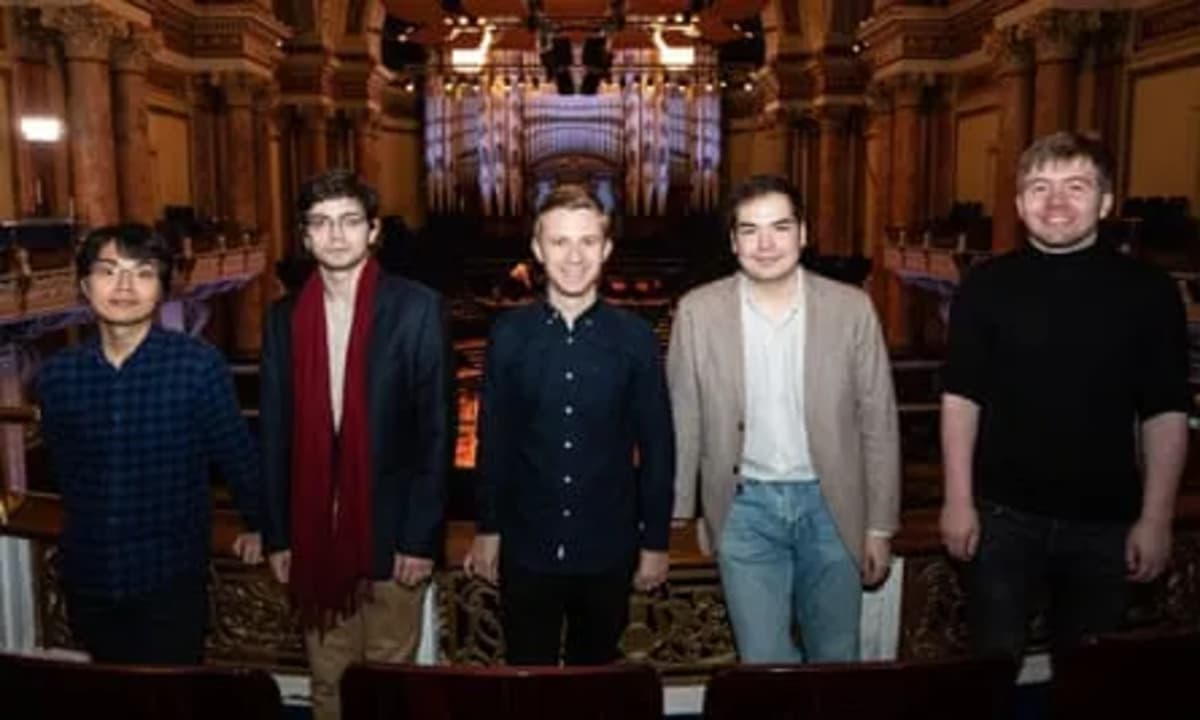 Many contemporary names on this list built international recognition partly through winning prestigious competitions: the Chopin Competition in Warsaw, the Tchaikovsky Competition in Moscow, and the Van Cliburn Competition in Texas among the most career-defining.
These competitions function as genuine career launchpads, offering winners management contracts, recording deals, and international touring opportunities that would otherwise take years to build through conventional career development alone.
Why Competitions Remain Controversial
Critics argue competition culture sometimes rewards flawless technical execution over genuine interpretive risk-taking, potentially producing technically perfect but emotionally cautious performers. This tension between competition success and artistic depth remains genuinely debated within the profession.
How Recording Technology Changed Everything
Early twentieth-century pianists built reputations primarily through live performance and word of mouth. Recording technology fundamentally changed this, letting artists like Horowitz and Rubinstein build truly global reputations without constant touring alone.
Today's streaming platforms accelerate this further, letting emerging pianists build substantial international followings through recorded performance and social media presence well before, or even entirely instead of, extensive traditional concert touring.
Twentieth-Century Interpretive Masters
As recording technology matured, these pianists became genuinely global names through albums and broadcasts, not just live performance. Their interpretations of classical repertoire remain reference recordings serious students study closely today.
Each brought a distinct interpretive philosophy to familiar repertoire, proving that even centuries-old compositions could sound genuinely fresh depending entirely on the specific artist's touch, phrasing, and emotional approach.
7. Vladimir Horowitz
Known for expressive style and seemingly effortless technique, Horowitz's interpretations of Chopin, Rachmaninoff, and Scriabin defined twentieth-century piano artistry. His 1965 Carnegie Hall return after a twelve-year break remains one of piano history's most significant events.
8. Arthur Rubinstein
Born in Poland in 1887, Rubinstein's warm, lyrical playing made him one of the finest interpreters of Chopin's work, giving the Romantic composer fresh voice throughout the twentieth century. Critics praised his uniquely glowing tonal quality.
9. Sviatoslav Richter
A Soviet pianist renowned for extraordinary range and intensity, Richter's repertoire spanned Bach through contemporary composers with equal authority. His famously unpredictable concert programming kept audiences genuinely uncertain what they'd hear each evening.
10. Martha Argerich
An Argentine virtuoso who began playing at three and gave her first concert at eight, Argerich's fiery, spontaneous performances and competition wins established her as one of the twentieth century's most electrifying live performers.
Why Gould Remains So Genuinely Fascinating
Beyond his Bach interpretations, Gould's audible humming during recordings, his insistence on a specific low chair, and his eventual complete withdrawal from public performance made him one of classical music's most compelling personalities, not merely one of its finest technicians.
Canada's Own Piano Legend
Here's the name most global lists inexplicably skip. Canada produced one of the twentieth century's most genuinely fascinating pianists, an artist whose eccentricities matched his interpretive genius in ways that still spark serious musical debate today.
His story deserves proper telling precisely because so many international guides overlook Canadian contributions to classical music entirely, treating the piano's great lineage as though it unfolded exclusively across Europe and the United States.
11. Glenn Gould
Toronto-born and revered as an exceptional interpreter of Bach's keyboard work, Gould read sheet music before he could read words and demonstrated perfect pitch by age three. He famously retired from live concert performance at just thirty-one, focusing entirely on studio recording.
Why Gould Remains So Genuinely Fascinating
Beyond his Bach interpretations, Gould's audible humming during recordings, his insistence on a specific low chair, and his eventual complete withdrawal from public performance made him one of classical music's most compelling personalities, not merely one of its finest technicians.
Gould's Legacy at the CBC and Beyond
Gould's decades-long relationship with the CBC, Canada's public broadcaster, produced numerous documentaries and radio programmes exploring music, technology, and solitude. This work cemented his reputation as a genuine intellectual force, not merely a performing musician.
The Goldberg Variations: Two Recordings, One Legend
Gould recorded Bach's Goldberg Variations twice, once in 1955 and again in 1981, shortly before his death. Comparing these two recordings reveals a genuinely fascinating artistic evolution, from youthful brilliance toward mature, contemplative depth.
Canada's Broader Classical Music Scene
 Beyond individual legends, Canada maintains a genuinely robust classical piano education infrastructure: the Royal Conservatory of Music in Toronto remains internationally respected, and Canadian music schools regularly produce internationally competitive young talent.
This institutional strength explains why Canada continues producing genuinely world-class pianists generation after generation, rather than Gould and Peterson representing isolated historical anomalies within an otherwise quiet national tradition.
The Royal Conservatory's International Influence
The RCM's graded examination system has been adopted by piano students and teachers well beyond Canada's borders, making this specifically Canadian institution a genuinely global standard-setter for structured piano education and assessment.
12. Angela Hewitt
Another Canadian pianist celebrated internationally for her Bach interpretations, Hewitt's Ottawa roots and decades-long international career prove Gould's legacy inspired genuine ongoing Canadian excellence in classical piano performance.
13. Marc-André Hamelin
A Montreal-born pianist celebrated for extraordinary technical command and championing rarely performed, fiendishly difficult repertoire. Hamelin's recordings regularly introduce international audiences to genuinely obscure composers deserving wider recognition.
Practice Habits of the Greats
Beyond raw talent, disciplined daily practice unites virtually every name on this list. Rachmaninoff reportedly practised scales for hours before ever touching repertoire; Horowitz maintained rigorous technical exercises even at the height of his global fame.
This consistency offers genuine encouragement for developing students. Even history's most naturally gifted performers relied on unglamorous, repetitive fundamental work, proving talent alone never substitutes for genuine sustained discipline over years of practice.
What Beginners Can Steal From Their Routines
Daily scales, slow deliberate practice of difficult passages, and consistent shorter sessions over occasional marathons all appear repeatedly across biographical accounts of these legends. These habits remain genuinely accessible regardless of natural ability level.
Protecting Your Hands: Lessons From Injured Pianists
Several historically significant pianists faced career-altering hand injuries, a sobering reminder that even legendary technique requires careful physical maintenance. Robert Schumann's own hand injury reportedly ended his performing career entirely, redirecting him toward composition instead.
Modern pianists increasingly incorporate proper warm-up routines, ergonomic awareness, and rest periods specifically to avoid repetitive strain injuries that plagued earlier generations lacking today's sports-medicine-informed understanding of physical technique.
The Pianists Who Also Composed
Many names on this list achieved fame through composition as much as performance. Understanding melody and composition basics reveals how these artists' performing insight directly informed their own compositional choices at the keyboard.
This dual identity, composer and performer, was far more common historically than today's increasingly specialised classical music landscape typically allows, where performing and composing careers now usually develop as genuinely separate professional paths.
Jazz Piano Legends
Beyond classical tradition, jazz produced its own pantheon of piano innovators, reimagining harmony and rhythm through improvisation rather than fixed composition. These artists expanded what the instrument could communicate entirely.
Jazz piano demands a fundamentally different skill set from classical performance: real-time harmonic decision-making alongside technical facility. These three names remain essential listening for understanding the instrument's full expressive range.
14. Oscar Peterson
A Canadian jazz giant from Montreal, Peterson's blazing technique and swinging sense of time made him one of jazz piano's most celebrated voices internationally. His extensive discography remains essential listening for any serious jazz piano student.
15. Bill Evans
Known for introspective, harmonically sophisticated playing that influenced generations of jazz pianists, Evans brought genuine classical sensibility into jazz improvisation, expanding the genre's harmonic vocabulary considerably during his relatively short but influential career.
16. Thelonious Monk
A genuinely singular composer and improviser whose angular, percussive style initially confused critics before becoming recognised as visionary. Monk's compositions remain jazz standards, studied for their unconventional harmonic and rhythmic choices.
Child Prodigies Among These Legends
Mozart, Chopin, and Argerich all displayed extraordinary ability before age ten, raising genuine questions about how early talent should be nurtured without burning out young performers before they reach genuine artistic maturity.
Modern pedagogical thinking increasingly favours balanced development over pure prodigy-focused intensity, recognising that sustainable, decades-long careers often depend more on genuine love of music than purely accelerated early technical achievement alone.
Balancing Early Talent With Healthy Development
Parents of talented young pianists should note how many legends discussed here also pursued broader education and interests alongside music. Gould himself was famously well-read across philosophy and literature, not solely absorbed in piano practice.
Piano in Film Scores: A Different Kind of Fame
Beyond concert halls, several contemporary pianists have built substantial audiences through film and television scoring work, bringing piano artistry to viewers who might never otherwise attend a formal classical concert performance.
This crossover work has genuinely expanded piano music's cultural reach considerably, introducing classical technique and repertoire to audiences through emotionally resonant film moments rather than formal concert hall settings alone.
Contemporary Stars Still Performing
The tradition continues actively today, with living pianists filling concert halls worldwide and building substantial audiences through streaming platforms and social media alongside traditional touring and recording careers.
Watching these artists perform live, where possible, offers genuine connection to a tradition stretching back centuries, proof that the piano's expressive power hasn't diminished despite every technological and cultural shift since Beethoven's era.
17. Lang Lang
A Chinese virtuoso whose charismatic stage presence and technical brilliance have made him one of classical music's most globally recognisable contemporary performers, credited with inspiring millions of young students worldwide to begin piano study.
18. Yuja Wang
Known for extraordinary technical command and bold, individual interpretations, Wang has become one of the most sought-after concert pianists of her generation, regularly performing the repertoire's most demanding concertos with genuine flair.
19. Daniil Trifonov
A Russian pianist celebrated for combining formidable technique with genuinely poetic musicality, Trifonov's competition wins and subsequent international career mark him as one of his generation's most critically respected performers.
20. Hélène Grimaud
A French pianist known for intensely personal, emotionally direct interpretations, Grimaud balances an active international performing career with genuine environmental activism, proving artistic depth and public engagement aren't mutually exclusive pursuits.
Master Table: 20 Pianists at a Glance
Bookmark this reference for building your own listening journey. Era and speciality columns help you construct a genuinely comprehensive listening rotation spanning the instrument's full historical range rather than sampling only one narrow period.
Notice how many Canadian names appear here once properly counted. From Gould's studio genius through Peterson's jazz swagger, Canada's contribution to piano history runs considerably deeper than most international guides ever acknowledge.
A Beginner's Listening Roadmap
New to classical and jazz piano entirely? Start with Beethoven's more accessible sonatas before Liszt's technical extremes. Add one Gould Bach recording specifically; his interpretive choices genuinely reward close, repeated listening.
For jazz newcomers, Bill Evans offers the gentlest entry point before Monk's more challenging angularity. Building genuine appreciation takes patient, repeated listening rather than single casual plays through unfamiliar repertoire.
Learning Piano Yourself
Every pianist above started with the same fundamentals you would. Our piano keys layout guide and beginner-friendly piano songs build exactly the foundation these legends once learned themselves, decades or centuries ago. Our Happy Birthday piano tutorial makes a genuinely fun first complete piece to celebrate that early progress.
What These Legends Teach Today's Students
Beyond inspiration, studying these pianists' specific choices, tempo, dynamics, phrasing, offers genuine technical education. Comparing three different recordings of the same piece reveals interpretation's real range within fixed notation.
Our piano chord progressions guide and grand staff guide build the reading fluency needed to eventually study these masters' own scores directly, rather than relying purely on recordings alone.
The Value of Studying Multiple Interpretations
Pick one Beethoven sonata and listen to three different pianists perform it. Notice tempo choices, pedal use, and dynamic shaping differences. This comparative listening exercise teaches interpretation's genuine range faster than almost any other single exercise.
Acoustic Piano vs Digital Keyboard: Does It Matter Historically?
Every legend on this list built their careers on acoustic instruments, since digital keyboards simply didn't exist for most of piano history. Modern students often wonder whether digital practice tools genuinely compromise authentic technical development.
Weighted digital keyboards now closely approximate acoustic touch, making them genuinely viable for early development. However, most serious teachers still recommend eventual acoustic instrument access for advanced technical and tonal refinement work.
What Today's Students Can Learn From Instrument Evolution
These legends adapted constantly to evolving instrument technology throughout their careers. Modern students navigating acoustic versus digital choices are following a genuinely long historical tradition of pianists adjusting technique to available tools.
How These Legends Influenced Popular Music
Classical piano technique and harmonic vocabulary quietly permeate popular music far more than casual listeners realise. Film composers, pop producers, and singer-songwriters regularly draw on harmonic ideas these legends pioneered centuries or decades earlier.Elton John and Billy Joel both cite classical training as foundational to their pop songwriting approach. This throughline connects concert hall tradition directly to music heard on contemporary radio, proving classical influence never actually disappeared.
Building Your Own Piano Listening Library
Rather than randomly sampling recordings, build a structured personal library: one recording per era covered in this guide, revisited periodically as your own ear and appreciation develop further through continued listening and practice.
Note which specific recordings genuinely move you emotionally, not merely which ones critics praise most highly. Personal resonance matters more for sustained musical enjoyment than technically informed but personally disconnected critical consensus alone.
### Frequently Asked QuestionsWho is the most famous piano player in the world?
Beethoven, Mozart, and Liszt top most historical rankings, while Lang Lang and Yuja Wang lead among currently active performers. Among famous piano players specifically celebrated for interpretation, Horowitz and Glenn Gould both feature prominently.
Who is the greatest piano player of all time?
The debate remains genuinely open, but Beethoven, Liszt, and Horowitz appear on nearly every serious list. Ranking depends heavily on whether you weight composition, technical innovation, or pure interpretive artistry most heavily.
Who is Canada's most famous pianist?
Glenn Gould holds this position decisively, celebrated internationally for his Bach interpretations and genuinely eccentric artistic choices. Oscar Peterson in jazz and Angela Hewitt in classical also carry substantial international Canadian recognition.
What makes a pianist a virtuoso?
True virtuosity combines exceptional technical command with genuine musical insight, not mere finger speed alone. The famous piano players on this list all paired dazzling technique with real interpretive depth and emotional understanding.
How long does it take to become a great pianist?
Most concert-level pianists train for fifteen to twenty years minimum, often starting in early childhood. However, genuine musical enjoyment and solid competency can develop within just a few years of consistent, well-guided practice.
Which famous pianists are still performing today?
Lang Lang, Yuja Wang, Daniil Trifonov, and Hélène Grimaud all maintain active international touring and recording careers, regularly performing both traditional repertoire and contemporary commissioned works across major concert venues worldwide.
Final Thoughts
Twenty pianists, four centuries, one continuously evolving conversation about what eighty-eight keys can express. These famous piano players prove that Canada's contribution to this story runs far deeper than most global guides ever properly credit.
Start with one artist from each era this week, Canadian names included, and build genuine appreciation from there. When the music inspires your own playing, Art Gharana's piano instructors teach live, one-on-one, right across Canada.