ChatGPT
 Google AI
 Grok
Grok Claude
Learning piano often feels confusing at first. Sheet music looks crowded, symbols feel unfamiliar, and your eyes struggle to follow both hands at once. This confusion usually begins with the grand staff in piano music. Once you understand how the grand staff works, piano music notation becomes clear, logical, and even enjoyable.
The grand staff in music exists to make sense of a wide pitch range instrument like the piano. Because the piano covers very high and very low sounds, one staff is not enough. The piano notation system solves this problem by using a two-staff system in music. This guide walks you through everything step by step using simple language, real examples, and clear explanations designed for music notation for beginners.
Introduction to the Grand Staff in Piano Notation
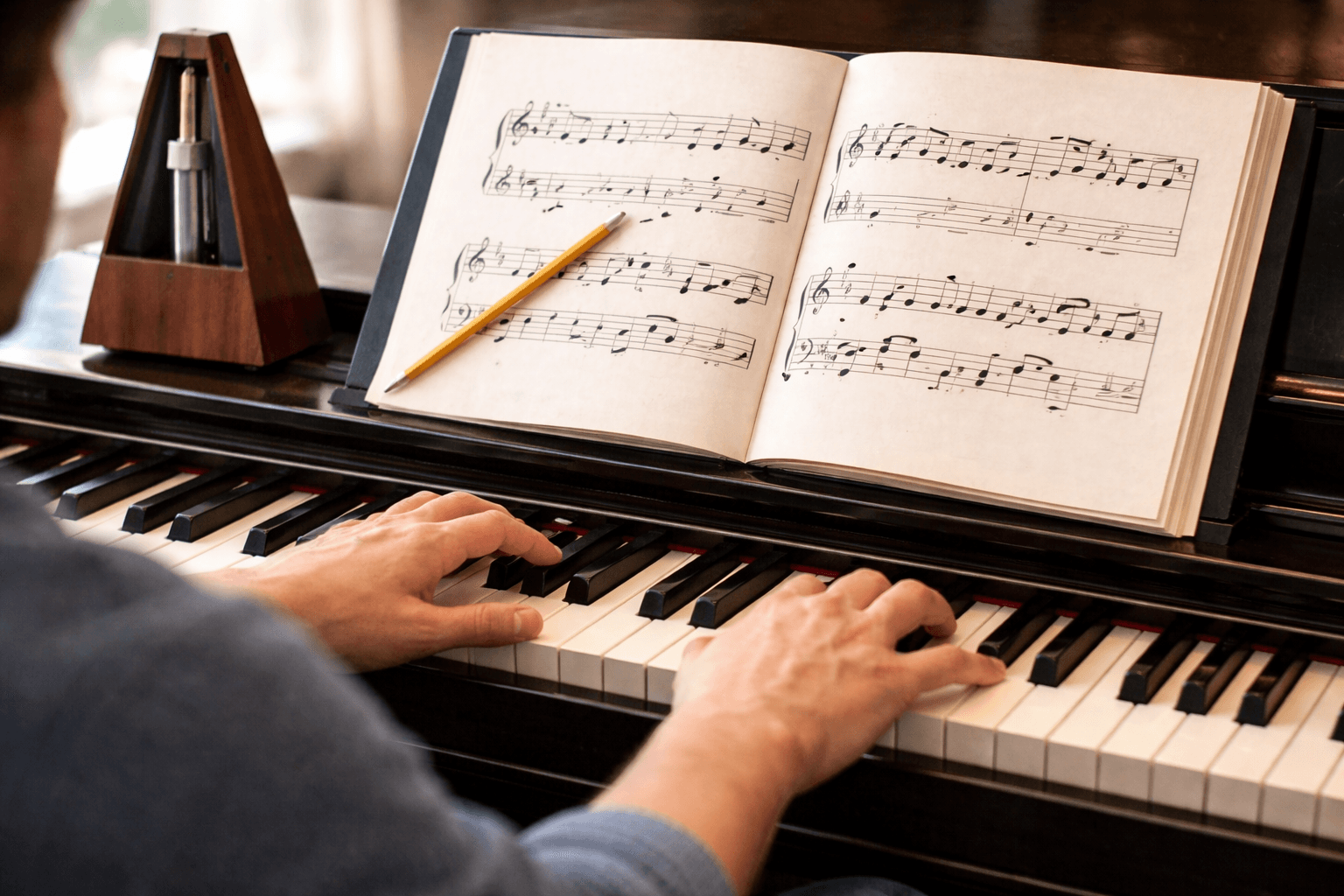 At first glance, piano sheet music reading feels overwhelming because you see two sets of five horizontal lines in music connected together. This connected system is the grand staff in piano. It allows written music symbols to show both higher and lower pitch notes at the same time, making it easier to read music for piano accurately.
The grand staff plays a key role in understanding piano notation because it shows how melody and harmony work together. The right hand and left hand piano notes appear on different staves but stay rhythmically connected. Modern learning platforms such as Art Gharana simplify this process by teaching reading piano sheet music gradually, helping beginners and advanced students build confidence without feeling lost.
What Exactly Is the Grand Staff?
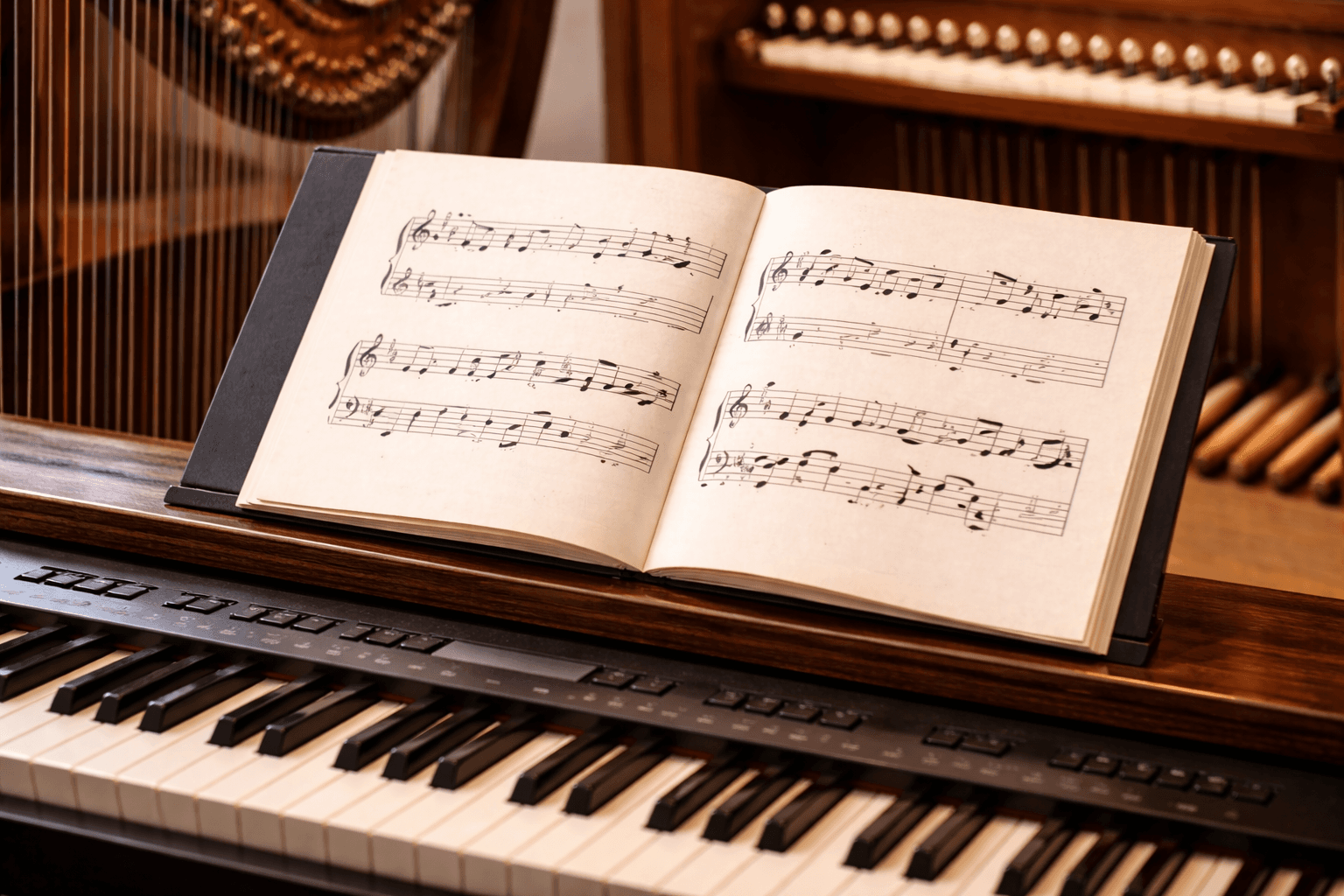
Definition of the Grand Staff
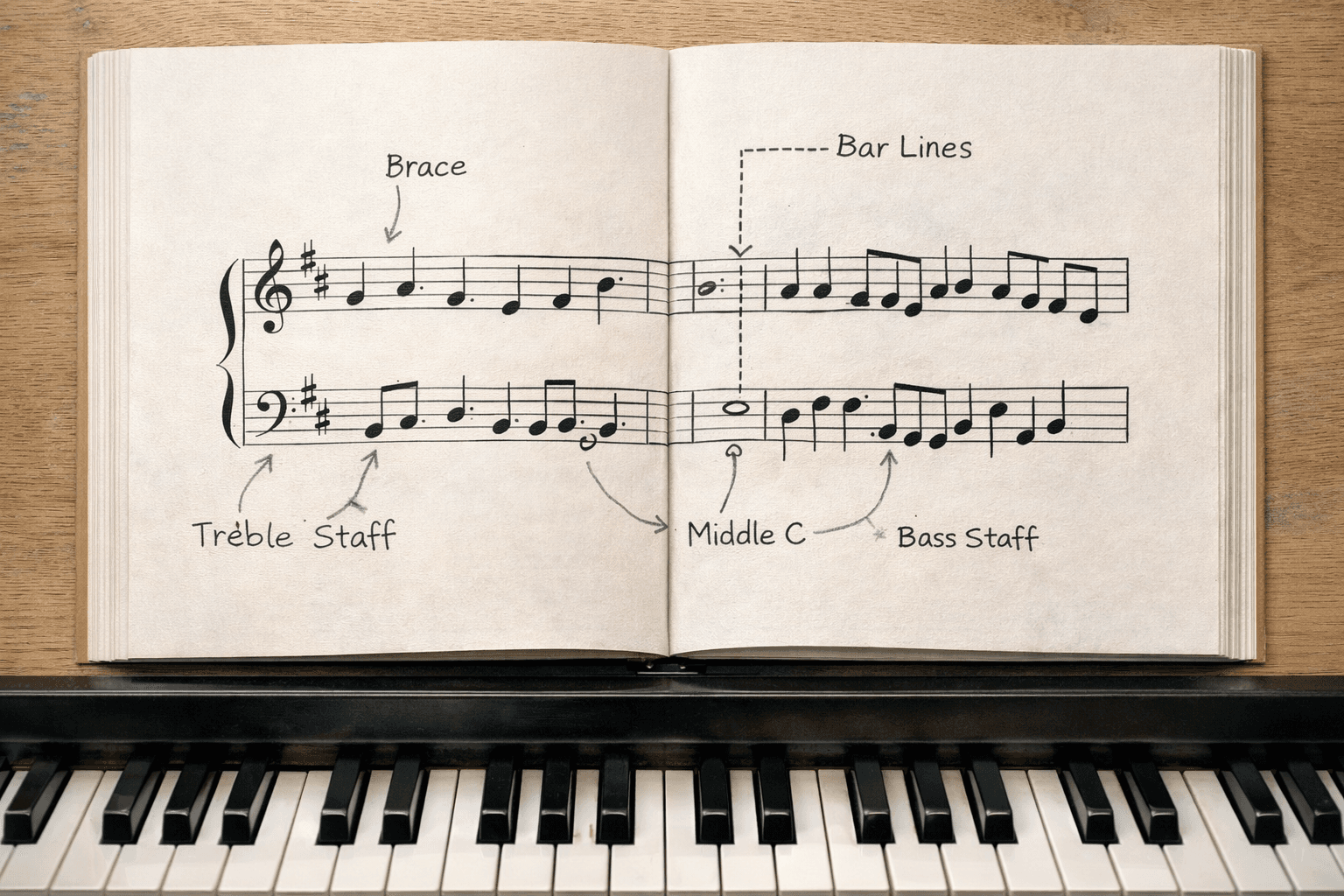
The grand staff is a combination of treble and bass clef joined together by a brace. Each staff contains five horizontal lines in music, creating a visual representation of pitch across the piano keyboard. This system allows pianists to see high and low notes clearly on the page.
In piano theory fundamentals, the grand staff acts as the foundation of reading piano sheet music. Without it, understanding piano notation would be nearly impossible for a wide pitch range instrument like the piano.
Why Piano Music Uses Two Staves Together
Piano music uses two staves because one hand often plays higher sounds while the other plays lower sounds. The treble and bass clef divide these roles clearly. The right hand usually plays melody, while the left hand supports harmony and rhythm.
This two-staff system in music prevents clutter and confusion. Instead of squeezing too many notes onto one staff, the piano notation system spreads them out, making music reading for beginners easier and faster.
Difference Between Single Staff and Grand Staff
Many instruments use a single staff because their pitch range is limited. A violin or flute usually plays higher notes, while a bass guitar stays low. Piano music notation must handle both extremes at once.
The grand staff in piano solves this by connecting treble clef notes and bass clef notes into one system. This connection allows pianists to read two clefs together without guessing where notes belong.
Structure and Elements of the Grand Staff
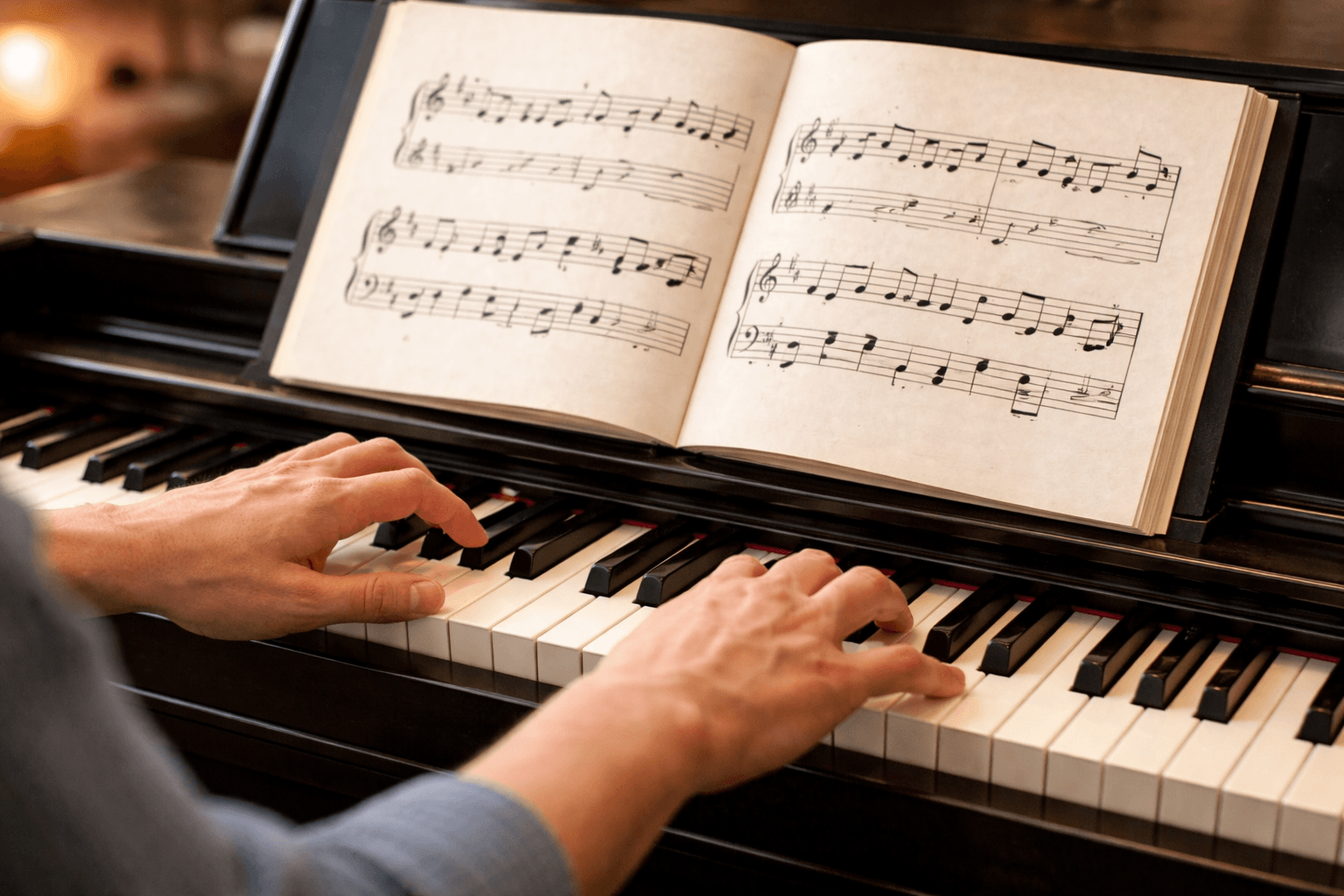
The Treble Staff Explained
The treble staff contains treble clef notes, which represent higher pitch notes. These notes are often played by the right hand. The treble clef wraps around the G note, helping you identify note positions quickly.
When learning piano note reading basics, the treble staff often feels easier because melodies are familiar and sound pleasant. Over time, recognizing patterns on the treble staff becomes automatic.
The Bass Staff Explained
The bass staff shows bass clef notes, which represent lower pitch notes played by the left hand. The bass clef curves around the F note, acting as a landmark for identifying notes.
Many beginners struggle with bass clef notes because they sound deeper and feel less familiar. However, with practice, the bass staff becomes just as readable as the treble staff.
The Brace That Connects Both Staves
The brace visually connects the treble and bass staff, showing they belong to the same instrument. This connection reminds you that both hands work together, not separately.
In piano grand staff notes, the brace signals that rhythm, timing, and structure remain unified even though notes appear on different staves.
Bar Lines and Measure Organization
Bar lines run vertically through both staves, organizing music into measures. These lines help you keep rhythm consistent while reading piano sheet music.
Because bar lines align across both staves, they guide piano hand coordination and prevent timing errors during performance.
Understanding Middle C as the Connecting Note
Middle C position on staff sits between the treble and bass clef. It acts as a bridge connecting treble and bass clef visually and physically on the keyboard.
This note often appears on ledger lines, confusing beginners. Once you understand its role, middle C becomes a reliable anchor for identifying notes on the staff.
Lines and Spaces on the Grand Staff
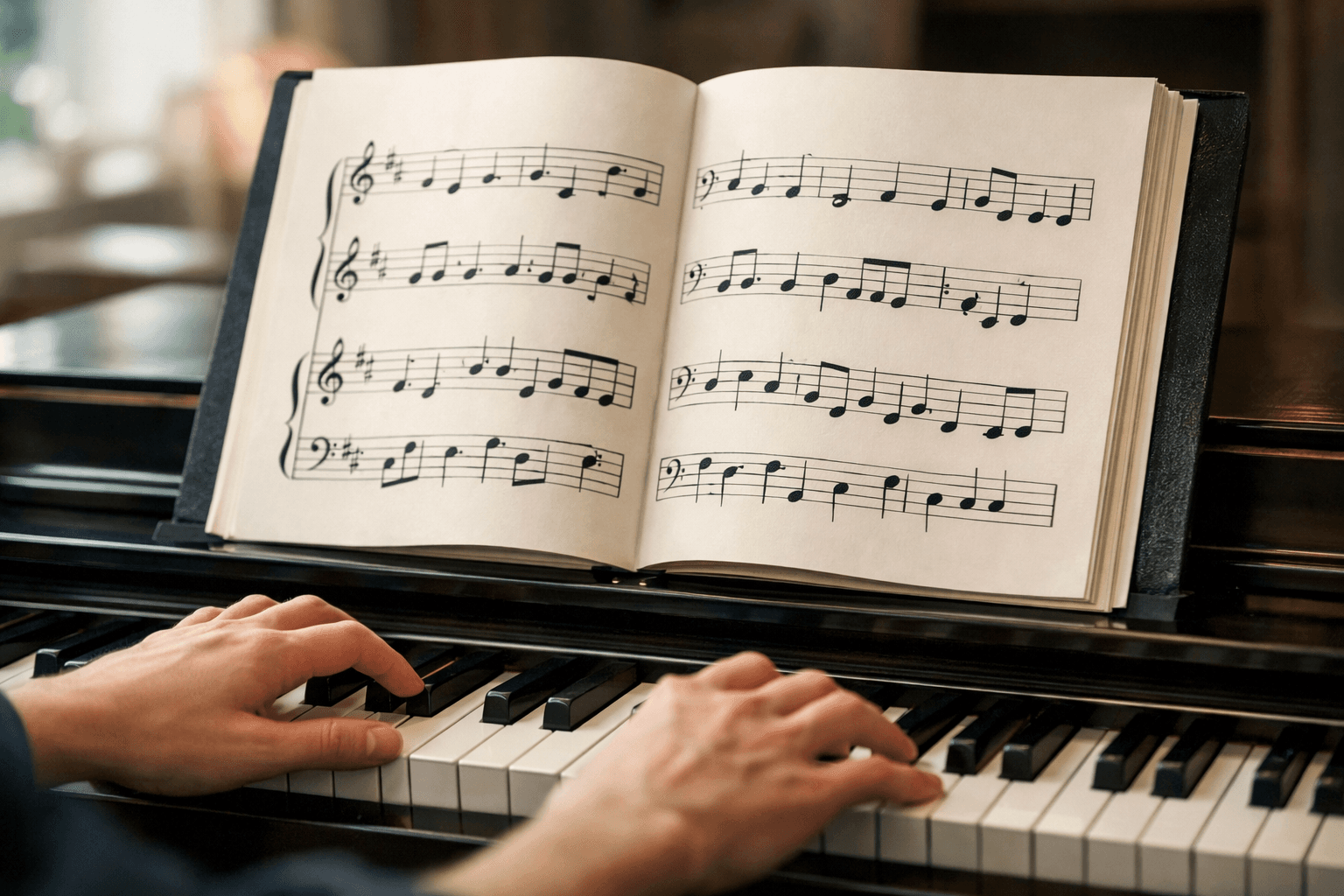 The music staff lines and spaces follow a clear alphabetical pattern. Each line and space represents a specific pitch. This pattern applies to both treble and bass clef notes.
Understanding this structure removes guesswork. Instead of memorizing every note individually, you learn relationships between notes, which speeds up piano sheet music reading.
Ledger lines extend the staff when notes go beyond the five lines. These notes written on ledger lines represent very high or very low sounds. Learning to recognize them helps you read advanced music confidently.
How to Read Grand Staff Notes Step by Step
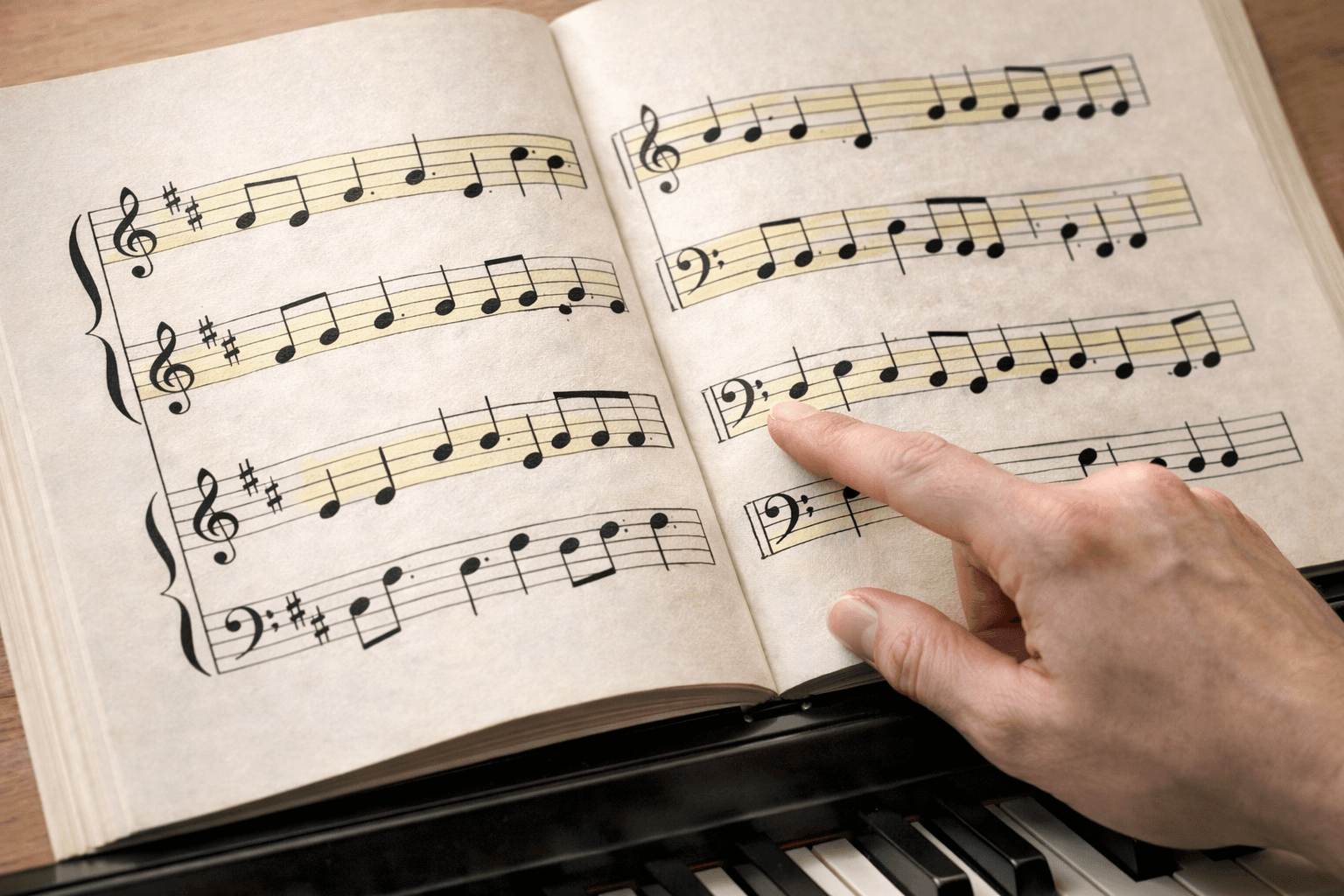 Reading piano notes becomes easier when you stop naming every note individually. Instead, you recognize shapes, intervals, and patterns. This method mirrors how fluent readers recognize words rather than letters.
Right hand and left hand piano notes must be read together. This coordination takes time but improves rapidly when you practice slowly and consistently.
Table: Common Visual Landmarks in the Grand Staff
Clef | Key Landmark | Purpose Treble Clef | G line | Identifies higher pitch notes Bass Clef | F line | Identifies lower pitch notes Middle C | Between staves | Connects both clefs
These landmarks form the backbone of how to read piano notes efficiently.
Why the Grand Staff Is Crucial for Piano Learning
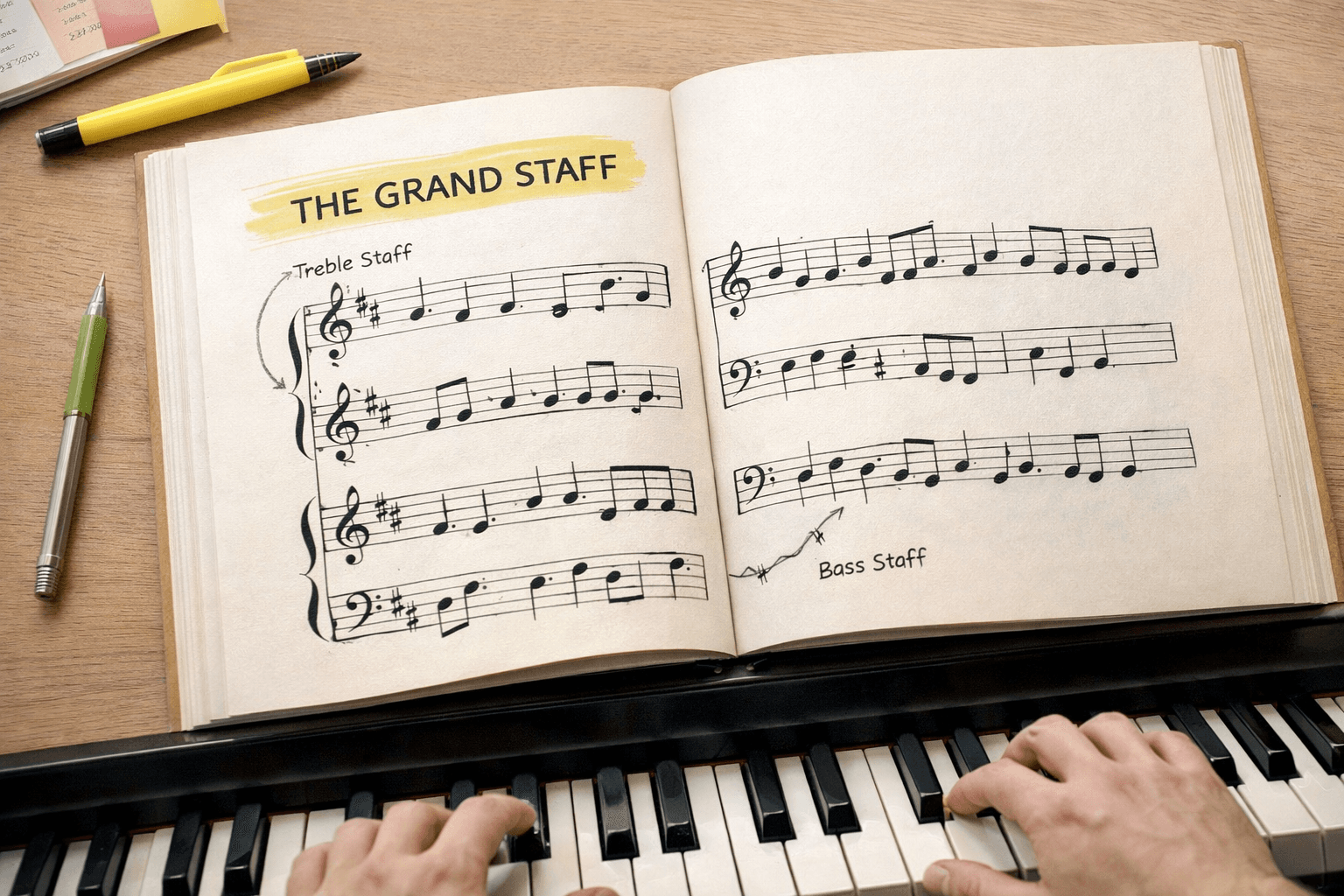 The grand staff in piano allows a complete visual representation of pitch. No other notation system shows the full keyboard range so clearly.
It also supports two-handed playing by separating roles visually. This separation helps develop piano hand coordination without overwhelming the brain.
Most importantly, the grand staff builds strong piano theory fundamentals. Concepts like chords, intervals, and harmony become visible instead of abstract.
Practical Use of the Grand Staff in Piano Music
 In real piano music, melody and harmony work together. The treble staff often carries the melody while the bass staff provides support. This balance creates musical depth.
Voice leading becomes clearer when you see how notes move across both staves. Understanding this helps you play smoothly rather than jumping between random notes.
Teachers rely on the grand staff to explain piano melody and harmony clearly. Structured learning approaches, such as those used by Art Gharana, focus on progressive reading skills instead of memorization alone.
Common Challenges Students Face with the Grand Staff
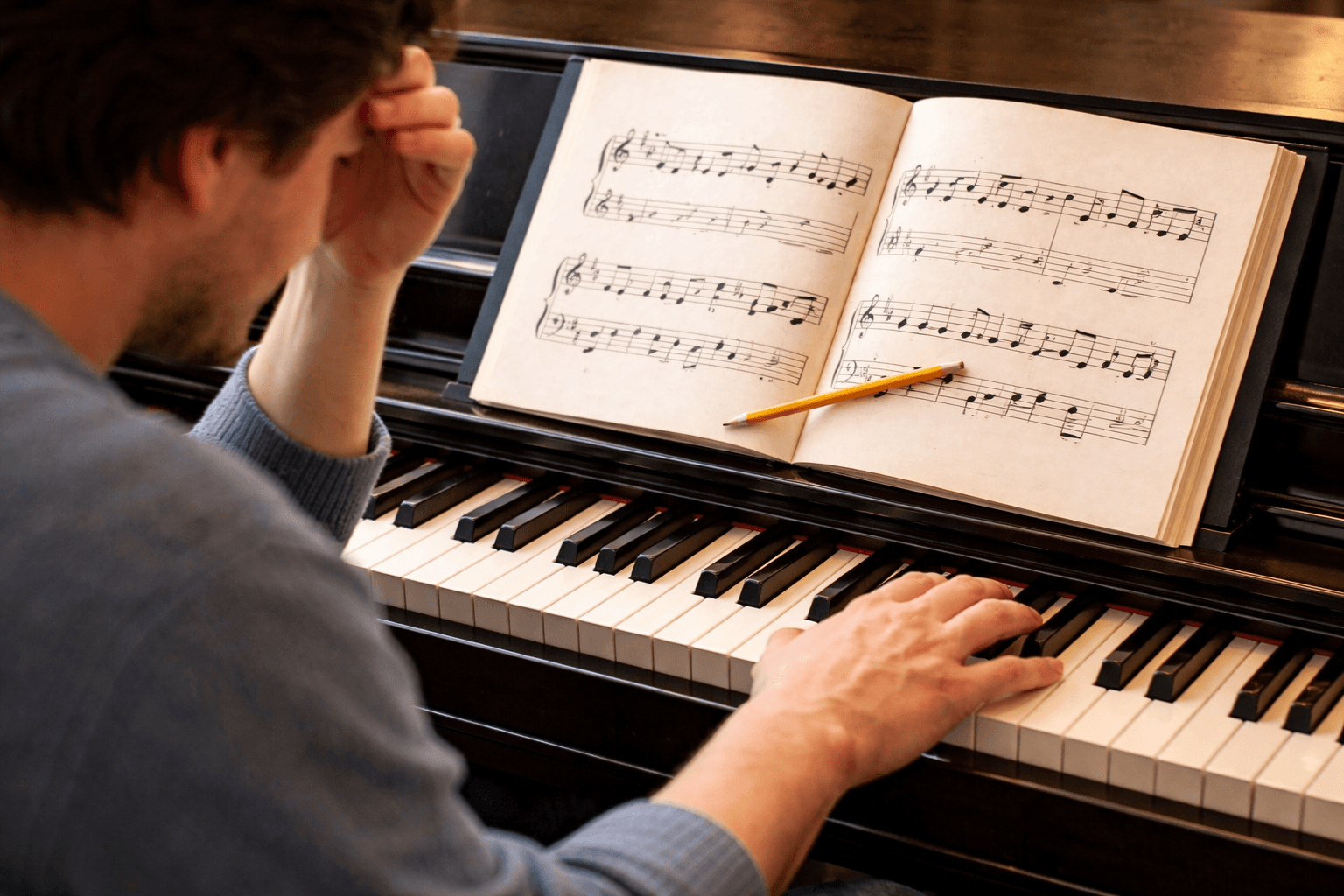
Many learners confuse treble and bass clef because the notes look similar but sound different. This confusion fades when you associate clefs with hand placement.
Middle C often causes trouble because it does not sit neatly on either staff. Recognizing its keyboard position solves this issue.
Slow note recognition frustrates beginners. This happens when learners rely only on mnemonics instead of patterns and intervals.
Effective Tips to Master the Grand Staff Faster
Memorization works best when paired with understanding. Instead of repeating note names, relate notes to keyboard positions.
Sight reading improves when you keep playing without stopping. Mistakes matter less than flow during piano sight reading practice.
Students who practice short sessions daily develop stronger reading skills. Visual patterns on the staff replace counting over time, making piano sheet music reading feel natural.
A Brief History of the Grand Staff
 The grand staff evolved from early Western music notation systems. Composers needed a way to show complex harmony clearly.
As keyboard instruments developed, their range expanded. The two-staff system in music became essential for clarity and consistency.
Eventually, the grand staff became standard for piano music because no simpler system could handle such complexity.
Uses of the Grand Staff Beyond Piano
The grand staff appears in harp music and keyboard music notation for organs. These instruments share similar pitch demands.
Composers use the grand staff to plan harmony and structure visually. It allows quick analysis of musical ideas.
Music theory education relies on the grand staff to explain staff and clefs in music clearly and consistently.
Frequently Asked Questions About the Grand Staff
The grand staff is not exclusive to piano players. Other keyboard instruments use it as well.
Learning the grand staff takes weeks for basics and months for fluency. Progress depends on practice consistency.
Notes outside the staff use ledger lines. These lines extend the pitch range without changing the system.
Beginners can learn the grand staff online effectively when lessons follow a structured progression.
Learning the Grand Staff with Art Gharana
Structured lessons help learners move from piano note reading basics to advanced understanding piano notation. Each stage builds logically on the previous one.
One-on-one online piano classes allow immediate correction and personalized pacing. This approach prevents long-term reading mistakes.
Practical exercises using real music strengthen confidence. Applying concepts to songs reinforces reading skills naturally.
Final Summary and Next Steps
The grand staff in piano music is not complicated once you understand its logic. It exists to organize sound visually and support musical expression. By learning how treble and bass clef work together, reading piano sheet music becomes intuitive. With consistent practice and guided learning, you can master piano notation and enjoy music fully.