ChatGPT
 Google AI
 Grok
Grok Claude
Understanding piano chord progressions transforms the way musicians play, compose, and interpret songs. These harmonic patterns appear in nearly every genre including pop, jazz, blues, classical, and film music. When beginners start to learn piano chord progressions, they begin recognizing musical patterns behind famous songs and melodies.
Many popular songs share similar harmonic structures even when the melodies sound different. This happens because composers often rely on common piano chord progressions that listeners already find pleasing. Once you understand these harmonic patterns, playing songs becomes easier, improvisation becomes natural, and songwriting becomes far more creative.
Introduction to Piano Chord Progressions
 Music becomes memorable because harmony moves in predictable yet emotional ways. Piano chord progressions form the harmonic framework behind melodies and rhythms in modern music. When beginners study basic piano chord sequences, they discover how composers combine chords to create tension, release, and emotional storytelling within songs.
Learning piano chord progressions for beginners introduces the foundation of music harmony theory. These harmonic patterns appear in thousands of songs across pop, jazz, blues, and classical styles. Once you understand how chords move inside tonal harmony in music, the harmonic structure of songs begins to feel logical rather than mysterious.
Why Chord Progressions Are Important for Piano Players
Every song relies on a harmonic backbone that supports the melody. When you practice easy piano chord progressions, your ear slowly recognizes how the tonic chord in music creates stability while the dominant chord function and subdominant chord function generate tension and movement, forming the emotional landscape heard in most popular chord progressions in songs.
How Chord Progressions Shape Modern Music
Modern music thrives on repetition and familiarity because listeners quickly connect with recognizable harmonic patterns. Many of the most used chord progressions in music appear in chart-topping hits across genres, proving that simple piano chord patterns and consistent tonal harmony in music create memorable emotional journeys for listeners.
The Role of Harmony in Piano Performance
Harmony gives depth and character to music performance. Skilled pianists use piano harmony progressions to support singers, accompany bands, or perform solo pieces. By mastering chord qualities in music and understanding how diatonic harmony works, musicians can transform simple melodies into rich musical experiences.
Understanding the Basics of Chords and Progressions
 Before exploring advanced harmony, every pianist must understand how chords are constructed. The foundation begins with major and minor scales, which produce scale degrees in music used to build chords. These chords form the building blocks that eventually create piano chord progression examples heard across musical genres.
Within music harmony theory, chords combine to create direction and emotional movement. The harmonic structure of songs often relies on a small set of basic piano chord sequences repeated throughout verses and choruses. This repetition allows listeners to anticipate musical movement while still enjoying the evolving melody.
What Is a Piano Chord?
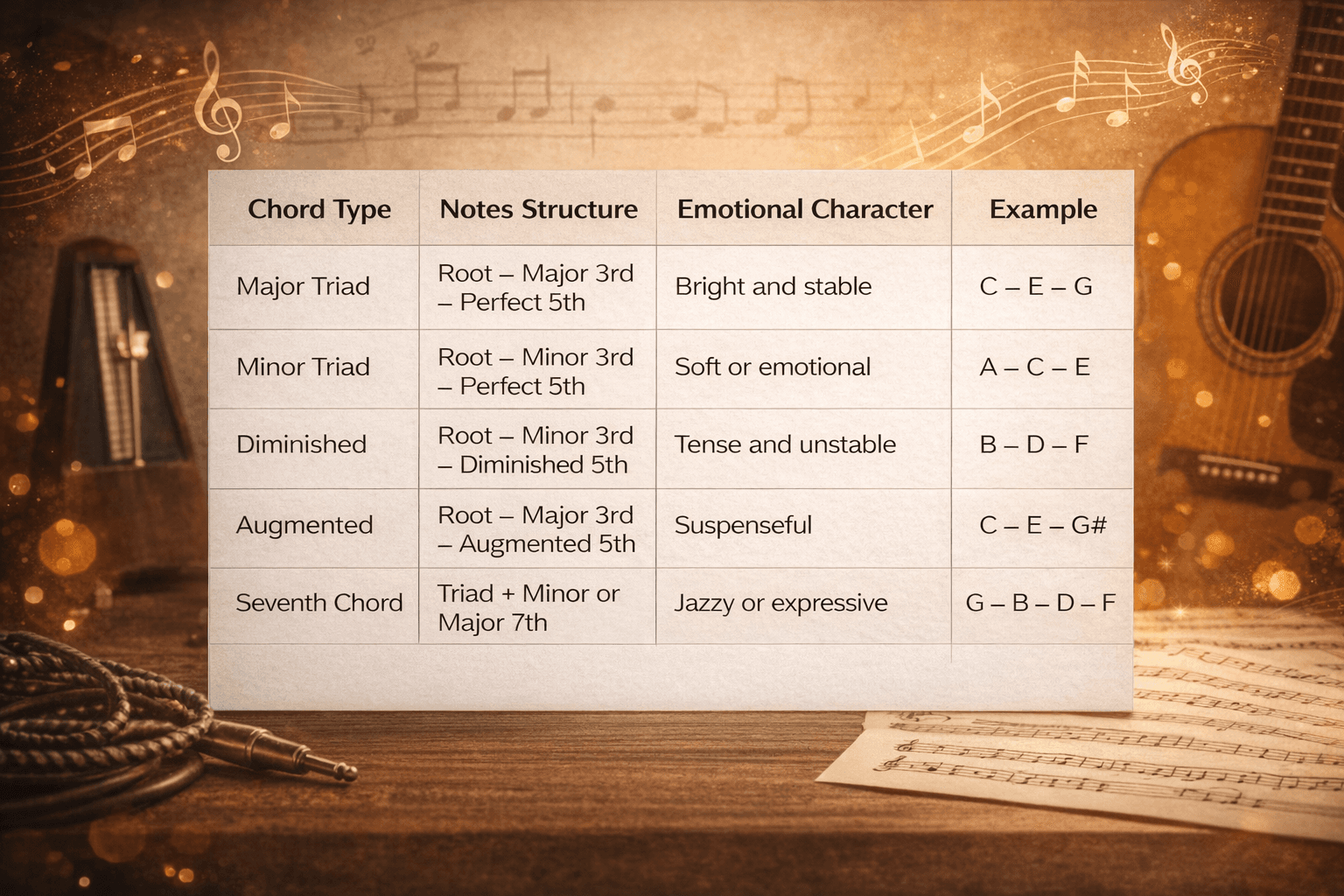
A piano chord forms when several notes sound together in harmony. Most beginner chords consist of three notes called major triads or minor triads, though advanced harmony includes diminished chords, augmented chords, and seventh chords in piano which expand tonal color and allow composers to create more expressive piano chord progressions.
What Is a Chord Progression in Music Theory?
A chord progression in music refers to a sequence of chords played in a specific order. Through roman numeral chord analysis, musicians describe harmonic movement using scale degrees in music, which helps performers understand how chords function within diatonic harmony and how composers build chord progressions for songwriting.
Major vs Minor Chords in Piano
The emotional color of harmony often comes from the difference between major and minor chords. Major chord progressions piano usually sound bright and uplifting while minor chord progressions piano create deeper emotional moods, often producing sad piano chord progressions or emotional chord progressions piano commonly heard in film music.
Roman Numeral System Used in Chord Progressions
Musicians use Roman numerals to describe harmonic relationships rather than specific chord names. This system allows pianists to transpose simple piano chord patterns into different keys easily while understanding harmonic functions such as tonic, dominant, and subdominant relationships inside diatonic chords in a key.
Table: Basic Chord Qualities Used in Piano Harmony
Quote from Music Theory Tradition
“Harmony is the language of music, and chord progressions are its sentences.” — Arnold Schoenberg
This observation explains why learning piano chord progressions dramatically improves musical understanding. Once a pianist understands harmonic movement, playing songs, improvising melodies, and composing music becomes far easier.
How Chord Progressions Work in Different Musical Keys
 Every musical key creates a unique harmonic environment where specific chords naturally belong. Piano chord progressions rely on diatonic chords in a key that come from major and minor scales. These scale-based chords help musicians predict harmonic movement while maintaining the tonal center that listeners perceive as the musical home.
When musicians learn how keys influence harmony they begin to understand piano harmony progressions more clearly. Each key contains seven scale degrees in music and each degree forms a chord with a specific harmonic role. This relationship forms the backbone of tonal harmony in music and explains why many popular chord progressions in songs sound balanced and satisfying.
The Relationship Between Scales and Chords
Musical scales provide the raw material for harmony because each note of major and minor scales produces a chord when stacked with third intervals, creating major triads minor triads diminished chords and occasionally augmented chords which together form the foundation for most piano chord progression examples used in pop chord progressions piano jazz piano chord progressions and blues piano chord progressions.
Diatonic Chords Explained
Diatonic chords in a key are chords built only from the notes of a scale which creates a stable harmonic environment where tonic chord in music establishes home while subdominant chord function creates gentle movement and dominant chord function produces tension that resolves naturally back to the tonal center.
Do All Chords in a Progression Need to Stay in the Same Key?
Not every chord progression must remain inside one key because composers often introduce chromatic chords in music to create surprise harmonic colors which expands emotional depth in songs and helps transform simple piano chord patterns into rich harmonic storytelling used in emotional chord progressions piano and dramatic film soundtracks.
When Musicians Borrow Chords from Other Keys
Borrowed harmony occurs when composers temporarily use chords from parallel keys such as borrowing minor chords from the parallel minor scale in major keys which enriches harmonic texture and allows musicians to create sad piano chord progressions or unexpected color within otherwise bright happy chord progressions piano.
Table: Diatonic Chords in the Key of C Major
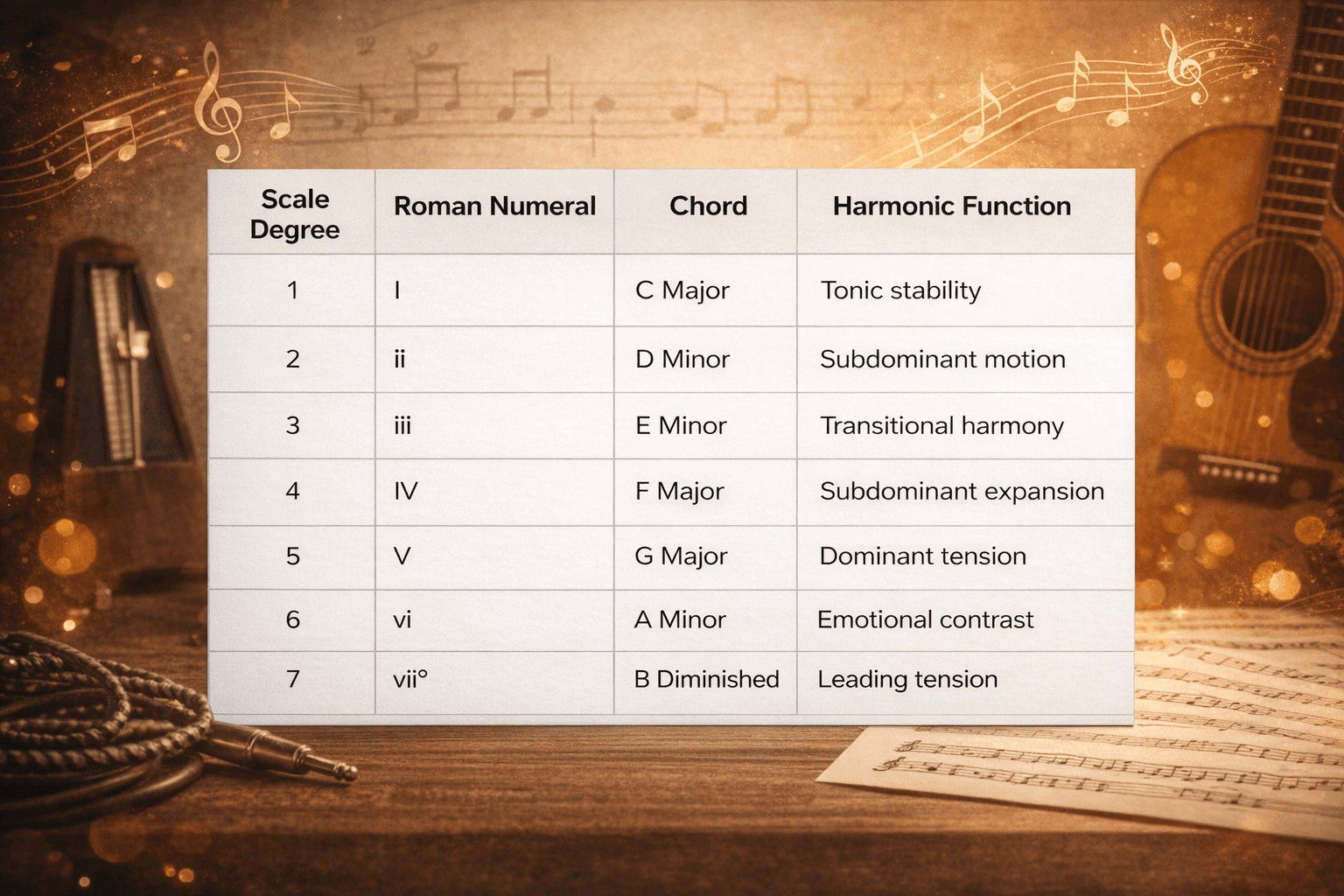
This table demonstrates how the most used chord progressions in music come from these seven diatonic chords. Many easy piano chord progressions simply combine these chords in different orders.
11 Must-Know Piano Chord Progressions with Examples
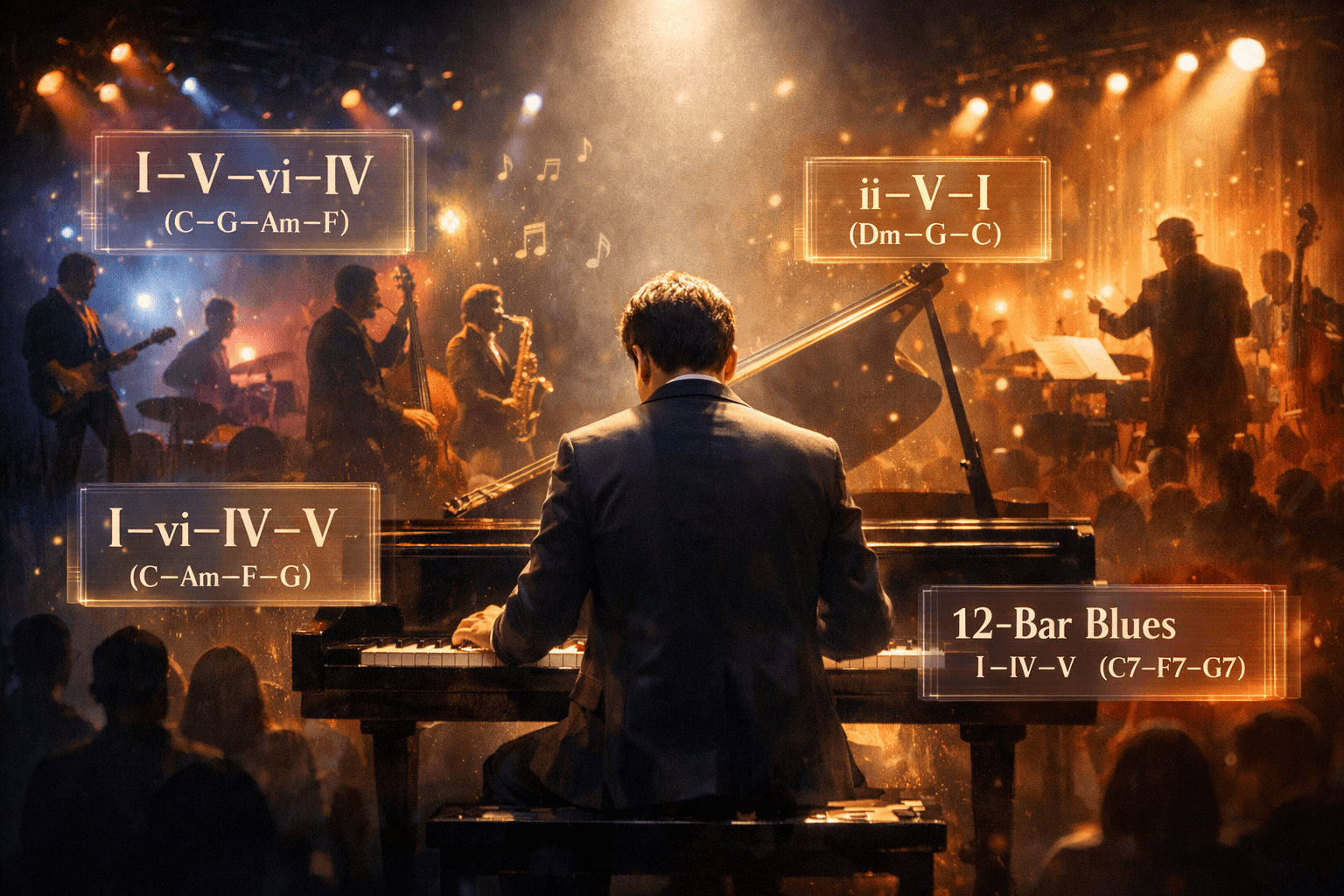 Learning famous harmonic patterns allows musicians to recognize the structure behind many songs. Piano chord progressions for beginners often start with simple repeating patterns because these progressions appear frequently in pop music jazz blues and cinematic soundtracks.
Many famous songs share identical harmonic structures even though melodies differ greatly. By studying common piano chord progressions, musicians quickly recognize the harmonic structure of songs and develop stronger improvisation and songwriting skills which explains why music teachers encourage students to learn piano chord progressions early.
###1. Powerful Four-Chord Pattern Used in Many Songs
One of the most famous popular chord progressions in songs follows the I–V–vi–IV pattern which appears in thousands of pop hits because the tonic chord creates stability while the dominant and minor chords introduce emotional movement creating a musical loop that feels familiar exciting and satisfying for listeners.
Example of the Progression on Piano
In the key of C major the progression becomes C major G major A minor and F major which produces a harmonic cycle used in countless pop chord progressions piano and often appears in songs performed with simple piano accompaniment chords.
Musical Breakdown and Theory
Roman numeral chord analysis shows this pattern moving from tonic stability to dominant tension before resolving through the submediant minor chord and finally relaxing on the subdominant which produces a harmonic journey listeners instinctively recognize.
Why This Progression Sounds Powerful
The mixture of major chord progressions piano and minor chord progressions piano creates emotional contrast that listeners experience as both uplifting and nostalgic which explains why this progression remains one of the most used chord progressions in music.
2. Cinematic Chord Progression Often Used in Film Music
Film composers frequently use dramatic piano chord progressions to support storytelling because wide harmonic shifts and minor tonal centers create emotional tension which helps audiences feel suspense anticipation and emotional depth during key cinematic moments.
Example in Piano Notation
A common cinematic progression follows i–VI–III–VII in a minor key which might appear as A minor F major C major and G major creating an expansive sound heard frequently in orchestral soundtracks.
Harmonic Explanation
This sequence works because minor tonic chords establish emotional gravity while major chords create contrast and upward harmonic motion which gives cinematic music its powerful dramatic tone.
Where This Progression Is Commonly Used
Epic film trailers emotional movie scenes and orchestral piano compositions frequently rely on this harmonic structure because the chord movement creates a sense of scale and emotional storytelling.
3. Soulful Gospel-Style Piano Progression
Gospel music uses expressive harmony where seventh chords in piano and chord extensions in harmony enrich basic chord structures which creates soulful piano harmony progressions filled with warmth spiritual depth and emotional intensity often heard in church music and modern R&B piano performances.
Piano Example
A common gospel progression might follow I–IV–I–V using extended chords such as Cmaj7 Fmaj7 Cmaj7 and G7 which adds richness beyond simple major triads.
How the Harmony Creates Emotion
Seventh chords and suspended tones soften harmonic movement which creates a smooth flowing emotional atmosphere that supports expressive melodies and vocal performances.
Tips for Practicing Gospel Chords
Practicing slow chord changes and learning extended chord voicings helps pianists develop the fluid hand movement required for gospel piano accompaniment chords.
4. Modern Pop Music Chord Progression
Modern pop relies heavily on simple piano chord patterns that repeat through verses and choruses because predictable harmony allows listeners to focus on melody lyrics and rhythm which explains why easy piano chord progressions dominate mainstream pop production.
Example in the Key of C
A widely used pop progression follows I–vi–IV–V which translates to C major A minor F major and G major in the key of C.
Why This Pattern Is Popular in Pop Songs
The mixture of major brightness and minor emotion creates balanced harmony that feels energetic optimistic and emotionally engaging.
How Beginners Can Practice It
Beginners can practice slowly while counting rhythm then increase tempo once chord transitions feel comfortable.
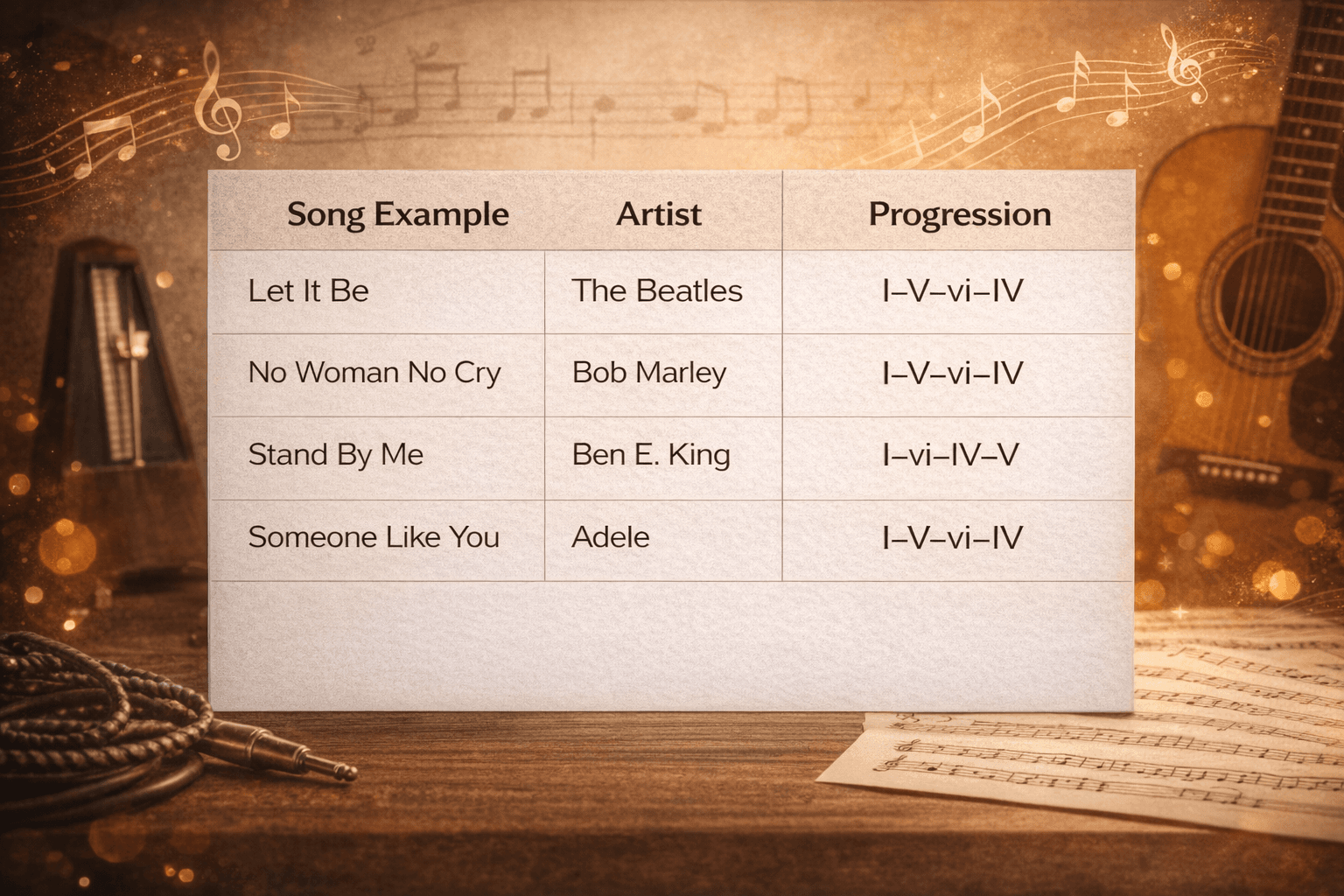
Table: Famous Songs Using Common Chord Progressions
5. Classic Jazz Turnaround Progression
Jazz musicians frequently rely on sophisticated harmonic cycles that resolve musical tension smoothly. Jazz piano chord progressions often include the famous ii–V–I movement which represents one of the most important structures in music harmony theory because it demonstrates how the dominant chord function leads naturally back to the tonic chord in music.
Example Played on Piano
In the key of C major the progression appears as D minor seven G dominant seven and C major seven. These seventh chords in piano enrich simple major triads and minor triads while producing smooth harmonic movement that forms the foundation for many jazz piano chord progression examples.
Understanding the Theory Behind the Turnaround
Roman numeral chord analysis explains how the ii chord prepares motion toward the dominant while the V chord builds tension that resolves into the tonic. This harmonic movement forms one of the most used chord progressions in music and appears constantly in jazz standards.
When to Use It in Songs
Composers often place this turnaround progression at the end of musical phrases because the dominant chord function creates expectation while the final tonic resolution gives listeners a satisfying sense of harmonic closure.
6. Emotional Ballad Progression
Ballads often rely on emotional chord progressions piano that create a reflective and sentimental mood. These progressions combine major chord progressions piano and minor chord progressions piano in ways that emphasize longing nostalgia and expressive melodic storytelling often heard in film music and romantic piano compositions.
Piano Chord Example
A common emotional progression follows I–V–vi–iii which appears in C major as C major G major A minor and E minor creating a flowing harmonic sequence used frequently in emotional pop piano ballads.
Harmonic Structure Explained
The progression moves from stability toward minor tonal colors which gently shift the emotional tone of the song. This harmonic balance allows composers to create music that feels hopeful yet reflective.
How It Creates a Romantic Sound
Gradual harmonic movement combined with smooth piano accompaniment chords produces an atmosphere where melody and harmony blend naturally creating the warm expressive tone listeners associate with romantic piano music.
7. Bright and Uplifting Chord Pattern
Some songs rely on happy chord progressions piano that emphasize major tonal harmony and energetic rhythmic movement. These bright progressions often appear in pop rock and contemporary worship music because major triads naturally create uplifting emotional energy.
Piano Demonstration
A common example follows the I–IV–V progression which becomes C major F major and G major in the key of C producing a bright harmonic sequence recognized across many musical styles.
Why This Progression Feels Happy
Major chords emphasize consonant intervals which naturally sound stable and optimistic. This explains why many cheerful songs rely on major chord progressions piano for their harmonic foundation.
Best Musical Styles for This Progression
Pop music country music and gospel piano accompaniment chords frequently use this structure because its simplicity supports catchy melodies and strong rhythmic grooves.
8. Soft and Sentimental Chord Sequence
Certain musical styles use sad piano chord progressions to evoke introspective emotional landscapes. These progressions rely heavily on minor tonal harmony and slower harmonic movement which creates a reflective atmosphere often heard in acoustic ballads and cinematic piano scores.
Example in Piano Keys
A typical minor progression might follow i–VI–III–VII which produces smooth harmonic motion within the natural minor scale and supports expressive melodic phrasing.
Musical Analysis
Minor triads and occasional diminished chords create gentle tension while maintaining tonal stability which explains why this progression feels emotionally rich yet calm.
When to Use It in Slow Songs
Composers frequently use these harmonic patterns in emotional ballads film scores and atmospheric piano compositions where subtle harmonic shifts enhance storytelling.
9. Classic 1950s Style Progression
The early era of rock and roll introduced one of the most recognizable common piano chord progressions in music history. This progression helped shape the harmonic language of early pop rock and doo wop music.
Piano Chord Pattern Example
The progression follows I–vi–IV–V which appears as C major A minor F major and G major in the key of C.
Harmonic Breakdown
The tonic establishes stability while the minor sixth chord introduces emotional contrast. The subdominant expands the harmony and the dominant chord resolves tension before repeating the cycle.
Why This Progression Became Famous
Many early rock and roll hits used this structure because it balanced emotional contrast with simple piano chord patterns that musicians could perform easily.
10. Circle of Fifths Based Chord Movement
The circle of fifths forms one of the most important systems in tonal harmony in music because it demonstrates how chords naturally resolve when moving through perfect fifth intervals.
Example Played on Piano
A typical sequence might follow vi–ii–V–I which appears as A minor D minor G major and C major.
Theory Behind the Circle of Fifths
Each chord moves downward by a fifth which strengthens harmonic resolution and creates smooth voice leading between chords.
Why It Works So Well in Jazz and Pop
This movement reinforces diatonic harmony while creating forward harmonic motion which explains why many jazz piano chord progressions rely on circle of fifths patterns.
11. Traditional Blues Chord Progression
Blues music introduced one of the most influential blues piano chord progressions in modern music history. The famous twelve bar blues progression appears in countless blues jazz and rock recordings.
12 Bar Blues Example
In the key of C the progression moves through C7 F7 and G7 following a repeating twelve measure structure.
Blues Harmony Explained
Dominant seventh chords introduce tension and expressive tonal color which defines the emotional sound of blues music.
Practice Tips for Beginners
Beginners should practice counting twelve measures carefully while repeating the progression slowly to internalize the rhythmic structure of the blues form.
Table: Comparison of Famous Piano Chord Progressions
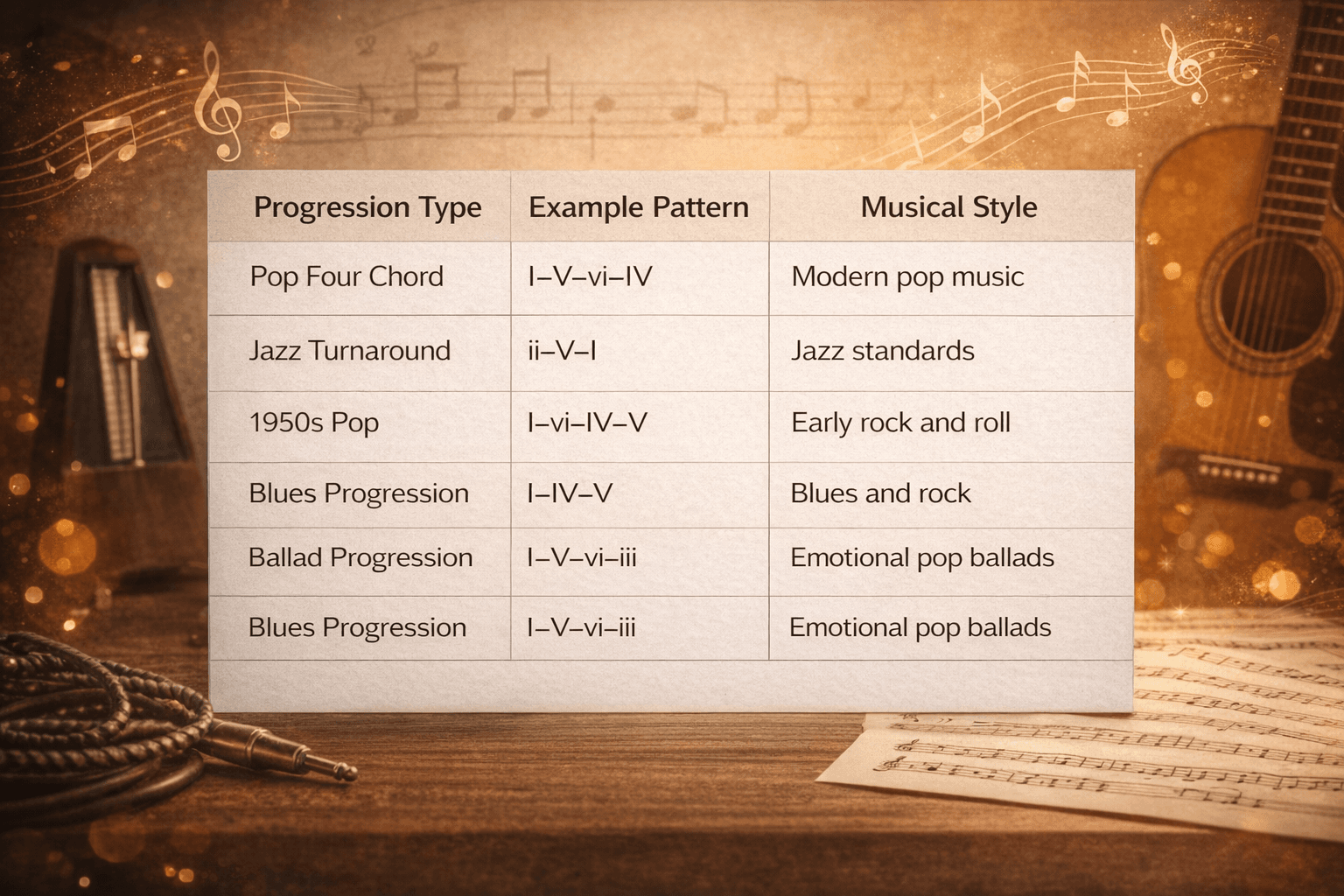
“Music is the space between the notes.” — Claude Debussy
This famous quote reflects the idea that harmony and timing create emotional meaning in music. When pianists learn piano chord progressions, they begin to hear the invisible relationships between chords that give songs their emotional power.
Tips to Practice Piano Chord Progressions Effectively
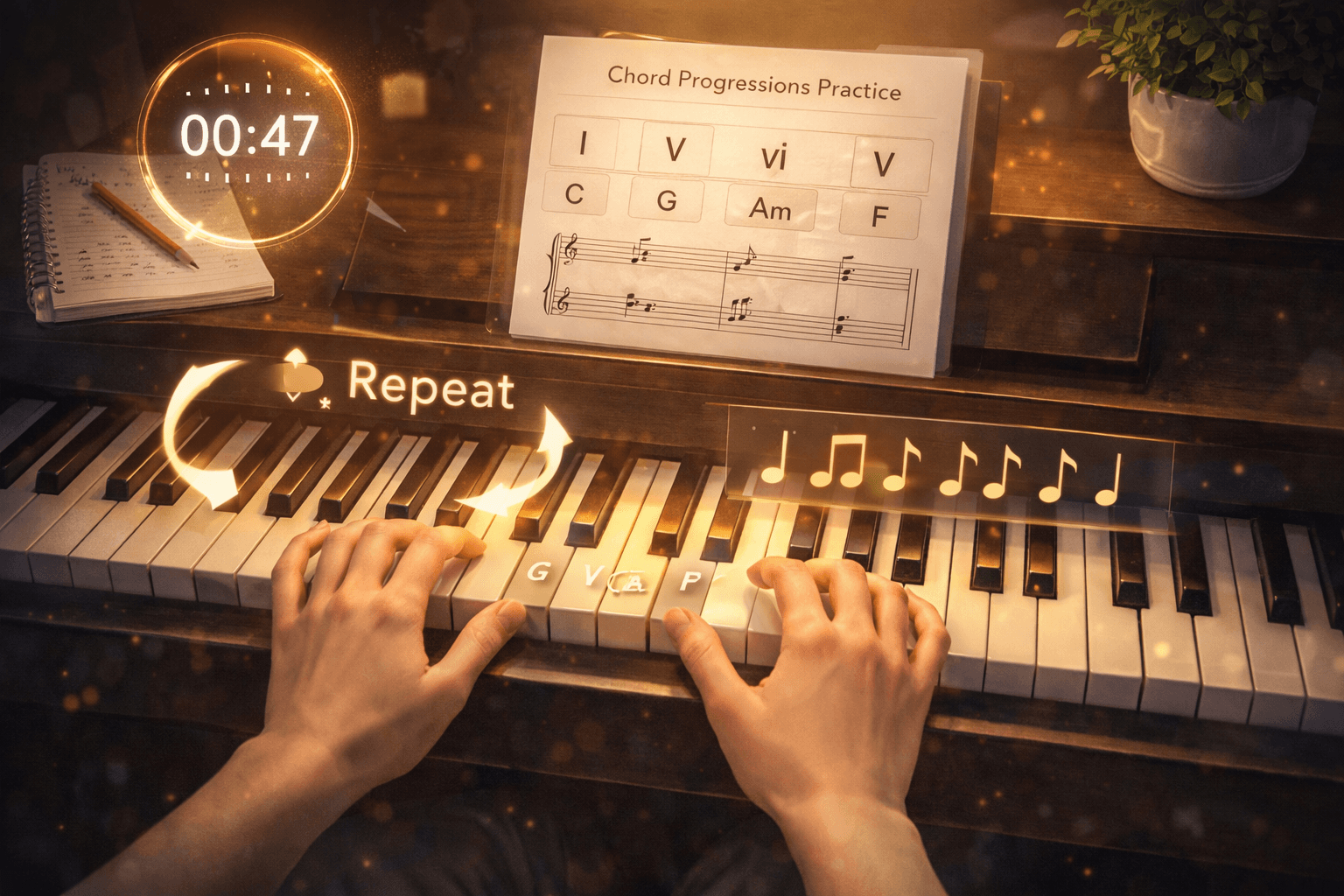 Practicing piano chord progressions requires patience and consistency because muscle memory develops gradually through repetition. Beginners should start with easy piano chord progressions in simple keys like C major or G major because these keys contain fewer accidentals which helps learners focus on chord movement rather than complex finger positions.
As students continue practicing, they begin recognizing patterns in common piano chord progressions used across many genres. Repeating these basic piano chord sequences daily strengthens finger coordination and ear training which gradually improves the ability to perform piano accompaniment chords smoothly in real musical situations.
Start Slowly with Simple Keys
Beginning with simple piano chord patterns allows musicians to understand how major triads minor triads and diminished chords relate within diatonic harmony which helps beginners build strong foundations before exploring more complex piano harmony progressions.
Practice with Both Hands
Playing chord progressions with both hands improves coordination because the left hand typically plays root notes while the right hand performs chord voicings or melodic embellishments which strengthens rhythmic control and harmonic awareness.
Use Rhythm Patterns While Playing
Adding rhythmic variation transforms basic piano chord sequences into musical phrases because rhythm shapes the harmonic structure of songs and helps musicians perform chord progressions for songwriting with expressive timing.
Learn to Transpose Progressions into Other Keys
Transposing chord progressions into new keys strengthens understanding of roman numeral chord analysis because musicians begin recognizing how scale degrees in music create the same harmonic relationships regardless of key.
Table: Daily Practice Routine for Piano Chord Progressions
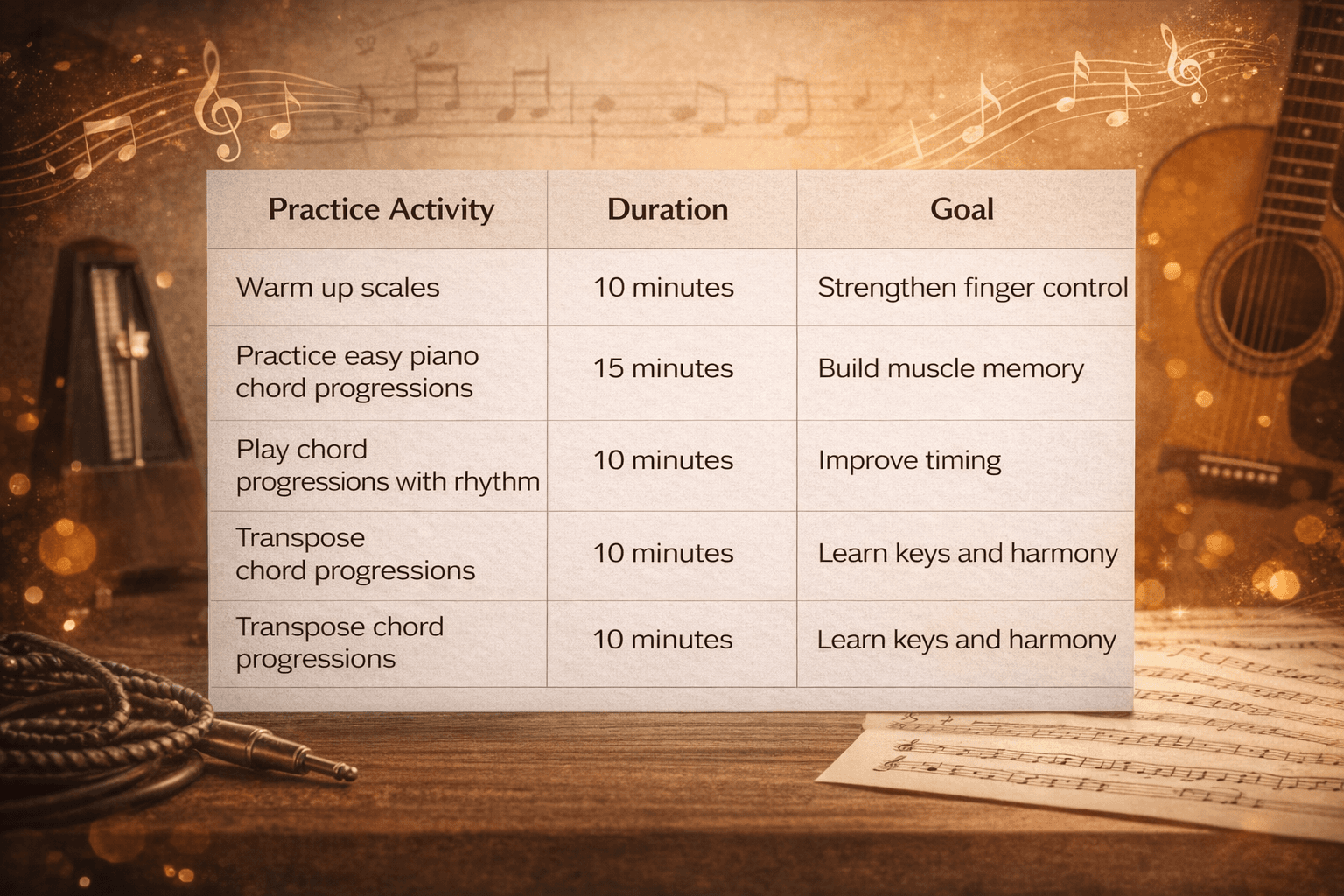
Consistent practice using this structure helps beginners learn piano chord progressions efficiently while strengthening musical understanding.
Common Mistakes Beginners Make When Learning Chord Progressions
 Many beginners struggle with piano chord progressions for beginners because they memorize patterns without understanding music harmony theory. When musicians study the harmonic structure of songs carefully they begin recognizing why certain chords work together which helps them play with greater confidence and musical awareness.
Another common challenge involves rushing through practice sessions. Mastering simple piano chord patterns requires slow deliberate repetition because muscle memory and ear training develop gradually through consistent practice and focused listening.
Playing Without Understanding Music Theory
Ignoring concepts such as tonic chord in music dominant chord function and subdominant chord function prevents beginners from understanding how chord progression in music actually works.
Ignoring Timing and Rhythm
Many learners focus only on chords while forgetting that rhythm shapes the emotional flow of music which often causes chord progressions to sound mechanical rather than musical.
Not Practicing Progressions in Multiple Keys
Practicing only one key limits musical flexibility because musicians must eventually perform common piano chord progressions in many different keys.
How Learning Chord Progressions Improves Your Piano Skills
 Understanding piano chord progressions expands musical creativity because harmony influences melody rhythm and song structure simultaneously. When musicians recognize how diatonic chords in a key interact they begin hearing relationships between notes which strengthens improvisation composition and performance skills.
Mastering chord progressions also improves listening ability. Experienced musicians can quickly identify popular chord progressions in songs by ear which allows them to learn new music faster and adapt chord progressions for songwriting in creative ways.
Helps in Song Composition
Composers rely on chord progression examples to create harmonic foundations that support melodies and lyrics while maintaining emotional consistency throughout a song.
Makes Improvisation Easier
When pianists understand tonal harmony in music they can create spontaneous melodies because they recognize which notes belong within the current harmonic context.
Improves Overall Musical Understanding
Learning chord qualities in music and chord extensions in harmony allows musicians to hear subtle harmonic differences which enhances interpretation and musical expression.
Learn Piano Chord Progressions with Art Gharana
 Students who want structured guidance often benefit from organized learning environments where instructors explain piano chord progressions clearly while demonstrating practical musical examples that connect theory with performance.
Professional training helps beginners understand both music harmony theory and real musical applications which allows students to develop confidence when performing piano accompaniment chords or composing original music.
Final Thoughts on Mastering Piano Chord Progressions
 Mastering piano chord progressions opens the door to deeper musical understanding because harmony connects melody rhythm and emotional storytelling. When pianists practice common piano chord progressions consistently they begin recognizing patterns across genres which dramatically improves performance songwriting and improvisation abilities.
The journey of learning harmony never truly ends. However understanding the most used chord progressions in music provides a powerful foundation that allows musicians to explore advanced harmonic ideas including chromatic chords in music extended harmony and complex jazz piano chord progressions.
Frequently Asked Questions About Piano Chord Progressions
How many chord progressions should a beginner learn?
Most beginners benefit from learning five to ten easy piano chord progressions first because these patterns appear repeatedly in many popular chord progressions in songs across pop rock jazz and blues styles.
What is the easiest piano chord progression?
The I–V–vi–IV progression remains one of the easiest and most recognizable common piano chord progressions because it appears in thousands of modern pop songs.
Can chord progressions help in writing songs?
Yes composers often start with chord progressions for songwriting because harmonic movement shapes the emotional direction of melodies lyrics and musical phrasing.
How long does it take to learn piano chord progressions?
Most students understand basic piano chord progression examples within several weeks of consistent practice though mastery of advanced harmony requires longer study.
Do all songs follow the same chord progressions?
Not every song uses identical harmony however many famous tracks rely on the most used chord progressions in music which explains why listeners often recognize similar harmonic patterns across different songs.