ChatGPT
 Google AI
 Grok
Grok Claude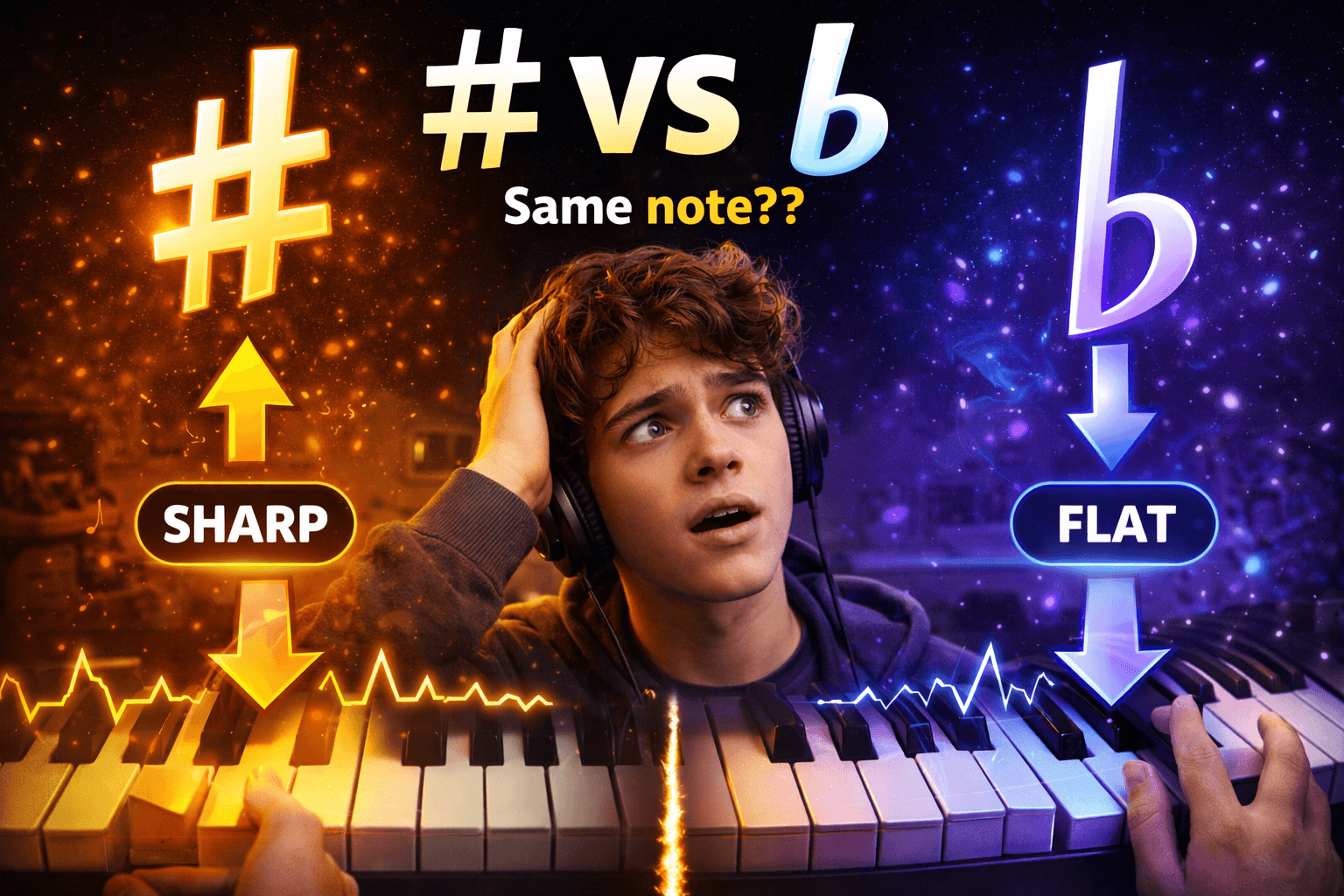
Music often begins with curiosity. You hear a melody and wonder why some notes sound bright while others sound soft. Understanding Sharp Notes vs Flat Notes in Music helps you unlock that mystery. In western music theory, notes change slightly to create different moods and harmonies. These changes happen through musical accidentals, which alter the pitch in music theory by a small step called a semitone in music.
Every musical system depends on structure. The musical notation system organizes sound using symbols placed on the musical staff notes. When musicians read treble clef notes, they also encounter symbols that raise or lower pitch. These symbols create the difference between sharp notes in music and flat notes in music, which together form the backbone of melody, harmony, and musical scales.
Introduction to Musical Notes and Pitch in Music Theory

What Are Musical Notes?
Musical notes represent specific sound positions. Each note corresponds to a measurable note frequency in music. When musicians play a note, they produce vibrations that travel through the air. These vibrations determine the sound frequency in music, which the ear interprets as pitch. The seven natural notes in music are A, B, C, D, E, F, and G.
These notes appear on the musical staff notes and repeat across every octave in music. Each octave interval doubles the vibration frequency of the previous one. For example, the A above middle C vibrates at 440 Hz, which musicians use as a standard tuning reference. This structured relationship helps instruments stay in harmony.
Note Approximate Frequency (Hz) Position A4 440 Standard tuning pitch C4 261.63 Middle C G4 392 Common melodic note
How Pitch Works in Music
Pitch describes how high or low a sound appears. In pitch in music theory, pitch depends on vibration speed. Faster vibrations produce higher sounds, while slower vibrations create deeper tones. Instruments adjust pitch through tension, air flow, or finger placement.
Music divides pitch into small steps known as the semitone interval. A semitone represents the smallest distance between two notes in the 12-tone equal temperament system. This structure divides the octave into twelve equal parts. These parts create the framework for musical intervals, major scales in music, and minor scales in music. Understanding these building blocks is essential for anyone starting their journey with online piano keyboard classes.
Why Accidentals Are Important in Music Theory
Sometimes natural notes alone cannot express the emotion a composer wants. This is where accidentals in music theory become essential. Accidentals include the sharp symbol (#) in music, the flat symbol (♭) in music, and special variations like the double sharp symbol and double flat symbol.
These symbols adjust pitch slightly. They allow musicians to create smooth melodic movement. Without accidentals, the musical language would feel rigid and limited. Accidentals add flexibility and color to the musical notation system, which explains why composers rely on them so heavily.
What Are Sharp Notes in Music?
Meaning of the Sharp Symbol (#)
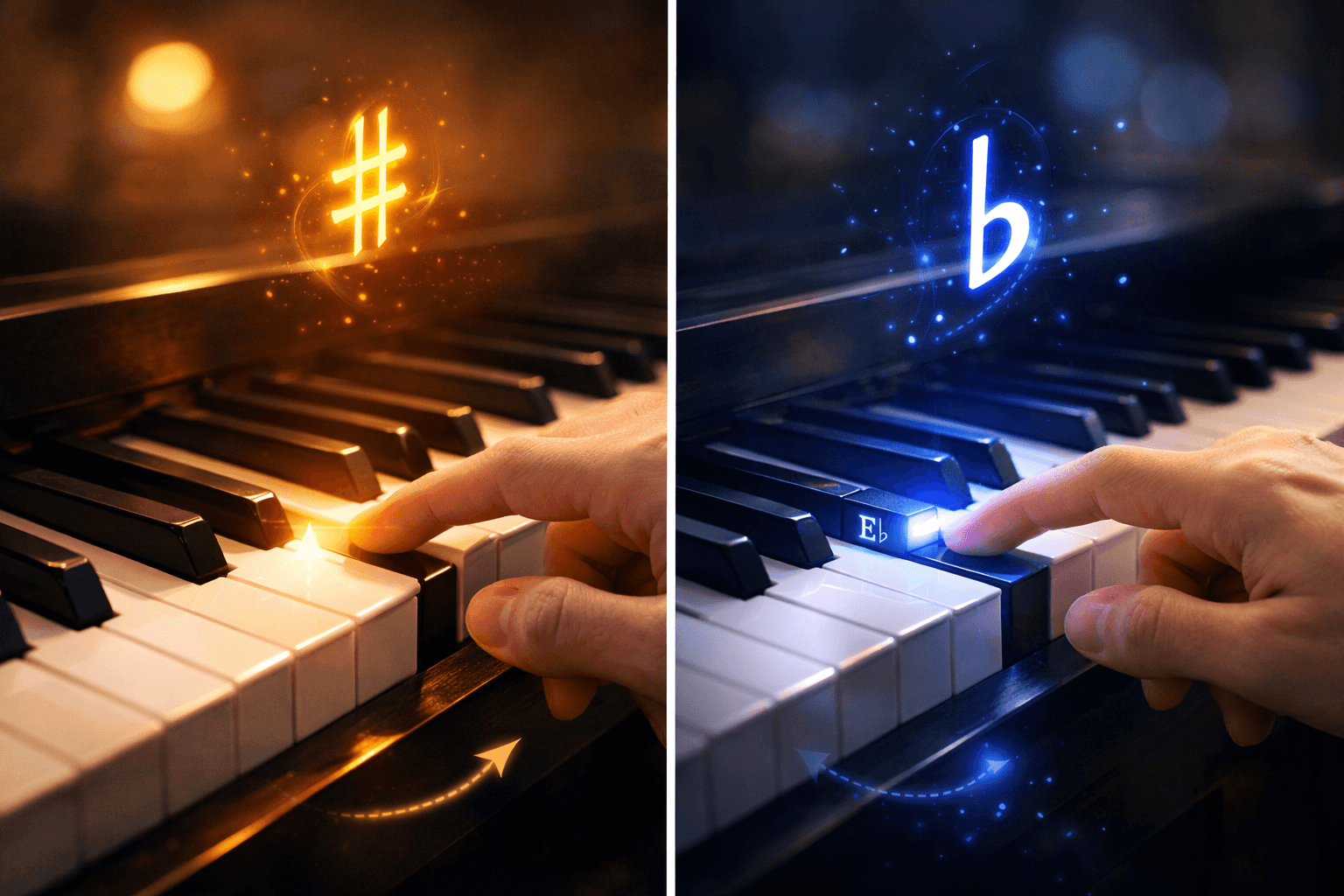
A sharp note raises the pitch of a natural note by one semitone interval. In notation, the sharp symbol (#) in music appears before the note on the staff. When musicians see this symbol, they raise the pitch slightly.
For example, C becomes C♯. This change increases the pitch frequency of the sound. In sharp keys in music, several notes in the scale appear with sharp symbols. These adjustments maintain the correct spacing of musical intervals within the scale.
How a Sharp Changes the Pitch of a Note
When a note becomes sharp, the sound rises by one semitone. On a piano, this usually means moving to the next key on the right. The change may feel small, yet it transforms harmony and melody.
Sharp notes are essential in many major scales in music and minor scales in music. For instance, the G major scale includes the note F♯. This slight change keeps the pattern of tones and semitones balanced across the scale. To hear how sharps sound in real compositions, explore some beginner-friendly piano songs that feature these notes.
Natural Note Sharp Note Pitch Change C C♯ Raised by one semitone F F♯ Raised by one semitone G G♯ Raised by one semitone
Examples of Sharp Notes on a Piano and Staff
Sharp notes appear frequently on the black keys on piano. The piano layout shows them clearly. Between C and D you find C♯, which lies on a black key. Between F and G you find F♯.
On sheet music, the symbol appears before the note. When placed on the musical staff notes, the sharp sign modifies the pitch immediately. Musicians reading treble clef notes adjust their playing accordingly.
Common Scales That Use Sharp Notes
Several scales depend on sharp notes to maintain proper interval spacing. These scales follow patterns found in the circle of fifths, which organizes musical keys.
Scale Sharp Notes Used G Major F♯ D Major F♯, C♯ A Major F♯, C♯, G♯
These scales belong to sharp keys in music, which gradually add sharps as you move around the circle of fifths.
What Are Flat Notes in Music?

Meaning of the Flat Symbol (♭)
Flat notes work opposite to sharp notes. The flat symbol (♭) in music lowers a note by one semitone in music. When placed before a note on the staff, it signals the performer to reduce the pitch slightly.
For example, B♭ sits one semitone below B. This adjustment changes the pitch variation in instruments, creating smoother harmonic transitions in many compositions. Once you understand flat notes, they become second nature — especially when you start learning beginner piano chords that rely on them.
How a Flat Lowers the Pitch of a Note
When a note becomes flat, the pitch drops by one semitone. On a piano keyboard, this usually means moving one key to the left. That small movement changes the tone dramatically.
Flat notes appear commonly in flat keys in music. Many orchestral and jazz compositions prefer these keys because they align well with instrument tuning and fingering patterns.
Examples of Flat Notes on Piano and Sheet Music
Flat notes also appear on the black keys on piano. For instance, E♭ lies between D and E. The same key can represent two names depending on context.
This dual naming highlights the concept of enharmonic equivalents, which appear often in western music theory.
Natural Note Flat Note Keyboard Position B B♭ Black key left of B E E♭ Black key left of E A A♭ Black key left of A
Common Scales That Use Flat Notes
Several major scales rely on flat notes. These belong to the family of flat keys in music.
Scale Flat Notes Used F Major B♭ B♭ Major B♭, E♭ E♭ Major B♭, E♭, A♭
These scales demonstrate how accidentals maintain the correct musical intervals within each scale.
Key Differences Between Sharp Notes and Flat Notes
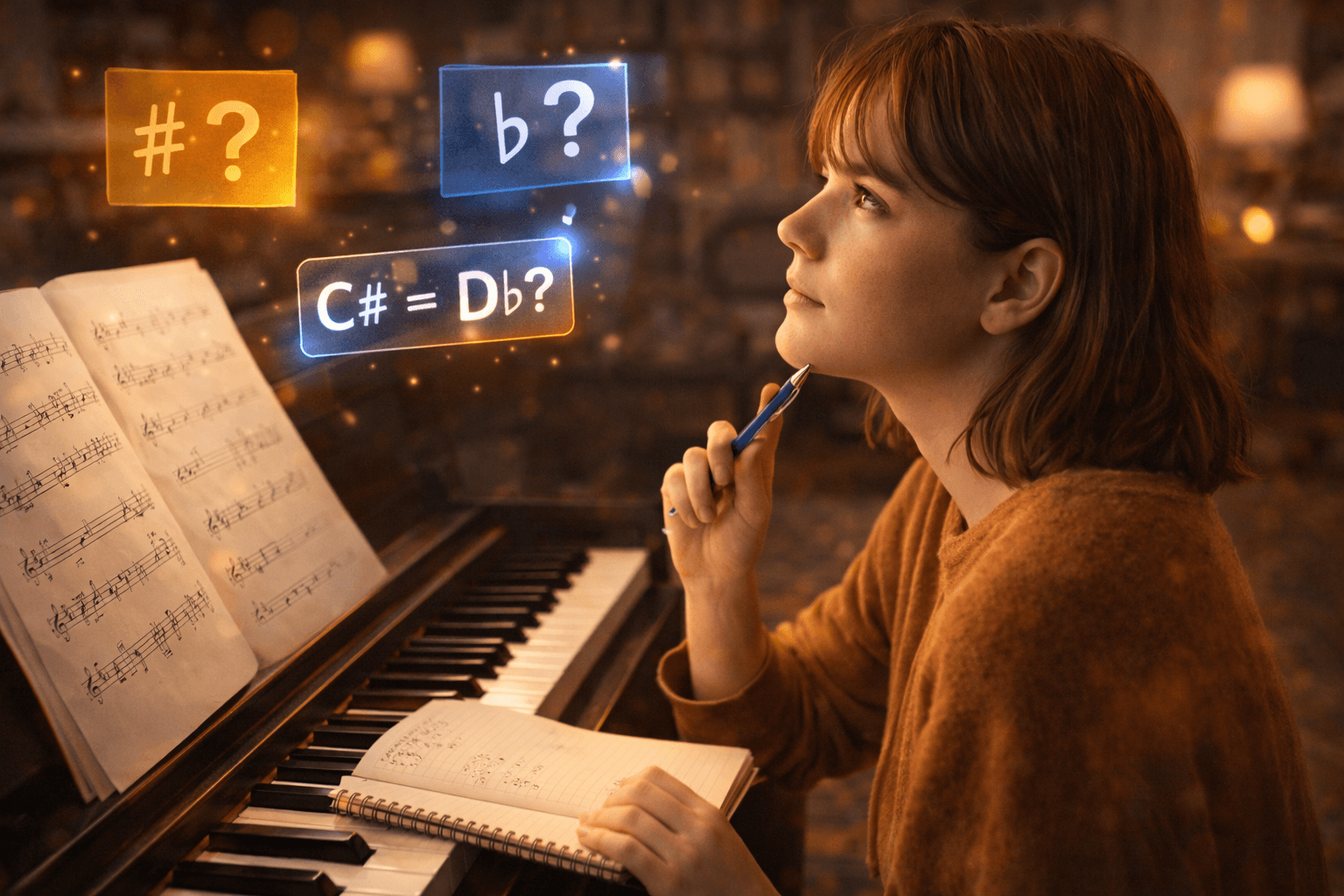 Sharp notes raise pitch. Flat notes lower pitch. This difference forms the core of sharp vs flat notes in the musical notation system.
Sharps appear mainly in sharp keys in music, while flats appear in flat keys in music. However, the same black keys on piano often represent both versions. This dual identity explains why musicians must understand context when reading sheet music.
Feature Sharp Notes Flat Notes Symbol
♭ Pitch Direction Higher Lower Keyboard Movement Right Left
Understanding Enharmonic Notes
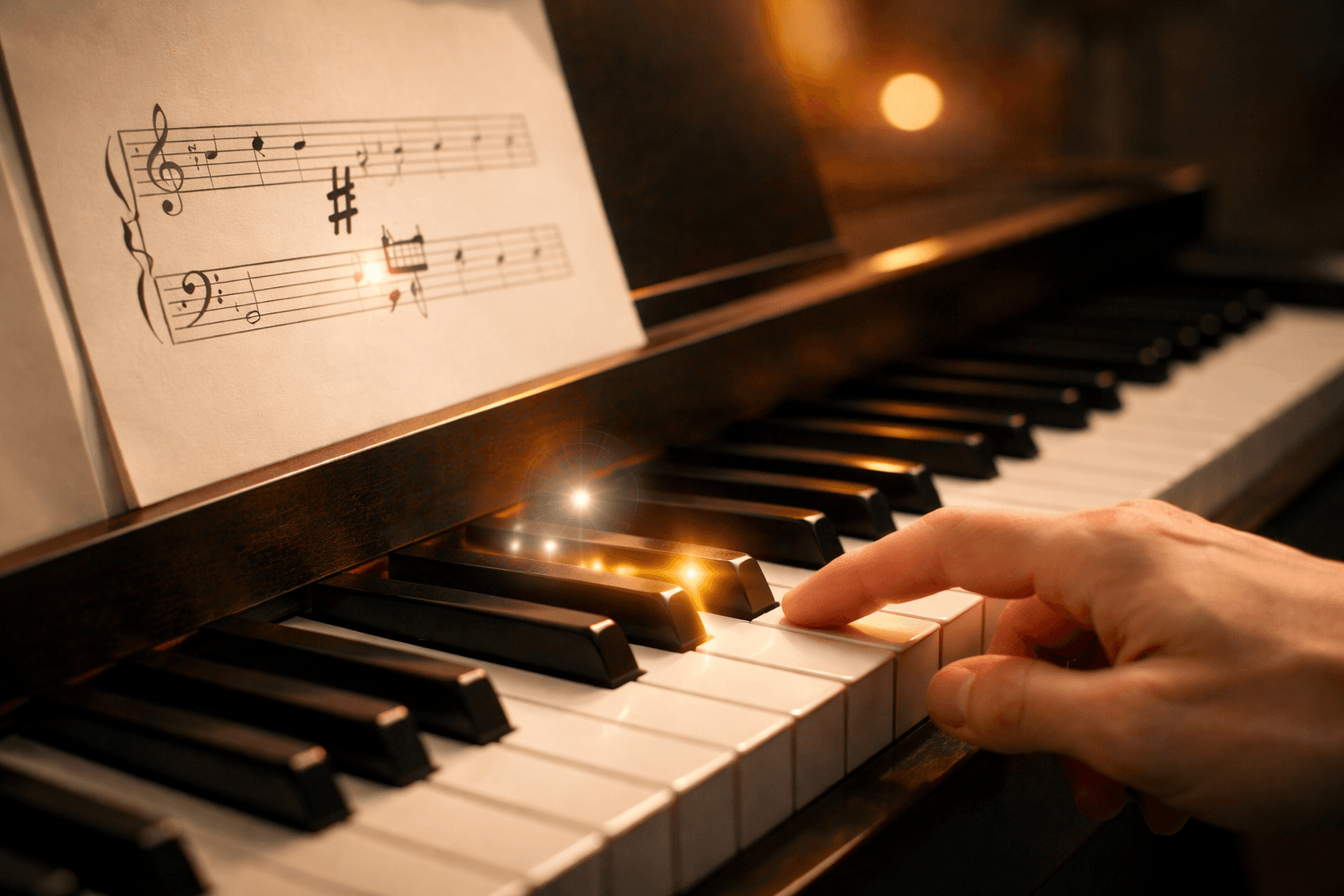 Enharmonic notes represent the same pitch but carry different names. For example, C♯ and D♭ sound identical in 12-tone equal temperament tuning.
These pairs are called enharmonic equivalents. They occur because the equal temperament tuning system divides the octave evenly into twelve semitones. This system allows musicians to play in any key without retuning instruments.
Note Name 1 Note Name 2 C♯ D♭ D♯ E♭ F♯ G♭
Role of Sharps and Flats in Musical Scales
Accidentals help maintain consistent intervals within musical scales. A major scale follows a specific tone pattern. If one note changes, the entire scale structure collapses.
The circle of fifths shows how keys relate to one another. Moving clockwise adds sharps. Moving counterclockwise adds flats. This system helps musicians understand key signatures in music and quickly identify accidentals. Understanding this system is one of the first steps covered in Art Gharana’s online piano keyboard classes.
Sharps, Flats, and Musical Tuning Systems
Modern music relies on equal temperament tuning. This tuning divides the octave into twelve equal parts called semitones.
Earlier tuning systems in music created slightly different pitches for notes like C♯ and D♭. Today, the 12-tone equal temperament system treats them as identical. This adjustment allows instruments from pianos to guitars to play together without pitch conflict.
How to Identify Sharp and Flat Notes on a Piano
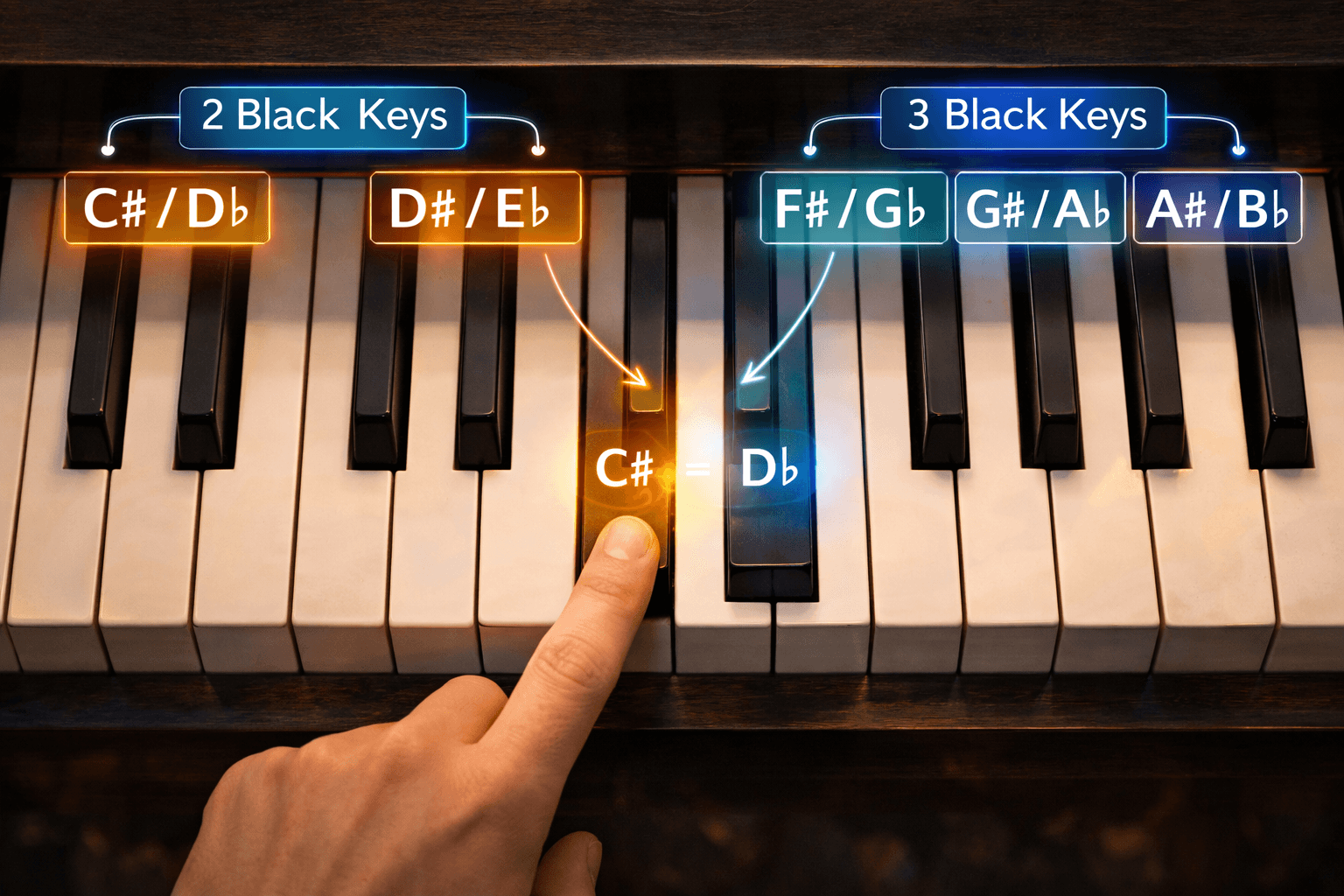 The piano keyboard notes reveal patterns that simplify learning. Groups of two and three black keys on piano repeat across the keyboard. Each black key represents either a sharp or flat note depending on context.
For example, the key between C and D can be C♯ or D♭. Learning these patterns helps beginners recognize accidentals quickly while reading piano key notation. You can explore these patterns further through our complete guide to the grand staff notes.
Common Mistakes Beginners Make With Sharps and Flats
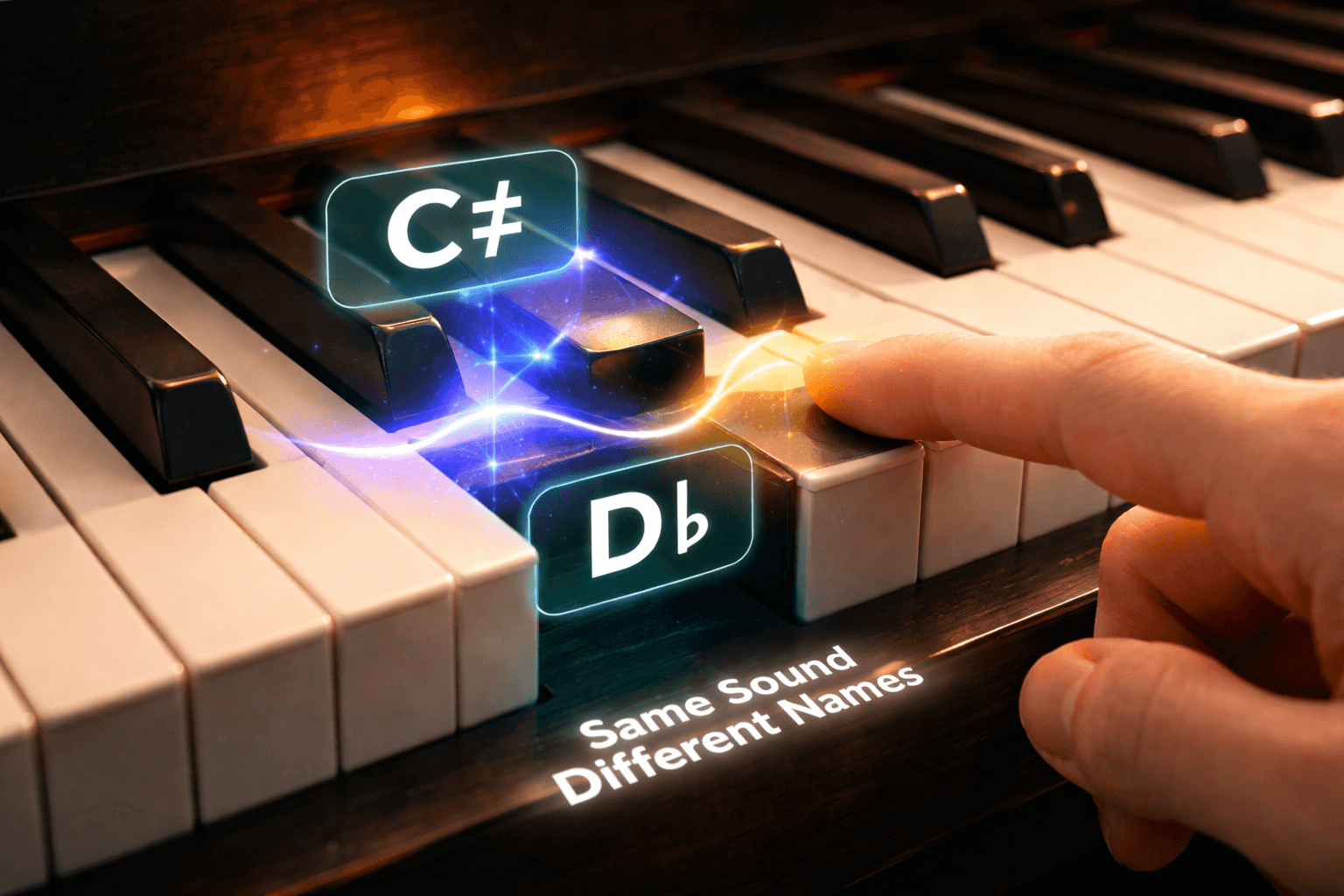 Many beginners confuse enharmonic notes. They often assume C♯ and D♭ produce different sounds. In reality, they share the same pitch under equal temperament tuning.
Another mistake involves ignoring accidentals in key signatures in music. When a key signature includes a sharp or flat, that note remains altered throughout the piece unless canceled by a natural sign.
Learn Music Theory and Piano With Art Gharana
Structured learning makes theory easier. Professional guidance breaks complicated concepts into manageable lessons. Students gradually explore piano keyboard notes, musical scales, and accidentals at Art Gharana.
Teachers also demonstrate real examples on instruments. This hands-on approach helps beginners understand sharp notes in music, flat notes in music, and the logic behind musical intervals. You can even explore beginner-friendly piano songs and piano chord guides to put theory into practice right away.
Conclusion: Mastering Sharp and Flat Notes in Music
Learning the difference between sharps and flats transforms your understanding of music. Once you grasp sharp vs flat notes, reading sheet music becomes easier. The patterns within musical scales and key signatures in music begin to make sense.
Consistent practice strengthens this knowledge. Over time, you will recognize accidentals instantly while reading treble clef notes or playing piano keyboard notes. With patience, the language of music becomes clear and expressive. Ready to take the next step? Book a free trial class with Art Gharana today and start your musical journey with expert guidance.
FAQs About Understanding Sharp Notes vs Flat Notes in Music
1. What is the difference between sharp notes and flat notes in music?
In western music theory, sharp notes in music raise a note by one semitone in music, while flat notes in music lower a note by one semitone. The sharp symbol (#) in music increases pitch, whereas the flat symbol (♭) in music decreases pitch.
2. Are sharp notes and flat notes the same on a piano?
Sometimes they represent the same key. Many black keys on piano can be named either sharp or flat. For example, C♯ and D♭ are enharmonic equivalents, meaning they share the same pitch frequency in the 12-tone equal temperament tuning system.
3. Why do musicians use sharps or flats instead of natural notes?
Musicians use musical accidentals to adjust pitch within musical scales. These changes maintain proper musical intervals and allow melodies to move smoothly within different key signatures in music.
4. What are enharmonic notes in music theory?
Enharmonic notes are notes that sound the same but have different names. For instance, F♯ and G♭ share the same sound frequency in music in modern tuning systems, even though they appear differently in the musical notation system.
5. How can beginners identify sharp and flat notes on a piano?
Beginners should observe the pattern of piano keyboard notes. Most sharp vs flat notes appear on the black keys on piano between natural notes. Learning these repeating patterns helps players quickly recognize accidentals while reading treble clef notes.