ChatGPT
 Google AI
 Grok
Grok Claude
Learning piano chords for beginners can open the door to playing countless songs. Chords define the harmony of a song and are made by playing two or more notes at the same time. Even simple chords can create fun and exciting music, and most rock piano songs rely on chords in some way. Understanding chord formation and practicing regularly allows you to develop musical intuition faster and play confidently. To practice effectively with expert guidance, you can explore online piano and keyboard classes.
Every beginner piano lesson focuses on triad chords first because they are the foundation of major and minor chords. Triads consist of a root note, a third, and a fifth. Once these basics are understood, keyboard chords become easier to learn, and you can gradually explore diminished piano chords and augmented piano chords to add more emotion and tension to your playing.
What is a Piano Chord?

A piano chord is a combination of notes played together to produce harmony. It can include two, three, or more notes, but most common piano chords are triads. The root note is the main note that gives the chord its name. For example, in a C major chord, C is the root note, E is the major third, and G is the perfect fifth.
Beginner piano chords often focus on major and minor chords first because they appear in almost every rock piano song and pop song. Common piano chords like C major, A minor, D minor, and G major are great starting points. Practicing these chords on a piano keyboard while following a piano note chart helps beginners quickly identify notes and improve their music theory for piano.
Understanding Piano Intervals and Notes
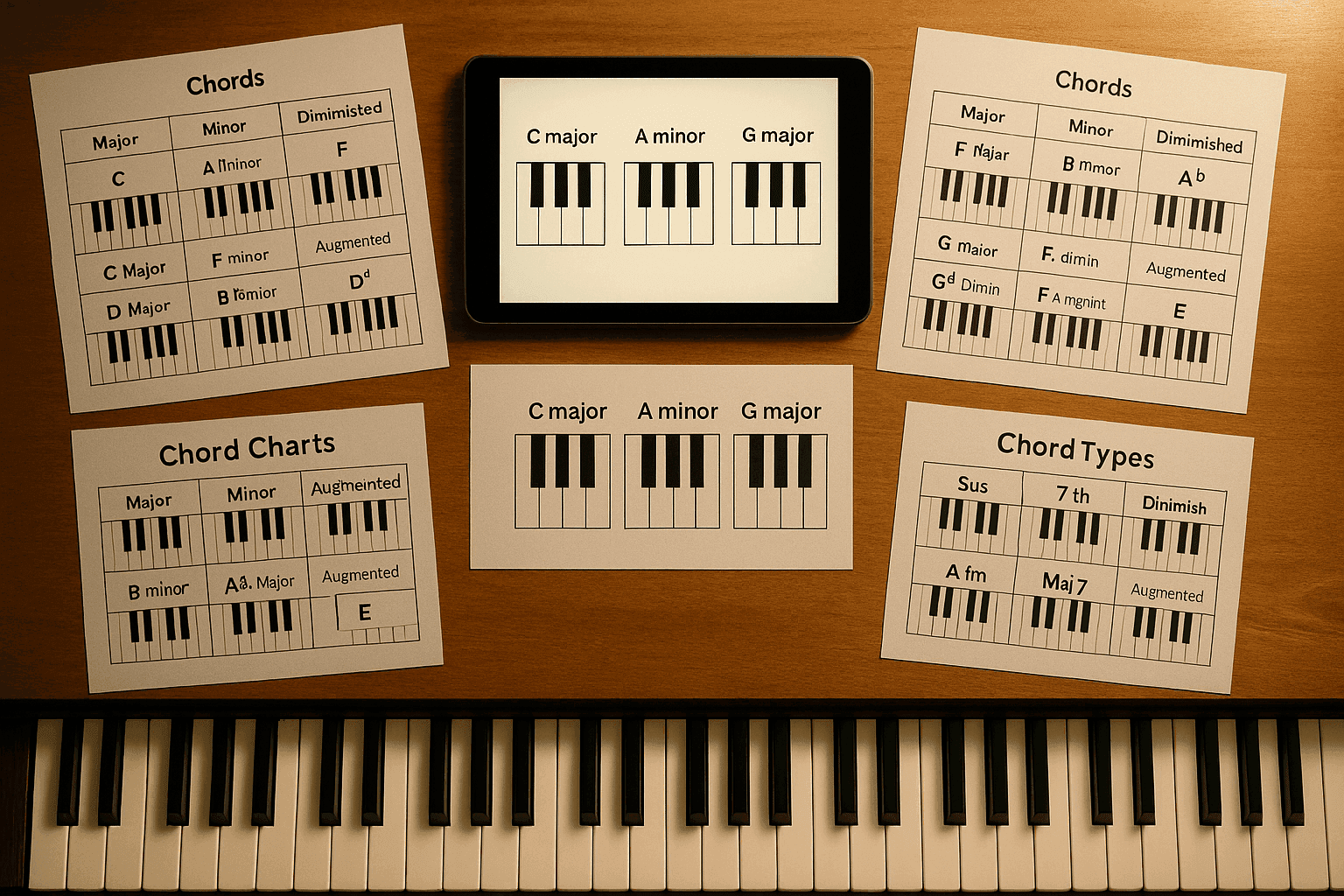
Intervals are the distance between two notes and determine how chords sound. A half-step is the distance from one key to the next on a piano keyboard. A whole-step equals two half-steps. The combination of intervals creates major and minor chords, diminished piano chords, or augmented piano chords. To practice these chords with simple songs, you can explore beginner-friendly piano songs.
Standard piano notes repeat in a pattern across the keyboard. White keys are named A to G, while black keys are called sharps (#) or flats (b). Reading sharp and flat notes is simple once you recognize the visual pattern. A C# is the black key to the right of C, and a Bb is the black key to the left of B. Practicing piano intervals with a piano note chart builds a strong foundation for chord formation and chord inversions.
What are piano intervals?
Piano intervals allow players to construct triad chords and more complex chords. A major third spans four half-steps, while a minor third spans three half-steps. The distance from the root note to the fifth is called a perfect fifth. Mastering intervals is essential to understand chord progression and how keyboard chords work in various songs.
What are standard piano notes?
A standard piano keyboard has 88 keys divided into white and black keys. White keys represent natural notes, and black keys represent sharp or flat notes. Using a piano note chart, beginners can quickly locate C major, C minor, D major, and D minor chords. Recognizing these notes makes playing songs easier and improves your music theory for piano knowledge.
What are sharp and flat piano notes?
Sharp (#) notes are one half-step higher than their natural note. Flat (b) notes are one half-step lower. Understanding sharps and flats helps you play songs in different keys and use augmented piano chords or diminished piano chords effectively. Practicing with these variations strengthens piano practice tips and builds chord formation skills.
How to read sharp and flat notes
Learning to read sharp and flat notes on sheet music allows beginners to interpret chord symbols and play chords accurately. Start by identifying black keys on the keyboard and matching them to their corresponding chord symbols. Practicing slowly at first improves confidence in how to play piano chords.
Comprehensive Piano Chords Chart for Beginners
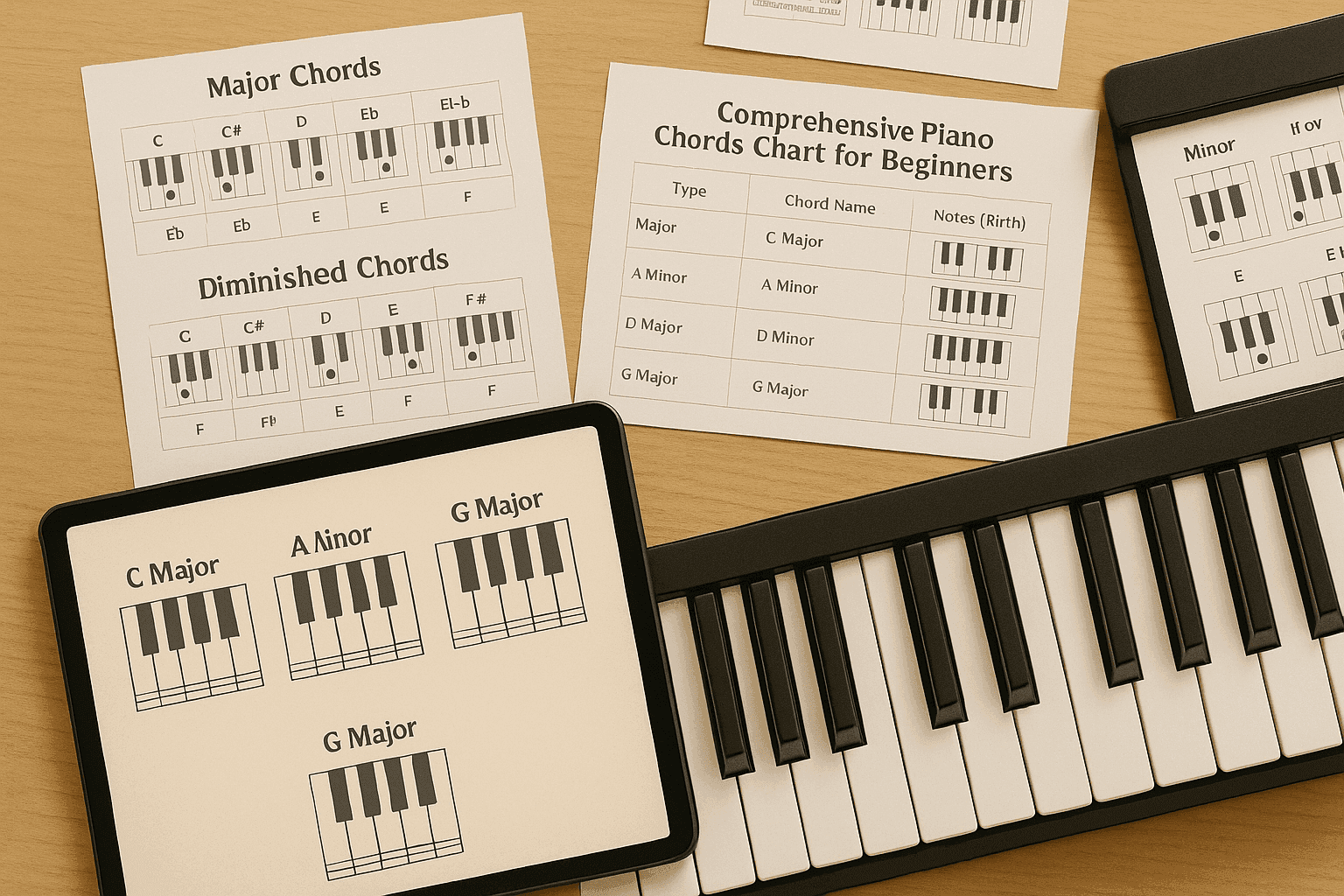
Chord Type Chord Name Notes (Root, Third, Fifth) Diagram Example (Keyboard Keys)
Major C Major C - E - G C, E, G
C# Major C# - E# - G# C#, E#, G#
D Major D - F# - A D, F#, A
Eb Major Eb - G - Bb Eb, G, Bb
E Major E - G# - B E, G#, B
F Major F - A - C F, A, C
F# Major F# - A# - C# F#, A#, C#
G Major G - B - D G, B, D
Ab Major Ab - C - Eb Ab, C, Eb
A Major A - C# - E A, C#, E
Bb Major Bb - D - F Bb, D, F
B Major B - D# - F# B, D#, F#
Minor C Minor C - Eb - G C, Eb, G
C# Minor C# - E - G# C#, E, G#
D Minor D - F - A D, F, A
Eb Minor Eb - Gb - Bb Eb, Gb, Bb
E Minor E - G - B E, G, B
F Minor F - Ab - C F, Ab, C
F# Minor F# - A - C# F#, A, C#
G Minor G - Bb - D G, Bb, D
Ab Minor Ab - Cb - Eb Ab, Cb, Eb
A Minor A - C - E A, C, E
Bb Minor Bb - Db - F Bb, Db, F
B Minor B - D - F# B, D, F#
Diminished C Diminished C - Eb - Gb C, Eb, Gb
C# Diminished C# - E - G C#, E, G
D Diminished D - F - Ab D, F, Ab
D# Diminished D# - F# - A D#, F#, A
E Diminished E - G - Bb E, G, Bb
F Diminished F - Ab - Cb F, Ab, Cb
F# Diminished F# - A - C F#, A, C
G Diminished G - Bb - Db G, Bb, Db
G# Diminished G# - B - D G#, B, D
A Diminished A - C - Eb A, C, Eb
A# Diminished A# - C# - E A#, C#, E
B Diminished B - D - F B, D, F
Augmented C Augmented C - E - G# C, E, G#
C# Augmented C# - E# - G## C#, E#, G##
D Augmented D - F# - A# D, F#, A#
D# Augmented D# - F## - A## D#, F##, A##
E Augmented E - G# - B# E, G#, B#
F Augmented F - A - C# F, A, C#
F# Augmented F# - A# - C## F#, A#, C##
G Augmented G - B - D# G, B, D#
G# Augmented G# - B# - D## G#, B#, D##
A Augmented A - C# - E# A, C#, E#
A# Augmented A# - C## - E## A#, C##, E##
B Augmented B - D# - F## B, D#, F##
How to Read Piano Chords
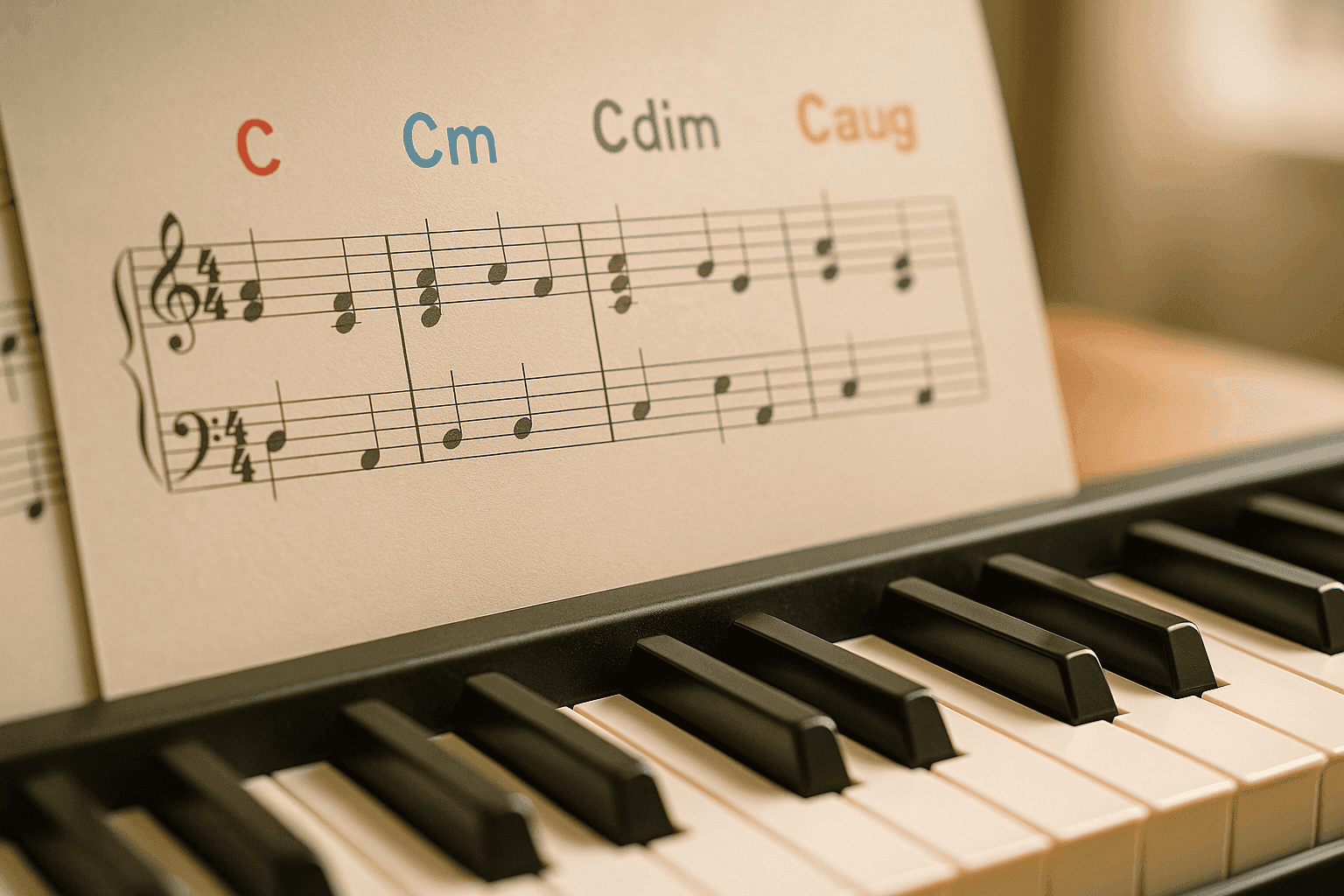
Reading piano chords involves understanding chord symbols and translating them to the keyboard. A simple "C" means C major, "Cm" is C minor, "Cdim" is C diminished, and "Caug" is C augmented. Recognizing these symbols allows you to play rock piano songs or pop songs without constantly looking at a piano note chart.
Visualizing chord symbols on the keyboard improves speed and accuracy. For example, locating G major, G minor, and G# augmented on a piano keyboard becomes easier with consistent practice. Chord inversions are another useful technique that allows smoother transitions between chords, making songs sound more professional.
How to Play Piano Chords
Learning how to play piano chords starts with proper hand positioning. The left hand often plays the root note, while the right hand plays the full chord. Practicing simple triad chords first, like C major or A minor, sets the foundation for more complex chords like diminished piano chords and augmented piano chords.
Playing a major chord on the piano
To play a major chord, find the root note, then add the major third and perfect fifth. For example, C major uses C, E, and G. Practicing C major, D major, and E major builds confidence and helps you understand chord formation. These chords appear in almost all beginner piano lessons and rock piano songs.
Playing a minor chord on the piano
Minor chords are formed by lowering the third interval by one half-step. For example, C minor is C, Eb, and G. Practicing minor chords alongside major chords improves your ability to switch between emotional tones in songs like Comfortably Numb or Let It Be.
Playing diminished and augmented chords
Diminished piano chords create tension, while augmented chords have a floating, unusual sound. D# diminished is D#, F#, A, and C augmented is C, E, G#. These chords are essential for advanced chord progressions and add color to your music.
Using chord inversions
Chord inversions rearrange the notes of a chord so that different notes appear as the bass. For example, first inversion C major is E-G-C. Inversions make transitions between chords smoother and allow beginners to play more fluid chord progressions.
Exploring Chord Qualities
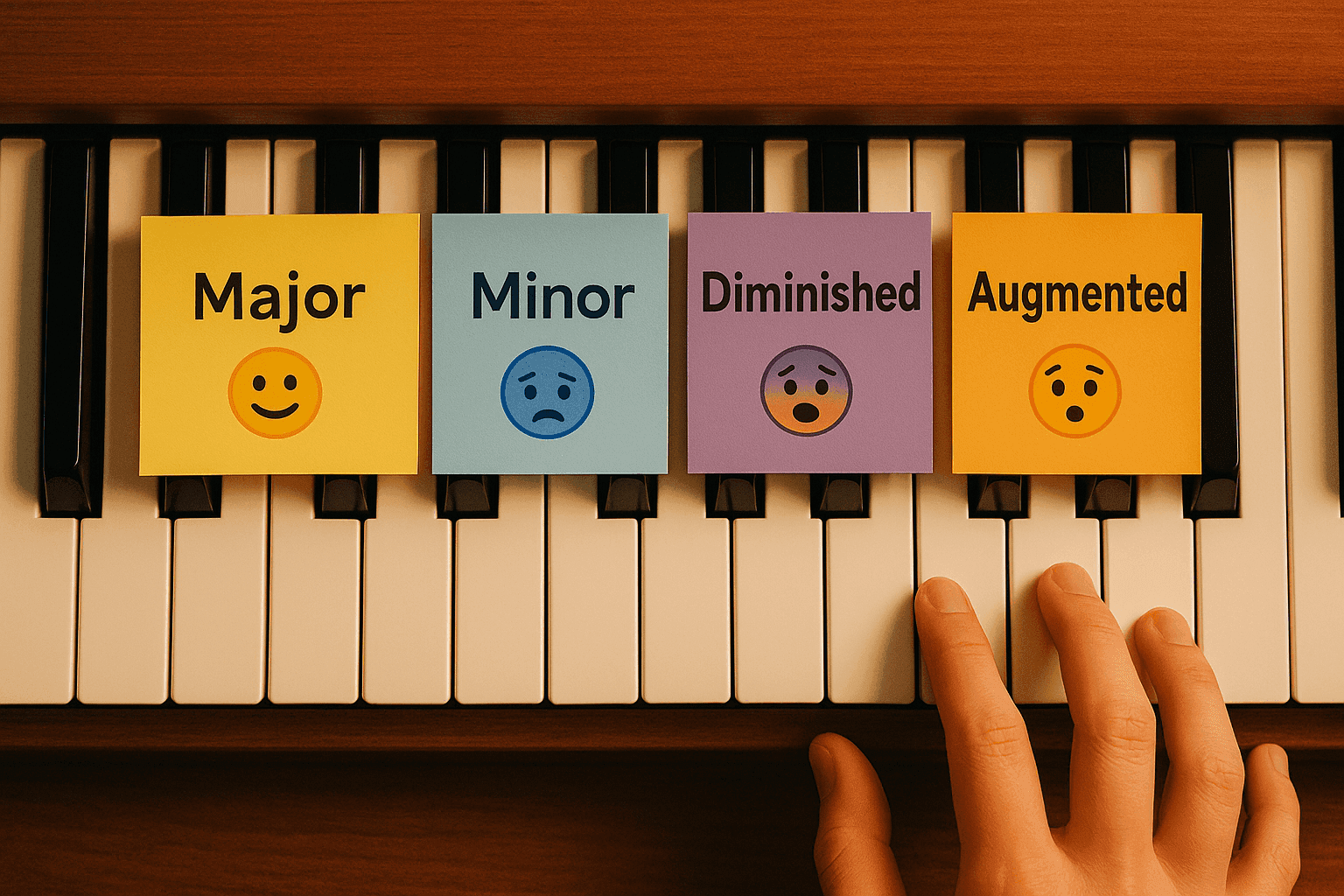
Major chords
Major chords have a bright, happy sound. C major, F major, and G major are common in beginner piano lessons and popular songs. Listening for major chords in rock piano songs trains your ear to identify them by sound.
Minor chords
Minor chords sound sad or emotional. A minor, D minor, and E minor are essential for creating variety in chord progressions. Many rock piano songs mix major and minor chords to evoke different moods.
Diminished chords
Diminished piano chords sound tense or spooky. They often appear in transitions, for example, in God Only Knows by The Beach Boys. Practicing diminished chords builds versatility in your chord formation skills.
Augmented chords
Augmented chords create unusual, unresolved sounds. Examples like C augmented or G# augmented are rare but powerful for adding flair to songs. They appear in pre-choruses or bridges, adding tension before returning to stable chords.
Advanced Chords and Variations
Suspended chords (Sus chords)
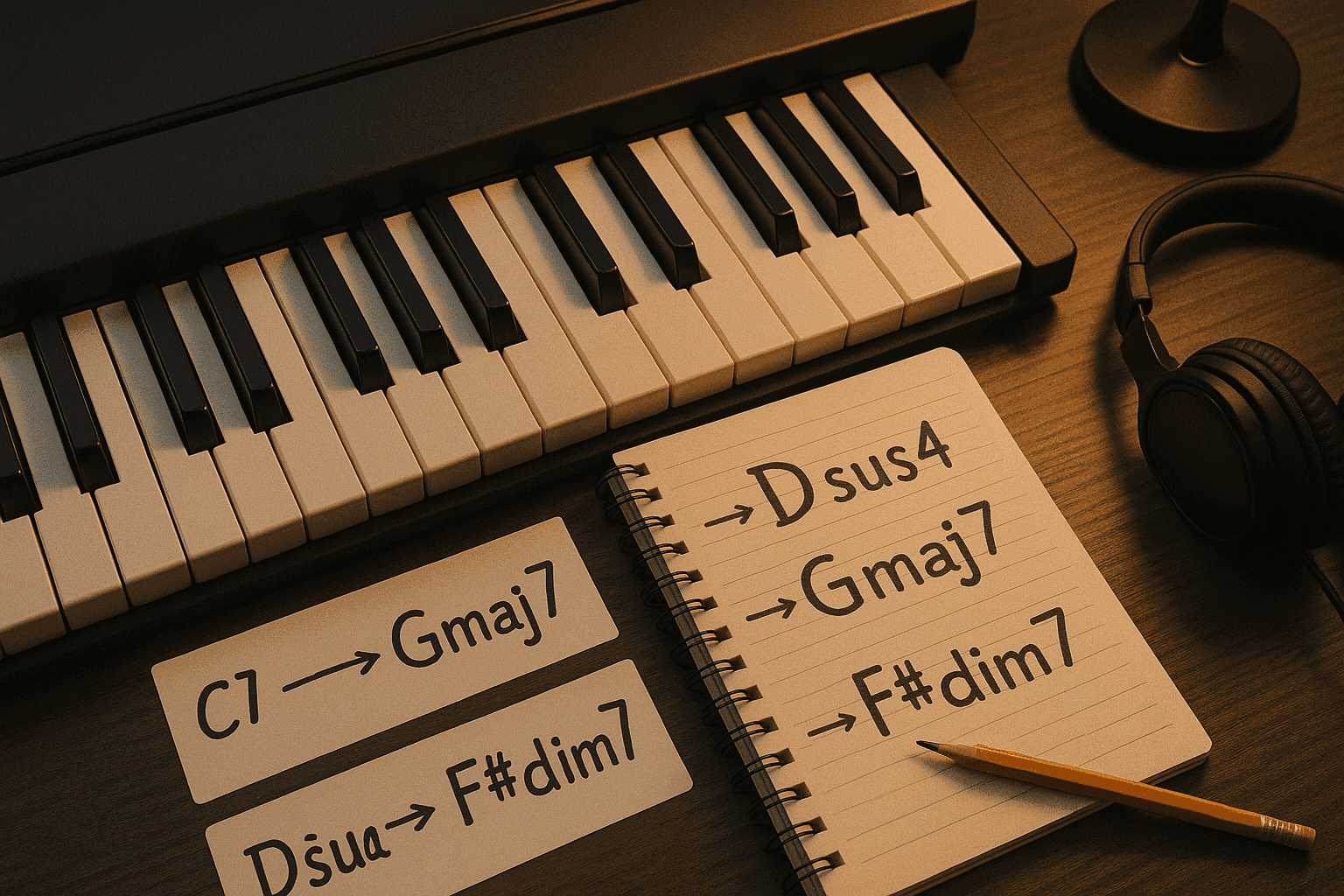
Sus2 and sus4 chords replace the third with either a second or fourth, creating open, unresolved sounds. For example, Dsus4 is D, G, A. These chords are useful in modern rock piano songs for adding variety.
Seventh chords
Seventh chords, including dominant, major, and minor 7th, add richness to music. C7 includes C, E, G, and Bb. Practicing seventh chords enhances your understanding of chord inversions and chord progressions.
Slash chords and their uses
Slash chords have a note other than the root in the bass. For example, C/G means C major with G as the bass. They are commonly used to create smoother transitions between chords in songs.
Chord structures: root, third & fifth
Understanding root, third, and fifth intervals is essential. Every triad chord, whether major, minor, diminished, or augmented, is built from these intervals. A strong grasp of intervals helps in improvisation and composition.
Intervals & chord formation
Advanced interval patterns help form complex chords beyond triads. Knowing major thirds, minor thirds, perfect fifths, and augmented fifths allows beginners to experiment with different chord progressions on a piano keyboard.
Practical Tools for Learning Chords
Piano chords generator
Digital tools and apps can generate chords for practice. These tools help visualize keyboard chords, showing which notes form triads or augmented piano chords. Using such tools alongside piano practice tips accelerates learning.
Taking your chords to the next level
Combining chords into progressions like C-G-Am-F allows beginners to play complete songs. Practicing chord progressions strengthens memory and builds confidence in performance.
Case Study: The impact of chords in popular songs
In Let It Be by The Beatles, the chord progression C-G-Am-F creates a memorable melody. Analyzing songs like this teaches how triad chords, inversions, and chord symbols interact to form harmonious music.
Tips to Practice and Memorize Piano Chords
Daily piano practice improves muscle memory and timing. Beginners should focus on major and minor chords first, then add diminished piano chords and augmented piano chords. Avoid common mistakes like pressing multiple keys incorrectly or playing too fast. Practicing on both digital keyboards and acoustic pianos enhances versatility and performance feedback. To receive structured guidance and personalized practice tips, you can book a trial class.