ChatGPT
 Google AI
 Grok
Grok Claude
Learning Twinkle Twinkle Little Star is one of the best ways to start piano lessons for kids and adults. This piano song for beginners introduces simple piano techniques, basic five-finger position, and right-hand melody with left-hand accompaniment. Using slow tempo practice and step-by-step piano guide, learners can build confidence while memorizing piano songs.
Music for children is not only fun but helps develop coordination. Twinkle Twinkle Little Star is easy to play and perfect for beginners to learn piano online or through interactive piano lessons. Its familiar lyrics by Jane Taylor make singing along while playing enjoyable and memorable.
Fascinating Insights About “Twinkle Twinkle Little Star”
 The origins of Twinkle Twinkle Little Star date back to early 19th century. The lyrics by Jane Taylor first appeared in 1806. Its melody is simple and charming, making it ideal for nursery rhyme piano tutorial and classical piano for beginners. Children can easily follow stepwise movement across piano keys white notes and play in common time meter.
The song’s structure is perfect for beginners because it uses basic five-finger position in C major piano song. Beginners can focus on right-hand melody first while using hands separate practice for left-hand accompaniment. Learning piano step by step using this song helps develop accuracy and precision while building piano memory techniques naturally.
Origins and history of the melody
The melody is adapted from the French tune “Ah! vous dirai-je, maman” and later arranged by Mozart variations for piano. It has been a staple in classical piano for beginners and is still widely used in modern piano lessons for kids. The simple C major scale makes it accessible for step-by-step piano guide learners.
Why it’s ideal for beginner pianists
Its repetitive notes help beginners memorize piano songs quickly. The song also introduces music theory basics, including common time meter, melody in right hand, and accompaniment in left hand. Easy piano songs like this build confidence, encourage slow tempo practice, and reinforce finger positions on piano without overwhelming learners.
Quick reference cheat sheet for beginners
Finger placement shortcuts
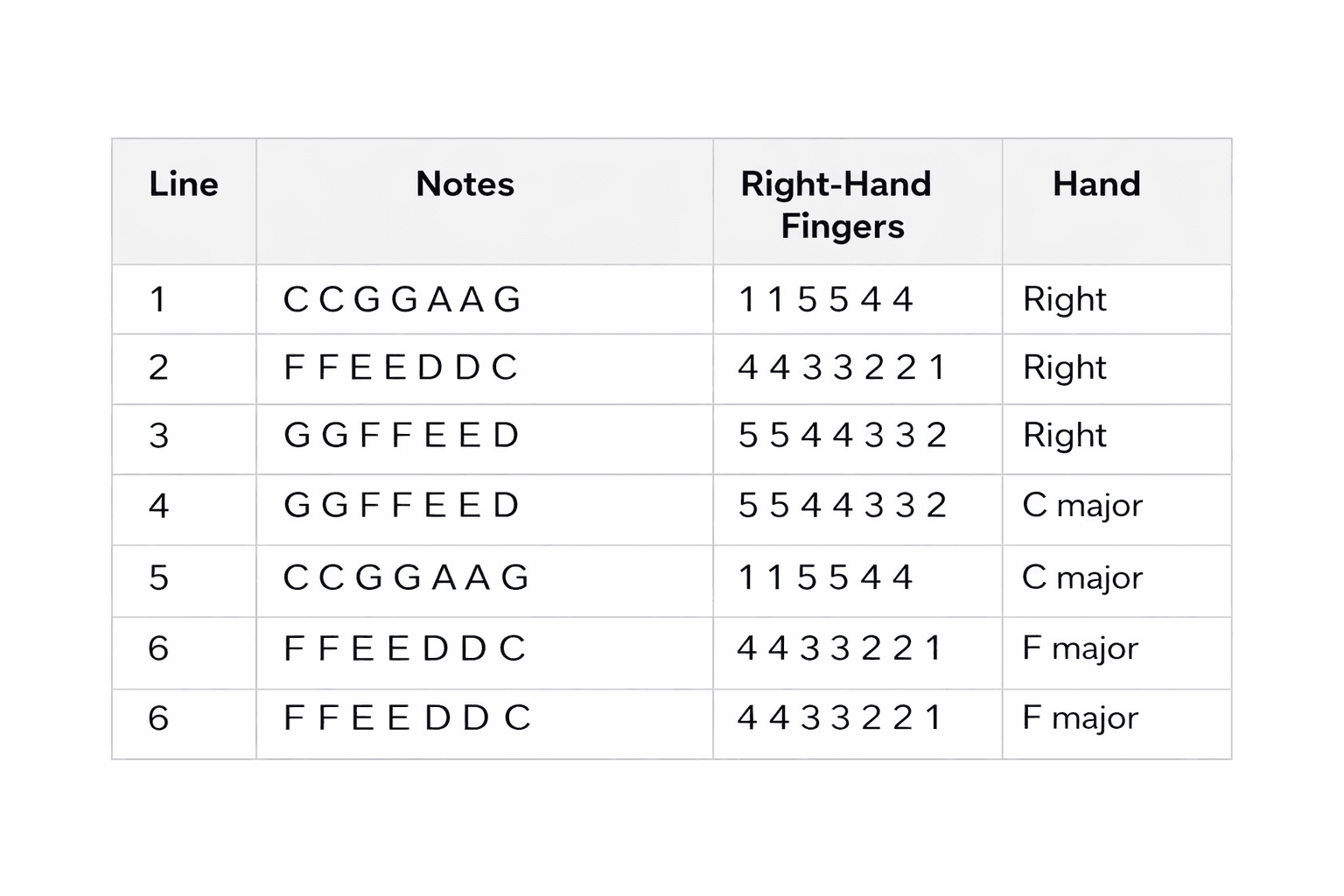
Assign fingers 1 to 5 for C major scale. Use finger 1 for C, finger 2 for D, finger 3 for E, finger 4 for F, and finger 5 for G. This method allows smooth transitions for right-hand melody and supports left-hand accompaniment.
Piano Notes and Finger Placements Simplified
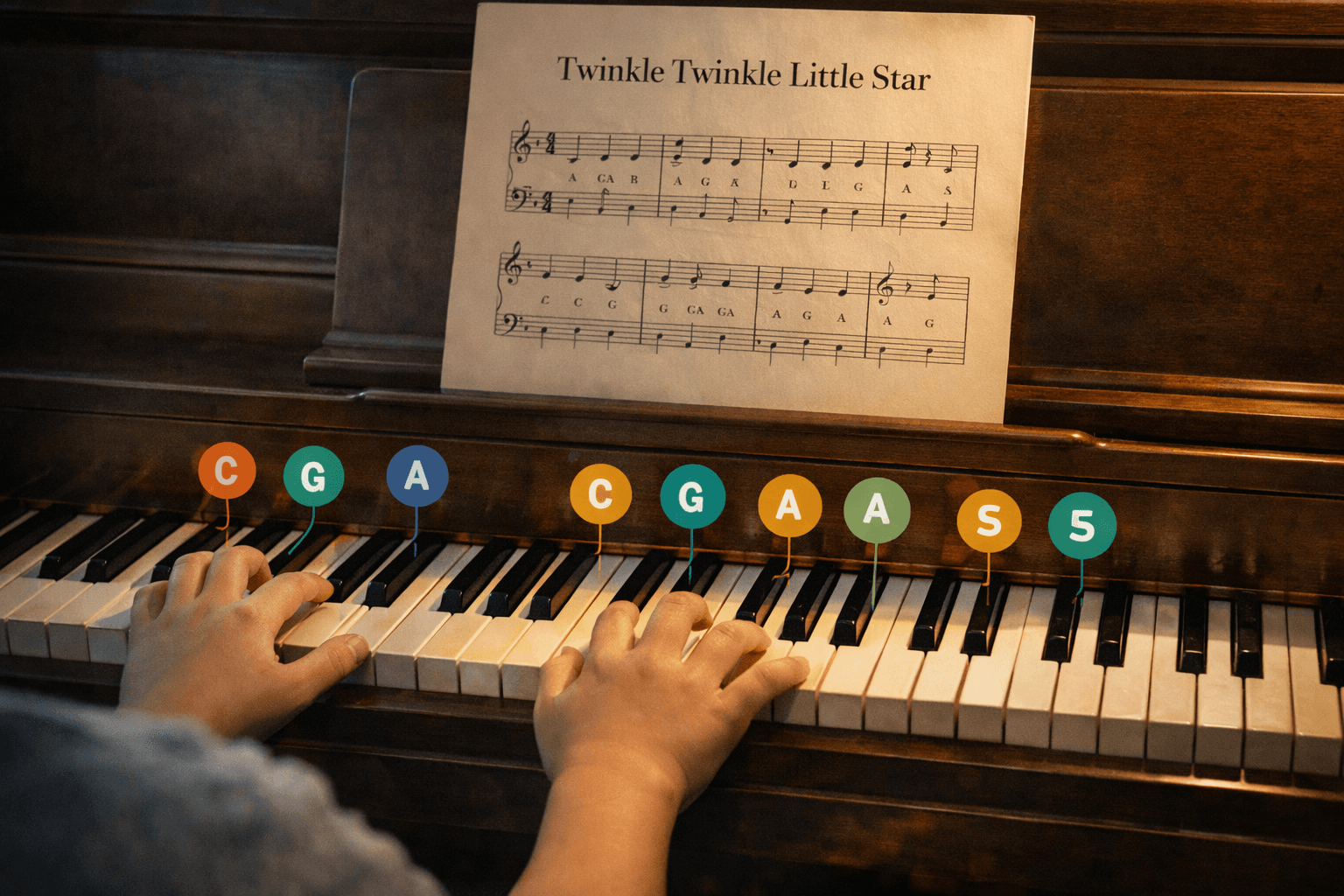 Playing Twinkle Twinkle Little Star becomes easier when finger positions on piano are clear. Right-hand melody follows stepwise piano keys white notes, while left-hand accompaniment uses basic chords. Beginners can combine simple piano techniques to play hands together on piano.
Practicing right-hand melody separately allows learners to focus on accuracy and precision. Left-hand accompaniment reinforces rhythm and develops independence. Using interactive piano lessons or beginner piano tutorial apps helps track progress and memorize piano songs efficiently.
Right-hand melody guide
Step-by-step note positions
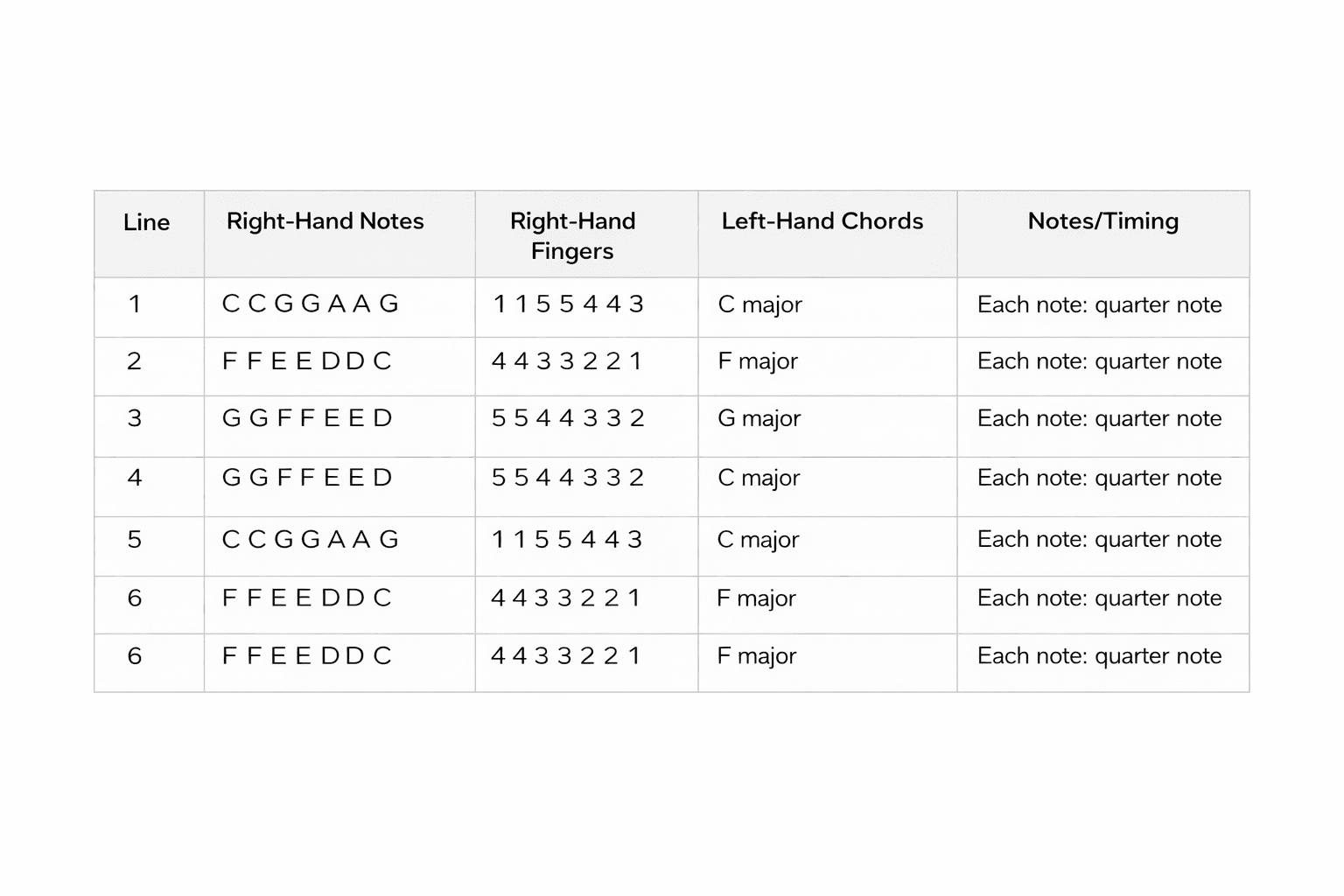
Start with C C G G A A G. Move slowly across white keys, using fingers 1 to 5. Repeat until comfortable. Hands separate practice before combining with left-hand chords is recommended.
Finger numbering tips
Finger 1 for thumb, 2 for index, 3 for middle, 4 for ring, and 5 for little finger. Proper finger numbering helps develop smooth transitions and reduces strain during longer practice sessions.
Left-hand accompaniment patterns
Basic chords to support the melody
Use simple C major, F major, and G major chords. Play chords in the same rhythm as the melody to support beginner piano tutorial. This develops a sense of harmony in early learners.
Combining left-hand chords with rhythm
Practice left-hand accompaniment slowly. Use a metronome for beginners to maintain consistent timing. Gradually increase tempo while keeping hands coordinated. This ensures right-hand melody and left-hand accompaniment stay aligned.
Step-by-Step Tutorial: Playing “Twinkle Twinkle Little Star”
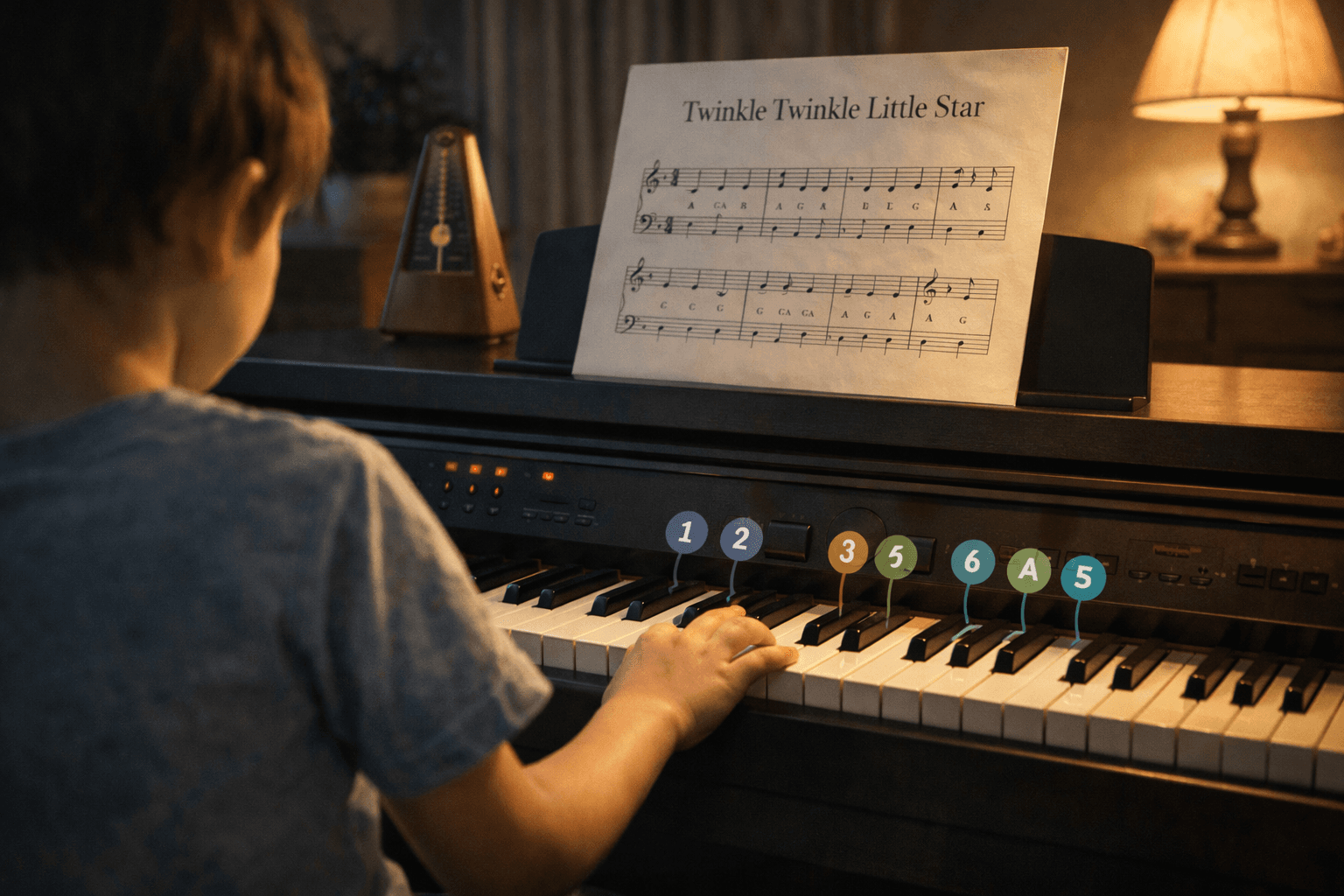 Preparing to play involves correct posture, hand positioning, and piano setup. Proper seating and curved fingers reduce tension. Beginners should use stepwise movement and slow tempo practice to learn piano step by step. Hands separate practice enhances focus on melody in right hand and accompaniment in left hand.
Right-hand practice focuses on learning the melody slowly. Repetition builds piano memory techniques and reinforces accuracy and precision. Left-hand practice uses simple chords to accompany the melody. Combining both hands is achieved through slow practice with metronome for beginners, gradually increasing speed without sacrificing control.
Preparing to play
Proper posture and curved fingers improve hand mobility. Adjust piano height and bench distance to allow comfort during practice. Correct positioning is critical for piano memory techniques and accuracy while playing hands together on piano.
Right-hand practice
Learn melody C C G G A A G slowly, using five-finger piano exercises. Repeat lines multiple times until smooth. Singing along while playing helps internalize rhythm and pitch, reinforcing music for children techniques.
Left-hand practice
Start with C major chord for first line, F major for second, G major for fifth. Play slowly and gradually build confidence. Use metronome for beginners to maintain steady tempo.
Coordinating both hands
Combine right-hand melody with left-hand accompaniment slowly. Focus on timing, rhythm, and finger positions on piano. Gradual practice prevents mistakes and develops hand independence.
Beginner-Friendly Lesson Plan
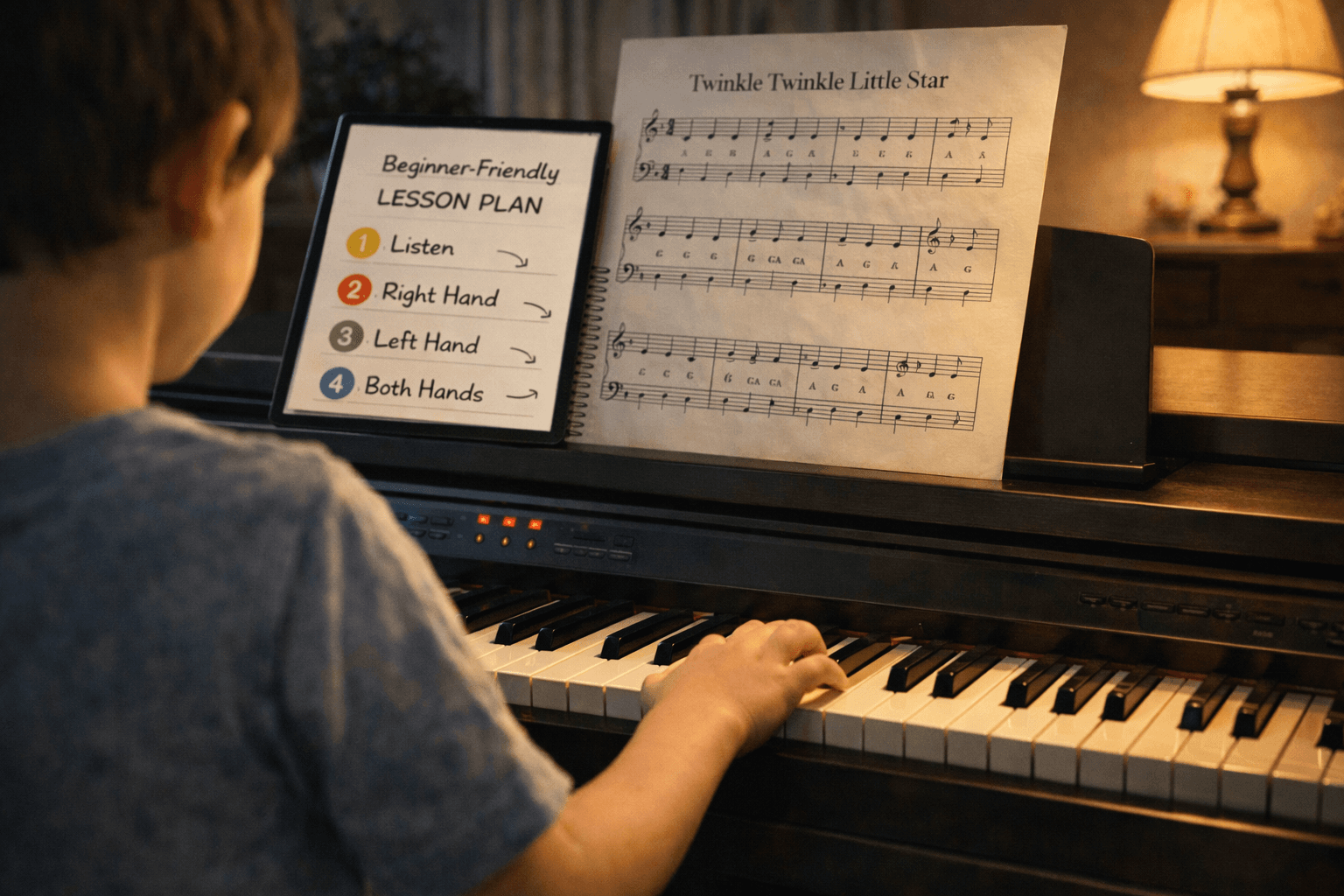 Step 1 involves listening to Twinkle Twinkle Little Star to internalize melody and rhythm. Active listening exercises and counting techniques enhance understanding of common time meter. Step 2 focuses on right-hand practice, step 3 on left-hand practice, and step 4 combines hands together using slow tempo practice.
Hands separate practice initially allows beginners to focus on each part. Stepwise piano guide, simple piano techniques, and interactive piano lessons encourage consistent improvement. Memorize piano songs effectively by combining daily piano practice tips and using metronome for beginners to maintain tempo.
Effective Practice Tips for Beginners
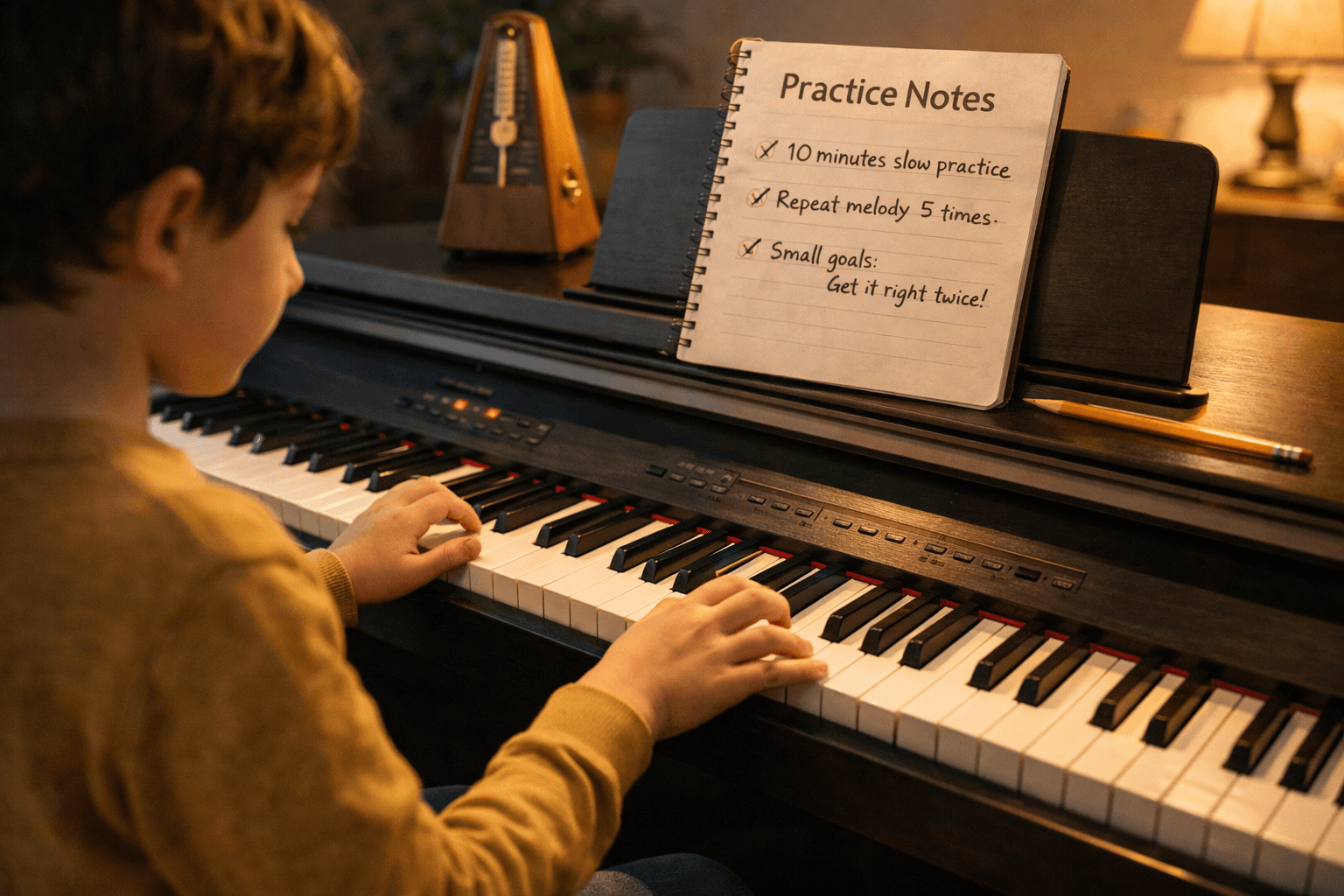 Daily practice routines improve speed, accuracy, and finger positions on piano. Use five-finger piano exercises and slow tempo practice to build strength. Visual aids, audio recordings, and interactive piano lessons reinforce learning and help memorize piano songs faster.
Overcoming challenges like uneven rhythm or finger stiffness requires targeted exercises. Tracking progress with recording or journaling motivates learners. Using simple piano techniques and stepwise piano guide ensures right-hand melody and left-hand accompaniment stay synchronized.
How Art Gharana Enhances Your Learning Experience
 Art Gharana offers structured piano lessons for kids and beginners with focus on foundational skills. Personalized guidance ensures learners progress at their own pace. Interactive piano lessons and stepwise practice modules make learning Twinkle Twinkle Little Star enjoyable and effective.
Success stories of learners demonstrate how slow tempo practice and step-by-step piano guide help build confidence and memorization. Beginners learn piano online while enjoying classical piano for beginners techniques, hands separate practice, and five-finger piano exercises.
Tips to Make Learning Fun and Engaging
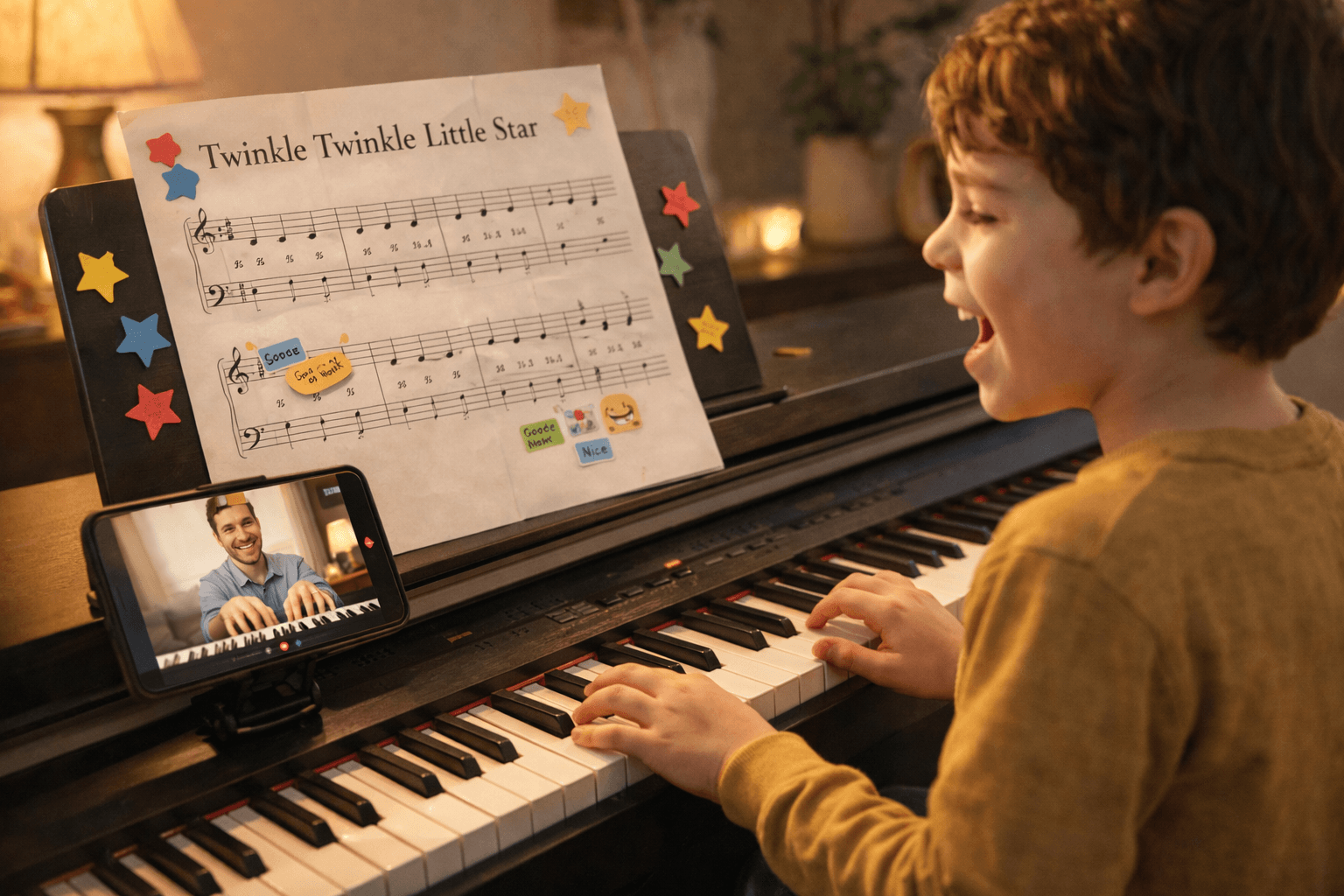 Incorporate games, challenges, and recording play-alongs to stay motivated. Set small milestones like completing one verse perfectly, gradually increasing difficulty. Singing along while playing strengthens memory and reinforces right-hand melody and left-hand accompaniment.
Regular practice with metronome for beginners ensures timing and rhythm improve steadily. Easy piano songs like Twinkle Twinkle Little Star make piano lessons for kids enjoyable while teaching music theory basics, accuracy and precision, and stepwise movement across piano keys white notes.
Summary and Next Steps
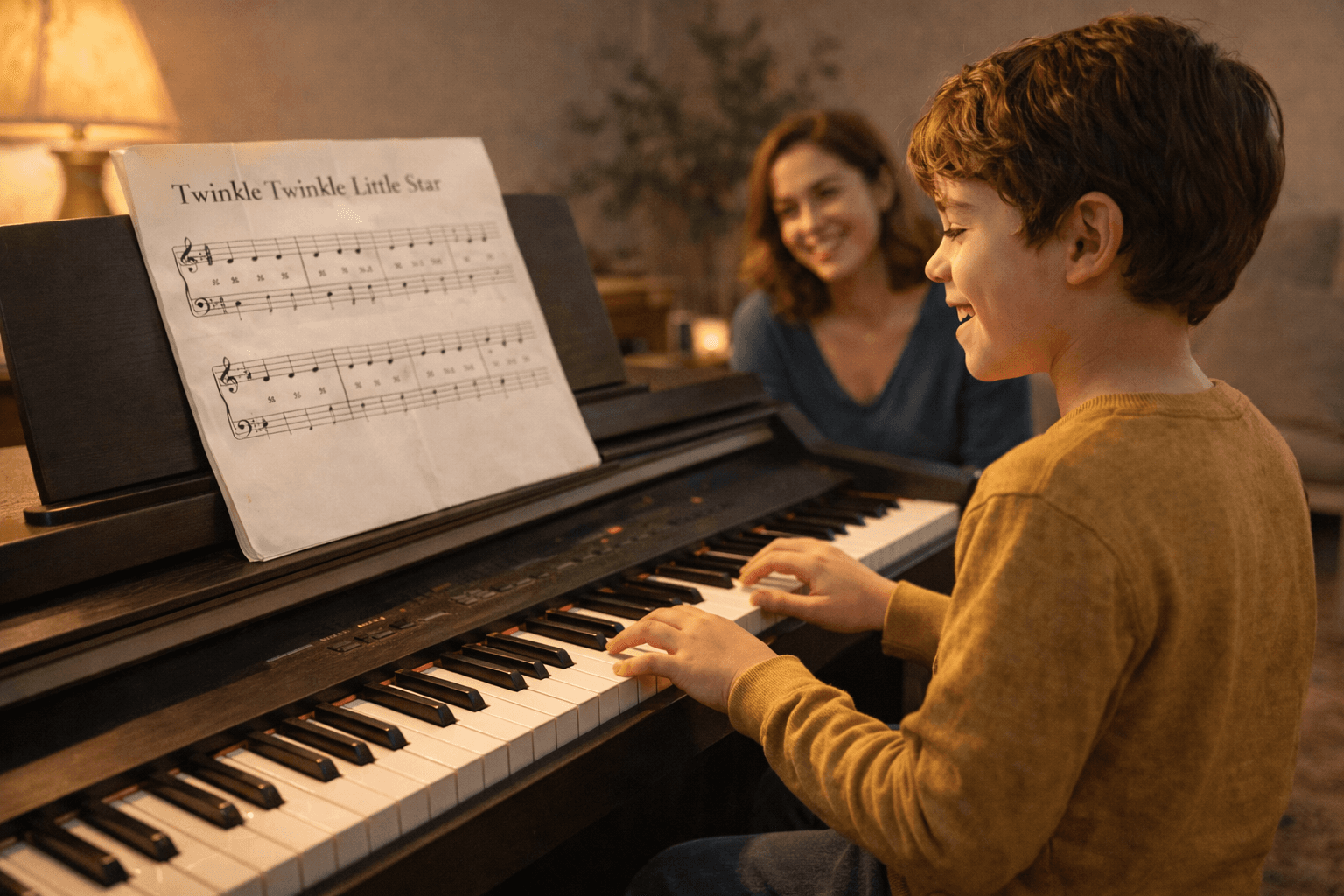 Mastering Twinkle Twinkle Little Star builds a solid foundation for piano practice. Right-hand melody, left-hand accompaniment, and proper finger positions on piano are key elements for beginners. Consistent practice, slow tempo, and step-by-step piano guide improve accuracy and confidence.
After mastering this piano song for beginners, learners can progress to follow-up songs like Mary Had a Little Lamb, Ode to Joy, or other nursery rhyme piano tutorial songs. Continuing with classical piano for beginners and interactive piano lessons helps memorize piano songs faster and develop lifelong music skills.
FAQ’s
Q1: Is “Twinkle Twinkle Little Star” good for beginner piano students?
A1: Yes, its simple C major scale and repetitive notes make it ideal for beginners.
Q2: Can kids learn this song online?
A2: Absolutely, interactive piano lessons and online tutorials make it easy to learn piano online.
Q3: Which hand should I practice first?
A3: Start with the right-hand melody, then practice left-hand accompaniment separately.
Q4: How can I memorize the song faster?
A4: Use slow tempo practice, hands separate exercises, and sing along while playing.