ChatGPT
 Google AI
 Grok
Grok Claude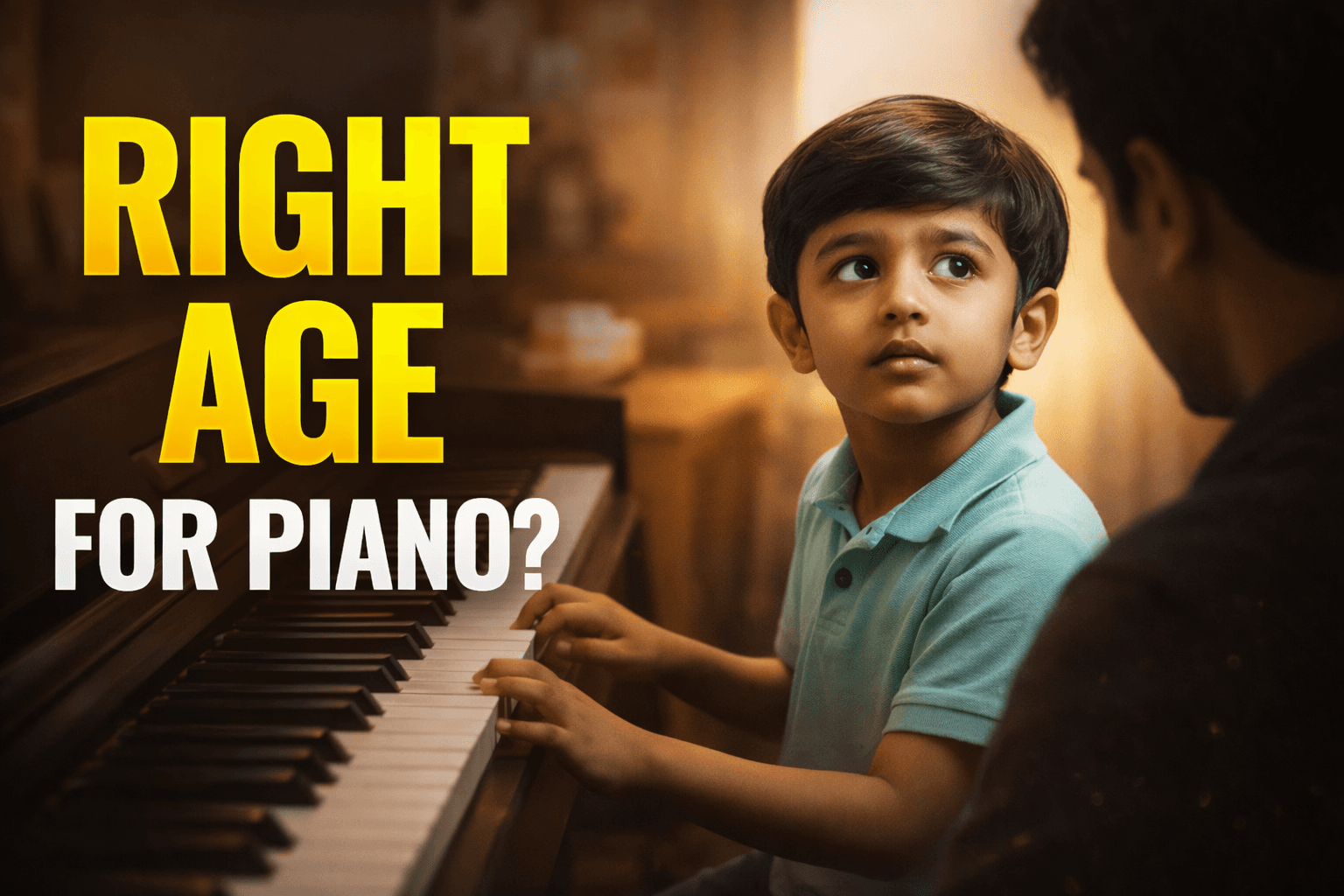
Adelaide has emerged as a vibrant hub for arts and music, offering children an ideal environment to explore musical instruments. Among the many options, the piano stands out for its versatility, accessibility, and foundational importance in music education. For Indian families living in Adelaide, piano learning is not only about mastering an instrument—it's an opportunity to develop cognitive skills, enhance creativity, and connect with a global music culture.
With the rise of online education, platforms like Art Gharana have made expert piano training accessible to children anywhere in Adelaide. Offering live, interactive lessons with Indian instructors, these platforms combine structured curricula with flexible scheduling. In this guide, we explore what piano learning entails, why it benefits children, and how parents and kids can start effectively, whether through online or offline classes.
What Is Piano Learning for Kids?
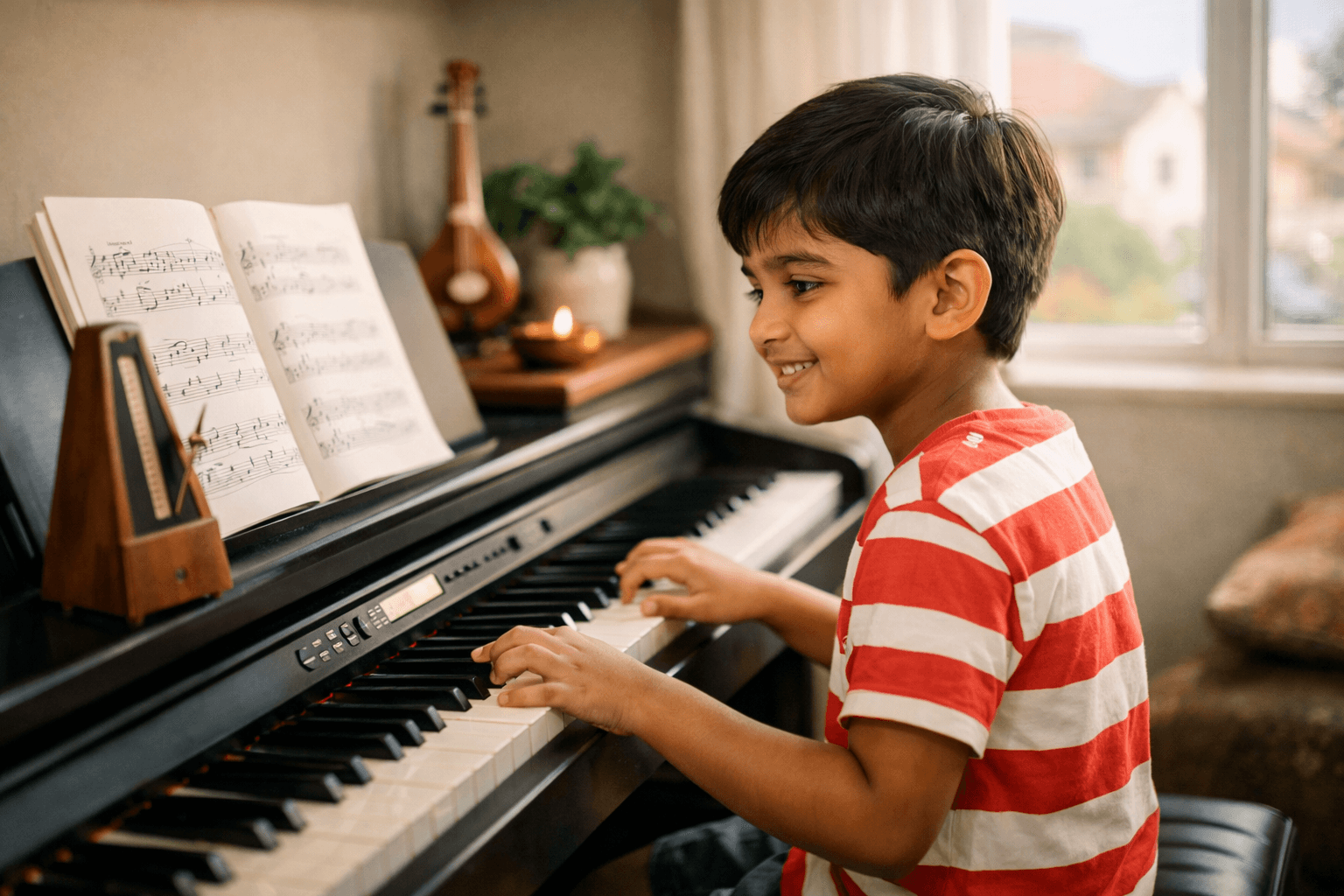 Piano learning is much more than playing notes; it is a holistic process that develops multiple dimensions of a child's growth. It combines physical coordination, cognitive development, music theory, rhythm, and creative expression. Children begin with basic finger exercises and scales, progressing to chords, melodies, and full compositions over time.
This process enhances hand-eye coordination, memory, and multitasking skills. For Indian kids in Adelaide, piano lessons also offer a unique blend of cultural learning, integrating Western classical music with Indian melodies. Platforms like Art Gharana provide structured programs tailored for children of all ages, ensuring steady progression and personalized feedback for each learner.
Origins and Importance of Piano Education
The piano, invented in the early 1700s, revolutionized music education by offering both melodic and harmonic capabilities in a single instrument. Learning the piano allows children to understand music theory intuitively, while simultaneously developing discipline, concentration, and emotional intelligence.
In the Indian context, piano learning complements vocal and instrumental music education, giving children a strong foundation in both classical and contemporary music. Adelaide families increasingly view piano education as a tool to nurture critical thinking, creativity, and self-expression, while also enhancing academic skills such as mathematics and reading comprehension.
Key Components of Piano Learning
A comprehensive piano program typically includes:
- Finger Exercises and Scales: Develops dexterity and accuracy.
- Music Theory: Understanding notes, rhythm, chords, and dynamics.
- Melody and Harmony Practice: Learning to play with both hands independently.
- Sight Reading: Quickly recognizing and interpreting sheet music.
- Composition and Creativity: Encouraging improvisation and original pieces.
Art Gharana integrates all these components into a structured curriculum, ensuring children enjoy a fun, progressive learning experience that builds both skill and confidence.
Why Children Should Learn Piano in Adelaide
 Piano education offers physical, cognitive, emotional, and cultural benefits, making it a popular choice for Indian families in Adelaide. Beyond skill acquisition, it develops discipline, confidence, and creativity. With a city rich in music schools, cultural festivals, and community events, children have multiple opportunities to showcase their learning.
Online platforms like Art Gharana are especially beneficial for busy families. They combine expert instruction, flexible scheduling, and milestone tracking, ensuring children progress efficiently without missing school or extracurricular activities.
Cognitive and Academic Benefits
Playing the piano engages both hemispheres of the brain. Children learn to coordinate hands independently while reading musical notation, enhancing memory, focus, and multitasking abilities. Studies have shown that children with music training often perform better in mathematics and language, as music education strengthens neural pathways associated with logical and analytical thinking.
Emotional and Social Benefits
Beyond academics, piano learning fosters emotional well-being and self-confidence. Performing music, whether in front of family or at recitals, builds courage and resilience. Children learn to handle performance anxiety and celebrate achievements, boosting their self-esteem. Additionally, learning piano with peers through group classes or online communities creates opportunities for social connection and friendship, especially valuable for Indian families seeking cultural connections in Adelaide.
Cultural and Creative Benefits
Piano lessons expose children to diverse musical styles, from Western classical to contemporary Indian adaptations. This encourages cultural appreciation and creativity. Art Gharana promotes a curriculum that allows children to blend Indian melodies with piano compositions, helping them develop unique musical expressions while learning global music traditions.
How to Start Piano Classes for Kids in Adelaide
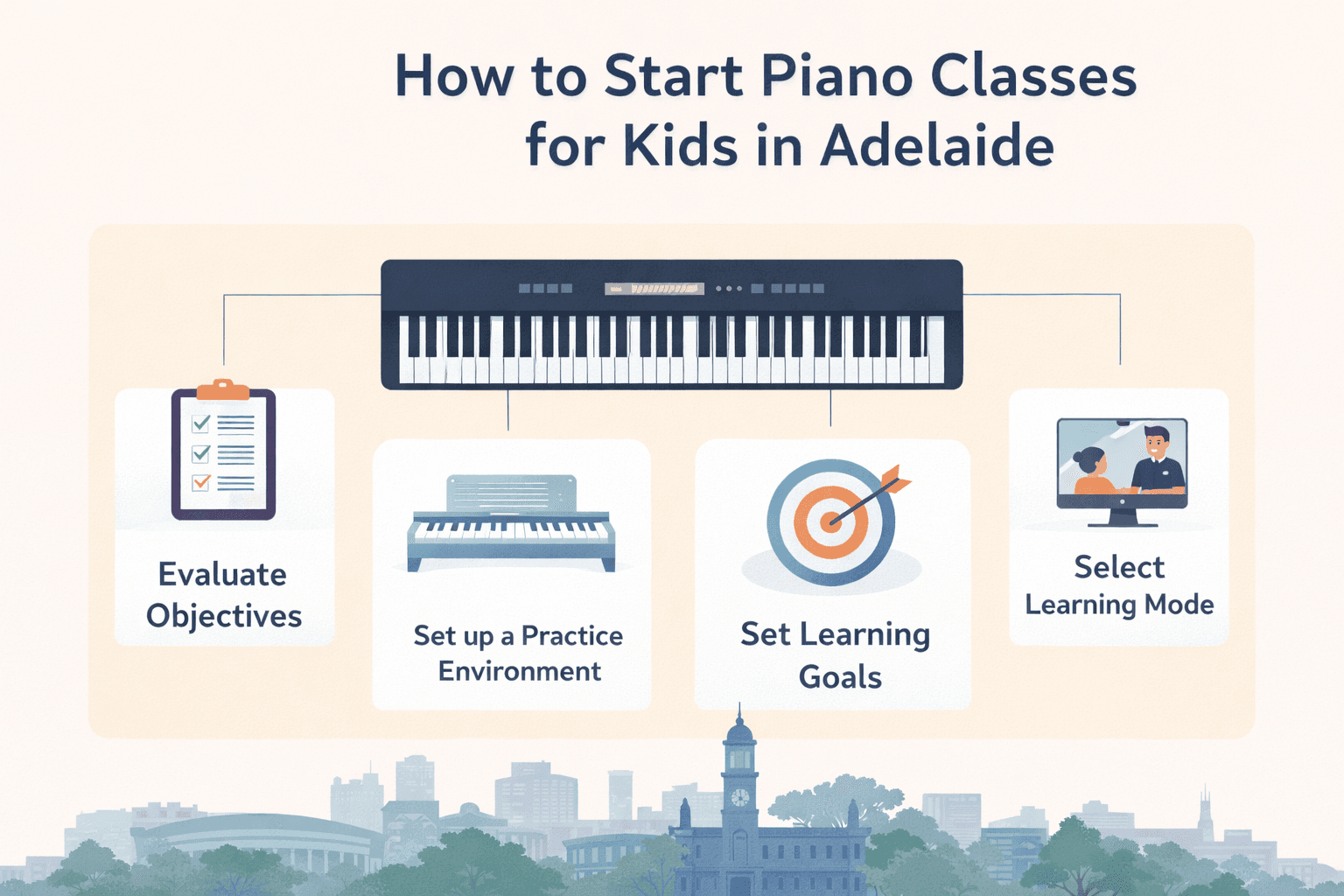
 Starting piano lessons requires evaluating objectives, selecting appropriate learning modes, and creating a conducive practice environment. Both offline and online options are available, but modern families often prefer online platforms for flexibility and access to expert instructors.
Offline vs Online Piano Classes
Offline Classes: Music schools provide in-person guidance, hands-on corrections, and classroom interactions. They are ideal for children who benefit from direct engagement and peer learning. However, commuting, fixed schedules, and limited access to highly qualified instructors in Adelaide can pose challenges.
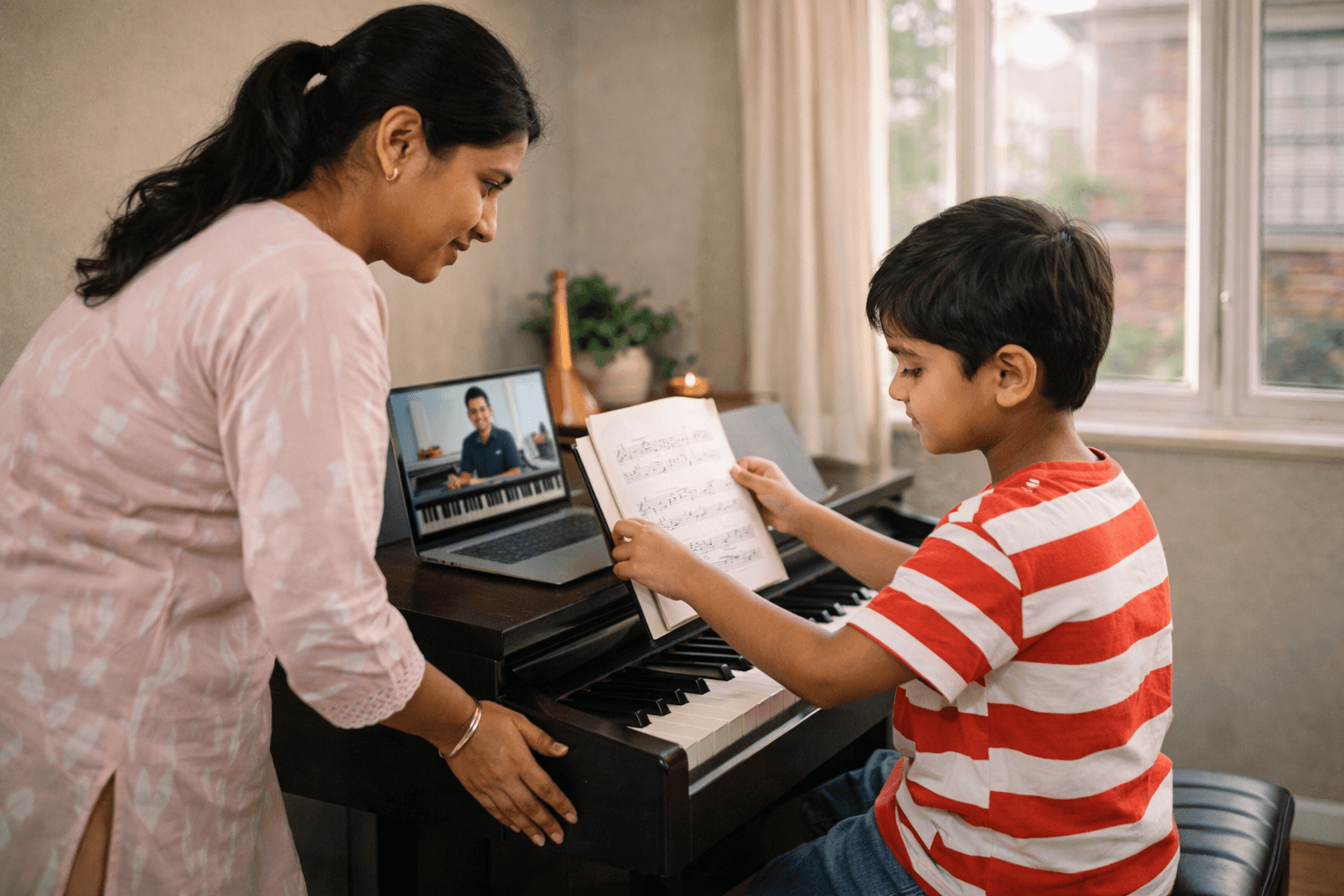
Online Classes (Art Gharana): Offers live, interactive sessions, personalized feedback, and flexible timing. Students can record lessons for practice, revisit challenging concepts, and progress at their own pace. Art Gharana ensures children receive the same level of instruction as traditional classrooms while enjoying convenience.
Age-Appropriate Learning Plans
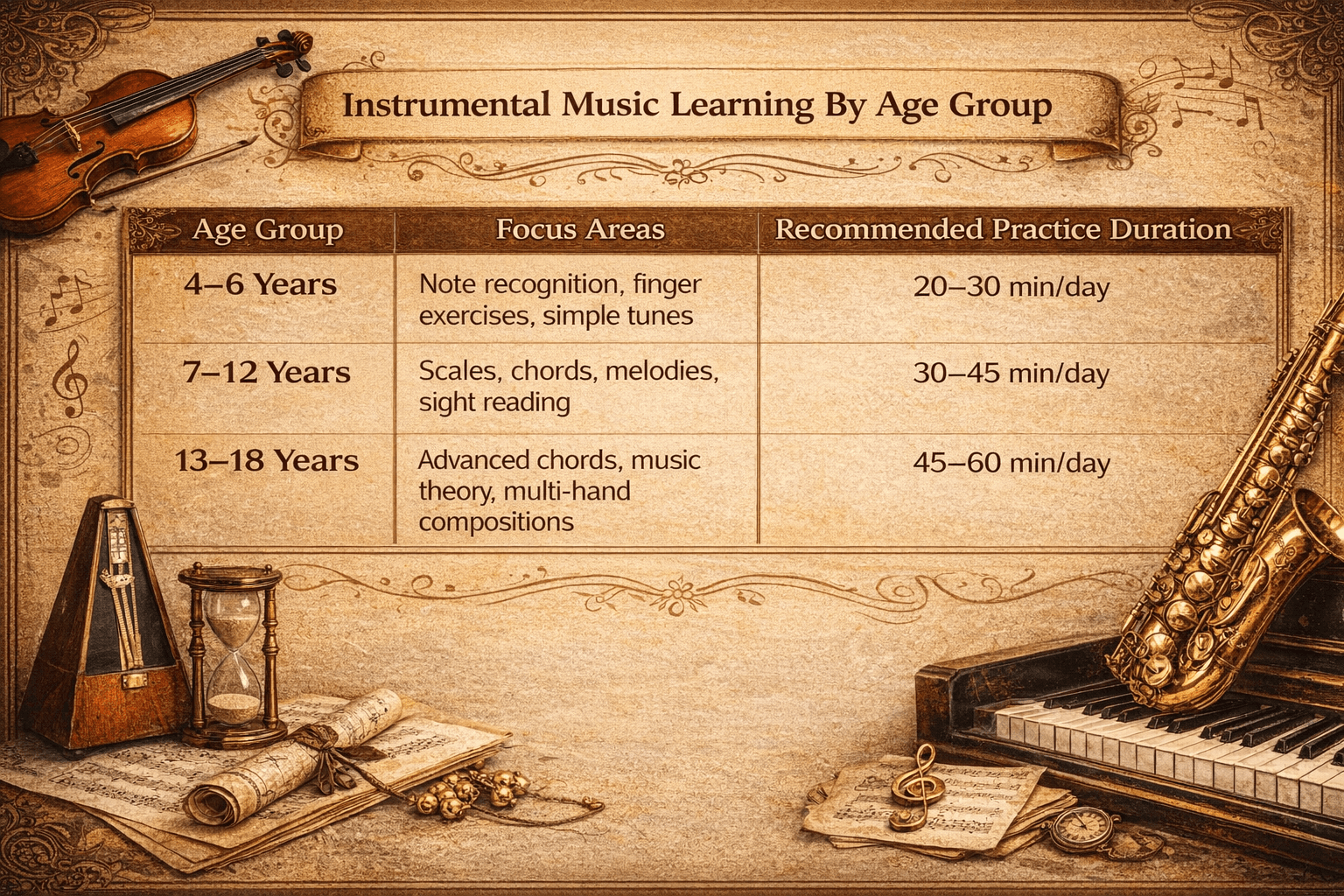
Art Gharana tailors lessons to each age group, ensuring that exercises match the child’s cognitive development, motor skills, and musical aptitude.
Setting Up a Home Practice Environment
- Instrument: Weighted keys digital piano or acoustic piano for advanced learners.
- Quiet Space: Minimize distractions for focused learning.
- Proper Seating: Adjustable bench for correct posture.
- Good Lighting: Helps with reading sheet music comfortably.
Creating a structured practice area improves focus, consistency, and the effectiveness of online lessons.
Setting Learning Goals
Children and parents should define clear objectives: hobby, school performance, exam preparation, or professional aspiration. Goals help instructors design lessons progressively, challenge students appropriately, and maintain motivation. Art Gharana provides structured paths from beginner basics to advanced compositions, making goal-oriented learning seamless.
What to Expect in Piano Classes
Piano classes are carefully structured to ensure children progress systematically while keeping lessons enjoyable.
Warm-Up and Finger Exercises
Classes begin with gentle stretches, scales, and finger exercises to build dexterity. Young children engage in playful rhythm games, while older students focus on technical drills to increase speed and precision.
Music Theory and Sight Reading
Understanding musical notation, rhythm, and dynamics is crucial. Sight reading allows students to interpret new pieces independently, enhancing cognitive processing and adaptability. Art Gharana includes theory in every lesson, reinforcing learning alongside practical exercises.
Learning Melodies and Chords
Students develop independence between the hands by practicing chords and melodies simultaneously. Gradually, they learn complex pieces that combine rhythm, harmony, and musicality, enhancing coordination and cognitive skills.
Performance and Composition
Children are encouraged to perform in recitals or online showcases. Creative exercises, improvisation, and composition allow them to explore musical expression while building confidence and stage presence.
Art Gharana – Best Online Piano Classes for Indian Kids in Adelaide
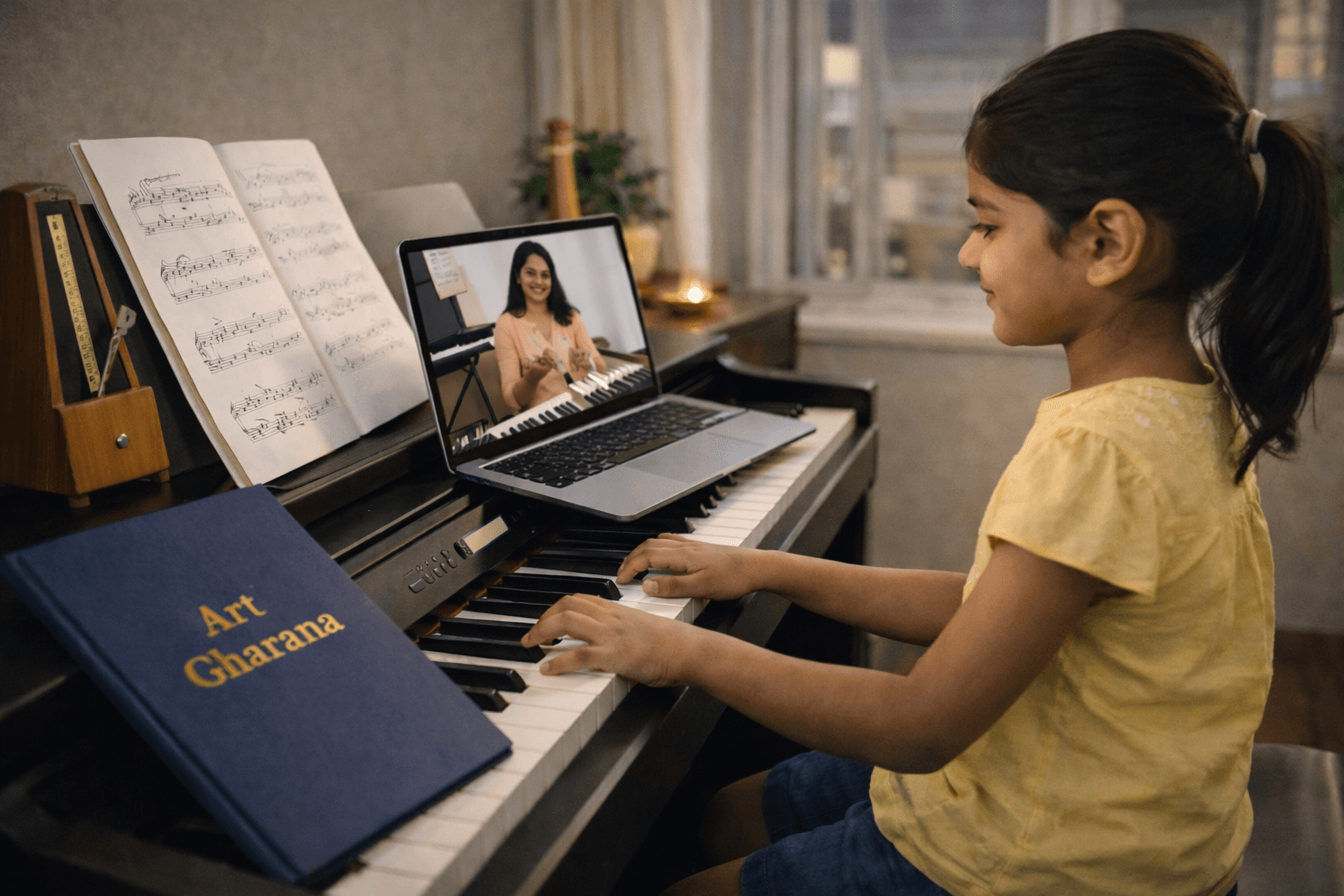 Art Gharana specializes in providing high-quality online piano education:
- Expert Indian instructors: Experienced teachers guide every student personally.
- Interactive live sessions: Tailored to AEST timings for Adelaide students.
- Age-appropriate curriculum: Gradual skill progression from basics to advanced.
- Milestone tracking and performance prep: Ensures steady progress.
Feature Benefit
Live 1:1 Classes Personalized feedback and real-time guidance Group Sessions Peer interaction and collaborative learning Flexible Timing Convenient for school and extracurricular activities Structured Curriculum Clear learning path from beginner to advanced Performance Preparation Prepares for recitals, competitions, and online showcases
Art Gharana ensures students not only learn piano skills but also develop creativity, confidence, and cultural awareness.
Tips for Parents and Learners
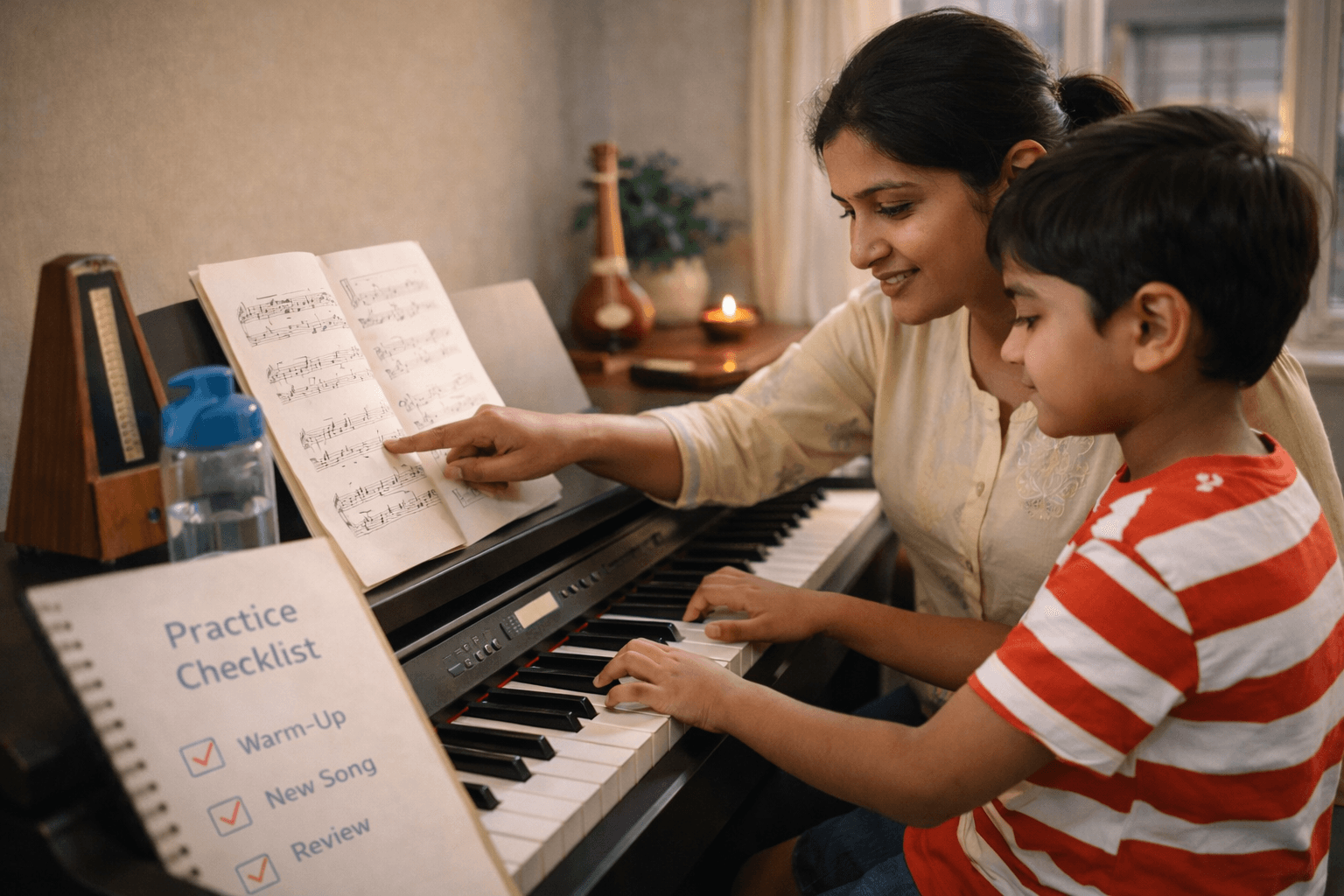
- Consistent Practice: Short, daily sessions yield better results than long, infrequent ones.
- Track Progress: Recording practice sessions helps identify improvement areas.
- Celebrate Achievements: Recognizing milestones keeps children motivated.
- Blend Fun with Discipline: Games, rhythm exercises, and improvisation make learning enjoyable.
Frequently Asked Questions
Can children start piano at age 4?
Yes, lessons at this age focus on fun exercises, note recognition, and basic rhythm skills.
How long does it take to learn basic piano?
Simple melodies can be learned within 3–6 months. Mastery of advanced compositions may take 2–3 years.
Are online piano classes effective?
Yes. Art Gharana provides live guidance, feedback, and structured learning comparable to traditional classrooms.
What type of piano is recommended for kids?
Weighted digital pianos with adjustable benches are ideal. Acoustic pianos are optional for advanced learners.
Conclusion
Piano learning offers a comprehensive developmental experience for Indian kids in Adelaide. It improves cognitive, emotional, and creative abilities while fostering cultural awareness. Art Gharana provides structured online piano classes with expert instructors, live interactive sessions, and goal-oriented curricula.
Starting piano education today equips children with lifelong musical skills, creativity, confidence, and discipline. Whether aiming for casual learning, school performances, or professional growth, Art Gharana ensures every child enjoys a rich and rewarding musical journey.