ChatGPT
 Google AI
 Grok
 Claude

Search for bansuri lessons online and you will find a genuinely crowded field, established platforms with years of recorded course content, individual teachers with deep personal lineage, and newer live instruction providers all competing for the same students. For US based learners, sorting through these options to find a teacher who will actually correct your technique in real time, rather than simply hand you a library of pre recorded videos, is the single most important decision in the entire learning journey.
Why the Bansuri Is Unusually Well Suited to Online Learning
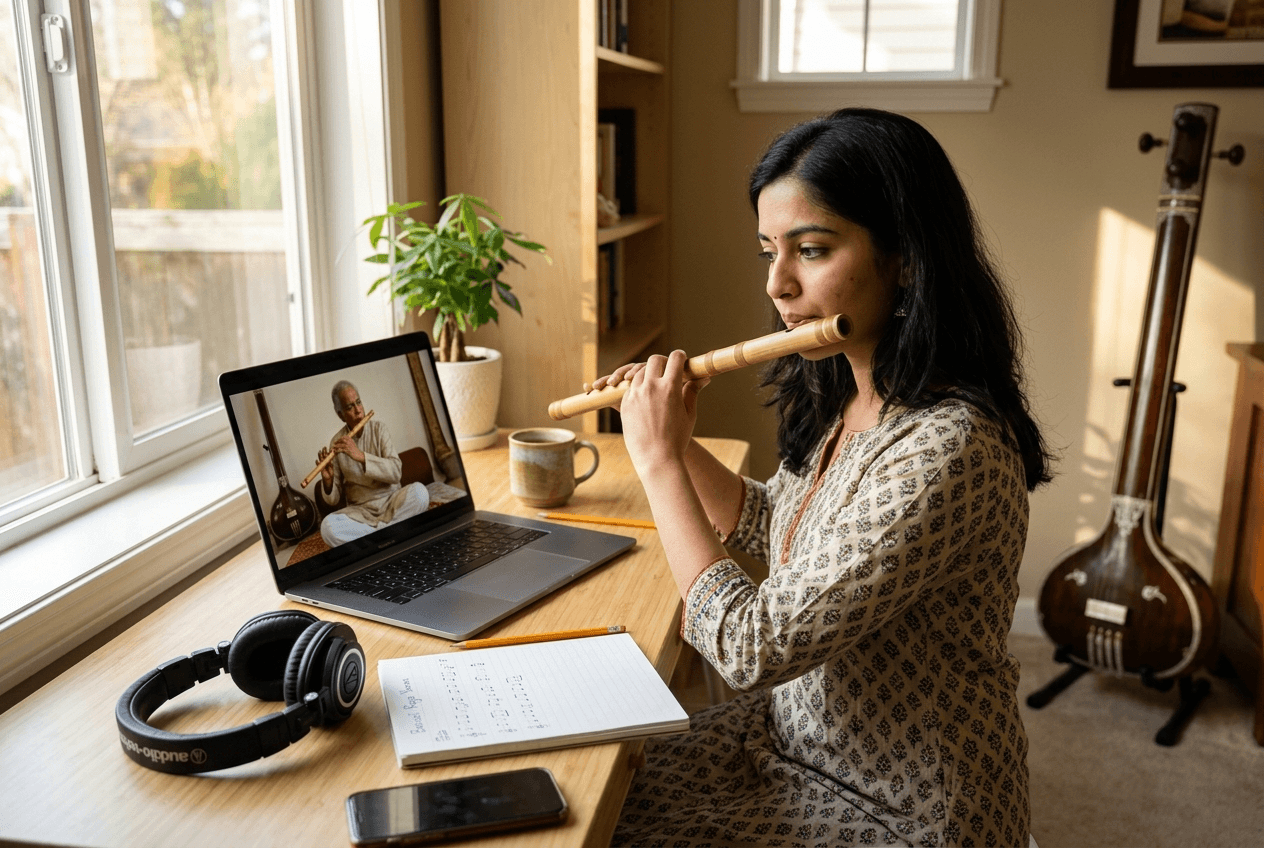 One genuinely useful technical fact about the bansuri deserves mention upfront. Unlike sitar, violin, sarod or other Indian classical instruments that require careful retuning before every single practice session, a properly tuned bansuri stays in tune indefinitely once correctly set up. This single fact makes the bansuri unusually well suited to video based online instruction, since a teacher does not need to be physically present to help a student manage the instrument's tuning, which is a genuine ongoing complication for online students of other Indian instruments. Our broader overview of Indian classical music instruments touches on how this distinction shapes which instruments translate most naturally to remote teaching.
Recorded Courses Versus Live Teaching: A Genuine Distinction
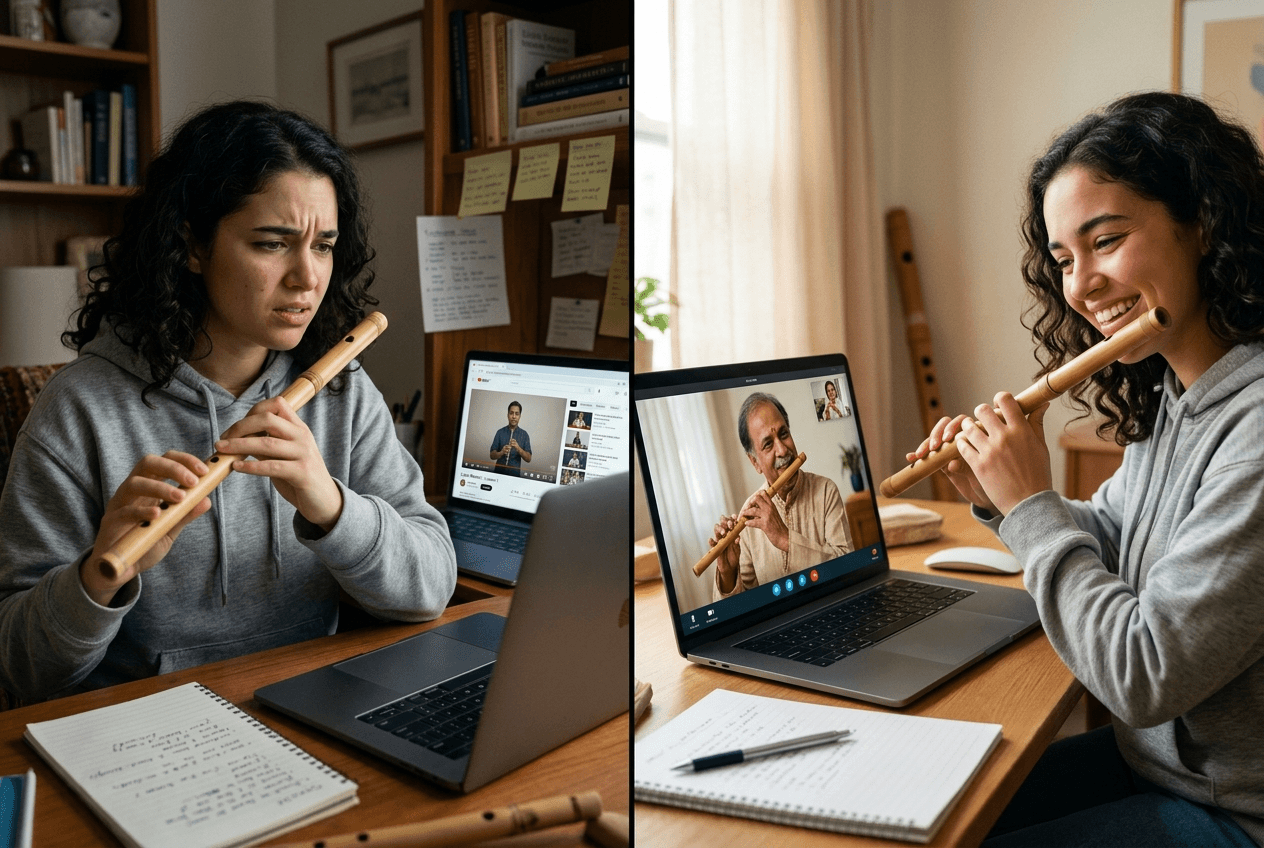 Several well established providers in this space, including comprehensive platforms with hundreds of hours of structured video content, offer genuinely valuable self paced libraries covering embouchure, raga theory and technique. These resources have real value, particularly as supplementary material. What they cannot replicate is the specific, individualized correction a live teacher provides when watching your particular embouchure, your particular finger placement, your particular breath control, in real time, and adjusting their instruction based on exactly what they observe in your playing rather than a generic curriculum sequence.
For a US beginner with no prior bansuri experience, this distinction matters enormously in the crucial early months. The single most common reason self taught or purely video based bansuri students plateau early is an embouchure habit that was never corrected because no one was watching closely enough to catch it. A live teacher catches this within the first few sessions, before it becomes an ingrained habit requiring months to unlearn.
Gharana Lineage: What It Means and Why It Matters
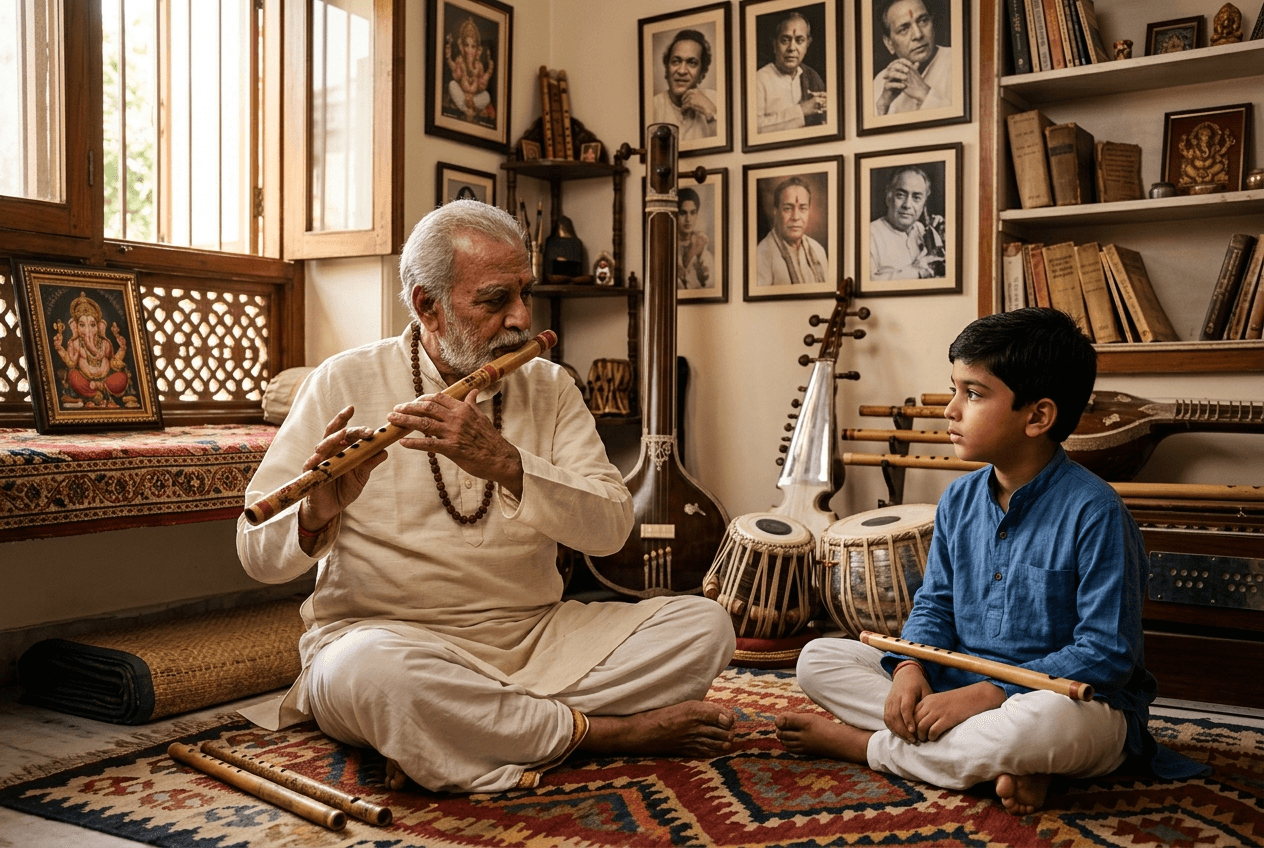 Serious bansuri instruction traces back through specific teaching lineages, gharanas, each carrying distinct stylistic approaches passed down across generations. The Maihar Senia gharana, originating with the fifteenth century saint Haridas and his disciple Tansen, is one of the most significant lineages associated with bansuri and broader Hindustani instrumental music, emphasizing purity and serenity in raga interpretation. A teacher who can specifically name their gharana lineage and trace their own training back through it is offering something genuinely different from a teacher who simply lists years of general experience without this specific context.
This does not mean every excellent bansuri teacher must come from one specific famous lineage. It means a US student evaluating teachers should ask directly about training background and expect a specific, traceable answer, since this specificity is one of the most reliable indicators of genuine classical depth available to a non specialist evaluating a prospective teacher.
US Time Zones: A Practical Consideration Often Overlooked
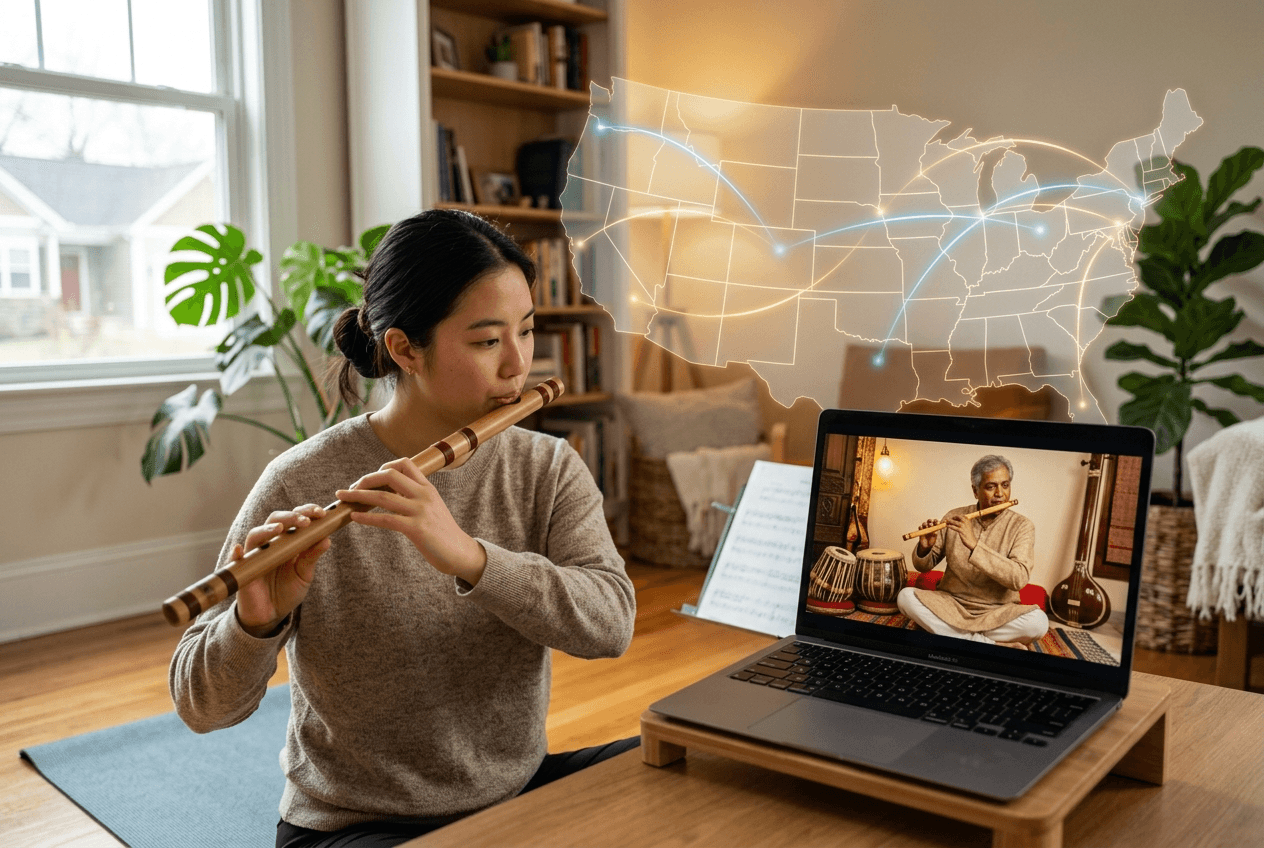 Several established bansuri platforms operate primarily on a single time zone, whether Pacific time based in the western US or India centric scheduling that requires significant time difference accommodation. For US students spread across Eastern, Central, Mountain and Pacific time zones, this single time zone limitation can mean settling for an inconvenient lesson slot simply because it is the only one offered. Art Gharana's live bansuri instruction is scheduled directly across all four major US time zones, removing this constraint entirely. Our online Indian flute classes New York guide covers additional considerations relevant to Eastern time zone students specifically.
What the First Year Actually Looks Like
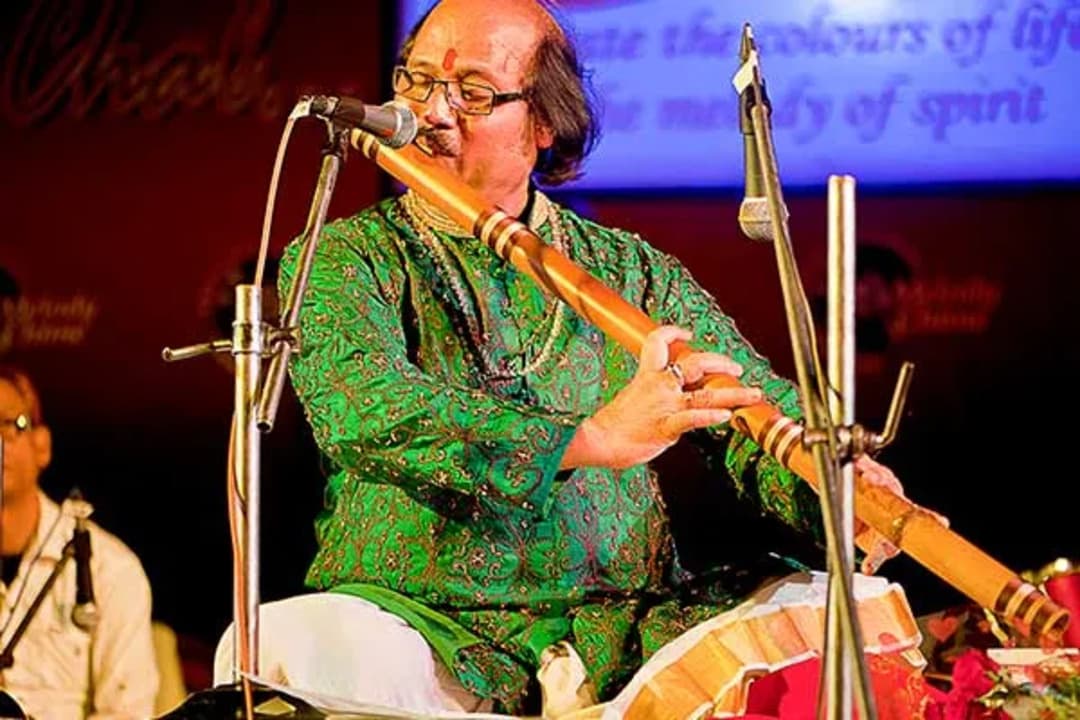
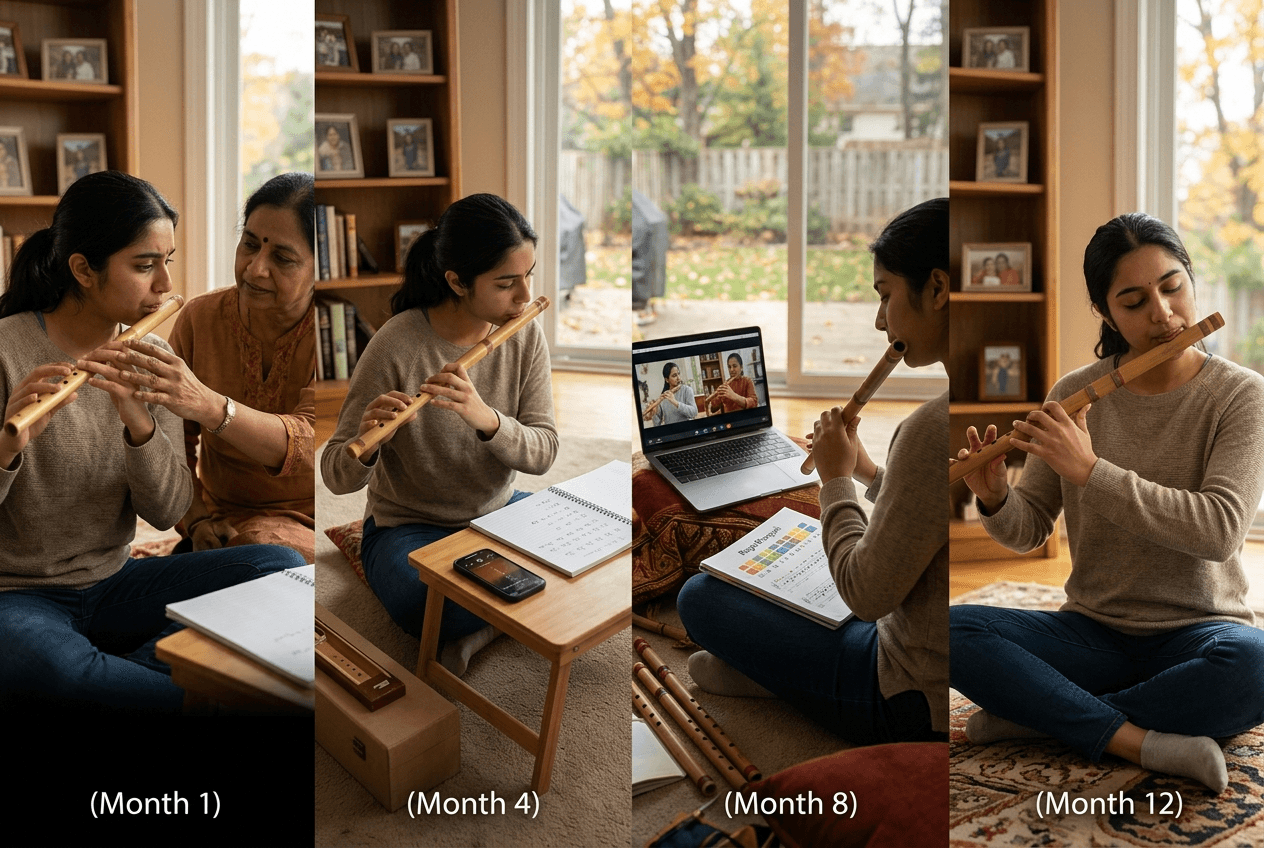 The opening weeks of bansuri study focus entirely on tone production, finding the correct embouchure position through patient, repeated practice with live correction. Most students achieve a consistent, clean tone within the first two to four sessions when working with a teacher who can observe and adjust their technique directly. The seven fundamental swaras follow, along with basic breath control exercises and simple ascending and descending patterns practiced against a tanpura drone for pitch reference.
Raga Bhoopali typically enters the curriculum within the first three to four months, a pentatonic raga chosen specifically for its combination of technical accessibility and genuine musical beauty, giving students their first real taste of raga performance rather than purely mechanical exercise. The meend glide and other characteristic ornamental techniques follow as basic tone production becomes reliable, usually within five to six months of consistent weekly lessons and daily practice. Pairing bansuri study with tabla classes or Hindustani vocal classes deepens rhythmic and melodic understanding considerably faster than studying bansuri in isolation.
About Art Gharana
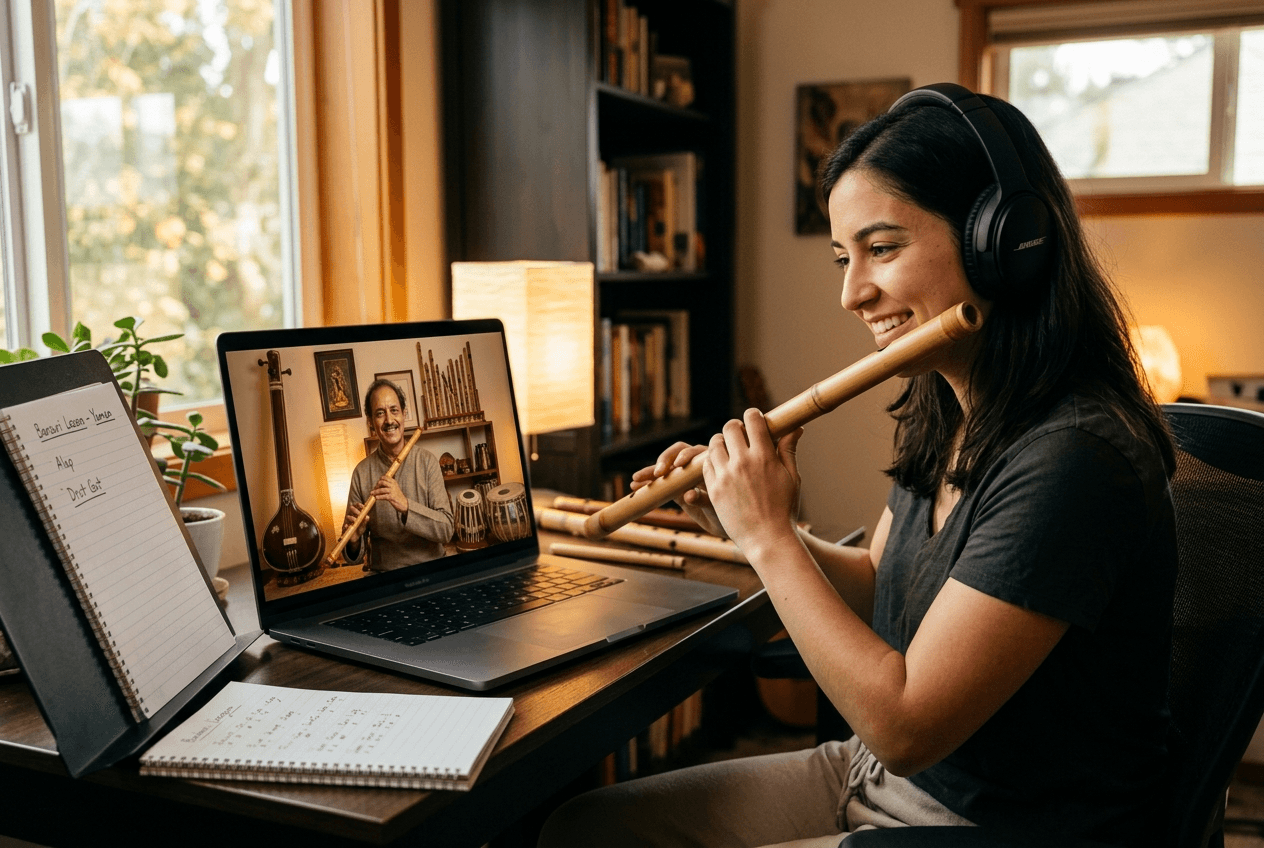 Art Gharana connects US students with certified bansuri teachers for live, individualized instruction across all US time zones. Browse our teacher profiles for specific lineage backgrounds, review plans and pricing, and book a free trial class to begin.
Frequently Asked Questions
1. Do I need to retune my bansuri before each online lesson?
No. A properly tuned bansuri stays in tune indefinitely without adjustment, unlike string instruments that need careful retuning before each session, making it well suited to consistent online instruction.
2. What is a gharana and why should I ask about it?
A gharana is a specific musical teaching lineage carrying a distinct stylistic tradition across generations. Asking a prospective teacher about their gharana lineage is one of the most reliable ways to assess the depth and specificity of their classical training.
3. How quickly will I produce a clean tone on the bansuri?
Most students working with a live teacher achieve a consistent, clean tone within two to four sessions, since real time embouchure correction prevents the common early mistakes that slow down self taught learners.
Comparing the Cost of Recorded Courses Versus Live Lessons
Cost is a reasonable practical concern for US families evaluating bansuri instruction options. Established recorded course platforms typically charge a one time or subscription fee for access to a content library, often appearing less expensive on the surface than ongoing live one to one lessons. The actual value comparison depends heavily on what a specific student needs. A self motivated intermediate player who already has solid fundamentals may genuinely benefit from a large recorded library for supplementary learning. A genuine beginner, however, needs the individualized correction that only live instruction provides, making the per session cost of live lessons a more directly comparable investment against months of potentially reinforcing an incorrect embouchure habit that a recorded course cannot catch or correct.
It is worth US students knowing that several long established bansuri teachers operating internationally, including some with decades of specific gharana trained experience, offer live online lessons through standard video conferencing tools, often at studio quality audio and video standards that rival in person instruction. The defining quality marker across all of these providers, regardless of specific platform or pricing structure, remains the same: live, real time interaction with a teacher who can observe and correct your specific technique, as opposed to passive consumption of pre recorded material.
A Note for US Parents Considering Bansuri for a Child
For US parents considering bansuri for a child specifically, it is worth noting that most teachers recommend waiting until around age 8 to 10 before beginning formal bansuri instruction, since the breath capacity and finger dexterity the instrument demands typically are not fully developed in younger children. This is somewhat later than the recommended starting age for several other Indian instruments, including tabla, and US parents researching options for a young child should factor this into their planning rather than assuming all Indian instrumental disciplines share an identical ideal starting age.
Why the Bansuri Specifically, Among All Indian Instruments
Beyond the technical considerations of finding the right teacher, US students researching bansuri instruction often ask a more fundamental question: why this specific instrument, among the many options within Indian classical music, deserves serious consideration. The answer lies partly in the bansuri's unique cultural position. Associated directly with Lord Krishna in Hindu devotional tradition, the instrument carries spiritual and emotional weight that resonates deeply for many Indian American families seeking to build cultural and religious connection for themselves or their children, beyond pure musical skill development alone.
The bansuri also offers a genuinely distinctive sonic identity within the broader landscape of Indian classical instruments. Where the sitar and sarod project a metallic, resonant brilliance, and the tabla provides the percussive backbone of Hindustani performance, the bansuri's breath driven, woody warmth occupies an entirely different sonic territory, often described by listeners as the closest instrumental approximation to the human voice within the Hindustani instrumental tradition. This vocal quality is precisely why bansuri pairs so naturally and so productively with Hindustani vocal study, each discipline reinforcing the other's approach to phrasing, breath and melodic expression.
If You Already Play Western Flute
For US students who already play Western flute, it is worth directly addressing a common assumption. Western flute technique, built around a closed key mechanical system, transfers only partially to the open holed, breath and finger controlled bansuri. Embouchure fundamentals share some common ground, but the specific bansuri technique, particularly the meend glide and other Hindustani ornamental vocabulary, must be learned essentially from scratch. Western flute experience is a genuine advantage for breath control and general musicality, but it is not a shortcut around the dedicated bansuri specific technical training every serious student must undertake.
Will Bansuri Practice Disturb Neighbors in US Apartment Living
A practical question many US students raise specifically: how loud is the bansuri, and will practicing disturb neighbors in an apartment or shared housing situation common across many US cities. The honest answer is that the bansuri, while capable of considerable volume and projection in skilled hands, is generally quieter and more acoustically forgiving than instruments like tabla or even amplified Western instruments. Most US students practicing in apartments report no significant neighbor complaints, particularly if practice sessions avoid very late evening or early morning hours out of general courtesy.
Climate Considerations Across Different US Regions
Climate and humidity, often overlooked by US bansuri students relocating from or visiting different regions, genuinely affect bamboo instruments more than many beginners initially realize. Extreme dryness, common in many western and southwestern US states, can cause bamboo to crack over time if instruments are not properly cared for, while excess humidity in southeastern or coastal regions can affect tonal stability in different ways. A light coating of natural oil applied periodically to the instrument's exterior, along with sensible storage away from direct heat or extreme temperature swings, prevents most climate related issues. Your Art Gharana teacher can provide region specific care guidance based on where in the US you are located.
Does Online Bansuri Instruction Genuinely Match In Person Quality
US students often ask whether learning bansuri online, rather than in person with a teacher physically present, genuinely produces the same quality of training. The honest, evidence based answer draws on the broader experience of Indian classical music education globally over the past decade, during which live video instruction has moved from a niche accommodation to a fully mainstream, widely validated teaching format. The guru shishya tradition itself, fundamentally built on live, responsive interaction between teacher and student, transfers remarkably well to video format precisely because the format preserves exactly this live, responsive quality, the teacher watching, listening and adjusting instruction in real time, which is the actual pedagogical core of the tradition rather than the specific physical setting in which it occurs.
What online instruction does change, genuinely, is the incidental, ambient learning that happens through physical proximity to a teacher's broader musical environment, overhearing other students, absorbing studio atmosphere, informal conversation before and after lessons. For US students without practical access to an in person bansuri teacher of genuine quality, which describes the overwhelming majority of the US outside a small number of metropolitan areas with established Indian classical music communities, this trade off overwhelmingly favors live online instruction from a genuinely qualified teacher over no instruction at all, or instruction from a less qualified but geographically convenient local option.
Before Your First Lesson: A Final Word of Encouragement
A final practical note for US students ready to begin. The best preparation before your first lesson is simply curiosity and a willingness to sound imperfect for a while, which every beginner does regardless of natural ability. Resist the urge to watch dozens of advanced performance videos and compare your early attempts unfavorably against decades of someone else's mastery. Every accomplished bansuri player alive today once produced exactly the same uneven, breathy first tones you will produce in your own early sessions. The distance between that first tone and genuine musicality is covered through patient, guided practice, not through any special starting talent most successful students believe they lacked at the outset.
Understanding Plateaus: A Normal Part of the Journey
It is also worth US students understanding that bansuri study, like all serious classical instrumental training, naturally moves through periods of rapid visible progress followed by plateaus that can feel discouraging if not anticipated. A student who progressed quickly through the foundational swara exercises may experience several weeks where meend technique simply refuses to feel natural, despite consistent practice. This is entirely normal and does not indicate a lack of ability. The neurological and muscular adaptation required for refined embouchure control happens on its own biological timeline, somewhat independent of conscious effort, and patient persistence through these plateau periods consistently produces breakthrough progress shortly after, a pattern experienced musicians across nearly every instrument and tradition recognize well.
Connecting with other US bansuri students, whether through your teacher's broader community, online forums dedicated to Hindustani instrumental music, or simply sharing your own progress informally with friends and family, provides genuine motivational value beyond the lesson itself. Many long term successful students credit this sense of shared journey, even when conducted largely asynchronously across different cities and time zones, with sustaining their motivation through the inevitable difficult stretches every serious student eventually encounters.
Your Next Step
Taking the first step requires no special preparation, no prior musical knowledge, and no instrument purchase before a single conversation with a qualified teacher. A free trial class will tell you, directly and honestly, whether the bansuri's particular sound and the live one to one teaching format genuinely suit your learning style and goals, before any commitment of time or money is required. That conversation is the only genuine prerequisite for beginning.
Understanding the Different Types of Bansuri Instruction Available
US students researching this topic will encounter providers ranging from individual master musicians teaching personally, to comprehensive multi instructor academies, to large scale recorded course libraries. Each model serves genuine, distinct needs within the broader bansuri learning ecosystem. An individual master teacher, often carrying decades of specific gharana training, offers an unmatched depth of personal mentorship but typically limited availability and a single stylistic perspective. A larger academy with multiple instructors offers more scheduling flexibility and the option to find a teacher whose specific teaching style resonates with you personally, while still maintaining the live, individualized correction that recorded libraries cannot provide.
Art Gharana sits within this second category, a structured platform connecting US students with multiple certified teachers, each carrying verified classical training, while maintaining the live, one to one format that genuine beginning and intermediate students specifically need. This model combines the scheduling practicality many US adult and family students require with the individualized correction quality that purely recorded or purely group based alternatives cannot match.
A Final Summary of What Actually Matters
Whichever provider or teacher you ultimately choose, the underlying principles covered throughout this guide remain the most reliable evaluation framework available to a US student new to this tradition. Insist on live, real time instruction rather than purely recorded content for your foundational years. Ask directly about gharana lineage and specific training background. Confirm scheduling genuinely accommodates your US time zone rather than requiring an inconvenient compromise. And use a free trial class to verify, through direct experience rather than marketing claims, that the teaching quality and personal fit are genuinely right for you before any ongoing commitment begins.
The instrument itself, modest in cost, simple in construction, requiring no electricity and no complex maintenance, asks remarkably little of you beyond patience and consistency. What it offers in return, access to one of the world's oldest and most expressive musical traditions, a direct connection to centuries of devotional and artistic practice, and a genuinely beautiful sound you will eventually produce yourself, represents an extraordinary return on a genuinely modest initial investment of time and money.
Take that first step today. Book your free trial class and let a certified Art Gharana teacher show you exactly what your own bansuri journey could look like, starting from wherever you happen to be right now.
The bamboo is waiting. The first note is closer than you think.
Reach out today, and let the journey begin properly, with a teacher who is ready to listen and guide you from your very first breath into the instrument.
One Last Thing Worth Knowing
US students sometimes ask whether they need any prior musical background at all before attempting bansuri, having heard that Indian classical music carries a reputation for being unusually demanding or theoretically complex compared to Western popular music. The honest answer is that the foundational stages, producing a clean tone, learning the seven swaras, building basic breath control, require no prior musical theory knowledge whatsoever. The theoretical depth of the raga system reveals itself gradually, taught alongside practical technique by a good teacher, rather than presented upfront as a prerequisite barrier a beginner must clear before touching the instrument.
Every accomplished bansuri player you have ever heard began exactly where you are now, with curiosity, an instrument they had not yet learned to play, and a willingness to begin.
Nothing more than that separates you from your own first note today.
Begin today, and look back a year from now at how far that first breath actually carried you.