ChatGPT
 Google AI
 Grok
 Claude

There is something instantly calming about the sound of the bansuri, the Indian bamboo flute, the instrument forever linked to Lord Krishna and to some of the most serene music ever written. For Indian families across Canada who want to stay connected to that heritage, and for anyone simply drawn to the flute's meditative tone through long Canadian winters, the bansuri has quietly become one of the most rewarding instruments to take up. And of all Indian instruments, it may be the single best suited to learning online.
Why the Bansuri Suits Online Learning Better Than Almost Any Instrument
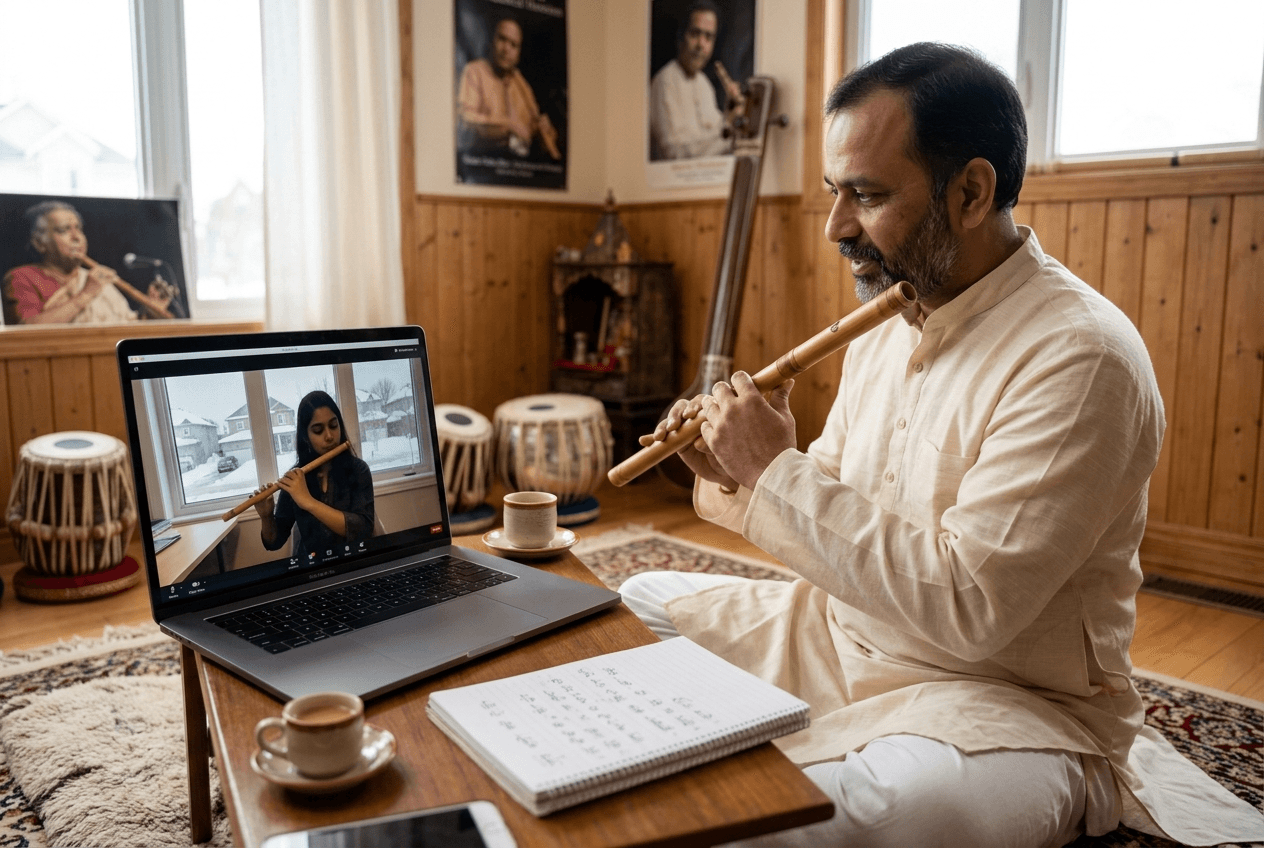 Not every instrument translates equally well to online lessons, but the bansuri is one of the best suited of all, for a beautifully simple reason. Unlike the sitar, violin or sarod, which need careful retuning every time you play, a good bansuri holds its pitch permanently. Once you own a well made flute, it stays in tune, removing the single biggest obstacle that makes some instruments awkward to teach over video. An online bansuri class therefore works almost exactly like an in person lesson, with the teacher hearing your tone clearly and correcting your breath in real time.
What the Bansuri Actually Is
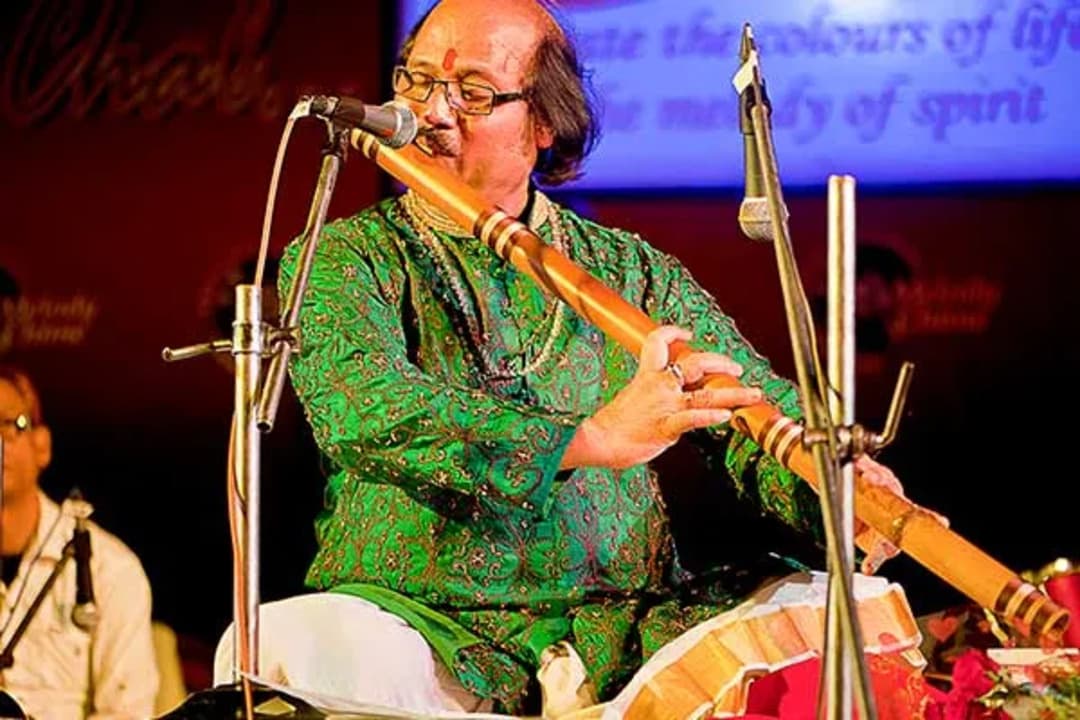
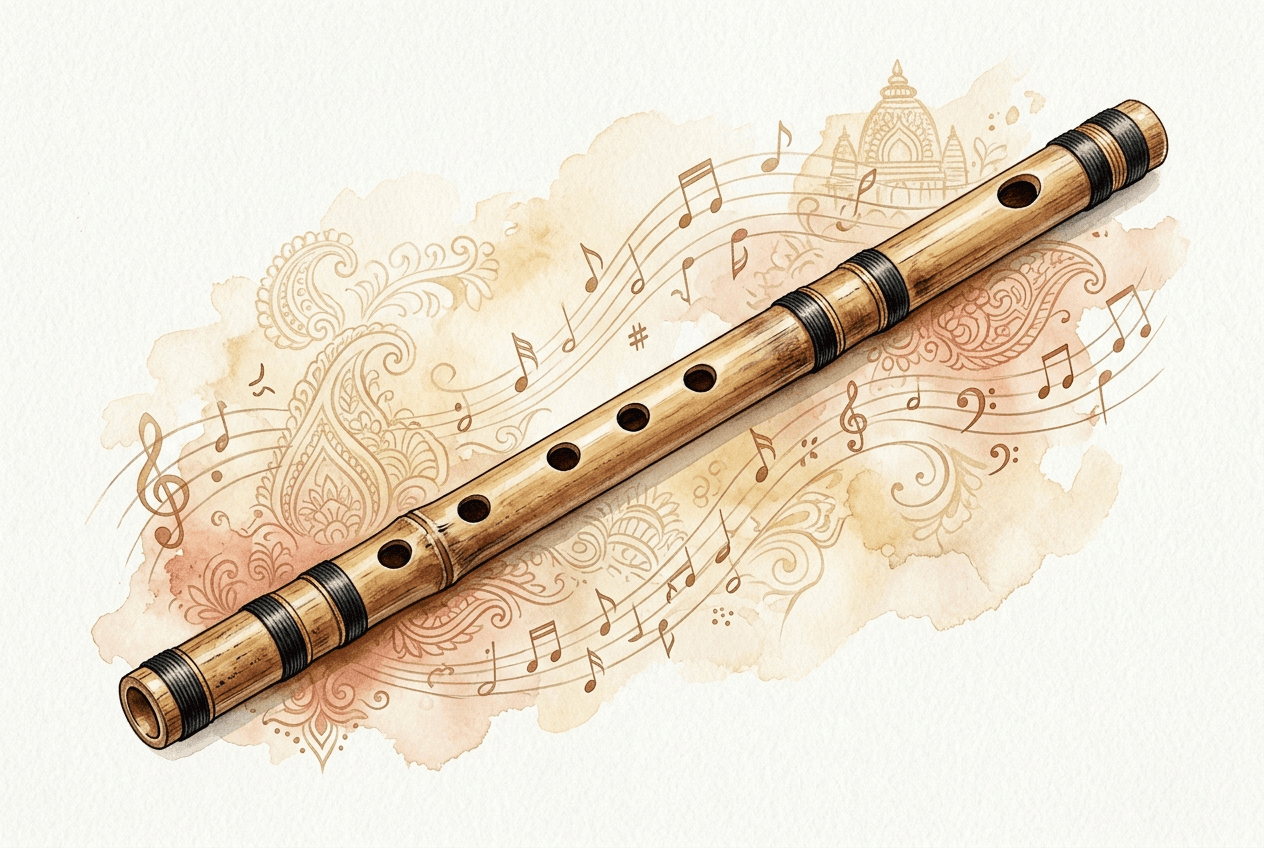 The bansuri is a side blown bamboo flute from North India, among the oldest melodic instruments in the world. The name comes from two Sanskrit words, bans meaning bamboo and sur meaning melody. Physically it is a hollow bamboo tube with a blowing hole and six or seven finger holes, yet it is wonderfully expressive, capable of the subtle slides and ornaments that define Indian classical music. Our guide to the top musical instruments in India places the bansuri in the context of the wider tradition for anyone curious about where it sits.
Choosing Your First Bansuri in Canada
The bansuri comes in many sizes, and the size determines its pitch. Longer flutes have a lower, deeper tone but demand a bigger hand stretch, while shorter flutes sit higher and are easier to finger. For most adult and older child beginners, a medium length flute in the key of G or A offers the best balance of comfortable reach and pleasant tone. Our blog on popular musical instruments is a useful starting point if you are still deciding whether the bansuri is the instrument for you. In Canada, beginner bansuris can be ordered online from specialist Indian instrument sellers, many of which ship a properly tuned flute to your door.
Avoid the cheapest decorative flutes sold as souvenirs, as these are rarely in tune and make learning frustrating. The safest approach is to let your teacher confirm the right key before you order, so your hands and the flute are well matched. A modest investment in a properly made beginner bansuri pays for itself quickly in faster, more enjoyable progress.
What You Learn, Stage by Stage
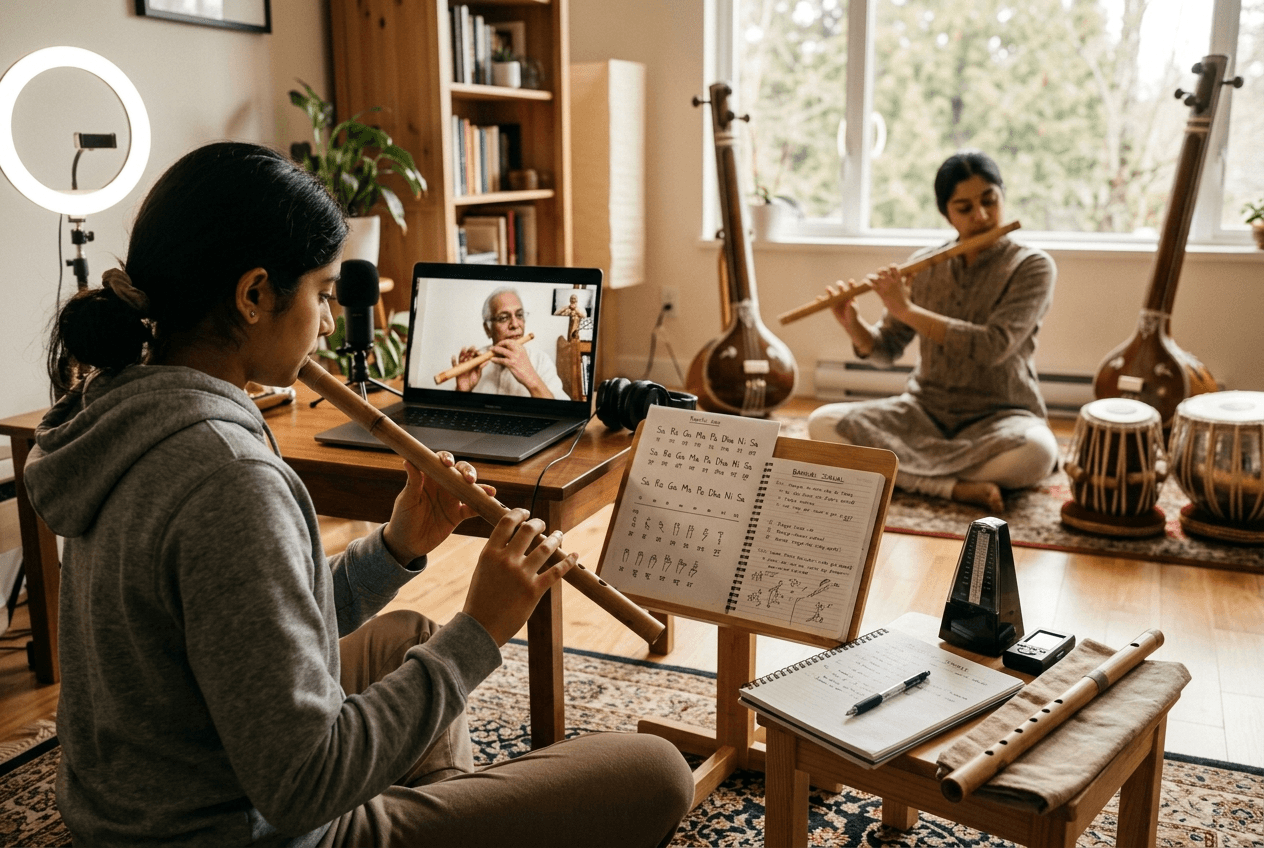 A good course follows a clear, progressive path. Everything begins with sound production, learning how to hold the flute, form your embouchure and produce a clear, steady note. From there you practise the seven swaras and basic alankars, the exercises that build finger and breath coordination, before moving into simple ragas such as Bhoopali and an understanding of tala and laya. Many flute students also explore Hindustani vocal classes alongside the bansuri, because singing a phrase before playing it deepens a learner's feel for the ragas.
Advanced learners refine tone, explore half hole techniques for complex notes and develop improvisation, the heart of a classical performance. For those drawn to rhythm as well as melody, pairing the flute with [tabla classes](https://www.artgharana.com/courses/instruments/online-tabla-classes builds a particularly complete grounding in the raga and tala system that underpins all Hindustani music.
The Breath Connection: Why the Bansuri Calms the Mind
Because it is played entirely with the breath, learning the bansuri naturally encourages slow, controlled breathing, which many players find calming and almost meditative. It is a wonderful antidote to a busy, screen heavy life, and a particularly welcome one during the long indoor months of a Canadian winter. For Indian families in Canada, the flute is also a living link to heritage and identity that children can carry forward, while for adults it offers a quiet daily practice for the mind as much as the music.
Online Versus In Person in Canada
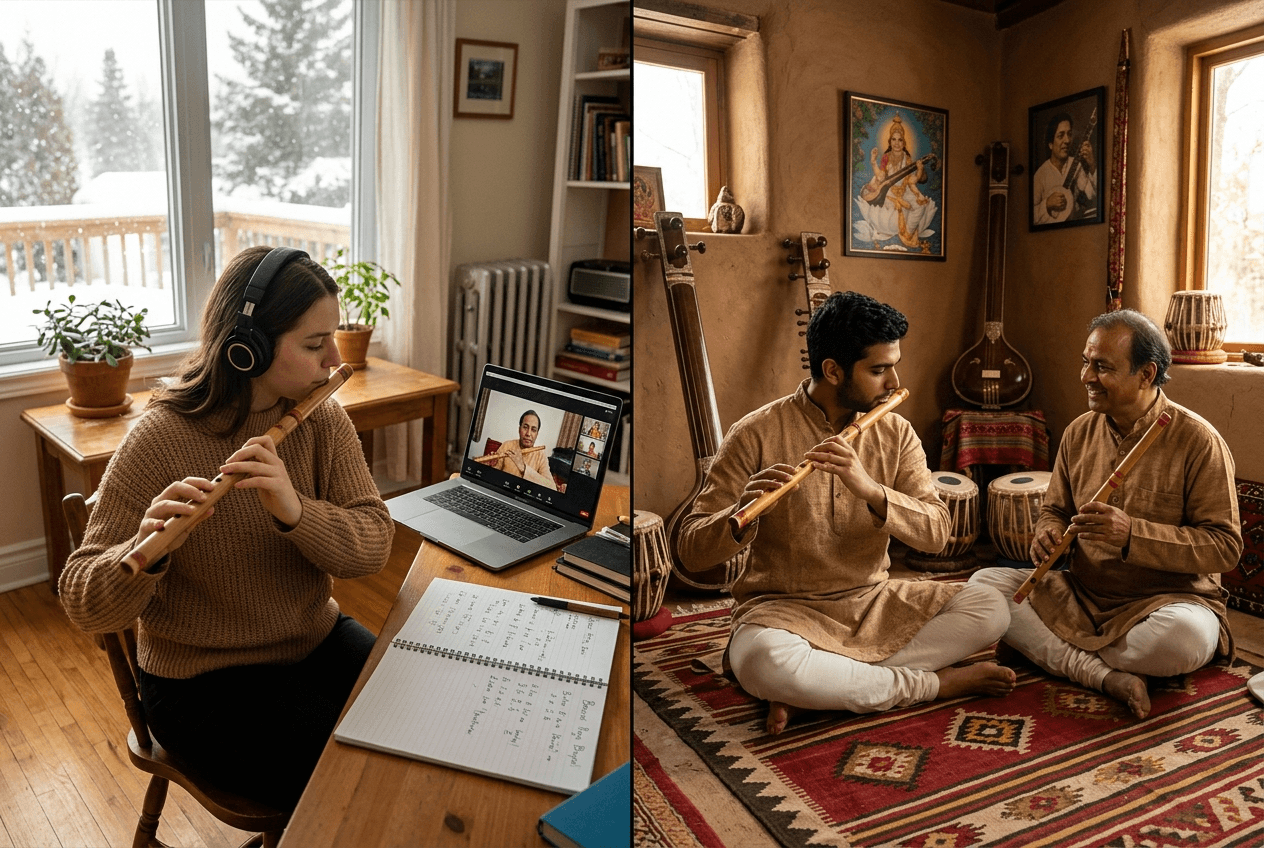 In person lessons offer the warmth of a shared space, but for the bansuri specifically, online classes lose very little. Because the flute holds its tune and the teacher can clearly hear your tone over video, the quality of feedback is high. Add the practical reality that dedicated Indian flute teachers are scarce in many Canadian cities, and online learning often becomes the only way to study with a truly qualified guru. Our companion guide to online Indian flute classes offers a closer look at the learning experience itself.
About Art Gharana
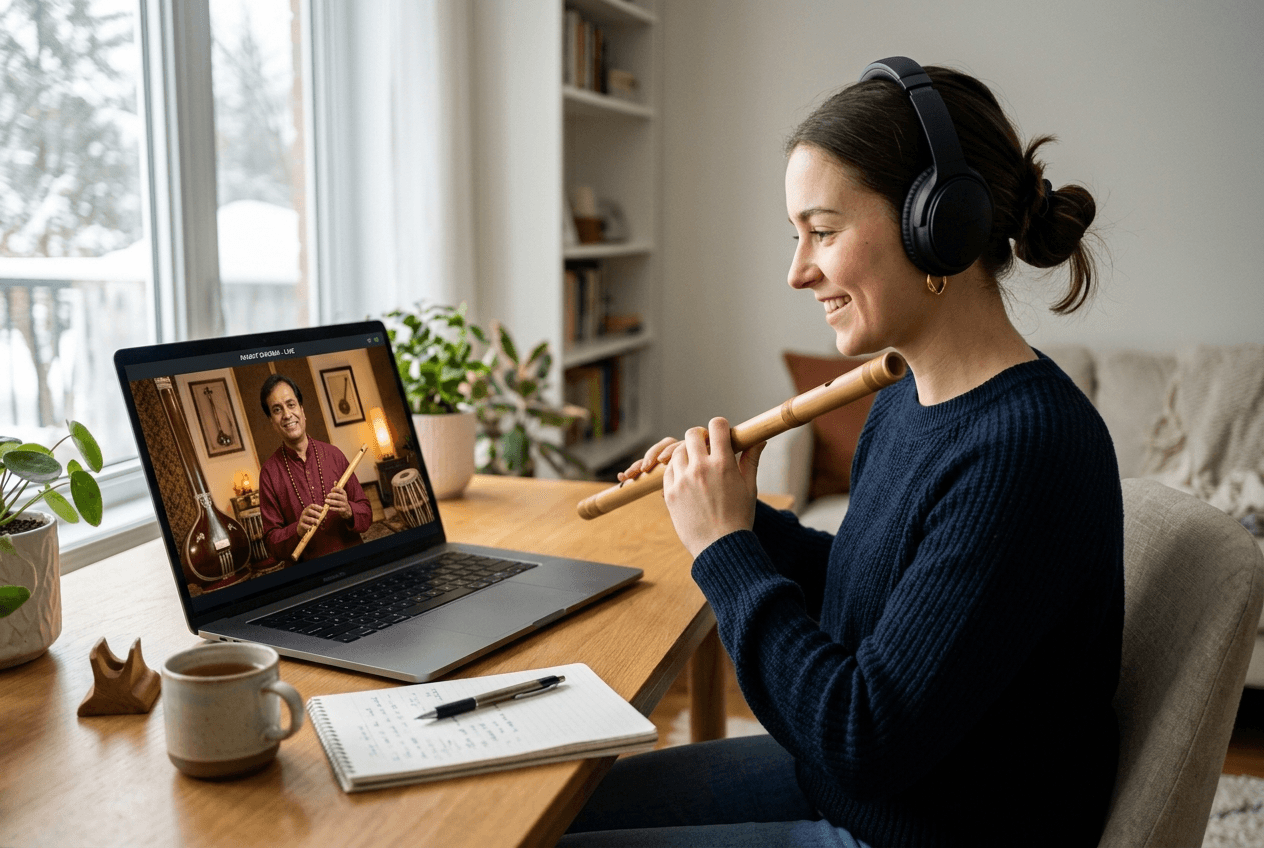 Art Gharana offers live one to one online flute classes with certified teachers for learners across Canada, in all time zones and at every level. Review plans and pricing and book a free trial class to experience a real lesson and get advice on choosing your first flute before you commit.
Frequently Asked Questions
1. Can I learn the bansuri online in Canada as a complete beginner?
Yes. Online bansuri classes are designed for complete beginners and start from holding the flute, forming the embouchure and producing your first clear note, long before any ragas are introduced.
2. Which bansuri should a beginner buy?
A medium length flute in the key of G or A suits most adult and older child beginners. Confirm the key with your teacher and buy from a specialist seller rather than a decorative souvenir flute.
3. Is the bansuri difficult to learn?
The very first clear note takes a little patience, but after that the bansuri is approachable. It has no frets or keys and never needs retuning, so regular practice brings steady, satisfying progress.
A Short History of the Bansuri
The bansuri is among the most ancient instruments of the Indian subcontinent, appearing in sculpture, scripture and legend across thousands of years, its deepest association being with Lord Krishna, whose flute represents the irresistible call of the divine. For much of its history it was treated mainly as a folk and accompanying instrument. That changed in the twentieth century, when visionary musicians elevated the humble bamboo flute into a fully fledged classical solo voice capable of performing the great ragas with depth and subtlety. Their work, and the global concerts of the masters who followed, carried the bansuri to audiences around the world, including the Indian communities now woven through Canadian cities.
How to Practise the Bansuri Effectively at Home
Progress on the bansuri comes less from long, occasional sessions and more from short, consistent daily practice. A focused twenty minutes most days takes you far further than a single long stretch once a week. Begin each session with slow, long tones on a single note to warm up your breath and steady your sound. Practise your alankars at a slow, even pace, prioritising clean tone and accurate fingering over speed. Recording yourself is one of the fastest ways to hear where your tone wavers, and a quiet space free of distractions helps you focus on the subtle breath control the flute rewards.
Common Mistakes Beginners Make
A few simple habits separate learners who progress smoothly from those who stall. Starting on a decorative or poorly tuned flute makes everything harder, so a properly made beginner bansuri in the right key is worth the modest outlay. Blowing too hard produces a harsh, unstable sound, where a gentle, controlled airstream gives the purest tone. Rushing past long tones and alankars to play melodies leaves gaps that slow you down later, so build the foundation patiently. And above all, be patient with that first clear note, because every bansuri player remembers the early struggle, and every one of them got past it.
What a Typical Online Bansuri Lesson Looks Like
While every teacher has a personal approach, most online bansuri sessions follow a familiar, reassuring rhythm. The class opens with a few minutes of breath work and long tones, settling your sound. From there the teacher leads structured exercises, drilling fingering and note accuracy at a comfortable pace, before turning to new material, a fresh set of notes, a phrase from a raga or a short composition, broken into small, learnable pieces. Throughout, your teacher listens closely and corrects your embouchure, breath and timing in real time, which is exactly why a live class is so much more effective than learning from videos alone.
The Bansuri Beyond Classical Music
While the bansuri's home is Hindustani classical music, its gentle voice has travelled far beyond it, into devotional music, into countless film scores carrying some of cinema's most memorable melodies, and increasingly into fusion, ambient and world music, where its breathy, organic tone blends with everything from guitars to electronic textures. This versatility makes it a rewarding long term instrument, because the foundation you build in classical training opens doors to many styles. Many learners are also drawn to the flute purely for meditation and mindfulness, using its calming tone as a daily practice for the mind as much as the music.
Who Should Learn the Bansuri?
The honest answer is almost anyone. The bansuri suits children from around the age of eight, once their hands can comfortably cover the holes, and it is equally rewarding for adults of any age, including complete beginners and busy professionals seeking a calming pursuit. It is especially valuable for vocalists, since the flute so closely mirrors the human voice and the structure of ragas that singers who learn it often deepen their understanding of melody and ornamentation. Whether you are drawn to the bansuri for its spiritual calm, its cultural roots or simply its beautiful sound, there is a place for you in its tradition, and an online class makes starting straightforward wherever in Canada you live.
Why the Bansuri Resonates With the Canadian Diaspora
For many Indian and South Asian families settled across Canada, the bansuri carries a meaning beyond its music. Its sound is bound up with Krishna, with devotional traditions, with film melodies heard across decades, and with a sense of home that distance can otherwise blur. Teaching a child the flute, or learning it yourself, becomes a way of keeping a thread of heritage alive in cities like Toronto, Calgary, Edmonton and Vancouver, far from where these traditions began. The portability and quiet of the instrument suit apartment and condo living, and its gentle tone rarely disturbs neighbours, which matters in dense urban housing.
What Online Bansuri Classes Cost in Canada
Fees depend on format, frequency and the teacher's experience, and one to one classes naturally cost more than group sessions because of the personalised attention an instrument like the flute rewards. Most platforms offer monthly plans or session packs, and prices are often lower than equivalent in person Canadian lessons because there is no studio rental or travel overhead to absorb. When comparing value, look beyond the headline figure to what is included, such as practice recordings, learning material and the flexibility to reschedule around a busy week. A free trial lets you judge the teaching quality before committing to any package, which is always the wisest first step.
Bansuri for Children in Canada
The bansuri is a wonderful first instrument for children, usually from around the age of eight, once their hands can comfortably cover the finger holes. A smaller flute matched to their reach makes the early stage far easier. Beyond the music, the breath focused nature of the flute encourages calm and concentration, and learning the swaras and simple ragas quietly builds listening, memory and patience. For Canadian born children, it also offers a living, joyful connection to a heritage they might otherwise encounter only through food and festivals, something many parents come to value deeply as their children grow.
How Long Does It Take to Learn the Bansuri?
The honest answer is that it depends entirely on you, and that the bansuri is a lifelong art in which even masters describe themselves as students. That said, a dedicated beginner can play simple, satisfying melodies within a few months and a basic raga within the first year, assuming weekly classes and short daily practice. Reaching a confident intermediate level, with clean tone across the octaves and a handful of ragas, typically takes a year or more, and the journey only deepens from there. There is no shortcut, but there is also no rush, because much of the pleasure lies in the gradual unfolding itself.
Sourcing and Caring for Your Bansuri
A bansuri is a natural object, and a little care keeps it sounding its best for years. Buy from a reputable maker or seller who tunes each flute properly, rather than a mass produced souvenir. Once you have it, keep it away from extremes of heat and dryness, which matter especially in Canadian winters when indoor heating can dry the air considerably, since well seasoned bamboo can crack if treated carelessly. Oiling the bore occasionally, as your teacher will advise, helps preserve both the bamboo and the tone. Treated with respect, a good bansuri becomes a companion that improves in feel as you grow into it.
The Same First Step, Whatever Your Starting Point
Whether you are a curious adult beginner, a parent enrolling a child, a vocalist wanting a melodic instrument or simply someone seeking calm at the end of a long day, the practical mechanics of beginning are the same. A free trial class, conducted live with a certified teacher, gives you direct, low risk insight into whether the bansuri and a particular teacher are right for you, before any financial or scheduling commitment. There is no equipment to buy beforehand and no prior experience required, only a willingness to sit with the instrument and listen.
Begin Today
The bansuri asks for patience, but it gives back calm, beauty and a lifelong connection to one of the oldest sounds in the world. You need only a properly tuned beginner flute, a quiet corner and a little willingness to sit with those first notes. Everything else, the technique, the tone, the ragas, unfolds naturally with a patient teacher and a few minutes of daily practice. Book your free trial class today, and let the bamboo flute become the calm, meaningful part of your week it has been for players across centuries.
The Bansuri and the Logic of Raga
Part of what makes the bansuri so absorbing over time is how directly it connects you to the logic of raga, the melodic framework at the heart of Indian classical music. As you progress beyond single notes, you begin to feel how a raga rises and falls, which notes it leans on and which it touches only in passing, and how a phrase can suggest a whole mood. Because the flute has no frets or keys to hide behind, it teaches this intuitively, through breath and ear rather than mechanics. Many learners find that the understanding they build on the bansuri deepens their appreciation of all the Indian music they have heard their whole lives.
A Calmer Kind of Screen Time
For families wary of how much of life now happens on screens, the bansuri offers a gentle counterbalance. A live online lesson uses the screen only as a window to a real teacher, and the practice that follows happens entirely away from it, with nothing but breath, bamboo and attention. Parents often note that a child who struggles to sit still for homework will happily lose half an hour to the flute, and adults describe practice as one of the few parts of the day when their attention is fully in one place. In a busy Canadian household, that quiet focus is its own reward.
Practising Through a Canadian Winter
There is a particular pleasure in the bansuri during the Canadian winter months, when daylight is short and so much of life moves indoors. A warm room, a cup of tea and twenty minutes with the flute becomes a small ritual that steadies the day, the breath work itself a gentle antidote to the tension that cold, dark afternoons can bring. Practically, the dry indoor air of heated homes is the one thing to watch, since well seasoned bamboo prefers a little humidity, so keeping the flute away from radiators and oiling the bore as your teacher advises keeps it healthy. Many learners find that winter, far from being an obstacle, is when their practice deepens most, simply because there is more quiet time at home to fill with music.
How the Bansuri Differs From the Western Flute
Newcomers sometimes assume the bansuri is simply an Indian version of the Western concert flute, but the two are quite different instruments with different souls. The Western flute is metal, keyed and built for the even, equal tempered scale of orchestral music. The bansuri is bamboo, open holed and built for the fluid, microtonal world of raga, where the space between two notes matters as much as the notes themselves. Playing the bansuri means shaping pitch with your fingers and breath rather than pressing keys, which is exactly what allows the gentle slides and ornaments that give Indian melody its emotional depth. If you have played the Western flute, some breath habits transfer, but the bansuri asks you to listen in a new and rewarding way.