ChatGPT
 Google AI
 Grok
Grok Claude
In Indian classical music, choosing the right instrument can significantly influence a learner’s journey. The harmonium and keyboard are both popular options, but they serve different purposes in practice, performance, and pedagogy. While both instruments allow for melodic exploration, their construction, sound production, and adaptability make each unique. Understanding their distinctions is crucial for beginners, especially children, and for those seeking to master Indian classical music traditions.
The harmonium, a reed-based instrument, produces sound when air passes through reeds pressed by keys. It is portable, allows microtonal exploration, and is commonly used in Hindustani vocal accompaniment. The keyboard, on the other hand, is digital, versatile, and often includes multiple sound effects, pitch correction, and rhythm accompaniments. While the keyboard enables a broader range of styles, harmonium emphasizes tonal purity, breath control, and nuanced articulation, which are essential for authentic classical training.
Understanding Harmonium – The Traditional Choice
 The harmonium has been a mainstay in Indian classical music for centuries. Its tonal warmth and natural resonance complement vocal performances, making it ideal for beginners learning ragas and talas. Children practicing on harmonium develop an intimate understanding of microtonal variations, or shruti microtones, essential in both Hindustani and Carnatic styles.
Playing the harmonium improves hand coordination, rhythmic precision, and memory for melodic patterns. The act of pumping air while pressing keys teaches focus and patience. In classrooms and online Hindustani music classes, the harmonium remains a preferred tool for teaching voice modulation, raga-based improvisation, and accompanying group singing sessions. Its authentic acoustic sound is difficult to replicate digitally, making it invaluable for performance ethics and maintaining musical authenticity.
Keyboard – The Modern, Versatile Alternative
 The keyboard introduces students to a range of tones, scales, and rhythms unavailable on the harmonium. Its digital interface allows learners to experiment with accompaniment, metronomes, and pitch adjustments. Children often enjoy the immediate feedback keyboards provide, which fosters engagement and faster learning. Moreover, keyboards can simulate multiple instruments, supporting fusion music production techniques and diverse musical exploration.
Digital keyboards also help students visualize musical patterns, enhancing their understanding of Western and Indian classical theory. While keyboards can be used for raga practice, the equal-tempered scale limitations mean subtle microtonal nuances, crucial in Indian classical music, may be lost. However, keyboards remain excellent for beginners, as they encourage creativity, independent practice, and familiarity with modern music technology in India.
Comparing Sound Quality and Expression
 The harmonium produces a natural, warm, and sustained tone that adapts to vocal nuances. Its airflow-based sound enables microtonal oscillations and meend techniques, giving students a deep connection to Hindustani and Carnatic styles. The keyboard, although versatile, relies on digital sampling, which may flatten subtle vocal inflections, affecting expressive training for classical performances.
Students seeking to develop emotional expression in singing often prefer the harmonium. Its organic sound supports breath control, subtle dynamics, and nuanced articulation. Keyboards excel in controlled, consistent pitch production, making them ideal for structured practice, stage accompaniment, and composing fusion music. Both instruments, when used appropriately, complement classical vocal training methods and enrich musical improvisation training.
Portability and Learning Curve
 Portability is another critical factor. Harmoniums are lightweight, foldable, and easy to carry for performances or travel. They require manual pumping, which helps children build physical endurance and concentration. Keyboards, while larger and dependent on electricity, offer adjustable features for beginners and professional learners, including built-in lesson modes and interactive tools.
Learning the harmonium demands consistent finger dexterity, control of airflow, and understanding of tonal subtleties. Keyboards provide a more immediate learning experience, allowing children to explore chords, scales, and digital effects with minimal technical complexity. Parents and teachers can use Carnatic vs Hindustani classical music insights to determine which instrument aligns better with the child’s training goals.
Role in Classical Performance and Accompaniment
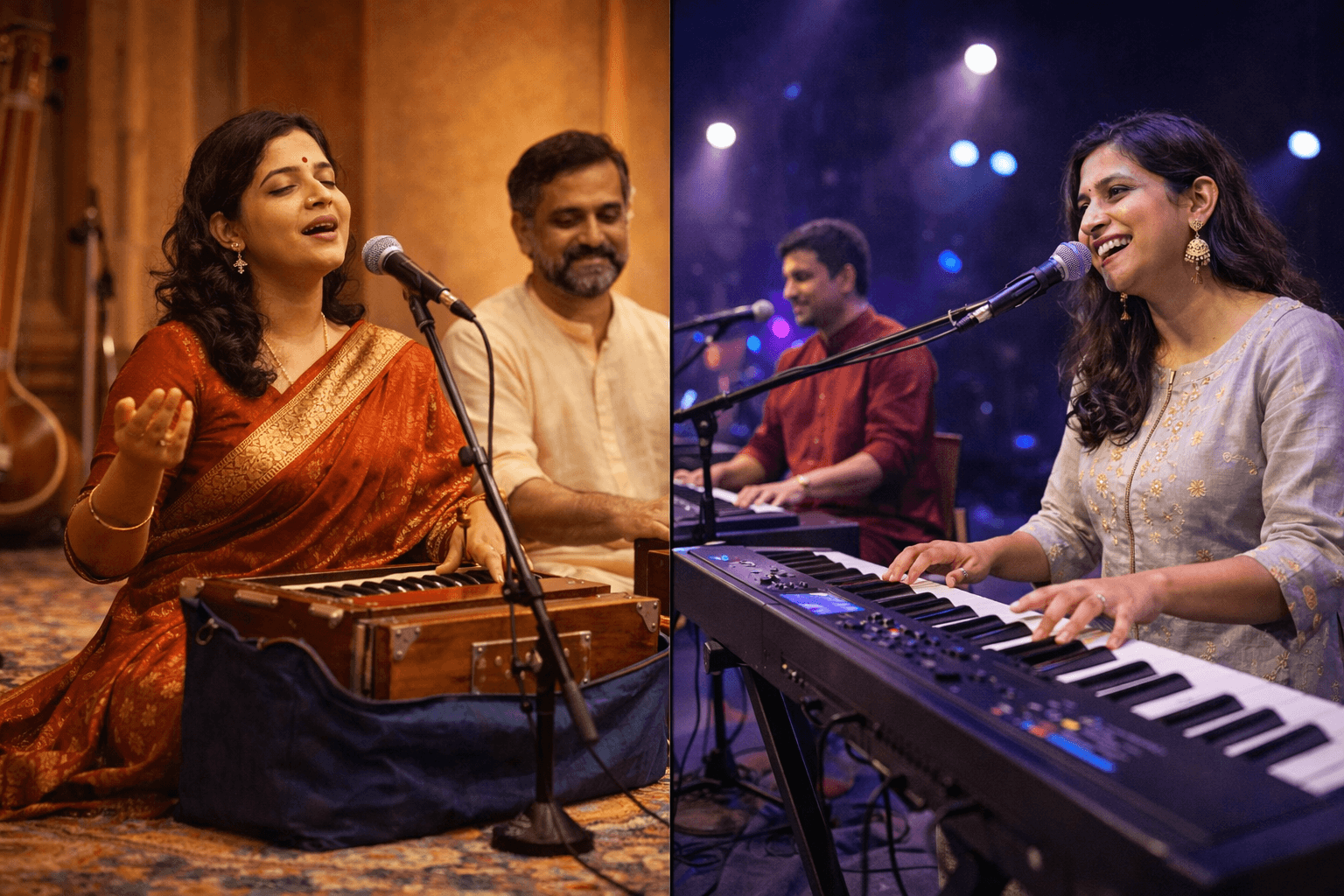 Harmoniums are indispensable in traditional performances and temple settings. They provide an authentic drone and tonal support for vocalists. The instrument’s ability to sustain notes without electronic interference makes it ideal for live performance, group singing for children, and stage presence development.
Keyboards, however, are widely used in modern concerts, recordings, and online classrooms. They allow precise pitch correction, layering, and experimentation with sounds, making them suitable for fusion performances or studio recordings. Musicians often use keyboards as a complement to harmoniums to bridge classical purity with modern musical arrangements.
Training Techniques and Music Discipline
 Mastering the harmonium enhances memory development through music, raga identification, and improvisation skills. It encourages vocal practice for kids by teaching alignment with tonal accuracy, supporting breathing techniques for singing, and improving musical ear development.
Keyboard lessons provide structured exercises for chord progression, melody building, and rhythm coordination. Children learn musical notation, digital audio workstations, and modern studio recording enhancements, expanding their knowledge of music production workflow. Both instruments cultivate discipline, focus, and creativity through consistent practice.
Advantages for Children
Harmonium helps children internalize Indian classical music traditions, including ragas, talas, and traditional compositions. It strengthens cognitive benefits of Carnatic music, develops cultural roots for children, and fosters long-term memory retention. Keyboard lessons boost creativity through improvisation, introduce digital music tools, and encourage collaborative performance skills.
Incorporating both instruments in online classes enables comprehensive learning. Platforms offering online Hindustani music classes integrate harmonium for tonal purity and keyboard for versatile practice. Children gain exposure to structured music lessons, performance preparation, and ensemble practices, cultivating both technical and expressive musical abilities.
Choosing Between Harmonium and Keyboard
 Selecting the right instrument depends on the child’s goals, age, and learning style. Harmoniums suit students focused on traditional Indian classical music and vocal accompaniment, while keyboards are better for those exploring fusion, digital music, or multi-genre learning.
Parents can also adopt a blended approach. Using a harmonium for raga practice and a keyboard for accompaniment, composition, or stage experimentation ensures a holistic development. Structured lessons at platforms like online Hindustani music classes help students balance the expressive nuances of harmonium with the versatility of a keyboard.
Online Learning Opportunities
Online platforms offer accessible, flexible, and interactive learning. Children can practice harmonium or keyboard at their own pace, receive expert feedback, and track progress. Interactive exercises and video demonstrations enhance engagement, while group classes foster peer learning.
For those interested in deeper knowledge of Carnatic vs Hindustani classical music, online lessons provide historical context, raga theory, and performance techniques. Digital learning ensures that both harmonium and keyboard training remain relevant in modern music education, blending tradition with contemporary methodology.
Cognitive and Cultural Benefits for Kids
Learning harmonium or keyboard improves memory, attention span, and auditory processing. Children develop musical improvisation skills, understanding of rhythm, and enhanced creativity. Participation in music ensembles cultivates social skills, teamwork, and stage presence.
Both instruments connect learners to Indian classical music’s rich heritage. Harmonium emphasizes cultural roots for children and melodic authenticity, while keyboards expose learners to digital music tools, studio techniques, and fusion music production. Together, they enrich children’s musical journey, ensuring they receive both cognitive benefits of Carnatic music and modern skills for the digital era.
Conclusion – Harmonium or Keyboard?
Both harmonium and keyboard play pivotal roles in shaping young musicians. Harmoniums nurture authenticity, tonal accuracy, and connection to Indian classical traditions. Keyboards enhance versatility, creativity, and modern music exposure. Choosing either—or both—depends on goals, style preference, and learning approach.
Parents and teachers can leverage online platforms like online Hindustani music classes to ensure structured, interactive, and comprehensive training. Combining traditional and digital tools provides children with a rich, balanced musical education, cultivating skill, expression, and a lifelong appreciation for music.
FAQs
1. Which is better for learning Indian classical music: harmonium or keyboard? Harmonium is ideal for traditional vocal accompaniment, while keyboards support versatility and fusion.
2. Can children learn both harmonium and keyboard together? Yes, a blended approach enhances tonal understanding and modern musical creativity.
3. How do online classes help with harmonium or keyboard training? They provide structured lessons, feedback, interactive exercises, and flexibility in scheduling.
4. Is the keyboard suitable for Carnatic and Hindustani music? Yes, but it may limit microtonal variations; harmonium complements expressive nuances.
5. What age is ideal to start learning harmonium or keyboard? Children can start around ages 5-7, depending on hand size, focus, and interest.