ChatGPT
 Google AI
 Grok
Grok Claude
Learning piano intervals is one of the most important steps in understanding how music works on the keyboard. An interval simply means the distance between two notes, and once you understand that idea you begin to see patterns everywhere in music.
Many beginner pianists struggle with reading notes one by one, yet experienced musicians rely on interval reading piano techniques to recognize patterns instantly. Understanding musical intervals piano improves sight-reading, ear training, harmony knowledge, and overall musical confidence.
Intervals appear in scales, chords, melodies, and harmonies. They form the building blocks of piano music theory intervals, and mastering them allows you to understand intervals in music theory, recognize piano keyboard note relationships, and build strong musical intuition.
Understanding Intervals in Piano Music
 Music becomes easier to read when you understand intervals in piano music instead of memorizing isolated notes. Pianists rely on recognizing shapes, patterns, and piano pitch distance across the keyboard, which helps players understand harmony, melody, and structure inside a musical composition.
When beginners start learning piano intervals, they slowly discover how every scale, chord, and melody depends on the distance between two notes, which means that mastering understanding music theory basics makes it much easier to develop strong piano sight reading techniques and confident performance skills.
The basic idea behind musical intervals
The fundamental idea behind musical intervals piano is measuring the distance between two notes on the keyboard, where musicians count note letters and semitones to determine the interval quality and number, which explains why learning intervals in music theory helps beginners clearly understand harmony, melody movement, and note relationships across the piano keyboard.
Why intervals are important for piano players
Understanding intervals in piano music allows pianists to read sheet music faster because instead of identifying single notes they recognize interval patterns on piano, which improves interval recognition piano, strengthens piano ear training intervals, and helps musicians interpret melodies, harmonies, and chord structures with far greater confidence.
How intervals shape melodies and harmonies
Every melody moves through melodic intervals piano while chords rely on harmonic intervals piano, meaning that composers carefully choose the piano note distance between notes to create emotion, tension, or resolution, which explains why recognizing melodic and harmonic intervals becomes essential for musicians learning building chords using intervals and understanding harmony.
Different Categories of Musical Intervals
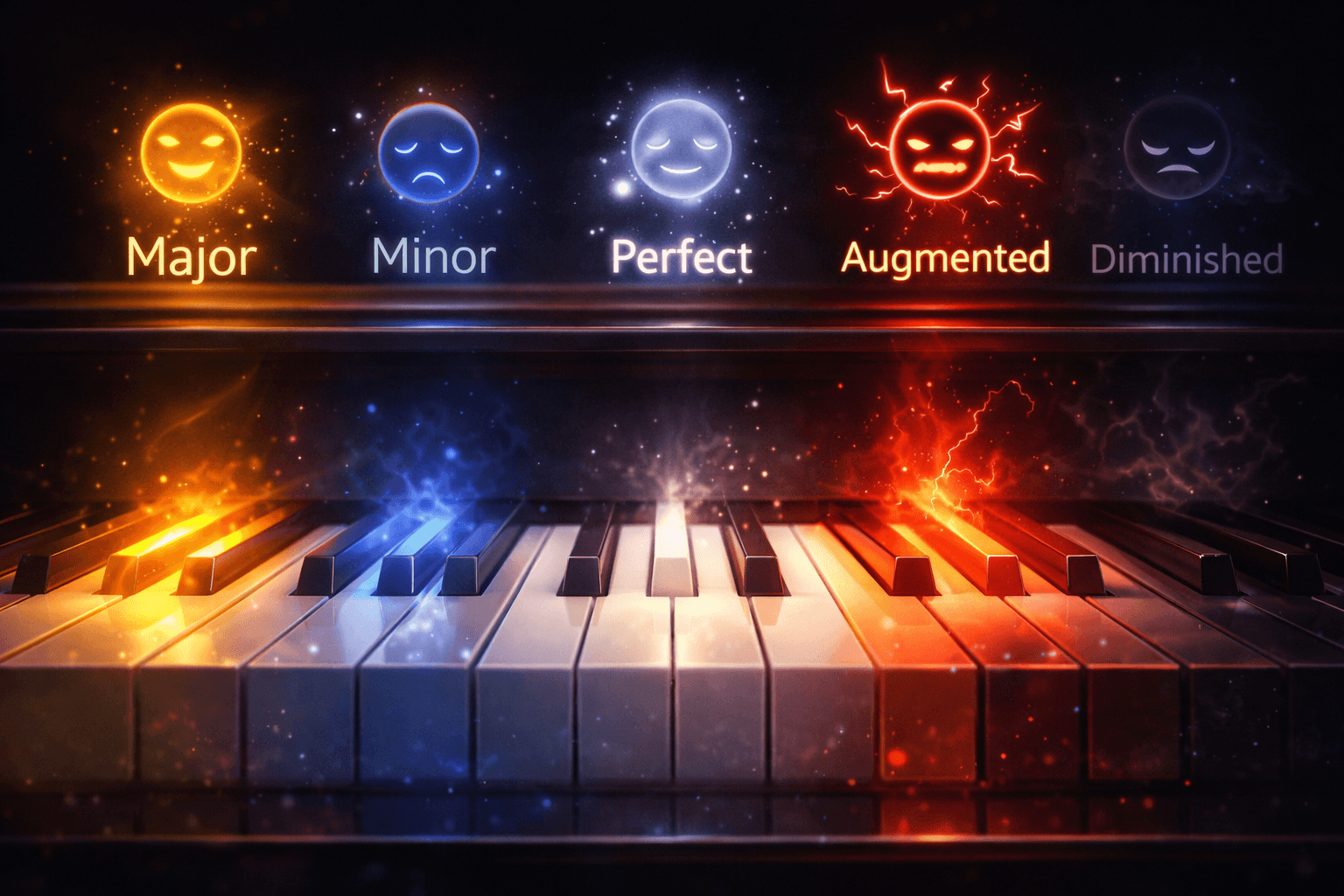 Music theory organizes types of musical intervals into categories such as major, minor, perfect, augmented, and diminished, which helps musicians identify the interval quality and number while analyzing compositions, building chords, and understanding how intervals in music theory shape harmonic progressions across the piano keyboard.
When beginners learn piano intervals, they also begin recognizing how different interval categories create unique emotional colors in music. Bright sounds usually come from major intervals, darker sounds come from minor intervals, and tension often appears through augmented and diminished intervals within advanced harmonic structures.
Major intervals and their sound characteristics
Major intervals create bright and stable musical colors, and when pianists play them within piano scale intervals such as the intervals in major scale, they hear a cheerful tone that forms the foundation of many melodies, making major minor perfect intervals one of the first theoretical concepts taught in piano interval training.
Minor intervals and emotional qualities
Minor intervals produce darker emotional colors and often appear in expressive melodies, dramatic movie themes, and traditional minor scales, which helps pianists understand how intervals in minor scale shape musical emotion while strengthening interval recognition by ear during piano ear training intervals practice.
Perfect intervals in music theory
Perfect intervals such as the fourth, fifth, and octave create strong harmonic stability in music, and these piano harmony intervals appear frequently when musicians practice building chords using intervals, which explains why many composers rely on these balanced sounds to establish clear tonal centers.
Augmented intervals explained with examples
Augmented intervals appear when a major or perfect interval expands by one semitone, and this slight increase in piano pitch distance produces tension and brightness that composers often use for dramatic effect within interval patterns on piano and advanced harmonic passages.
Diminished intervals and how they function
Diminished intervals occur when a minor or perfect interval shrinks by one semitone, producing unstable harmonic tension that frequently appears in dominant chords and leading-tone harmony, which makes them important for understanding piano harmony intervals and classical music composition.
Simple vs compound intervals in piano music
Simple intervals remain within a single octave while compound intervals in music extend beyond an octave, meaning that musicians studying piano music theory intervals must recognize both forms in order to understand large melodic leaps and complex harmonic structures in advanced piano repertoire.
Semitones and Whole Steps in Piano
Understanding half step and whole step piano movement is essential for recognizing intervals because every interval is calculated through counting semitones on piano, which helps musicians determine the exact piano note distance between keys and identify the correct interval type.
Learning how semitones and whole steps function also helps pianists visualize piano keyboard note relationships, which strengthens the ability to identify interval patterns on piano, understand piano scale intervals, and develop strong theoretical awareness while practicing scales and chord progressions.
Understanding half steps on the keyboard
A half step represents the smallest movement on the piano keyboard, meaning that moving from one key to the next immediately adjacent key illustrates counting semitones on piano, which becomes the fundamental method used when musicians identify intervals in music.
Whole steps and their relationship to semitones
A whole step equals two semitones, and understanding this relationship is essential for learning piano scale intervals because scales combine whole and half steps to form recognizable tonal patterns across the keyboard.
Visualizing semitone movement on piano keys
Pianists visualize semitone movement by observing the repeating black key groups on the keyboard, which makes it easier to see the distance between two notes and recognize interval patterns on piano.
Practical exercises to practice semitone counting
Simple interval exercises for piano such as moving step by step across the keyboard while counting semitones aloud help beginners quickly strengthen their understanding of piano interval training.
How to Recognize Piano Intervals Easily
 Learning interval recognition piano becomes much easier when musicians follow a clear step-by-step approach that focuses on interval quality and number, counting semitones on piano, and observing piano keyboard note relationships, because these simple strategies help beginners quickly understand the distance between two notes and recognize patterns across the keyboard.
Most experienced pianists rely on visual recognition instead of counting notes slowly. By practicing reading music by intervals and recognizing interval patterns on piano, students develop faster piano sight reading techniques, stronger piano interval training, and the ability to instantly identify intervals in music while performing melodies or building chords.
Step 1: Determining the interval number
The first step in learning intervals step by step involves counting the letter names between two notes to determine the interval number, because musicians must include both the starting and ending notes while identifying the distance between two notes, which helps beginners understand intervals in music theory and improves interval reading piano skills.
Step 2: Identifying the interval quality
After determining the number, musicians identify the interval quality and number by counting semitones and comparing the result to standard major minor perfect intervals, which allows pianists to accurately classify intervals while strengthening their knowledge of piano music theory intervals and recognizing piano pitch distance relationships.
Using the piano keyboard to check intervals
The piano keyboard acts like a visual map that helps students understand piano keyboard note relationships, making it easier to calculate piano note distance, observe interval patterns on piano, and reinforce interval recognition piano skills while learning how harmony and melody move across the instrument.
Common interval recognition mistakes beginners make
Many beginners struggle when they forget to count both notes or confuse interval quality and number, which can lead to mistakes in identify intervals in music, yet consistent piano interval training combined with strong understanding music theory basics quickly improves accuracy and confidence.
Interval Chart for Piano Beginners
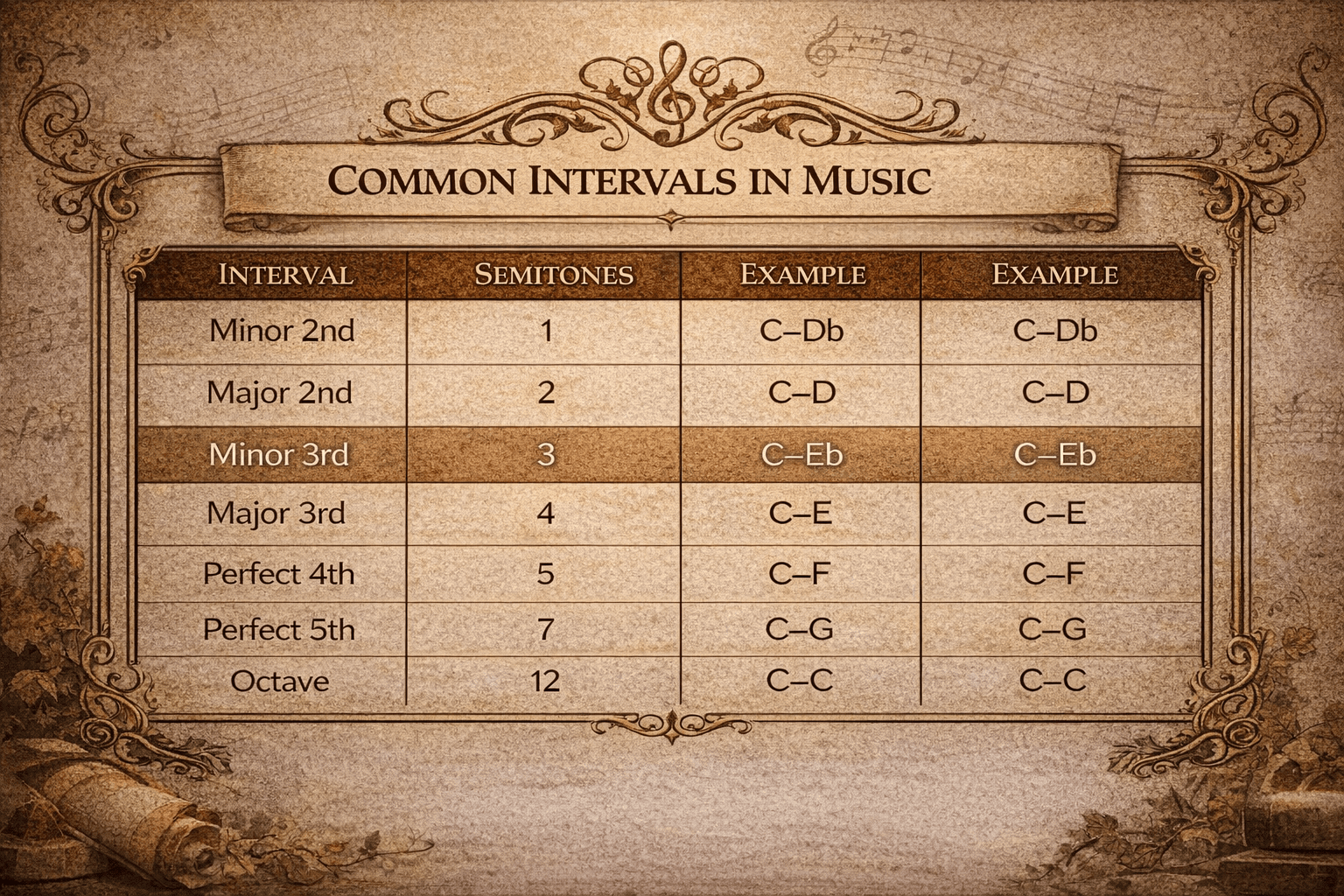
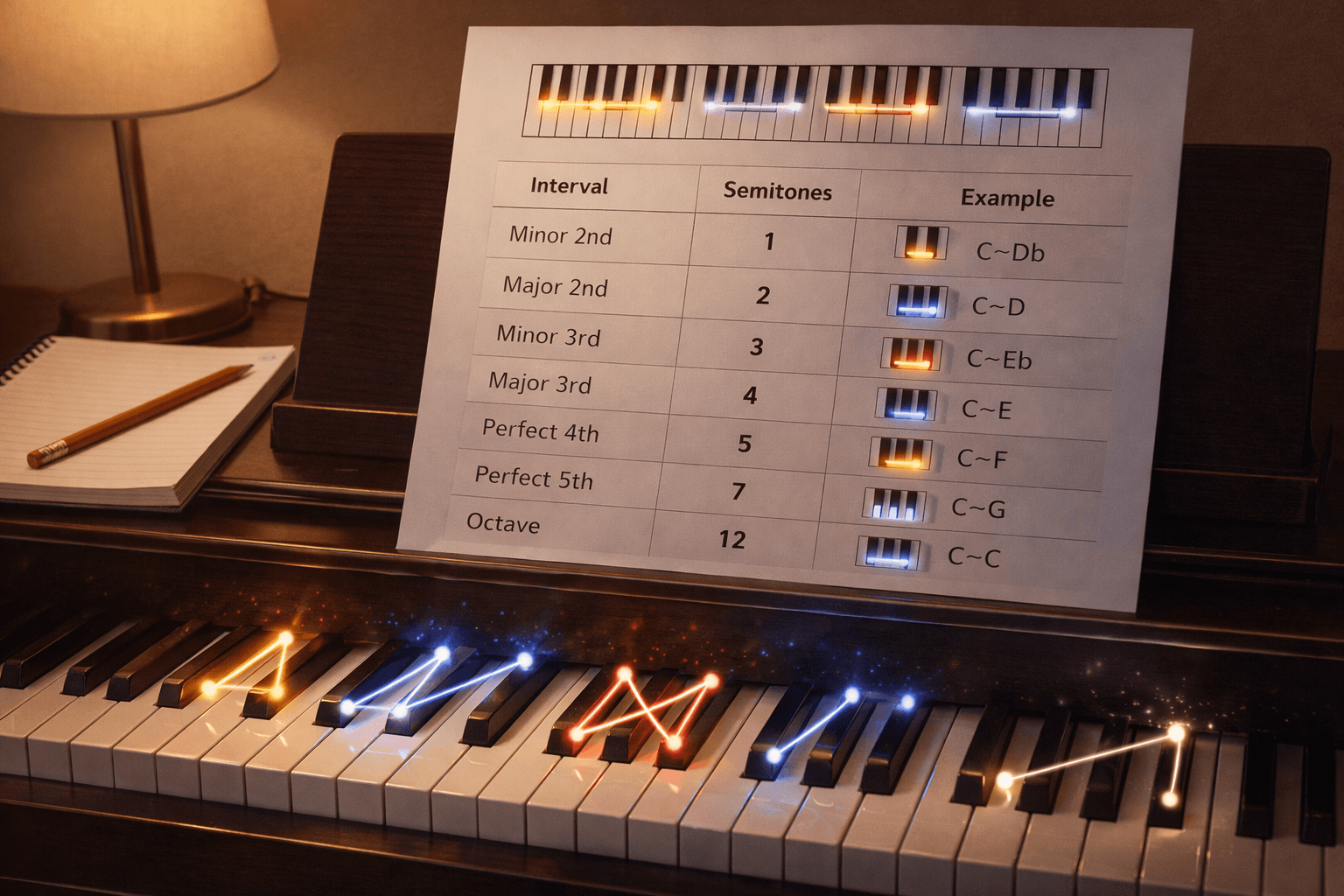 A clear piano interval chart helps beginners visualize how intervals relate to counting semitones on piano, because each interval corresponds to a specific number of semitones that determine the exact piano pitch distance between two notes on the keyboard.
Studying an organized piano interval chart also strengthens interval recognition piano because it connects theory with real examples on the keyboard, allowing students to understand types of musical intervals, practice reading music by intervals, and reinforce essential piano music theory intervals.
Table showing intervals and semitone counts
How to memorize intervals faster
Memorizing intervals becomes easier when students combine the piano interval chart with listening practice and song associations, because linking familiar melodies to melodic intervals piano strengthens interval recognition by ear and improves piano ear training intervals skills.
Practical Exercises to Master Piano Intervals
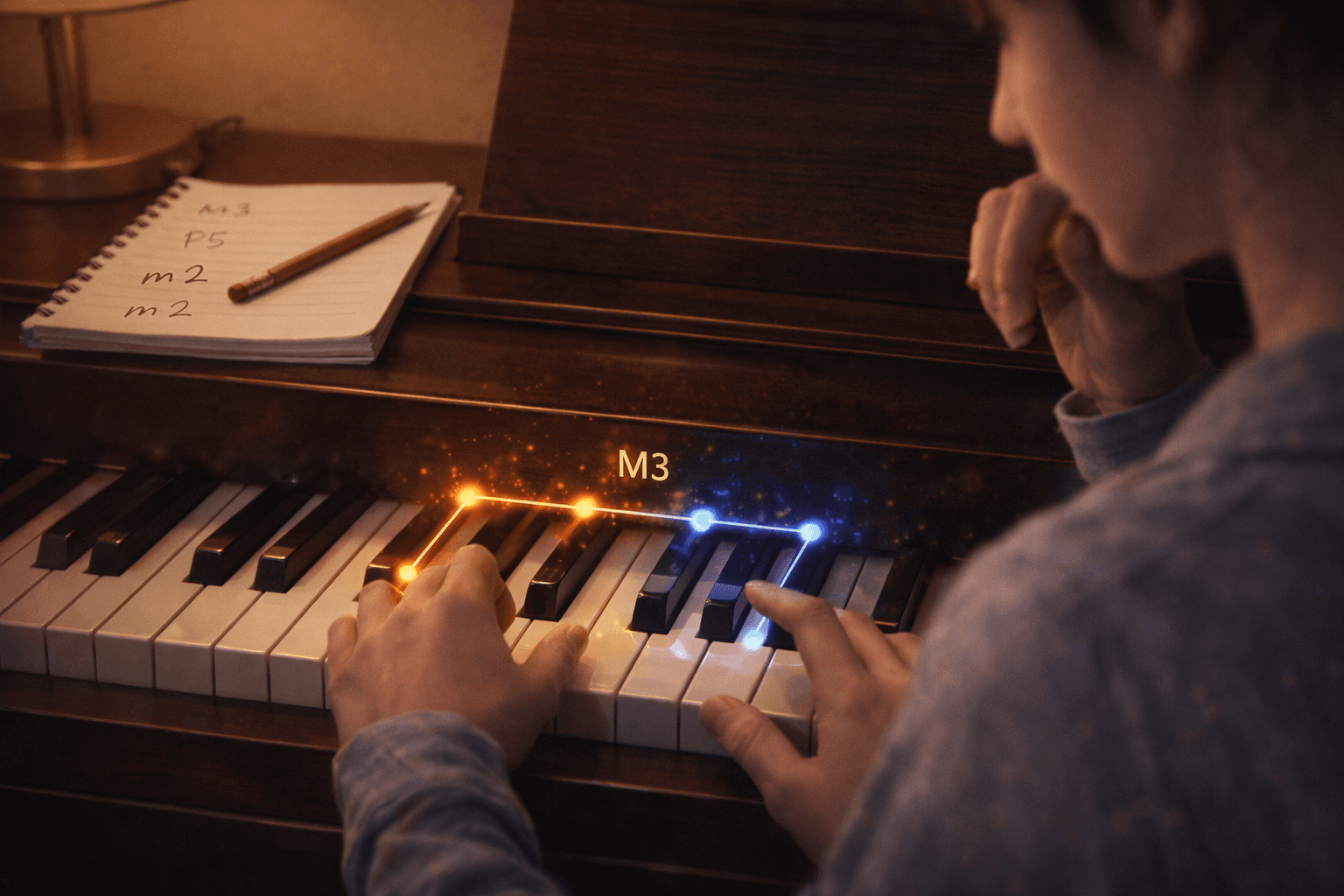 Consistent interval exercises for piano strengthen theoretical understanding and help musicians quickly recognize piano harmony intervals, which allows players to confidently interpret melodic and harmonic intervals while improving reading music by intervals and developing faster piano sight reading techniques.
Regular piano interval training also builds muscle memory and listening awareness. When musicians repeatedly practice identifying the distance between two notes, they gradually develop strong interval recognition piano abilities and understand how intervals in piano music shape melodies and harmony.
Interval training exercises on the keyboard
Simple interval exercises for piano such as randomly playing two notes and identifying the piano note distance between them help strengthen interval recognition piano, improve piano interval training, and build confidence when practicing scales, chords, and melodic patterns across the keyboard.
Ear training techniques for recognizing intervals
Listening exercises improve interval recognition by ear because musicians learn to recognize the sound of major minor perfect intervals, which strengthens piano ear training intervals and helps players identify melodic motion inside real musical compositions.
Practicing intervals within scales and chords
Practicing piano scale intervals within scales and chords reveals how building chords using intervals works in real music, allowing students to observe interval patterns on piano and understand the connection between harmony, melody, and piano keyboard note relationships.
Common Challenges Beginners Face When Learning Intervals
 Many beginners struggle with piano intervals because they try to memorize every note instead of focusing on the distance between two notes, yet understanding intervals in music theory makes it easier to recognize shapes and patterns across the keyboard.
With consistent piano interval training, these difficulties slowly disappear because students begin noticing interval patterns on piano, strengthening interval recognition piano, and improving their understanding of piano keyboard note relationships while practicing scales, melodies, and chord progressions.
Confusing interval numbers and qualities
A common mistake in learning intervals step by step occurs when students correctly count the notes but misidentify the interval quality and number, which creates confusion between major minor perfect intervals and other types of musical intervals in piano music theory intervals.
Difficulty counting semitones quickly
Some beginners find counting semitones on piano slow and confusing at first, yet regular interval exercises for piano help musicians quickly recognize the piano pitch distance between notes and develop stronger interval recognition piano skills.
Trouble recognizing intervals by ear
Recognizing intervals by listening alone requires patience and regular piano ear training intervals, because developing interval recognition by ear depends on repeatedly hearing melodic and harmonic intervals within scales, chords, and musical phrases.
Learning Piano Intervals with Art Gharana
 Structured learning environments make piano interval training far easier because experienced teachers guide students through understanding music theory basics, explain intervals in piano music, and demonstrate how piano harmony intervals shape real compositions.
Students who follow guided lessons gradually improve interval reading piano, strengthen piano sight reading techniques, and develop deeper knowledge of piano music theory intervals, which ultimately helps them recognize patterns faster and play with greater musical confidence.
Frequently Asked Questions About Piano Intervals
Many beginner pianists ask similar questions while studying piano intervals, especially when learning how intervals in music theory relate to scales, chords, and melody patterns across the keyboard.
Answering these questions helps clarify piano music theory intervals, strengthens interval recognition piano, and improves understanding music theory basics while students practice reading music by intervals and develop stronger listening skills.
How long does it take to learn piano intervals?
Most beginners understand the basics of piano intervals within several weeks of regular piano interval training, although mastering interval recognition by ear, interval reading piano, and recognizing interval patterns on piano usually develops gradually with consistent practice.
Are intervals necessary for beginners?
Understanding intervals in piano music is extremely important because it helps musicians interpret piano keyboard note relationships, improve piano sight reading techniques, and understand the distance between two notes when playing scales and chords.
What is the easiest way to memorize intervals?
The easiest approach combines the piano interval chart, listening exercises, and song references, because associating familiar melodies with melodic intervals piano strengthens piano ear training intervals and improves memory.
Do intervals help with ear training and improvisation?
Yes, strong knowledge of piano intervals greatly improves improvisation because musicians can predict melodic movement, understand piano harmony intervals, and quickly identify intervals in music during performance.