ChatGPT
 Google AI
 Grok
Grok Claude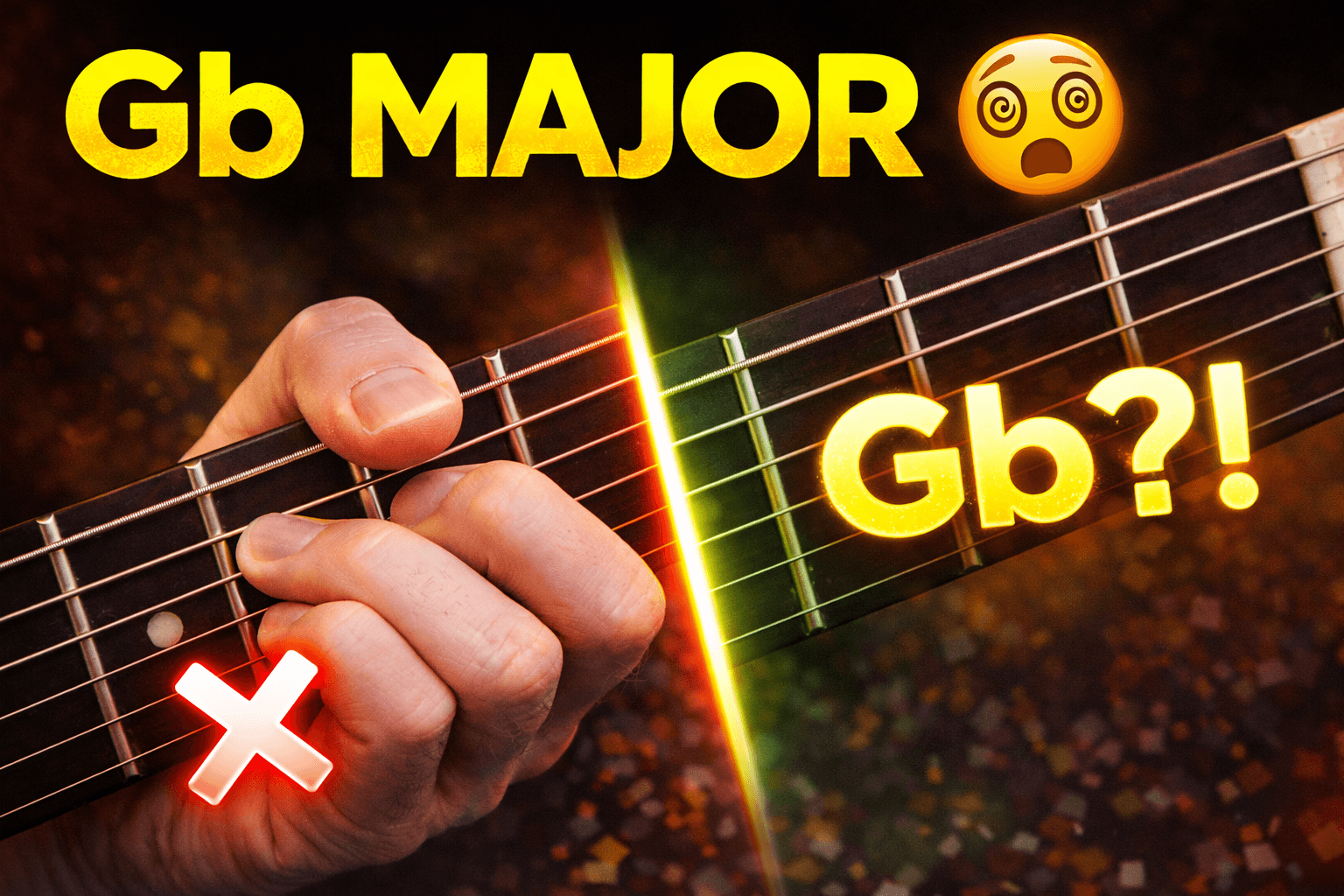
What Makes the Gb Major Chord Special
 The Gb major chord is unique because of its theoretical context and tonal color. It is enharmonically equivalent to F♯ major, meaning both chords sound identical on a guitar but are written differently depending on the key and harmonic function. In music theory, Gb major is preferred in flat-heavy keys, modulation passages, and certain classical and jazz frameworks.
Built using the 1–3–5 formula of Gb–Bb–Db, the chord delivers a warm, grounded, and sophisticated major sound. Its tonal balance often feels smooth and refined rather than aggressive, making it popular in genres that value harmonic depth such as jazz, soul, R&B, cinematic music, and modern worship.
Understanding Gb major allows guitarists to see the fretboard through a theoretical lens rather than relying solely on shapes. This perspective improves transposition skills, chord spelling accuracy, and the ability to communicate effectively with other musicians. It also strengthens comprehension of key relationships, modulation strategies, and chord-scale harmony.
Gb Major Chord Notes and Formula
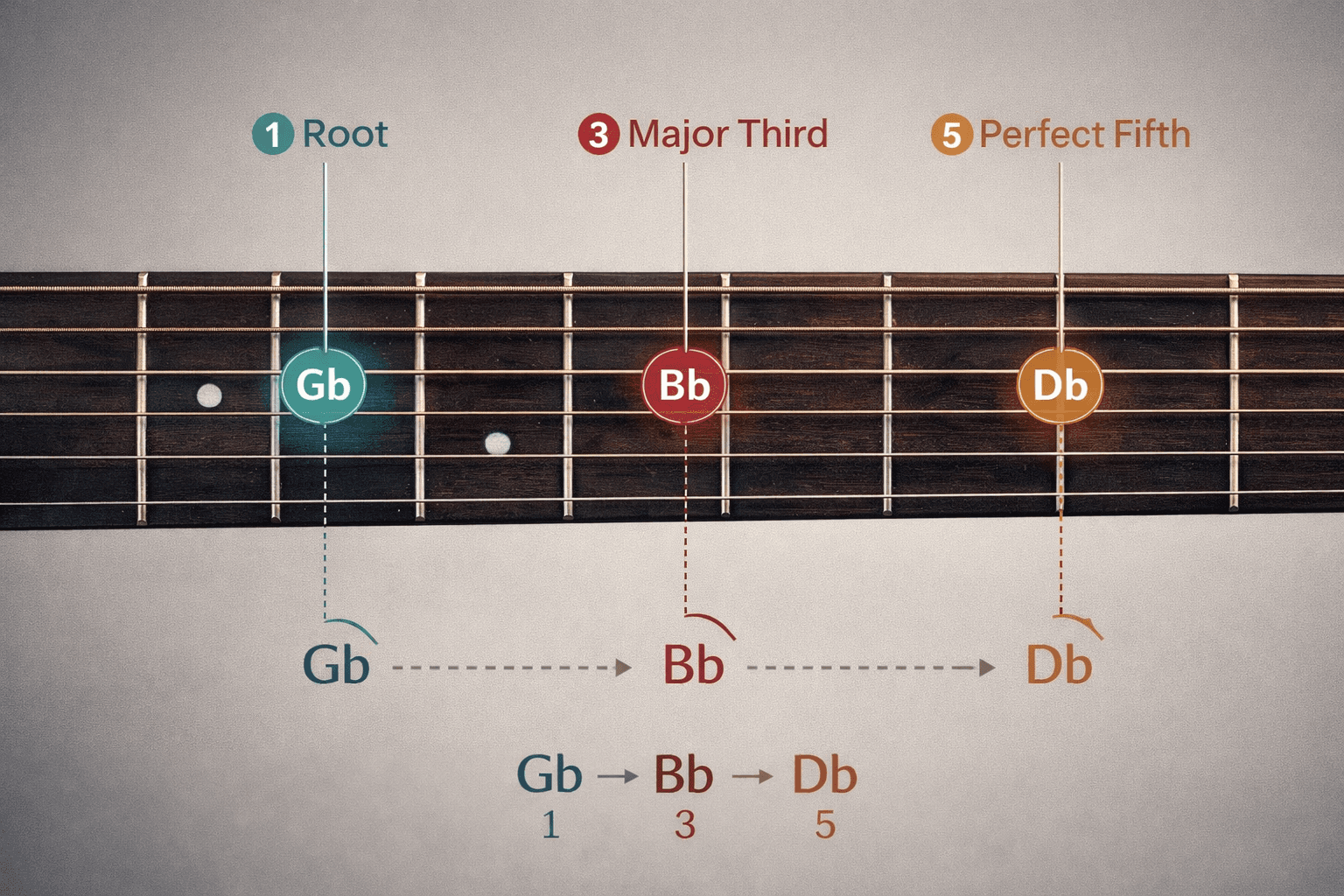
 The Gb major chord consists of three essential chord tones derived from the Gb major scale.
Note Interval
Gb Root
Bb Major Third
Db Perfect Fifth
The Gb major chord consists of three essential chord tones derived from the Gb major scale.
Note Interval
Gb Root
Bb Major Third
Db Perfect Fifth
These three notes form the Gb major triad. The formula follows the standard major chord structure of 1–3–5. Understanding this structure is critical for identifying Gb major across the fretboard, building inversions, forming extended chords, and targeting chord tones during improvisation.
When guitarists internalize the chord tones rather than relying solely on memorized shapes, they gain the ability to construct voicings anywhere on the neck. This approach unlocks triads, drop voicings, chord melody techniques, and advanced harmonic applications.
How the Major Chord Is Built
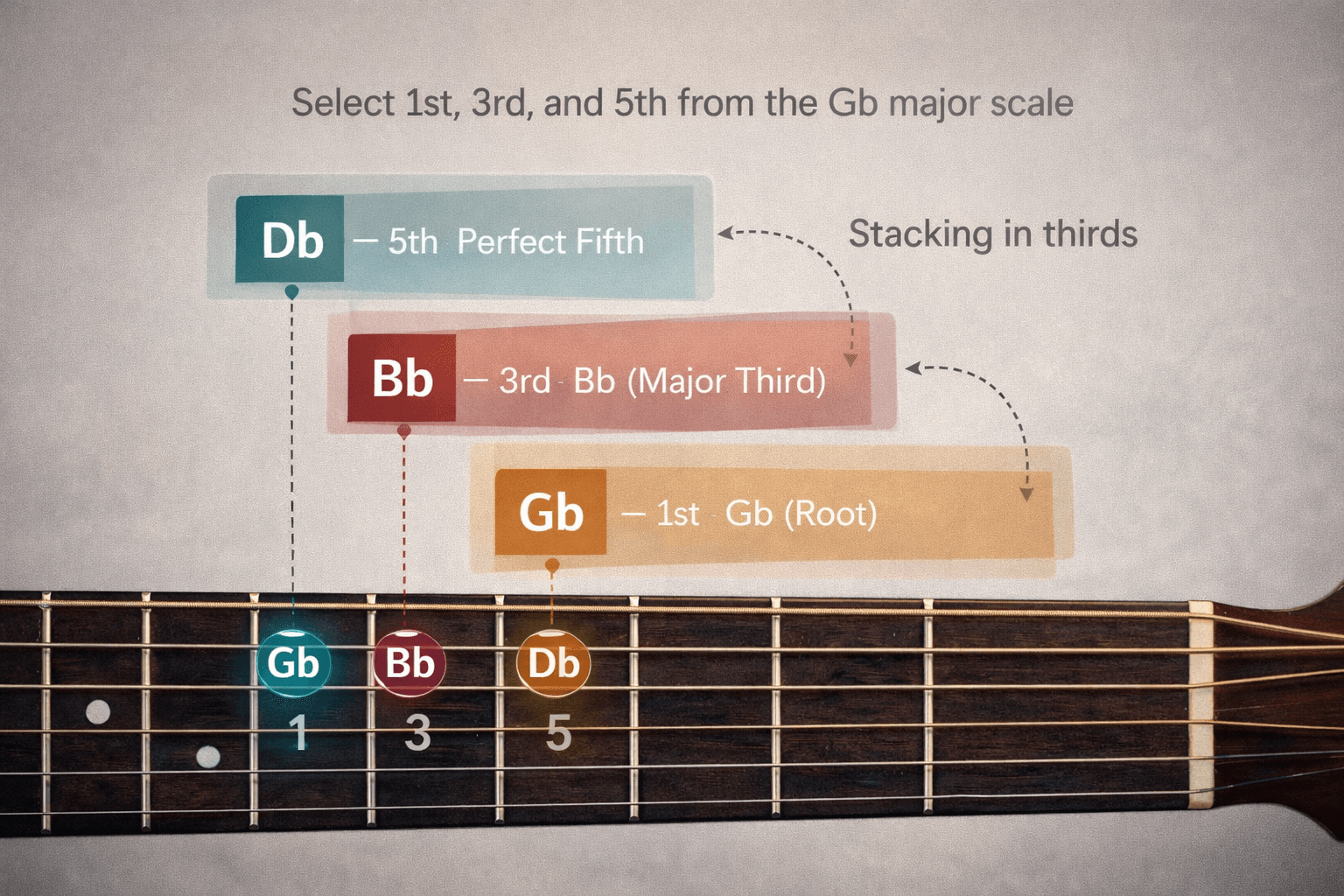
 The Gb major chord is constructed by stacking intervals of thirds from the Gb major scale. The full Gb major scale contains the notes Gb, Ab, Bb, Cb, Db, Eb, and F. Selecting the first, third, and fifth degrees of this scale produces the Gb major triad: Gb, Bb, and Db.
This intervallic structure creates the bright and stable sound associated with major chords. The distance between the root and the major third defines the chord’s emotional character, while the perfect fifth reinforces tonal stability.
Understanding how Gb major is built allows guitarists to form the chord in any register, adapt it to different musical contexts, and apply the same logic to all other major chords. This knowledge also supports harmonic analysis, chord substitution, and modal playing.
Gb Major Chord on Guitar
The Gb major chord is most commonly played using barre chord shapes and movable voicings rather than open strings. Because of its flat-based spelling, it challenges players to think beyond standard open-position habits and rely on fretboard visualization.
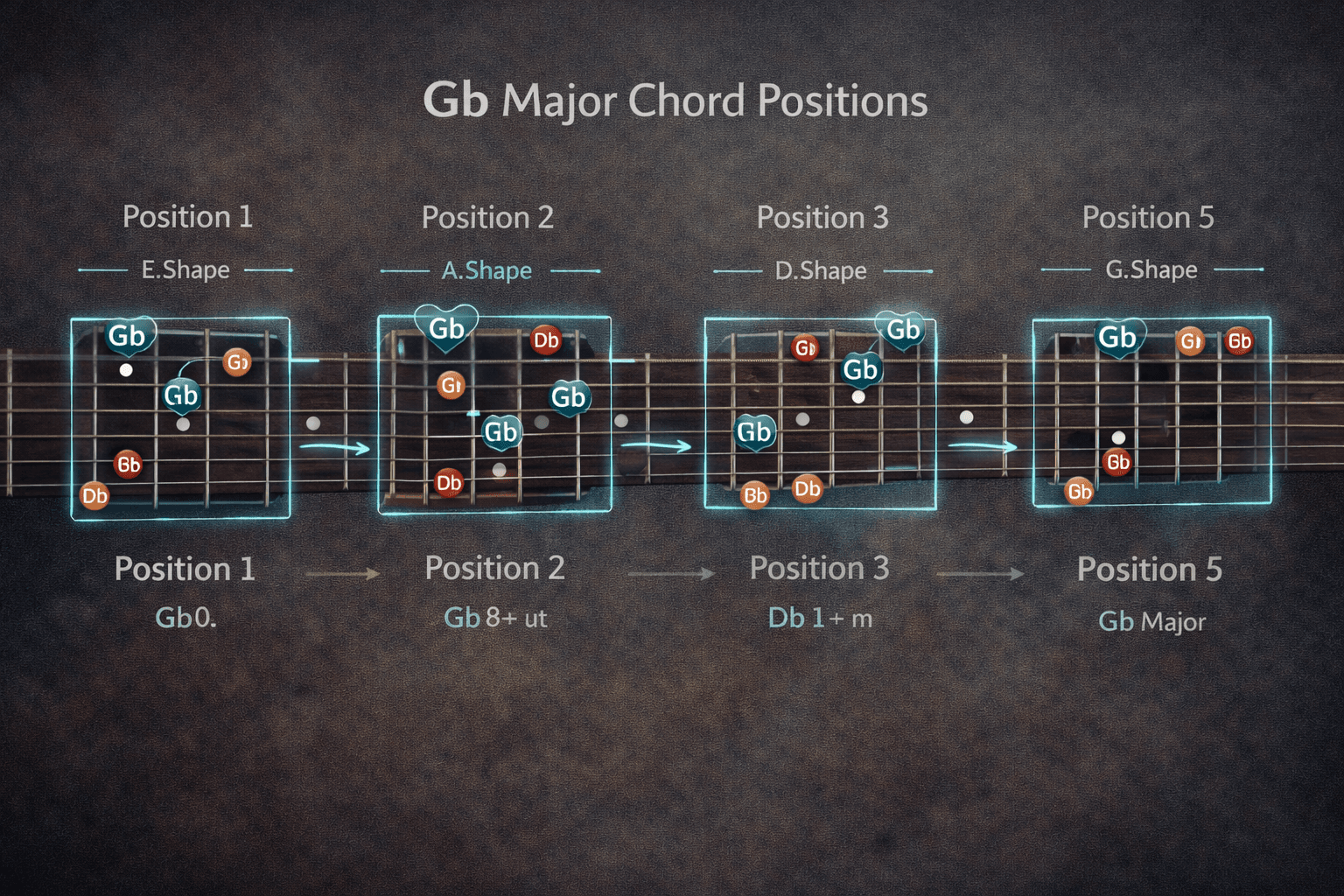
Gb major can be found across the neck using E-shape and A-shape barre chords, CAGED system positions, triad clusters, and higher-register voicings. Each position produces a distinct tonal character, allowing guitarists to choose voicings that suit rhythm, lead, or chord-melody playing.
Mastering Gb major shapes improves finger strength, barre chord accuracy, and neck-wide fluency. It also enhances the ability to connect chord shapes smoothly during key changes and modulations.
The Basic Gb Major Barre Shape
 The most common way to play Gb major on guitar is as an E-shape barre chord at the second fret. This shape uses the low E string as the root and provides a powerful, full-bodied sound suitable for rhythm guitar.
In this position, the root note Gb is located on the second fret of the low E string. The remaining chord tones are formed using the familiar E major barre shape. This voicing is widely used in rock, pop, and worship music due to its clarity and projection.
Players must focus on proper barre technique, thumb placement, and finger pressure to ensure all notes ring cleanly. Developing control in this shape builds the foundation for playing major chords in any key.
Keys Where You’ll Find the Gb Major Chord
 The Gb major chord naturally appears in several keys and harmonic contexts. Understanding these relationships helps guitarists analyze progressions, write music, and improvise confidently.
| Key | I | ii | iii | IV | V | vi | vii° |
|---|---|---|---|---|---|---|---|
| Gb Major | Gb | Abm | Bbm | Cb | Db | Ebm | Fdim |
| Db Major | Db | Ebm | Fm | Gb | Ab | Bbm | Cdim |
| Cb Major | Cb | Dbm | Ebm | Fb | Gb | Abm | Bbdim |
| Eb Minor | Ebm | Fdim | Gb | Abm | Bbm | Cb | Db |
Learning how Gb major functions within these keys strengthens harmonic awareness and improves the ability to anticipate chord movement. This knowledge is particularly valuable in ensemble settings and advanced songwriting.
Common Chord Progressions With Gb Major
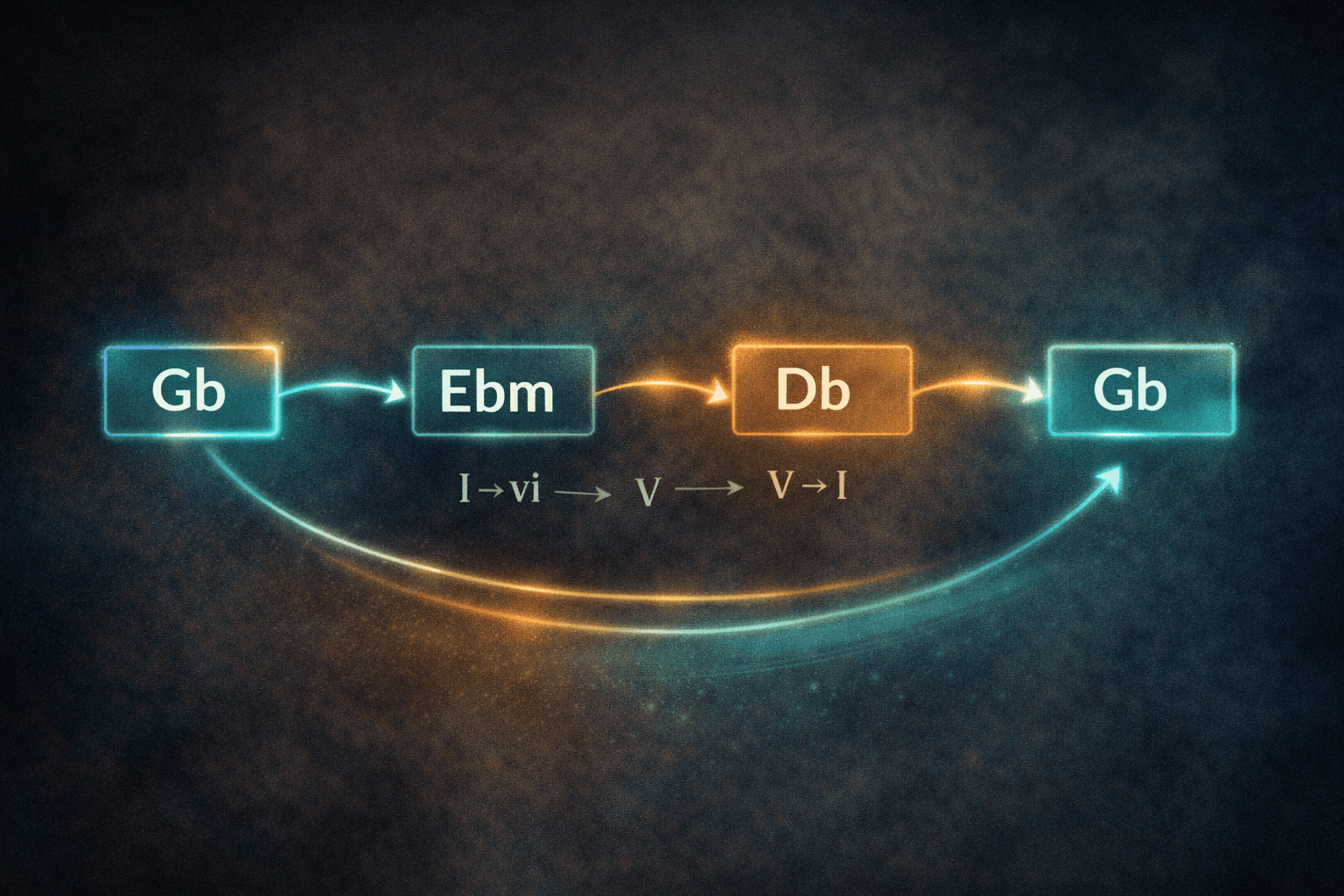 Gb major appears in a variety of expressive and sophisticated chord progressions. These progressions are often found in jazz standards, film scores, gospel music, and modern ballads.
Progressions such as I–IV–V in Gb major emphasize smooth voice leading, while vi–IV–I–V patterns create emotional depth and resolution. Understanding how Gb major interacts with related minor chords enhances both rhythm guitar and compositional skills.
These harmonic movements help guitarists develop musical intuition and recognize recurring patterns across genres.
Scales to Play Over a Gb Major Chord
Improvising over the Gb major chord requires scales that contain the chord tones Gb, Bb, and Db. Targeting these notes during solos ensures melodic alignment with the harmony.
| Scale | Notes | Mood |
|---|---|---|
| Gb Major Scale | Gb Ab Bb Cb Db Eb F | Bright, resolved |
| Eb Minor Scale | Eb F Gb Ab Bb Cb Db | Emotional |
| Gb Major Pentatonic | Gb Bb Cb Db F | Clean, melodic |
| Gb Lydian | Gb Ab Bb C Db Eb F | Dreamy |
| Gb Mixolydian | Gb Ab Bb Cb Db Eb Fb | Blues-influenced |
Understanding these scale relationships allows guitarists to improvise fluidly, craft melodic solos, and create expressive phrasing that complements the underlying harmony.
Popular Songs That Use the Gb Major Chord
The Gb major chord appears frequently in professionally arranged music, particularly in piano-driven compositions and jazz-influenced genres. While guitar-based pop songs may use the enharmonic F♯ major instead, Gb major is commonly written in sheet music and ensemble scores.
Many ballads, film soundtracks, worship arrangements, and jazz standards include Gb major as part of key centers or modulation passages. Studying these contexts helps guitarists understand how theory translates into real musical applications.
How to Play the Gb Major Chord Across the Fretboard
 Using the CAGED system, guitarists can locate the Gb major chord in multiple connected positions. Each shape offers a different voicing and tonal character.
| Position | Root Location | Shape Type |
|---|---|---|
| 1 | 2nd fret E string | Barre E-shape |
| 2 | 9th fret A string | Barre A-shape |
| 3 | 14th fret E string | Movable voicing |
| 4 | 6th fret D string | Triad-based |
| 5 | 18th fret A string | Inversion |
Learning these positions improves fretboard navigation and allows guitarists to move seamlessly between registers during performance.
Alternate Voicings and Extensions
Gb major can be expanded using chord extensions and altered voicings. These variations add color and emotional nuance to progressions.
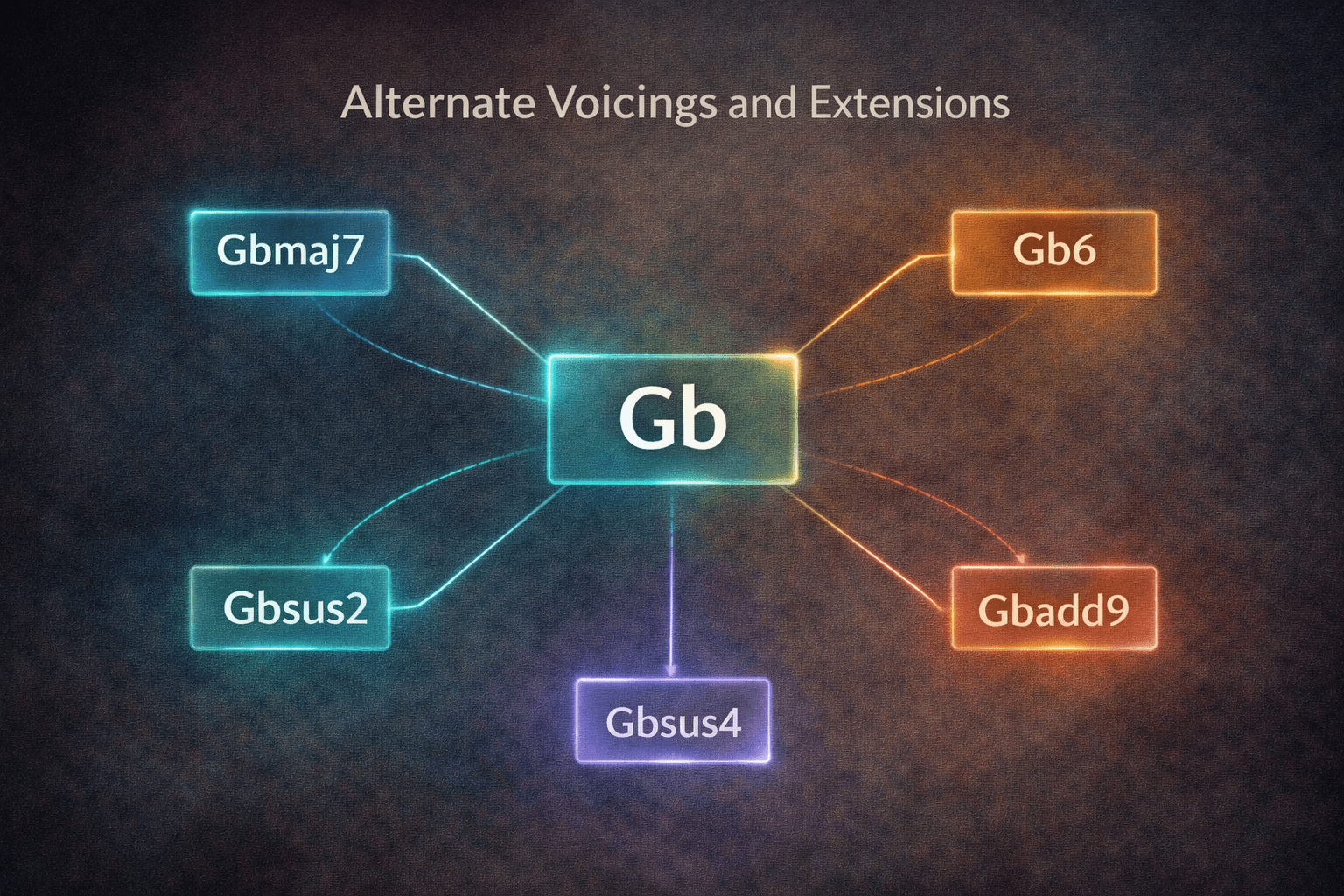
Common extensions include Gbmaj7, Gb6, Gbadd9, Gbsus2, and Gbsus4. These voicings are widely used in jazz, neo-soul, worship, and cinematic music.
Exploring these variations enhances harmonic vocabulary and supports expressive songwriting.
Play This Chord With Other Roots
The Gb major shape is fully movable, allowing guitarists to transpose the structure across the fretboard. By shifting the same shape, players can produce other major chords while maintaining consistent fingering.
This approach reinforces pattern recognition and builds confidence in key changes and modulation.
How to Build the Gb Major Chord on Guitar
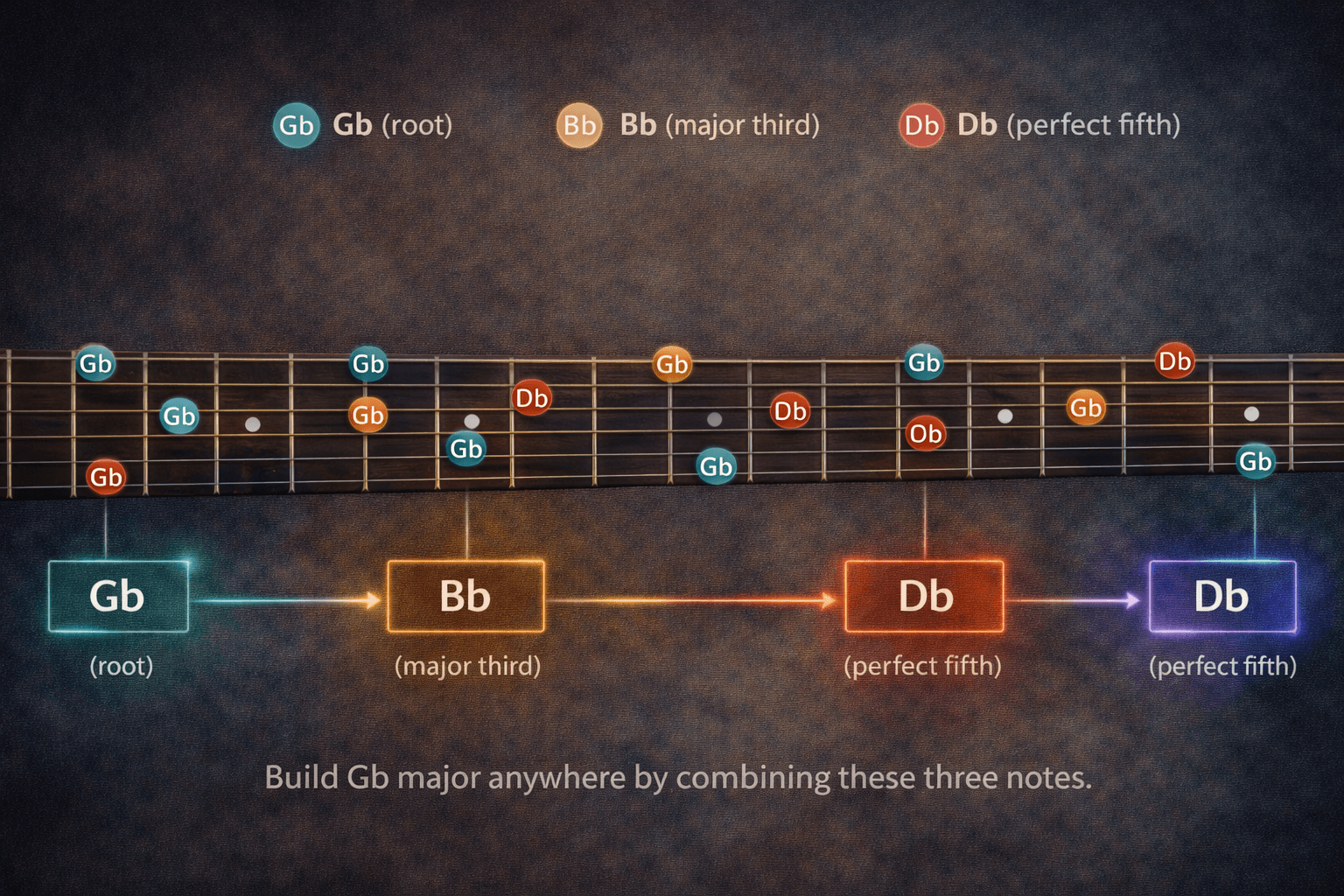 Building the Gb major chord involves identifying all instances of Gb, Bb, and Db across the neck. Mapping these tones allows guitarists to construct custom voicings, triads, and inversions.
This method deepens theoretical understanding and supports advanced techniques such as arpeggio-based improvisation and chord-melody playing.
Tips to Master the Gb Major Chord
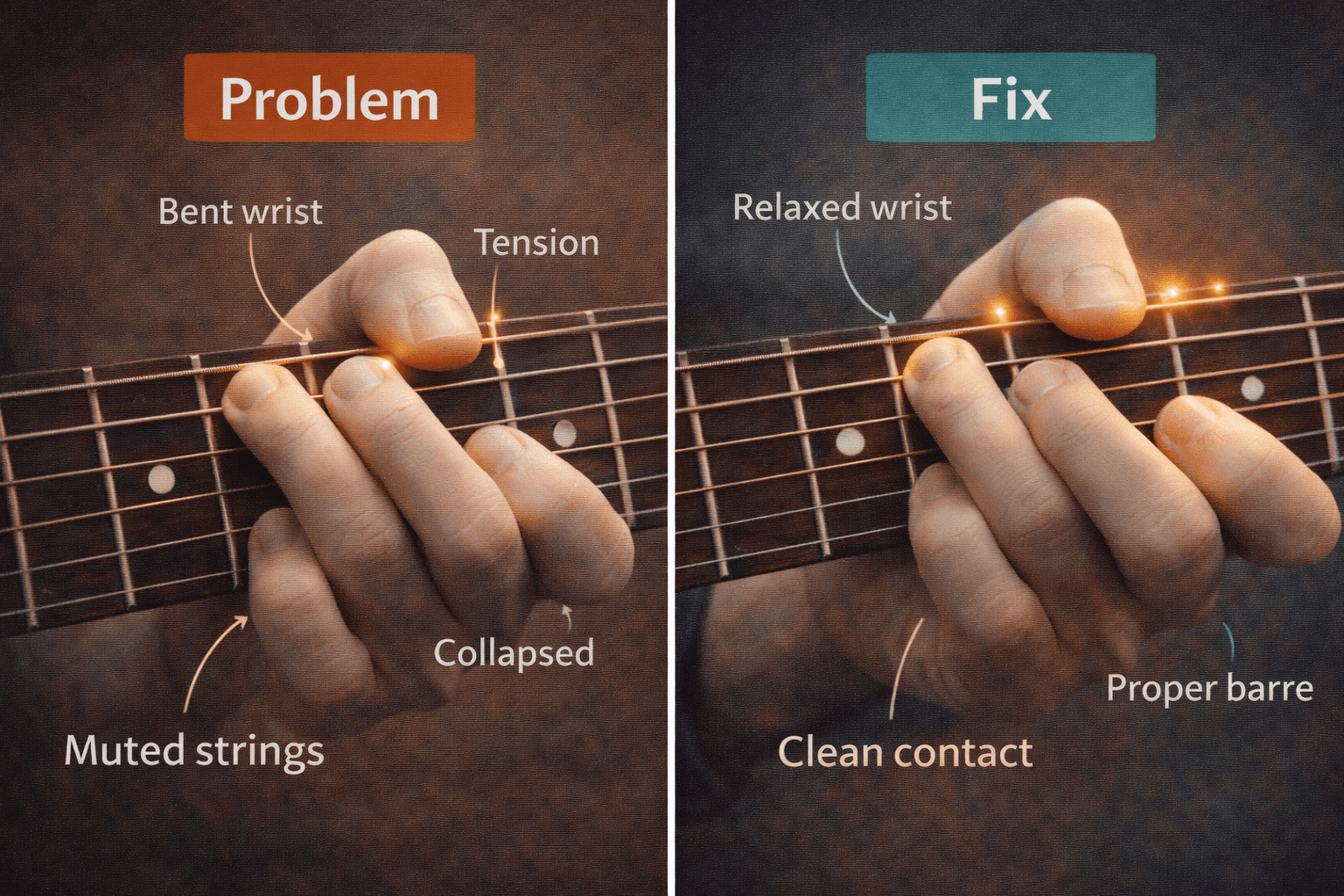 Clean execution of Gb major requires relaxed posture, accurate barre pressure, and consistent practice. Developing finger strength and maintaining proper wrist alignment prevent fatigue and ensure clarity.
Practicing transitions between related chords improves rhythmic flow and musical confidence.
| Exercise | Duration | Goal |
|---|---|---|
| Barre accuracy | 5 mins | Clean tone |
| Gb to Db transitions | 10 mins | Smooth changes |
| Gb progression practice | 10 mins | Timing and feel |
Troubleshooting Common Problems
Players may experience muted strings, buzzing notes, or hand fatigue when learning Gb major. These issues are typically resolved through improved finger placement, reduced tension, and slower practice tempos.
Consistent attention to technique leads to noticeable improvements in tone and control.
Advanced Applications of the Gb Major Chord
In advanced harmony, Gb major functions as a powerful tonal center for modulation and expressive writing. Guitarists can use arpeggios, inversions, and modal interchange to expand its musical potential.
Understanding how Gb major connects to scales, modes, and substitutions allows players to perform confidently in complex musical environments.
FAQ About the Gb Major Guitar Chord
1 Is Gb major hard to play on guitar?
Gb major is more challenging than open chords because it relies on barre shapes, but consistent practice makes it comfortable and reliable.
2 What are the notes in the Gb major chord?
The Gb major triad consists of Gb, Bb, and Db.
3 Is Gb major the same as F♯ major?
They sound the same but are spelled differently. Gb major is used in flat keys, while F♯ major appears in sharp keys.
4 Which chords work well with Gb major?
Db major, Ab minor, Eb minor, and Cb major commonly pair with Gb major.
5 Why should guitarists learn Gb major?
Learning Gb major improves theoretical accuracy, fretboard fluency, and professional-level musicianship.