ChatGPT
 Google AI
 Grok
Grok Claude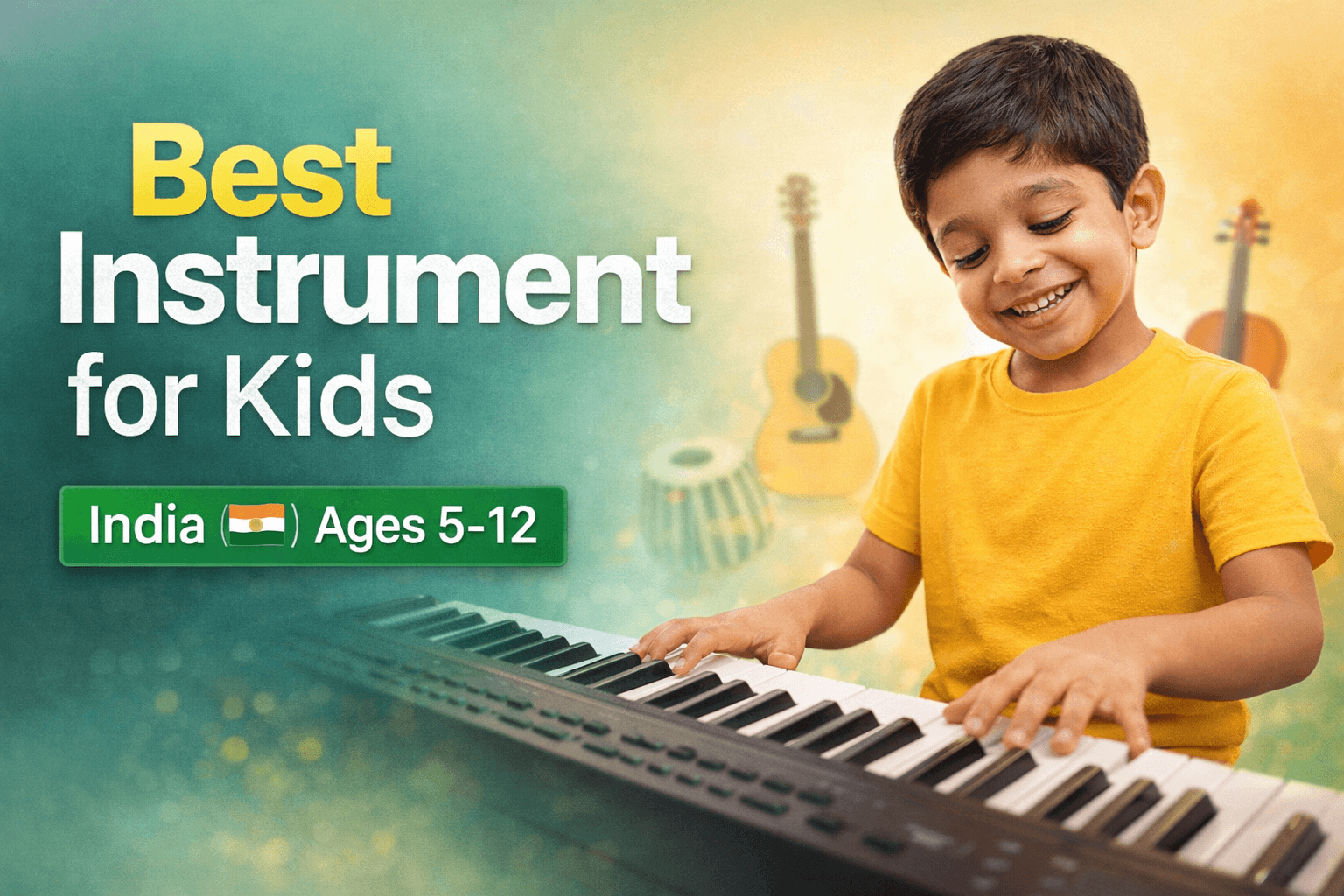
Music has always been a bridge between creativity and discipline, especially for children. In India, a country with rich musical traditions, parents increasingly seek instruments that nurture both skill and imagination. Choosing the right instrument can shape a child’s cognitive growth, emotional intelligence, and social confidence. While options are abundant, understanding each instrument’s benefits, learning curve, and suitability for young learners helps families make informed decisions.
When kids start learning an instrument, the goal isn’t just to play notes but to build a lifelong connection with rhythm, melody, and expression. Early exposure to instruments enhances memory, improves listening skills, and instills a sense of discipline. By integrating structured learning, children also develop an appreciation for cultural heritage. Platforms like online piano classes provide curated guidance for children to explore instruments safely, making the learning journey both structured and enjoyable.
Piano and Keyboard – Building Musical Foundations
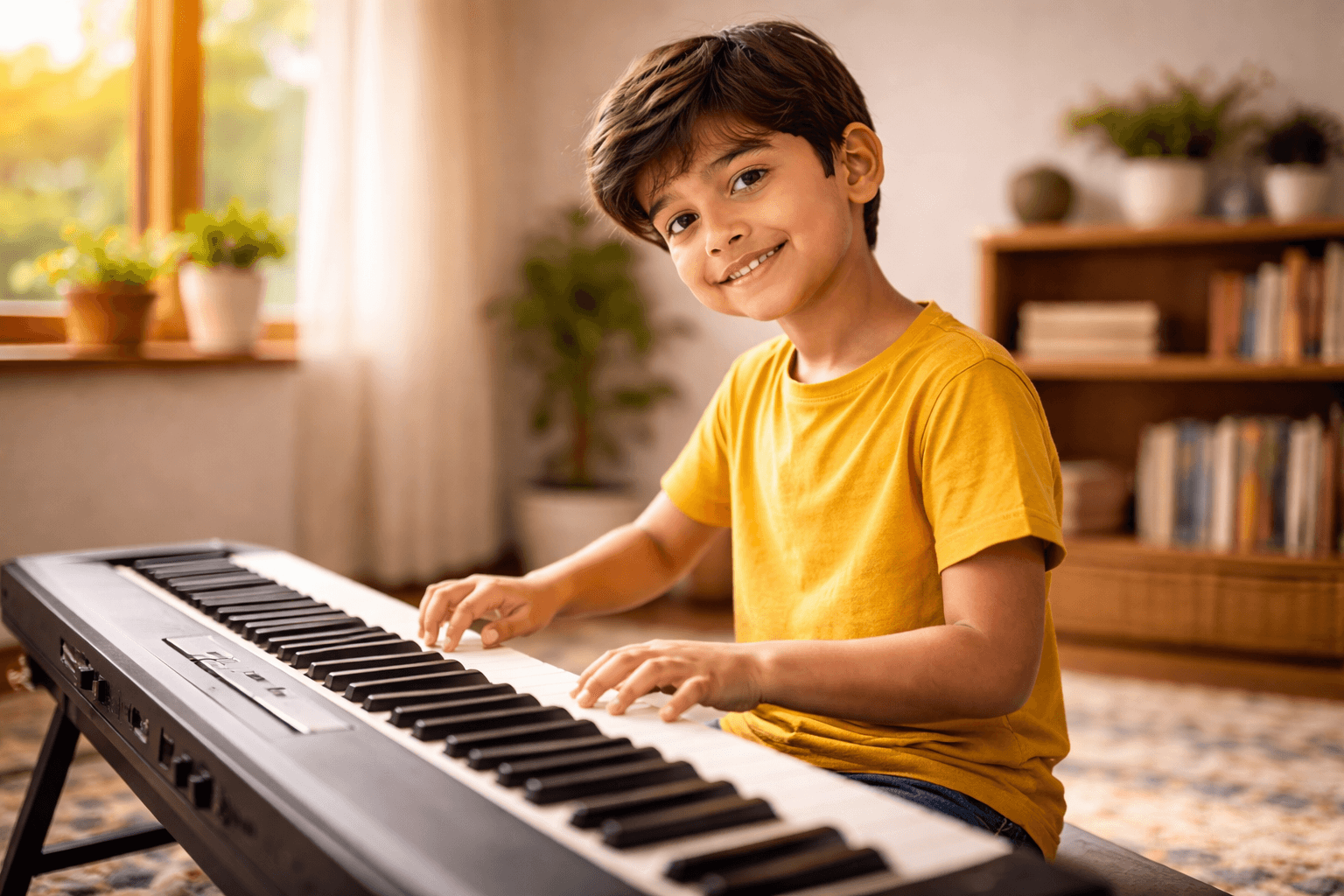
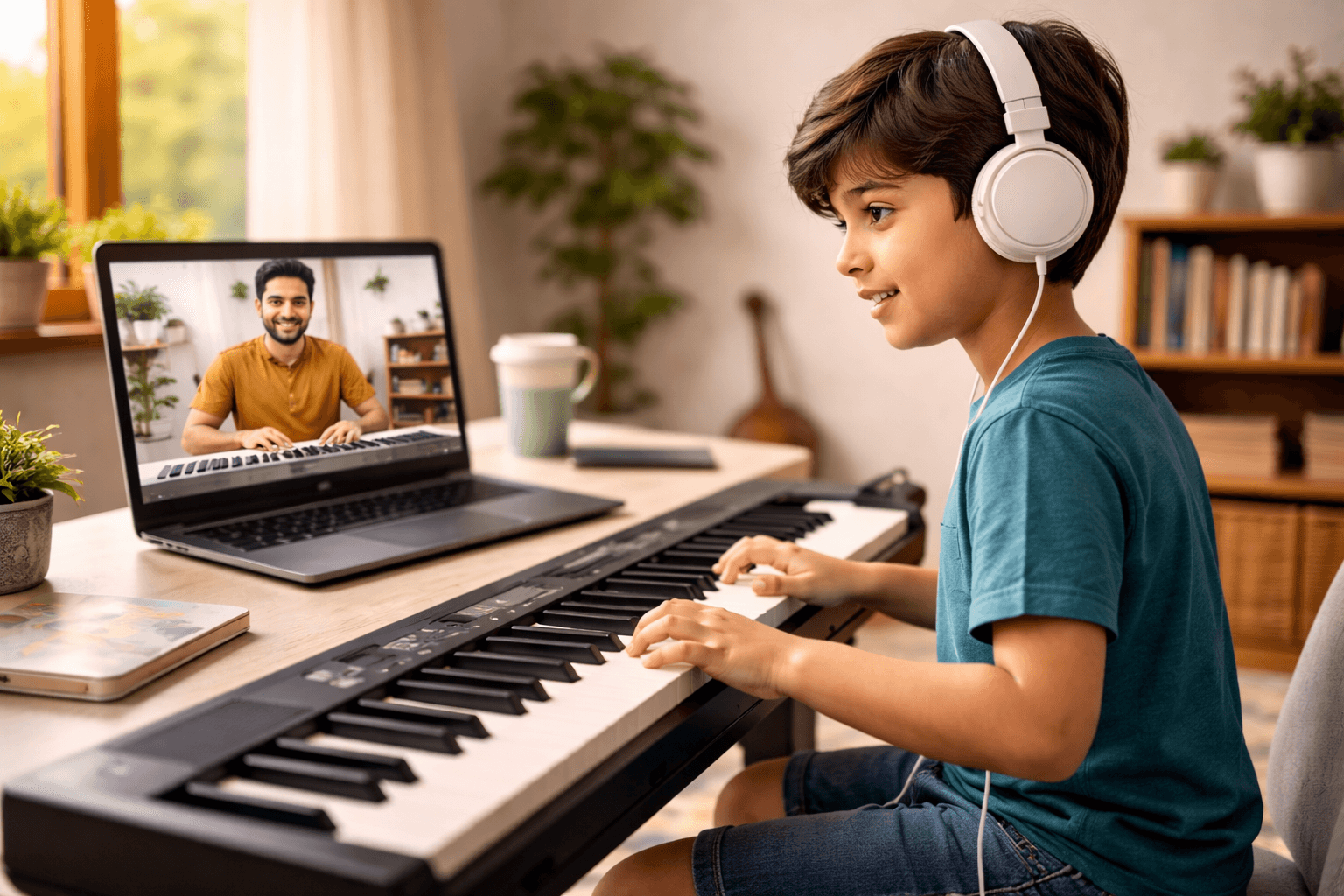 The piano or keyboard is often recommended for beginners because of its clear note layout and versatility. Each key produces a precise pitch, helping kids recognize notes visually and aurally. For Indian classical beginners, the piano offers an introduction to melody while supporting Western musical frameworks. Beyond technical skill, piano practice improves finger dexterity and hand-eye coordination, crucial skills for any budding musician.
A keyboard’s built-in sounds and rhythms make learning more engaging for children. Modern keyboards often include features like tempo control, digital metronomes, and accompaniment tracks, which motivate kids to practice regularly. Parents looking for online guidance can explore online guitar classes for complementary training, as learning multiple instruments fosters versatility and musical creativity. Keyboards are excellent for blending classical lessons with contemporary tunes, giving children a well-rounded musical experience.
Guitar – Creativity and Versatility in One
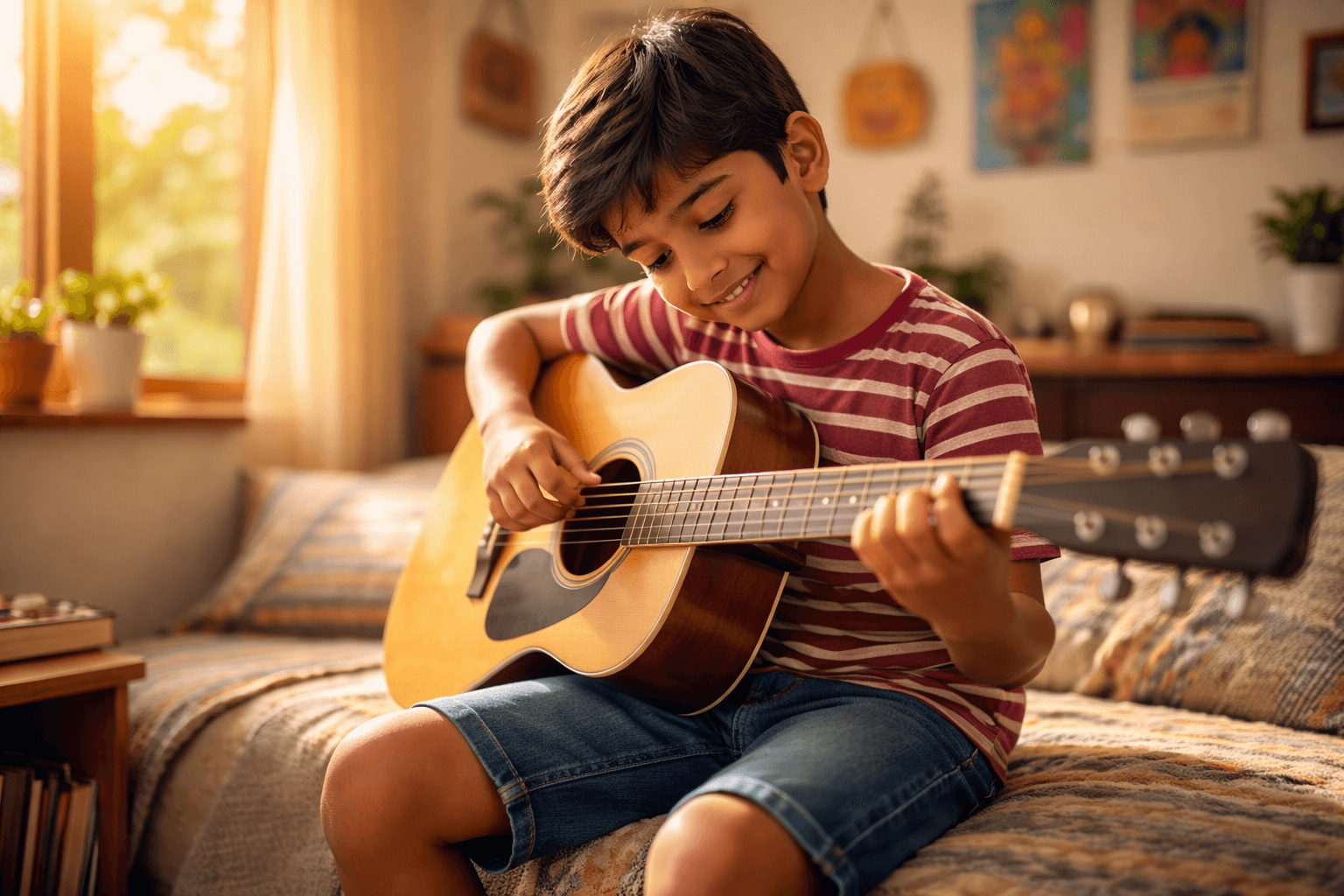 The guitar is one of the most versatile instruments for children in India. It supports multiple genres, from classical to popular music, and is portable for performances. Kids can start with basic chords and scales before moving to complex fingerpicking patterns. Learning the guitar also strengthens fine motor skills, hand coordination, and auditory recognition, making it an ideal choice for early learners.
Acoustic guitars encourage melodic improvisation, while electric guitars provide a contemporary appeal, especially for older children exploring pop and fusion. Parents interested in structured guidance can check online guitar classes to support practice sessions. Guitar lessons also build performance confidence, as children often play in groups, enhancing collaboration and stage presence.
Tabla – The Heartbeat of Rhythm
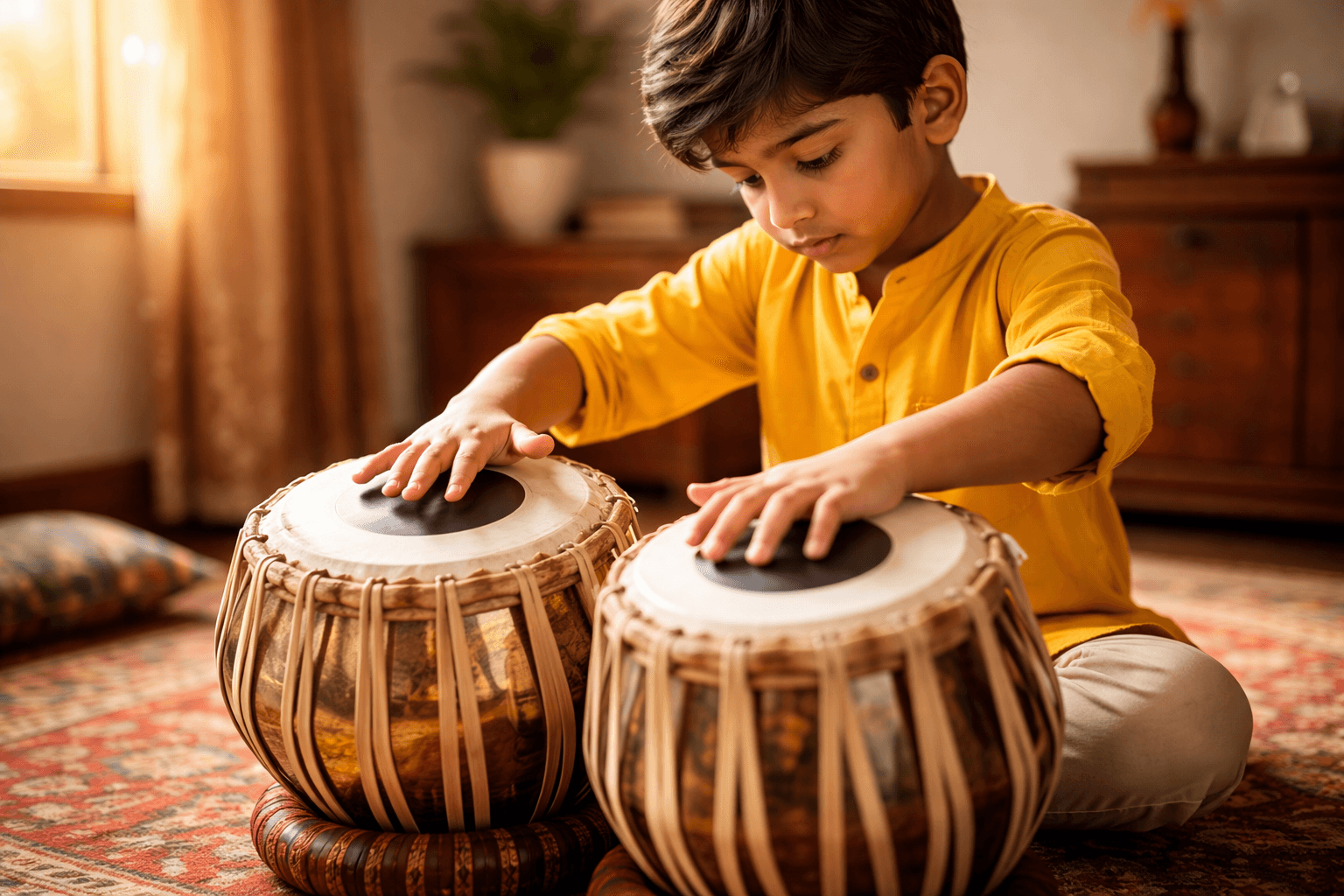 Percussion instruments like the tabla introduce children to the fundamentals of rhythm and timing. Indian classical music relies heavily on tala, and learning the tabla helps children internalize complex rhythmic cycles. The act of striking different drum surfaces trains coordination between hands, while improvisation exercises develop cognitive flexibility and creative thinking.
Tabla practice also strengthens listening skills. Students learn to accompany melodic instruments, understanding when to emphasize beats and when to soften the sound. For structured instruction, parents can refer to online tabla classes, which offer lessons tailored to children, including exercises for hand positioning, rhythm patterns, and stage performance techniques.
Flute – Expressing Emotion Through Breath
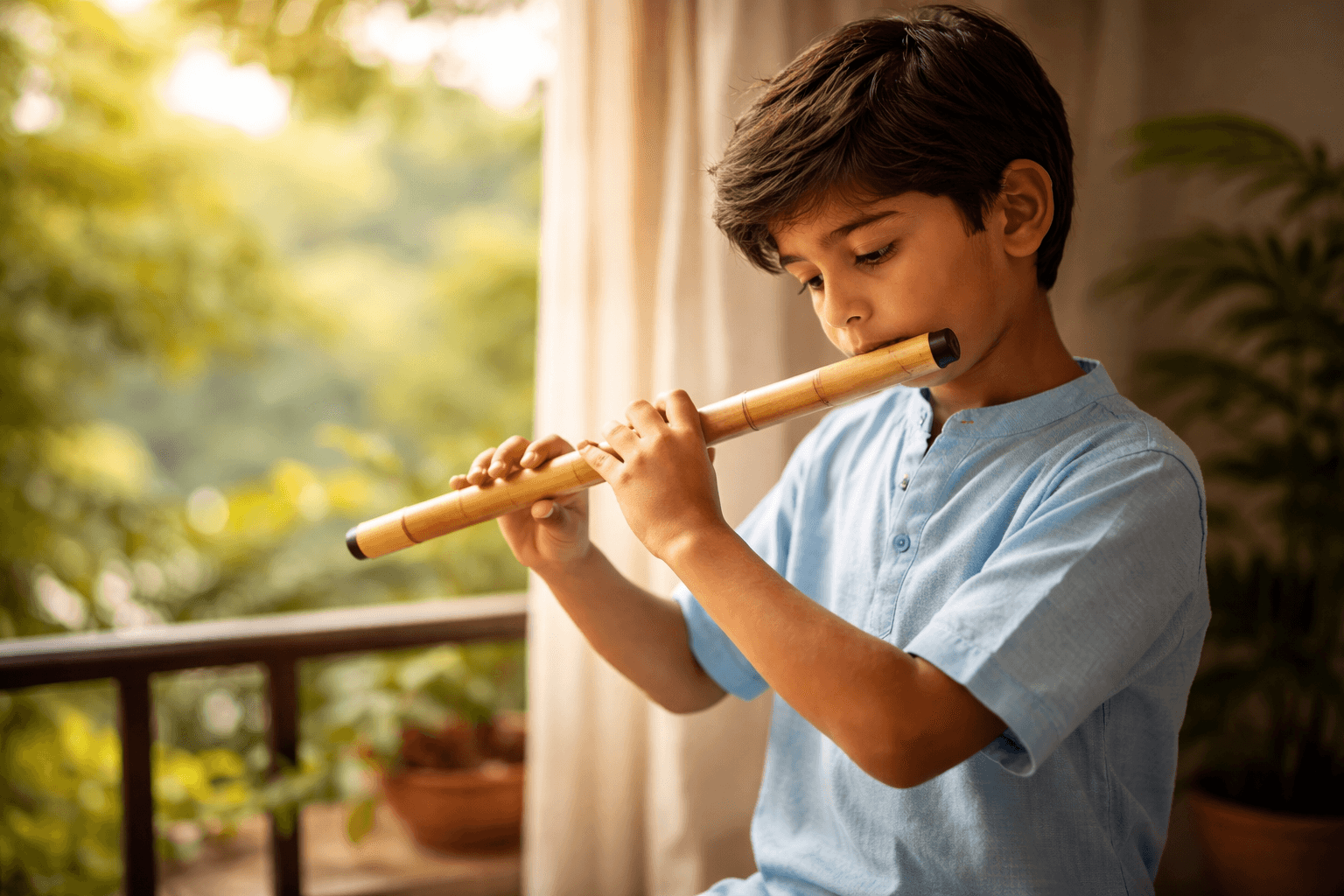 The flute, a wind instrument, teaches children control over breath, tone, and phrasing. In Indian classical music, the flute’s melodic range makes it suitable for both Hindustani and Carnatic traditions. Practicing the flute develops lung capacity, breath awareness, and sustained concentration. Children also learn to translate emotion directly into sound, a skill vital for expressive performance.
Learning the flute early instills discipline and focus. Children engage in exercises that improve embouchure, fingering technique, and melodic ornamentation. Parents seeking expert guidance can explore online flute classes, which provide interactive lessons and exercises designed specifically for young learners. The flute’s portability and calming tone make it a favorite for stage performances and group music sessions.
Violin – Harmonizing Precision and Expression
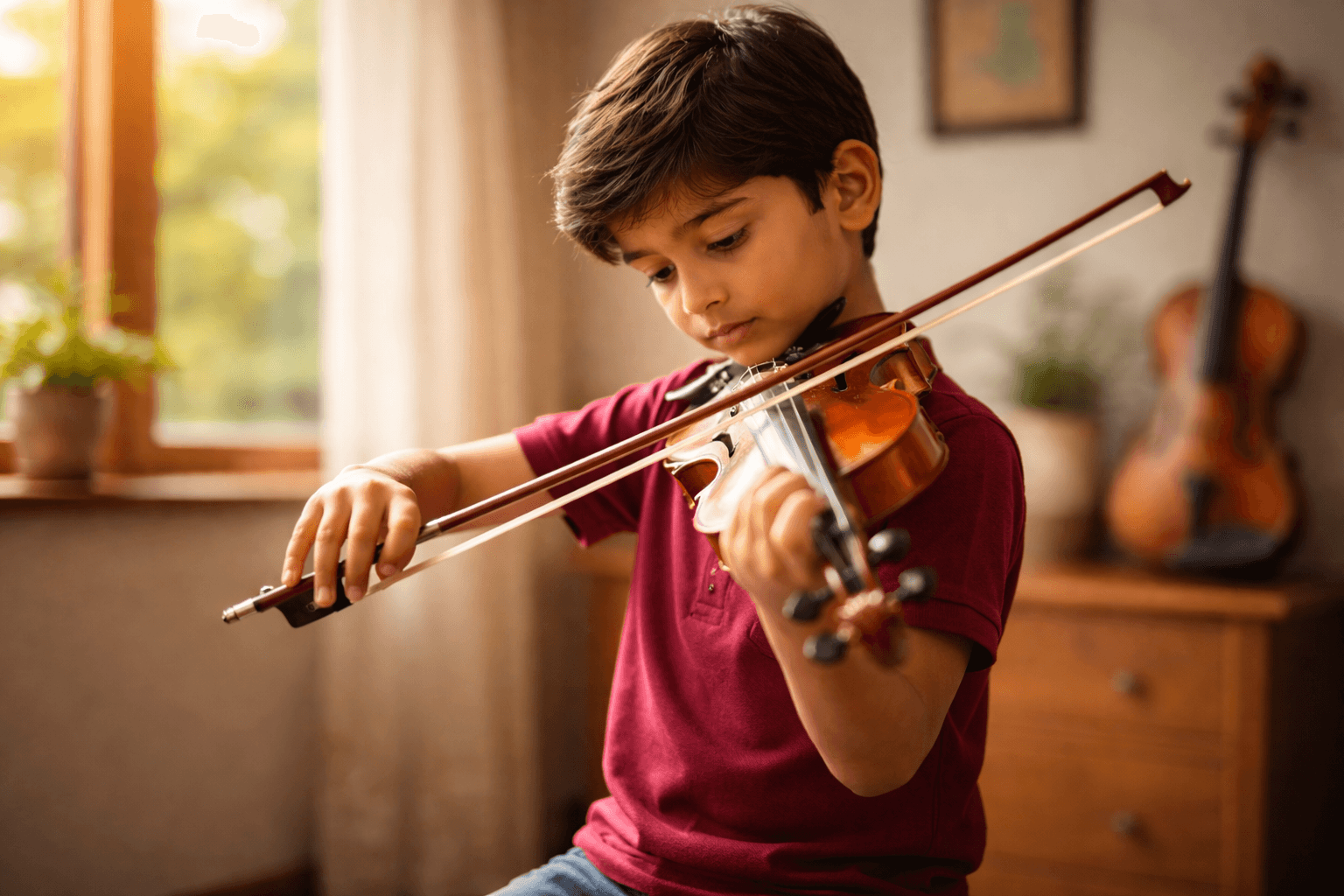 The violin is an excellent instrument for children interested in string music. It teaches precision, finger agility, and ear training. In both Carnatic and Hindustani classical music, the violin serves as both a solo and accompanying instrument. Practicing violin requires patience, as children develop the coordination needed to bow and finger simultaneously, refining their musical ear with each session.
Structured training through platforms like online violin classes provides step-by-step exercises for posture, tuning, and raga practice. Violin lessons also encourage expressive phrasing, enabling children to communicate emotions through subtle variations in tone, volume, and tempo. Over time, this strengthens both technical skill and artistic sensitivity.
Ukulele – Fun and Accessible Learning
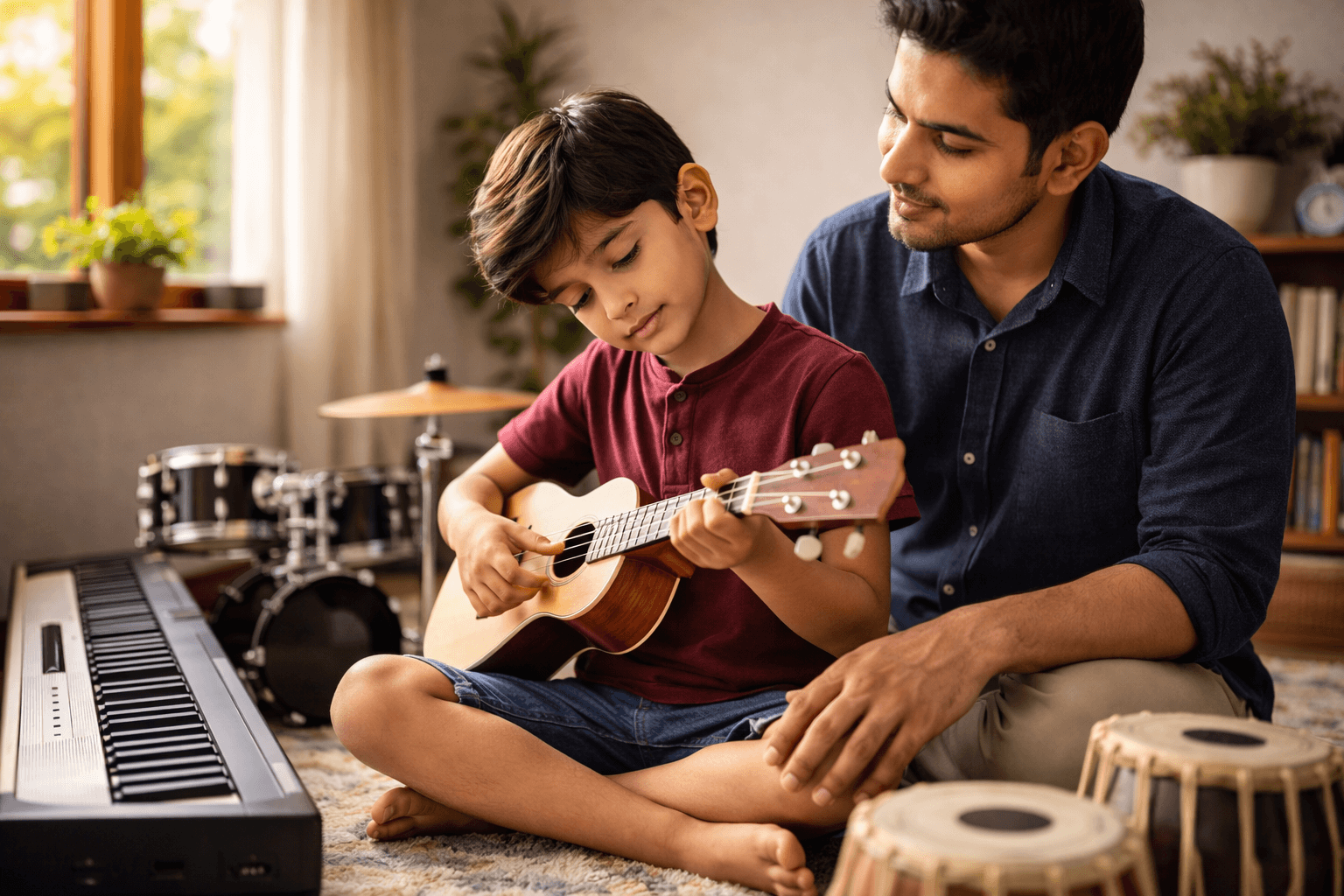 The ukulele has gained popularity as a beginner-friendly string instrument. Its lightweight body and soft strings make it easy for children to hold and play. The ukulele’s small size allows kids to focus on learning chords, strumming techniques, and melodic patterns without physical strain.
Ukulele lessons foster creativity and group interaction. Kids often play simple songs, which helps them practice rhythm, pitch, and harmony. Parents can use resources like online ukulele classes for guided lessons, song tutorials, and exercises tailored to young learners. The instrument’s cheerful sound encourages children to explore musical ideas confidently.
Drums – Energizing Rhythm and Coordination
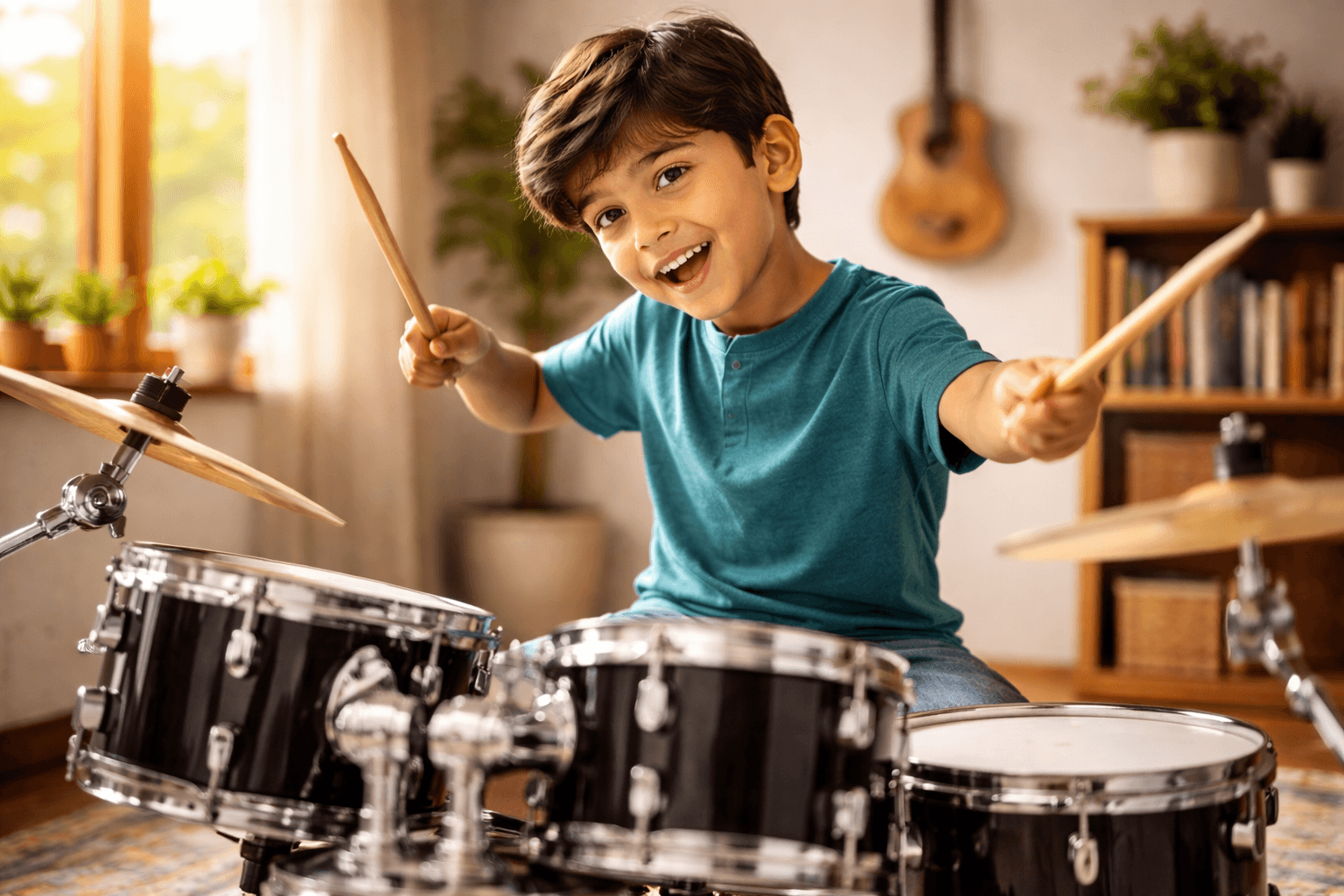 Drums provide children with a tactile and energetic introduction to rhythm. Playing drums develops hand-eye coordination, reflexes, and multitasking abilities. In Indian music, percussion plays a critical role in maintaining tempo and enhancing emotional expression. Early exposure to drums teaches kids how to feel the pulse of music intuitively.
Drum lessons encourage discipline, as students must control dynamics, timing, and complexity simultaneously. Online resources like online drums classes offer structured lessons with exercises on basic beats, rhythm cycles, and ensemble performance. Drums also enhance social skills when children perform in groups, building confidence and teamwork.
Combining Multiple Instruments for Holistic Growth
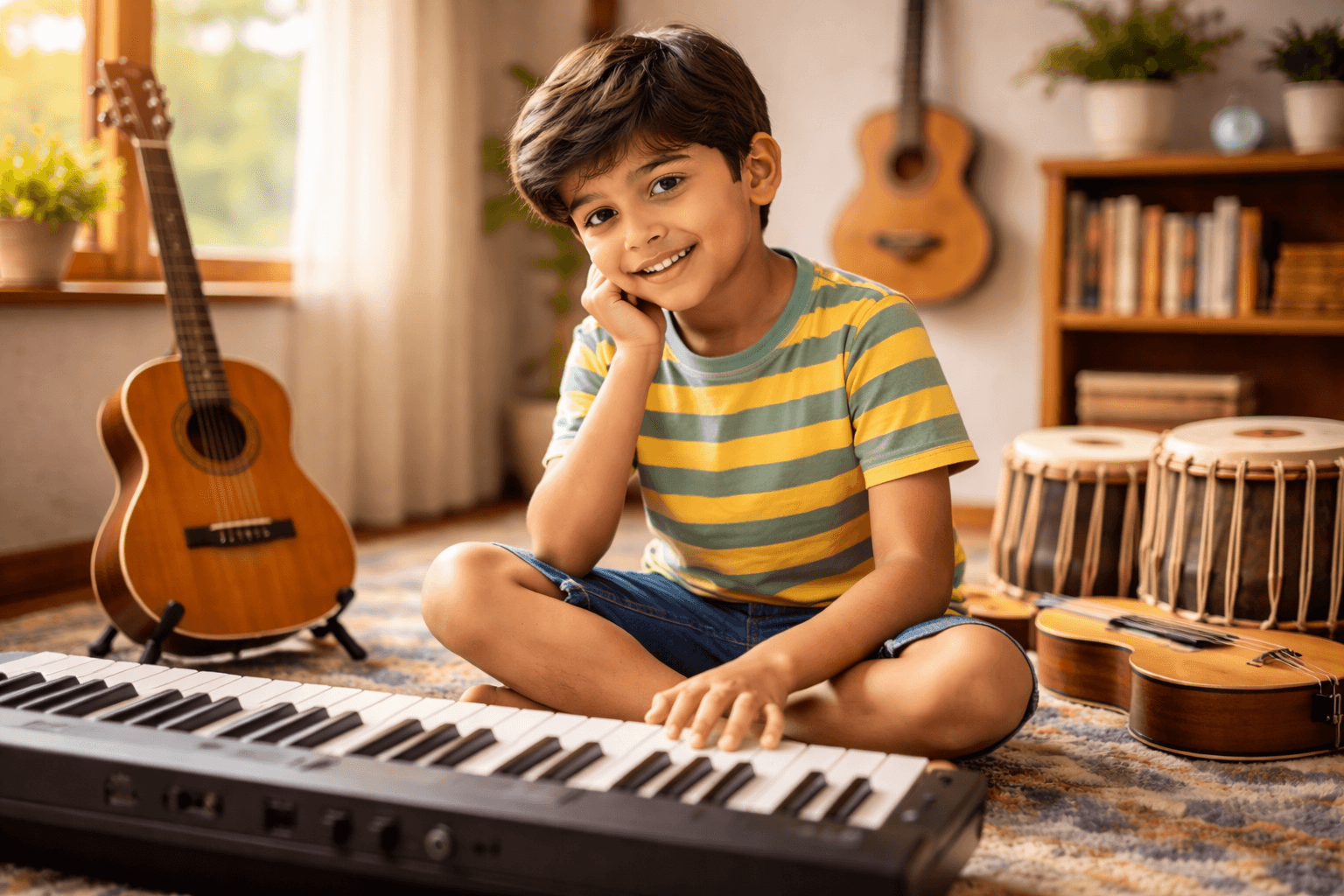 Children often benefit from learning more than one instrument. For example, piano or keyboard combined with drums or tabla develops melodic and rhythmic understanding simultaneously. Multi-instrument learning enhances creativity, improves cognitive flexibility, and deepens appreciation for harmony and rhythm.
Group music sessions and ensemble practices further strengthen communication, listening, and performance skills. Exposure to different instruments also encourages children to develop their personal style and adapt to various musical contexts. Parents looking to integrate multiple instruments can schedule lessons across platforms like piano, guitar, tabla, and flute to ensure a balanced growth trajectory.
Choosing the Right Instrument Based on Child’s Personality
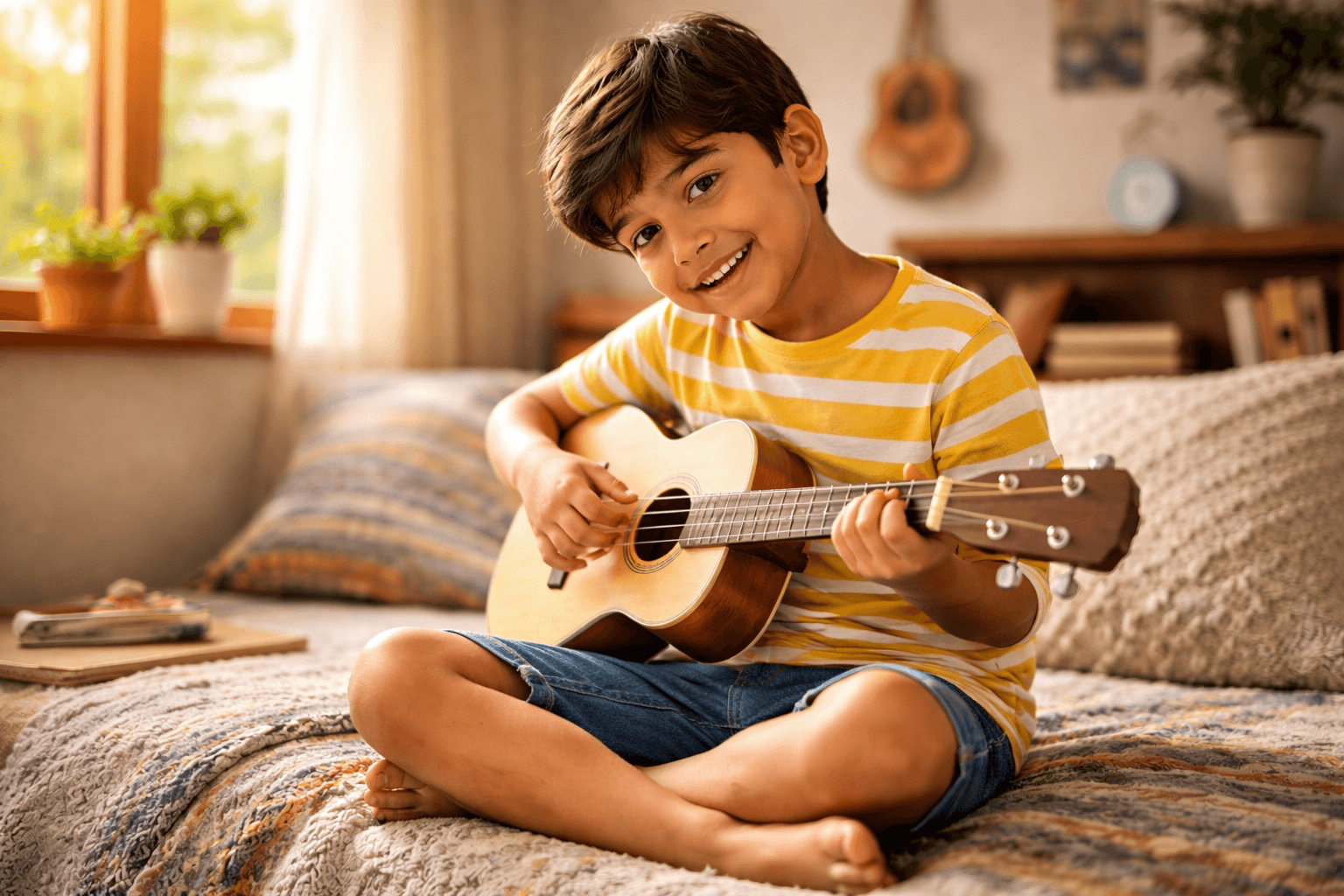 Selecting the right instrument involves understanding a child’s personality and preferences. Introverted children may thrive with the flute or violin, as these instruments emphasize expressive solo performance. Energetic or extroverted children often enjoy drums or keyboard, where physical engagement and improvisation are encouraged.
Parents should consider factors like the child’s age, hand size, and musical interest. Structured guidance from online piano classes or other digital platforms ensures the learning curve remains encouraging and achievable. Early exposure paired with consistent practice forms the foundation for long-term musical development.
Advantages of Learning Musical Instruments for Kids
Learning a musical instrument offers cognitive, emotional, and social benefits. It enhances memory, attention span, and analytical thinking. Music also reduces stress, improves emotional regulation, and boosts self-confidence. Children who participate in group music develop social awareness, teamwork, and leadership skills.
Practicing instruments such as piano, guitar, or tabla encourages persistence, goal-setting, and discipline. Stage performances, competitions, and online showcases help children build poise and public speaking confidence. Instruments provide a lifelong hobby that nurtures creativity, cultural understanding, and personal expression.
Online Music Classes for Accessible Learning
Digital platforms have revolutionized how children learn music in India. Online classes provide expert guidance, structured lessons, and flexible schedules. Parents can select instruments based on interest, and children receive personalized instruction with immediate feedback.
Platforms like online guitar classes or online violin classes allow students to access professional teachers from home. Online learning also enables recording, playback, and self-assessment, enhancing the learning process. Interactive exercises and group sessions maintain engagement, ensuring children stay motivated and consistent.
Cultural and Cognitive Benefits of Music for Kids
 Learning instruments rooted in Indian classical traditions exposes children to rich cultural heritage. It introduces ragas, talas, and improvisation practices, fostering an understanding of music history. Cognitive benefits include improved memory, spatial-temporal skills, and enhanced problem-solving abilities.
Music also nurtures emotional intelligence, empathy, and self-expression. Children learn to convey mood and emotion through melody and rhythm. Combined with modern instruments, classical training ensures kids develop both analytical and creative faculties, preparing them for diverse musical experiences.
Conclusion – Start Their Musical Journey Today
Choosing the best instrument for kids in India depends on personality, interest, and long-term goals. Pianos, guitars, tabla, flute, violin, ukulele, and drums each offer unique benefits, from rhythmic mastery to melodic expression. Early exposure nurtures creativity, confidence, and cognitive development.
Parents seeking structured guidance can explore online piano classes, online guitar classes, and other courses to give children the best start. With consistent practice and supportive teaching, children can develop a lifelong passion for music.
FAQs
1. Which instrument is best for kids in India to start with?
The piano or keyboard is ideal for beginners, while guitar, tabla, and flute provide complementary skills.
2. Can children learn multiple instruments simultaneously?
Yes, learning multiple instruments enhances creativity, cognitive skills, and rhythm understanding.
3. How do online classes help children learn instruments?
They offer structured guidance, flexible schedules, immediate feedback, and interactive exercises for better engagement.
4. Are drums suitable for young children?
Yes, they help develop rhythm, coordination, and team performance skills.
5. What factors should parents consider when choosing an instrument?
Child’s interest, personality, hand size, age, and willingness to practice consistently.