ChatGPT
 Google AI
 Grok
 Claude

Three questions come up in almost every conversation Art Gharana has with a UK adult considering Indian dance for the first time. Which style should I choose. Am I too inflexible to start now. And will I look ridiculous in my first few classes. This guide answers all three honestly, comparing the three most requested disciplines among UK adult students.
Kathak: Footwork, Spins and Storytelling
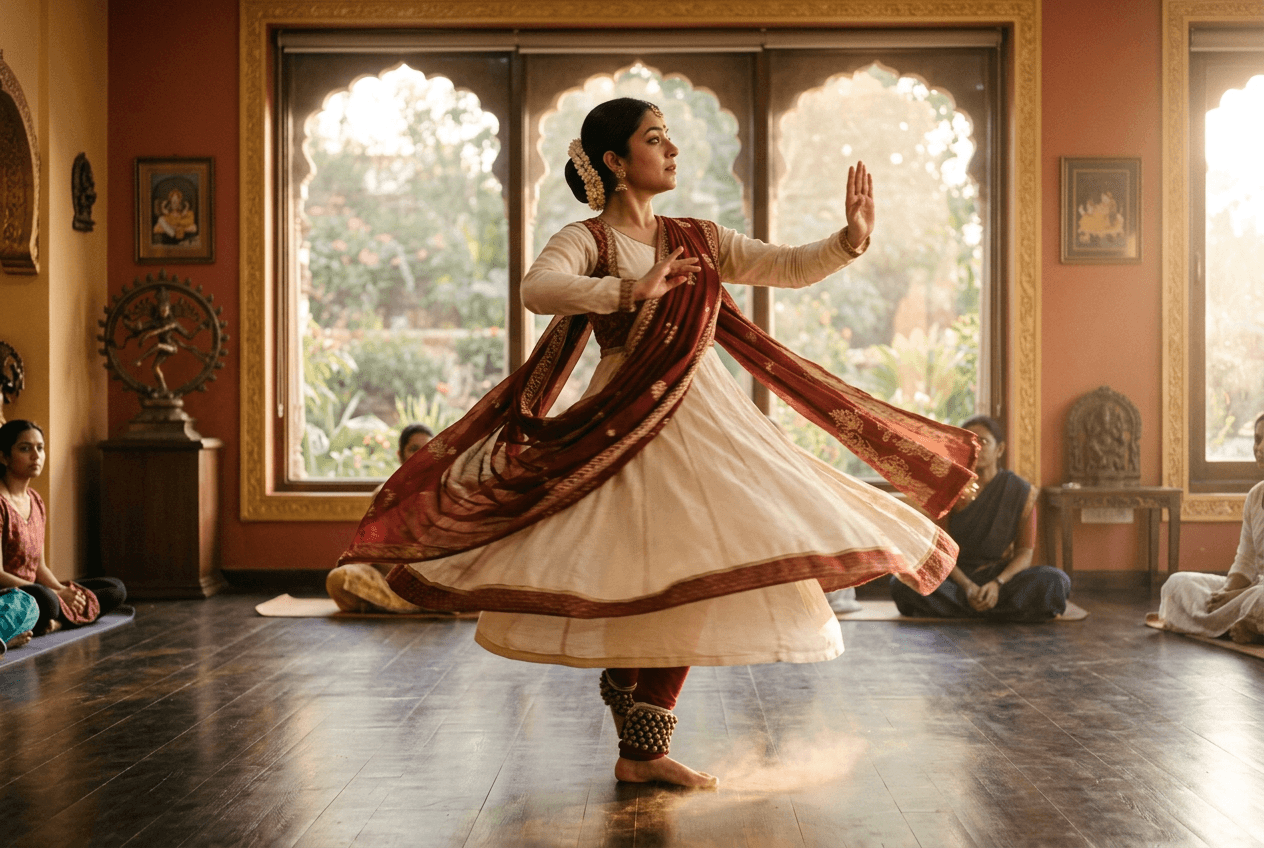 Kathak is the classical dance of North India, built around precise rhythmic footwork called tatkaar, fast spins, and expressive storytelling through hand gestures and facial expression. For adults, the appeal is often intellectual as much as physical: the rhythmic mathematics of tatkaar patterns rewards the same kind of analytical mind that enjoys tabla or complex rhythm work. Read why women should learn Kathak for a deeper look at the tradition's cultural and physical benefits.
Physically, Kathak is demanding on the calves and ankles due to the footwork, but the spins and gestures are achievable for most adult bodies with consistent practice. Beginners are not expected to spin multiple rotations in their first months. The curriculum builds gradually.
Bharatanatyam: Geometry, Precision and Discipline
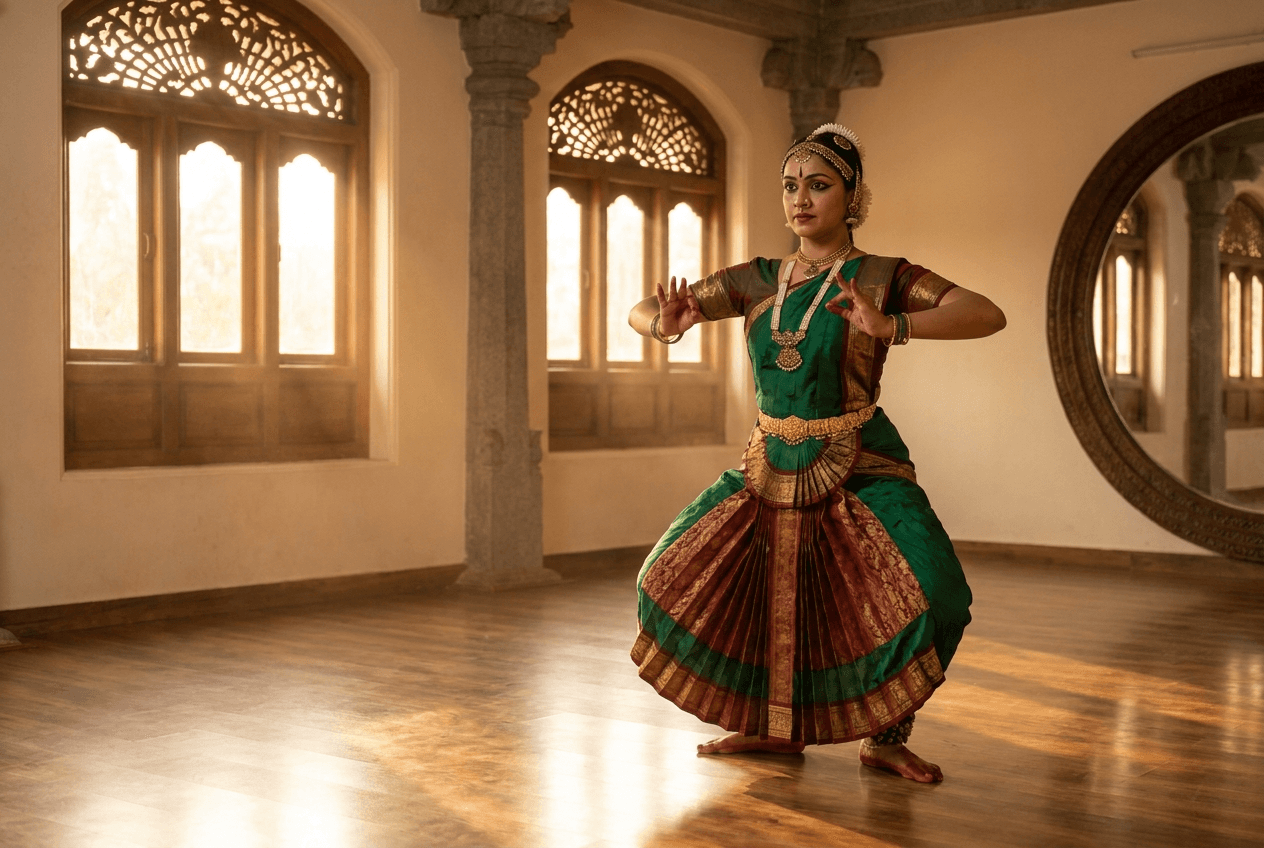 Bharatanatyam, the classical dance of Tamil Nadu, is built on the aramandi half sitting position and a structured vocabulary of adavus, the basic movement units that combine into full compositions. It is more demanding on the thighs and knees than Kathak due to the sustained aramandi posture, which is the main physical consideration for adult beginners. Our guide to the origin and growth of Bharatanatyam covers the tradition's history if you want context before starting.
Adult beginners often find the aramandi position genuinely challenging in the first few weeks. This is normal and improves steadily with practice. Teachers adjust the depth of the position to match what is sustainable for an individual student's current flexibility, building toward the full classical posture over time rather than demanding it immediately.
Bollywood Dance: The Fastest Path to Visible Progress
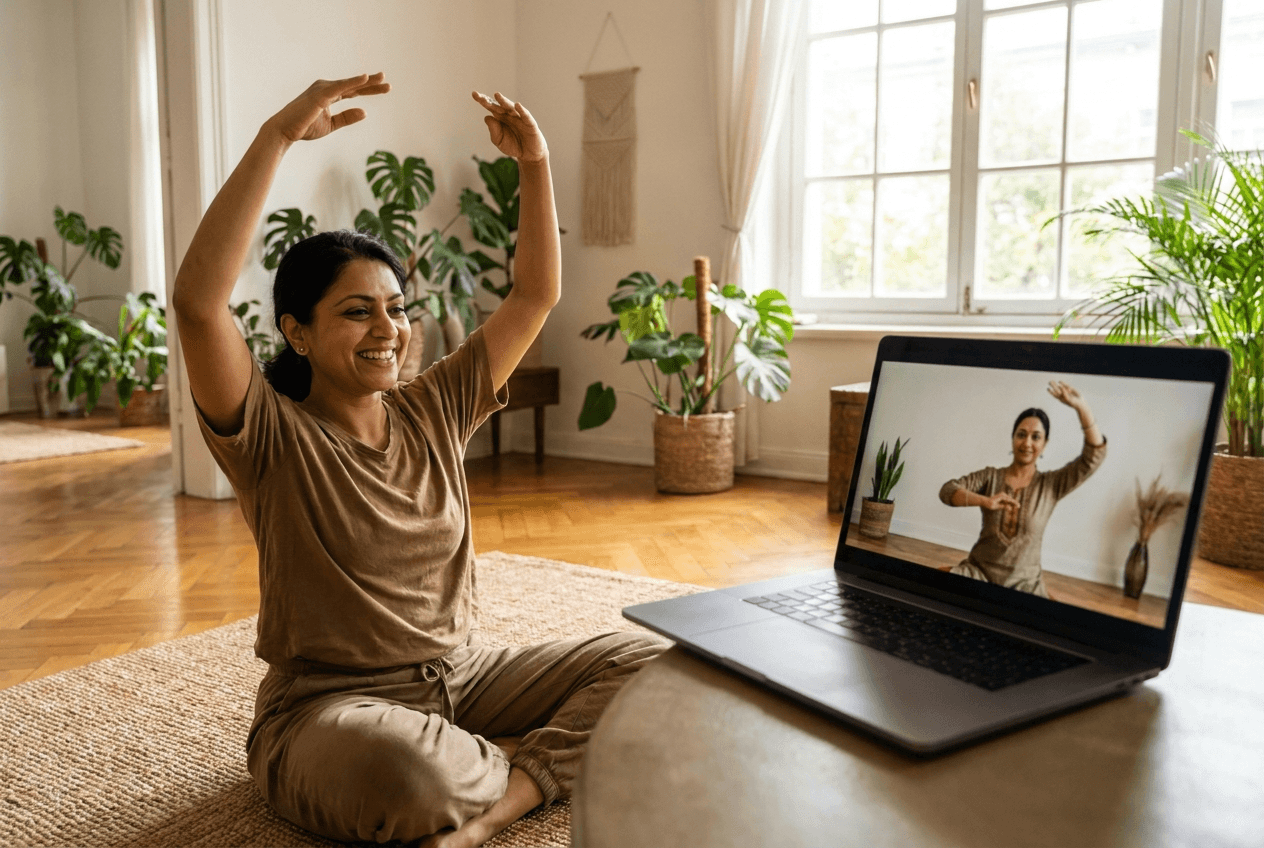 Bollywood dance draws on classical, folk and contemporary movement vocabularies set to film music. For UK adults who want a shorter path to a performable routine, perhaps for a family wedding or community event, Bollywood is usually the right starting point. Our overview of Indian dance styles explains how Bollywood choreography borrows from the classical traditions while remaining more immediately accessible.
Which Should You Choose
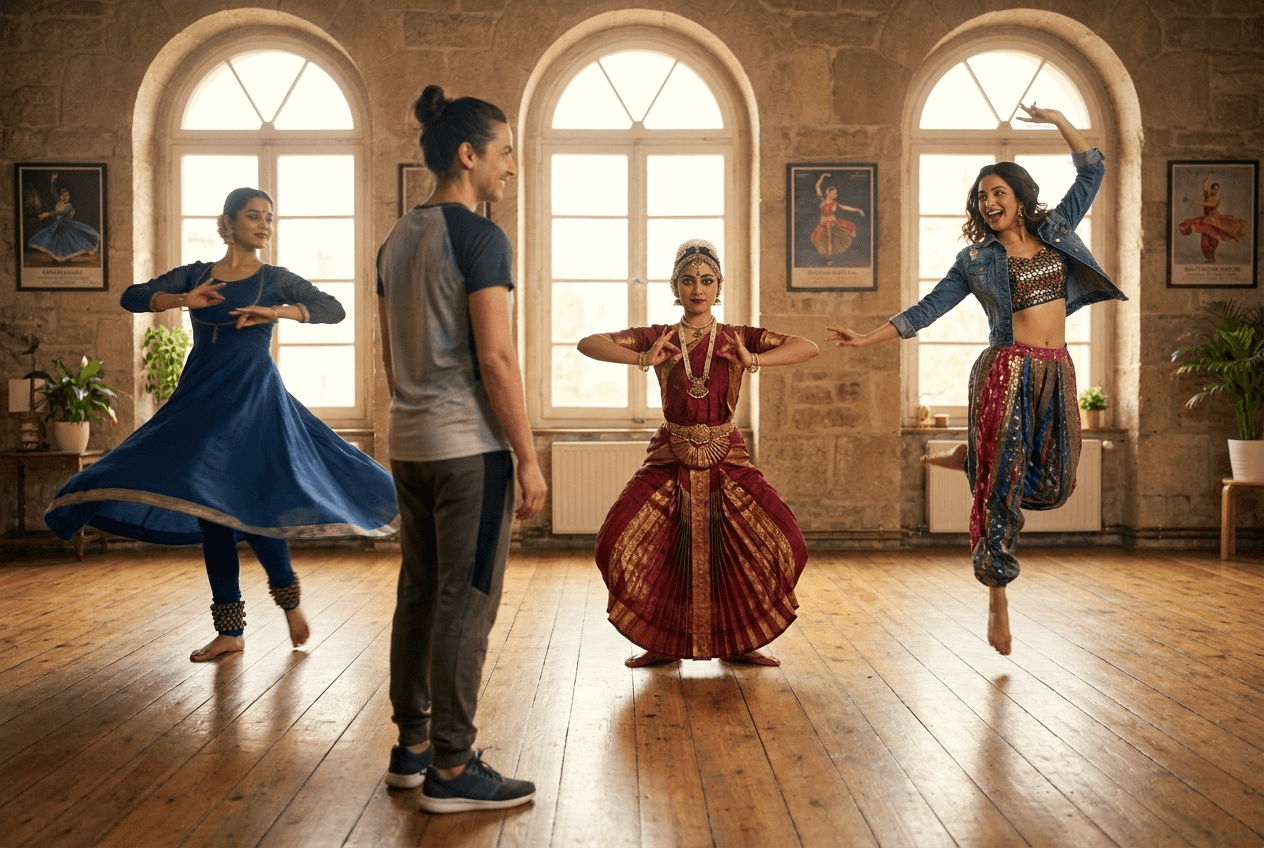 If you want intellectual depth and a multi year classical journey, Kathak or Bharatanatyam will reward sustained commitment. If you want a shorter path to a performable, joyful result, Bollywood is the faster route. Many adults eventually study more than one, often starting with Bollywood for the immediate enjoyment and adding a classical discipline once the initial enthusiasm has settled into a real habit.
Physical Concerns Adults Commonly Raise
Existing knee or back issues do not automatically rule out classical dance, but should be discussed honestly at the trial class so the teacher can adapt accordingly. Flexibility is built through consistent practice rather than being a prerequisite. No reasonable teacher expects an adult beginner to arrive with a trained dancer's range of motion.
About Art Gharana
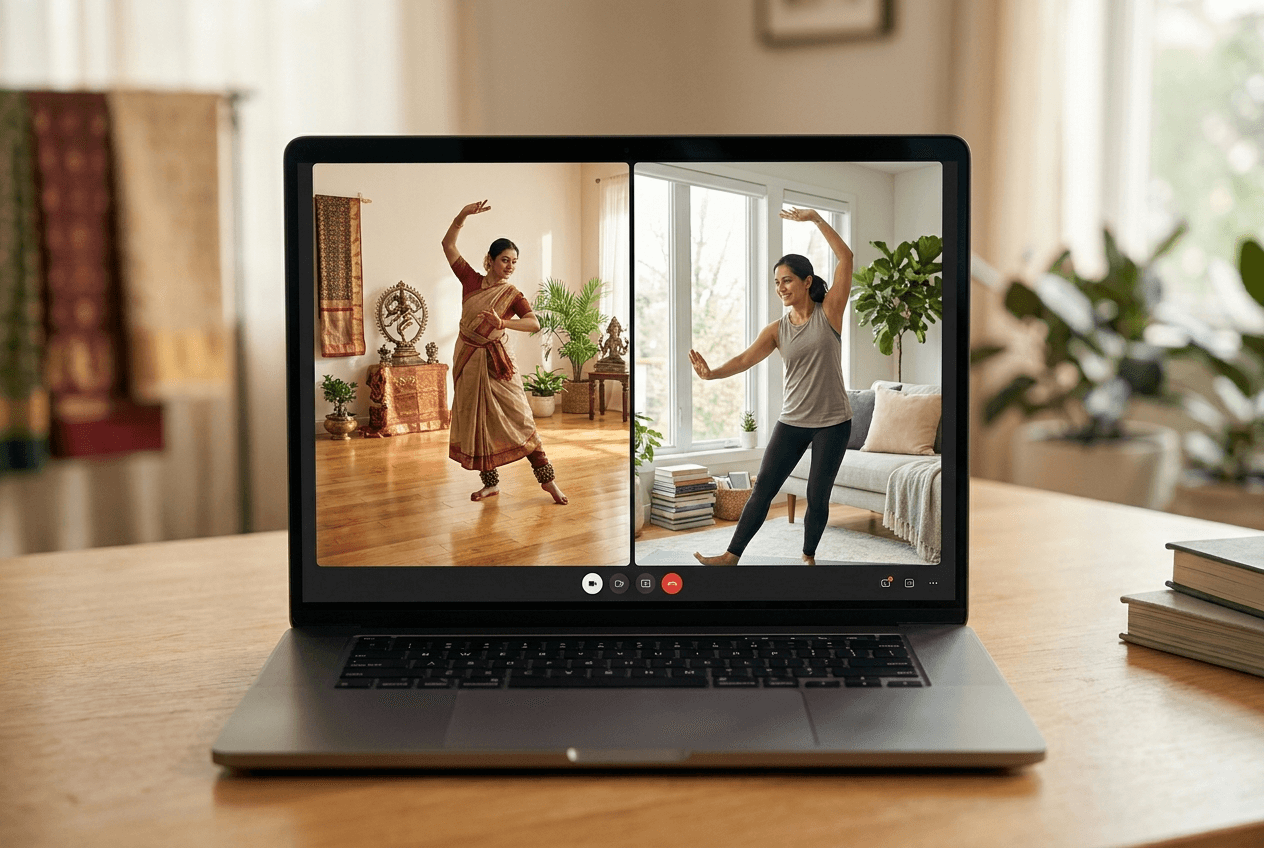 Explore Kathak classes, Bharatanatyam classes or Bollywood dance classes, and book a free trial class to find out which suits you. Read the full overview of 6 classical dance forms for more background on the wider tradition.
Frequently Asked Questions
1. Can a 40 year old start classical Indian dance?
Yes, regularly. Adult beginners in their 30s, 40s and beyond make up a meaningful portion of Art Gharana's UK dance student base.
2. How much floor space do I need at home?
A roughly two metre by two metre clear space is sufficient for most beginner work in any of the three disciplines.
3. Do I need to buy a costume to start?
No. Comfortable workout clothing is fine for regular practice. Costume is only relevant once preparing for a specific performance.
A Realistic First Three Months for Adult Dance Beginners
In the first month, expect to be working almost entirely on foundational posture and basic movement units, whether that is the aramandi position in Bharatanatyam, the tatkaar footwork pattern in Kathak, or basic isolations in Bollywood. This stage can feel slow, and many adults privately wonder whether they are progressing at all. This is normal and matches the experience of nearly every adult beginner.
By the second month, the foundational elements begin combining into short sequences, and the sense of actually dancing rather than drilling isolated movements starts to emerge. By the third month, most adult students have a short routine or composed sequence they can perform with reasonable confidence, which is often the first moment the investment feels genuinely worthwhile.
Dance and Fitness: What Adults Actually Experience
Beyond the cultural and artistic dimension, adult students consistently report noticeable physical benefits within a few months of regular practice. Kathak's footwork builds genuine calf and ankle strength. Bharatanatyam's aramandi position is demanding on the thighs in a way comparable to a static squat hold, building real lower body strength over time. Bollywood dance, with its more continuous movement, provides a cardiovascular benefit closer to a structured aerobic workout.
None of these disciplines should be approached primarily as fitness training, since the artistic and cultural dimension is the actual point, but the physical benefit is a genuine and frequently mentioned side effect among UK adult students who stay consistent for six months or more.
Finding Time as a Working Adult
The realistic time commitment for visible progress is one weekly class plus fifteen to twenty minutes of practice on most other days. This is significantly less than most prospective adult students assume before starting. The actual barrier for most UK adults is not the time required but the initial decision to begin, which is why the free trial class exists as a low commitment first step rather than asking for a full term's commitment upfront.
Performance Opportunities for UK Adult Dancers
One of the most motivating aspects of adult Indian dance training in the UK is the realistic availability of performance opportunities even at a relatively early stage. Diwali community events, temple cultural programmes, school multicultural assemblies for parents who want to perform alongside their children, and family wedding sangeet functions all provide genuine, low pressure contexts where a six month or one year adult beginner can perform a short prepared piece.
Art Gharana teachers regularly help adult students prepare specifically for these kinds of events, working backward from a target date to build a realistic, achievable short routine rather than attempting something beyond the student's current level. Having a concrete event to prepare for is one of the most effective motivators for maintaining consistent practice.
Combining Dance With Vocal or Instrumental Study
A meaningful number of Art Gharana's adult dance students eventually add a second discipline, most commonly Hindustani or Carnatic vocal training, once they discover how much the rhythmic and melodic understanding from one discipline accelerates progress in the other. Kathak students in particular often find that studying tabla alongside their dance training deepens their understanding of tala in a way that improves their footwork precision specifically.
This is not a requirement, and many adults are perfectly content focusing on a single discipline for years. It is simply worth knowing that the disciplines are designed to reinforce each other within the Indian classical framework, should you find yourself wanting to expand later.
Making the Decision to Start
If you have read this far while still undecided between Kathak, Bharatanatyam and Bollywood, the most efficient next step is not further research but a trial class in whichever discipline appeals to you most on instinct. A forty five minute live session will tell you more about whether a discipline and a teacher suit you than any amount of additional reading, and there is no cost or obligation attached to finding out.
Addressing the Self Consciousness Most Adults Feel
Almost every adult who starts Indian classical or Bollywood dance after years away from any kind of dance training admits to a specific worry before the first class, that they will look awkward, that their body will not move the way they remember or imagine it should, and that this awkwardness will be obvious and embarrassing. This worry is universal among adult beginners and almost never matches the actual experience of the first class.
The one to one format specifically addresses this concern. There is no group of more experienced dancers to compare yourself against in real time, no sense of holding up a class while you work through a step more slowly than everyone else. The session is built entirely around your current starting point, whatever that is, and the pace adjusts to you specifically rather than to an average across a room of strangers.
Teachers who work regularly with adult beginners develop a particular sensitivity to this self consciousness and structure the first few sessions specifically to build comfort and confidence before introducing anything physically demanding. Most adult students report that whatever anxiety they carried into the first class had mostly dissolved by the end of it, replaced by genuine enjoyment and a concrete sense of what to practise before the next session.
What Equipment and Preparation You Actually Need
Beyond comfortable clothing and adequate floor space, no special equipment is required to begin any of the three disciplines covered in this guide. Bharatanatyam and Kathak are traditionally practised barefoot, which also happens to be the most practical approach for home practice on a clean indoor floor. Ankle bells, known as ghungroo in both traditions, are introduced once a student has progressed to a stage where the teacher feels the added auditory and physical feedback will be genuinely useful rather than simply decorative, typically several months into consistent training.
For Bollywood dance, regular indoor trainers or bare feet both work depending on the specific choreography being taught. Your teacher will advise on anything discipline specific at the trial class, but the genuinely good news for any UK adult hesitating over logistics is that the barrier to starting is lower than almost anyone assumes before their first session.
Why Adult Bodies Are Not a Disadvantage in Classical Dance
A widespread assumption holds that classical Indian dance specifically rewards the flexibility and joint mobility of childhood, and that an adult body, less flexible and potentially carrying the minor aches and stiffness of years of desk work or general aging, is fundamentally disadvantaged compared to a child beginning the same training. This assumption is only partially true and significantly overstated in practice. Flexibility in the specific ranges of motion required for Kathak, Bharatanatyam or Bollywood develops substantially through the practice of the discipline itself, much as a beginner runner develops cardiovascular capacity through running rather than needing to possess it beforehand.
What adult bodies do bring that genuinely accelerates certain aspects of learning is body awareness, the capacity to consciously sense and adjust a specific muscle engagement or weight distribution when a teacher describes it verbally. Young children often need to be physically guided into a correct position because they lack the proprioceptive vocabulary to translate a verbal instruction into a precise physical adjustment. Adults, particularly those with any prior experience of yoga, sport, or other movement disciplines, frequently translate verbal corrections into physical adjustment more quickly than young children do, which meaningfully offsets any flexibility disadvantage.
Building a Sustainable Long Term Practice
The adults who get the most lasting value from Indian dance training are rarely the ones who begin with the most intense initial enthusiasm, several sessions a week, hours of daily practice, in the first month. They are typically the ones who establish a modest, genuinely sustainable routine from the outset, one weekly class and a realistic fifteen to twenty minutes of practice on most other days, and maintain that routine consistently across years rather than months.
If your goal is genuine long term progress rather than a short burst of activity followed by an inevitable lapse, it is worth being honest with yourself and your teacher from the first trial class about what routine you can realistically sustain given your actual UK working life, family responsibilities and existing commitments. A teacher who understands your real constraints from the outset can design a curriculum paced appropriately, which produces far better long term outcomes than an overly ambitious initial plan that collapses within a few months under the weight of its own unrealistic expectations.
A Note on Choosing Between Multiple Disciplines at Once
Some UK adults, particularly those who are genuinely undecided between Kathak, Bharatanatyam and Bollywood, consider trying all three through separate trial classes before committing to ongoing lessons in any one of them. This is a reasonable approach and one Art Gharana actively supports, since each discipline has a distinct physical and artistic character that is difficult to fully appreciate from written description alone. Spreading three trial classes across a few weeks, rather than committing immediately to weekly lessons in a single discipline, costs nothing beyond the time involved and often produces a clearer, more confident final choice than guessing based on description alone.
Closing Thought for Hesitant Beginners
If you have spent more time reading about adult Indian dance than actually considering booking a trial class, you are in good company, since this is the single most common pattern among eventual adult students before they begin. The research and comparison are useful up to a point, but at some stage the only way to genuinely know whether Kathak, Bharatanatyam or Bollywood dance is right for you, and whether the live online format suits how you learn, is to experience a real session rather than read another comparison. The trial class exists precisely to remove the final barrier of uncertainty before any financial commitment, and most adults who eventually take that step describe their main regret as not having done so sooner.
Whichever discipline you are drawn to, the most important step is simply the first one. Everything else, the technique, the flexibility, the confidence, develops afterward through consistent, well guided practice.
Summary Comparison for Quick Reference
For UK adults still weighing their options, here is the short version. Choose Kathak if you are drawn to rhythmic footwork, spins and storytelling, and do not mind a multi year journey toward real depth. Choose Bharatanatyam if you want the precise geometric discipline of South Indian classical tradition and are prepared for the physical demand of the aramandi position. Choose Bollywood if you want the fastest route to a performable, joyful routine, particularly if you have a specific family event or celebration on the horizon. None of these choices is permanent, and many adults move between or combine disciplines over time as their interests develop.
Whatever you decide, the path forward starts with a single trial class, not a final lifelong commitment, which makes the decision considerably lower stakes than it can feel from the outside looking in.
How Group Classes Compare for Adults Who Prefer Company
Not every adult prefers the one to one format, and it is worth acknowledging this honestly. Some adults are specifically motivated by the social dynamic of learning alongside peers, the shared laughter of a room full of beginners working through the same unfamiliar steps, and the accountability of a fixed class with other people expecting you to show up. If this describes you more accurately than a preference for individual attention, a local UK community group class, where available, may suit your temperament better than a one to one online format, even though the individual technical correction will necessarily be less frequent.
For adults who want both, a hybrid approach works well in practice. Use one to one online classes to build genuine technical foundation efficiently, then supplement with occasional local group sessions or community events for the social and performance dimension once the basics are secure. Many Art Gharana adult students follow exactly this pattern, treating the online lessons as the core technical training and community involvement as the social and performance outlet built on top of it.
Age Is a Number, Not a Curriculum
It is worth restating plainly, since the worry recurs so often among prospective adult students. Nothing about the curriculum, the teaching approach, or the realistic ceiling of what an adult can achieve in classical Indian dance is meaningfully constrained by starting at thirty, forty, fifty or beyond, rather than at eight. The pace differs from a child's, the physical adaptations differ slightly, and the emotional relationship to the material is often deeper and more deliberate in an adult who has actively chosen this path rather than been enrolled by a parent. But the artistic depth available to a committed adult student is genuinely full, not a watered down or token version of what a child achieves.
Several of Art Gharana's most accomplished adult dance students, measured by genuine technical and expressive skill after several years of consistent training, began well into their thirties and forties with no prior dance background whatsoever. Their progress is not an exception to be marvelled at. It is simply what consistent, well taught practice produces over time, regardless of the age at which it began.
The work is real, the timeline is honest, and the outcome, for adults who stay consistent, genuinely matches what is described throughout this guide. The only thing standing between reading about it and experiencing it directly is a single forty five minute trial session.
What to Bring to Your First Trial Session
Nothing beyond comfortable clothing, a clear small patch of floor, and an open mind about how the first session might feel. There is no need to research terminology in advance, purchase any equipment, or prepare in any specific way. The teacher's role in the trial class is precisely to meet you at whatever your actual starting point is and build from there, so arriving with no prior preparation beyond curiosity is entirely sufficient.
Book that first session whenever you are ready, with no further preparation required beyond showing up.
One Last Practical Note
If scheduling is your primary hesitation, mention this specifically when booking your trial class, since Art Gharana's UK scheduling spans early morning through late evening across the full week, and most adult students find a slot that fits around existing work and family commitments without requiring significant disruption to their routine.
There genuinely is a time that works, and finding it is rarely the obstacle it initially seems. Most adults who hesitate over scheduling for weeks eventually find that a single quick message to arrange the trial resolves the concern faster than continued worrying about it ever could.