ChatGPT
 Google AI
 Grok
Grok Claude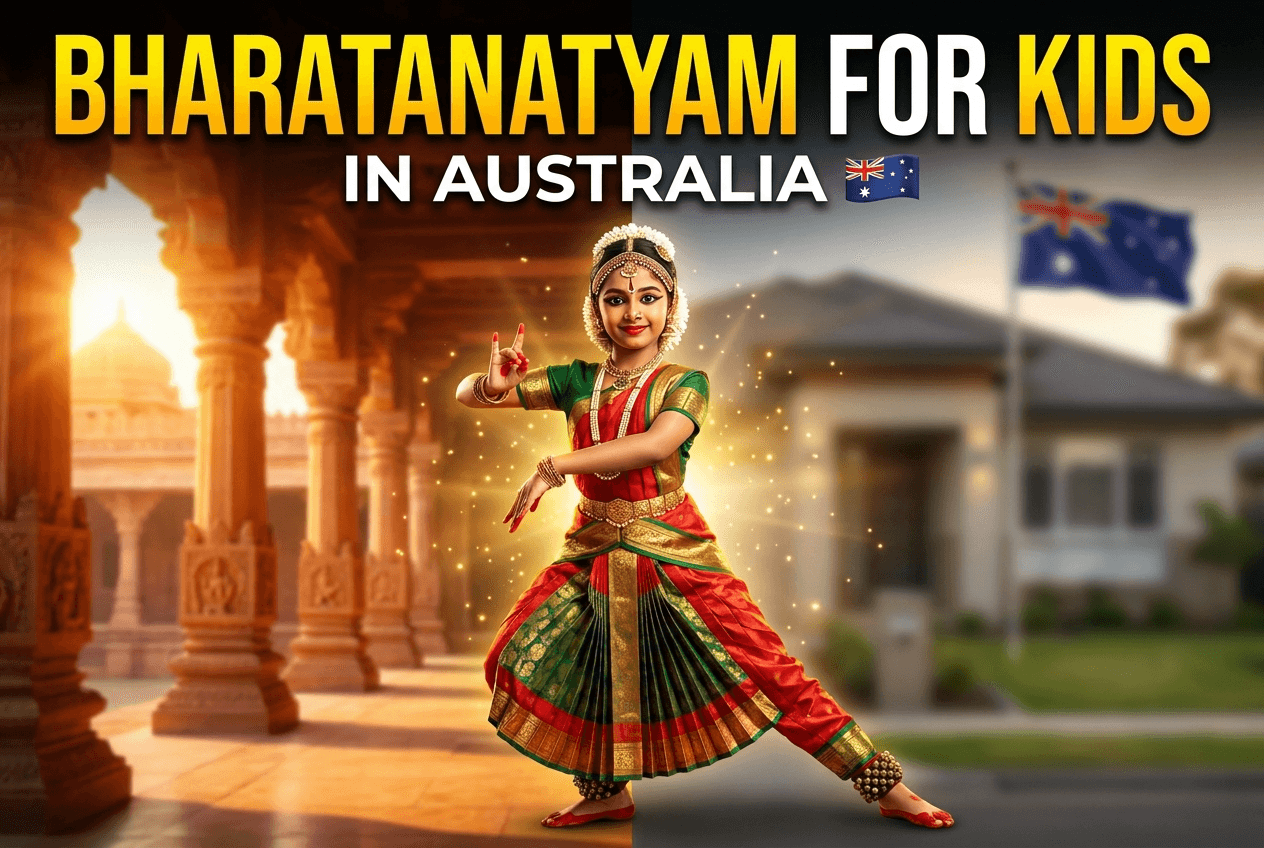
Indian-Australian families are enrolling their children in Bharatanatyam in growing numbers, and the reasons run deeper than cultural obligation or parental nostalgia. For children growing up in Australian schools where their cultural heritage is largely invisible in the curriculum, Bharatanatyam provides something genuinely rare: a space where being Indian is not just acceptable but is the entire point, where the depth of their heritage is expressed through one of the world's most ancient and sophisticated art forms, and where excellence is possible and celebrated.
This is your complete guide to Bharatanatyam for Indian-Australian children. It covers what the art form is at its core, why it is uniquely well-suited to diaspora children's developmental needs, how the learning journey unfolds year by year, what excellent online instruction looks like for Australian families, and how to get started from anywhere in Australia in 2026.
Bharatanatyam: India's Most Widely Practised Classical Dance Form
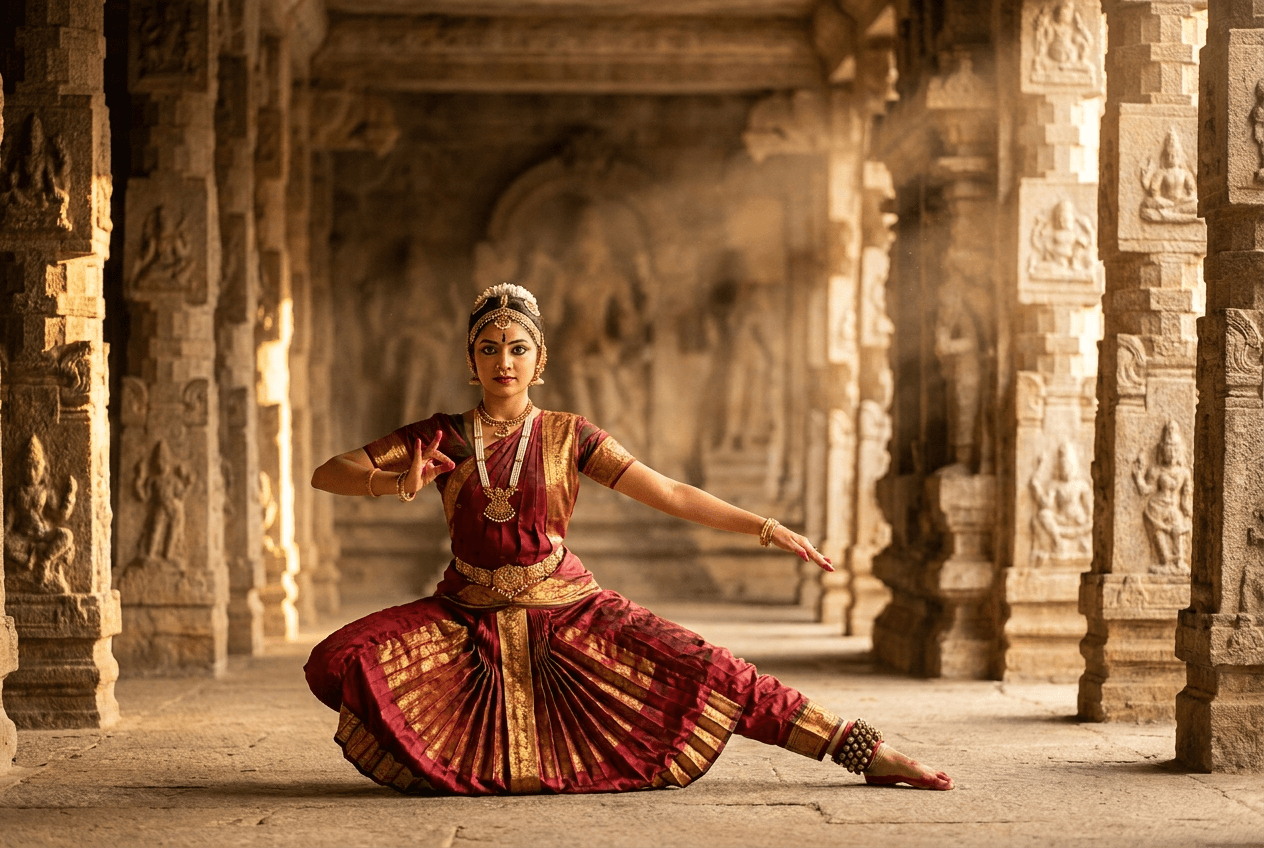 Bharatanatyam is India's oldest and most widely practised classical dance form, originating in the temples of Tamil Nadu in South India. According to the Centre for Cultural Resources and Training, India, the form has documented roots in the Natya Shastra, the ancient Sanskrit treatise on performance arts attributed to Bharata Muni and dated to approximately 200 BCE to 200 CE. Its transmission through temple Devadasis, its near-destruction during British colonial rule, and its extraordinary 20th-century revival through the work of Rukmini Devi Arundale is one of Indian cultural history's most remarkable stories.
The name Bharatanatyam encodes its own definition: Bha (Bhava - expression), Ra (Raga - melody), Ta (Tala - rhythm), and Natyam (dance). The form integrates all three dimensions simultaneously in every performance, making it one of the most complete artistic disciplines available to children.
Why Indian-Australian Families Specifically Choose Bharatanatyam
For South Indian-Australian families from Tamil Nadu, Karnataka, Andhra Pradesh, Telangana, and Kerala, Bharatanatyam represents the most direct cultural connection to their regional heritage. It is the dance form their grandparents watched at temples, the tradition that runs through their family's ceremonial and cultural life, and the art form most likely to be recognised and celebrated within Australia's South Indian community networks.
For non-South Indian families drawn to it by its beauty, accessibility, and the quality of online instruction available, Bharatanatyam offers one of the most complete arts educations available to children anywhere in the world. Its combination of physical discipline, narrative storytelling, musical understanding, and cultural depth is genuinely without parallel.
What Bharatanatyam Develops in Children
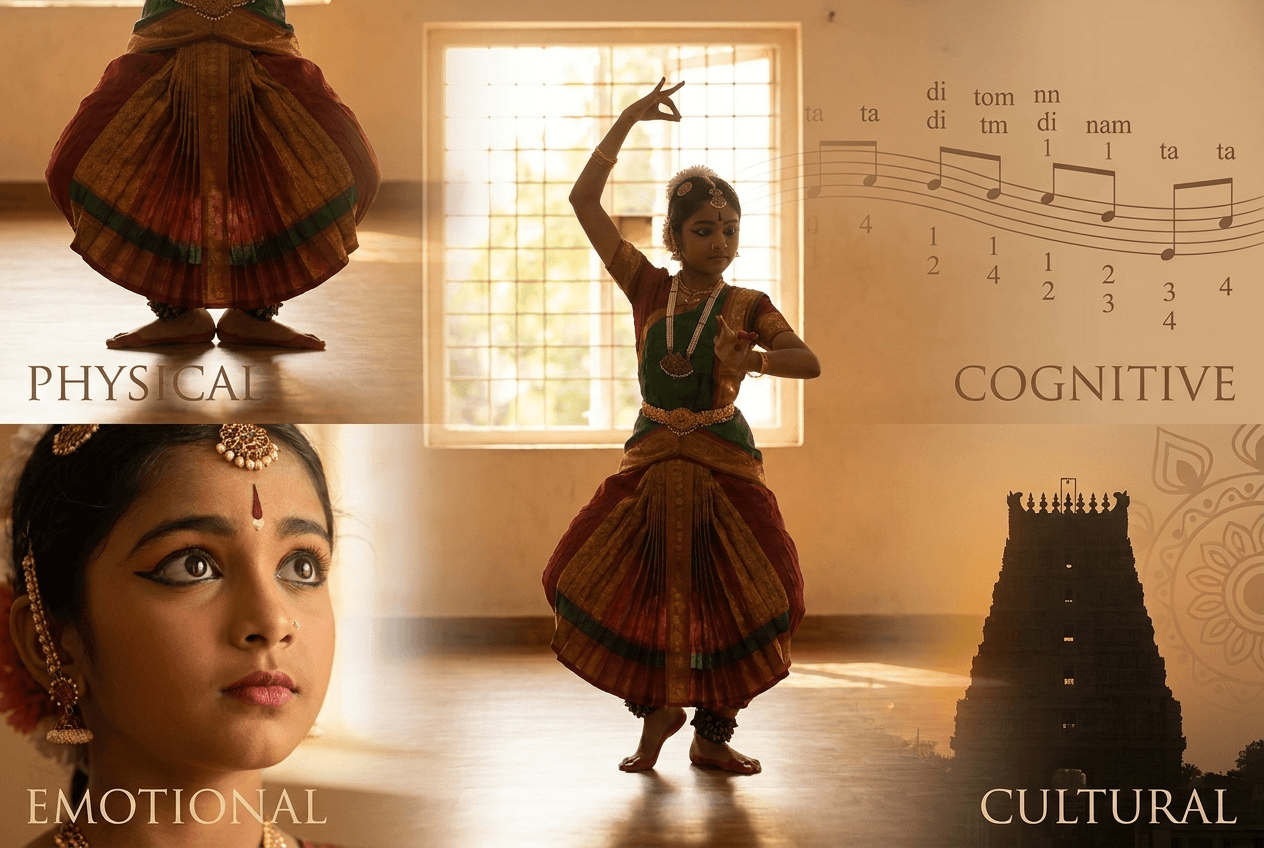 The developmental benefits of Bharatanatyam for children are well-established across physical, cognitive, cultural, and emotional domains. Understanding them helps Australian parents appreciate exactly what this investment provides.
Physical Development Through Aramandi and Adavus
Bharatanatyam's foundational posture, the aramandi - a half-squat with heels together and toes turned out - builds exceptional strength in the inner thighs, quadriceps, and lower back. Maintaining this posture while executing footwork patterns (adavus), coordinating arm movements, and controlling facial expressions simultaneously is one of the most physically demanding activities available to young children.
Research on structured dance training confirms that this type of physically demanding, movement-coordinated activity improves children's motor skill development, body coordination, and the coordination between movement and sound responses. For Australian parents considering dance as a physical activity, Bharatanatyam provides cardiovascular fitness, flexibility development, core strength, and balance training that many popular sports cannot match in completeness.
Cognitive Development Through Tala and Memory
The tala system of Bharatanatyam - the rhythmic cycle within which all footwork is performed - makes sophisticated mathematical demands on children. Tracking an 8-beat or 16-beat cycle while simultaneously executing footwork patterns, mudra sequences, and facial expressions requires genuine multi-tasking of cognitive systems in ways that build executive function, working memory, and attention.
A landmark longitudinal study published in Frontiers in Neuroscience found that structured performing arts training significantly improves children's short-term memory, planning, and inhibitory control. These are the precise cognitive functions that Bharatanatyam demands, and the improvements are not limited to dance contexts - they transfer directly into academic performance.
Cultural Identity for Indian-Australian Children
Research on diaspora cultural identity published in the International Social Science Journal demonstrates that active engagement with heritage cultural practices significantly strengthens ethnic identity in second-generation diaspora children. The key distinction is between active and passive cultural engagement. Watching Bharatanatyam is passive. Learning and performing it is active, and active cultural engagement produces categorically stronger cultural identity effects.
For Indian-Australian children who attend Australian schools, watch Australian television, and navigate largely Western cultural environments every day, Bharatanatyam is frequently their most powerful active connection to their Indian heritage. The child who can perform an alarippu at a cultural event or explain what mudras mean is not a cultural spectator. They are a cultural practitioner, and that distinction shapes their sense of cultural identity profoundly.
Performance Confidence That Transfers Everywhere
Bharatanatyam students perform from early in their training - first within class showings, then at community events, Diwali festivals, and eventually formal recitals. Each performance experience, successfully navigated, builds a specific kind of earned confidence: the knowledge that you can prepare for something genuinely hard, perform it publicly, and succeed. This confidence is not given - it is built through genuine accomplishment, and it transfers into academic performance, social confidence, and professional settings throughout life.
The Bharatanatyam Learning Journey for Australian Children
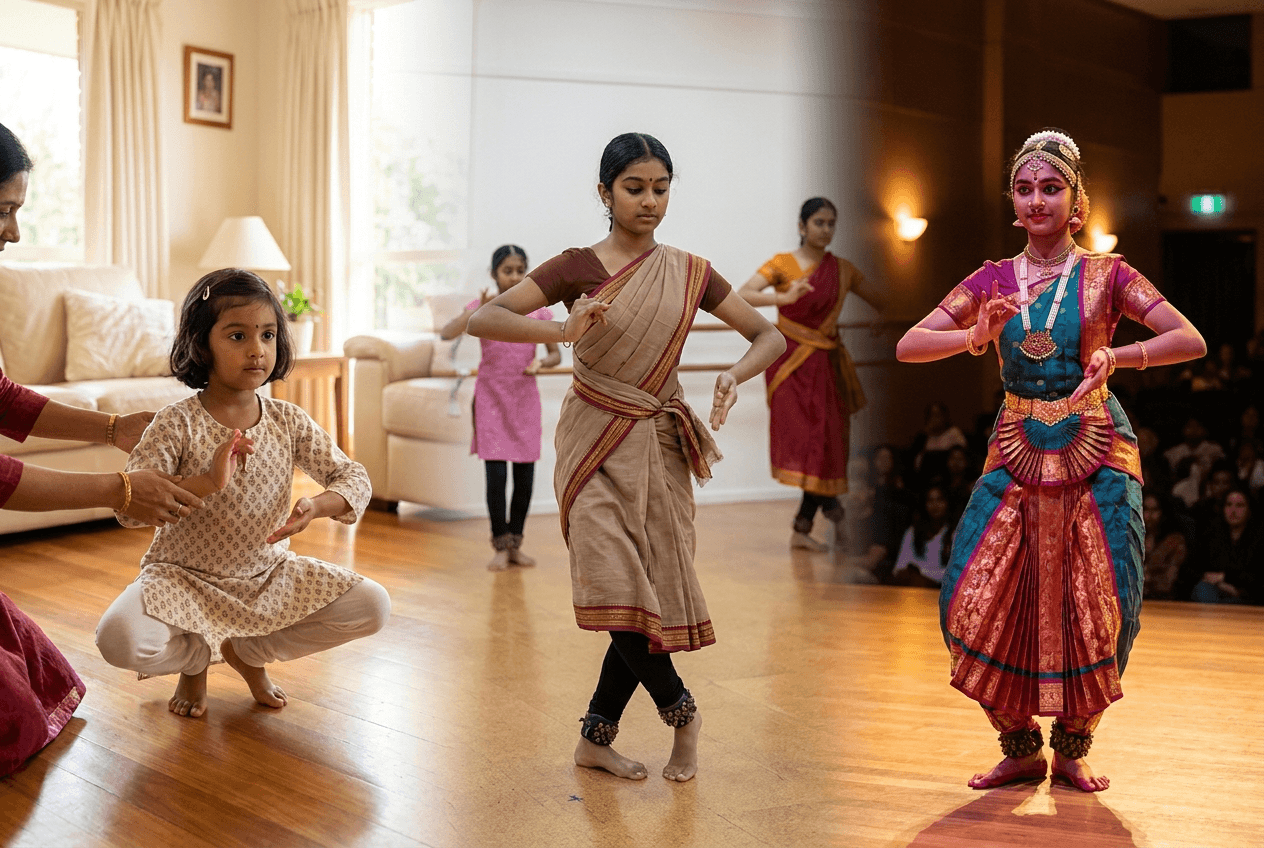 Understanding what a child actually learns year by year helps Australian parents engage with the process intelligently and set appropriate expectations.
Year One: Foundation Postures and First Adavus
The first year of Bharatanatyam is spent almost entirely on physical and rhythmic foundations. Two elements receive most attention.
Establishing Aramandi
The aramandi posture requires specific muscular development that most children do not have when they start. The teacher introduces it gradually - first as a brief hold, then extended progressively as the muscles develop. Within four to six weeks of regular practice, most children find aramandi increasingly natural. By the end of three months, it begins to feel like a stable, comfortable home position rather than a challenge. The physical development happening during this stage is genuine and significant.
Tatta Adavu - The First Footwork Sequence
The tatta adavu is Bharatanatyam's first adavu family. "Tatta" means "stamp" in Tamil, and this adavu involves specific rhythmic stamping patterns in aramandi position. The teacher introduces each pattern with its jathi (rhythmic syllables), practised first at slow tempo, then medium, then fast. Learning tatta adavu builds fundamental foot-to-beat coordination, introduces the student to tala practice, and establishes the physical stamping quality that gives Bharatanatyam its characteristic rhythmic power.
Years Two and Three: Expanding Technical Vocabulary
Multiple Adavu Families
As tatta adavu becomes confident, new adavu families are introduced progressively. Natta adavu (involving a stretched heel movement), visharu adavu (spreading movements), and several others each contribute new physical qualities and rhythmic patterns to the student's vocabulary. According to Raaga School of Music, there are more than 60 traditionally taught adavus in Bharatanatyam grouped into different categories. Students typically cover 6-10 major adavu families in their first two years.
Hasta Mudras and Abhinaya Introduction
Alongside footwork development, students learn the hasta mudra (hand gesture) vocabulary drawn from the Abhinaya Darpana. The 28 asamyukta hastas (single-hand gestures) and 24 samyukta hastas (double-hand gestures) form the expressive language of Bharatanatyam. Learning their shapes and meanings begins in year two, building the vocabulary that abhinaya (expressive storytelling) will later use.
Alarippu - The First Complete Composition
The alarippu is an invocatory composition that opens all Bharatanatyam performances, systematically warming up the body from head to foot. Learning a complete alarippu is a significant milestone - the student can now perform a complete, structured piece from beginning to end. This achievement is typically reached between 12 and 18 months of consistent training.
Years Four Through Seven: Building Toward Arangetram
Jatiswaram and Swarajati
These intermediate compositions deepen the student's integration of technical dance (nritta) with melodic material (nritya). The jatiswaram connects specific musical notes (swaras) with specific adavu sequences, developing the student's ability to feel and respond to the musical structure rather than simply executing pre-learned patterns.
The Varnam
The varnam is the centrepiece of Bharatanatyam, the defining achievement of intermediate training. It combines pure dance sequences, expressive passages, and improvised abhinaya in a complete musical-dance journey that can last 30-45 minutes in concert. Learning a full varnam typically takes one to two years of focused work and represents genuine artistic maturity.
Toward Arangetram
The arangetram - the graduation solo performance - is the culmination of 7-10 years of dedicated training. It typically involves an evening-length programme of 2-3 hours covering the complete margam from Alarippu through Thillana. In Australia's Indian classical arts community, arangetrams are celebrated cultural events attended by family, community, and the teacher's broader student network.
How Online Bharatanatyam Works for Australian Children
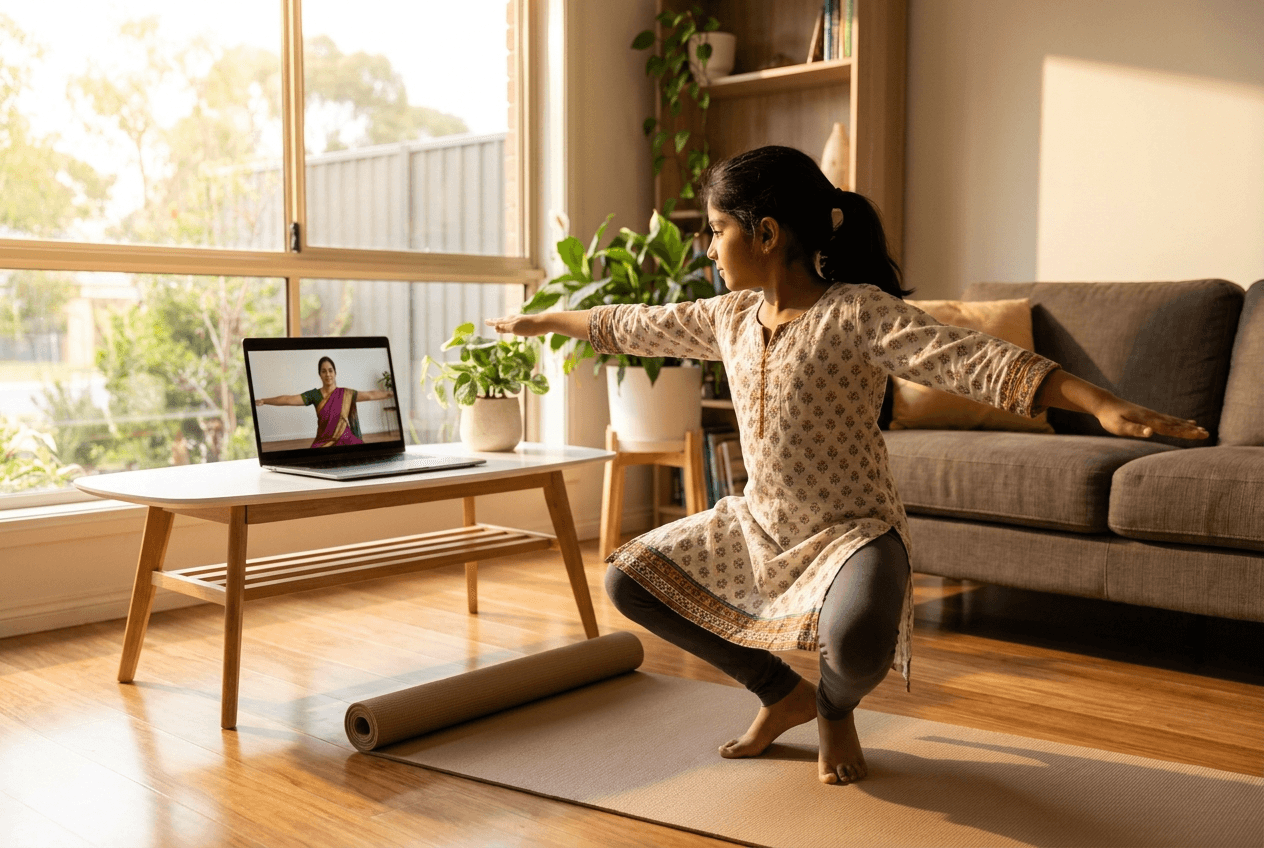 The online format has been demonstrably effective for Bharatanatyam instruction, and understanding why helps Australian parents approach it with appropriate confidence rather than unnecessary reservation.
What the Camera Can See and What It Cannot
A properly positioned camera at full-body height, showing the complete figure from head to feet in good lighting, allows a Bharatanatyam teacher to observe everything they need to observe:
Aramandi quality (depth, knee position, spine alignment), foot placement and stamping technique, arm positions and hasta mudra shapes, facial expression and eye movements, overall body line and the characteristic Bharatanatyam spatial geometry, and the connection between the student's movement and the tala cycle.
The teacher cannot physically guide the student's limbs into position or use touch to indicate correct alignment. This is a genuine limitation for very specific corrections that require physical guidance. Experienced online Bharatanatyam teachers compensate with precise verbal cueing, frequent demonstrations, and encouraging students to self-record their practice for review.
Setting Up for Online Bharatanatyam in Australian Homes
Floor Space
Clear a minimum area of 8 feet by 6 feet. Hard flooring - timber, tiles, vinyl, or polished concrete - is strongly preferred. Carpet significantly muffles footwork sounds and reduces the proprioceptive feedback that helps students feel correct foot placement.
If your practice space is carpeted, a large hardwood-finish vinyl mat placed over the carpet (available from Bunnings or online flooring retailers for $50-$120 AUD) provides an appropriate practice surface. This single addition dramatically improves the online lesson experience.
Camera Height
Position your camera at approximately knee height, angled slightly upward to capture the complete figure. This angle gives the teacher the most informative view of the whole body - critically including the feet and lower leg positions that are central to correct Bharatanatyam technique assessment.
Salangai (Ankle Bells)
Bharatanatyam uses salangai (sets of ankle bells) that produce the characteristic rhythmic sound of the footwork. Your teacher will introduce these at the appropriate stage (typically months three to six). South Indian instrument shops in Melbourne, Sydney, and online Indian art supply stores stock salangai sets. Your teacher will advise on the appropriate number of bells per ankle for beginners.
Finding a Qualified Online Bharatanatyam Teacher for Australian Children
Training Bani and Guru Lineage
Ask every prospective teacher to state their bani (Bharatanatyam style - Kalakshetra, Pandanallur, Vazhuvoor, or Mellattur) and their primary guru. A teacher with clear lineage has received structured transmission within a specific tradition. A teacher who cannot state this clearly has not.
Formal Credentials
Formal training from Kalakshetra, Bharatiya Vidya Bhavan, or equivalent recognised institution, ideally with examination credentials at Visharad level or equivalent, is the appropriate credential standard.
Experience With Young Children Online
Ask specifically about experience teaching children in your child's age range through video call format. Teaching effectively online with young students requires specific adaptation skills that not every teacher has developed.
At Art Gharana, our Bharatanatyam teachers are formally trained, culturally experienced, and skilled in working with Australian diaspora families. Explore our online Bharatanatyam classes and read our guide on Bharatanatyam benefits for kids.
The Australian Indian Classical Arts Community
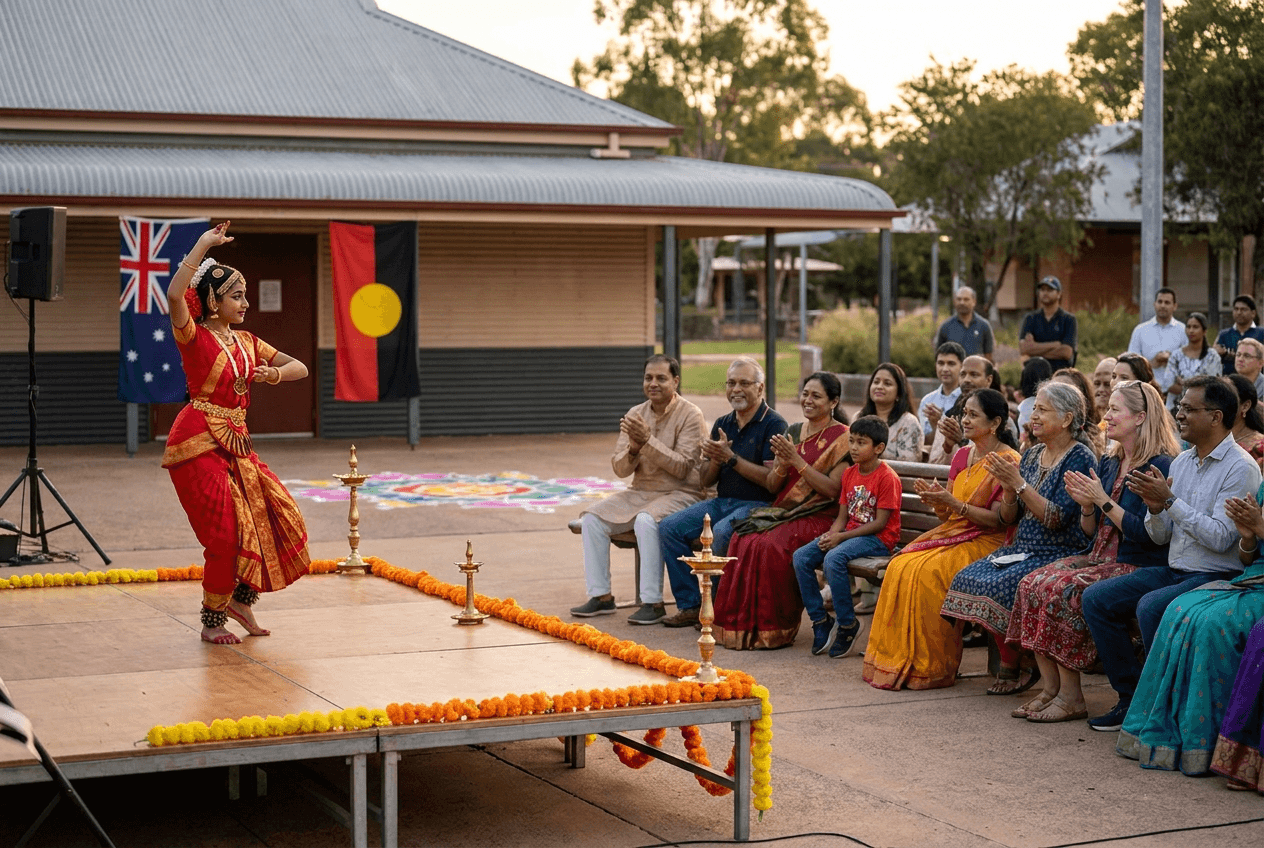 Australian cities with significant South Indian communities support active Bharatanatyam communities that provide context, performance opportunities, and cultural belonging alongside online instruction.
Community Performance Opportunities for Australian Students
Melbourne hosts several Bharatanatyam organisations and regular concert events. The Melbourne Tamil Cultural Association, various temples including the Shri Shiva Vishnu Temple in Carrum Downs, and South Asian cultural groups regularly host Bharatanatyam performances and student showcases. Sydney's South Asian community similarly organises Diwali festivals, Navratri events, and cultural galas where student dancers perform.
These community performance opportunities are invaluable - they give Australian Bharatanatyam students the experience of performing in front of audiences who genuinely understand and appreciate the art form, not just sympathetically supportive family members. Your child's teacher should be able to connect you with appropriate performance opportunities in your city as the student develops.
Conclusion
Bharatanatyam for Indian-Australian children is simultaneously a physical discipline, a cognitive investment, a cultural education, and a form of artistic expression that they can carry through their entire lives. For Australian families who have wondered whether online instruction can deliver the genuine quality this tradition deserves, the answer is a clear and documented yes - provided the teacher is qualified, the home setup is appropriate, and the commitment to daily practice is genuine.
Three things to take away. First, verify teacher credentials specifically - bani lineage and formal training are non-negotiable for authentic instruction. Second, invest in a proper hard-floor practice surface if your home has carpet - this single practical step significantly improves lesson quality. Third, build daily practice of 15-20 minutes from week one. Bharatanatyam rewards consistency above everything else.
Book a free trial Bharatanatyam class at Art Gharana today through our complete course catalogue and begin your child's journey into this extraordinary tradition.
Frequently Asked Questions
1. What age is best to start Bharatanatyam for Australian children?
Most Bharatanatyam teachers recommend starting between ages five and seven. This window captures the optimal neurological period for movement pattern development while the child is old enough to follow structured instruction. Starting between ages eight and twelve is equally effective for technical development and sometimes produces faster initial progress due to greater cognitive maturity.
2. How many years does it take to reach arangetram standard?
The arangetram - the graduation solo performance that represents the culmination of Bharatanatyam training - is typically performed after seven to ten years of consistent weekly lessons and daily practice. Students who attend twice-weekly lessons and practise daily reach arangetram readiness faster. Students with once-weekly lessons and inconsistent practice take longer.
3. Can my child learn Bharatanatyam online without any prior dance experience?
Absolutely. Online Bharatanatyam classes for complete beginners are specifically designed for children with no prior dance experience. Every qualified teacher begins from the absolute foundations: samapadam posture, aramandi development, and the first tatta adavu sequences. Prior dance experience is never required.
4. Are there Bharatanatyam performances or competitions for children in Australia?
Yes. South Indian cultural organisations in Melbourne, Sydney, Brisbane, and Perth regularly host Bharatanatyam student performances and competitions. Temple cultural committees, Tamil and Telugu cultural associations, and dedicated Carnatic music and dance organisations all organise events that showcase young Bharatanatyam performers at different stages of development.
5. Is Bharatanatyam appropriate for Indian-Australian boys as well as girls?
Absolutely. Bharatanatyam has a celebrated tradition of male practitioners. Several of India's greatest Bharatanatyam masters have been male, and the Bharatanatyam community recognises no gender distinction in the tradition's practice. Boys who study Bharatanatyam develop exceptional physical strength, rhythmic precision, and artistic expression through the same training journey as girls.