ChatGPT
 Google AI
 Grok
 Claude

If your child is learning Bharatanatyam or Kathak in the UK, sooner or later you will hear about ISTD exams. The official documents are thorough but written for teachers, full of terminology and cross references, and not easy for a parent to make sense of. This guide translates them. It explains what ISTD certification actually is, how the pathway works from the very first exam to advanced qualifications, the rules that surprise parents most, what it costs, and why the qualification can matter well beyond the dance studio.
Everything here is drawn from the current ISTD framework for Classical Indian Dance. Figures such as fees change from year to year, so treat the numbers as indicative and confirm the latest on the official ISTD website or through your child teacher. With that said, the structure and the rules below give you an accurate map of what your child journey through ISTD certification looks like.
What Is ISTD and Why Does It Matter?
 The Imperial Society of Teachers of Dancing, usually shortened to ISTD, is one of the world leading dance examination boards. It is a UK based registered charity and its qualifications are regulated, which means they are recognised within the formal British education framework rather than being informal certificates. Crucially for our purposes, the ISTD has a dedicated Classical Indian Dance faculty that offers graded examinations in both Bharatanatyam and Kathak. So a child learning these classical forms in Britain can work toward a recognised, externally assessed qualification, exactly as a ballet or tap student can.
This is a genuinely meaningful option for UK families. It gives a child structured goals, an objective external assessment of their progress, and a recognised credential that sits alongside their academic achievements. It also reflects the seriousness of these art forms. To appreciate what the training involves, the origin and growth of Bharatanatyam and the overview of Indian dance styles give helpful background.
The Certification Pathway, Step by Step
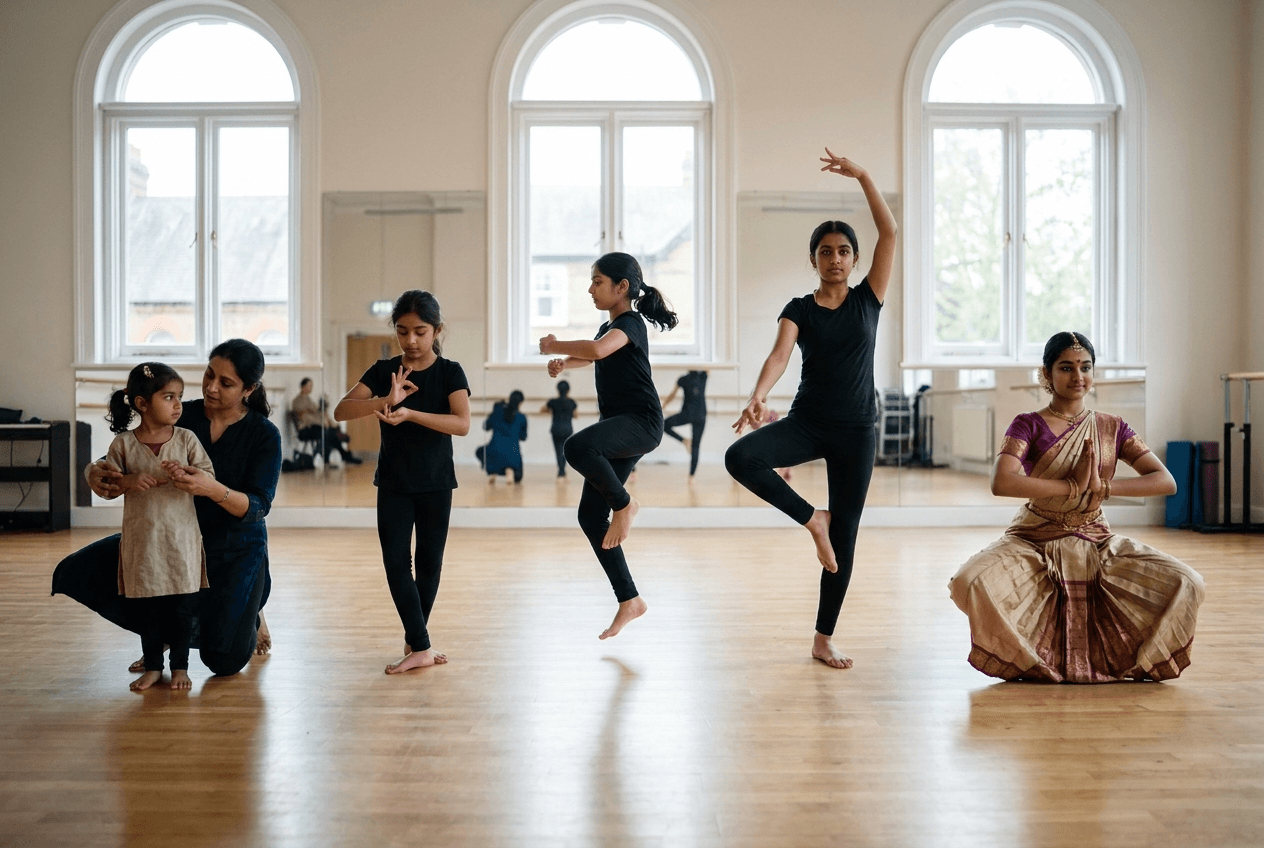 ISTD Classical Indian Dance is organised as a clear ladder. A child does not jump in at the top; they climb it grade by grade, which is part of what makes the qualification respected.
Primary: the first step
The journey usually begins with the Primary examination. This is the introductory level, and its syllabus is shared between Kathak and Bharatanatyam, designed to introduce younger learners to classical Indian dance. There is no strict lower or upper age limit, but the ISTD recommends it for children aged roughly six to eight, which lines up neatly with when most children are developmentally ready for formal technique.
Grades 1 to 6: building real skill
After Primary come the graded examinations, Grades 1 through 6. These are accredited within the regulated qualifications framework and represent steadily increasing technical and expressive demand. There is no fixed age limit on the grades, but teachers are expected to ensure a child is mature enough to meet and enjoy the demands of each level. This is where a dancer genuinely develops, moving from basic vocabulary toward confident, expressive performance.
Vocational grades: the serious path
Beyond Grade 6 sit the vocational examinations: Intermediate Foundation, Intermediate, Advanced 1 and Advanced 2. These are for committed students on a path toward performance or teaching. Intermediate Foundation carries a minimum age of eleven, and the later levels require passing the one before, so Advanced 1 requires a pass at Intermediate, and Advanced 2 requires a pass at Advanced 1. This is the stage where training becomes truly demanding and professional in its standards.
Inside the Primary Exam: What Actually Happens
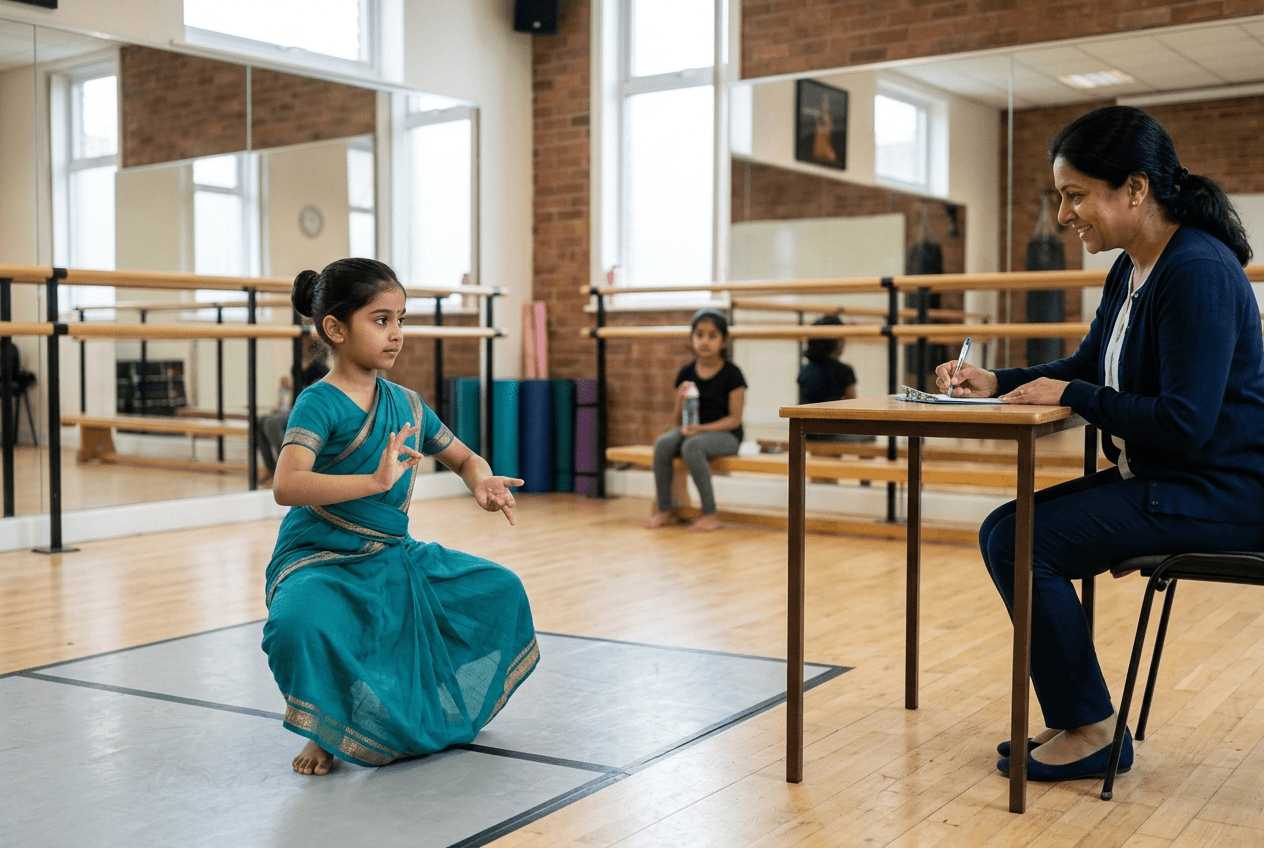 Because Primary is where most families begin, it helps to know exactly what to expect. The examination is assessed externally by a visiting examiner who is recruited and trained by the ISTD, not by the child own teacher, which is what gives the result its objectivity. Children are typically entered in pairs, though they can be examined individually, and boys and girls can be presented together, since the syllabus does not require any gender specific presentation.
The examiner allows around twenty minutes for a group of up to four candidates, and part of the assessment involves the examiner asking each child individually to show material from the syllabus. The overall mark is given out of one hundred. The examiner is looking for technical accuracy and correct placement within the child physical ability, a sense of line and well coordinated movement, and above all musicality and rhythmic awareness. At this level a child also shows early rhythmic skills such as the recitation of the syllable patterns that accompany the basic steps. It is rigorous, but it is pitched to be achievable and encouraging for a young beginner.
The Rules That Surprise Parents Most
The ankle bell rule
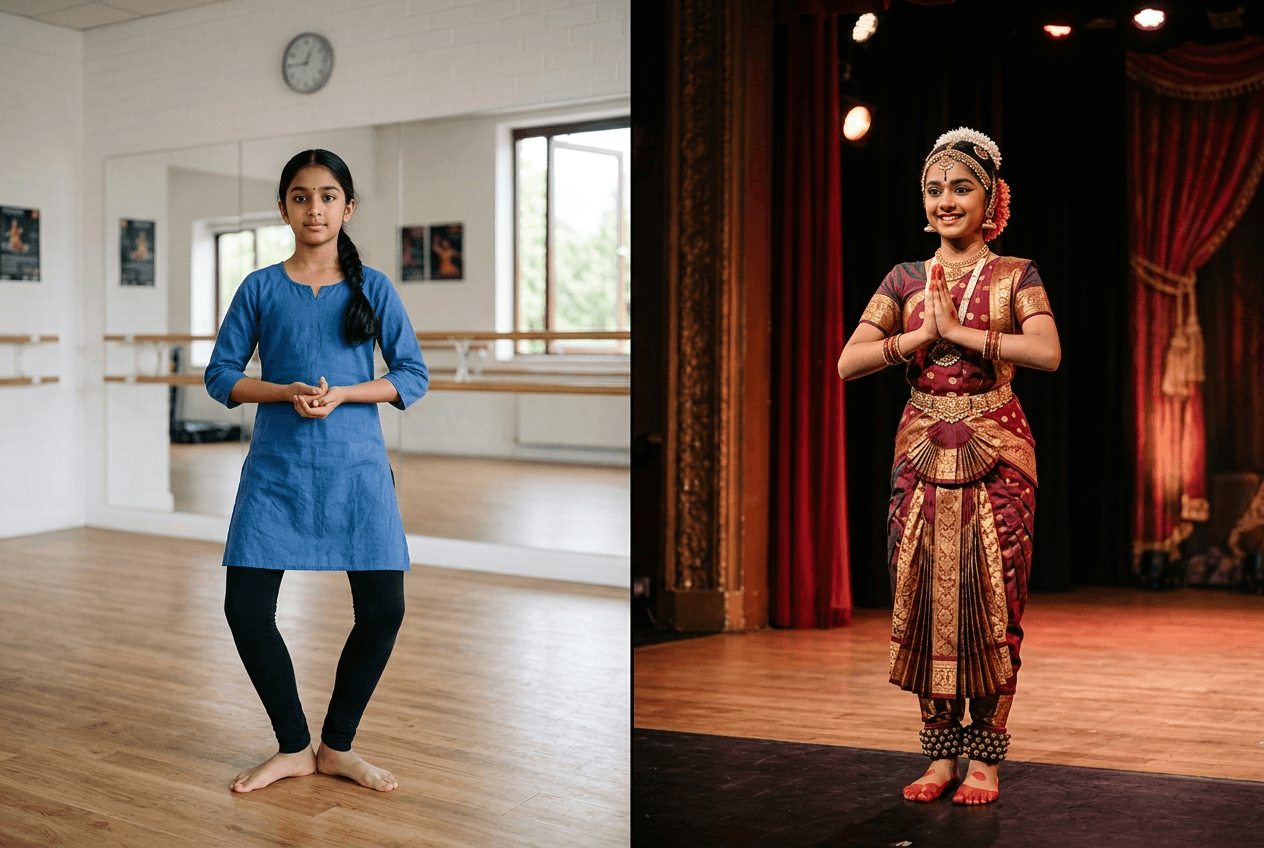
This is the detail that catches almost every family off guard. The ankle bells, the ghungroo that many people see as the very symbol of Indian classical dance, are not worn in the early graded exams. Under the ISTD rules, no ankle bells should be worn for the Grade 1, 2 and 3 examinations. They are introduced only from the higher grades onward. The reasoning is sound: in the early years the examiner needs to see and hear the precision of the footwork itself, without the sound of the bells masking errors or, frankly, hiding a lack of crispness. So if your child is disappointed not to wear their bells at Grade 1, you can explain that earning the right to wear them in the exam is part of the journey.
The uniform rule
The second surprise is that the graded exams are danced in plain practice clothing, not in a full costume with jewellery. Across both Bharatanatyam and Kathak, candidates wear clothes that let the examiner clearly see the body and the dance, with the waist firmly bound and the hair pinned neatly away from the face, in a plait or bun if needed. No dance costume or jewellery is worn for the examination. Again the logic is about visibility and fairness: the examiner is assessing technique and line, and an elaborate costume would get in the way of seeing them.
What Does ISTD Certification Cost?
 Exam fees are set by the ISTD and rise on a roughly yearly basis, so the figures below are indicative rather than fixed. They give a realistic sense of the scale, drawn from a recent published fee list. Confirm the current amounts with your child teacher or on the ISTD website before budgeting.
A few practical points sit alongside these entry fees. The exam fee is the ISTD charge for the examination itself; your child dance teacher or school may also charge separately for the lessons and exam preparation that lead up to it. Exams are usually held in a couple of sessions across the year, results typically take a few weeks to come back, and candidates are normally entered through their registered teacher rather than by parents directly.
How Children Are Entered for Exams
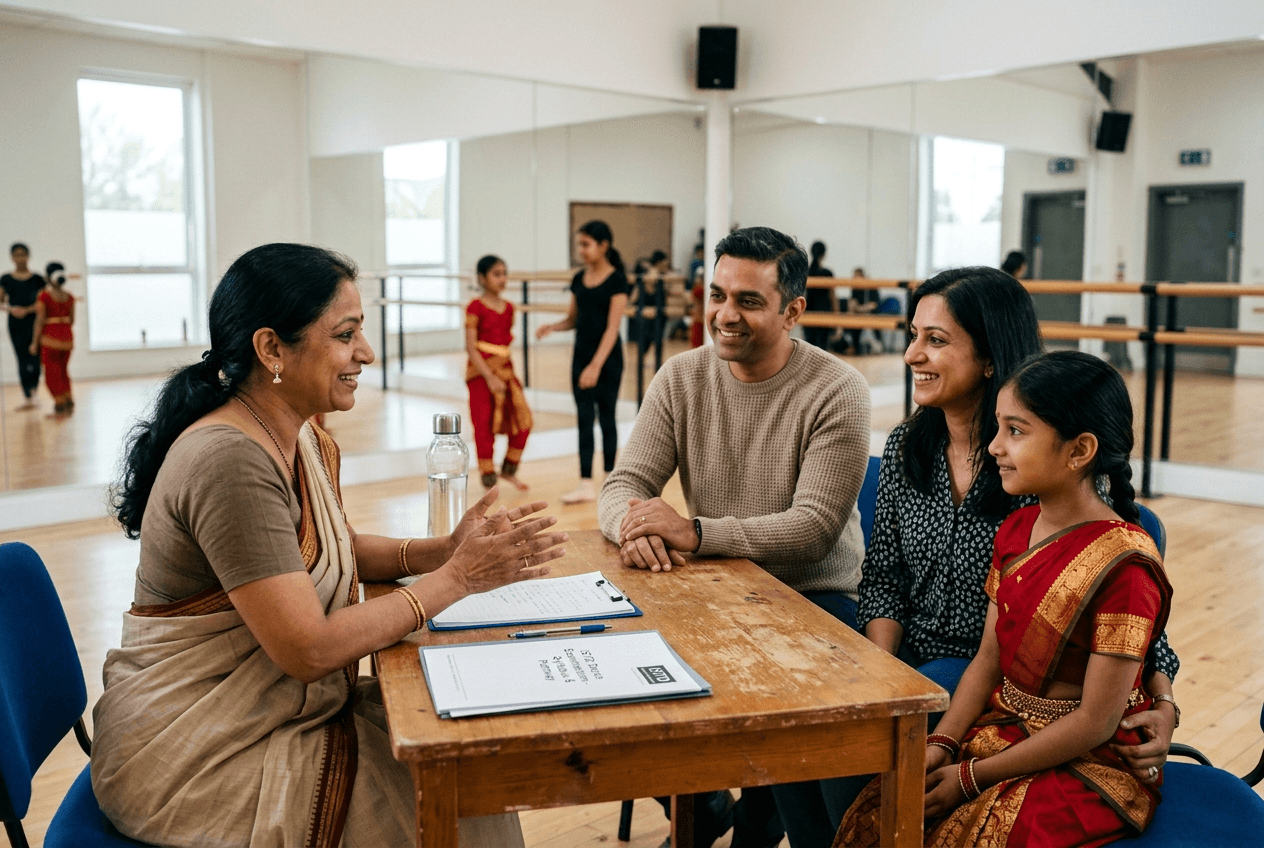 One thing parents should understand early is that you do not enter your child for an ISTD exam yourself. Candidates are entered through a registered ISTD teacher or an Approved Dance Centre, who organises the examination session, prepares the child to the syllabus, and submits the entry. This means that if formal ISTD certification is your goal, you need a teacher who is ISTD registered for Classical Indian Dance. It is a fair question to ask any prospective teacher directly. Whatever route you take, the foundation is the same: solid, correct technique built from the early years, which is exactly what structured online Bharatanatyam classes and online Kathak classes are designed to develop.
Why the Qualification Is Worth Considering
Beyond the dance itself, ISTD certification carries real, practical value. Because the grades and vocational levels are regulated qualifications, the higher ones attract UCAS points, the currency UK universities use when making offers. A serious dancer can therefore turn years of classical Indian dance training into points that strengthen a university application, putting Bharatanatyam and Kathak on the same recognised footing as more familiar qualifications. For a child weighing whether years of dedicated practice will count for anything formal, that recognition can be genuinely motivating.
There is also the quieter value of structure and external feedback. Working toward graded exams gives a child clear milestones, a reason to practise with purpose, and an honest external assessment of where they stand, delivered by an examiner with no stake in flattering them. Many children rise to that challenge and gain real confidence from passing each level on merit.
Certification or Arangetram: Which Path?
 UK families sometimes ask whether they should aim for ISTD grades or for the traditional arangetram, the formal solo debut performance. These are not rivals, and many dedicated students pursue both. The ISTD pathway offers regulated, externally assessed milestones and UCAS recognition along the way, which suits the British education context. The arangetram is the traditional artistic rite of passage, typically after many years of training. Some families value the structure and recognition of ISTD grades, others the cultural weight of arangetram, and plenty pursue the grades as a measured ladder toward the eventual arangetram. The right choice depends on your child goals, and a good teacher can help you plan a route that honours both.
How to Get Started
If certification appeals, the sequence is straightforward. First, make sure your child has a solid, correct foundation in technique, which is the bedrock everything else rests on, and which is best begun at the right age. The companion guide on the right age for children to start Indian classical dance explains exactly when a child is ready. Second, choose a teacher who can build that technique properly, and if formal ISTD exams are your goal, confirm they are ISTD registered for Classical Indian Dance. Third, let your child progress at a healthy pace, entering each level only when they are genuinely ready, since the value of the qualification lies in passing it on merit.
Whether or not you ultimately pursue formal exams, the foundation is identical: consistent, well taught, one to one training that builds correct technique from the start. That is what Art Gharana provides. You can explore online Bharatanatyam classes and online Kathak classes, and begin with a free trial class to see the teaching for yourself.
The Theory Side Most Parents Forget
Classical Indian Dance under the ISTD is not only about movement. As a dancer progresses, theory becomes part of the assessment, and there is a dedicated theory examination within the framework. From the early grades, children begin absorbing the vocabulary of their form, the names of the basic steps, the rhythmic syllables, and the structure of the dance, and at higher levels they are expected to understand history, terminology, and the cultural context of what they perform. This matters for two reasons. It deepens a child genuine understanding of the art rather than leaving them as a copier of movements, and it means exam preparation involves a little study alongside the physical practice. A good teacher weaves this knowledge in gradually, so it never feels like homework piled on top of dance.
Preparing Your Child for Exam Day
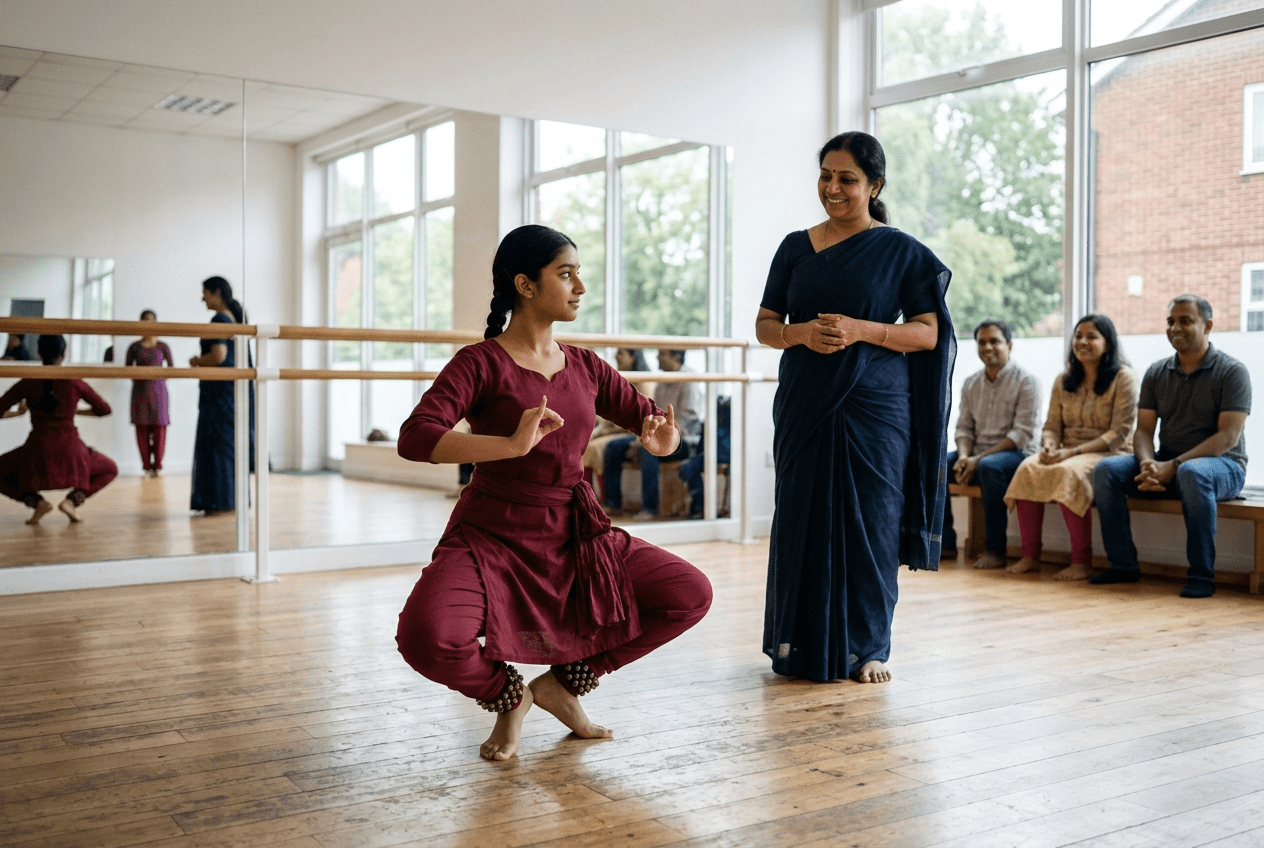 When a first exam approaches, a few simple things make the day go smoothly. Practically, your child should arrive in good time, in the correct plain uniform with hair properly secured, and you will usually be asked to bring the hair grips, pins and bands needed rather than relying on the studio. Emotionally, the most useful thing you can do is keep the mood calm and encouraging. The examiner is experienced with nervous young dancers and is there to see what a child can do, not to catch them out. Reassure your child that they only need to show their best version of the material they have practised.
In the weeks beforehand, steady, focused practice beats last minute cramming, which suits dance far better than panic. Children who have trained consistently with good technique walk in prepared, because the exam simply asks them to show what they already know. This is one more reason the quality and consistency of the weekly teaching matters so much: a child who has been taught correctly all along has very little to fear on the day. Results usually arrive a few weeks later, and whatever the mark, the experience of preparing for and completing an external assessment is valuable in itself.
Frequently Asked Questions
1. At what age can my child take the ISTD Primary exam?
There is no strict age limit, but the ISTD recommends the Primary examination for children aged roughly six to eight, which matches when most children are ready for formal technique.
2. Why can my child not wear ankle bells in the early grades?
Under ISTD rules, ankle bells are not worn for the Grade 1, 2 and 3 examinations. They are introduced from the higher grades, so that examiners can clearly see and hear the precision of the footwork in the early years.
3. What does my child wear for the exam?
Plain practice clothing that lets the examiner see the dance, with the waist firmly bound and hair pinned neatly. No full costume or jewellery is worn for the graded examinations.
4. How much do ISTD exams cost?
Fees are set by the ISTD and rise yearly. As an indication, the Primary exam is in the region of 35 pounds, rising gradually to around 54 pounds by Grade 6. Your teacher may also charge separately for lessons and preparation. Confirm current fees with your teacher or the ISTD.
5. Do ISTD dance grades count for anything academically?
Yes. The higher ISTD grades and vocational levels are regulated qualifications that attract UCAS points, which UK universities use when making offers, so serious dance training can strengthen a university application.
6. Can my child do ISTD exams if they learn online?
Candidates are entered through a registered ISTD teacher or Approved Dance Centre, so if formal exams are your goal, confirm your teacher ISTD registration. Either way, strong technique is the foundation, which is what good one to one teaching builds. You can try a free trial class to assess the teaching.
A Note for Diaspora Families
The ISTD Classical Indian Dance syllabus was shaped with diaspora students in mind, which is worth knowing if your family is raising a child in Britain rather than India. The framework deliberately invests time in the early grades to build both the physical technique and the cultural understanding that a child growing up outside India may not absorb simply from their surroundings. In other words, it is designed not to assume that a child already lives inside the tradition, but to bring the tradition to them in a structured way. For UK families who want their child to stay genuinely connected to their heritage, that makes the ISTD pathway a thoughtful fit, because it treats the dance as both an art to master and a culture to understand.
The Bottom Line
ISTD certification turns a child Bharatanatyam or Kathak training into a recognised, externally assessed qualification, with a clear ladder from the Primary exam through Grades 1 to 6 and on to the vocational levels. The rules that surprise parents, the ankle bells held back until the higher grades and the plain exam uniform, both exist to keep the assessment fair and focused on real technique. The fees are modest and rise gradually with each level, and the higher grades even carry UCAS points toward university. Whether you pursue the full pathway, aim for arangetram, or simply want your child to learn well, it all rests on the same thing: correct technique, taught consistently, from the right age.
To give your child that foundation, start with a single lesson and a teacher who builds technique properly. Explore Art Gharana online dance classes and book a free trial to begin.