ChatGPT
 Google AI
 Grok
 Claude
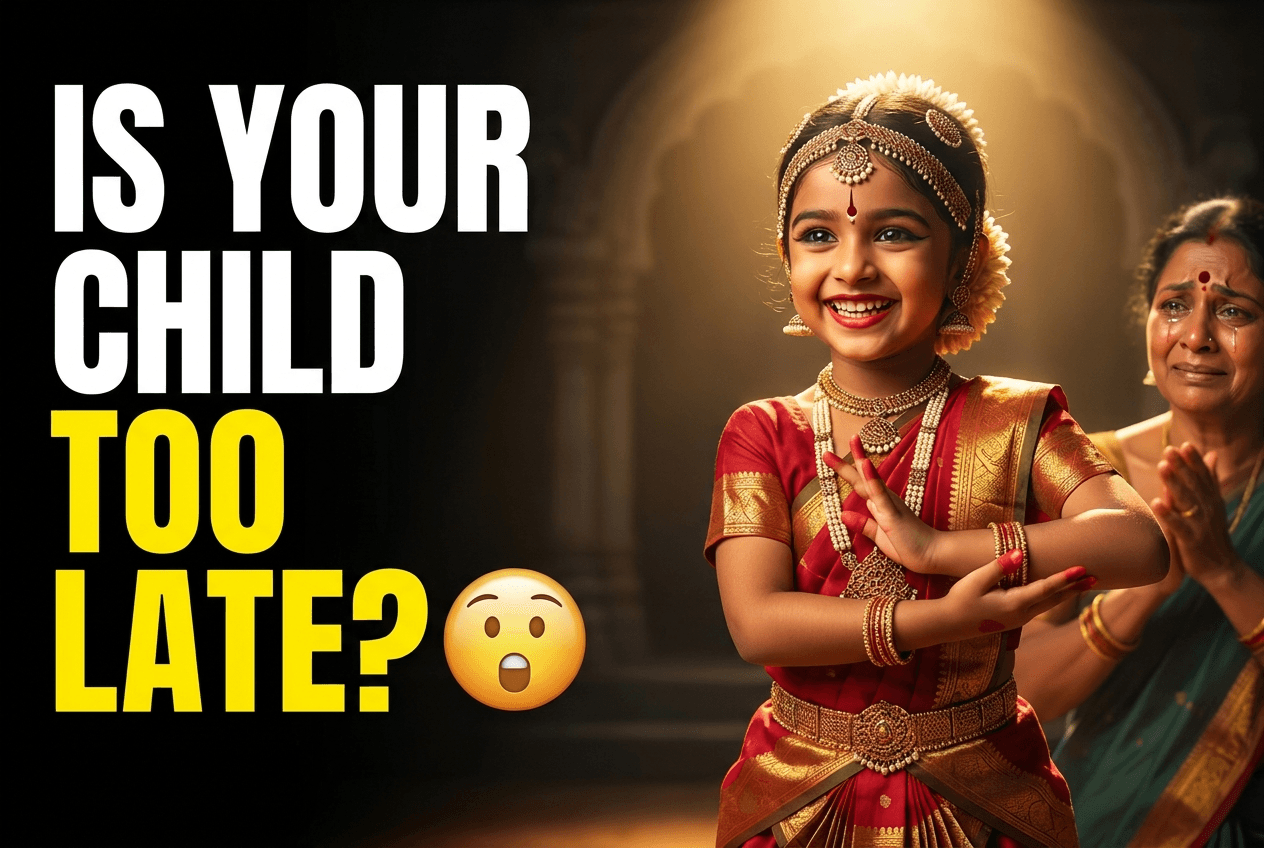
Ask three dance teachers when a child should start, and you will often get three different answers. One will tell you to start at three, while the body is at its most adaptable. Another will say wait until six or seven, when a child can truly focus and learn technique. A third will shrug and say it depends on the child. For a parent simply trying to do the right thing, this contradiction is maddening. You are not imagining the disagreement. It is real, and it runs right through the dance education world.
This guide does something most articles avoid. Instead of giving you one tidy answer and pretending the debate does not exist, it lays out both camps honestly, looks at what recent research actually says about how young children develop, and then resolves the question specifically for Indian classical dance forms like Bharatanatyam and Kathak, which have their own demands that generic ballet or jazz advice does not account for. By the end you will know not just a number, but how to judge whether your own child is ready.
The Two Camps, Side by Side
 Let us name the disagreement plainly, because seeing both arguments in full is the only way to make a confident decision.
The early start camp: begin at three to four
One group of educators, often coming from a motor development background, argues that the early years are precious and should not be wasted. Their case is that children between roughly three and seven are in a rapid phase of gross motor development, building balance, coordination, body awareness and rhythm at a speed they will never match again. Creative movement classes in these years, they argue, lay down the physical and neural foundations that formal technique later builds on. Wait too long, this camp says, and you miss a developmental window.
There is real substance here. Research on age appropriate movement training notes that from age three to seven, fundamental skills such as jumping continue to improve markedly, making it an excellent period to explore movement through play. Early childhood specialists also point out that classes at this age build something just as important as physique: the social readiness to follow instructions, take turns and move within a group, all of which prepare a child for both school and later structured training.
The wait camp: begin at six to seven
The opposing group, often classical technique teachers, argues that real training should wait until a child can actually train. Their case is that genuine technique requires focus, the ability to follow multi step instructions, the patience to repeat a movement until it is correct, and the cognitive maturity to connect an instruction to a physical action. These capacities, they say, arrive reliably around six or seven, not before. Push formal technique on a three year old, this camp warns, and you either frustrate the child or teach sloppy habits that have to be unlearned.
This view also has strong support. Many studios observe that children truly take to structured dance around five or six, which is when they start school and become better at following directions. By age eight or nine, children move comfortably into highly structured technical classes. For disciplines that demand precision from the first lesson, starting structured work too early can simply mean wasted, frustrating terms.
What the Research Actually Shows
 When you look past the slogans, the research does not really pick a side. It describes two different things happening at two different ages, which is exactly why both camps can be right at once.
Recent work on early childhood movement, including guidance reflecting 2023 and 2024 thinking, consistently makes two points. First, the window from around eighteen months to seven is the fastest period of gross motor development, and movement programmes in these years genuinely support coordination, balance, spatial awareness and confidence. Second, and crucially, what happens in those early classes should be creative and play based, not technical. Improvisation and creative movement are the developmentally correct content for ages three to seven, with structured technical work layered in only as a child matures, typically from around eight or nine.
In other words, the research resolves the apparent conflict like this: early movement is valuable, but early technique is not the point. A three year old benefits enormously from creative movement, and benefits very little from being drilled in formal posture. The two camps are arguing about different stages of the same journey, and both stages matter.
Why Indian Classical Dance Needs Its Own Answer
Here is where generic studio advice falls short. Bharatanatyam and Kathak are not the same as creative movement or early ballet. They are precision arts built on adavus (Bharatanatyam) and tatkar and footwork patterns (Kathak), with demanding posture, intricate rhythm and, eventually, deep expressive storytelling. The half sitting araimandi position in Bharatanatyam, for example, asks a lot of a young body. This means the right age question has two answers, one for readiness and one for formal technique. You can read more about the deeper tradition in the origin and growth of Bharatanatyam and the wider family of Indian dance styles.
Tellingly, the most respected examination framework for these forms agrees with the research rather than with either extreme. The Imperial Society of Teachers of Dancing, whose Classical Indian Dance syllabus covers both Bharatanatyam and Kathak, sets its introductory Primary examination with a recommended age of six to eight. That is the considered judgement of the leading UK board on when a child is ready for the first formal step. If you want the full picture of that pathway, the ISTD certification guide walks through it in detail.
A Stage by Stage Guide for Indian Classical Dance
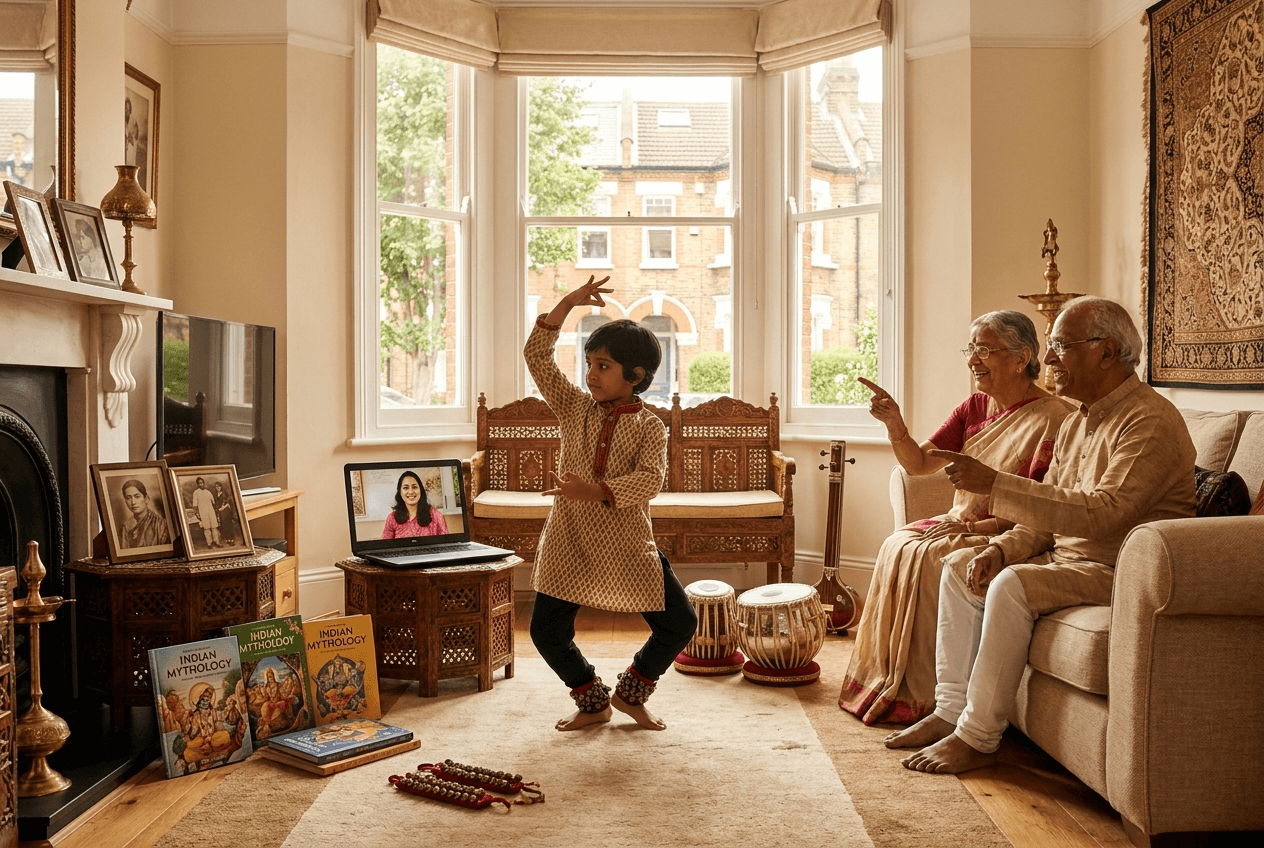 Putting the research and the tradition together gives a clear, practical roadmap. Match the stage to your child, not your child to a fixed number.
Ages 3 to 5: creative readiness, not technique
At this age the goal is love of movement, basic coordination, a sense of rhythm and the social skills of a class. If your child is drawn to dance, a playful creative movement or introductory session is wonderful, but do not expect or push formal adavus. Look for joy and engagement. This stage builds the foundation that real training will later stand on.
Ages 6 to 8: the formal beginning
This is the sweet spot where most children become ready for genuine Bharatanatyam or Kathak training, and it is exactly the window the ISTD recommends for its Primary examination. A child this age can usually hold attention, follow multi step instruction, and begin learning posture and basic footwork properly. This is the right time to begin structured online Bharatanatyam classes or online Kathak classes with a teacher who can build correct habits from the start.
Ages 9 and up: depth and progression
Children who begin around this age are far from behind. With consistent practice they progress quickly, often faster than younger starters because their focus and body awareness are more developed. Older beginners can move through the early stages briskly and reach expressive, performance level work in good time.
Teenagers and adults: never too late
It is a myth that the door closes in childhood. Teenagers and adults can start Indian classical dance and progress meaningfully, and the expressive, storytelling side of these forms is often richer for an older learner. If you always wanted to dance, or want to learn alongside your child, you can.
How to Tell if Your Own Child Is Ready
 The age bands are a guide, not a rule, because children mature at different rates. These signs matter more than the number on a birthday card.
- Can your child follow a simple two or three step instruction and stay with a short structured activity? This is the single best predictor of readiness for formal technique.
- Does your child show interest in moving to music, copying movements, or performing for the family? Genuine interest sustains the practice that real progress demands.
- Can your child cope, happily, with being corrected and trying again? Classical dance involves a lot of gentle repetition and correction.
- Is your child physically comfortable with basic balance, hopping and squatting? The araimandi posture in particular asks for a degree of lower body control.
- Does your child want to do it, rather than only you wanting it? A willing child learns; a pushed child resists.
What About Music? The Same Logic Applies
Parents who ask about dance usually ask about music too, and the same staged thinking holds. Very young children benefit from playful exposure to rhythm and song, while genuine vocal or instrumental training tends to begin well around five or six, once a child can match pitch and follow a teacher. Hindustani and Carnatic vocal both welcome young beginners, and rhythm focused children often thrive on the tabla. As with dance, the instrument the child is drawn to matters more than starting at the earliest possible moment.
There is also a happy overlap. A child who learns a little Carnatic music alongside Bharatanatyam, or who understands rhythm through tabla alongside Kathak, often progresses faster in both, because the music and the movement reinforce each other. None of this is required, but it explains why many families like learning dance and music under one roof.
Why Early Technique Can Backfire
 It is worth understanding why pushing formal technique too early does not simply fail to help but can actively hurt. When a very young child is asked to hold a precise posture their body is not yet ready for, two things tend to happen. First, they compensate with incorrect alignment, and those compensations harden into habits that a teacher then has to spend months undoing later. Second, and more damaging, the child associates dance with frustration and failure rather than joy. Because their cognitive ability to connect a correction to a physical change is still forming, repeated correction can feel like constant criticism, and young children rarely keep choosing something that makes them feel they are getting it wrong.
The early childhood approach of creative movement sidesteps both problems. There is no fixed posture to get wrong, so there are no bad habits to ingrain, and there is no precise standard to fail against, so the child experiences dance as play and success. By the time formal technique begins at six or seven, the child arrives with coordination, rhythm, confidence and, most importantly, a positive relationship with dancing. That positive relationship is the fuel that carries a dancer through the long, demanding years of real classical training. Protect it, and everything else becomes possible.
When Your Child Friends Started Earlier
Many parents feel a quiet pressure when other children in the community seem to have started Bharatanatyam or Kathak as toddlers. It is easy to worry that your six year old is already behind. In almost every case, they are not. A child who began formal technique at four and a child who began at seven usually look remarkably similar by the age of nine or ten, because the older starter learned faster and the younger starter spent much of those early years on readiness rather than real technique. The head start is often more apparent than real.
What actually predicts a strong dancer years down the line is not the starting age but consistency, a good teacher, and a child who genuinely enjoys the art. A seven year old who loves their weekly class and practises happily will comfortably overtake a nine year old who started at three but resents being made to dance. So if your child is ready now, start now, and pay no attention to the birthday on which someone else child first walked into a studio. Your child journey is their own.
The Mistake to Avoid
The single biggest error parents make is treating the starting age as a race. It is not. A child pushed into formal technique at three, before they can focus, often learns to dislike the very thing you hoped they would love. A child started thoughtfully at six or seven, when they are ready, usually overtakes them within a year and keeps going for years more. Readiness beats earliness almost every time. The goal is not the earliest start; it is the start your child is ready to enjoy and sustain.
Frequently Asked Questions
1. What is the best age to start Bharatanatyam or Kathak?
For genuine formal training, around six to eight is ideal, which matches the ISTD Primary examination recommendation. Younger children, from three to five, benefit from playful creative movement that builds readiness rather than technique.
2. Is age three too early for Indian classical dance?
Not for fun, creative movement that develops coordination and rhythm. It is usually too early for formal adavus and posture work, which a child is better placed to learn from around six.
3. My child is nine and has never danced. Have we missed the chance?
Not at all. Children who start at nine or older often progress quickly because their focus and body awareness are more developed, and they catch up fast with consistent practice.
4. How do I know if my child is ready?
Look for the ability to follow simple instructions, genuine interest in moving to music, comfort with gentle correction, and a willingness that comes from the child rather than only from you.
5. Can adults start Indian classical dance?
Yes. There is no upper age limit, and the expressive side of these forms is often richer for adult learners. You can try a free trial class to see how it feels.
How One to One Learning Helps at Every Age
Whatever age your child starts, the format of the class shapes how well the staged approach works in practice. In a large group, a teacher cannot easily meet a four year old where they are and also stretch a confident seven year old, so children at the edges of the group are often poorly served. Live one to one learning solves this neatly, because the lesson is pitched exactly to your child stage and readiness. A young beginner gets playful, encouraging sessions, while an older or more advanced child gets proper technical progression, all from the same trusted teacher who knows precisely where the child is.
This individual pitch matters most at the two ends: the early years, where the wrong, over technical class can put a child off, and the later start, where a child needs to move quickly and would be held back by a slow group. For UK families, online one to one classes also remove the travel and the fixed studio slot, so the right class fits a real family week. The result is that the staged, readiness first approach in this guide is far easier to follow when the teaching is genuinely tailored to your child.
The Bottom Line
The age 3 to 4 versus age 7 debate has a sensible resolution once you stop treating it as one question. The early years are for creative movement and readiness, and they genuinely matter. Formal Bharatanatyam and Kathak technique is best begun around six to eight, exactly where the leading UK examination board sets its first step. And no child, teenager or adult who starts later has missed their chance. Match the stage to your child, follow their interest and readiness rather than a calendar, and the right age becomes obvious.
When your child shows the readiness signs in this guide, the best next step is a single trial lesson to see how they respond. Explore Art Gharana online dance classes and book a free trial to begin at exactly the right time for your child.