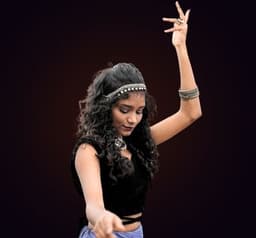
ChatGPT
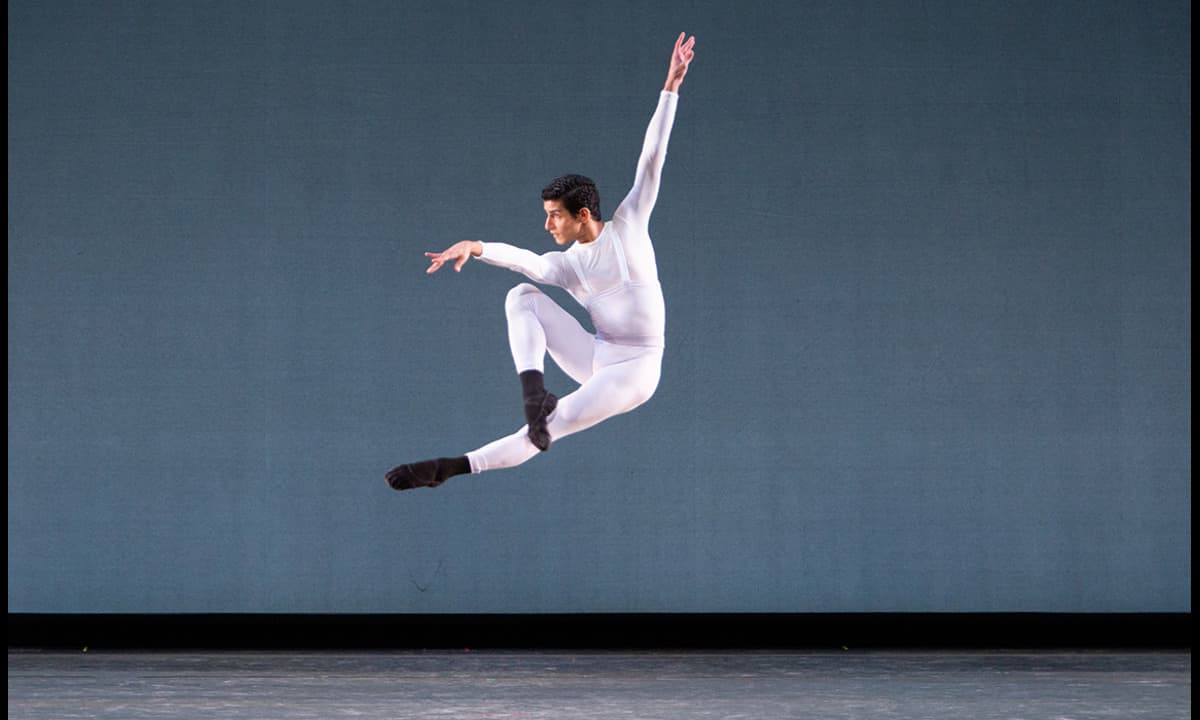
 Google AI
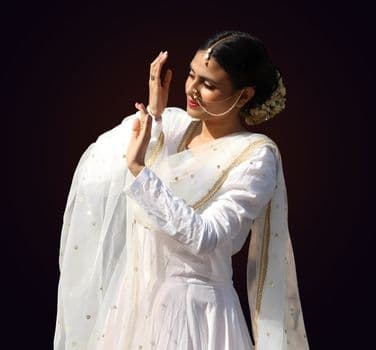
 Grok
 Claude
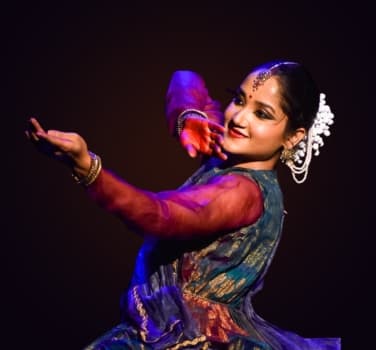
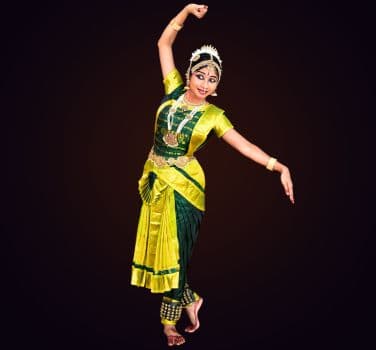 India does not have one dance. It has hundreds. Every region moves to its own rhythm, wears its own colours and tells its own stories through the body. The dance forms of India fall into two big families: classical dances, built on ancient rules and years of training, and folk dances, born in villages, harvests and festivals. In this guide, you will find all eight officially recognised classical styles, the most loved folk dances state by state, the difference between the two, and practical advice from our gurus on choosing and learning a style. Whether you are a student, a parent or a curious learner, this is your complete map.
Key Takeaways
Among the dance forms of India, eight classical dances are recognised by the Sangeet Natak Akademi, India’s national academy for performing arts. The Ministry of Culture adds Chhau, which makes nine. Beyond these, every state has its own folk and tribal dances, so there is no single fixed count. India also has no officially declared national dance, although Bharatanatyam is the name people mention most often.
How Many Dance Forms Are There in India?
There is no official number, because India has hundreds of folk, tribal and ritual dances alongside its classical styles. Among the dance forms of India, the clearest count is for classical dance: eight forms are recognised by the Sangeet Natak Akademi, and nine if you include Chhau, which the Ministry of Culture also lists.
So when people ask how many dance forms are there in India, the honest answer has two parts. The classical list is small and fixed. The folk list keeps growing as scholars document village and tribal traditions. These various dance forms of India are part of everyday life. Our gurus like to say that if you travel 100 kilometres in India, the dance changes, just like the language and the food.
How Many Types of Dance Are There in India?
If you are wondering how many types of dance in India there are, the simple answer is two: classical and folk. Some experts add a third group for tribal dances and a fourth for modern styles such as Bollywood and contemporary fusion. For learning purposes, the classical and folk split is the one that matters most.
Types of Dance in India: Classical vs Folk
The different dance forms of India look and feel very different. Although there are many different types of dance forms in India, almost every one of them falls into one of two groups. Knowing the types of dance forms, and which group a dance belongs to, tells you how it is learned, where it is performed and what it asks of you as a student.
What Makes a Dance Classical?
A classical dance follows the principles of the Natya Shastra, an ancient Sanskrit text on performance attributed to the sage Bharata Muni. Classical styles have a fixed grammar of steps, hand gestures called mudras, facial expressions called abhinaya and a structured repertoire. They are taught through the guru to student tradition and take years to master.
What Makes a Dance Folk?
Folk dances grow out of community life. People dance them at harvests, weddings, festivals and seasonal celebrations, usually in groups and often without formal training. The steps are simpler, the energy is high and the songs are in local languages. Folk dances are about joining in, not about years of technical study.
Difference Between Folk Dance and Classical Dance
The main difference between folk dance and classical dance is training and purpose. Classical dance follows the fixed grammar of the Natya Shastra and takes years of study under a guru, while folk dance grows out of community life and anyone can join in at a festival or wedding.
The two also differ in where and how they are performed. Classical dancers usually perform solo on a stage, telling stories from mythology and devotion through the nine emotions, or navarasa. Folk dancers perform in groups in open spaces, celebrating harvests, love, weddings and local legends. Bharatanatyam, Kathak and Odissi are classical, while Bhangra, Garba, Bihu and Ghoomar are folk.
8 Classical Dance Forms of India
How many types of classical dance in India are there? Officially, eight. These classical dance forms of India each come from a particular region, but today they are taught and performed across the country and around the world. Here are the different forms of classical dance in India, with the state each one comes from and what makes it special. Think of this section as the dance forms of India with pictures and quick facts, so you can tell the different types of classical dance apart at a glance.
#### 1. Bharatanatyam, Tamil NaduBharatanatyam is the classical dance of Tamil Nadu and one of the oldest living dance traditions in India. It grew out of Sadir, the temple dance of South India, and took its present name in the 1930s. It is known for its strong geometric lines, deep half sitting posture called aramandi, crisp footwork and expressive storytelling.
A full performance, called a margam, moves from pure dance pieces such as Alarippu and Jatiswaram to the long, expressive Varnam and the joyful Tillana. Many people search for Bharatanatyam dance forms, but it is one style with several schools, or banis. Read more in our guide to the origin and growth of Bharatanatyam.
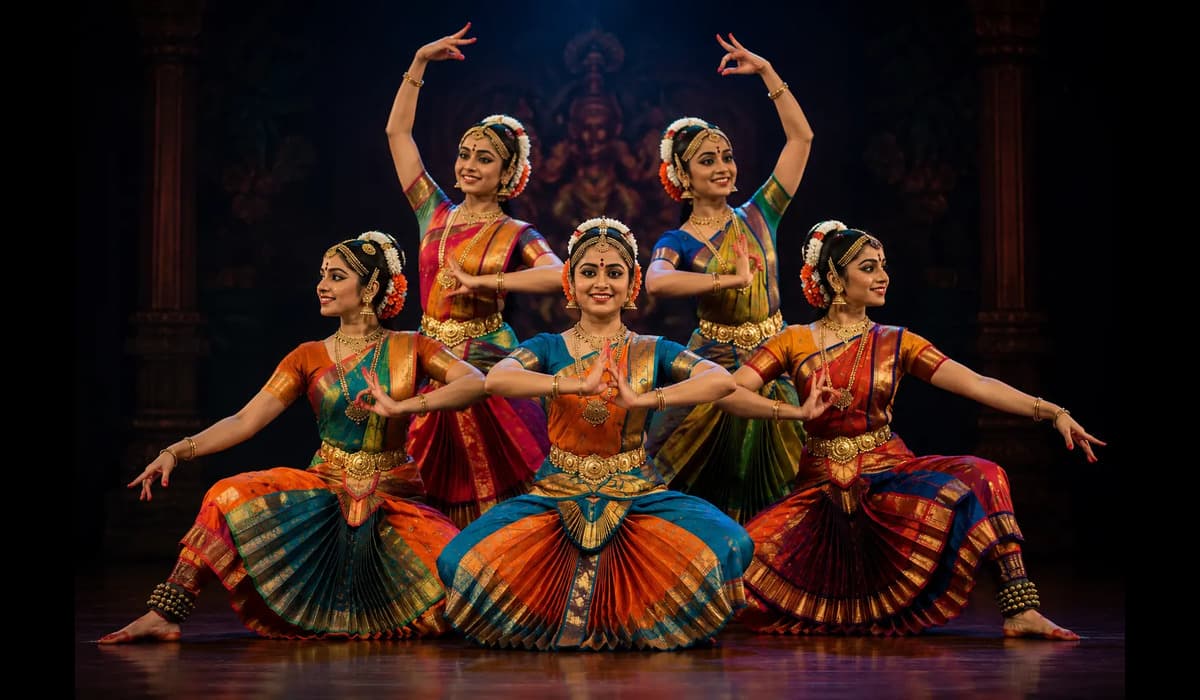
2. Kathak, Uttar Pradesh and North India
Kathak comes from the kathakars, the storytellers of North India. Over centuries it absorbed influences from temple storytelling and the Mughal courts. Its signature features are fast spins called chakkars, rhythmic footwork called tatkar, and the sound of ankle bells, or ghungroo, keeping time with the tabla.
Kathak has three main gharanas, or schools: Lucknow, Jaipur and Banaras. Lucknow is known for grace and expression, while Jaipur is known for speed and complex footwork. If you want to explore it further, see why learning Kathak builds both fitness and confidence.
3. Kathakali, Kerala
Kathakali is the dramatic dance theatre of Kerala. Performers wear elaborate costumes, huge headdresses and bold face makeup, with green faces for heroic characters. Stories come from the Ramayana and the Mahabharata, told through powerful eye movements, facial expressions and mudras while singers and drummers provide the music.
Traditionally, Kathakali performances began at dusk and went on through the night. It is one of the most physically demanding Indian classical styles, and students train their eyes and facial muscles as seriously as their feet.
4. Kuchipudi, Andhra Pradesh
Kuchipudi takes its name from a village in Andhra Pradesh. It began as a dance drama tradition and blends pure dance, expression and acting. Compared with Bharatanatyam, it feels lighter and more flowing, with quick, bouncing movements.
Its most famous showpiece is the Tarangam, in which the dancer performs balanced on the rim of a brass plate, sometimes with a pot of water on the head. It is a crowd favourite at school and cultural events.
5. Odissi, Odisha
Odissi comes from the temples of Odisha. It is famous for the tribhangi posture, where the body bends at the neck, torso and knee to form three soft curves, a shape you can also see in the temple sculptures of Konark and Puri.
Odissi balances fluid, sculptural poses with strong footwork. Our guide to [Odissi dance for kids) explains how young learners can start.
6. Manipuri, Manipur
Manipuri is the gentle, devotional dance of Manipur in North East India. Its movements are soft and rounded, with no sharp angles and no stamping of the feet. The best known form is the Ras Lila, which tells the story of Radha and Krishna in beautiful cylindrical skirts.
Manipuri also includes the energetic Pung Cholom, in which dancers play the drum while leaping and spinning. It shows how one tradition can hold both calm devotion and athletic power.
7. Mohiniyattam, Kerala
Mohiniyattam means “dance of the enchantress”. It is a graceful solo dance from Kerala, traditionally performed by women in a white and gold costume. Its gentle swaying movements are often compared to coconut palms moving in the breeze.
Kerala is the only state with two recognised classical dance forms: the powerful Kathakali and the graceful Mohiniyattam. Together they show the full range of Indian cultural dance, from drama to delicacy.
8. Sattriya, Assam
Sattriya comes from the sattras, the Vaishnava monasteries of Assam, founded by the saint and reformer Srimanta Sankardev in the 15th and 16th centuries. For centuries, monks performed it as part of devotional dance dramas.
Sattriya was the last style to receive classical status from the Sangeet Natak Akademi, in the year 2000. That is why the list of eight classical dance forms is only complete from 2000 onwards, why older lists show only seven classical dances, and why some search for 5 dance forms of India or 6 classical forms and find outdated answers.
What About Chhau?
Chhau is a vigorous martial dance from Odisha, Jharkhand and West Bengal. The Purulia and Seraikela styles use striking masks, while Mayurbhanj Chhau is performed without them. UNESCO added Chhau to its list of intangible cultural heritage in 2010, and the Ministry of Culture lists it alongside the eight classical forms.
Different Dance Forms of India with States
Every state in India has its own dance identity, and looking at Indian states and dance forms together is the easiest way to understand that variety. This section is a simple list of dance forms in India, arranged as the dance forms of India state wise, so you can see how the different dances of India change as you travel. Think of it as dances of India with names and places side by side, with every dance form and state matched up.
North India: Bhangra, Giddha, Nati and Rouf
Punjab gives India its most energetic dances: Bhangra, performed by men at harvest time, and Giddha, the lively dance of Punjabi women. In Himachal Pradesh, villages come together for Nati, a slow circular group dance. In Jammu and Kashmir, women perform Rouf in rows to celebrate spring and festivals.
Uttar Pradesh is the home of Kathak and of the Braj folk tradition of Charkula, in which women dance balancing a tall tower of lit lamps on the head. Uttarakhand has Chholiya, a sword dance performed at weddings in the Kumaon hills.
West India: Garba, Ghoomar, Kalbelia and Lavani
Gujarat is famous for Garba and Dandiya Raas, danced in circles through the nine nights of Navratri. UNESCO inscribed Garba as intangible cultural heritage in 2023. Rajasthan offers the swirling Ghoomar and the snake-like Kalbelia, which UNESCO recognised in 2010.
Maharashtra is known for Lavani, a fast and expressive dance set to the beat of the dholki, and for the Koli dance of its fishing communities. In Goa, women perform Fugdi in circles during festivals.
East India: Chhau, Gotipua and Bihar’s Folk Dances
Odisha has Odissi, Chhau and Gotipua, a tradition in which young boys dressed as girls perform acrobatic dance. It is often described as one of the roots of modern Odissi. West Bengal and Jharkhand share forms of Chhau, and Bihar has folk dances such as Jat Jatin, which tells the story of a separated couple.
North East India: Bihu, Cheraw and More
Assam celebrates its new year and harvest with Bihu, one of the happiest dances in India, along with the classical Sattriya. Manipur has its classical dance and the martial art based Thang Ta. Mizoram is known for Cheraw, the bamboo dance, where dancers step quickly in and out of clapping bamboo poles. Tripura has Hojagiri, performed while balancing pots and lamps.
South India: Yakshagana, Theyyam, Karakattam and More
South India is home to various dance forms beyond its classical styles. Karnataka has Yakshagana, a colourful dance drama, and Dollu Kunitha, a powerful drum dance. Kerala has Theyyam, a ritual dance in which performers are believed to embody deities, and Thiruvathirakali, a graceful group dance by women. Tamil Nadu has Karakattam, danced with a decorated pot on the head, and Kummi. Our guide to South Indian dance forms goes deeper into the region.
Indian States and Their Dance Forms
This table brings the state wise picture together, covering the classical dances of Indian states and their most popular folk traditions. No single table can hold all dance forms of India, but it lists the famous dance forms of India for each major region. If you only remember one Indian dance name from each state, start here. State
What Is the National Dance of India?
India has no officially declared national dance. Bharatanatyam is the dance most often called the national dance of India, because it is one of the oldest classical styles, it is taught in every part of the country and it represents Indian culture on stages worldwide. So which is the national dance of India? Officially, none, and no single dance form holds that title.
This surprises many people, because India does have a national animal, bird and flower. With eight classical styles and hundreds of folk traditions, choosing just one dance would leave out most of the country. Many teachers see that variety itself as the true national dance form of India.
Which Is the Oldest Dance Form in India?
Bharatanatyam is widely considered the oldest classical dance form in India still performed today. Its roots trace back to the temple dance traditions of Tamil Nadu and to the principles of the Natya Shastra, which scholars date to roughly the start of the common era.
Dance itself is far older in India. The famous bronze “Dancing Girl” statue from the Indus Valley civilisation, about 4,500 years old, shows a figure in a confident dance pose. Many folk and tribal dances also carry very old traditions that were passed down orally rather than written.
Which State Has the Most Dance Forms in India?
There is no official ranking, but Kerala stands out because it is the only state with two classical dances, Kathakali and Mohiniyattam, plus a rich set of ritual and folk forms such as Theyyam and Thiruvathirakali. States such as Odisha, Assam and Rajasthan also have remarkably varied dance traditions.
Is Bollywood Dance an Indian Dance Style?
Bollywood dance is not a classical or traditional folk form, but it is one of the most popular Indian dance styles today. It mixes classical gestures, folk steps such as Bhangra and Garba, and Western styles such as hip hop and jazz, all set to Hindi film music.
Bollywood is often the first step into dance for many learners because it is fun and easy to start. Our Bollywood dance guide explains its main styles, and you can compare older and newer traditions in our article on traditional vs contemporary Indian dance styles.
How to Choose and Learn an Indian Dance Form
Choosing among so many traditional dance forms of India can feel overwhelming. Our gurus suggest starting with what draws you emotionally, then matching it to your goals and your schedule.
Choosing the Right Dance Form for You
Every one of the dance forms of India rewards a different kind of learner. If you love storytelling, structure and expression, Bharatanatyam or Odissi will suit you. If rhythm and speed excite you, try Kathak. If you want pure fun and fitness, Bollywood is a great start. Children often begin well between ages 5 and 8, and our guide to the right age for classical dance explains why.
Can You Learn Indian Classical Dance Online?
Yes. You can learn Indian classical dance online with live one-to-one classes, as long as you have a little floor space, a camera that shows your full body and a teacher who corrects you in real time. Live correction matters far more than recorded videos.
At Art Gharana, students learn through live sessions with experienced gurus. You can explore our online Bharatanatyam classes or our online Kathak classes, and adults can read whether it is too late to start classical dance.
Common Mistakes Beginners Make
The most common mistake beginners make is rushing to learn full dances before building the basic posture. In Bharatanatyam, that means skipping the aramandi. In Kathak, it means spinning before the footwork is steady. Our gurus spend the first weeks on posture, balance and basic steps because everything else is built on them.
Another mistake is practising without warming up the knees and ankles, which take a lot of strain in classical dance. A third is copying videos without correction. A short daily practice of 15 to 20 minutes, guided by a teacher, beats a long weekly session done alone.
FAQs on Dance Forms of India
How many classical dances are there in India?
There are eight classical dances recognised by the Sangeet Natak Akademi: Bharatanatyam, Kathak, Kathakali, Kuchipudi, Odissi, Manipuri, Mohiniyattam and Sattriya. The Ministry of Culture also lists Chhau, which is why some sources say nine. Sattriya was the most recent addition, in 2000.
How many folk dances are there in India?
Nobody has an exact count, because India has hundreds of folk and tribal dances and new ones are still being documented. Every state has several, from Bhangra in Punjab and Garba in Gujarat to Bihu in Assam and Karakattam in Tamil Nadu. Folk dance changes from region to region.
What are the 8 classical dance forms of India and their states?
The 8 classical dance forms of India are Bharatanatyam from Tamil Nadu, Kathak from Uttar Pradesh, Kathakali and Mohiniyattam from Kerala, Kuchipudi from Andhra Pradesh, Odissi from Odisha, Manipuri from Manipur and Sattriya from Assam. Each has its own costume, music and technique.
What is the difference between Bharatanatyam and Kathak?
Bharatanatyam comes from Tamil Nadu and uses a deep bent knee posture, sharp geometric lines and expressive storytelling. Kathak comes from North India and is known for upright posture, fast spins and intricate footwork with ankle bells. Both are expressive, but Kathak feels lighter and faster while Bharatanatyam feels grounded.
Which classical dance is easiest for beginners?
No classical dance is truly easy, but many beginners find Kathak simpler to start because its upright posture is gentler on the knees. Bharatanatyam builds excellent strength and discipline from the very first class. The best choice is the style you enjoy most, since enjoyment keeps you practising.
Can adults learn Indian classical dance?
Yes. Adults can learn Indian classical dance at any age. Progress may be steadier than for children, but adults bring focus, patience and a deeper understanding of expression. With live online classes and regular practice, many adult students perform confidently within one to two years.
Conclusion
The dance forms of India are a living map of the country, from the temple grace of Bharatanatyam and the spinning rhythm of Kathak to the harvest joy of Bhangra and Bihu. Knowing the eight classical styles and the folk dances of each state helps you appreciate Indian culture and choose the dance that speaks to you.
If you are ready to move from reading to dancing, start with a guided first step. Book a free trial class with an Art Gharana guru, or explore our online dance classes and begin your journey into the dance forms of India today. [AUTHOR: name, dance style, years of teaching experience]