ChatGPT
 Google AI
 Grok
 Claude

Have you ever listened to Indian classical music and felt a deep emotional pull, even without understanding a single word? That feeling has a name and a structure behind it, and it is called the raga. For Indo-Canadian families wanting to share this music with their children, or simply to understand the soundtrack of their own heritage more deeply, the raga is the perfect place to begin. This guide explains, in plain language, what a raga actually is, what it is built from, and how a family can start exploring it together.
A Raga Is Not Just a Scale
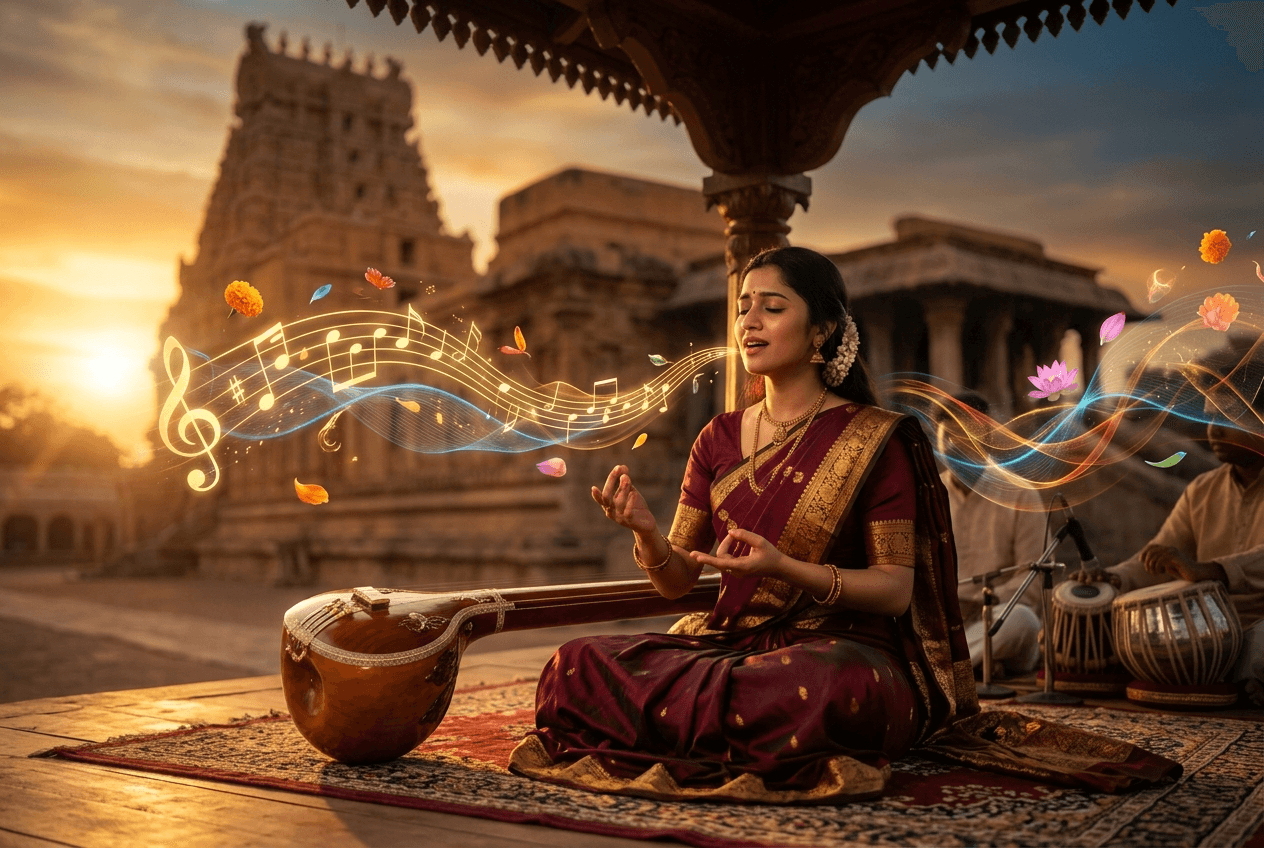 The most important idea to grasp first is that a raga is more than a scale. A Western scale is simply a ladder of notes, but a raga is a living melodic framework, a set of notes combined with rules and characteristic phrases that together evoke a specific mood. The Sanskrit root of the word means to colour, and tradition describes a raga as that which colours the mind. Think of it less as a fixed staircase and more as a personality, with its own feeling and its own favourite notes. Our beginners guide to ragas explores this idea further for those who want to go deeper.
The Seven Swaras: The Alphabet of the Raga
Every raga is built from the swaras, the seven basic notes of Indian music, sung as Sa, Re, Ga, Ma, Pa, Dha and Ni. These correspond loosely to the Western do, re, mi and so on. With the addition of flat and sharp variants, there are twelve notes in all, just as in Western music. If the swaras are the alphabet, a raga is a kind of word built from a specific selection of those letters, arranged and emphasised in a particular way. Children often learn these swaras first, through the cheerful call and response of sargam, long before they meet any single raga by name.
The Building Blocks of a Raga
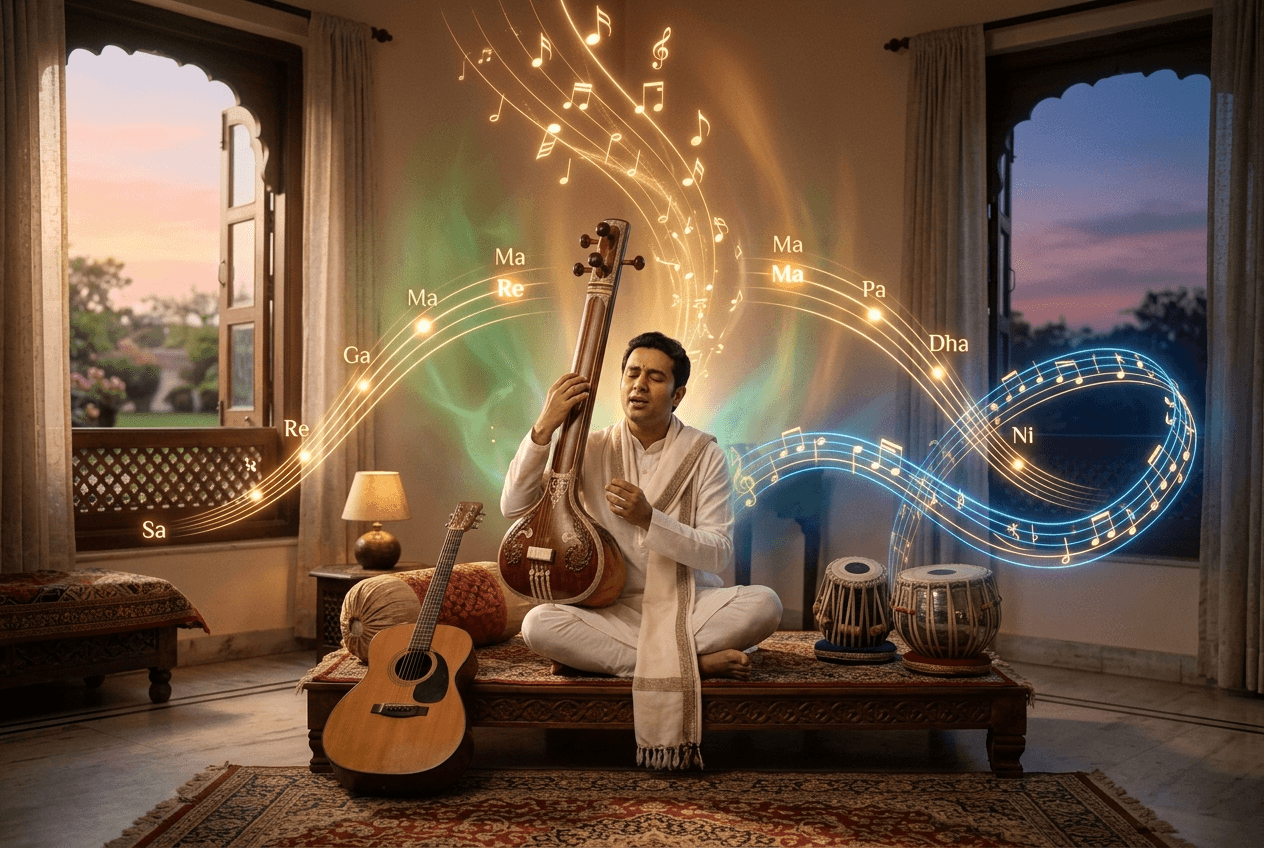 A few key elements give each raga its identity. The aaroh and avaroh are the ascending and descending patterns of notes, defining the raga's basic shape. The vadi and samvadi are the most important and second most important notes, the emotional centre of gravity. The pakad is a signature melodic phrase that makes a raga instantly recognisable to a trained ear. Together with its mood and its preferred time, these elements are what separate one raga from another, even when they share many of the same notes.
Rasa and Samay: Mood and Time of Day
Two of the most enchanting features of the raga system are rasa and samay. Rasa is the emotional flavour of a raga, its capacity to evoke serenity, longing, joy or devotion. Samay is the traditional time of day, or sometimes the season, when a raga is believed to sound most powerful. Morning ragas like Bhairav feel meditative, evening ragas like Yaman feel romantic and elegant, and late night ragas like Malkauns feel deep and introspective. This connection between music and the natural rhythm of the day is unique to Indian classical music and endlessly fascinating to explore as a family.
Thaat and Melakarta: How Ragas Are Organised
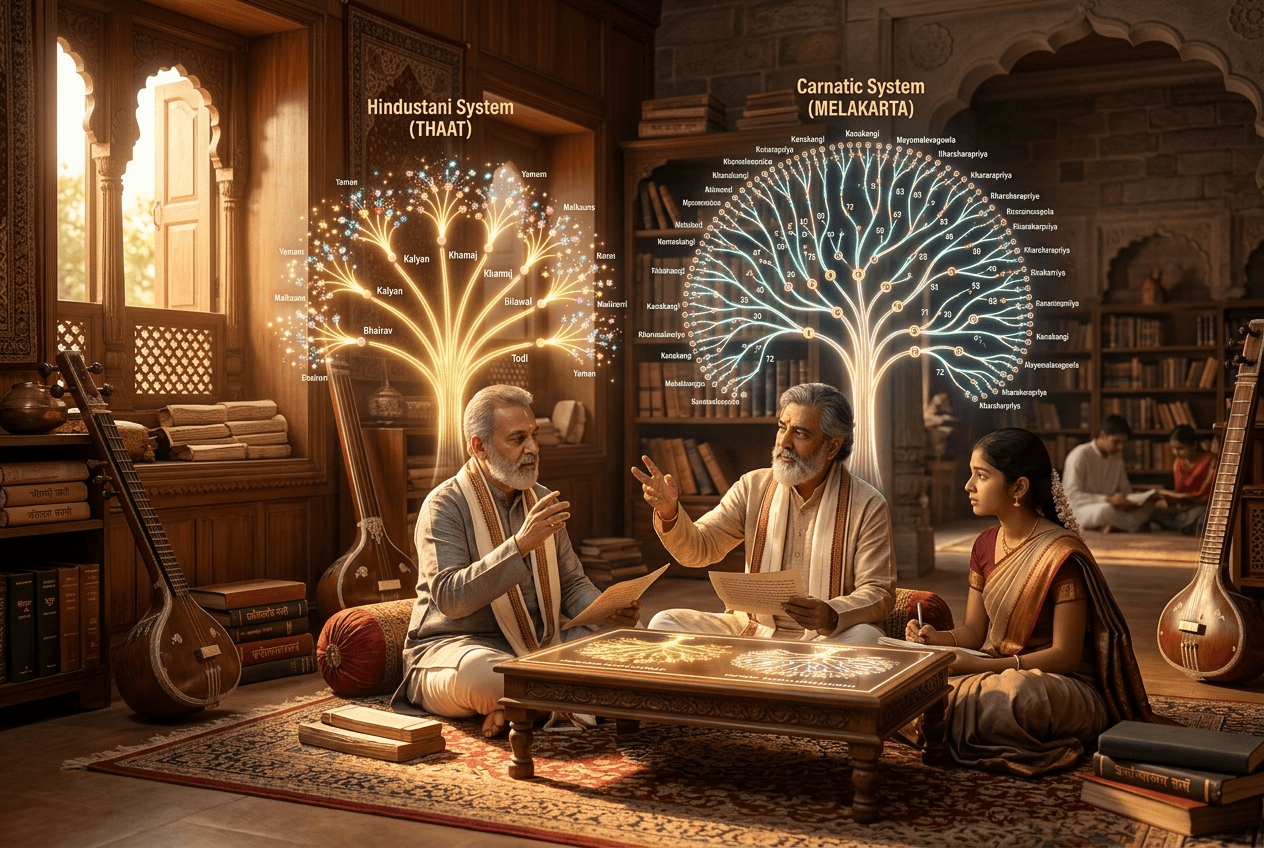 With so many ragas, musicians use parent frameworks to organise them. In Hindustani, the North Indian tradition, ragas are grouped under ten parent scales called thaats, such as Bhairav, Kafi, Khamaj and Kalyan, a system codified by the scholar Bhatkhande. In Carnatic, the South Indian tradition, ragas are organised under seventy two parent scales called melakartas, from which many derived ragas flow. If your family roots span both North and South India, our Carnatic vs Hindustani guide](https://www.artgharana.com/blogs/vocal/carnatic-vs-hindustani-classical-music) explains how these two great systems relate.
Beginner Ragas Worth Knowing
A handful of ragas make wonderful first encounters. Yaman, an evening raga, is elegant and soothing and often the first taught to beginners. Bhairav is deep and meditative, perfect for early mornings. Bhupali, a gentle pentatonic raga of just five notes, is especially friendly for children and new learners. Kafi is earthy and expressive, common in folk and semi classical songs. Listening to these with your children, and learning to recognise their moods, is a rewarding way in. Our guide to Indian raga music offers more starting points to listen for.
Improvisation: Where the Raga Comes Alive
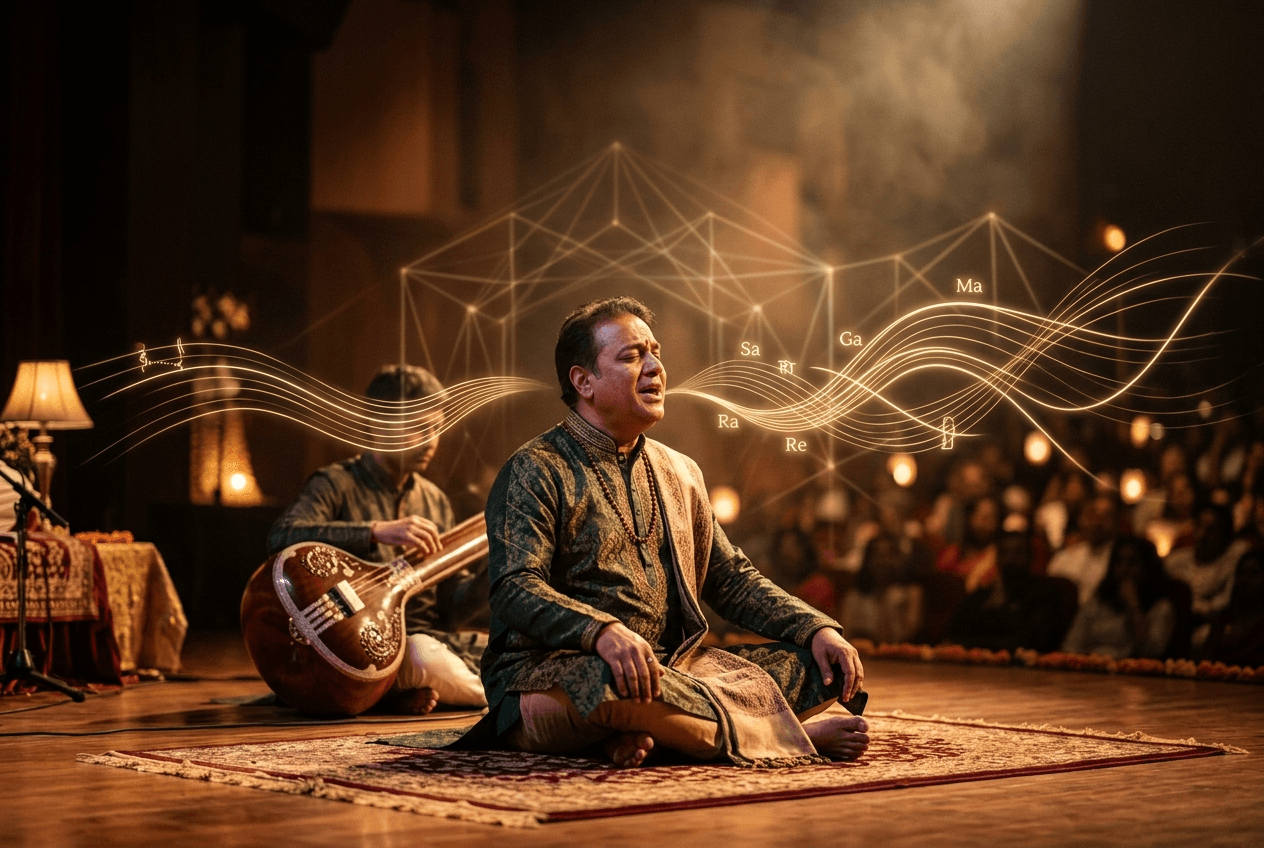 One of the most beautiful aspects of the raga is that it is a framework for improvisation, not a fixed tune to be repeated. In a Hindustani performance, a musician often begins with an alap, an unmetered, meditative exploration of the raga's notes and mood, gradually unfolding its character before any rhythm enters. Within the raga's rules, the artist creates fresh sequences of notes in the moment, which is why no two performances are ever quite the same. This blend of strict structure and free creativity is the very heart of Indian classical music.
How a Family Can Start Exploring Ragas
You do not need to be a musician to begin appreciating ragas as a family. Start by listening together, perhaps a morning raga with breakfast and an evening raga at dinner, and talk about how each one feels. For those who want to learn actively, live Hindustani vocal classes or Carnatic vocal classes introduce ragas through singing, while flute classes let a learner explore ragas on the gentle bansuri. A good teacher makes this structured world feel approachable from the very first lesson.
About Art Gharana
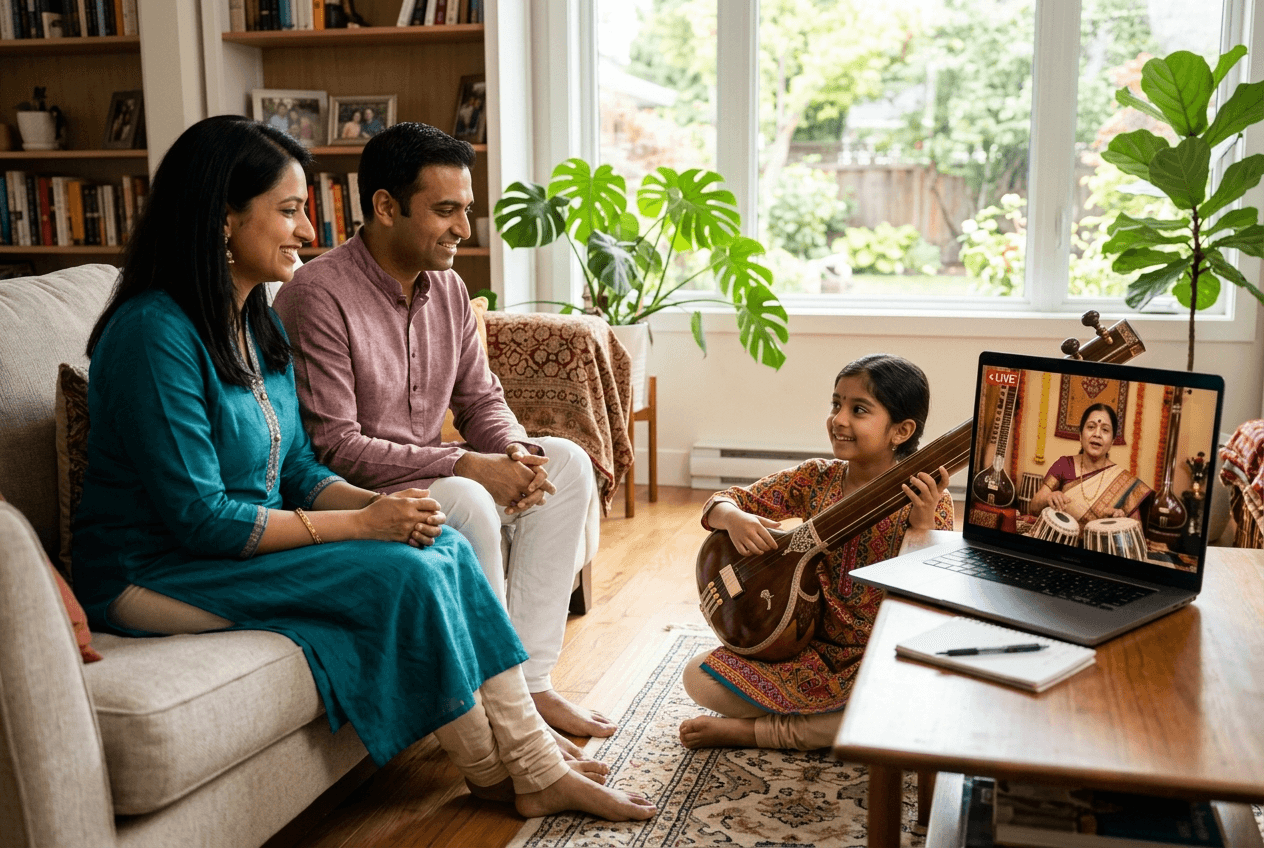 Art Gharana offers live one to one online vocal and instrumental classes for Indo-Canadian families, where certified teachers introduce ragas step by step, from the first swaras to a first full raga. Review plans and pricing and book a free trial class to begin exploring this beautiful world with a patient guide.
Frequently Asked Questions
1. What is a raga in simple terms?
A raga is a melodic framework, a set of notes combined with rules and characteristic phrases that shapes a melody to evoke a particular mood. It is more than a scale, and is often described as that which colours the mind.
2. What is the difference between a raga and a scale?
A scale is just a sequence of notes. A raga uses a selection of notes but adds rules about how they ascend and descend, which notes are emphasised, a signature phrase, a mood and even a preferred time of day, giving it a distinct character a scale does not have.
3. Which raga should a beginner learn first?
Yaman is a very common first raga, prized for being elegant and approachable. The pentatonic Bhupali, with only five notes, is also especially friendly for children and absolute beginners.
Why Ragas Matter to Indo-Canadian Families
For families raising children in Canada, the raga is more than a musical concept, it is a doorway to heritage. Understanding ragas deepens a child's connection to the devotional songs sung at home, the film melodies that fill family gatherings, and the classical performances at community festivals across the Greater Toronto Area, Vancouver and beyond. When a child can hear why a particular song feels the way it does, they connect more richly with their culture. Sharing the raga, even just by listening together and naming the moods, becomes a quiet, joyful way of passing tradition across generations.
The Wellbeing Side of Ragas
Beyond heritage, many families are drawn to the calming, centring quality of raga music. The tradition's long held belief that different ragas suit different times of day echoes something modern wellness has rediscovered, that aligning the music we hear with our natural daily rhythms can soothe and focus the mind. A gentle morning raga can ease the start of a busy Canadian day, and a soft evening raga can help a household wind down. Used this way, ragas become not just a subject to study but a small, restorative practice woven into family life.
Ragas in Music You Already Know
One of the most delightful discoveries for a beginning family is that ragas are not confined to formal classical concerts. Countless beloved film songs, devotional bhajans and ghazals are built on ragas, often without listeners ever realising it. Once you begin to recognise the mood and contours of a few ragas, you start hearing them everywhere, in a favourite old melody or a film score that always moved you. This is a wonderful way to engage children, showing them that the music of their everyday life is quietly rooted in this ancient, structured tradition.
Common Misconceptions About Ragas
A few misunderstandings often discourage beginners needlessly. The first is that ragas are impossibly complex and only for trained experts, when in fact the basic idea is simple and the early ragas are genuinely approachable. The second is that a raga is just a scale, when it is really a whole personality of mood, movement and phrase. The third is that you must master music theory before you can enjoy ragas, when listening with attention is itself the best first step. Cleared of these myths, the raga becomes far less intimidating and far more inviting.
How Ragas Are Taught to Beginners
A good teacher introduces ragas gradually and patiently, never all at once. Lessons usually begin with the swaras and sargam, building a secure sense of pitch, before a first simple raga such as Bhupali or Yaman is introduced through easy exercises and short compositions. The teacher explains the raga's aaroh and avaroh, points out its signature phrase, and describes its mood, so the student understands what they are singing rather than merely copying. Over time, one raga at a time, a learner's inner map of this world fills in, and what once seemed mysterious becomes familiar and beloved.
A Lifetime of Discovery
Perhaps the most beautiful thing about the raga is that it rewards a lifetime of exploration. A beginner can enjoy and recognise a few ragas within weeks, yet even master musicians describe themselves as endlessly discovering new depths in ragas they have sung for decades. This means there is no pressure to learn everything quickly, and no point at which the journey is finished. For a family, it offers a shared interest that can grow with a child for years, from first delighted listening to confident singing, and perhaps to a lifelong love of this extraordinary art.
Two Traditions, One Shared Idea
It is worth understanding that the raga belongs to both great streams of Indian classical music, yet each treats it a little differently. The Hindustani tradition of North India places great emphasis on improvisation, often unfolding a raga slowly and meditatively, giving the artist wide freedom to explore its mood. The Carnatic tradition of South India leans more toward composed pieces, with intricate rhythmic structure and a rich repertoire of kritis built on ragas. For an Indo-Canadian family whose roots may lie in either region, or both, it is reassuring to know that the underlying idea of the raga is shared, even as the flavour of its presentation differs between North and South.
What is a Tala, and How It Pairs With a Raga
If the raga governs melody, its rhythmic partner is the tala, the cycle of beats that gives a performance its pulse and structure. In Hindustani music the tabla articulates the tala, while in Carnatic music the mridangam fills that role, and in both the interplay between the melodic raga and the rhythmic tala creates the dynamic, living quality of the music. A performance often begins with the free, unmetered alap, exploring the raga alone, before the tala enters and the music gains momentum. Understanding that melody and rhythm work hand in hand helps a beginner appreciate what is actually happening in a piece they are hearing.
Listening Is the First Skill
For a family beginning to explore ragas, the single most valuable activity is simply listening, attentively and often. Long before anyone learns to sing a raga, the ear learns to recognise its mood, its characteristic phrases and the way it rises and falls. Put on a recording of a renowned artist and listen together, noticing the dominant notes, the ornamentation and the signature phrase that recurs. This patient, focused listening trains the ear in a way no amount of theory can, and it is something the whole family can do together, turning the living room into a gentle classroom for the heart as much as the head.
Ragas and the Seasons
Beyond the time of day, many ragas are also linked to the seasons, adding yet another dimension to this rich system. There are monsoon ragas that evoke the longing and relief of the rains, spring ragas that capture freshness and renewal, and others tied to particular festivals and moods of the year. For a family in Canada, where the seasons differ so sharply from those of India, there is something poignant and connecting about listening to a monsoon raga or a spring raga and feeling, through the music, a thread back to the rhythms of an ancestral home. It is a small, beautiful way to keep a distant landscape present.
Why the Same Raga Can Sound Different
Newcomers are sometimes puzzled to hear the same raga sound quite different in two performances, but this is the system working exactly as intended. Because a raga is a framework for improvisation rather than a fixed tune, two artists, or even the same artist on two occasions, will explore its possibilities in their own way, emphasising different phrases and creating fresh sequences of notes within its rules. This is not inconsistency but the very freedom that makes the music endlessly alive. Recognising this helps a beginner listen for the raga's underlying character rather than expecting a single, repeatable melody.
Teaching Children to Hear Ragas
Children are often more receptive to ragas than adults expect, especially when the introduction is playful. Naming the mood of a raga, asking whether it sounds happy, calm or a little sad, turns listening into a game children enjoy. Connecting a raga to a familiar film song or bhajan built on it makes the abstract suddenly concrete. Over time, a child who has listened and sung sargam begins to absorb the feel of particular ragas almost without effort, in the same intuitive way they absorb language. Approached gently and joyfully, the raga becomes not a daunting subject but a natural part of a child's musical world.
From Listening to Singing Your First Raga
Once the ear is comfortable, the step into actually singing a raga is smaller than it seems. With a teacher's guidance, a learner practises the swaras and sargam, then meets a first gentle raga such as Bhupali or Yaman through simple exercises that drill its aaroh and avaroh and introduce its signature phrase. Short compositions follow, sung slowly at first, until the raga begins to feel familiar in the voice as well as the ear. This progression, from listening to recognising to singing, is the natural path every student travels, and a patient teacher makes each step feel achievable and rewarding.
Final Thoughts
The raga can seem mysterious from the outside, but at its heart it is a simple and beautiful idea, a framework of notes and rules shaped to colour the mind with a particular feeling. For Indo-Canadian families, understanding it opens a deeper connection to heritage, a source of calm, and a shared journey of discovery that can span generations. Begin gently, by listening together and naming the moods, and when curiosity grows, a patient teacher can guide your family from the first swara to a first full raga, and into a world that never stops giving.
The Quiet Power of the Tanpura Drone
If you listen closely to almost any Indian classical performance, you will hear a soft, continuous drone beneath the melody, traditionally produced by an instrument called the tanpura. This unbroken backdrop of the raga's home note anchors the whole performance, giving the singer or instrumentalist a constant reference and lending the music its characteristic depth and stillness. For a family beginning to listen, noticing this drone is a lovely first discovery, and simple tanpura apps now let anyone hear it at home. Singing the swaras gently against a drone is also one of the first things a student does, training the ear to hold pitch and feel the gravity of the raga's central note.
A Simple Listening Practice for the Whole Family
You do not need lessons, instruments or any training to begin enjoying ragas as a household, only a little intention. Try choosing one raga to listen to together each week, perhaps a calm morning raga at breakfast on weekends, and talk afterwards about how it made everyone feel. Over a few weeks, family members start to recognise moods and even name a raga they have heard before, which is genuinely exciting for children. This gentle, shared ritual costs nothing, deepens everyone's connection to the music, and quietly lays the groundwork should a child later wish to learn actively. Often, curiosity grows naturally from exactly this kind of unhurried listening.
Patience and the Joy of Small Recognitions
The world of ragas is vast, and that vastness is a feature, not an obstacle. There is no need, and no way, to absorb it all at once, and the pleasure lies in the small, accumulating recognitions along the way. The first time a child correctly senses that a raga sounds peaceful, the first time a parent recognises a familiar film melody as belonging to a particular raga, the first time the family agrees that an evening raga simply feels right at dusk, these are real and joyful milestones. Approached with patience and curiosity rather than pressure, the raga reveals itself gradually, and each small recognition becomes its own quiet reward.