ChatGPT
 Google AI
 Grok
 Claude

You have probably felt it before you could name it. A few notes of Indian classical music drift past, and somehow they carry a mood, dawn, longing, devotion, joy, before a single word is sung. That is the work of a raga. Yet when people try to define a raga, they usually reach for the word scale, and that is where the confusion begins, because a raga is far more than a scale.
This guide explains what a raga actually is, in plain language, while staying true to the real musical detail. We will look at the notes that give a raga its identity, the hierarchy among those notes, how a raga carries a specific mood and even a time of day, and we will carefully clear up a confusion you may have met in wellness writing: the difference between the musical raga and the very different raga of yoga philosophy. By the end, you will hear Indian classical music with new ears.
A Raga Is Not a Scale
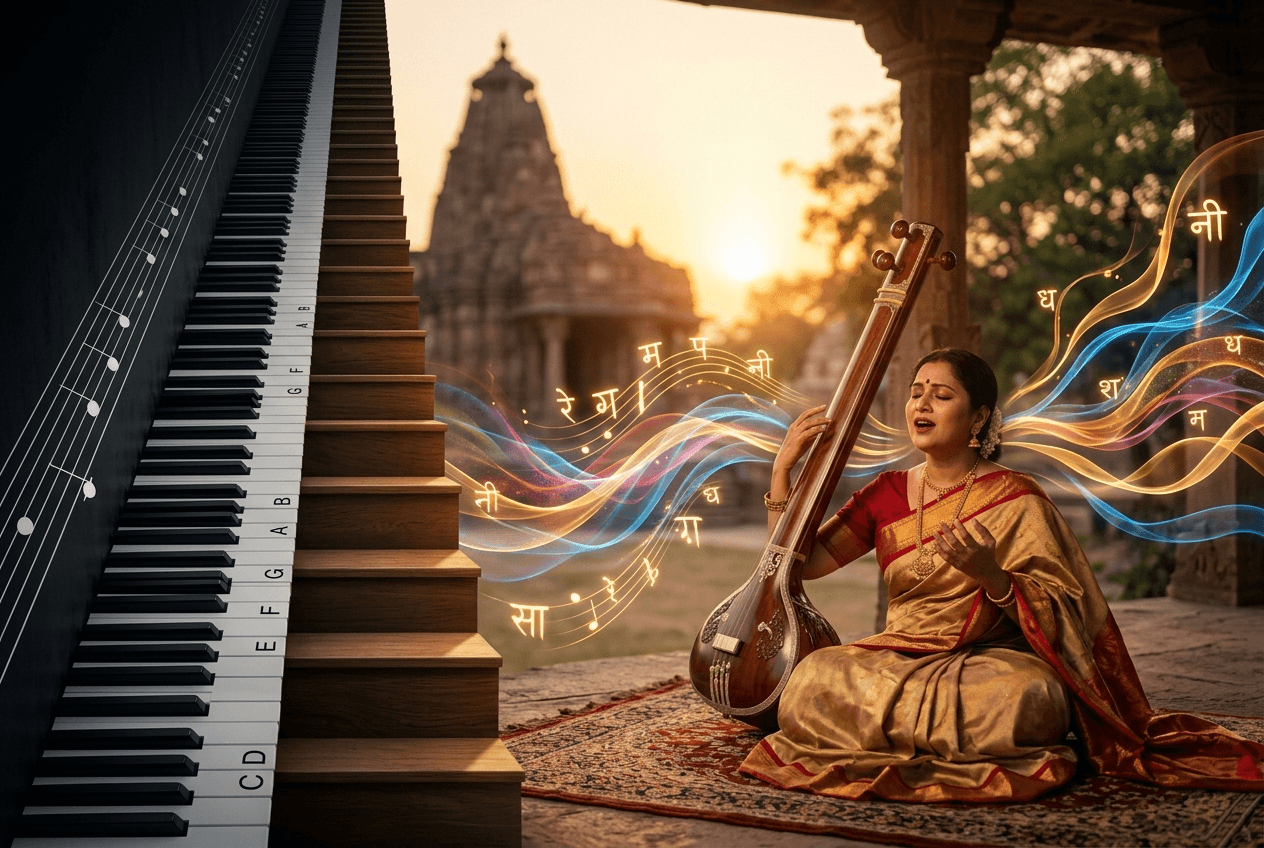 Let us start by retiring the most common misunderstanding. A Western scale is a fixed ladder of notes: play them in order and you have the scale. A raga uses a set of notes too, but it is better thought of as a complete melodic personality, a set of rules and tendencies for how those notes behave. Two ragas can use the very same notes and still be entirely different pieces of music, because what defines a raga is not only which notes it uses but how they are used: which notes are stressed, which are touched lightly, how the melody rises and falls, and which phrases give it away.
A useful way to put it is that a raga is a melodic framework that colours the mind with a particular feeling. It sits somewhere between a scale and a composition: more structured than a scale, more open than a fixed song. Within a raga grammar, a musician improvises freely, which is why two performances of the same raga can feel fresh and different while remaining unmistakably the same raga. Art Gharana own beginner guide to Indian raga music is a good companion to this overview, and the broader beginner guide to ragas goes further into the families of ragas.
The Building Blocks of a Raga
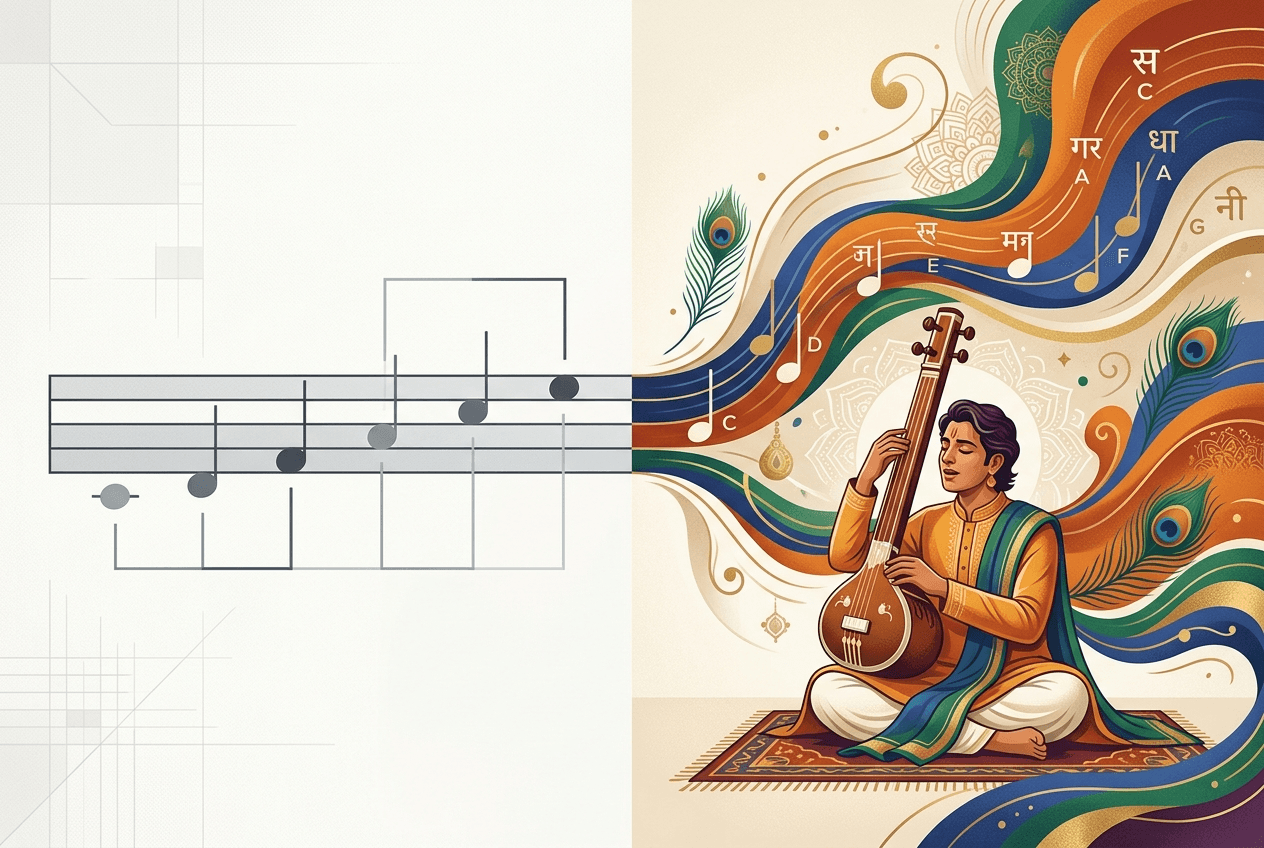 Every raga is assembled from a handful of components. Once you can name them, the music stops being mysterious and starts being legible.
Swaras: the seven notes
Indian classical music uses seven basic notes, or swaras: Sa, Re, Ga, Ma, Pa, Dha and Ni, the equivalents of do, re, mi and so on. Several of these have natural and altered (flat or sharp) variants, and the particular selection a raga uses is the first thing that shapes its character.
Aroha and avaroha: the ascent and descent
Every raga has a defined way of going up, the aroha, and coming down, the avaroha. These are not always mirror images. A raga might skip a note on the way up that it includes on the way down, or take a slightly zig zag path. This ascending and descending shape is a core part of a raga identity.
Vadi and samvadi: the king and the minister
This is the detail that most simple explanations miss, and it is the heart of why two ragas with identical notes sound different. Within a raga, the notes are not equal. One note, the vadi, is the most prominent, often called the king note. The melody returns to it, rests on it, and draws its emotional centre from it. A second note, the samvadi, is the next most important, often called the minister or vizier, and it usually sits a fourth or a fifth away from the vadi. Together, the vadi and samvadi anchor the raga and carry much of its mood.
How much does this matter? Enough that ragas sharing exactly the same notes can be told apart almost entirely by their vadi and samvadi. The classic example is a pair of ragas built on the same five notes that nonetheless sound distinct, because one leans on one note as its king and the other leans on a different note. Change the king and minister, and you change the whole feeling, even with the same raw material. This hierarchy of notes is what turns a scale into a living raga.
Pakad: the signature phrase
Each raga also has a pakad, a characteristic phrase or two that act like a musical signature. The moment a trained listener hears the pakad, they recognise the raga, the way you recognise a friend by their walk. Musicians return to the pakad throughout a performance to keep the raga identity clear even as they improvise around it.
Thaat: the parent scale
Finally, in the Hindustani (North Indian) system, ragas are grouped under ten parent scales called thaats. A thaat is essentially the key signature a raga belongs to, telling you which variants of the notes are in play. Raga Yaman, for instance, belongs to the Kalyan thaat, marked by its luminous sharp Ma. Thaats are a way of organising the vast family of ragas into understandable groups.
How a Raga Carries a Mood and a Time
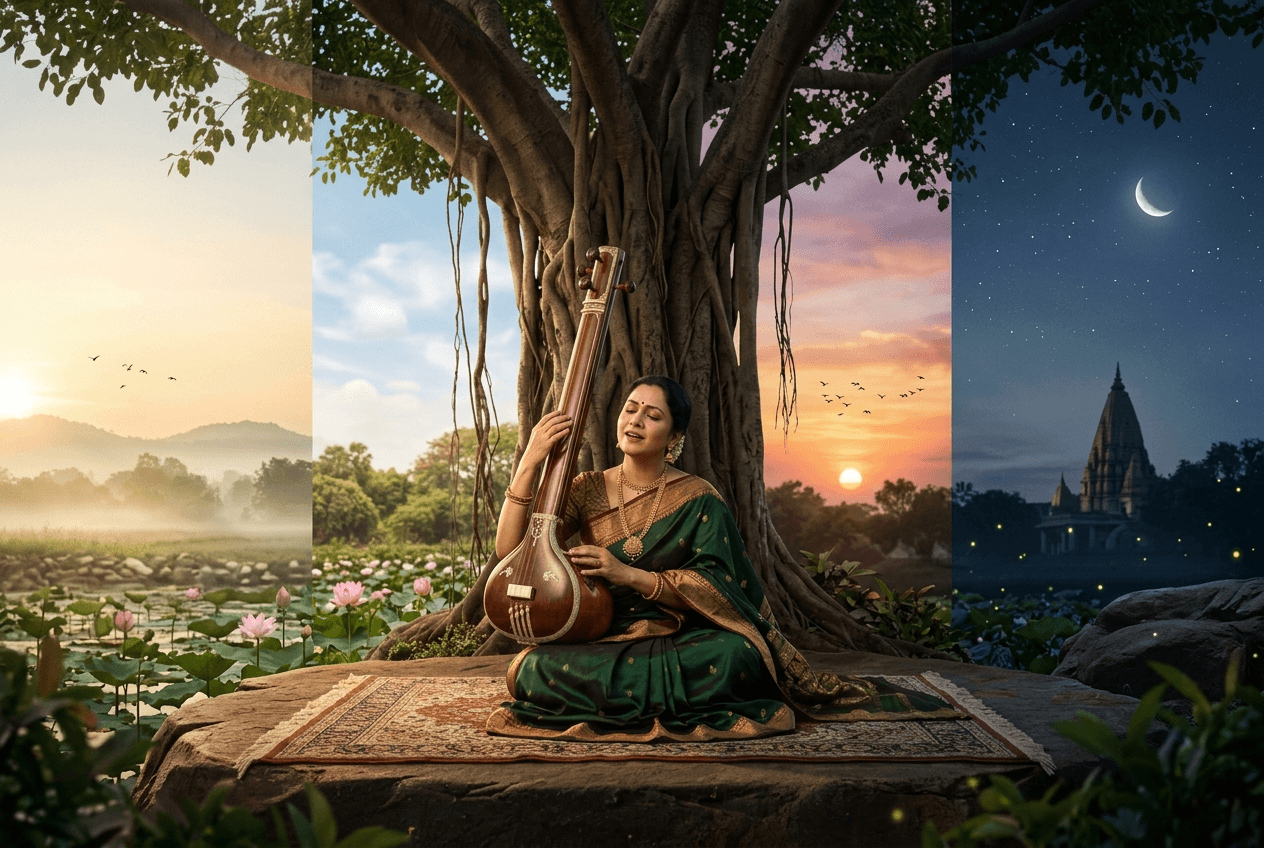
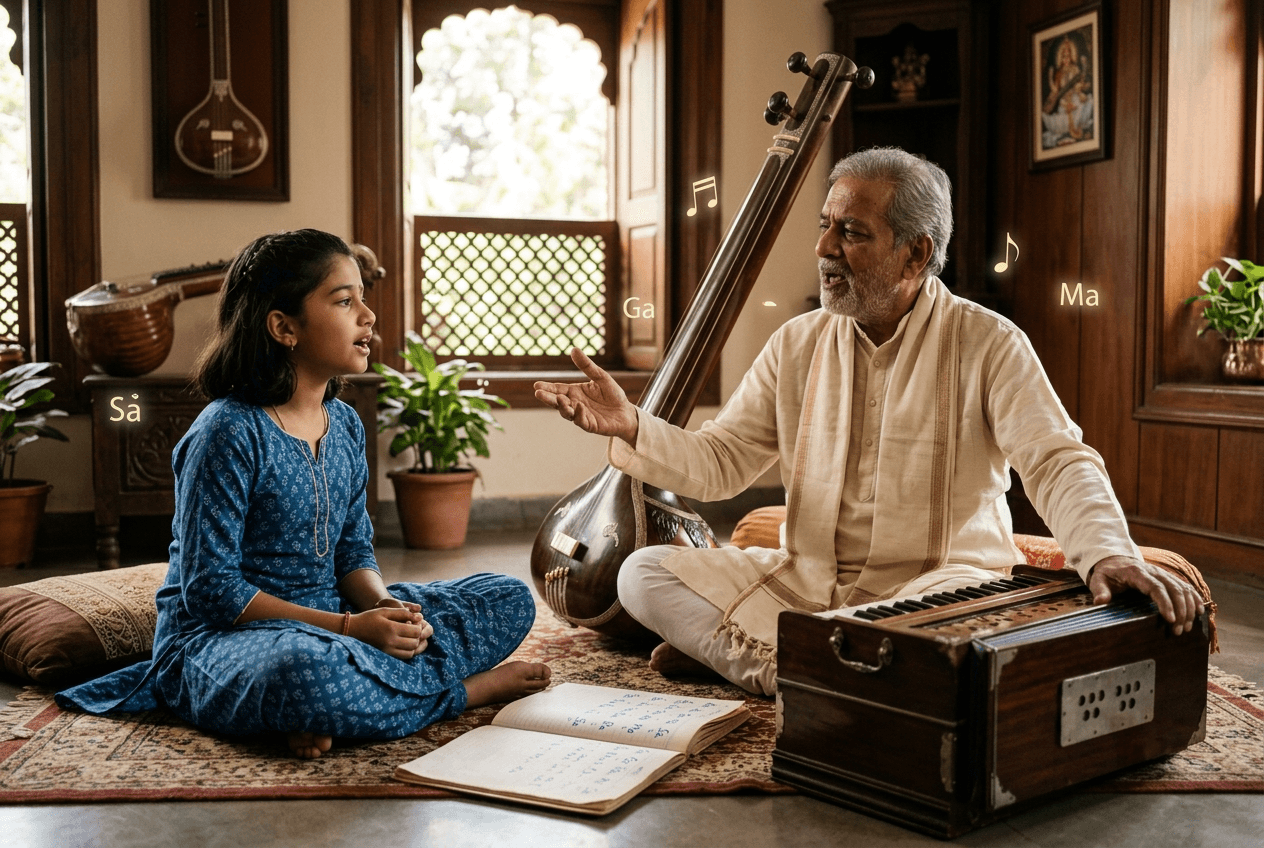 Here is where Indian classical music does something most other traditions do not. Each raga is associated with a particular emotional flavour, a rasa, and very often with a specific time of day or season when it is traditionally performed. Raga Yaman unfolds in the early evening with a feeling of grace and devotion. Morning ragas like Bhairav carry a serene, meditative calm. Monsoon ragas are sung to evoke the rains. This is not superstition; it is a refined system that matches the colour of certain note combinations to the mood of a moment.
This is why a raga can move you before you understand anything about it. The structure, the chosen notes, the king and minister, the rising and falling shape, has been refined over centuries to evoke a specific feeling. When people say a raga has a soul, this is what they mean: a deliberate, time honoured design for stirring a particular emotion. Art Gharana explores this beautifully in its piece on why Indian music sounds so different from Western traditions.
The Confusion Worth Clearing Up: Raga in Music Versus Raga in Yoga
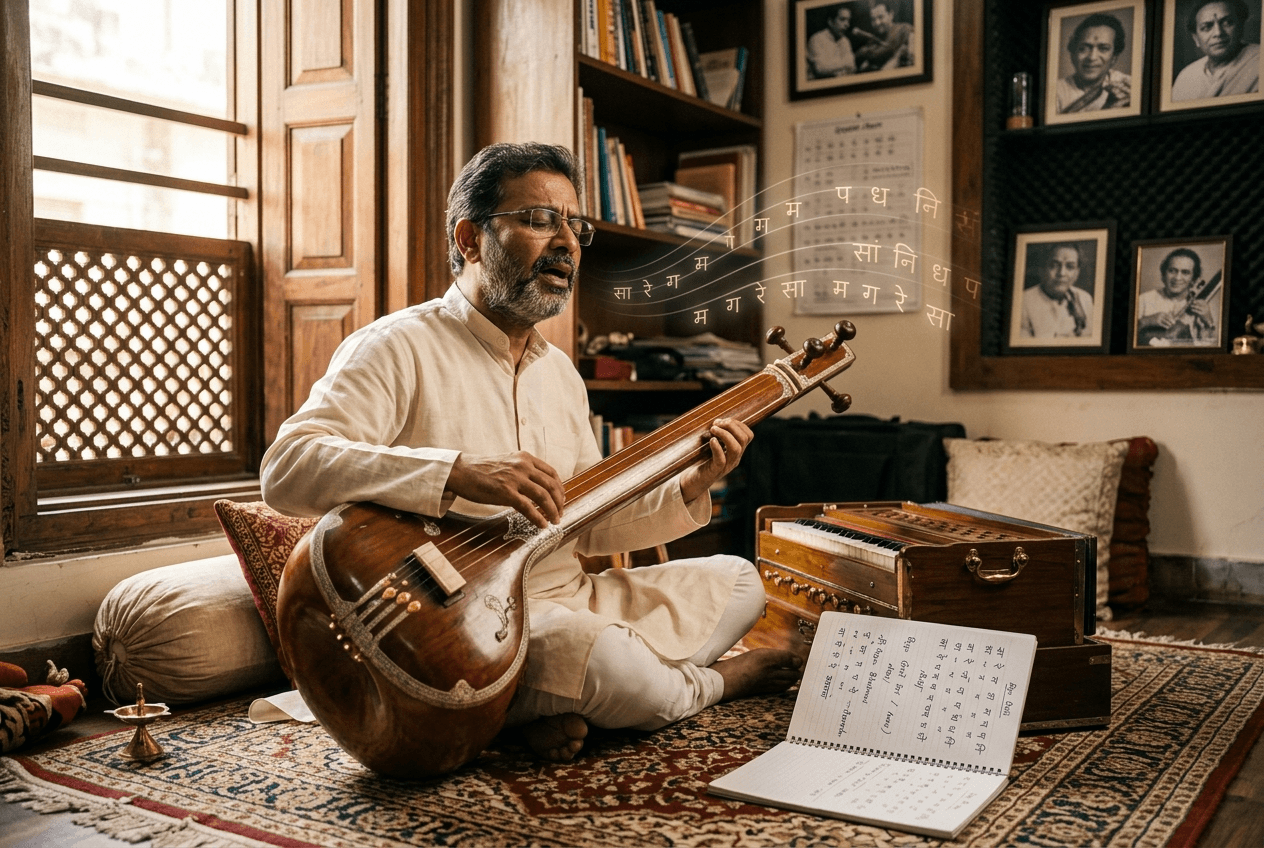 If you have read wellness or yoga content, you may have met the word raga in a completely different context, and the two are often carelessly blended together. They should not be, so let us set the record straight, because the distinction is genuinely interesting.
Both meanings come from the same Sanskrit root, ranj, which means to colour or to tint. From that single root grew two very different ideas. In music, a raga is that which colours the mind with a mood: a melodic framework, exactly as we have described. In the philosophy of yoga, however, raga means something quite different. In Patanjali Yoga Sutras, raga is one of the five kleshas, the afflictions or obstacles of the mind, and there it means attachment or craving, the pull toward pleasure that binds us. In that tradition, raga is something to understand and ultimately move beyond, not a melody to enjoy.
So the same word names a beautiful musical form in one tradition and a mental affliction to be transcended in another. They are linked only by that shared root idea of colouring the mind. Wellness writing sometimes blurs the two, implying that listening to a musical raga is somehow the yogic raga, or treating the two as one spiritual concept. They are not the same thing. A musical raga is an art form that can certainly calm or uplift you; the yogic raga is a category of attachment in a philosophy of the mind. Holding the distinction clearly does justice to both, and it is the kind of precision that separates a trustworthy guide from marketing copy.
A Quick Reference Table
Carnatic and Hindustani: Two Homes for the Raga
The raga is central to both great traditions of Indian classical music, the Hindustani music of the north and the Carnatic music of the south, though they treat it with their own accents. Hindustani performance often unfolds a raga slowly, beginning with an unmetered exploration before rhythm enters, prizing expansive improvisation. Carnatic music typically frames a composition with improvisatory passages shaped to the raga grammar, with intricate ornamentation. The underlying idea, a melodic framework that evokes a mood, is shared. If you are curious about the wider landscape, the overview of the types of Indian music maps out where ragas sit among the many forms.
How Beginners Actually Start Learning Ragas
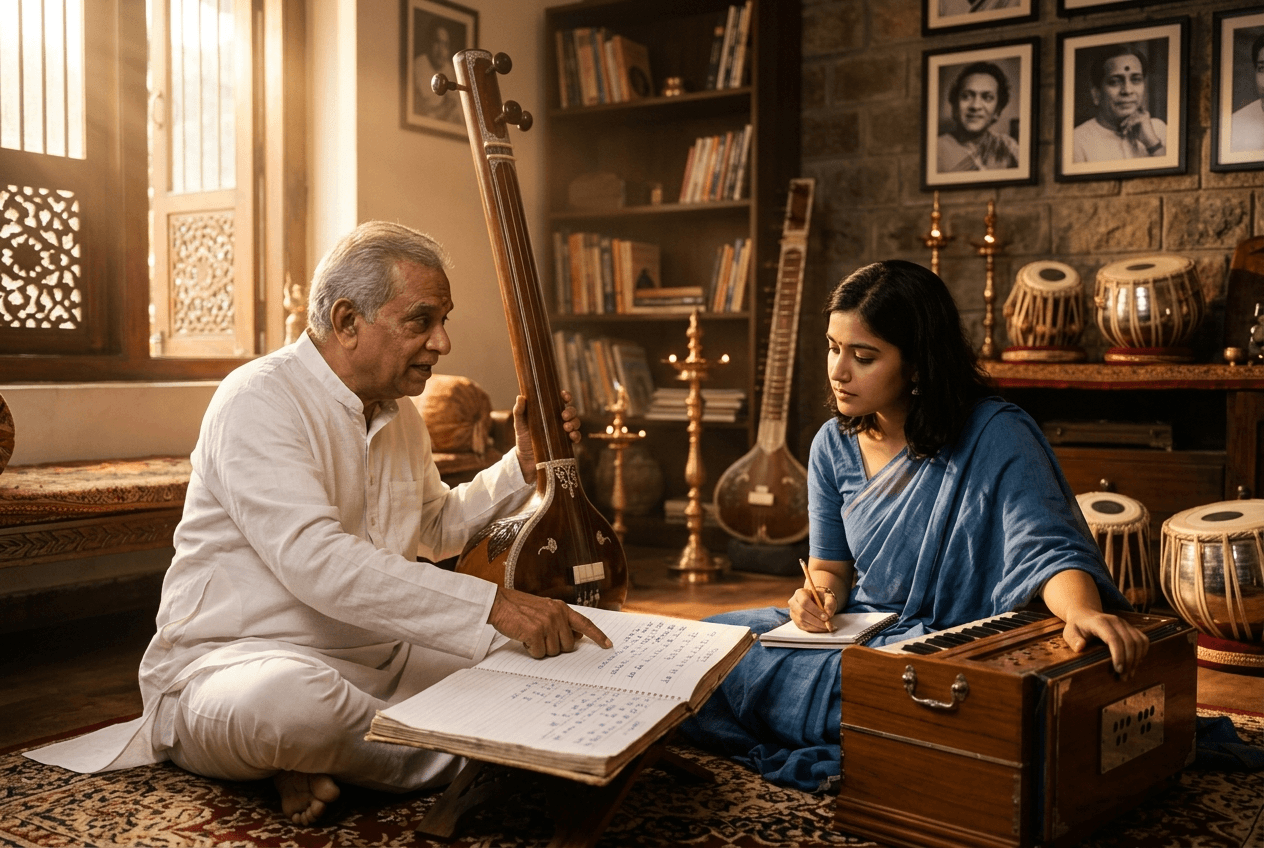
 You do not learn a raga from a diagram; you learn it by singing or playing it, slowly, under guidance. Most beginners start with an accessible raga such as Yaman, often called the beginner blueprint because its structure is clear and its mood is gentle. You learn its aroha and avaroha, then its pakad, then simple compositions, and gradually the raga becomes part of your ear and your voice. A teacher is essential here, because so much of a raga lives in subtle ornamentation and phrasing that no notation fully captures. Structured Hindustani vocal classes or Carnatic vocal classes are the natural way in, and the complete Hindustani music journey guide lays out the path from first note to confident raga singing.
You do not need to be a trained musician to begin appreciating ragas either. Listening with intention, picking one raga and hearing several renditions, noticing how the mood shifts between a morning and an evening raga, trains your ear surprisingly fast. And if the music moves you enough to want to make it yourself, a single free trial class is an easy first step.
Why Ragas Sound Improvised Yet Disciplined
One of the most beautiful paradoxes of Indian classical music is that a raga performance feels spontaneous and freely improvised, yet it is bound by strict rules. Both halves of that are true at once. A skilled performer is genuinely improvising, never playing the same thing twice, inventing melodic phrases in the moment. But every phrase must stay inside the grammar of the raga: the right notes, the right ascent and descent, the right emphasis on the king and minister notes, the right pakad surfacing now and then to keep the identity clear.
Think of it like a language. A fluent speaker improvises every sentence they say, yet never breaks the rules of grammar, and you always recognise the language. A raga works the same way. The rules are not a cage; they are what make the freedom meaningful. This is also why learning ragas takes a teacher and time. You are not memorising a fixed tune, you are absorbing a grammar deeply enough to speak in it spontaneously. That is a slower and richer process than learning a song, and it is the reason a single raga can sustain a performance lasting an hour or more without ever feeling repetitive.
A Few Famous Ragas and Their Moods
Putting names to the idea makes it concrete. A handful of well loved ragas show how clearly each one carries its own character, and they are a good listening starting point for a newcomer.
• Yaman, an early evening raga of grace and devotion, often the first raga a beginner learns because its structure is so clear. • Bhairav, a serene, meditative morning raga with a contemplative, almost prayerful quality. • Malkauns, a deep, introspective raga traditionally associated with the late night and a sense of mystery. • Desh, a bright, joyful raga linked with the monsoon and frequently borrowed by film music. • Bhairavi, a tender, devotional raga so beloved that it traditionally closes a concert, leaving the listener with a sweet ache.
If you listen to even two of these back to back, the point of this whole guide becomes obvious in seconds. You do not need theory to feel that Bhairav at dawn and Malkauns at midnight inhabit entirely different emotional worlds. That felt difference is the raga doing exactly what it was designed, over centuries, to do.
Why Understanding Ragas Deepens Your Listening
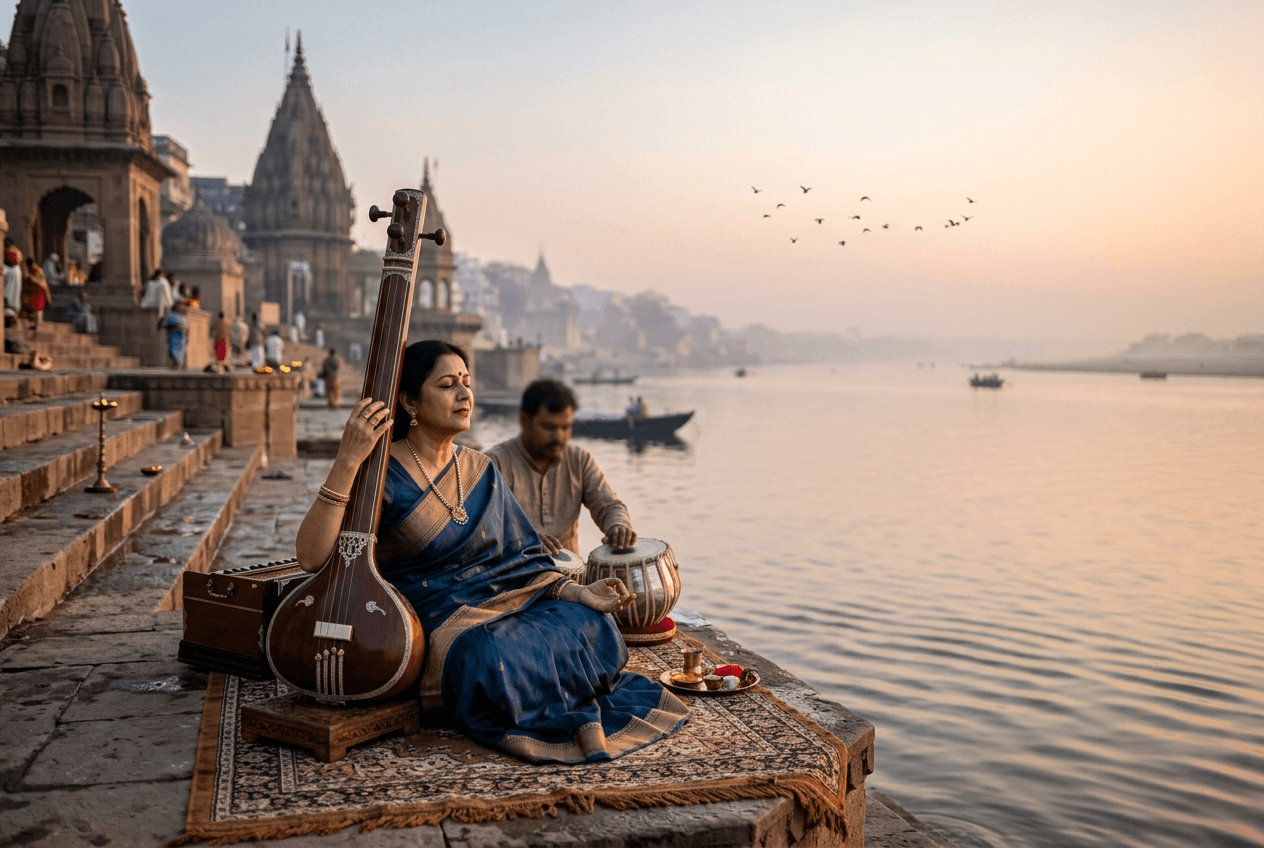 You might wonder whether any of this theory matters if you simply enjoy the music. It does, in the best way. Knowing what a raga is changes how you hear it. Once you understand that the musician is returning again and again to a king note, you start to feel that note pull at the centre of the melody. Once you know a raga has a signature phrase, you begin to catch it surfacing through the improvisation like a familiar face in a crowd. The music opens up, and a performance that once washed over you becomes something you can follow, almost like reading along with a story you are hearing for the first time.
This is why even casual listeners benefit from a little raga literacy, and why learners who understand the structure progress faster and enjoy the music more. You do not need to become a scholar. Just knowing the handful of ideas in this guide, the notes and their hierarchy, the ascent and descent, the signature phrase, and the mood, is enough to transform listening from passive to active. And the same knowledge is the foundation a student stands on when they begin to sing or play ragas themselves.
Frequently Asked Questions
1. What is a raga in simple terms?
A raga is a melodic framework in Indian classical music: a set of notes plus rules for how they behave, designed to evoke a particular mood. It is more than a scale, because the same notes can form different ragas depending on which are stressed and how the melody moves.
2. What is the difference between a raga and a scale?
A scale is just a fixed ladder of notes. A raga adds a hierarchy among the notes (the vadi and samvadi), a specific ascent and descent, a signature phrase, and an associated mood. Two ragas can share the same notes yet sound completely different.
3. What are vadi and samvadi?
The vadi is the most prominent note of a raga, often called the king note, and the samvadi is the second most prominent, the minister, usually a fourth or fifth away. Together they anchor the raga and carry much of its character.
4. Is the raga in yoga the same as the raga in music?
No. They share the Sanskrit root meaning to colour, but in music a raga is a melodic framework, while in yoga philosophy raga is one of the kleshas, meaning attachment or craving to be transcended. They are different concepts that wellness writing sometimes wrongly blends.
5. Can a beginner learn ragas?
Yes. Beginners usually start with an accessible raga like Yaman under a teacher guidance, learning its ascent, descent, signature phrase and simple compositions. You can begin with a free trial class.
The Bottom Line
A raga is the beating heart of Indian classical music: not a scale, but a living melodic framework with a hierarchy of notes, a characteristic shape, a signature phrase and a mood, often tied to a time of day. Understanding the vadi and samvadi, the king and minister notes, is the key that unlocks why two ragas built on the same notes can feel worlds apart. And the next time you meet the word raga in a yoga or wellness setting, you will know that it points to something different entirely, a concept of attachment, linked to the musical raga only by an ancient root meaning to colour the mind.
If this has made you want to hear ragas more deeply, or to sing one yourself, that is the best possible outcome. Explore Art Gharana Hindustani vocal classes and book a free trial to begin your own journey into the world of ragas.