ChatGPT
 Google AI
 Grok
Grok Claude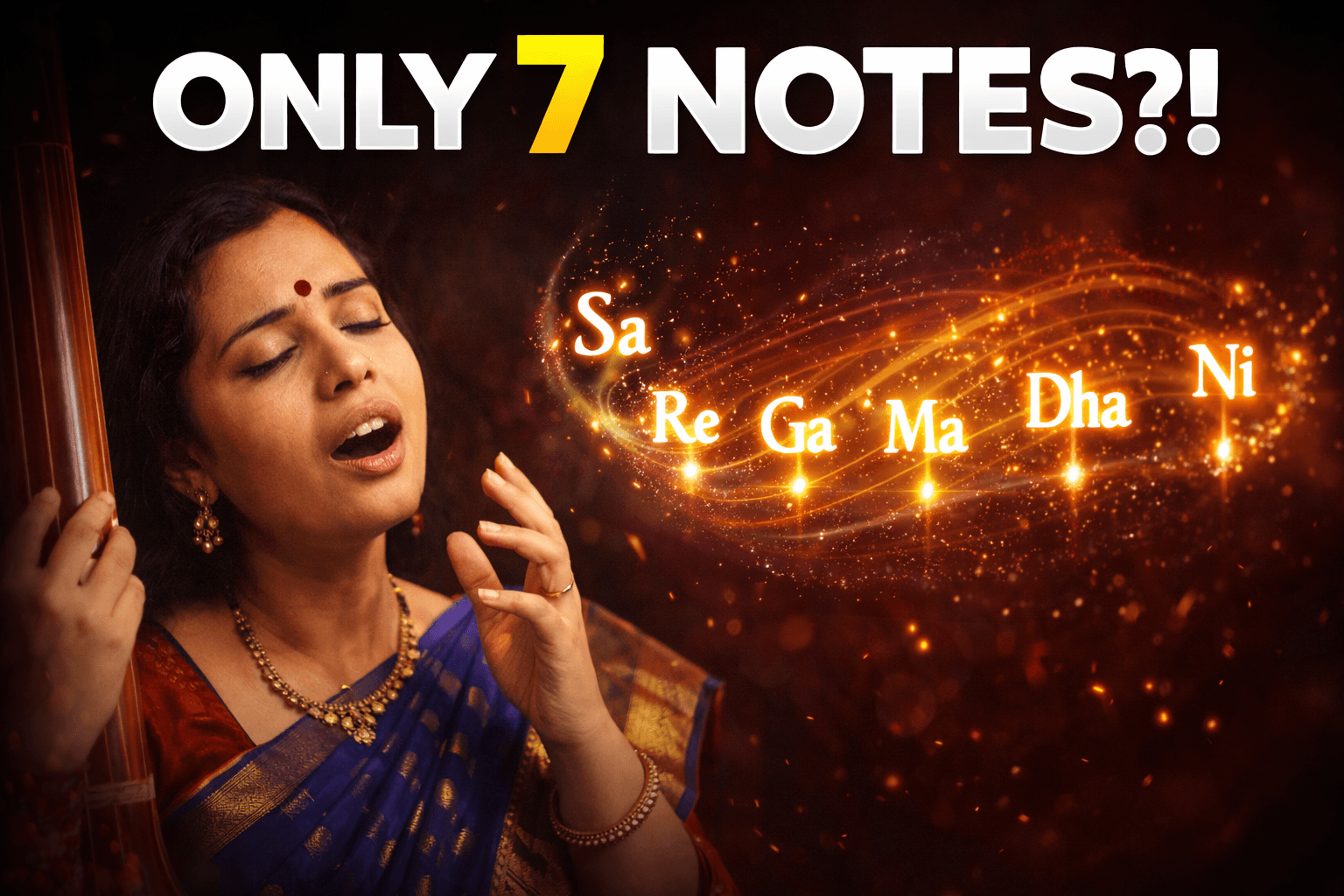
Introduction to Swaras
 Swaras are the very foundation of Indian classical music. They represent the seven musical notes that give life to melodies and ragas. The word "Swara" is derived from the Sanskrit word "Swa" (Self) and "Ra" (to Shine), symbolizing the inherent resonance of sound within us.
Each swara holds a unique pitch, emotional quality, and spiritual significance. Whether you're learning Hindustani music or just exploring, understanding swaras is the first and most essential step. They form the backbone of every raga, composition, and improvisation in Indian classical music.
At Art Gharana, we simplify this journey for students through personalized online Hindustani music classes. From understanding the basics to mastering complex ragas, we guide you every step of the way.
What Are Swaras?
 In Indian classical music, swaras are the seven fundamental musical notes, similar to the Western concept of do-re-mi. Together, they are known as "Sapta Swaras" (Sapta meaning seven).
The Seven Swaras:
- Sa (Shadja) – The root note
- Re (Rishabh) – The second note
- Ga (Gandhar) – The third note
- Ma (Madhyam) – The fourth note
- Pa (Pancham) – The fifth note
- Dha (Dhaivat) – The sixth note
- Ni (Nishad) – The seventh note
These notes are universally recognized in both Hindustani (North Indian) and Carnatic (South Indian) music systems. The sequence Sa Re Ga Ma Pa Dha Ni Sa is called Sargam, the equivalent of the Western solfege.
The Science Behind Swaras
 Every swara has a specific frequency that distinguishes it from the others. In Hindustani music, the tonic or base note (Sa) can be set to any frequency depending on the singer's or instrument's range.
For example:
- If Sa = C in Western music,
- Then Re = D, Ga = E, Ma = F, Pa = G, Dha = A, Ni = B
But in Indian classical music, Sa is not fixed. It's relative. A male vocalist might choose C as Sa, while a female might pick G or A. This flexibility allows for personalized expression.
Frequency and Pitch
Each swara resonates at a particular pitch, creating distinct sonic colors. This is why a trained ear can identify notes just by listening. Understanding this helps in:
- Recognizing ragas
- Identifying mistuned notes
- Developing perfect pitch over time
At Art Gharana, our teachers use proven techniques to train your ear and voice for accurate pitch recognition.
Types of Swaras: Shuddha and Vikrit
 Swaras are categorized into two types:
1. Shuddha Swaras (Pure Notes)
These are the natural, unaltered notes:
- Sa, Re, Ga, Ma, Pa, Dha, Ni
They represent the fundamental scale used in most basic ragas and exercises.
2. Vikrit Swaras (Altered Notes)
These are the flat or sharp variations:
- Komal Re, Komal Ga, Tivra Ma, Komal Dha, Komal Ni
"Komal" means flat (lowered), and "Tivra" means sharp (raised). These variations add depth and emotional texture to ragas.
Note: Sa and Pa do not have Komal or Tivra forms. They remain constant and are known as Achala Swaras (immovable notes).
Swaras and Emotions (Rasa)
 One of the most beautiful aspects of Indian classical music is the emotional expression tied to each swara. This is called Rasa.
Emotional Significance:
- Sa (Shadja): Peace, stability, divine connection
- Re (Rishabh): Devotion, longing
- Ga (Gandhar): Joy, playfulness
- Ma (Madhyam): Passion, intensity
- Pa (Pancham): Purity, brightness
- Dha (Dhaivat): Grace, calmness
- Ni (Nishad): Tension, anticipation
Ragas are built around these emotional colors, blending swaras to evoke specific moods—be it love, devotion, heroism, or melancholy.
Role of Swaras in Ragas
 A raga is much more than a scale. It's a melodic framework with rules about:
- Which swaras to use
- Which to emphasize (Vadi and Samvadi)
- Which to avoid or touch lightly (Varjit)
- How to move between notes (Chalan)
Example:
- Raga Yaman: Uses Tivra Ma (sharp Ma) and omits no notes.
- Raga Bhairav: Uses Komal Re and Komal Dha (flat Re and Dha).
Each raga paints a unique emotional and aesthetic picture. Understanding swaras is the key to unlocking this artistic depth.
Learning Swaras with Sargam Practice
 The foundation of vocal and instrumental training in Hindustani music is Sargam practice.
What is Sargam?
Sargam is the exercise of singing the notes—Sa Re Ga Ma Pa Dha Ni Sa—in various combinations and speeds. It trains your:
- Pitch accuracy
- Voice control
- Memory and listening skills
Types of Sargam Exercises:
- Aaroha (Ascending): Sa Re Ga Ma Pa Dha Ni Sa
- Avaroha (Descending): Sa Ni Dha Pa Ma Ga Re Sa
- Pakad (Catch phrases): Signature note patterns of ragas
- Alankars: Structured patterns for building fluency
At Art Gharana, we incorporate Sargam practice in every lesson, making it fun and effective for students of all ages.
Swaras in Instruments
 While swaras are most commonly taught through vocals, they are equally important in instrumental music.
Common Instruments and Swaras:
- Harmonium: Keys represent each swara
- Tabla: Bols (syllables) align with swaras rhythmically
- Sitar/Sarod: Strings are tuned to specific swaras
- Flute: Finger placements correspond to notes
Learning swaras on an instrument enhances your understanding of melody and rhythm. Whether you're playing or singing, the principle remains the same.
Why Learn Swaras?
Mastering swaras offers numerous benefits:
- Foundation for All Music: Every raga, taal, and composition starts with swaras.
- Improves Listening Skills: You begin to identify notes in any music you hear.
- Enhances Creativity: Knowing the notes helps you improvise confidently.
- Cultural Connection: Deepens your appreciation for Indian classical traditions.
- Mental Discipline: Regular practice sharpens focus and memory.
Whether you're a beginner or an advanced learner, swaras remain central to your musical growth.
Common Mistakes Beginners Make
When starting out, students often make these errors:
1. Ignoring Shruti (Microtones)
Indian classical music is not just about the 12 semitones. There are subtle microtones (shrutis) between notes. Pay attention to these nuances.
2. Rushing Through Sargam
Speed comes later. Focus on clarity and accuracy first.
3. Not Using a Tanpura or Shruti Box
Practicing without a reference pitch leads to inconsistent tuning.
4. Skipping Basics
Many students want to jump into ragas without mastering swaras. This weakens the foundation.
At Art Gharana, our teachers ensure you build strong fundamentals before moving to advanced concepts.
How Art Gharana Helps You Master Swaras
At Art Gharana, we believe that every student is unique. Our teaching approach is personalized, flexible, and rooted in tradition.
What We Offer:
- One-on-One Online Classes: Learn from expert gurus via live video sessions.
- Customized Curriculum: Tailored to your pace, goals, and skill level.
- Sargam and Raga Training: Structured lessons from basics to advanced.
- Flexible Scheduling: Choose class times that suit you.
- Affordable Pricing: Quality Hindustani music education for everyone.
- Comprehensive Support: Assignments, recordings, and doubt-solving sessions.
Whether you want to learn vocals, harmonium, tabla, or sitar, we have the right teacher for you.
Book your free trial class today!
Frequently Asked Questions (FAQs)
1. What are the 7 swaras in Hindustani music?
The seven swaras are: Sa, Re, Ga, Ma, Pa, Dha, Ni. They form the foundation of all ragas and compositions.
2. What is the difference between Shuddha and Komal swaras?
Shuddha swaras are pure notes, while Komal swaras are flat (lowered) versions. For example, Komal Re is a flattened Re.
3. Can I learn swaras online?
Absolutely! At Art Gharana, we offer personalized online classes where you can learn swaras, sargam, ragas, and more from the comfort of your home.
4. Why are Sa and Pa called Achala swaras?
Because they do not have flat or sharp variations. They remain constant in all ragas.
5. How long does it take to master swaras?
With consistent practice, most students develop a strong grasp of swaras within 3 to 6 months. Mastery, however, is a lifelong journey.
6. Do I need to know music theory to learn swaras?
No prior knowledge is needed. We start from scratch and build your understanding step by step.
Conclusion
Swaras are not just notes—they are the soul of Indian classical music. Understanding them opens the door to ragas, rhythms, and the rich emotional world of Hindustani music.
Whether you're a beginner exploring sargam or an advanced student diving into complex ragas, mastering swaras is essential. And the best way to learn is under the guidance of an experienced teacher.
At Art Gharana, we are committed to preserving and sharing the beauty of Hindustani music with students around the world. Our online classes make learning accessible, affordable, and enjoyable.
Ready to start your musical journey?
Explore our courses here
Book a free trial class
Read more blogs on Indian classical music