ChatGPT
 Google AI
 Grok
Grok Claude
Swar Sadhana in Hindustani vocal music is the quiet strength behind every confident note you hear. It shapes the voice, sharpens listening skills, and builds a deep emotional bond with sound. For learners in the USA, online vocal training has opened doors to authentic Hindustani classical music education without borders. You can now experience traditional music learning while studying from home, guided by expert teachers who understand both culture and technique.
This complete guide explains Swar Sadhana, also known as Swara Sadhana, in clear and simple language. It explores vocal training in Hindustani music through theory, daily practice, rhythm awareness, raga training, and performance readiness. The focus stays on practical learning, musical discipline, and steady growth through online Hindustani music classes designed for modern learners.
Understanding Swar Sadhana in Hindustani Classical Music
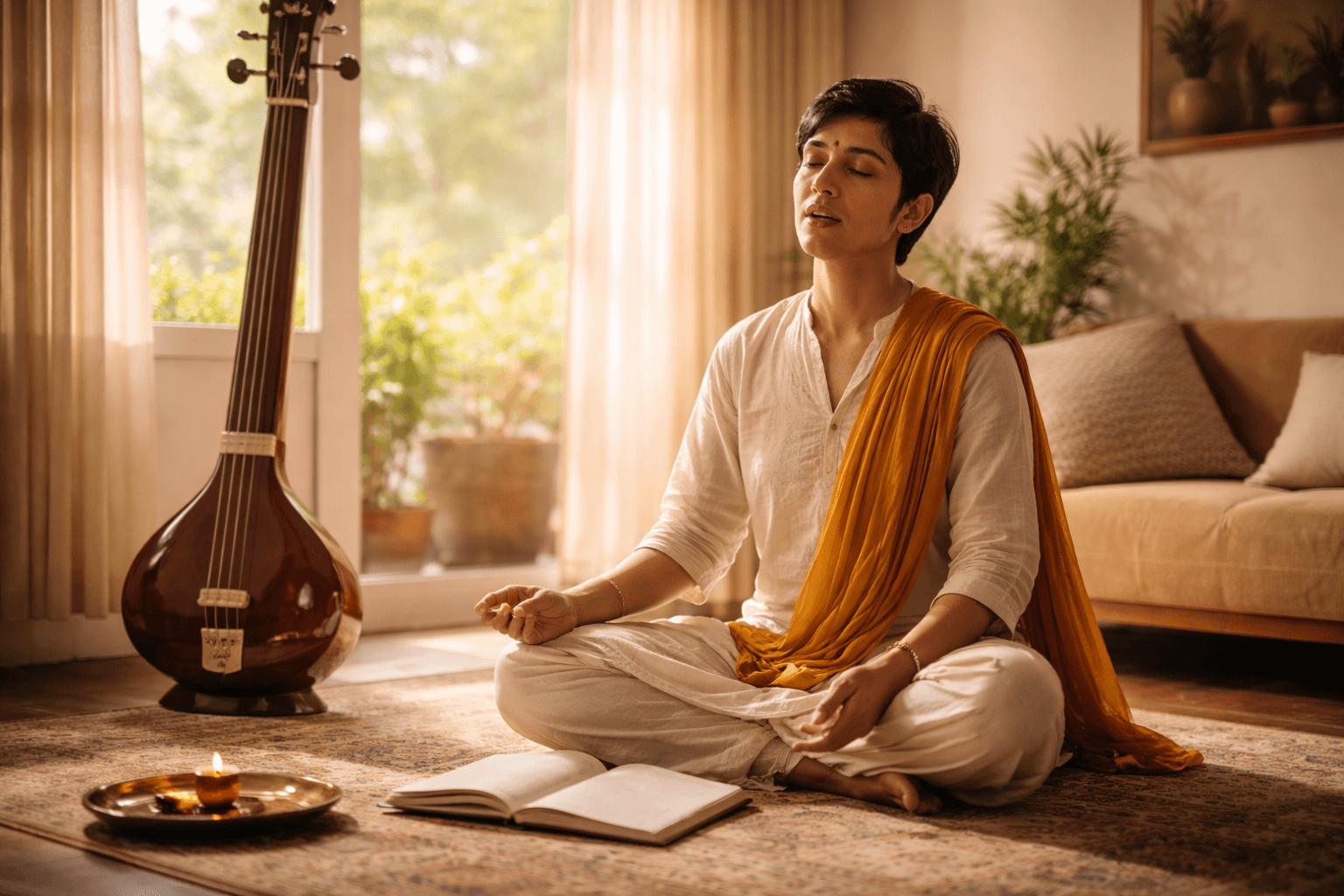 Swar Sadhana forms the classical music foundation of Hindustani vocal music. It trains your ears and voice to recognize, produce, and sustain correct musical notes. In Indian classical music, sound is treated as a living force. Each swara carries emotional weight. Through regular musical notes practice, singers develop vocal consistency and clarity that supports all future learning.
For students in the USA, understanding Swar Sadhana helps remove fear around learning Hindustani classical singing online. The practice builds control slowly. It replaces guesswork with awareness. Over time, vocal training in Hindustani music becomes more intuitive and expressive, even for complete beginners.
Meaning and origin of Swar Sadhana
Swar Sadhana means disciplined practice of musical notes. The word “swar” refers to sound or pitch, while “sadhana” means focused effort. Ancient texts like Natya Shastra describe sound as sacred energy. This idea still guides classical singing practice today. You train not just the voice but also patience and attention.
In Hindustani classical music, Swar Sadhana came before complex compositions. Early musicians spent years on twelve swaras alone. This tradition continues in modern online vocal training, where strong basics ensure long-term progress and vocal health.
The role of swaras in Indian classical vocal tradition
Swaras are the building blocks of Hindustani vocal music. They function differently from Western scales. Each note shifts slightly depending on the raga. This flexibility gives Indian classical music its depth. Understanding this difference between raga and scale helps learners avoid confusion early on.
The twelve swaras include shuddha, komal, and tivra variations. Through daily vocal practice routines, singers learn how each swara behaves emotionally and technically. This awareness supports raga training and expressive singing later.
Why Swar Sadhana is considered lifelong practice
Swar Sadhana never truly ends. The voice changes with age, health, and emotion. Regular practice keeps the voice balanced and responsive. Even experienced artists return to basic swara exercises daily. This habit protects vocal quality and sharpens listening skills.
For online vocal training for beginners, this idea removes pressure. Progress happens step by step. With music education online, learners grow comfortably while respecting the depth of Hindustani classical music.
Core Principles That Shape Swar Sadhana Practice
 The strength of Swar Sadhana lies in its structure. It follows clear principles that guide the voice gently. These principles focus on accuracy, breath, and awareness rather than volume or speed. Vocal training in Hindustani music always prioritizes control before performance.
Online Hindustani music classes follow the same logic. Teachers emphasize slow learning and repetition. This approach supports beginners and helps advanced learners correct old habits without strain.
Shuddha, Komal, and Tivra swaras explained
The twelve swaras include seven shuddha notes, four komal notes, and one tivra note. These variations create emotional color. Komal notes sound softer. Tivra notes sound sharper. Understanding their placement improves musical notes practice accuracy.
In Swara Sadhana, singers learn to feel these shifts rather than force them. This sensitivity forms the base of understanding ragas in Hindustani music.
Voice discipline and tonal precision
Voice discipline means singing with control and respect for sound. It avoids shouting or forcing notes. Tonal precision develops when the voice stays steady and relaxed. Online singing classes with expert teachers help correct tone early through guided listening.
This discipline supports long-term vocal consistency. It also prevents strain, especially for adults starting classical music training from home.
Importance of breath control and vocal placement
Breath supports every note. In Swar Sadhana, breathing stays natural and deep. Proper vocal placement keeps sound clear and resonant. These skills develop slowly through repetition and awareness.
Online vocal training often includes breathing guidance during live sessions. This helps learners connect breath with pitch stability.
Developing pitch stability and sur awareness
Sur awareness means recognizing correct pitch instinctively. Pitch stability grows when singers listen before they sing. Tanpura-based practice trains the ear gradually. This habit improves confidence and reduces dependence on external correction.
In online Hindustani music classes, consistent feedback strengthens this skill, even across time zones.
Raga-Based Learning Through Swar Sadhana
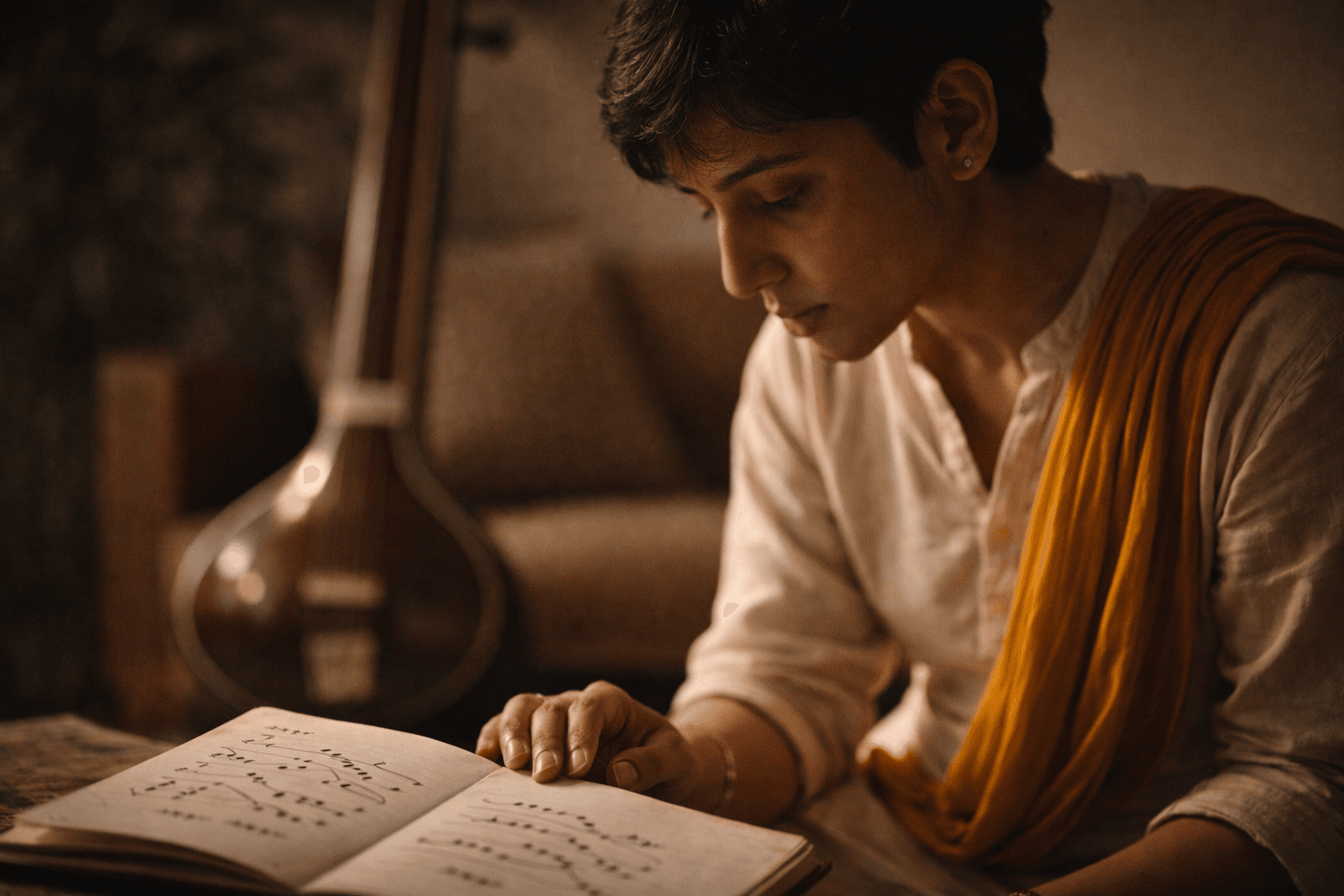 Raga training begins only after basic swaras feel comfortable. Swar Sadhana prepares the voice to handle raga rules with ease. This step-by-step process defines Hindustani classical music education.
Understanding ragas involves more than memorizing notes. It requires emotional sensitivity and discipline. Online vocal training supports this journey with structured lessons and patient guidance.
Relationship between swaras and ragas
Ragas are melodic frameworks built from swaras. Each raga selects specific notes and movements. Swar Sadhana teaches how these notes interact. This relationship explains why the same swara sounds different in different ragas.
This concept helps learners grasp the emotional logic behind raga training.
How raga grammar is built through swar practice
Raga grammar includes ascending and descending patterns. Swar practice trains the voice to follow these rules naturally. Repetition builds muscle memory and emotional familiarity.
Online vocal training programs often introduce ragas slowly, ensuring clarity before creativity.
Aalap, sargam, and swar vistar techniques
Aalap develops slow expression. Sargam strengthens note clarity. Swar vistar expands melodic range. These techniques grow directly from Swar Sadhana. They prepare singers for deeper raga exploration.
Through online Hindustani music classes, learners practice these forms with live correction and recordings.
Emotional expression (bhava) through correct swar usage
Bhava emerges when swaras align emotionally. Correct swar usage allows singers to convey mood without exaggeration. This subtlety defines classical singing practice.
Online vocal training encourages emotional awareness alongside technical control.
Rhythm Awareness: Taal and Laya in Vocal Training
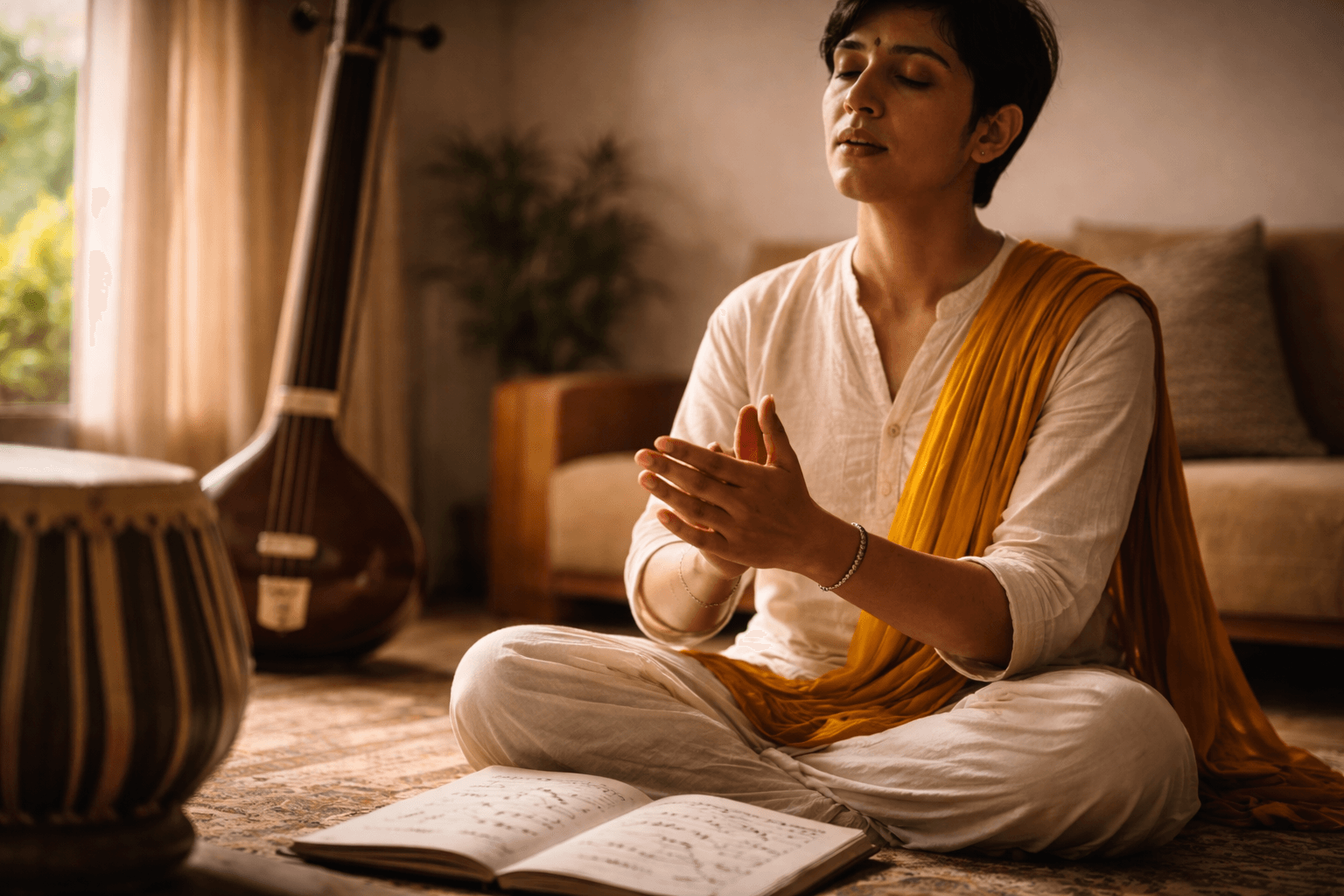 Rhythm and tempo in Indian music guide melodic movement. Taal and lay support Swar Sadhana by adding structure. Without rhythm awareness, even accurate notes feel incomplete.
Learning how to learn taal and lay helps singers maintain balance during performance and practice.
Understanding taal cycles in Hindustani music
Taal cycles repeat patterns of beats. They differ from Western time signatures. Understanding these cycles improves coordination. Online classes often use clapping and counting to simplify learning.
This method suits beginners learning Hindustani music online.
Laya control and its impact on swar clarity
Laya refers to tempo control. Slow practice improves clarity. Fast singing comes later. Swar Sadhana strengthens laya awareness by training patience.
This approach reduces mistakes and builds confidence gradually.
How swar sadhana improves rhythmic accuracy
Regular swar practice trains internal timing. The voice learns to align naturally with rhythm. This skill supports vocal performance training and ensemble singing.
Online vocal training reinforces this through guided repetition.
Synchronizing melody with rhythm
Melody and rhythm must move together. Swar Sadhana prepares the voice to respect this balance. This coordination improves stage performance preparation and musical confidence.
Traditional Learning Values in Modern Vocal Education
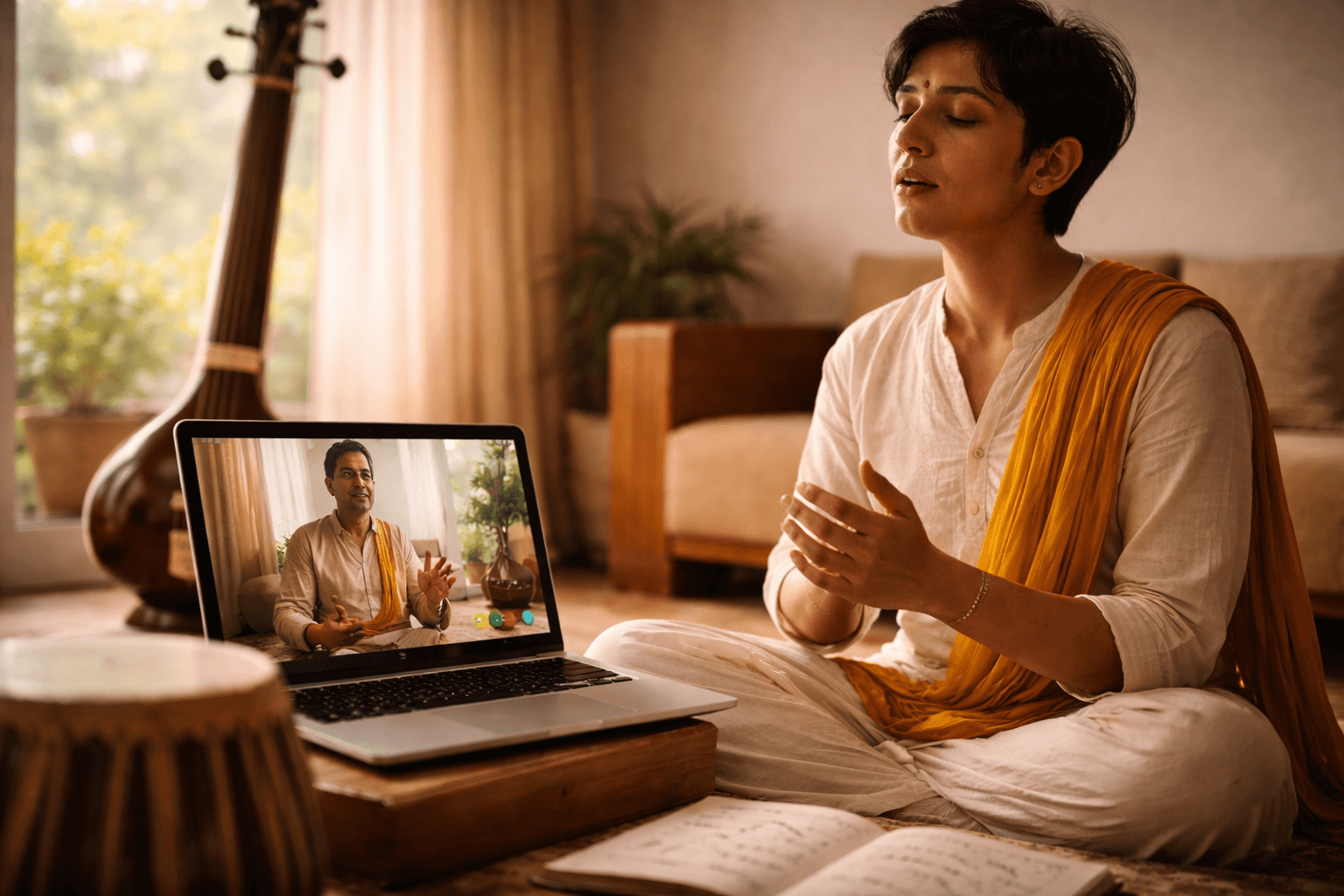 Traditional music learning values remain relevant today. The Guru-Shishya Parampara emphasizes respect, discipline, and guidance. Online education adapts this tradition without losing depth.
Music learning from home still honors these principles through structured mentorship.
Essence of Guru–Shishya Parampara
This tradition centers on trust and guidance. Teachers shape technique and mindset. Online vocal training with Guru-Shishya tradition maintains this bond through consistent interaction.
Discipline, riyaaz, and musical ethics
Riyaaz means daily practice with focus. Musical discipline builds patience and humility. These values support long-term growth in Hindustani vocal music.
How tradition is preserved in structured training
Structured lessons preserve authenticity. Clear progression protects classical integrity. Online platforms ensure continuity through planned curricula.
Balancing authenticity with modern pedagogy
Modern tools support learning without replacing tradition. Technology assists feedback and practice. This balance suits today’s learners.
Learning Swar Sadhana Through Online Hindustani Music Classes
 Online learning has transformed music education online. Swar Sadhana now reaches global students. Quality instruction remains the priority.
Online vocal training provides flexibility and consistency for learners in the USA.
How online vocal classes replicate classical training methods
Live sessions allow correction in real time. Teachers demonstrate techniques clearly. This setup mirrors in-person learning closely.
One-to-one guidance and personalized feedback
Personalized vocal training online addresses individual needs. Feedback stays specific and actionable. This support accelerates improvement.
Structured riyaaz plans for consistent improvement
Clear practice routines reduce confusion. Structured plans help learners stay motivated. Progress becomes visible over time.
Technology tools that support swar accuracy
Digital tanpura and recordings assist self-correction. These tools complement traditional methods effectively.
Benefits of Online Swar Sadhana for Modern Learners
Online music learning offers comfort and access. It suits busy schedules and varied lifestyles. Quality remains intact.
These benefits encourage consistency and confidence.
Flexibility for students across time zones
Classes fit different schedules. Learners manage practice easily. This flexibility supports regular riyaaz.
Learning at your own pace without compromising quality
Recorded support aids revision. Learners repeat lessons calmly. This approach builds confidence.
Access to experienced Hindustani vocal mentors
Geographic limits disappear. Students learn from skilled teachers globally.
Ideal for beginners, working professionals, and children
Teaching adapts to age and experience. This inclusivity strengthens learning outcomes.
Performance Readiness Through Swar Sadhana
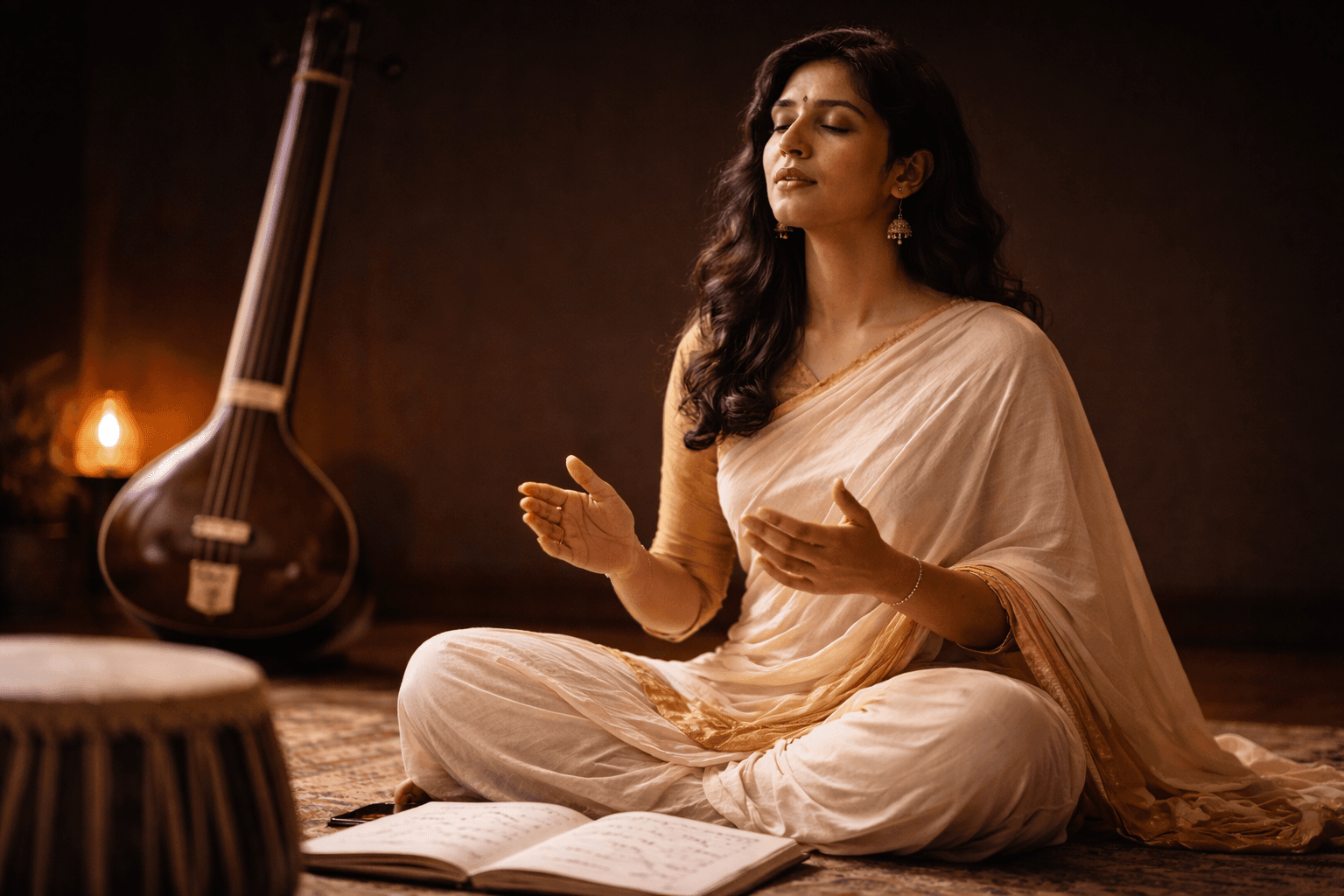 Performance grows from practice. Swar Sadhana prepares singers mentally and technically. Confidence develops naturally.
This preparation supports both classical and semi-classical genres.
Building confidence through consistent riyaaz
Consistency reduces fear. Familiarity breeds comfort. Confidence improves steadily.
Improving stage presence and vocal control
Control improves posture and projection. Presence grows through awareness.
From practice room to live performance
Gradual exposure prepares singers. Mock sessions build readiness.
Role of swar mastery in classical and semi-classical genres
Strong basics support flexibility. Genres expand without losing authenticity.
Why Learn Swar Sadhana with Art Gharana
Art Gharana offers structured Hindustani vocal training rooted in tradition. The focus stays on clarity, consistency, and growth.
The learning environment respects both culture and comfort.
Art Gharana’s approach to Hindustani vocal training
The approach blends structure with patience. Learning stays learner-centered.
Structured curriculum rooted in classical tradition
Progression follows classical logic. Foundations remain strong.
Experienced vocal mentors and personalized attention
Mentors guide with care. Feedback stays detailed and supportive.
Focus on swar purity, raga understanding, and performance skills
Training remains holistic. Technique and expression grow together.
A learning environment that blends tradition with accessibility
The environment feels welcoming. Learning feels achievable.
Starting Your Swar Sadhana Journey with Art Gharana
Beginning feels simple and supportive. Curiosity matters more than experience.
Consistency shapes progress over time.
Who can join Hindustani vocal classes
All ages can learn. No prior knowledge required.
Beginner to advanced learning pathways
Clear pathways guide growth. Progress feels organized.
Class formats and learning progression
Live sessions ensure interaction. Practice supports retention.
How consistent practice leads to long-term growth
Habits create results. Growth becomes sustainable.
Conclusion: The Timeless Power of Swar Sadhana
Swar Sadhana defines Hindustani vocal music. It nurtures discipline, awareness, and expression.
Online vocal training brings this tradition closer to modern learners.
Why swar mastery defines a true Hindustani vocalist
Purity of sound reflects dedication. Mastery grows from patience.
The role of guided training in musical excellence
Guidance prevents confusion. Growth stays focused.
Embracing Swar Sadhana as a lifelong musical companion
The journey never ends. Music grows with you.
Frequently Asked Questions About Swar Sadhana
1. What is Swar Sadhana and why is it essential for Hindustani vocal music?
Swar Sadhana builds accuracy and expression. It forms the base of all classical singing practice.
2. Can beginners learn Swar Sadhana effectively through online classes?
Yes. Online vocal training supports beginners through structured guidance.
3. How does online vocal training compare to offline Hindustani music lessons?
Online learning offers flexibility and access while maintaining quality.
4. What makes Art Gharana’s Hindustani vocal program unique?
The program blends tradition with personalized attention.
5. Are traditional values maintained in online Swar Sadhana training?
Yes. Guru-Shishya Parampara remains central.
6. Is a specific type of voice required to learn Hindustani classical singing?
No. Any healthy voice can learn with practice and guidance.