ChatGPT
 Google AI
 Grok
Grok Claude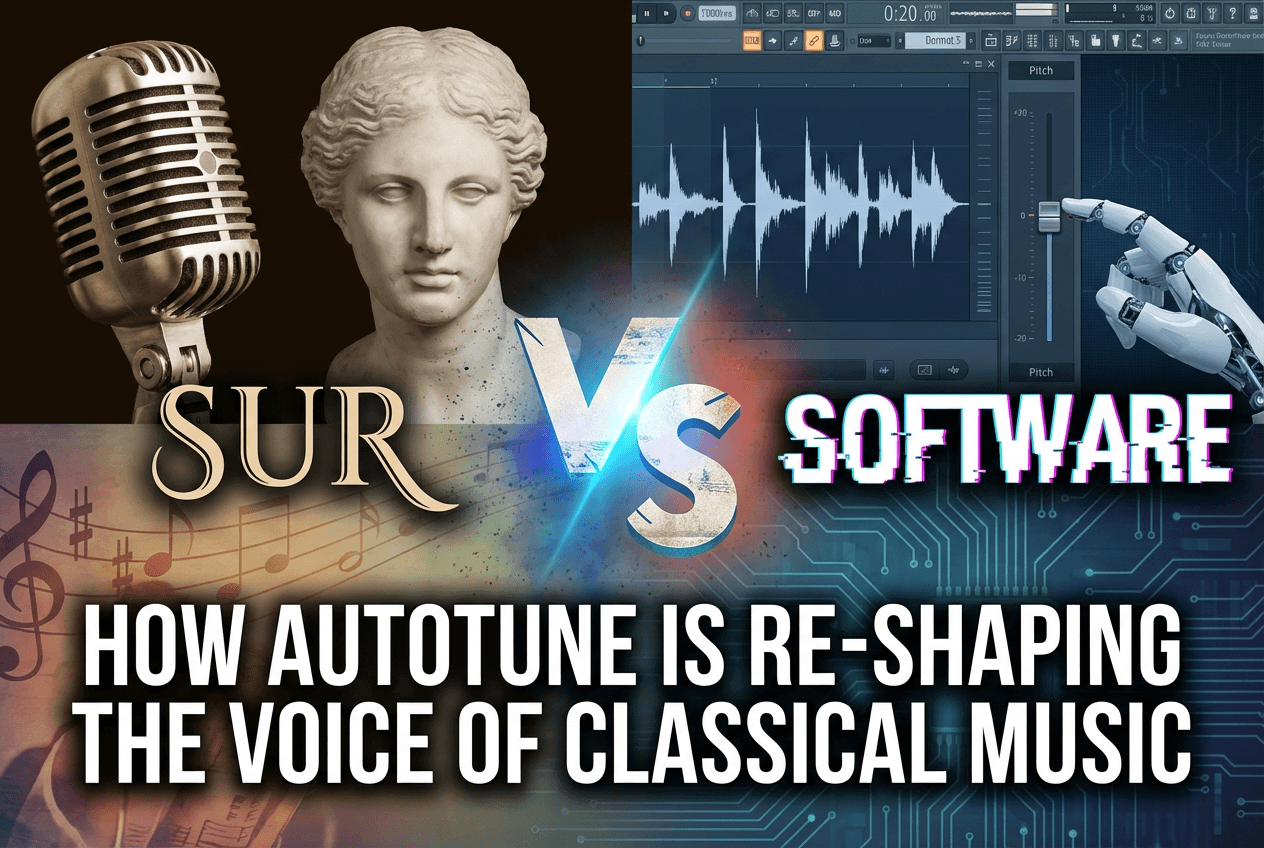
Indian classical music traditions have always lived in a world of natural sur, emotional expression in singing, and the deep discipline of riyaz. Today, digital pitch correction tools and modern music technology in India are rewriting how singers think, practice and perform. Many young vocalists rely on Autotune effect, pitch-correction software, algorithmic tuning and studio recording enhancements. This creates a new debate about precision versus soul. As Autotune in Bollywood music grows, the classical world now faces a new question. Can technology transform without breaking authenticity in digital music, or will the natural beauty of shruti microtones, raga-based improvisation and Hindustani and Carnatic styles fade?
Readers new to classical foundations can explore the basics of Hindustani training here: Learning Hindustani Classical Music Guide.
This article explores every side of the debate. It studies Autotune’s influence on classical nuance, looks at the psychology behind perfect pitch, and examines how online singing classes shape modern artists. Readers who want to understand how classical journeys start can explore: Your Hindustani Classical Music Journey.
The New Debate: Technical Precision vs. Emotional Depth
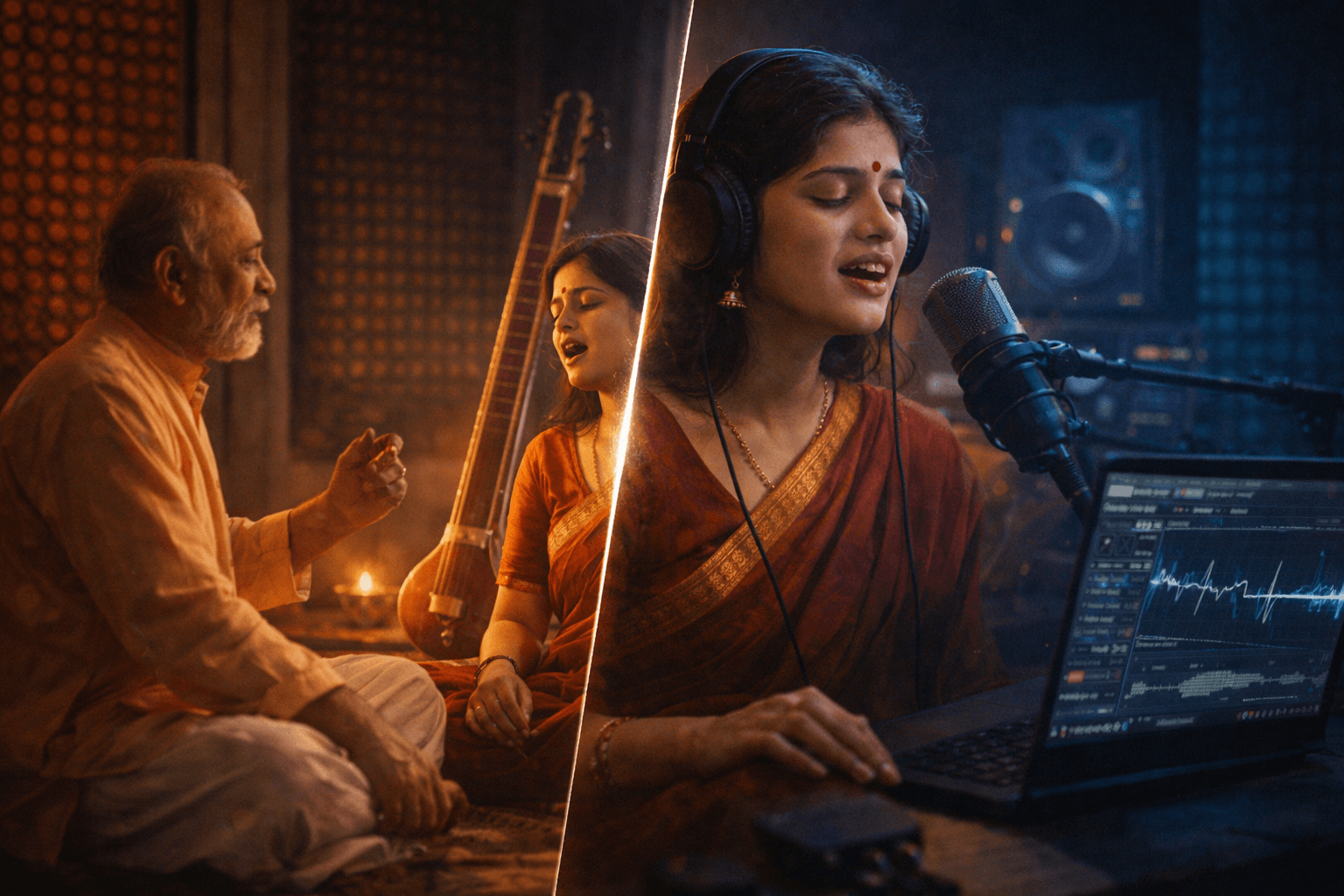 The conversation around the Autotune effect in classical vocal training methods is rising because many singers now compete in a world shaped by digital audio workstations and sound engineering adjustments. When a singer can adjust every note using retune speed settings, the value of musical imperfection begins to change. Earlier, slight deviations in sur were part of a singer’s emotional identity.
To understand how both Hindustani and Carnatic classical structures evolved, see: Carnatic vs. Hindustani Classical Music.
Today the pressure of perfection is intense. Audience ears are used to digitally-corrected vocals in Bollywood and fusion music. This creates unrealistic expectations for classical performers who rely on natural sur and shruti microtones.
Is Flawless Pitch Diluting Emotional Expression?
 Digital pitch correction tools can weaken emotional expression because they often flatten the natural bends of meend and andolan techniques. These movements define raga identity. Without these micro-variations, classical vocal nuances lose depth.
Students exploring the emotional nature of classical singing can learn more through: Beginner’s Guide to Indian Classical Music.
Emotional expression in singing is built through subtle imperfections. Autotune smooths these out, reducing personal touch and expressive storytelling.
Why Classical Singers Feel Pressured for Digital Accuracy
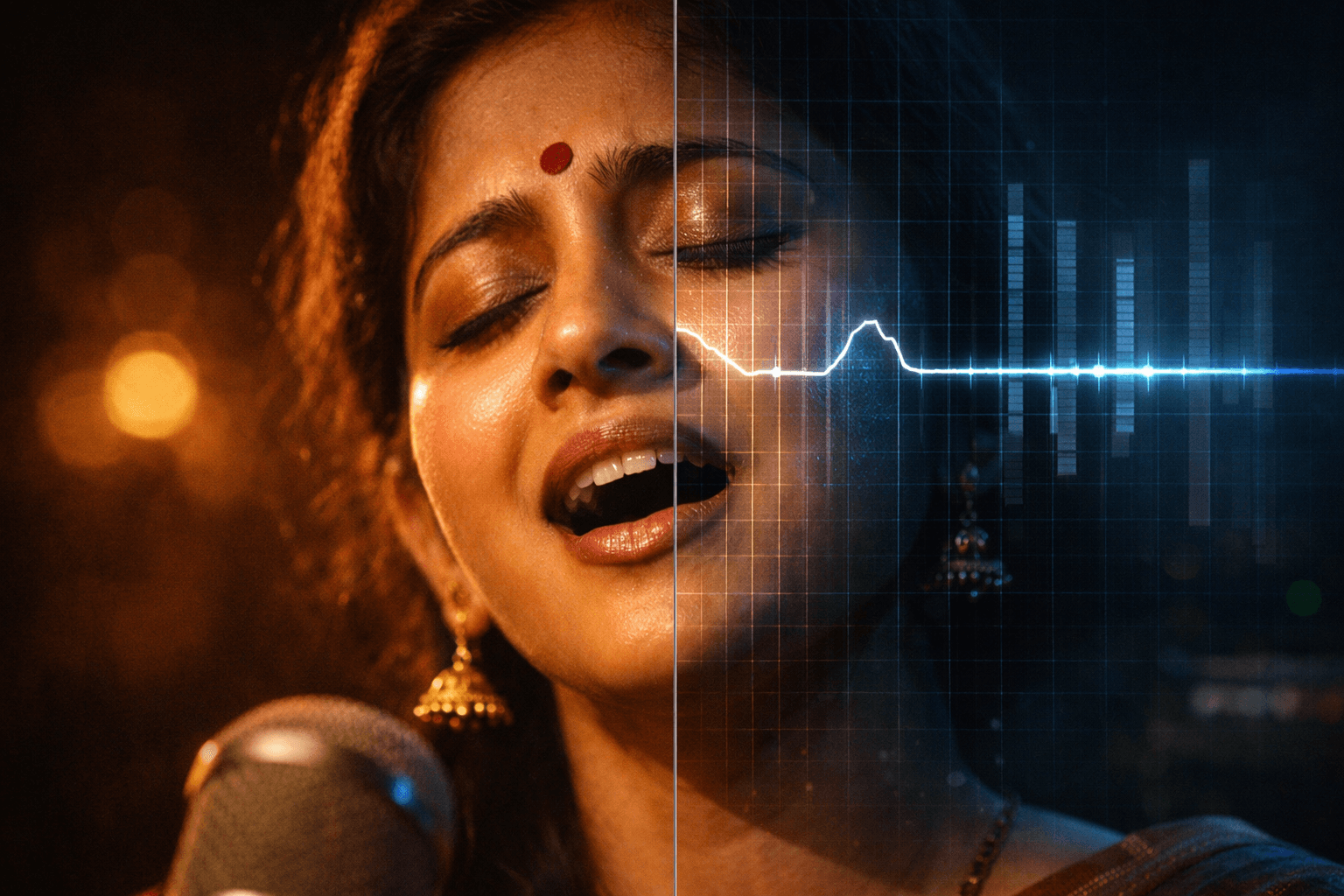 Modern audiences consume mostly studio-processed tracks. This shapes their expectations from concerts, competitions and online learning. Young artists fear criticism when natural imperfections appear alongside digitally edited vocals online.
As digital aesthetics become the norm, many students compare their training sessions with engineered recordings.
For beginners trying to understand the roots of classical styles and their natural imperfections, this guide helps: Carnatic Music for Beginners.
Evolution of Pitch: From Tanpura Roots to Digital Tools
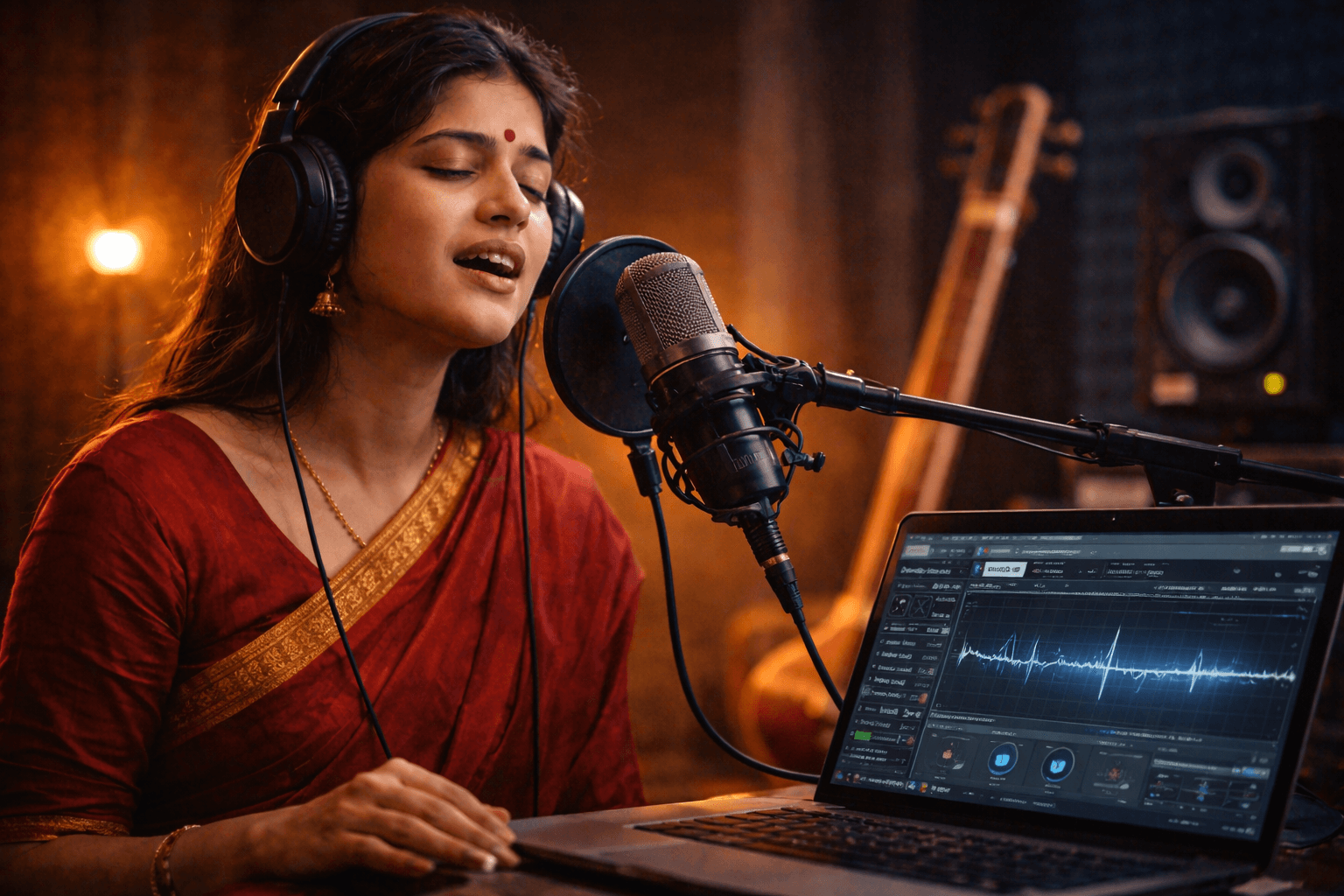 Indian classical music evolved through the tanpura drone tuning tradition. Each singer developed sur through listening, not through software. Microtonal variations in ragas came from years of riyaz and immersion in natural acoustics.
As software entered the studio, equal-tempered scale limitations influenced classical recordings. Many semi-classical albums now fit classical sur into Western grids.
To understand how Indian classical learning originally developed, visit: Beginner’s Guide to Indian Classical Music.
How Sur Was Tuned Before Technology
Earlier, sur was tuned through the guru-shishya parampara. Students listened, repeated, refined, and relied on natural resonance. Classical performance ethics demanded purity over perfection.
A deeper explanation of this traditional journey is available here: Your Hindustani Classical Music Journey.
The Arrival of Autotune in Classical and Semi-Classical Spaces
 Autotune began in Bollywood, but slowly entered ghazals, fusion, semi-classical and modern raga-based productions. Producers discovered that light pitch correction helped blend vocals with digital arrangements.
Classical purists fear the risk of raga identity distortion when sur becomes uniform across performances.
Why Modern Artists Lean Toward Correction Tools
Modern pressures from streaming platforms, social media and competitive exposure push artists toward digital accuracy. With most users listening through headphones, even minor imperfections stand out.
Autotune fixes this instantly, making it highly attractive for new-age musicians.
The Psychology Behind Perfect Pitch
When audiences hear digitally-perfect pitch daily, the brain begins to treat that standard as “correct”. This slowly changes the perception of natural shrutis and flexible tonal shades in classical music.
The more people consume tuned music, the more they expect artists to match it.
How the Brain Interprets ‘Correct’ Sur
Repeated exposure to corrected vocals reorganizes the brain’s pitch recognition patterns. The mind begins to prefer symmetrical tuning over natural microtonal flow. This weakens appreciation for traditional Indian scale structures based on shrutis.
Audience Expectations in a Digitally-Influenced Music World
Audiences raised on digital music expect identical precision in live performances. Competitions, social media covers and online classes often rely on tuned audio, raising unrealistic standards for students.
Why Perfection Feels Addictive
Digital perfection gives instant satisfaction. When every note lands perfectly, it creates a psychological reward. Singers become dependent on correction to feel confident. This weakens riyaz discipline over time.
The Science of Sonic Satisfaction
Autotune creates consistent frequency patterns that the brain finds soothing. But classical music depends on tension, release, breath and movement. This contrast highlights why heavy correction reduces emotional impact.
Social Media’s Influence on Flawless Vocals
Platforms reward clean audio, causing creators to tune vocals more aggressively. As millions consume polished sound daily, natural imperfections feel unfamiliar. This shapes expectations for classical singers too.
When ‘Clean Sound’ Becomes a Creative Trap
Clean sound can trap singers creatively. They may avoid risk, improvisation or bold emotional expression due to fear of digital comparison. Classical music loses its natural depth when artists restrict themselves.
Tradition Meets Technology: Finding the Middle Path
The ideal approach is balance. Technology can assist without overpowering. Subtle correction keeps recordings modern, but classical singers must still practice the natural sur within.
For anyone starting classical music, a foundational guide is here: Learning Hindustani Classical Music Guide.
Where Classical Gharanas Stand Today
Different gharanas view technology differently. Some avoid it fully, some accept minimal correction, while others balance both. All agree that riyaz, shruti awareness and guru-guided learning should remain central.
Can Digital Enhancements Support Riyaz?
Used carefully, digital tools can help students review pitch drift or identify tonal habits. But they must not replace natural ear development. Software should be a guide, not a crutch.
What Art Gharana Recommends for Responsible Use
Art Gharana encourages a balanced approach—using technology for polishing but relying on riyaz, vocal culture, improvisation and natural listening for true growth. Training must build both technical and expressive strength.
Case Study: Fusion Performances & Pitch Correction
Fusion music demands balance between classical melody and modern beats. Subtle tuning helps vocals sit neatly in electronic arrangements without harming raga purity.
Explore the differences between classical systems used in fusion through: Carnatic vs. Hindustani Classical Music.
How Modern Collaborations Use Subtle Tuning
Fusion producers adjust vocals lightly to align with equal-tempered instruments. This helps maintain harmony while protecting the core of the raga.
The Art of Blending Natural Voice and Digital Support
Great fusion keeps the natural colors of the voice intact. The tuning is subtle enough that listeners can still feel the emotional movements of the raga.
Technical Integration Behind the Scenes
Engineers use transparent preamps, gentle retune speed, and avoid harsh modulation. This keeps the performance natural while blending smoothly into digital arrangements.
When Technology Becomes a Background Partner
When done well, technology becomes invisible. The natural voice remains central while software supports the mix quietly from behind.
Artistic Examples & Long-Term Impact
Fusion that respects classical identity becomes timeless. These works inspire future musicians to combine creativity with discipline.
Maintaining Classical Identity in Fusion Experiments
Classical identity must remain rooted in shruti microtones, raga personality and natural embellishments. Technology should enhance—not replace—the essence.
AI-Generated Voices and Classical Authenticity
AI-generated vocals in music are rising fast. They can mimic tone but cannot imitate the emotional movement of shruti or the sensitivity of ragas. They lack breath, intention and improvisation.
Can AI Replicate the Nuance of Sur & Gamakas?
AI may copy pitch, but cannot understand cultural memory, emotion or improvisational depth. Sur is a lived experience, not just a frequency.
What the Future of Classical Playback May Look Like
AI may support learning, create tanpura drones or help with simulations. But authentic sur will always need a human artist behind it.
For beginners exploring tradition in detail, this guide helps: Beginner’s Guide to Indian Classical Music.
Rethinking Music Training for the Digital Era
Training must adapt but remain rooted in natural listening. Students must use their ears, breath and emotional memory—not just software. Online platforms like Art Gharana combine modern access with the depth of guru-guided learning.
Should Students Learn With or Without Autotune?
Students should train without Autotune to build independent pitch awareness. Software may be used only later as a review tool.
Online Classrooms at Art Gharana: Balanced Training Approaches
Art Gharana offers structured Hindustani and Carnatic vocal training where teachers focus on shruti recognition, voice culture and raga identity. Technology assists only where needed. Learn more about these foundational systems here: Carnatic vs. Hindustani Classical Music.
Building Listening Skills Beyond Software
Listening is the first step in classical growth. Students must listen to tanpura drones, great maestros, natural acoustics and live performances—not just digital outputs.
More guidance for deep listening can be found in this classical journey guide: Your Hindustani Classical Music Journey.
Culture in Transition: Ritual Sound to Algorithmic Accuracy
Classical music once thrived in temples, courts and natural spaces. Today, performances shift toward digital templates. Sound engineers manage every frequency, shaping expression differently.
The Shift from Temple Acoustics to Digital Templates
Earlier, singers relied on natural projection and space acoustics. Now, microphones, EQ and compression control the sound. This changes vocal color and artistic instinct.
How Technology Is Rewriting Classical Sound Norms
Digital standards create fixed norms for pitch and clarity. These norms influence young singers, shaping their understanding of “correct” sur.
The Human Soul Behind the Software
Technology cannot replace human emotion. Classical singing lives in breath, stories and personal expression. A computer cannot feel raga bhava or emotional storytelling.
Why Emotional Storytelling Still Matters
Listeners connect with vulnerability, not perfection. Storytelling gives classical music its timeless connection to culture and human feeling.
Restoring the ‘Sur Within’ in a Digital World
Students must reconnect with inner sur through tanpura practice, shruti awareness and mindful riyaz. Only then can classical music survive the digital age with authenticity.
FAQs
1. What is Autotune, and how does it influence Indian classical vocals?
Autotune is a pitch-correction tool. When overused, it flattens microtones and reduces natural expression in classical singing.
2. Can pitch-correction tools support the purity of sur and riyaz?
Yes, lightly and only for feedback. But riyaz and natural listening must guide true learning.
3. How is technology reshaping online classical music learning?
It offers access and convenience, but also creates pressure for digital accuracy, which teachers must balance with classical depth.
4. Does Autotune compromise emotional depth in classical singing?
Heavy tuning reduces microtonal movement and emotional nuance, weakening expressive storytelling.
5. Can classical music and Autotune coexist without losing authenticity?
Yes, if used subtly in recordings while keeping live performances natural.
6. How can online education maintain tradition while using modern tools?
By preserving riyaz discipline, shruti training, guru guidance and emotional expression while using technology only as support.