ChatGPT
 Google AI
 Grok
Grok Claude
Hindustani classical music is one of the greatest musical traditions in human history, and it is the living heritage of millions of North Indian families across the United States. From Bengali and Marathi families in New Jersey to Punjabi and Gujarati communities in California, from UP and Bihari families in Texas to Rajasthani and Kashmiri families in Illinois, Hindustani vocal music is the musical bedrock of a vast and culturally rich diaspora.
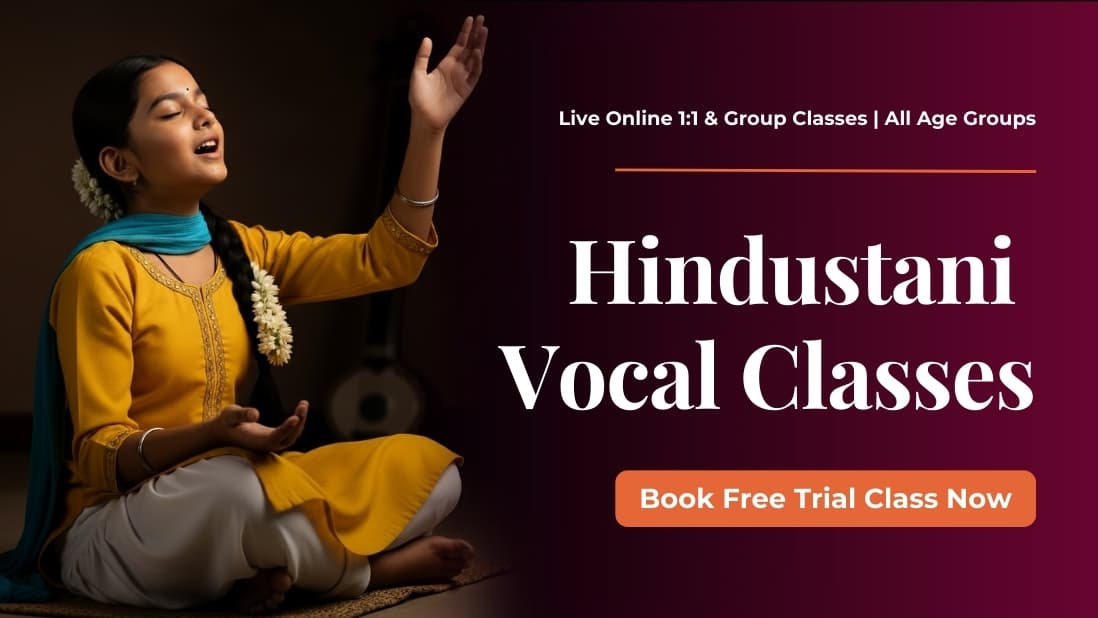
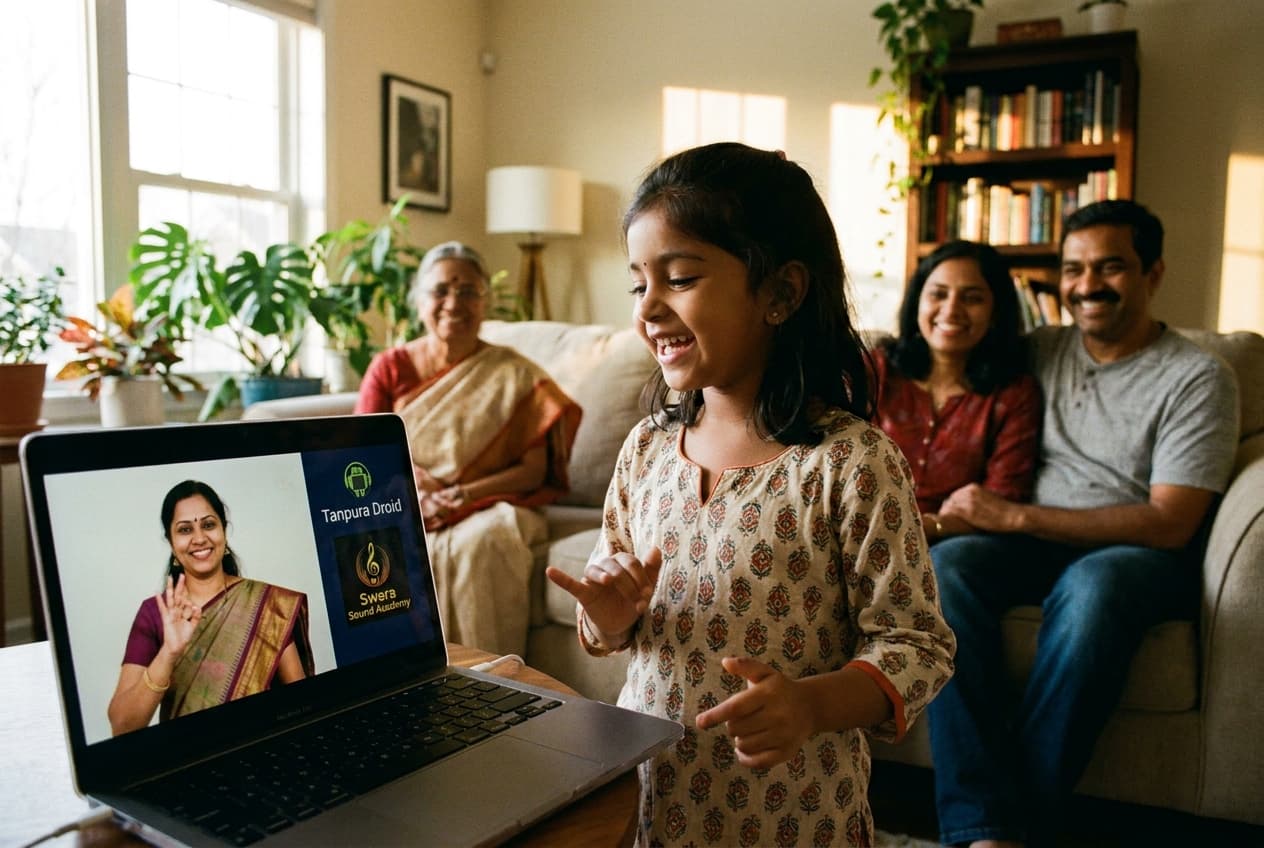
Yet finding a genuinely qualified Hindustani vocal teacher in the USA who teaches live one to one in US time zones has always been difficult. Many teachers advertising classical vocals are primarily Bollywood song coaches. Art Gharana's live online Hindustani vocal classes in the USA provide genuine classical training from certified teachers, in your time zone, with a completely free first lesson.
What Is Hindustani Classical Vocal Music?
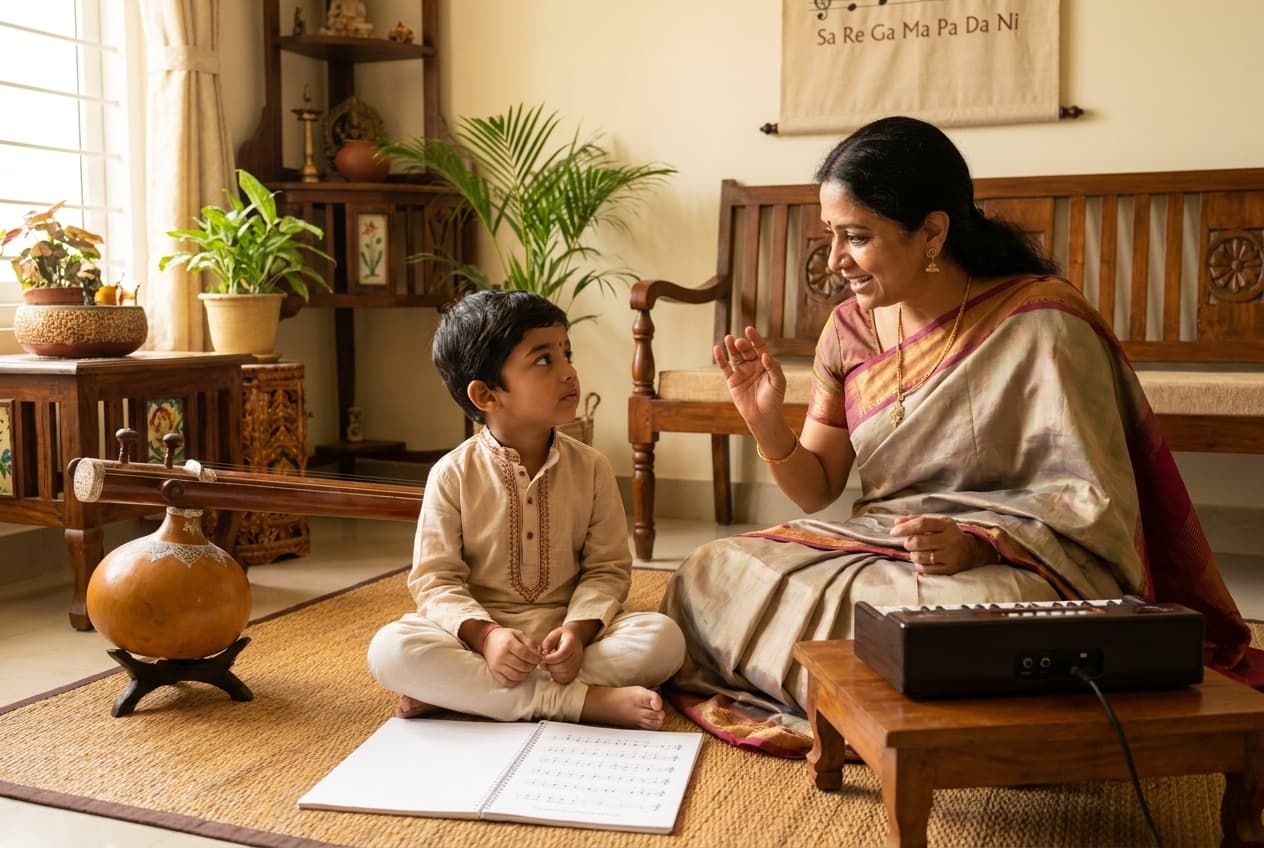 Hindustani classical music is the classical music of North India, developed over centuries from the ancient Sanskrit musical tradition through the influence of Persian and Central Asian cultures during the Mughal era. The result is a musical system of extraordinary richness, built on the twin pillars of raga and tala.
A raga is a melodic framework defining a specific set of notes, their characteristic movements, their ornamentation, their emotional quality and the time of day with which they are associated. The major compositional forms include khayal, the central form of classical performance with its expansive alap and rhythmically grounded bandish; thumri, the lighter semi-classical form; dadra; and bhajan, devotional songs accessible to all levels.
Hindustani Vocal Across the USA
New Jersey and the Tri-State Area
New Jersey's North Indian community, encompassing Gujarati, Punjabi, UP, Bengali and many other regional backgrounds, has a rich musical tradition and consistent demand for classical education. Temples, cultural organisations and community events in Edison, Iselin, Jersey City and surrounding areas create a context in which classical vocal training has genuine cultural visibility and regular performance opportunities.
California and the West Coast
California's North Indian community is spread across the Bay Area and Los Angeles, with significant Gujarati, Punjabi, Bengali and UP populations in Fremont, San Jose, Milpitas, Artesia and Cerritos. Art Gharana serves all of these communities through Pacific Time Zone scheduling with morning, after-school, evening and weekend slots.
Texas, Illinois and the Rest of the Country
Houston, Dallas, Chicago and Atlanta all have active North Indian communities with temples and cultural organisations hosting classical music events throughout the year. For families in these cities and across the broader country, Art Gharana's online programme is often the only route to genuinely qualified Hindustani vocal instruction.
The Benefits of Hindustani Vocal Training
Voice Development
Hindustani vocal training develops the voice in a healthy, sustainable way, emphasising correct breathing, posture, tone production and gradual extension of the vocal range. Children who begin classical vocal training develop voices that project clearly, sustain without strain and retain their quality over a lifetime of use. The emphasis on correct technique from the earliest stages prevents vocal habits that can cause problems later.
Ear Training and Pitch Precision
The microtonal precision demanded by raga singing develops a sense of pitch that exceeds what any Western music training produces. Hindustani vocal students learn to hear and reproduce intervals, ornaments and microtonal inflections with extraordinary accuracy. This acute ear for pitch is an asset in every musical context, from Western choral singing to popular music performance to classical Indian instruments.
Memory and Heritage Language
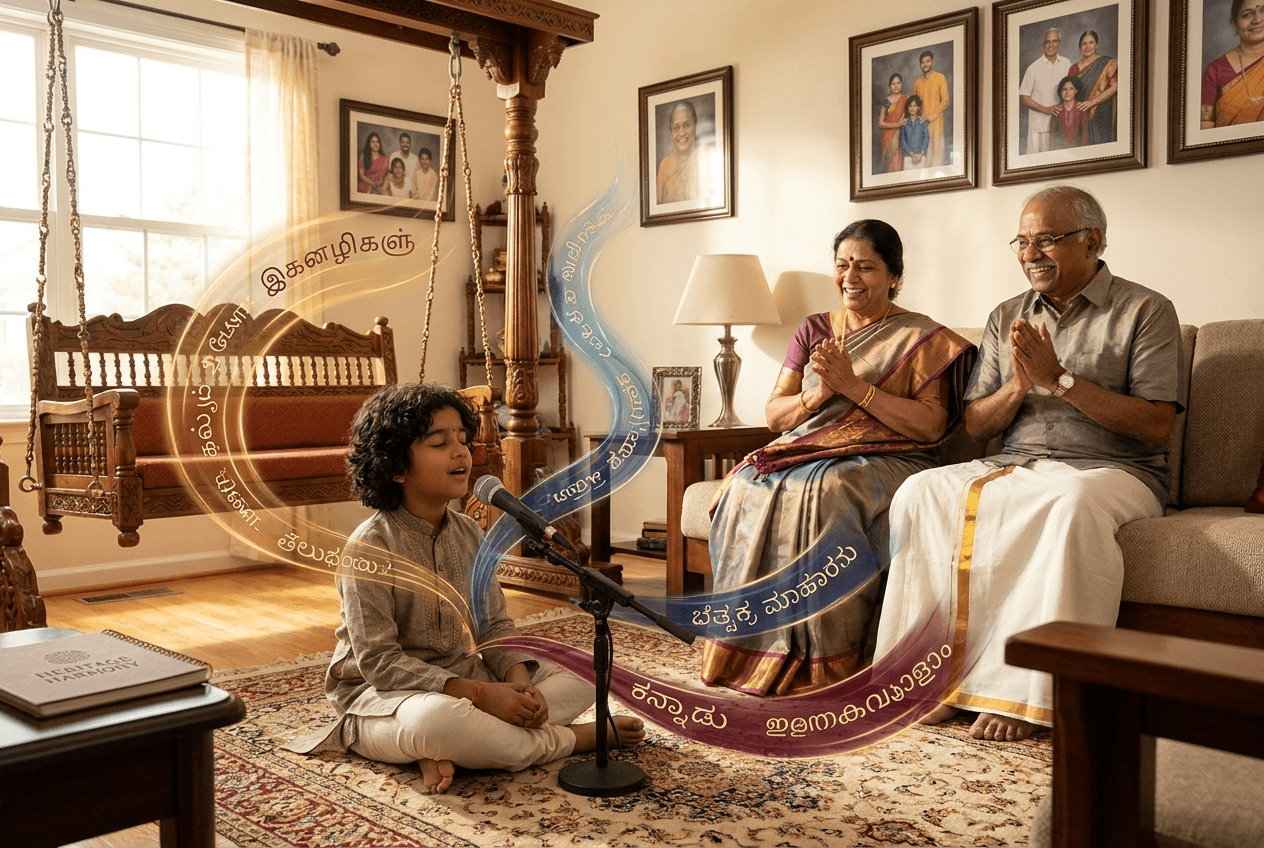
The memorisation demands of Hindustani training, including bandish lyrics in Hindi, Sanskrit, Braj Bhasha and Urdu, develop both memory capacity and language skills. For Indian-American children whose connection to heritage languages may be limited, singing compositions in these languages is language education delivered through the joy of music rather than the duty of study.
Cultural Identity
For North Indian American children, Hindustani vocal training connects them to the musical heritage of their families in a way that is active and genuinely joyful. Singing the same bandishes that their grandparents sang, exploring the same ragas that have moved Indian audiences for centuries, gives children a cultural identity that is lived rather than merely asserted.
The Curriculum: From Riyaz to Raga
Foundation Stage, Ages 6 to 9
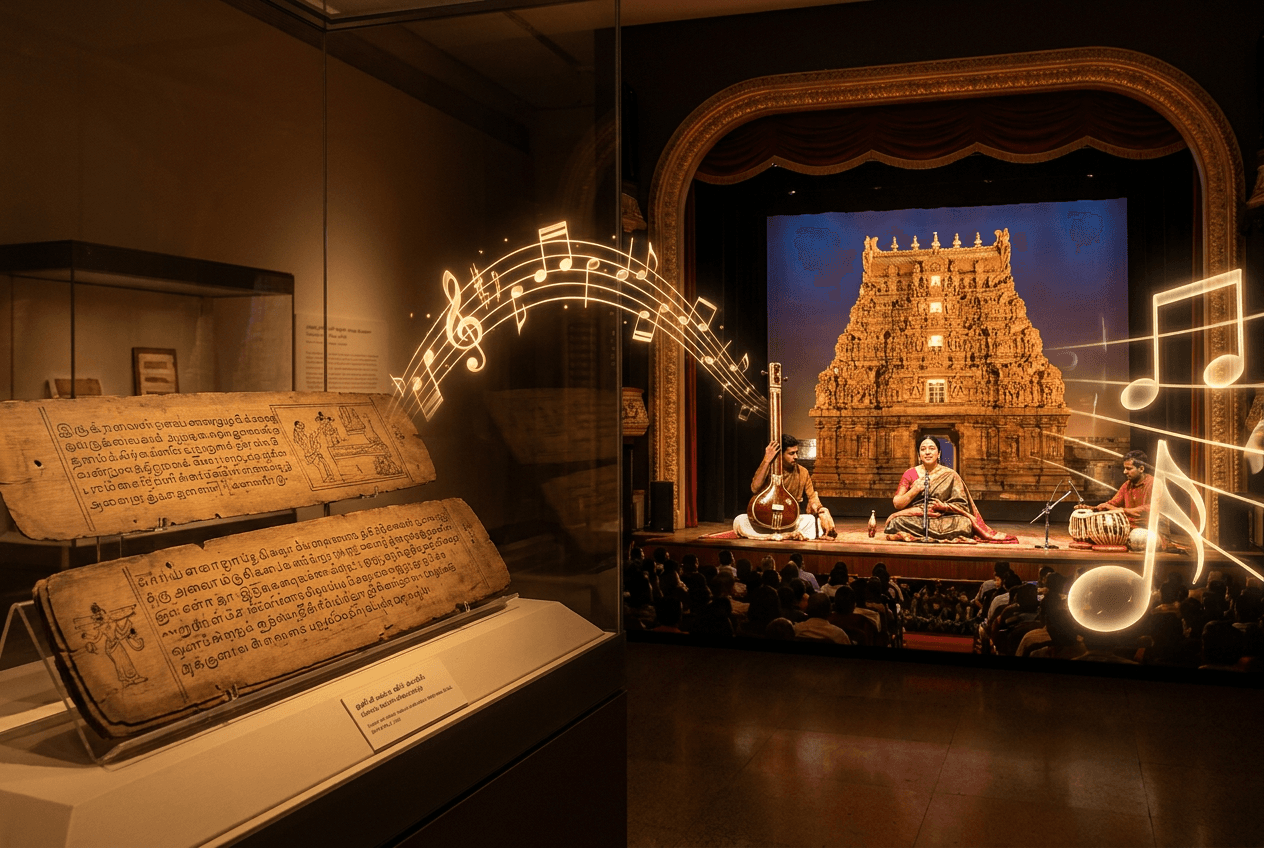
All training begins with riyaz, daily practice of swara exercises developing correct tone production, intonation and breath control. Students learn the sargam and practice singing through the scale in both ascending and descending forms. Simple alankars are introduced progressively. Short compositions in accessible ragas such as Bilawal, Yaman and Bhoopali are introduced once the foundation is established.
Elementary Stage, Ages 9 to 12
Elementary students expand their raga vocabulary, begin working on the khayal form and develop understanding of tala through work with the tabla. The ability to identify and sing the characteristic phrases of a range of ragas is developed systematically.
Intermediate and Advanced Stage
Intermediate and advanced students work on more complex ragas, develop alap skills and explore thumri. The improvisatory dimension of Hindustani performance, the alap, bol-alap and taan, becomes a central focus and students develop the musical spontaneity that characterises the tradition at its highest levels.
Raga and the Indian Sense of Time
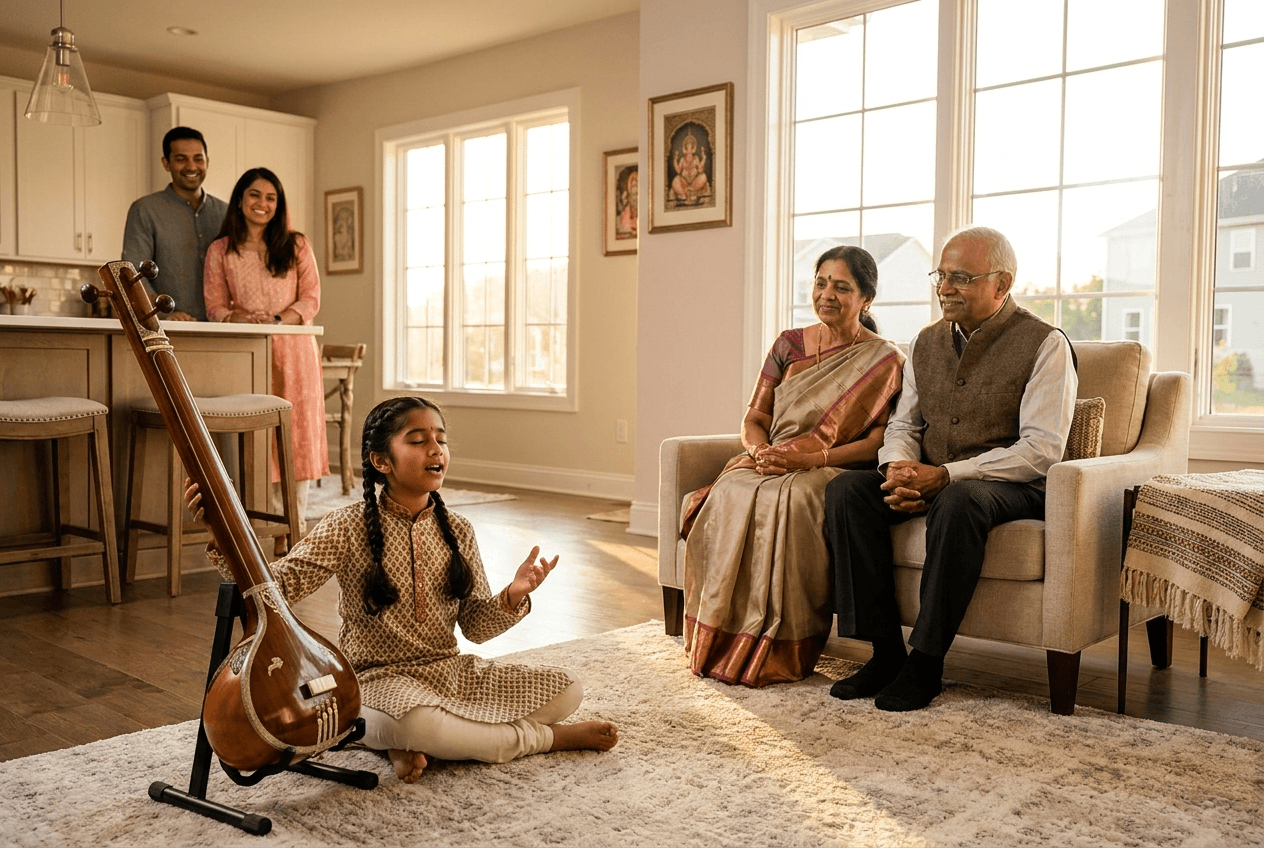 One of the most distinctive features of Hindustani classical music is the association of ragas with specific times of day and seasons. Pre-dawn ragas, late morning ragas, rainy season ragas: this association of music with natural rhythms reflects a philosophy genuinely different from anything in the Western tradition.
Understanding why Bhairav is a morning raga and Darbari is sung in the deep of the night, what qualities of each raga's melodic character connect it to a specific time or emotional state, gives students a sense of music as a living, time-sensitive art. This dimension of raga theory is one of the most culturally fascinating aspects of Hindustani music and one that students at every level find deeply engaging.
The Guru-Shishya Tradition in a Modern Context
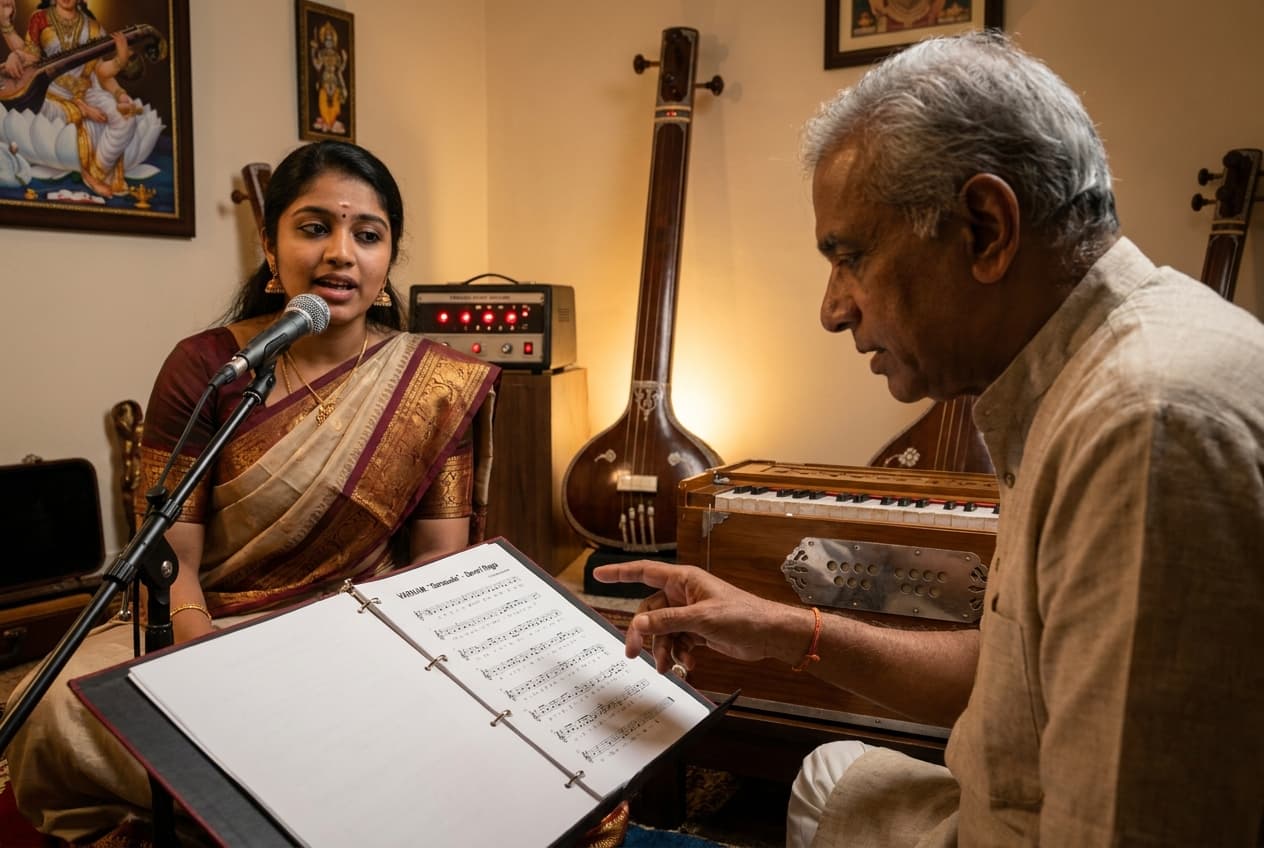 Hindustani classical music was traditionally transmitted through the guru-shishya parampara, the teacher-disciple lineage in which a student studied intensively under a single guru, absorbing not just technique but artistic values and complete musical world. The great Hindustani vocalists of the twentieth century were all shaped by this relationship at the deepest level.
In the modern online context, the guru-shishya relationship cannot take the same form as it did historically. But the best online Hindustani teaching preserves its essential qualities: a specific student and specific teacher, transmission of a genuine musical lineage, the teacher's attentiveness to the individual student's voice and pace, and the development of a musical identity that reflects both tradition and individual character. At Art Gharana, we select teachers who understand and embody these values.
How Art Gharana Compares
US families searching for online Hindustani vocal classes encounter a landscape of India-based marketplaces, pre-recorded video courses and Bollywood song coaches using the term classical loosely. The key differences are clear.
The conflation of Bollywood song lessons with Hindustani classical music is a significant problem in the US online education market. Many platforms advertising Hindustani vocal are primarily providing popular song coaching rather than genuine classical training. The distinction matters enormously for a student's long-term development. Art Gharana's teachers are formally trained classical vocalists who teach the authentic Hindustani tradition.
Hindustani Vocal Alongside Other Indian Arts
Hindustani vocal pairs naturally with tabla. Our tabla classes develop the rhythmic intelligence that gives vocal students a deep performer's understanding of tala, and the tabla-vocal dialogue is central to classical Hindustani performance. Students who study both consistently develop faster and richer musical intelligence than those who study only one.
Our flute classes share the same raga and tala framework as Hindustani vocal. For South Indian families, our Carnatic vocal classes offer the South Indian tradition with the same live one to one format. And our Kathak classes develop parallel understanding of the rhythmic and melodic structures that vocal students explore in their singing. Explore our full range of courses for all options.
Hindustani Vocal and the College Application Process
As Indian-American students approach the college application process, sustained engagement with classical Indian arts becomes a genuinely distinctive element of their application. Admissions officers at selective universities are familiar with the standard Indian-American student profile, and genuine sustained achievement in Hindustani classical music, backed by performances, certifications and teacher testimonials, stands out in a competitive field.
A student who has trained in Hindustani vocal for five or more years, who has performed publicly at cultural events and temples, and who can write articulately about what classical music has meant to their identity and development, brings something to their college application that is culturally distinctive and genuinely impressive. Art Gharana teachers can provide recommendation letters and performance documentation to support students' college applications.
About Art Gharana
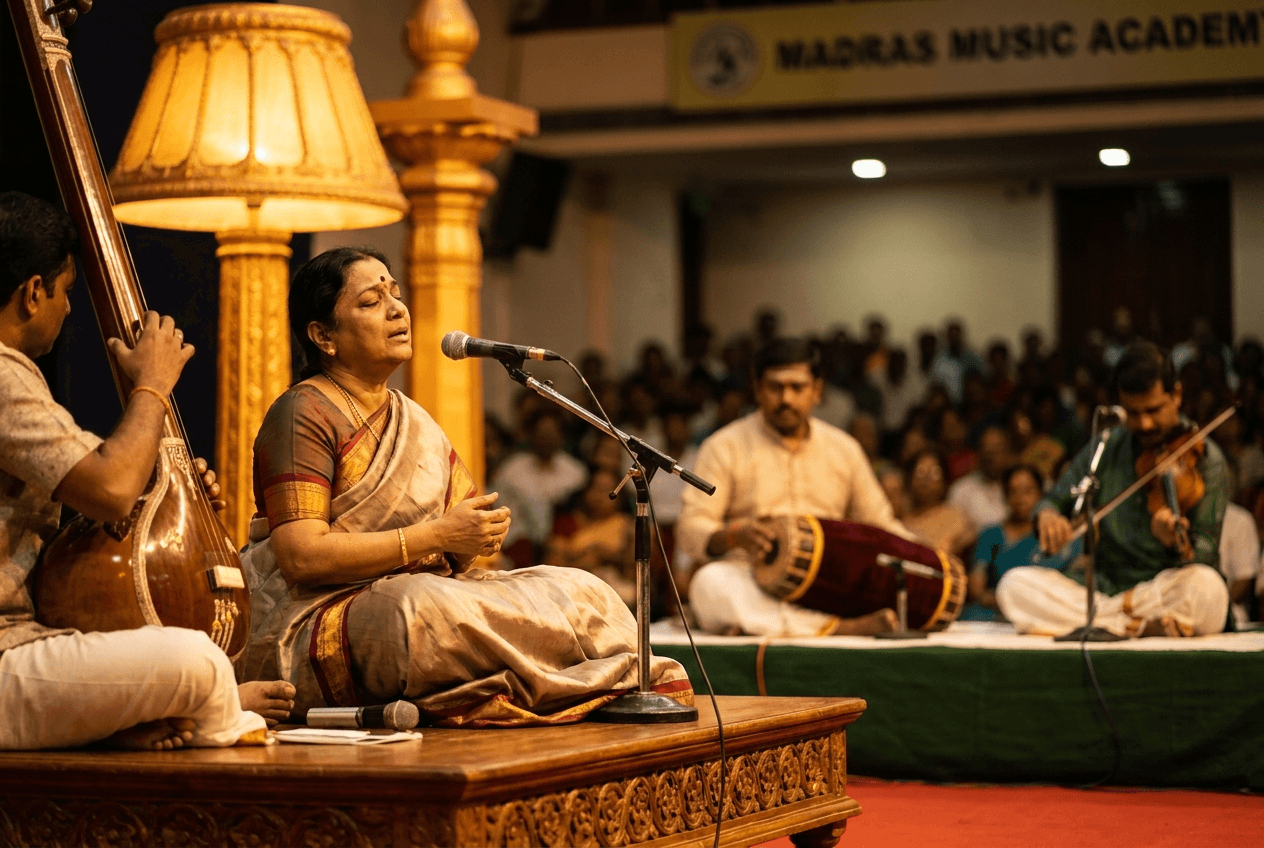 Art Gharana is a specialist online Indian arts education platform with over 50 certified teachers. Our Hindustani vocal programme serves North Indian families across all 50 states with live one to one classes in all US time zones. Browse our teacher profiles and review our plans and pricing to choose the right plan.
Frequently Asked Questions
1. What is Hindustani classical vocal music?
Hindustani classical music is the classical tradition of North India, built on the raga and tala system and encompassing khayal, thumri, dadra and bhajan. It is one of the most sophisticated and emotionally expressive musical traditions in human history.
2. Is Hindustani vocal suitable for children?
Yes. Children can begin from around age 6. The beginner curriculum develops the voice gently through swara practice and simple compositions in accessible ragas.
3. Do I need a harmonium or tanpura for online classes?
A tanpura app on a smartphone or tablet is sufficient for beginners. A harmonium becomes useful as students advance into khayal training. Your teacher will advise at the appropriate stage.
4. How is Hindustani vocal different from Carnatic?
Hindustani is the classical tradition of North India, Carnatic of South India. Both use a raga-based system but have distinct compositional forms, performance styles, ornamentation and cultural heritage. They developed largely independently over many centuries.
5. How long until my child can perform at a cultural event?
Most students can perform a simple bhajan or light classical piece confidently within one to two years of consistent training. A performance-ready khayal typically takes two to three years.
Book Your Free Hindustani Vocal Trial Class Today
Whether your family is in New Jersey, California, Texas, Illinois or anywhere else in the USA, Art Gharana's certified Hindustani vocal teachers are ready to begin your child's classical musical journey. Live one to one instruction, US time zone scheduling, a structured curriculum from swara practice to raga performance and a completely free first lesson. The ragas of Hindustani music are your family's heritage. Head to our book a free trial class page and begin today.
Riyaz: The Foundation of Hindustani Vocal Training
The word riyaz, which means practice or exercise in Urdu, is the cornerstone of Hindustani vocal training. Every student, from the most absolute beginner to the most advanced concert performer, begins each practice session with riyaz: the patient, attentive repetition of swara exercises that maintains and develops the voices tonal quality, intonation accuracy and range. This daily practice is not merely preparation for the music to follow. It is itself a form of musical meditation, a daily return to the simplest and most fundamental elements of the tradition. Art Gharana teachers assign specific riyaz exercises for home practice after each class, typically 15 to 20 minutes of swara practice using the tanpura app as a reference. Building this daily riyaz practice into your childs routine is the single most effective thing you can do to support their progress, and many families find that children come to value the quiet, focused quality of riyaz time as a calming counterpoint to the busy pace of American school and after-school life.
The Ragas Your Child Will Learn
A raga is not simply a scale or a key. It is a complete melodic personality with characteristic ascending and descending movements, specific ornamental gestures, a particular emotional quality called rasa, and associations with specific times of day and seasons of the year. The first ragas that students encounter are typically the accessible, beautiful ragas that have been taught to beginners for generations: Bilawal, with its closest correspondence to the Western major scale; Yaman, the evening raga whose elevated fourth gives it a quality of longing and aspiration; Bhoopali, the gentle pentatonic raga; and Bhairavi, the morning raga of devotion and surrender that is among the most emotionally beloved in the entire Hindustani repertoire. Each of these ragas has a substantial repertoire of compositions, from simple beginner bandishes to sophisticated concert pieces. As students advance, they encounter more complex ragas with narrower note sets and subtler emotional characters. The ongoing discovery of new ragas is one of the perpetual pleasures of Hindustani music study.
Classical Music in the Indian-American Home
One of the most significant benefits of Hindustani vocal training that parents frequently discover is its effect on the musical atmosphere of the home. Families where a child is seriously studying Hindustani music find that Indian classical music begins to appear naturally in the background of family life. Parents who had not previously listened to classical music start exploring recordings of the great masters. Siblings develop an ear for raga and begin to identify ragas in films and devotional music. Grandparents who visit from India find a musical common ground with their grandchildren that they could not have anticipated. This widening of musical culture in the family is one of the most quietly significant effects of classical arts education, and it compounds over years. The home that has been a household of classical music for a decade produces adults who carry that musical inheritance with them throughout their lives, potentially passing it to their own children in turn. Enrolling your child in Hindustani vocal training is in this sense not simply an extracurricular decision. It is a cultural investment that can shape several generations. One of the qualities that most distinguishes Hindustani classical music from virtually all other musical traditions, including Western classical music, is the role of improvisation at its very centre. A great Hindustani performance is not a reproduction of a fixed composition. It is a creative act in which the performer explores the raga in real time, finding new pathways through its landscape, responding to the musical moment with spontaneous creativity within the framework the tradition provides. This improvisatory dimension develops a form of musical intelligence and creative courage in students that is genuinely rare and deeply valuable. For children growing up in the USA, where most musical education focuses on accurate reproduction of fixed compositions, the introduction to improvisatory musical thinking through Hindustani training is often described as genuinely revelatory. Students who have learned to improvise within a raga describe the experience as one of the most freely creative things they have ever done, comparable to jazz improvisation but rooted in an entirely different and arguably even richer melodic tradition. This creative dimension of Hindustani training is one of the most distinctive and lasting gifts it provides to students who remain with it long enough to reach it. The performance tradition of Hindustani classical music in the USA is more active than many families realise. Major concert series in New York, Chicago, Boston, San Francisco and Houston bring great Indian classical musicians to American audiences throughout the year. Smaller community concerts at temples, cultural centres and universities provide more accessible performance experiences throughout the Indian-American community. Art Gharana teachers actively encourage their students to attend Hindustani classical concerts as part of their musical education, and several families have reported that taking their child to hear a live khayal performance was the experience that transformed their commitment from participation to genuine passion. For North Indian American families who are actively evaluating their options for cultural education for their children, it is worth comparing the long-term value of Hindustani vocal training with the alternatives. Western classical music lessons, the most common comparator, develop technical skill and musical literacy but provide no connection to Indian heritage. Bollywood singing lessons, which are widely available, provide Indian cultural connection but lack the classical depth and rigour that Hindustani training provides. Community bhajan singing, while culturally valuable and deeply accessible, does not develop the systematic musical intelligence and technical vocal capability of classical training. Hindustani vocal training at Art Gharana provides all three: technical musical development, genuine Indian cultural connection, and the depth of the classical tradition, in a live one-to-one format with certified teachers in US time zones. For families who want all three of these dimensions in a single activity, it is the most comprehensive option available. For Indian-American families who are just beginning to explore what Hindustani classical music education looks like in practice, the Art Gharana trial class is designed to answer every question in the most direct way possible: by showing rather than telling. In forty-five minutes with a certified Hindustani vocal teacher, your child will experience what the riyaz exercises feel like, hear what a raga sounds like from close up, try singing a simple sargam pattern themselves, and get a genuine sense of whether this is an activity they want to pursue. Most children come away from that first class more excited than they expected to be. The music is genuinely beautiful, the teacher is genuinely engaging, and the experience of making Indian classical sound with their own voice is genuinely new and compelling. Families who take the step of enrolling their children in Hindustani vocal training at Art Gharana consistently describe the experience as one of the most meaningful cultural decisions they have made. The combination of genuine classical training, the personal relationship with a certified teacher who understands and respects the tradition, and the concrete experience of their child singing Indian classical music with growing confidence and beauty is something that no other educational activity in the American extracurricular landscape provides. It connects children to their heritage in the most direct and living way possible, through the musical language that generations of their family have used to express their devotion, their joy and their identity.