ChatGPT
 Google AI
 Grok
Grok Claude
Carnatic music is the classical music of South India and one of the oldest, most sophisticated and spiritually profound musical traditions in human history. For Tamil, Telugu, Kannada and Malayalam families living across the United States, from New Jersey and Maryland to Houston, the Bay Area and Chicago, Carnatic vocal training is one of the most meaningful investments a family can make in their children's cultural identity and musical development.
Finding a genuinely qualified Carnatic vocal teacher in the USA has long been a challenge. Several prominent providers restrict enrolment to female students, and scheduling across India time zones is a persistent obstacle. Art Gharana solves this directly with live one to one Carnatic vocal classes in the USA, scheduled in your time zone, with certified teachers, and open to all students regardless of gender.
Carnatic Music and the South Indian American Community
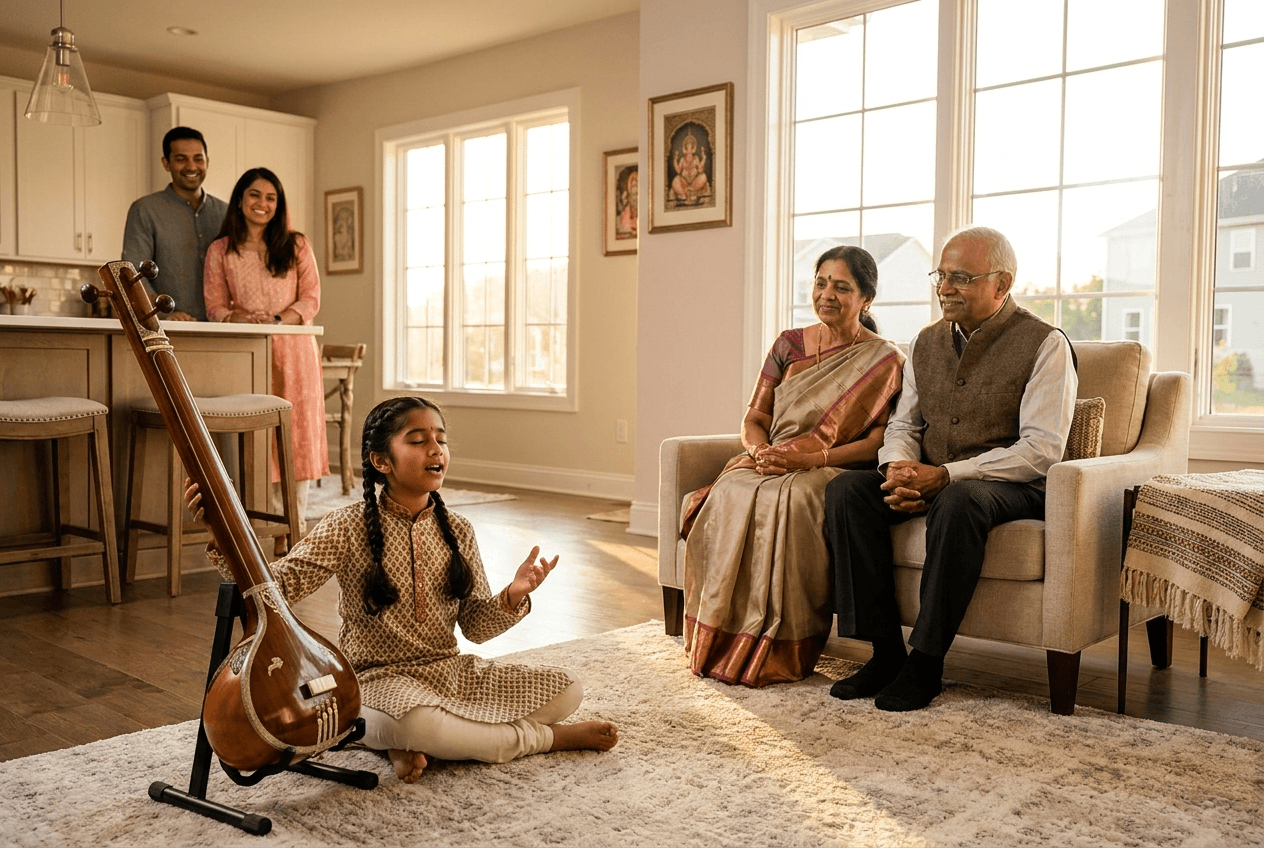 The South Indian American community is one of the most educationally accomplished and culturally active in the country. In New Jersey, the Bay Area, Houston, Chicago and across the country, Tamil, Telugu, Kannada and Malayalam families have built temples, cultural organisations and networks that sustain a rich tradition of classical arts events throughout the year.
The Cleveland Thyagaraja Aradhana, held annually in Cleveland, Ohio, is the largest Carnatic music festival outside India, attracting thousands of musicians and music lovers from across the United States. It demonstrates the depth and vitality of Carnatic musical culture among South Indian Americans and the community's commitment to sustaining this tradition in the United States.
For South Indian American children, Carnatic vocal training provides what no American educational activity can: a direct, living connection to the devotional musical tradition that has shaped South Indian cultural identity for centuries. The ragas, the compositions of Thyagaraja and Dikshitar, the rhythmic structures of Carnatic tala, these are not historical artefacts. They are a living musical world that their grandparents inhabit and that their children can inhabit too, if given the right guidance.
What Is Carnatic Music?
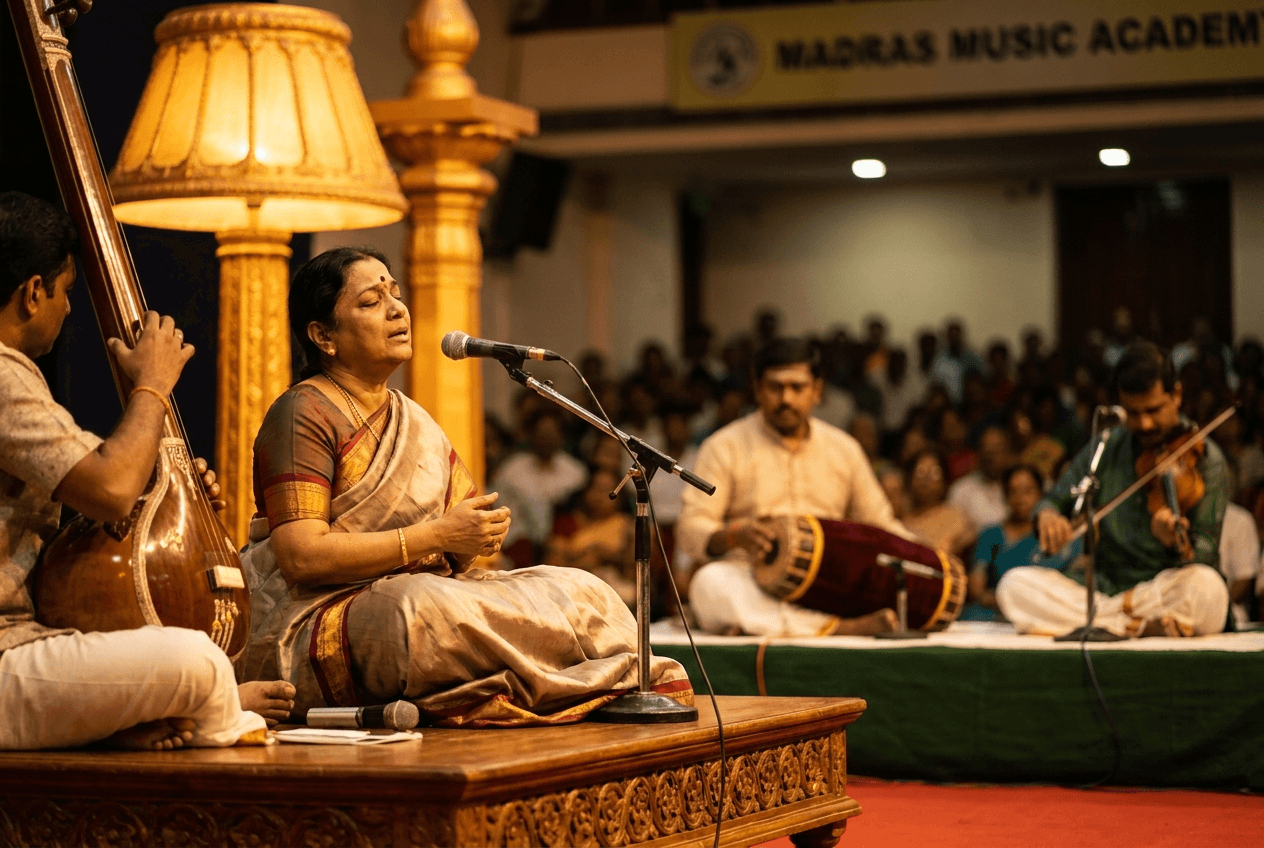 Carnatic music is a system of classical music that originated in the ancient Sanskrit musical treatises of India and developed over two millennia into one of the most elaborate and codified musical traditions in the world. It is primarily associated with Tamil Nadu, Karnataka, Andhra Pradesh, Telangana and Kerala, and its performing tradition is anchored by the vast compositional output of the saint composers of the eighteenth and nineteenth centuries.
The three pillars of Carnatic music are raga, tala and bhava. Raga is the melodic framework defining which notes are used, how they move, which phrases characterise the raga's identity and what emotional quality the raga evokes. Tala is the rhythmic cycle governing the structure of performance. Bhava is the devotional emotion, the loving relationship between performer and divine that is the ultimate motivation of the tradition.
The compositional heart of the tradition is the Trinity: Thyagaraja, Muthuswami Dikshitar and Syama Sastri, who composed in the late eighteenth and early nineteenth centuries. Thyagaraja alone composed thousands of songs, primarily in Telugu and Sanskrit, whose direct emotional power has made them beloved across South India and the South Indian diaspora worldwide.
The Languages of Carnatic Music
One of the most valuable features of Carnatic vocal training for South Indian American children is its deep engagement with classical South Indian languages. The vast majority of the Carnatic repertoire is sung in Sanskrit, Telugu, Tamil, Kannada and Malayalam. Learning to sing these compositions develops a meaningful musical relationship with the languages of their heritage that no language class can replicate.
For American-born children whose connection to South Indian languages may be tenuous, the musical route into language is often the most natural path. Many Art Gharana parents report that their children, who had little interest in learning Tamil or Telugu as a classroom subject, developed genuine affection for those languages through their engagement with Carnatic music.
Children who learn to sing Thyagaraja compositions in Telugu develop a feeling for the language that shapes how they relate to Telugu as their heritage tongue. The same is true for Tamil students singing Dikshitar kritis in Sanskrit and Tamil. Carnatic vocal training is simultaneously language education, delivered through the joy of music rather than the duty of a classroom.
The Curriculum: From Sarali Varisai to Kriti
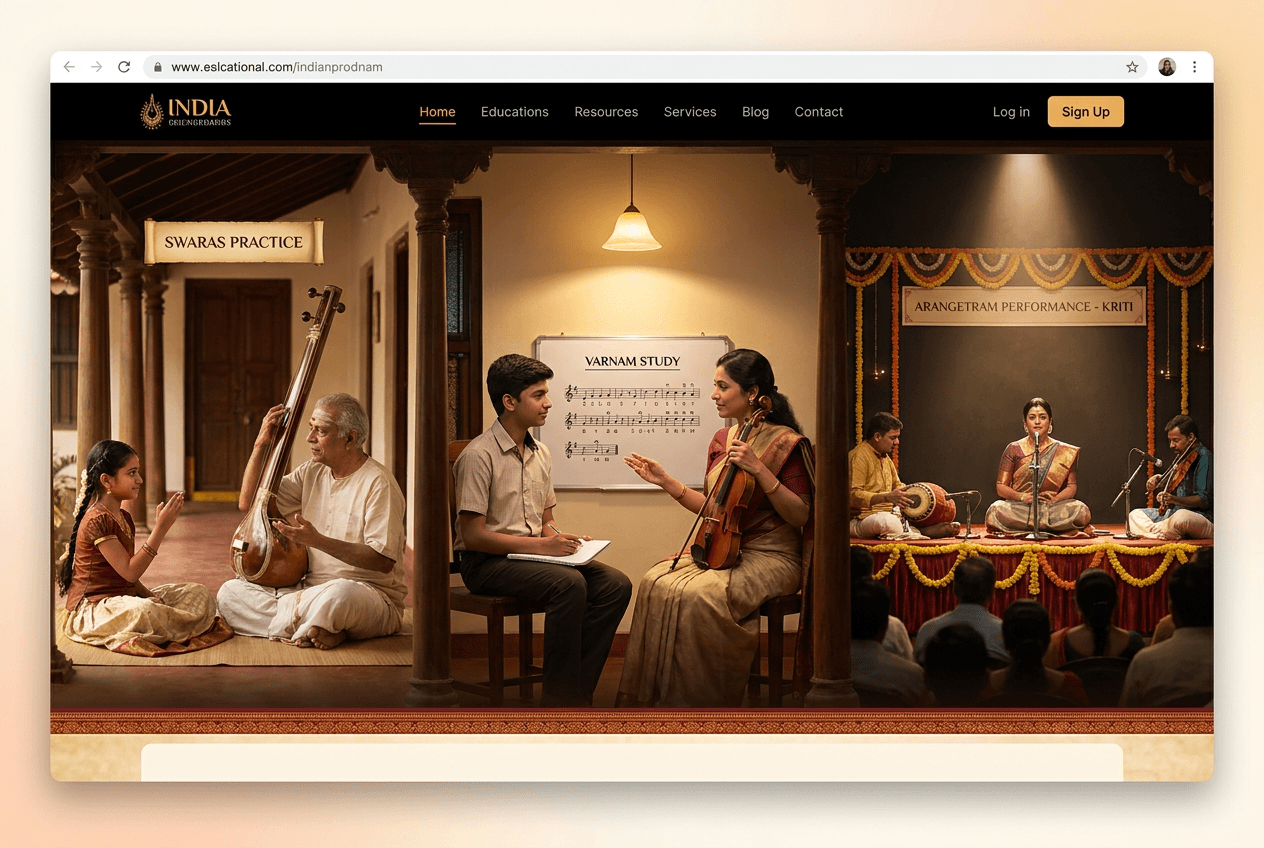
Foundation Stage
All training begins with swara practice: learning the seven notes of the scale, Sa Re Ga Ma Pa Da Ni, and singing them clearly in tune with a tanpura drone. Sarali varisai exercises follow, systematic patterns through the scale developing intonation, breath control and octave range. Alankarams introduce the ornamental patterns central to Carnatic melodic expression. Simple gitam compositions are introduced once the swara foundation is secure.
Intermediate Stage
Intermediate students work on swarajathis and varnams. The varnam is the most important compositional form in Carnatic music, introducing students to the full expressive and rhythmic complexity of the tradition in concentrated form. Students explore a wider range of ragas and learn to sing each with its characteristic phrases and ornamental vocabulary.
Advanced Stage
Advanced students work on kritis by the Trinity composers, developing the ability to render each composition with appropriate raga character, rhythmic precision and genuine emotional conviction. Manodharma sangita, the improvisatory dimension including alapana, neraval and swarakalpana, is introduced at this stage.
Raga and the Emotional Landscape
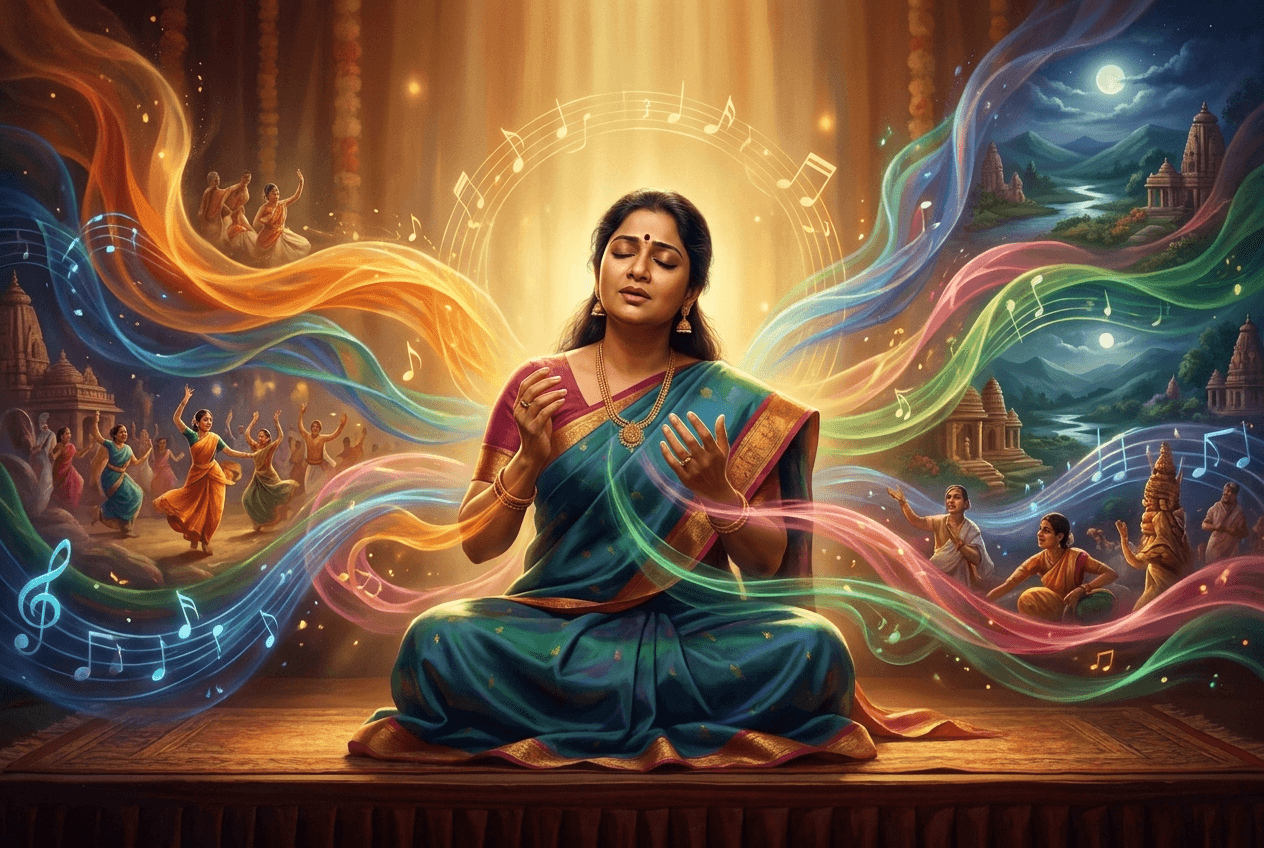 Each Carnatic raga is associated with a specific emotional quality. Bhairavi evokes melancholy and devotional longing, Kalyani conveys joy and celebration, Todi expresses deep pathos, Kambhoji suggests romantic tenderness. These associations have been developed over centuries of compositional practice and audience experience.
As a student develops their raga vocabulary, they simultaneously develop an emotional vocabulary, an ability to recognise and inhabit a range of human emotional states with precision and musicality. Students who have spent years singing Carnatic compositions across multiple ragas develop an emotional sensitivity and expressive range that extends well beyond the music itself, enriching their empathy, their storytelling and their engagement with literature and life.
How Art Gharana Compares
 US families searching for online Carnatic vocal classes encounter group Zoom classes, scattered individual teachers and several providers that explicitly restrict enrolment to female students. The differences that matter are clear.
The gender restriction applied by several prominent Carnatic vocal providers in the USA is a significant barrier for many families. Boys, fathers and adult males who want to learn Carnatic music find entire platforms unavailable to them. Art Gharana welcomes all students regardless of gender. Our curriculum is equally designed for boys and girls, children and adults from all South Indian communities.
Carnatic Vocal and the Wider South Indian Arts
Carnatic music is inseparable from Bharatanatyam. Every piece in the Bharatanatyam repertoire is set to a Carnatic composition, and students who understand the music from the inside bring a significantly richer expressive range to their dance. Our Bharatanatyam classes are taken alongside Carnatic vocal by many Art Gharana families for precisely this reason. A dancer who can sing the music they are dancing to performs at an entirely different level of musical depth.
Our tabla classes complement Carnatic vocal by developing rhythmic intelligence from a percussionist's perspective, enriching footwork precision and tala awareness. Our flute classes share the same raga and tala framework as the vocal tradition. For North Indian families interested in classical music, our Hindustani vocal classes follow the Hindustani tradition with the same live one to one format. Explore our full range of courses for all available options.
The Voice as the Primary Instrument
Carnatic vocal training treats the voice as the supreme musical instrument, more expressive and more immediate than any physical instrument. In the Carnatic tradition, vocal music is the source from which all other music flows: instrumentalists are expected to sing the compositions they play internally, and the highest compliment for an instrumentalist's performance is to say it sounds vocal. Learning to sing Carnatic music is therefore learning to access the most direct form of musical communication the tradition has produced.
For children, the voice has a particular advantage: it is always available, always with them, and develops naturally alongside them as they grow. A Carnatic vocal student who practices sarali varisai exercises while walking to school is developing their musical ear in a way that an instrument student cannot without their instrument. This accessibility makes vocal training especially powerful for children with busy American lives.
How to Practice Carnatic Vocal at Home
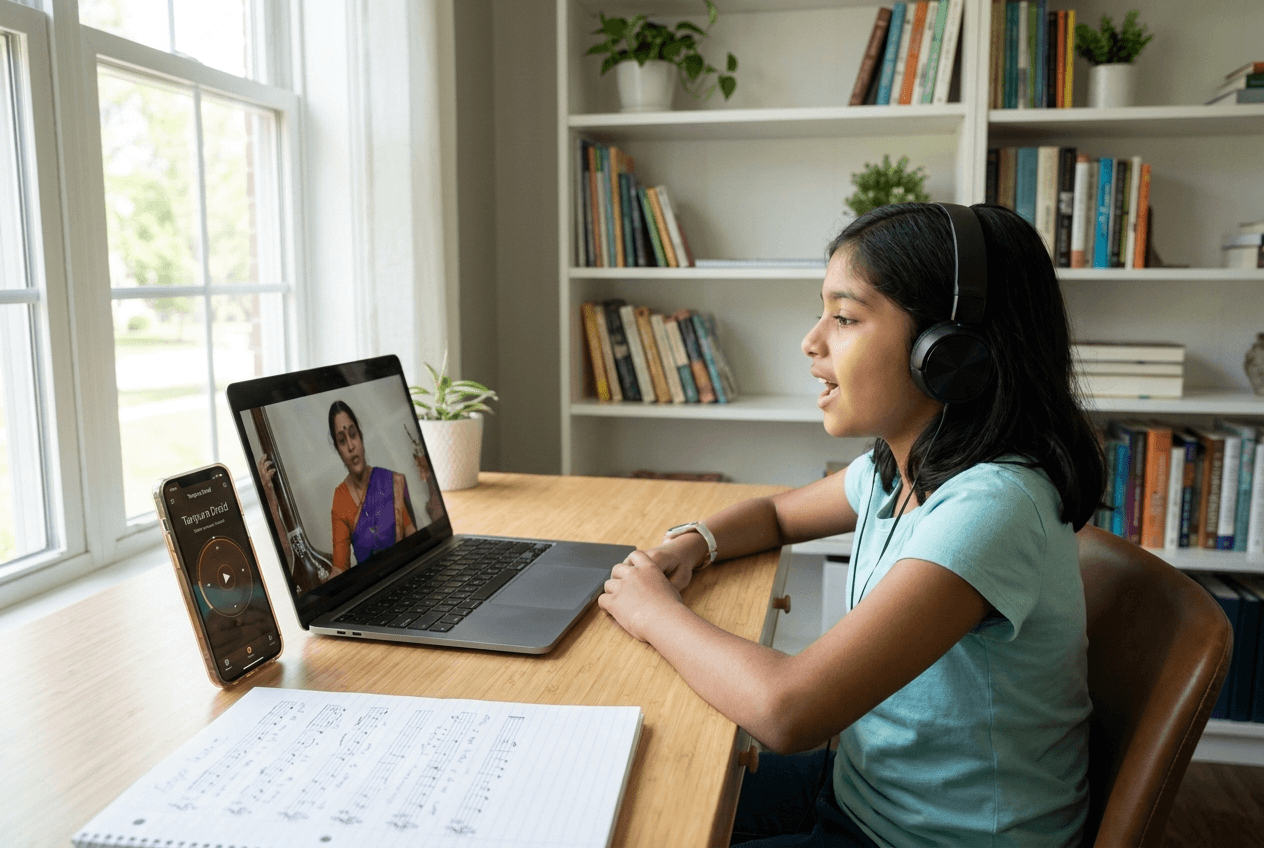
Carnatic vocal practice at home is simpler to set up than any instrument practice. A quiet room, a device playing a tanpura drone app and 20 to 30 minutes of consistent daily attention are all that is needed. The morning is traditionally the best time for vocal practice in the Indian classical tradition, when the voice is rested and the mind is clear.
Your teacher provides a specific practice plan after every class, covering which exercises and compositions to focus on and how long to spend on each element. Following this plan consistently, rather than practicing whatever feels comfortable, is the most important thing a student can do to accelerate their progress. The teacher's practice plan is designed to build on what was covered in class and to prepare the student for the next session.
About Art Gharana
Art Gharana is a specialist online Indian arts education platform with over 50 certified teachers across dance, music and vocal disciplines. Our Carnatic vocal programme serves South Indian families across all 50 states with live one to one classes in all US time zones. Browse our teacher profiles and review our plans and pricing to choose the right plan for your family.
Frequently Asked Questions
1. Can I find a certified Carnatic vocal teacher online in the USA?
Yes. Art Gharana connects US students with certified Carnatic vocal teachers for live one to one classes in all US time zones, with morning, evening and weekend slots across Eastern, Central, Mountain and Pacific.
2. Do I need a tanpura for online Carnatic classes?
A physical tanpura is not required. A high-quality tanpura app on a smartphone or tablet works perfectly for both practice and online lessons. Your teacher will recommend a specific app at your first class.
3. What age can children start Carnatic vocal training?
Children can begin from around age 5 to 6. Basic swara practice is well suited to young voices, and the beginner curriculum is designed to be age-appropriate, engaging and fun for young learners with no prior musical knowledge.
4. How long does Carnatic vocal training take?
Basic proficiency with a small repertoire and working knowledge of several ragas typically takes two to three years of consistent practice. Carnatic music is a lifelong tradition; even the most accomplished performers describe themselves as eternal students of the art.
5. Is prior musical knowledge required?
No. Art Gharana's beginner Carnatic vocal curriculum starts from the absolute foundations. No prior knowledge of music notation, ragas or talas is assumed or required.
Book Your Free Carnatic Vocal Trial Class Today
Whether your family is in New Jersey, Houston, the Bay Area, Chicago or anywhere else across the USA, Art Gharana's certified Carnatic vocal teachers are ready to begin your child's musical journey. Live one to one classes, US time zone scheduling, a structured curriculum from sarali varisai to advanced kritis and a completely free first lesson. The Carnatic tradition belongs to your family. Head to our book a free trial class page and take the first step today.
The Cleveland Thyagaraja Aradhana and US Carnatic Culture
The Cleveland Thyagaraja Aradhana, held each spring in Cleveland, Ohio, is one of the largest Carnatic music festivals in the world outside of India. Drawing thousands of musicians, students and devotees from across North America and beyond, it is a testament to the extraordinary vitality of Carnatic music culture in the United States. For South Indian American children who have received serious Carnatic vocal training, the Cleveland Aradhana represents both a goal and a context: a community of practitioners and a tradition of excellence that their training is connecting them to. Beyond Cleveland, the Carnatic music performance calendar in the USA is rich and active. Community kutcheris at South Indian temples across New Jersey, Maryland, California, Texas and Georgia provide students with meaningful performance platforms throughout the year. Art Gharana teachers actively help their US students connect with these performance opportunities and prepare appropriately for them.
How Carnatic Music Develops the Brain
Research conducted at institutions including MIT and Stanford has shown that the combination of pitch training, rhythmic complexity and language learning involved in Carnatic music study produces measurable neurological benefits including enlarged auditory cortex, enhanced phonological processing and superior working memory compared to non-music-trained peers. The implications for academic performance are direct. Carnatic students, who must simultaneously process pitch accuracy requirements, rhythmic demands and lyrical content in Sanskrit, Tamil, Telugu and other languages, exercise multiple cognitive systems simultaneously in a way that strengthens each of them. Several Art Gharana families have reported that beginning Carnatic vocal training coincided with significant improvements in their childrens school performance, particularly in mathematics and language arts.
Setting Up for Online Carnatic Vocal Classes
Setting up for online Carnatic vocal classes is simple. The primary requirement is a quiet room where the teacher can hear your childs voice clearly without echo or background noise. A device with a good microphone is important since the teacher needs to hear fine pitch differences and tonal quality. Before the first class, download a tanpura app on a smartphone or tablet. Your teacher will recommend a specific app at the first session. The tanpura provides the essential tonal reference for Carnatic singing, giving your child a stable drone pitch to tune to during both classes and home practice. This is the only tool needed to begin, and it costs nothing.
Carnatic Vocal and the South Indian American Family
For Tamil and South Indian American families, Carnatic vocal training carries cultural significance that transcends music education. The compositions of Thyagaraja, the most beloved composer in the Carnatic tradition, are Telugu devotional songs expressing his passionate love for Lord Rama with an emotional directness and musical beauty that has moved generations of South Indian families. When a Tamil or Telugu child in suburban New Jersey or Houstons Sugar Land learns to sing a Thyagaraja composition correctly, they are entering into a living devotional tradition that their grandparents and great-grandparents knew and loved. The child who can sing a Thyagaraja kriti at the family puja, or at a temple event, or for grandparents visiting from Chennai or Hyderabad, is demonstrating a cultural mastery that no other activity can replicate and that earns a quality of pride and emotion from South Indian elders that parents describe as deeply moving to witness. Parents frequently wonder whether their children need to know Tamil, Telugu or Sanskrit to benefit from Carnatic vocal training. The answer is no prior language knowledge is required. Art Gharana teachers introduce the lyrics of compositions gradually and in context, explaining their meaning and devotional significance as part of the teaching process. Many Art Gharana Carnatic students whose first language is English have developed functional understanding of the devotional Telugu and Sanskrit lyrics they sing, and several have reported that Carnatic training sparked a broader interest in the heritage languages of their families that has had lasting cultural benefits. For South Indian American families who do maintain Tamil, Telugu or another heritage language at home, Carnatic vocal training reinforces and deepens that linguistic connection significantly. The literary quality of the texts, particularly Thyagarajas Telugu compositions and Dikshitars Sanskrit kritis, exposes students to the heights of South Indian classical literature alongside the music. Students who study Carnatic seriously often develop a genuine love for the languages they sing in, approaching them not as duty but as the medium of an art form they have come to cherish. The international dimension of Carnatic music in the United States is also worth noting. The Carnatic music community in the USA is genuinely global, connected through the Cleveland Thyagaraja Aradhana, the Narada Gana Sabha events on the East Coast, the performance calendar of Bay Area and Houston temples, and the digital world of Carnatic music podcasts, YouTube channels and online kutcheris. A child who trains seriously in Carnatic vocal is not simply learning a private cultural skill. They are joining a living, active, internationally connected community of practitioners and enthusiasts that will enrich their cultural life for decades. For families who are weighing the time commitment of Carnatic vocal training against other after-school activities, it is useful to understand what a realistic programme looks like week by week. One live class of 45 minutes per week, plus 15 to 20 minutes of daily riyaz practice, represents the minimum commitment for meaningful progress. This is less time than most competitive sports demand, comparable to what most families already spend on academic tutoring or music lessons in other traditions, and is readily achievable for most families with consistent scheduling. The key is daily practice rather than occasional longer sessions. Fifteen minutes of consistent daily swara practice, using a tanpura app as a drone reference, develops intonation and voice quality far more effectively than an hour of practice once a week. Art Gharana teachers design their home practice assignments with this principle in mind, keeping the daily practice sessions short enough to maintain the habit but substantive enough to produce real results. For South Indian American families who have been searching for a Carnatic vocal programme that truly understands the cultural context and the musical tradition they are investing in, Art Gharana offers something that generic music education platforms cannot: a programme built specifically for the diaspora experience, taught by teachers who are themselves classical performers with deep roots in the Carnatic tradition, and delivered in a format that respects the demands of American family life. The combination of classical authenticity, cultural sensitivity, scheduling flexibility and genuine pedagogical expertise makes Art Gharana the best available option for Carnatic vocal education in the USA in 2026.