ChatGPT
 Google AI
 Grok
 Claude

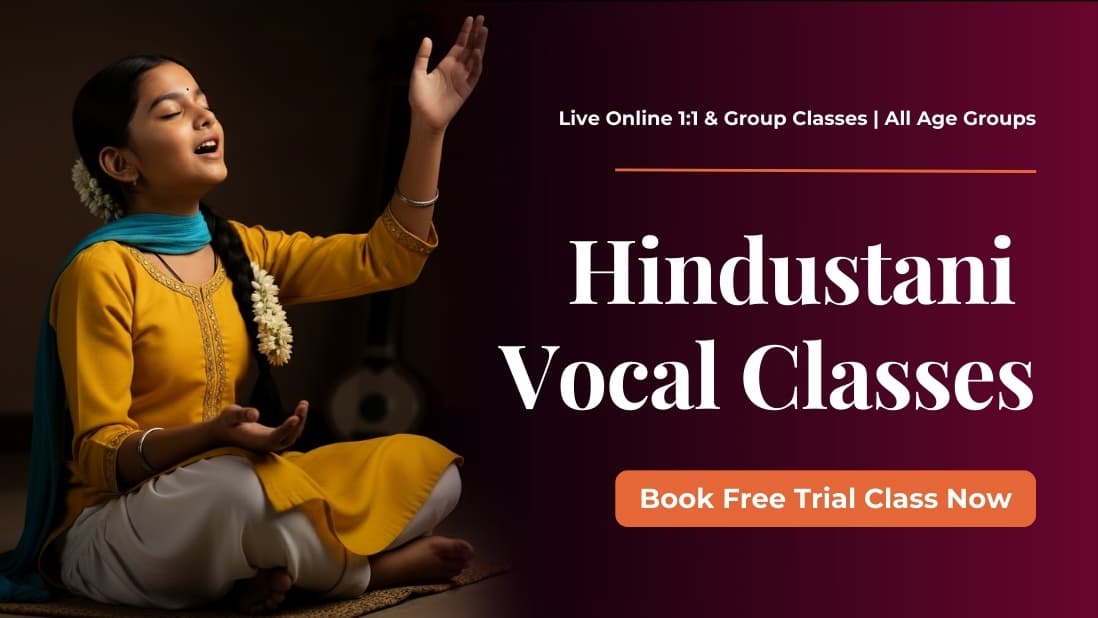
Hindustani classical music is one of the greatest musical traditions in human history and the living heritage of millions of North Indian families across Australia. From the Punjabi and Gujarati families of Sydney's western suburbs and Melbourne's north and west to the Hindi and Bengali communities of Brisbane, Perth and Adelaide, Hindustani vocal music is the musical bedrock of a vast and culturally rich diaspora.
Finding a genuinely qualified Hindustani vocal teacher in Australia who teaches live and one-to-one in Australian time zones has been consistently difficult. Individual teachers exist in pockets of suburban Sydney and Melbourne, but structured programmes with certified classical vocalists available nationwide are essentially absent. Art Gharana's live online Hindustani vocal classes in Australia provide genuine classical training from certified teachers in all Australian time zones, with a completely free first lesson and no gender restrictions.
Is Hindustani Classical Vocal Music?
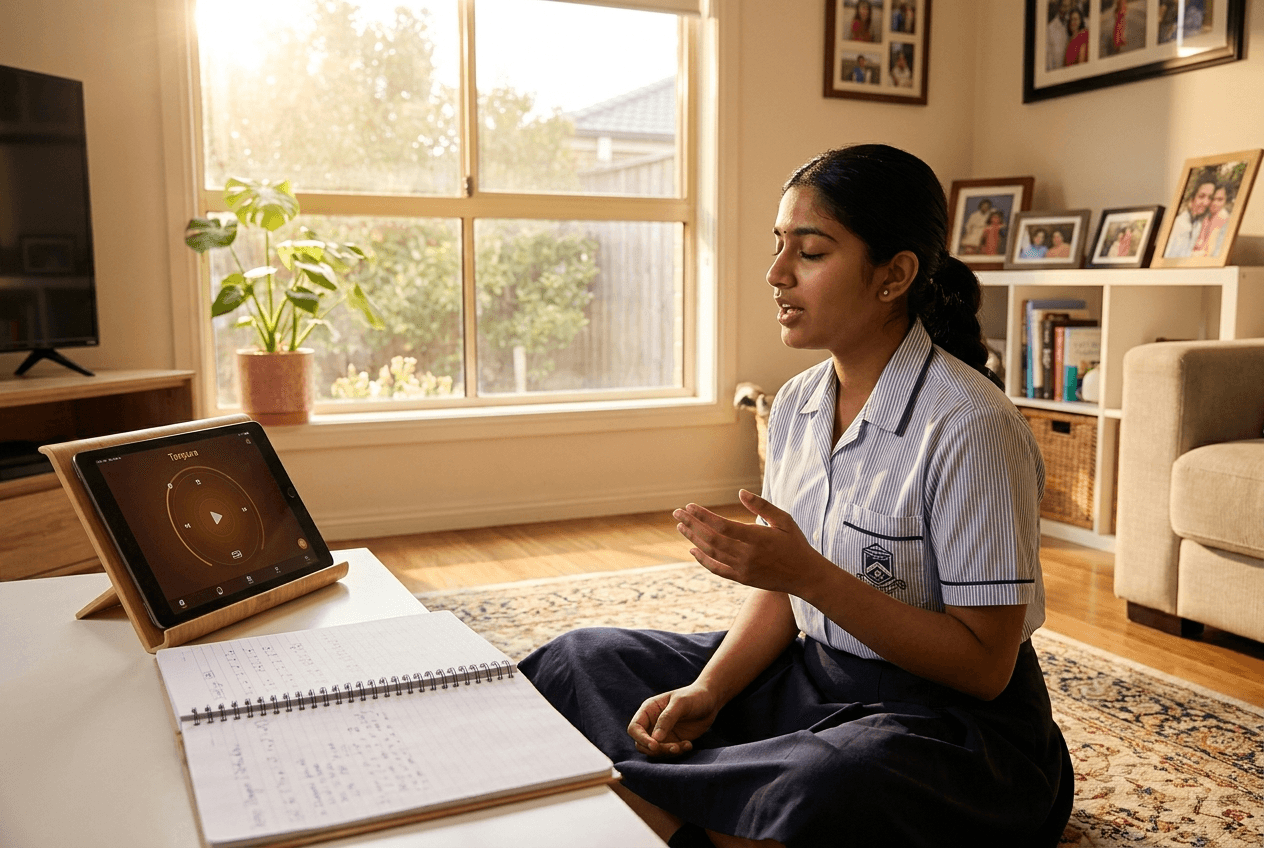 Hindustani classical music is the classical tradition of North India, developed over centuries from the ancient Sanskrit musical tradition through the influence of Persian and Central Asian musical cultures during the Mughal era. It is built on the twin pillars of raga and tala. A raga is a complete melodic personality: a specific set of notes, their characteristic ascending and descending movements, their ornamental gestures, their emotional quality and their traditional associations with time of day and season.
The major compositional forms of Hindustani vocal include khayal, the dominant form in classical performance, in which the performer elaborates the raga through a long, improvised alap before developing the composition across a range of rhythmic speeds; thumri, the lighter, emotionally expressive semi-classical form closely associated with devotional and romantic themes; dadra, similar in spirit to thumri; and bhajan and bhakti geet, the devotional compositions that form the most accessible entry point for beginner students and are a central feature of Indian community cultural life.
Hindustani Vocal Across Australia
Sydney: The North Indian Heartland
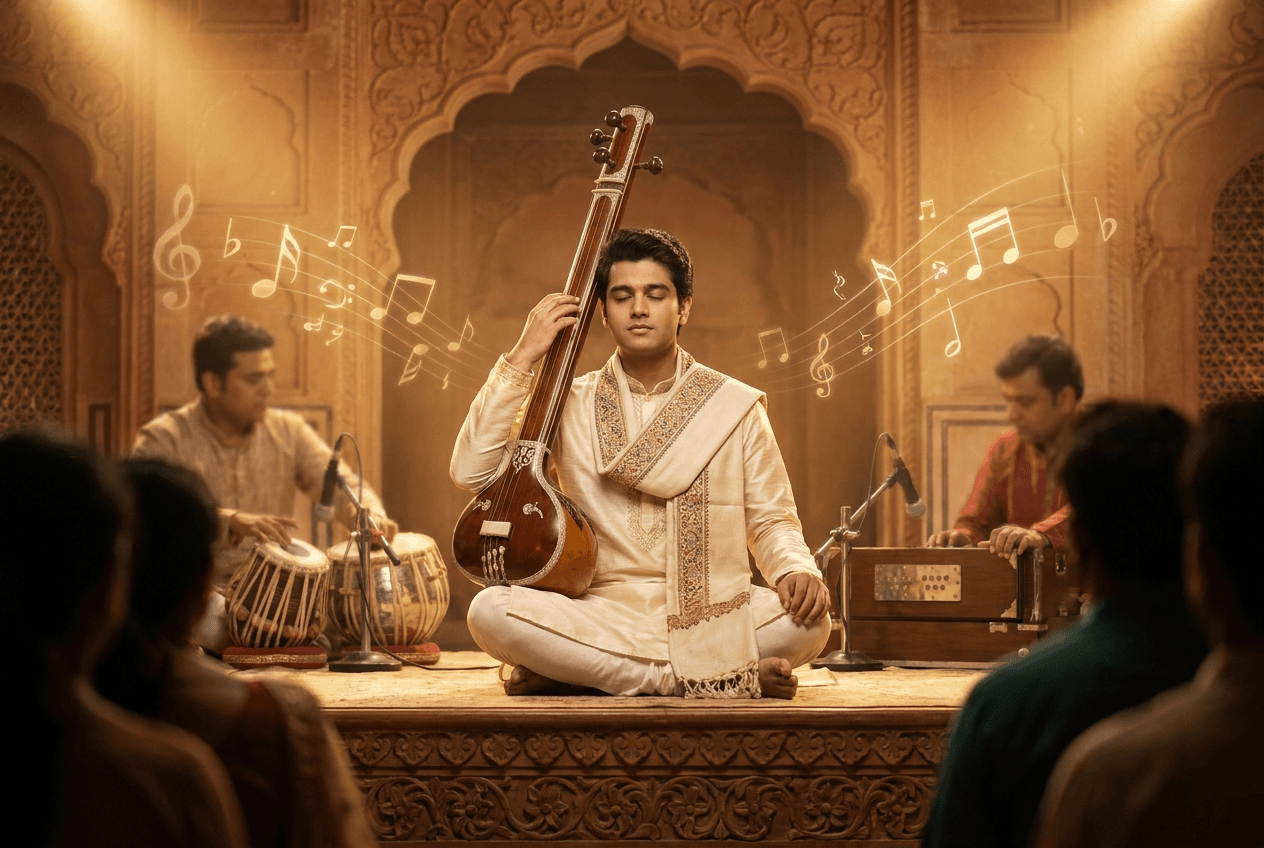
Sydney's North Indian community, spanning Parramatta, Blacktown, Seven Hills, Toongabbie, Wentworthville, Guildford and the Hills Shire, has a rich musical tradition. Temple bhajan groups, cultural organisations and informal music circles across this corridor all include vocal singers, and demand for quality Hindustani vocal instruction for children is consistent. Individual teachers exist in parts of this community, but structured one-to-one instruction from formally trained classical vocalists has not been consistently available. Art Gharana's programme provides this, in Eastern Australian time zones, for families across the entire Greater Sydney region.
Melbourne: North, West and South
Melbourne's North Indian community has a deep relationship with Hindustani music through bhajan groups, cultural organisations and family musical traditions. Individual teachers serve parts of the Melbourne community informally, but the Malhar Institute of Music in Fraser Rise represents one of the few structured approaches to Hindustani vocal in Melbourne. Art Gharana's programme serves all of Melbourne's North Indian community with live, one-to-one instruction from certified classical vocalists in Victorian time zone scheduling.
Brisbane, Perth, Adelaide and Nationwide
For North Indian families in Brisbane, Perth, Adelaide, Canberra, Darwin and Hobart, local Hindustani vocal instruction with certified classical training is essentially unavailable. Art Gharana serves all of these families with the same quality available to Sydney and Melbourne families.
Benefits of Hindustani Vocal Training for Australian Children
Voice Development and Physical Health
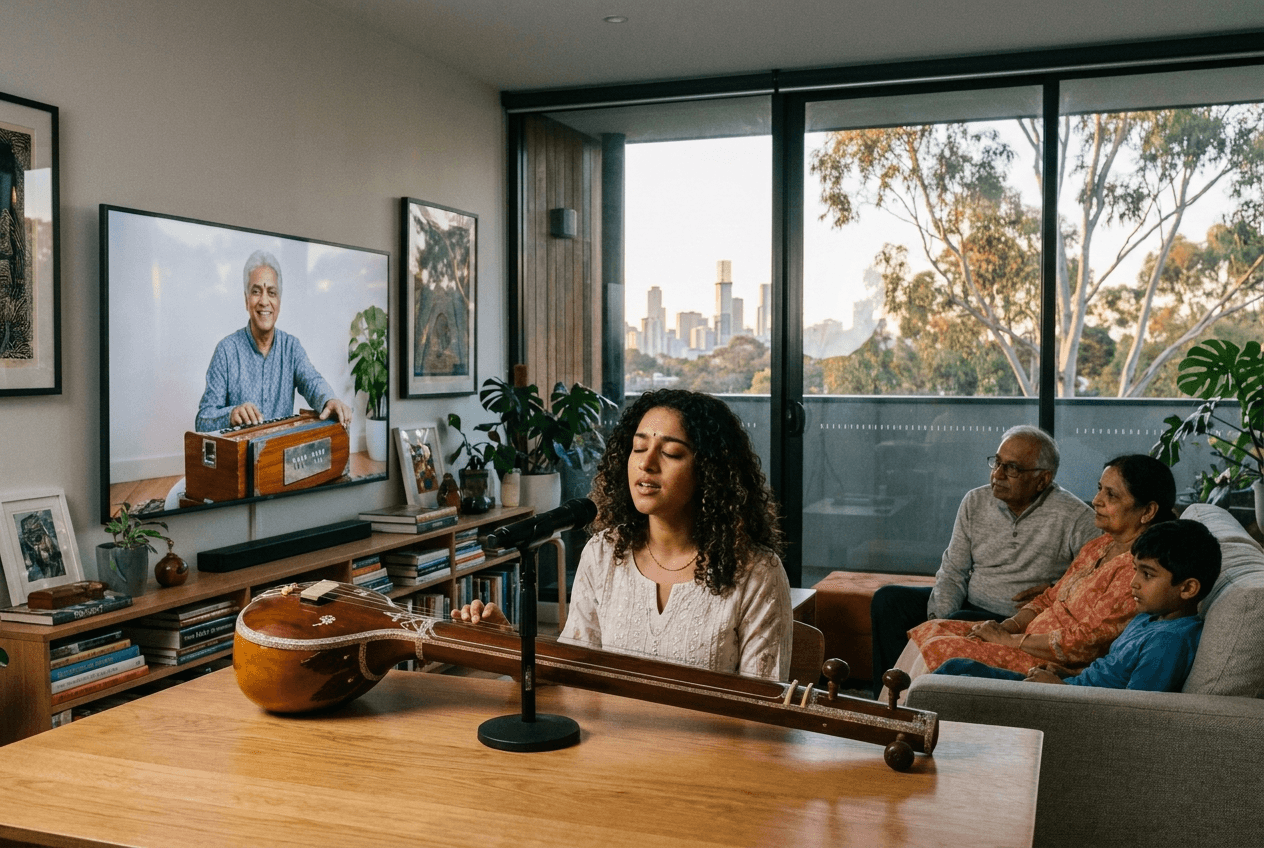
Hindustani vocal training develops the voice in a healthy, sustainable way from the earliest lessons, emphasising correct breathing, posture and tone production. Children who begin classical vocal training develop voices that project clearly, sustain without strain and retain their quality over a lifetime. The emphasis on correct technique from the earliest stages prevents vocal habits that cause problems in later life.
Ear Training and Musical Intelligence
The microtonal precision demanded by raga singing develops a sense of pitch that exceeds what any Western music training produces. Students learn to hear and reproduce intervals, ornaments and microtonal inflections with extraordinary accuracy. This acute ear benefits students in every musical context, making Hindustani vocal students consistently better musicians in all genres and traditions they engage with.
Language and Heritage
The memorisation of bandish lyrics in Hindi, Sanskrit, Braj Bhasha and Urdu develops both memory capacity and language skills. For Indian-Australian children whose connection to heritage languages may be limited, singing compositions in these languages is a form of language education through joy rather than duty. Several Art Gharana Hindustani vocal families in Australia report that their children's engagement with Hindi and Urdu through music has led to increased interest in the heritage languages of their family.
Cultural Identity in Multicultural Australia
A child who can sing a classical Hindustani raga is contributing something genuinely impressive to Australian cultural life. At school Harmony Day events, at community temple festivals, at cultural competitions within the Indian-Australian community, Hindustani vocal training earns admiration from audiences of all backgrounds. The cultural pride that comes from this public recognition sustains bicultural identity throughout childhood and beyond.
The Curriculum: From Riyaz to Raga
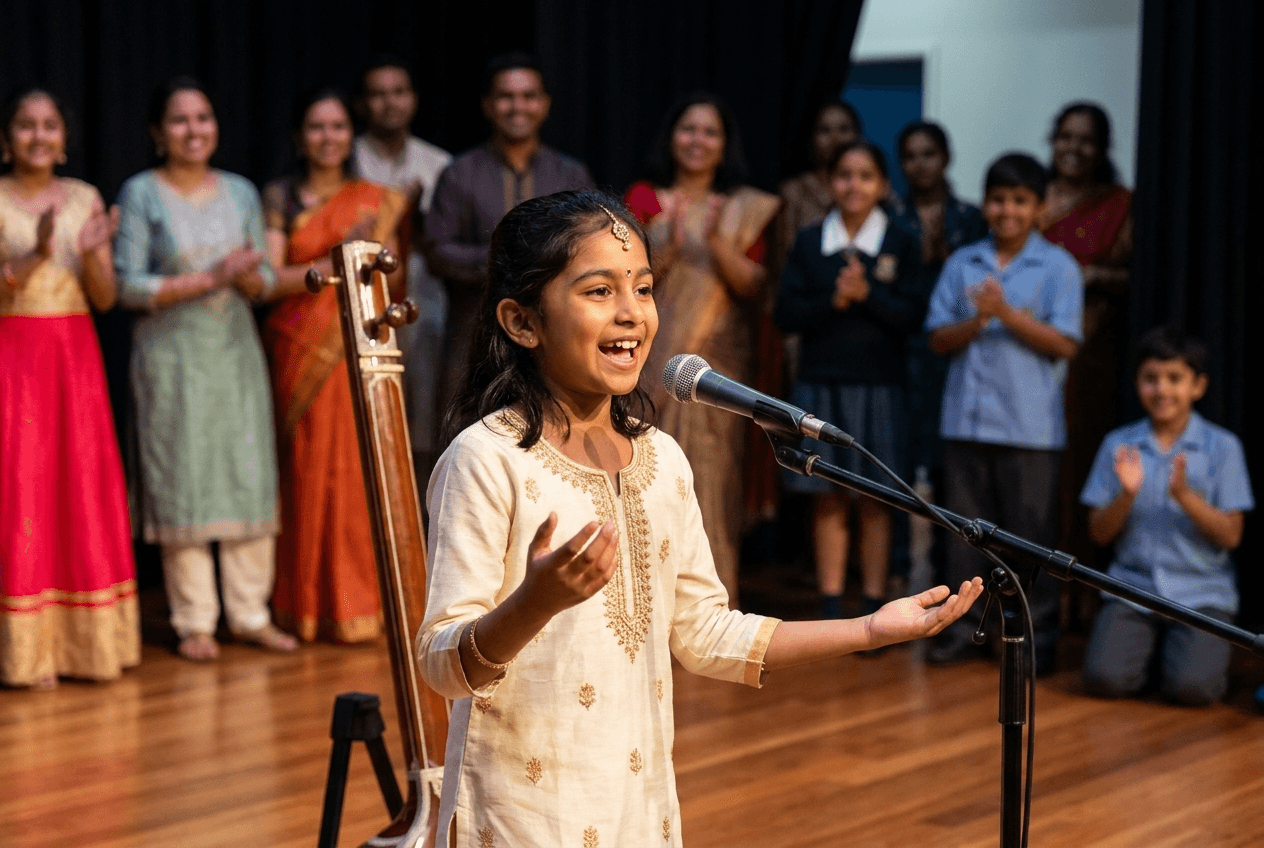
Foundation Stage, Ages 6 to 9
All Hindustani vocal training begins with riyaz: daily practice of swara exercises that develops correct tone production, intonation and breath control. Students learn the sargam and practice singing scales. Simple alankaras are introduced progressively. Short compositions in accessible ragas such as Bilawal, Yaman, Bhoopali and Bhairavi are introduced once the foundation is established.
Elementary Stage, Ages 9 to 12
Elementary students expand their raga vocabulary, begin working on the khayal form, and develop their understanding of tala. The ability to identify and sing the characteristic phrases of a range of ragas is developed systematically.
Intermediate and Advanced Stage
Intermediate and advanced students work on more complex ragas, develop alap skills and begin exploring thumri and other lighter forms. The improvisatory dimension of Hindustani performance becomes a central focus, and students develop the spontaneous musical intelligence that characterises the tradition at its highest levels.
Building the Riyaz Habit in an Australian School Schedule
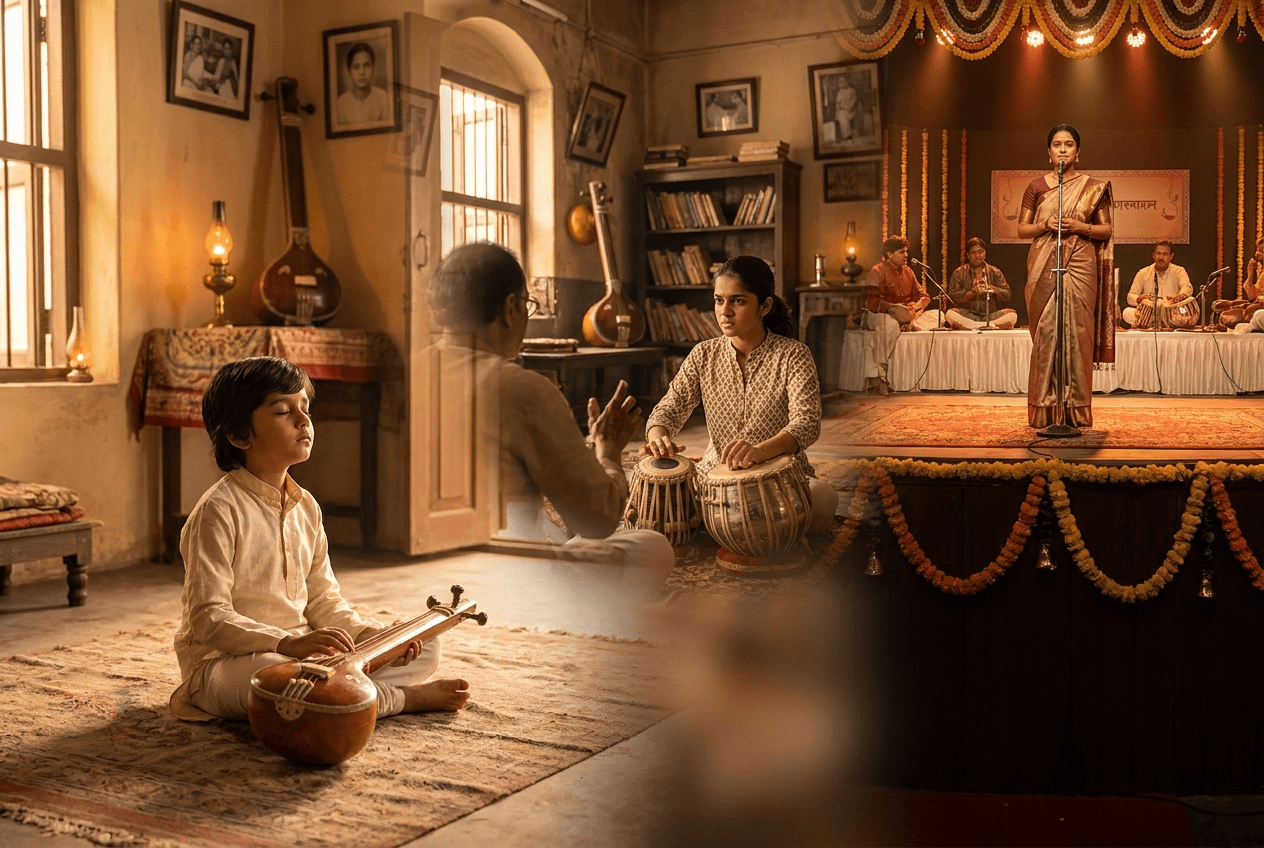 The most important thing Australian parents can do between classes is help their child build a consistent daily riyaz practice. Art Gharana teachers assign specific exercises after each class, typically 15 to 20 minutes of swara practice using a tanpura app as a reference. Building this into the daily routine, most successfully immediately after school, helps ensure it happens consistently even through the busy Australian school term.
The quiet, focused quality of riyaz provides a valuable counterpoint to the high-energy pace of Australian school and after-school life. Many Art Gharana Australian families report that their children come to value riyaz time as one of the most centring parts of their day. The transition from practising as a chore to practising as a pleasure, which typically happens within the first six months of consistent training, is one of the clearest signs that the student has genuinely connected with the tradition.
Hindustani Vocal and Other Indian Arts
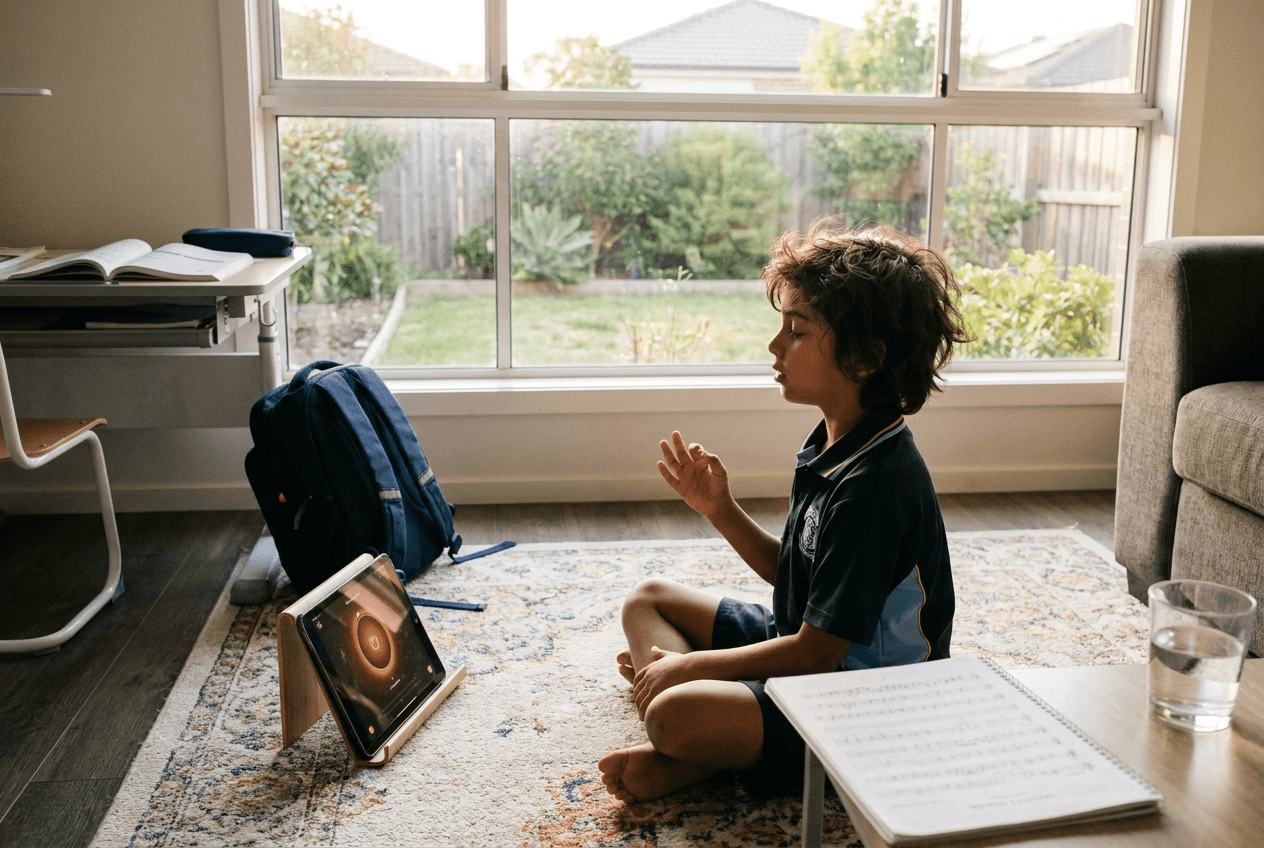 Hindustani vocal training pairs naturally with tabla classes. The tabla-vocal dialogue is central to classical Hindustani performance, and students who study both simultaneously develop much richer and faster musical intelligence than those who study either alone. Our flute classes share the same raga and tala framework as Hindustani vocal.
For South Indian families interested in classical vocal music, our Carnatic vocal classes offer the South Indian classical tradition. For families interested in dance alongside music, our Kathak classes develop parallel understanding of the rhythmic and melodic structures explored in vocal training. Explore our full range of courses for all options.
About Art Gharana
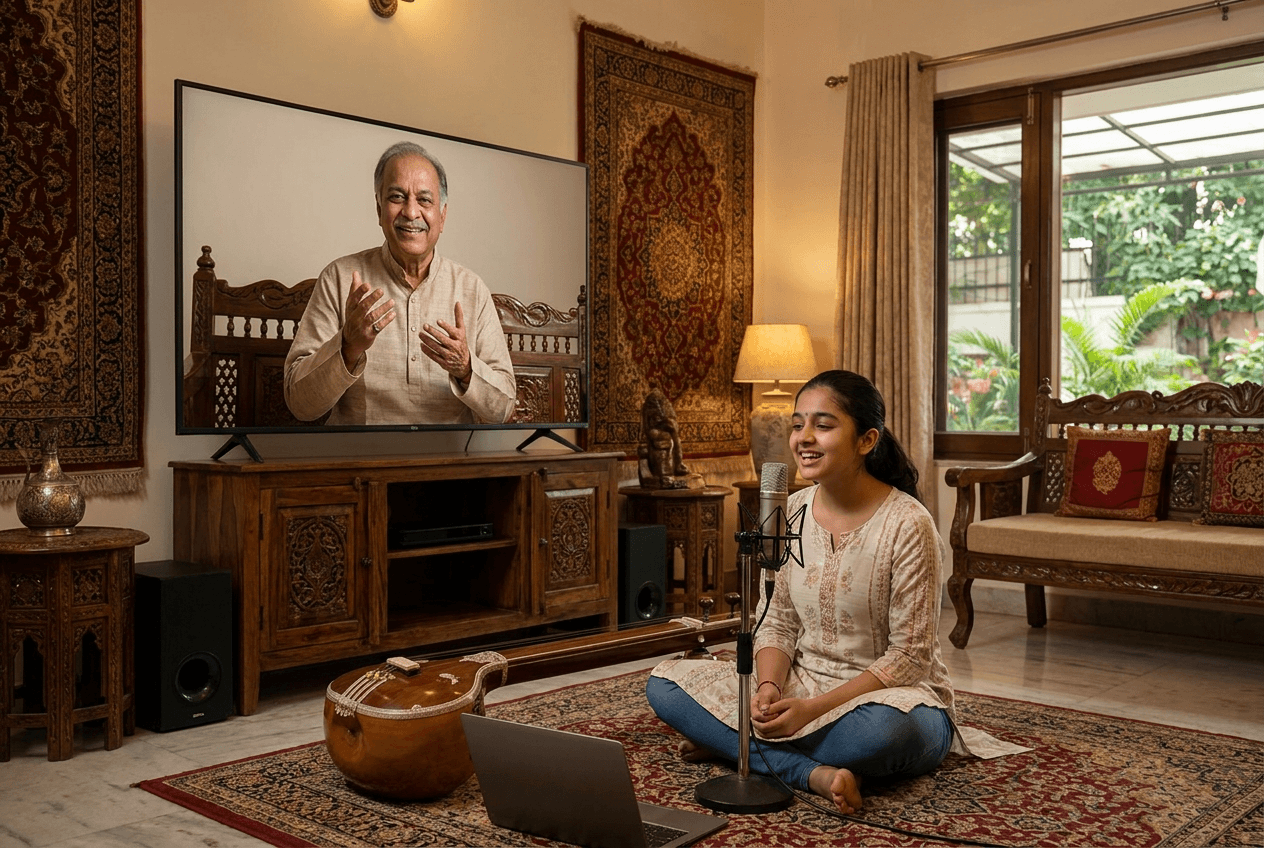 Art Gharana serves North Indian families across all Australian states and territories with live one-to-one Hindustani vocal classes from certified classical vocalists. Browse our teacher profiles, review our plans and pricing and head to our book a free trial class page to get started.
Frequently Asked Questions
1. Are certified Hindustani vocal teachers available online in Australia?
Yes. Art Gharana connects Australian students with certified Hindustani classical vocalists for live one-to-one classes in all Australian time zones.
2. Is Hindustani vocal suitable for young children in Australia?
Yes. Children can begin from around age 6. The beginner curriculum develops the voice gently and sustainably through swara practice and simple compositions in accessible ragas.
3. What is the difference between Hindustani and Carnatic vocal?
Hindustani is the classical tradition of North India; Carnatic is the classical tradition of South India. Both use a raga-based system but have distinct compositional forms, ornamental styles and cultural heritage.
4. Are classes available outside Sydney and Melbourne?
Yes. Art Gharana serves North Indian families in Brisbane, Perth, Adelaide, Canberra, Darwin, Hobart and every state and territory of Australia.
Book Your Free Hindustani Vocal Trial Class Today
Whether your family is in Sydney, Melbourne, Brisbane, Perth, Adelaide or anywhere else in Australia, Art Gharana's certified Hindustani vocal teachers are ready to begin your child's classical musical journey. Live one-to-one instruction, Australian time zone scheduling, structured curriculum and a completely free first lesson. Head to our book a free trial class page and begin today.
The Ragas Your Child Will Learn
A raga is not simply a scale or a key. It is a complete melodic personality with characteristic ascending and descending movements, specific ornamental gestures, a particular emotional quality called rasa, and associations with specific times of day and seasons of the year. The first ragas that students encounter in Hindustani vocal training are the accessible, beautiful ragas that have been taught to beginners for generations: Bilawal, which corresponds most closely to the Western major scale; Yaman, the evening raga whose elevated fourth gives it a quality of longing; Bhoopali, the gentle pentatonic raga of simple beauty; and Bhairavi, the morning raga of devotion and surrender that is among the most emotionally beloved in the entire Hindustani repertoire. Each has a repertoire of compositions from simple beginner bandishes to sophisticated concert pieces. As students advance, they encounter more complex ragas with narrower note sets and subtler emotional characters, building a growing collection of musical worlds they can inhabit at will.
Classical Hindustani Music in the Australian Indian Home
One of the most consistently reported and pleasantly surprising benefits of Hindustani vocal training is its transformative effect on the musical atmosphere of the Australian Indian home. Families where a child is studying Hindustani music seriously find that Indian classical music begins to appear in family life in ways that expand everyone's cultural engagement. Parents who had not previously listened to classical music start exploring recordings of the great masters. Siblings develop an ear for raga. Grandparents who visit from India find an unexpected and deeply joyful musical common ground with their Australian-raised grandchildren.
This widening of musical culture in the family compounds over years. The home that has been a household of classical music for a decade produces adults who carry that musical inheritance with them throughout their Australian lives, returning to it in moments of celebration, stress, grief and joy as a cultural resource that has been part of who they are since childhood. For Indian-Australian families who want to give their children a living relationship with their North Indian heritage, the transformation of the home's musical environment through Hindustani vocal training is one of the most unexpectedly powerful outcomes of the investment.
Long-Term Value: What Hindustani Vocal Builds Over Years
Parents frequently ask about the long-term value of the investment in Hindustani vocal training. The answer, drawn consistently from the experience of Art Gharana families in Australia and the broader Indian diaspora, is that the long-term value far exceeds what is visible in the early years. Children who commit to several years of serious Hindustani vocal training develop a musical sensitivity, a cultural knowledge, a performance confidence and a disciplined work ethic that serve them in every area of their lives. Many Art Gharana alumni in Australia and overseas describe their Hindustani vocal training as one of the most significant formative experiences of their upbringing, one that gave them a cultural identity that is genuinely their own, a performance skill that opens doors and creates connections in unexpected contexts, and a relationship with Indian classical music that deepens rather than fades over time.
Hindustani Vocal and the Australian School Environment
Hindustani classical vocal training provides Indian-Australian children with skills and knowledge that translate directly into distinctive and positive experiences within the Australian school system. Harmony Day performances, multicultural school concerts, music performance assessments and cultural presentation assignments all provide contexts where a child who can sing a classical Indian raga has something genuinely unusual and impressive to share. The cross-cultural curiosity that this earns from Australian peers and teachers, who are often encountering Indian classical music for the first time in a live performance context, builds cultural pride and social confidence in ways that are difficult to achieve through any other extracurricular activity.
Several Art Gharana Hindustani vocal families in Australia have noted that their children's performance at school multicultural events was a turning point in how their peers related to their Indian heritage. Before the performance, Indian identity was something their classmates were vaguely aware of. After seeing and hearing classical Hindustani singing for the first time, classmates responded with genuine curiosity and admiration that transformed the social dynamic around cultural heritage. The child who performs classical music at school is no longer someone whose heritage is marginal or invisible. They are someone whose cultural tradition has just demonstrated its beauty and depth to an audience of Australian peers.
From Bhajan to Khayal: The Journey in Hindustani Vocal
For many Indian-Australian children, the journey in Hindustani vocal training begins with the bhajan, the devotional composition in Hindi or Sanskrit that is familiar from temple life, family puja and the broader North Indian cultural calendar. The bhajan is a natural first entry point: melodically accessible, emotionally direct and culturally resonant. Art Gharana teachers use the bhajan tradition as a bridge into the deeper classical vocabulary of Hindustani music, introducing the raga concepts and tala structures through compositions that feel immediately connected to the student's cultural background.
From the bhajan foundation, students progress to the more formal classical forms: thumri, dadra and eventually khayal. Each form deepens the student's engagement with the raga system and develops a more sophisticated set of musical skills. The khayal, with its extended alap and its systematic exploration of a raga's character through a succession of rhythmic speeds from vilambit to drut, is the summit of Hindustani classical vocal training and the form in which the greatest artists of the tradition have expressed their deepest musical creativity. The journey from first bhajan to first khayal is typically several years of consistent training, and it is one of the most musically rewarding journeys available in the performing arts.
How Art Gharana Supports Australian Families Through the Journey
Art Gharana's Hindustani vocal programme is designed to support Australian families at every stage of the journey, from the first inquiry through to advanced classical performance. The matching process pairs each student with the teacher whose training, experience, teaching style and personality best fits that student's needs and background. The flexible rescheduling system means that missed classes can be made up without losing momentum through the inevitable weeks when Australian family life creates scheduling conflicts. The structured curriculum with clear levels and regular assessments means that both students and families can see and celebrate the progress being made.
The Art Gharana community support system connects Australian Hindustani vocal families with others in the programme across the country, creating a sense of shared cultural commitment that sustains long-term engagement. Students who know they are part of a community of Indian-Australian children working toward the same classical goals are more motivated and more consistent in their practice than those who experience their cultural arts education as a purely private endeavour. Art Gharana builds this community deliberately and nurtures it actively. It is one of the platform's most distinctive and valuable features.
Why Hindustani Vocal Is the Right Choice for North Indian Australian Families
For North Indian Australian families who are evaluating their options for Indian arts education, Hindustani vocal training offers a combination of cultural authenticity, musical depth and personal development that is genuinely difficult to match through any other extracurricular activity. The cultural authenticity is complete: the raga system, the compositional forms, the performing tradition that Art Gharana teaches are the same ones that Pandit Bhimsen Joshi, Ustad Rashid Khan and the other great masters of the twentieth century perfected and preserved. The musical depth is extraordinary: the raga system is one of the most sophisticated melodic frameworks in the world, offering a lifetime of exploration and discovery. And the personal development that flows from the discipline of riyaz, the patience of slow classical progression, the courage of performance and the pride of genuine cultural mastery is measurable and lasting in ways that most extracurricular activities cannot match.
Art Gharana brings this combination to every North Indian Australian family, in every state and territory, in every time zone, through a programme that is live, personalised, culturally authentic and completely free to try. The free trial class is the first step. For North Indian Australian families who want to give their children the musical and cultural inheritance of the Hindustani tradition, there is no better time to begin than now. Head to artgharana.com and book a free trial class today.
The Hindustani classical tradition belongs to every North Indian Australian child who has the desire and the commitment to claim it. Art Gharana is here to make that claiming possible for families across all of Australia, in every state and territory, at scheduling times that fit Australian family life. The free trial class is completely free, completely without obligation and immediately available. It is the most direct way to discover whether Hindustani vocal training is the right choice for your child. Book one today at artgharana.com and let the music begin.
Hindustani classical music has been carried to Australia by the North Indian diaspora and kept alive through temples, cultural associations, music circles and family traditions across the country. Art Gharana is part of this living chain of transmission, providing the certified teaching and the structured curriculum that carries the tradition from one generation to the next. For Indian-Australian families in every corner of Australia who want to be part of that chain, who want their children to receive the musical and cultural inheritance of the Hindustani tradition, Art Gharana is ready. The free trial class is available now. Take the first step today.