ChatGPT
 Google AI
 Grok
 Claude

Carnatic music is the classical music of South India and one of the most ancient, sophisticated and emotionally profound musical traditions in the world. For Tamil, Telugu, Kannada and Malayalam families across Australia, from Sydney's Parramatta Tamil community and Melbourne's Dandenong South Indian families to the Tamil diaspora in Brisbane, Perth and Adelaide, Carnatic vocal training is among the most meaningful cultural investments a family can make. It connects children to a living devotional tradition thousands of years old, develops extraordinary musical intelligence, and provides a cultural identity anchor that sustains children through the challenges of growing up between two cultures in Australia.
The Australian Carnatic vocal landscape is scattered and geographically fragmented. Individual Carnatic teachers exist in Sydney's western suburbs and Melbourne's south-eastern areas. Saraswati Mahavidhyalaya in Perth offers Carnatic vocal as part of its WACE curriculum, serving senior Perth students specifically. IndianNatya serves Australia online but is explicitly females-only. No provider offers live one-to-one Carnatic vocal classes in Australia nationwide, in Australian time zones, open to all genders and children of all ages. Art Gharana fills this gap directly.
Carnatic Music and Australia's South Indian Community
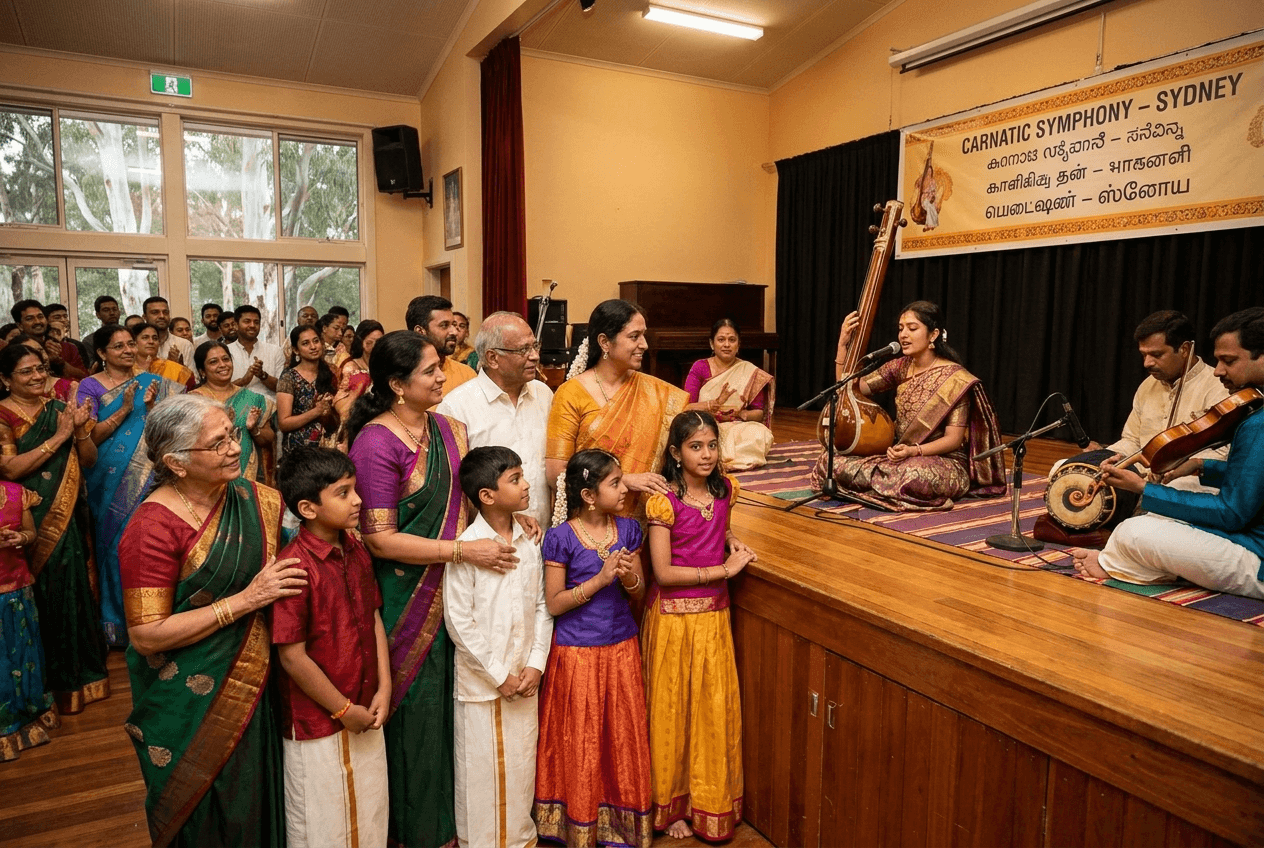 Australia's South Indian community is culturally active and deeply invested in classical arts education for its children. Sydney's Tamil community in Parramatta, Blacktown, Seven Hills and the Hills Shire supports multiple Tamil temples and cultural associations, many of which host regular Carnatic music performances and cultural events. Melbourne's South Indian community in Dandenong, Noble Park, Wyndham Vale and Werribee has similar cultural infrastructure. Brisbane's growing Tamil community in Logan and southern suburbs, Perth's Indian community and Adelaide's South Asian population all have increasing demand for quality Carnatic vocal instruction that local provision cannot meet.
The Australian Carnatic performance calendar is active and growing. Temple concerts at Sydney and Melbourne South Indian temples, Tamil cultural association events, cultural competitions within the Indian-Australian community and regular kutcheris at community halls throughout the year provide trained students with meaningful performance platforms. Art Gharana teachers actively help their Australian Carnatic students connect with these performance opportunities and prepare appropriately for them.
What Is Carnatic Music?
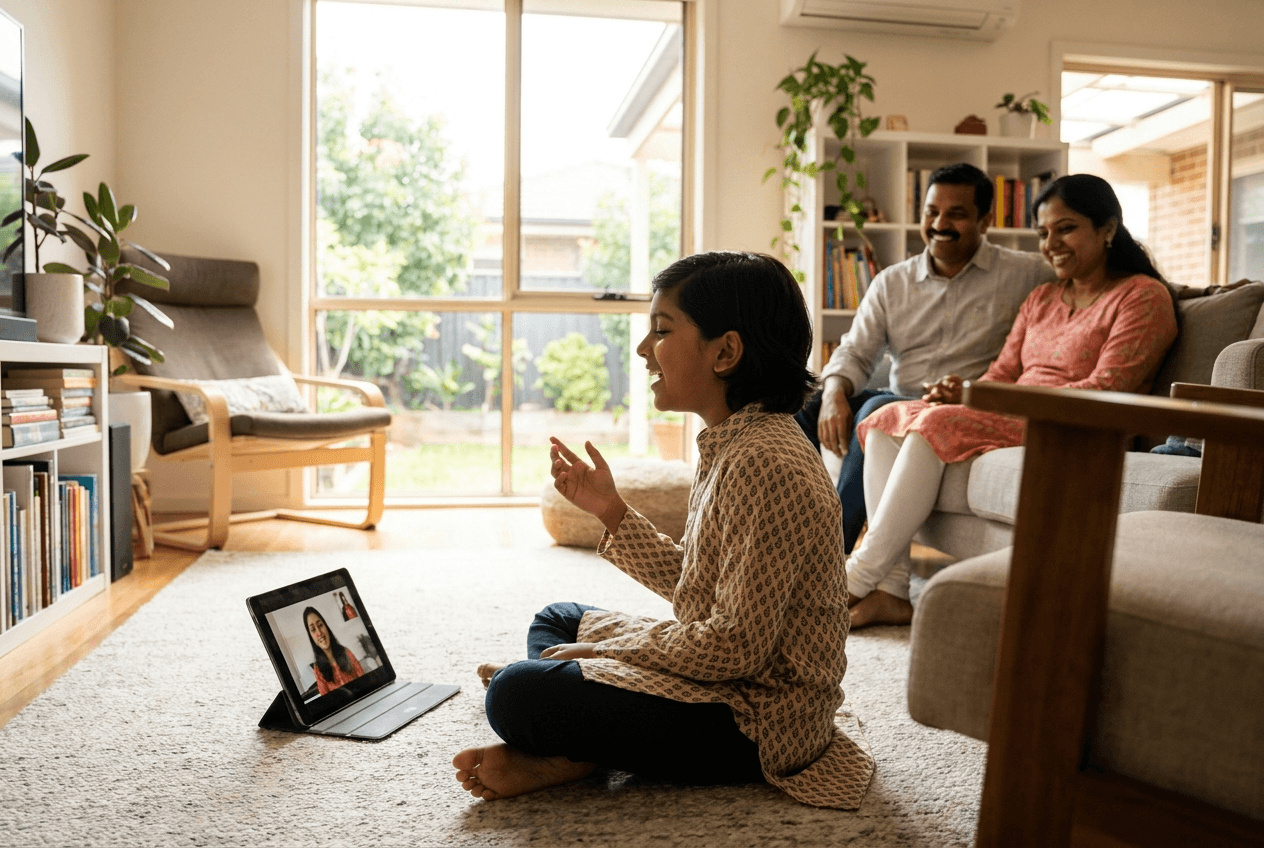 Carnatic music is built on the twin pillars of raga and tala. A raga is a melodic framework defining a specific set of notes, their characteristic movements, their ornamentation and their emotional quality. The Carnatic system contains hundreds of ragas, ranging from the most commonly used melakarta ragas to rare and subtle janaka ragas explored only at advanced levels. Tala is the rhythmic cycle that governs performance: Adi Tala with its eight beats is the most commonly encountered cycle for beginners, alongside Rupaka Tala and Misra Chapu.
The compositional core of the Carnatic tradition is the work of the Trinity composers: Thyagaraja, whose thousands of Telugu devotional compositions form the living heart of the repertoire; Muthuswami Dikshitar, whose Sanskrit kritis are celebrated for their musical sophistication and philosophical depth; and Syama Sastri, whose compositions are treasured for their emotional beauty. Learning to sing these compositions with appropriate raga character, rhythmic precision and devotional feeling is the goal toward which all Carnatic vocal training works.
Benefits of Carnatic Vocal Training for Children
Pitch Precision and Musical Intelligence
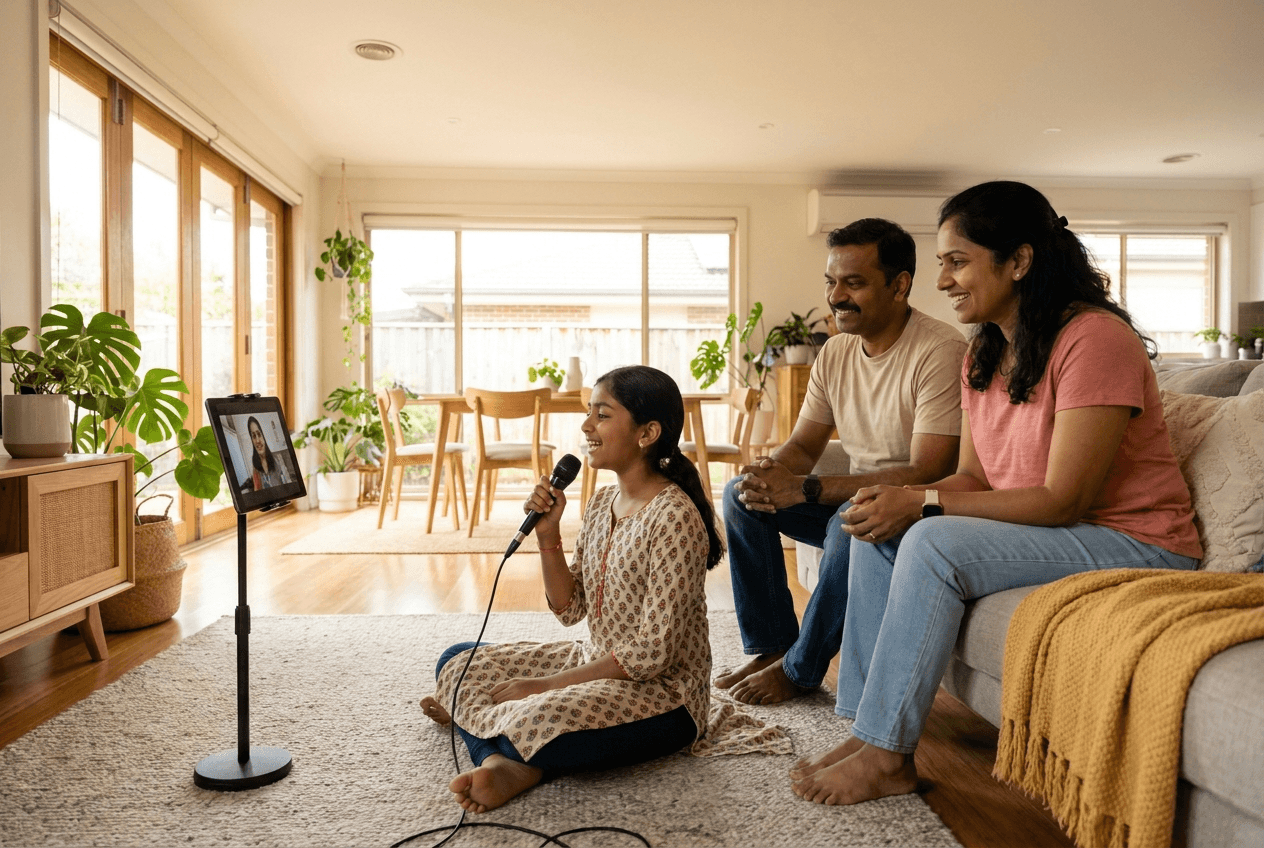
The microtonal precision demanded by raga singing develops a sense of pitch that exceeds what any Western music training produces. Students learn to hear and reproduce intervals, ornaments and microtonal inflections with extraordinary accuracy. This acute ear for pitch benefits students in every musical context they encounter throughout their lives, and Carnatic students consistently demonstrate superior musical ear in all comparative assessments.
Mathematical and Pattern Thinking
The rhythmic structures of Carnatic music are genuinely mathematical. The ability to subdivide a tala cycle correctly, to place gamaka ornaments within a melodic phrase and to handle complex rhythmic compositions like laya vinyasa requires pattern thinking that directly supports academic performance in numeracy, logic and analytical reasoning.
Language and Cultural Heritage in Australia
For Tamil and South Indian Australian children, Carnatic vocal training provides a musical connection to their heritage languages: Tamil, Telugu, Sanskrit and Kannada. Learning to sing Thyagaraja compositions in Telugu, or Dikshitar kritis in Sanskrit, is a form of heritage language education delivered through the joy of music rather than the duty of study. For many Australian Tamil families whose children are more comfortable in English, Carnatic training is the most effective available pathway to genuine engagement with Tamil and Telugu cultural heritage.
Cross-Generational Connection
The child who can sing a Thyagaraja kriti at the family puja, or at a temple event, or for grandparents visiting from Chennai, Coimbatore or Hyderabad, is demonstrating a cultural mastery that earns a response from South Indian elders that parents consistently describe as deeply moving. This cross-generational cultural recognition, the grandparent who grew up attending Carnatic concerts in a South Indian city hearing their grandchild in suburban Sydney sing the same compositions with genuine fidelity, is one of the most powerful outcomes of classical arts education in the diaspora context.
The Curriculum: From Sarali Varisai to Kriti
Foundation Stage
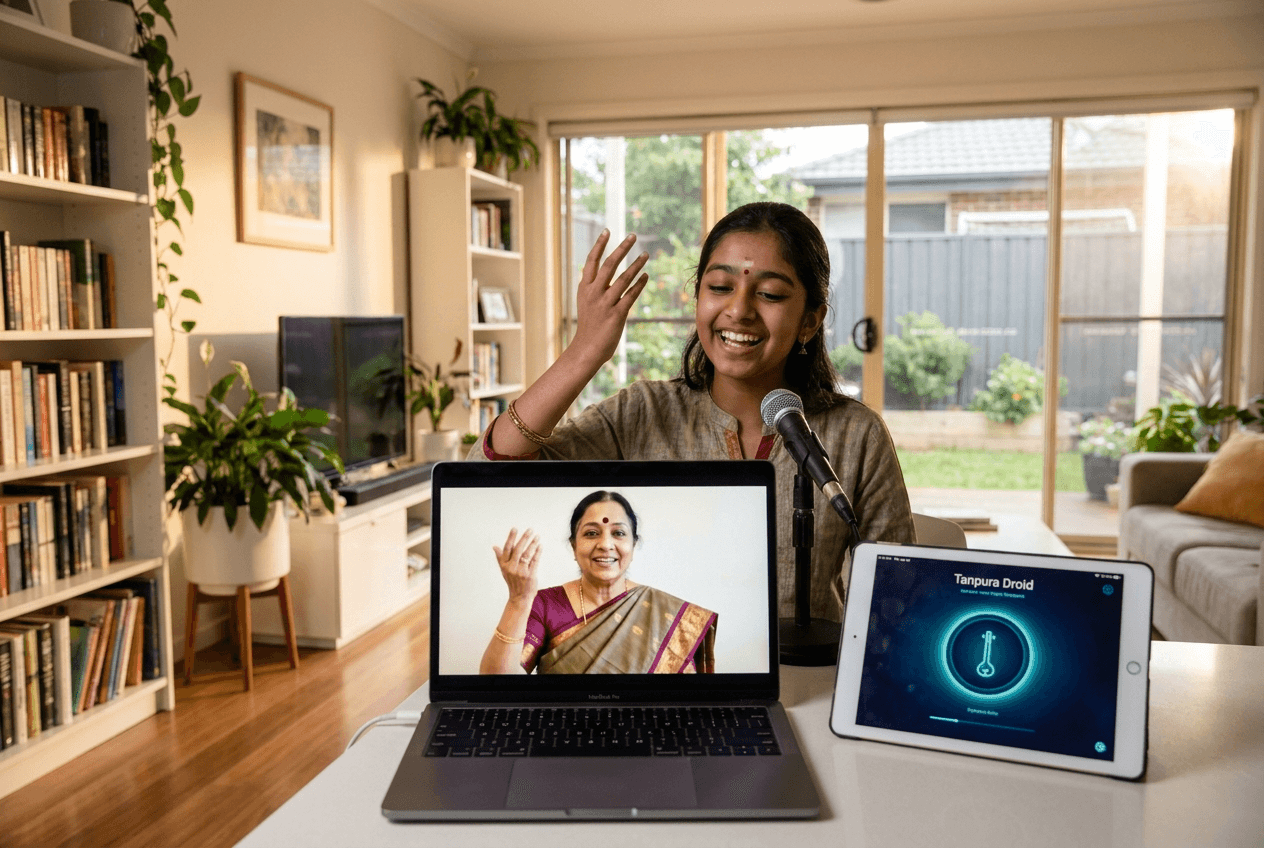
All Carnatic vocal training begins with swara practice: the seven notes Sa Re Ga Ma Pa Da Ni, sung clearly in tune with the tanpura drone. Students progress to sarali varisai exercises that develop intonation, breath control and range. Alankarams follow, introducing the ornamented patterns central to Carnatic melodic expression. Simple gitam compositions are introduced once the swara foundation is established.
Intermediate Stage
Intermediate students work on swarajathis and varnams. The varnam introduces the full complexity of the Carnatic tradition in concentrated form, combining pure technical movement with expressive content. Students explore a wider range of ragas, learning to identify and authentically render the characteristic phrases of each.
Advanced Stage
Advanced students work on kritis by the Trinity composers, developing the ability to render each composition with appropriate raga character and genuine devotional feeling. Manodharma sangita, the improvisatory dimension of Carnatic performance, is introduced: alapana, neraval and swarakalpana within the framework of raga and tala.
How Art Gharana Compares
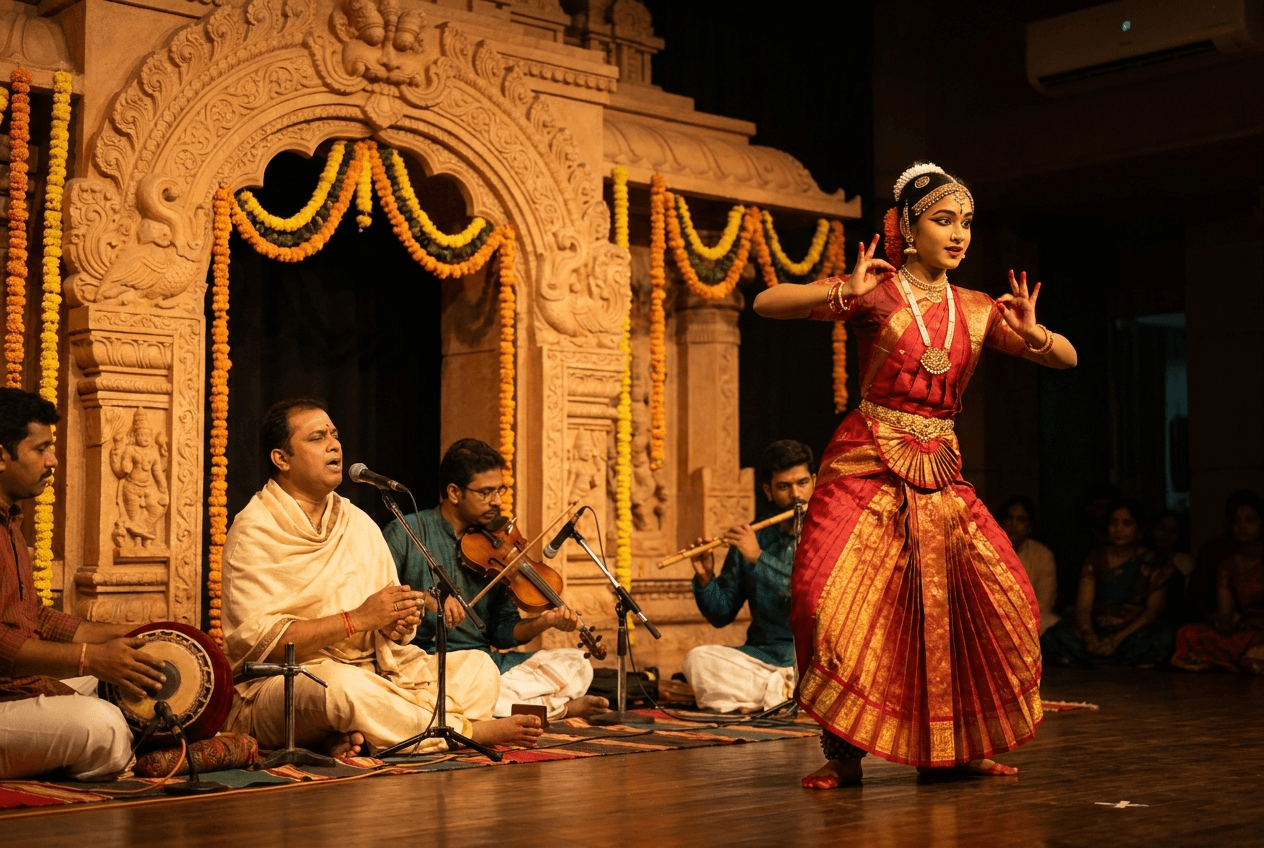 Australian families searching for Carnatic vocal classes will find Saraswati Mahavidhyalaya (Perth, in-person, Years 11-12 only), scattered individual teachers in Sydney and Melbourne suburbs, and IndianNatya online (females-only, UAE time zone). Art Gharana provides live one-to-one instruction from certified Carnatic vocalists, available across all Australian time zones, for children from age 5 upward, open to all genders, with a structured curriculum and a completely free first lesson. No other provider matches this combination for Australian families.
Carnatic Vocal and Bharatanatyam Together
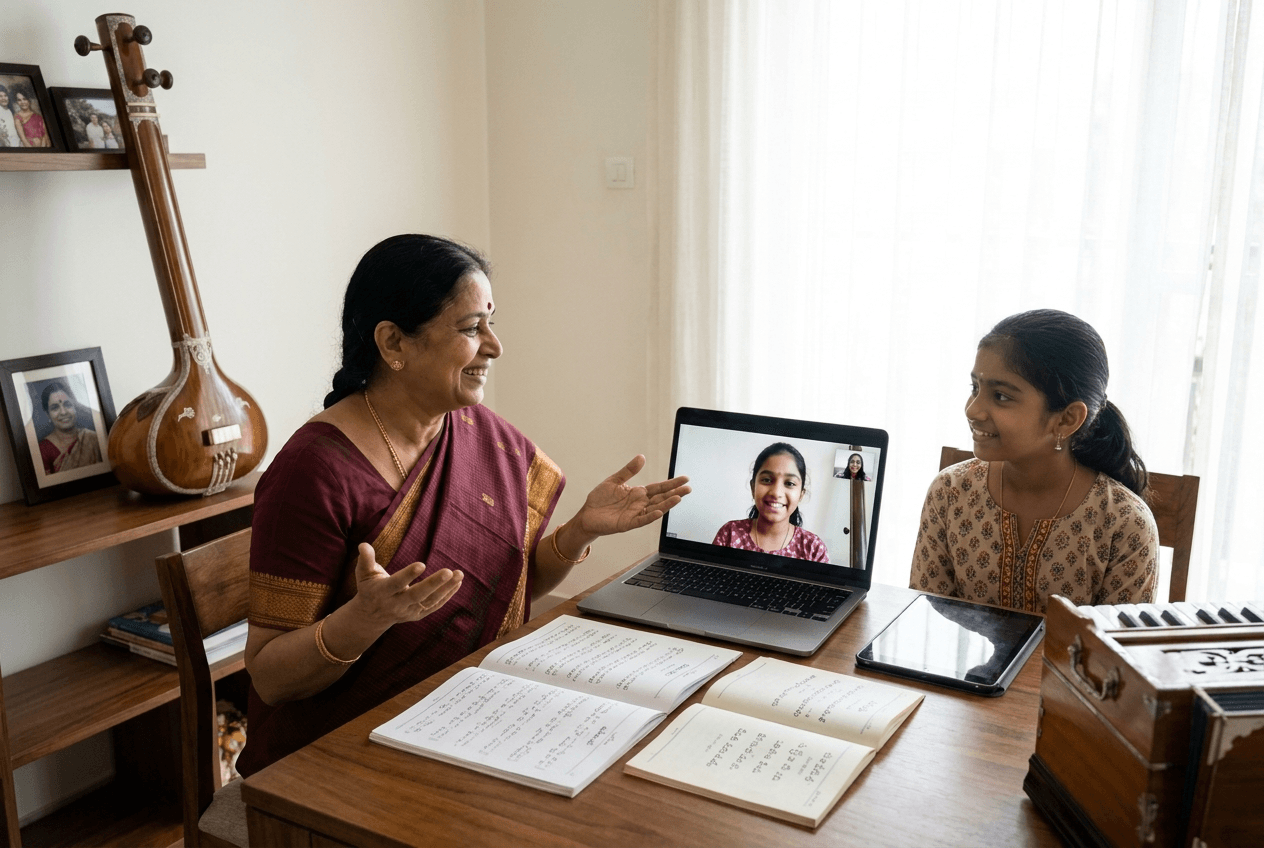 Carnatic music and Bharatanatyam are inseparable traditions, and many Art Gharana Australian families enrol their children in both simultaneously. Our Bharatanatyam classes and Carnatic vocal training complement each other deeply: a dancer who can sing the compositions they perform brings a qualitatively different musical understanding to their abhinaya. Our tabla classes develop rhythmic intelligence from a percussionist's perspective. Our flute classes share the same raga and tala framework. Explore our full range of courses for all options.
About Art Gharana
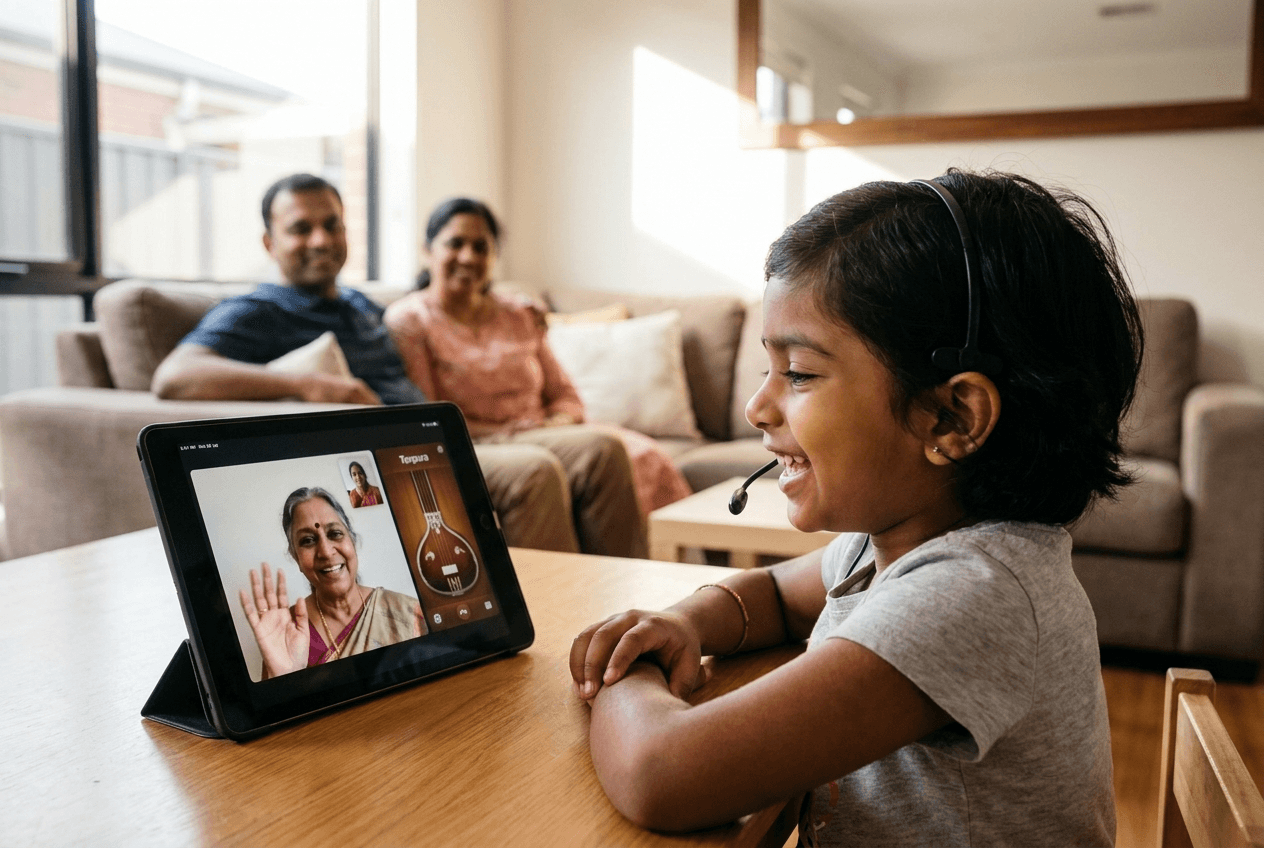 Art Gharana serves South Indian families across all Australian states and territories with live one-to-one Carnatic vocal classes from certified South Indian classical vocalists. Browse our teacher profiles, review our plans and pricing and head to our book a free trial class page to begin.
Frequently Asked Questions
1. Are certified Carnatic vocal teachers available online for Australian families?
Yes. Art Gharana connects Australian students with certified Carnatic vocal teachers for live one-to-one classes in all Australian time zones.
2. Do I need a tanpura for Carnatic classes in Australia?
A physical tanpura is not required. A tanpura app on a smartphone or tablet works perfectly for classes and home practice. Your teacher will recommend a specific app at the first session.
3. Is Carnatic vocal available for boys in Australia?
Yes. Art Gharana welcomes all students regardless of gender. IndianNatya, the most prominent online Carnatic provider, is females-only. Art Gharana is not.
4. Are classes available outside Sydney and Melbourne?
Yes. Art Gharana serves South Indian families in Brisbane, Perth, Adelaide, Canberra, Darwin, Hobart and every regional city across Australia.
Book Your Free Carnatic Vocal Trial Class Today
Whether your family is in Parramatta, Dandenong, Brisbane, Perth or anywhere across Australia, Art Gharana's certified Carnatic vocal teachers are ready to begin your child's musical journey. Completely free first lesson, live one-to-one, all Australian time zones. Head to our book a free trial class page and take the first step.
Practical Setup for Carnatic Vocal Classes in Australia
Setting up for online Carnatic vocal classes at home in Australia is straightforward and inexpensive. The primary requirement is a quiet room where the teacher can hear the student's voice clearly without echo or background noise. A device with a good microphone is important since the teacher needs to hear fine pitch differences and tonal quality. Before the first class, download a tanpura app on a smartphone or tablet. Your teacher will recommend a specific one at the first session. The tanpura provides the essential drone reference for Carnatic singing, giving the student a stable tonal centre during classes and home practice. This is the only tool needed to begin.
Building the Daily Practice Habit in Australia
The most important thing Australian parents can do to support their child's Carnatic vocal progress between classes is help them build a consistent daily riyaz practice. Art Gharana teachers assign specific exercises after each class, typically 15 to 20 minutes of swara practice using the tanpura app as a reference. This short, focused daily practice session develops intonation accuracy and voice quality far more effectively than occasional longer sessions. Many Australian families find success by scheduling riyaz immediately after school, before other after-school activities begin, linking it to an existing routine anchor.
The quiet, focused quality of riyaz provides a genuinely valuable counterpoint to the high-energy pace of Australian school and after-school life. Several Art Gharana Australian families report that their children come to value riyaz time as one of the most centring parts of their day. Once the practice habit is established, the weekly class becomes a showcase of the progress made at home rather than the entirety of the learning. That shift transforms the pace of development dramatically and is what distinguishes students who develop genuine musical capability from those who remain at the beginner level for extended periods.
Carnatic Vocal and the Australian South Indian Community
For Tamil and South Indian Australian families, Carnatic vocal training carries a cultural significance that transcends music education. The compositions of Thyagaraja, sung in Telugu with a devotional directness and musical beauty that has moved South Indian families for two centuries, become personally known when a child learns to sing them. When a Tamil child growing up in Parramatta or Dandenong sings a Thyagaraja kriti at the family puja, or for grandparents visiting from Chennai or Coimbatore, they are entering into a devotional tradition that connects them to generations of South Indian cultural life.
This cross-generational cultural recognition is one of the most powerful outcomes of Carnatic vocal training in the Australian diaspora context. The pride and emotional depth that South Indian grandparents experience when they hear their grandchild in suburban Sydney sing the same compositions they grew up with is something that no other extracurricular activity produces. For Tamil and South Indian Australian families, this outcome alone justifies the investment in Carnatic vocal training, and the musical, cognitive and developmental benefits come as additional gifts on top of this fundamental cultural transmission.
The Carnatic Music Performance Ecosystem in Australia
The Carnatic music performance community in Australia is more active than many families realise. South Indian temples in Sydney, Melbourne, Brisbane and Perth host regular concerts, cultural events and festival performances throughout the year. The Sri Murugan Temple in Parramatta, the Murugan temples in Melbourne, the South Indian cultural associations in Brisbane and the Indian community organisations in Perth all programme Carnatic music events that draw community audiences and provide trained students with meaningful performance contexts.
Temple kutcheris, smaller informal concerts held in temple halls for community audiences, are the most accessible performance context for developing Carnatic students. An intermediate student who has developed sufficient repertoire can participate in these events as a performer, contributing to the cultural programme of their temple community. This transition from audience member to performer, from cultural observer to cultural practitioner, is one of the most significant milestones in a Carnatic student's development, and Art Gharana teachers prepare their Australian students specifically for it.
Carnatic Vocal for Children from Non-Musical Backgrounds
Many Australian families who are interested in Carnatic vocal training for their children come from backgrounds where classical music was not a central feature of family life. Perhaps the parents grew up listening to Carnatic music at temples and cultural events but never studied it formally. Perhaps the family is North Indian and is exploring Carnatic music as a connection to a South Indian spouse's heritage. Perhaps the parents are second-generation Australian-Indians who grew up without formal music training but want to give their children the classical foundation they did not receive. In all of these cases, Art Gharana's Carnatic vocal programme is genuinely accessible: no prior musical knowledge is required, and the curriculum is designed from the ground up for beginners who are encountering the tradition for the first time.
The sarali varisai exercises that begin every student's Carnatic journey are designed precisely for this: a systematic, graduated introduction to the swara system that requires no prior musical knowledge and that builds the intonation, breath control and ear for pitch that all subsequent Carnatic learning depends on. Teachers who are experienced in teaching diaspora children, who understand the challenges of introducing a classical tradition to a child who has grown up in Australian popular musical culture, know exactly how to make the first months of Carnatic training engaging, achievable and exciting.
The Long-Term Value of Carnatic Vocal Training in Australia
Indian-Australian adults who received sustained Carnatic vocal training as children describe it consistently as one of the most significant gifts of their upbringing. The musical intelligence it developed has served them in every musical context they have engaged with throughout their Australian lives. The cultural knowledge it gave them has provided a source of genuine depth and distinctiveness in professional and social contexts. The heritage language skills developed through singing in Telugu, Tamil and Sanskrit have opened personal and professional doors that would otherwise have remained closed. And the cross-generational cultural connection created by being able to sing Thyagaraja kritis for grandparents, at temple events and at South Indian community occasions has been a source of belonging and pride that has sustained Indian identity through all the changes of Australian adult life.
For Australian South Indian families who want to give their children the most comprehensive and lasting cultural gift available, Carnatic vocal training at Art Gharana is the answer. The quality is genuine, the format is optimal, the accessibility is nationwide, and the cultural depth is authentic. The free trial class is the first step. Book one today at artgharana.com.
Starting Carnatic Vocal in Australia: No Experience Required
Many Australian South Indian families hesitate before enrolling their children in Carnatic vocal training because they feel they do not know enough about the tradition to judge whether the instruction is good, or because they are uncertain whether their child, raised in Australian popular musical culture, will engage with something as unfamiliar as classical Indian music. Both concerns are understandable and both are resolved by the free trial class. In 45 minutes with a certified Carnatic vocal teacher, your child will sing their first swaras, hear what a raga sounds like from close up, try singing along with the tanpura drone, and get a genuine sense of whether this is music they want to make. Most children come away more engaged than their parents expected. The music is genuinely beautiful, the teacher is warm and encouraging, and the experience of producing Indian classical sounds with their own voice is new, exciting and immediately compelling.
Art Gharana's Carnatic vocal teachers are experienced in teaching diaspora children who have grown up in Australian popular musical culture and who are encountering classical Indian music for the first time. They know how to make the first months of training engaging, achievable and rewarding. They know how to introduce the swara system in ways that connect to musical intuitions children already have. They know how to make the Carnatic tradition feel alive, relevant and personally meaningful to a child growing up in suburban Sydney or Melbourne. That experience and that knowledge are what make the Art Gharana programme genuinely exceptional for Australian South Indian families. Book the free trial class today and begin.
For South Indian Australian families from Parramatta to Perth, from Dandenong to Darwin, Art Gharana's Carnatic vocal programme is the best available option for genuine classical instruction in Australian time zones. Certified vocalists, structured curriculum from sarali varisai to advanced kritis, open to all genders, completely free first lesson. The tradition is extraordinary. The teachers are ready. Book the free trial class at artgharana.com today and let your child's Carnatic journey begin.
The Cleveland Thyagaraja Aradhana, the world's largest Carnatic music festival outside India, draws its vitality from exactly the kind of diaspora families that Art Gharana serves. Families who brought the tradition from South India and chose to keep it alive for their children, even in the most unlikely geographic circumstances. Australian South Indian families are part of this global community of Carnatic keepers. Art Gharana is here to support them in their custodianship, providing the certified teaching, the structured curriculum and the genuine classical quality that the tradition deserves. For South Indian Australian families who want their children to grow up genuinely connected to the Carnatic tradition rather than merely aware of it, Art Gharana is the programme that makes the difference. The free trial class is ready. Book it today.
For every South Indian Australian family that wants the best possible Carnatic vocal education for their children in 2026, Art Gharana is ready. Certified teachers, live one-to-one instruction, all Australian time zones, all genders, structured curriculum, and a free first lesson. Book the trial class today and let your child's voice find its classical home.
Carnatic music has been a living tradition for over two thousand years because families like yours have always found a way to transmit it across whatever distances and circumstances they faced. Art Gharana is here to help your family do the same. From sarali varisai to Thyagaraja kritis, from the first swara exercise to the first temple kutcheri performance, Art Gharana's certified Carnatic vocal teachers are with your child every step of the way. Begin today.