ChatGPT
 Google AI
 Grok
 Claude
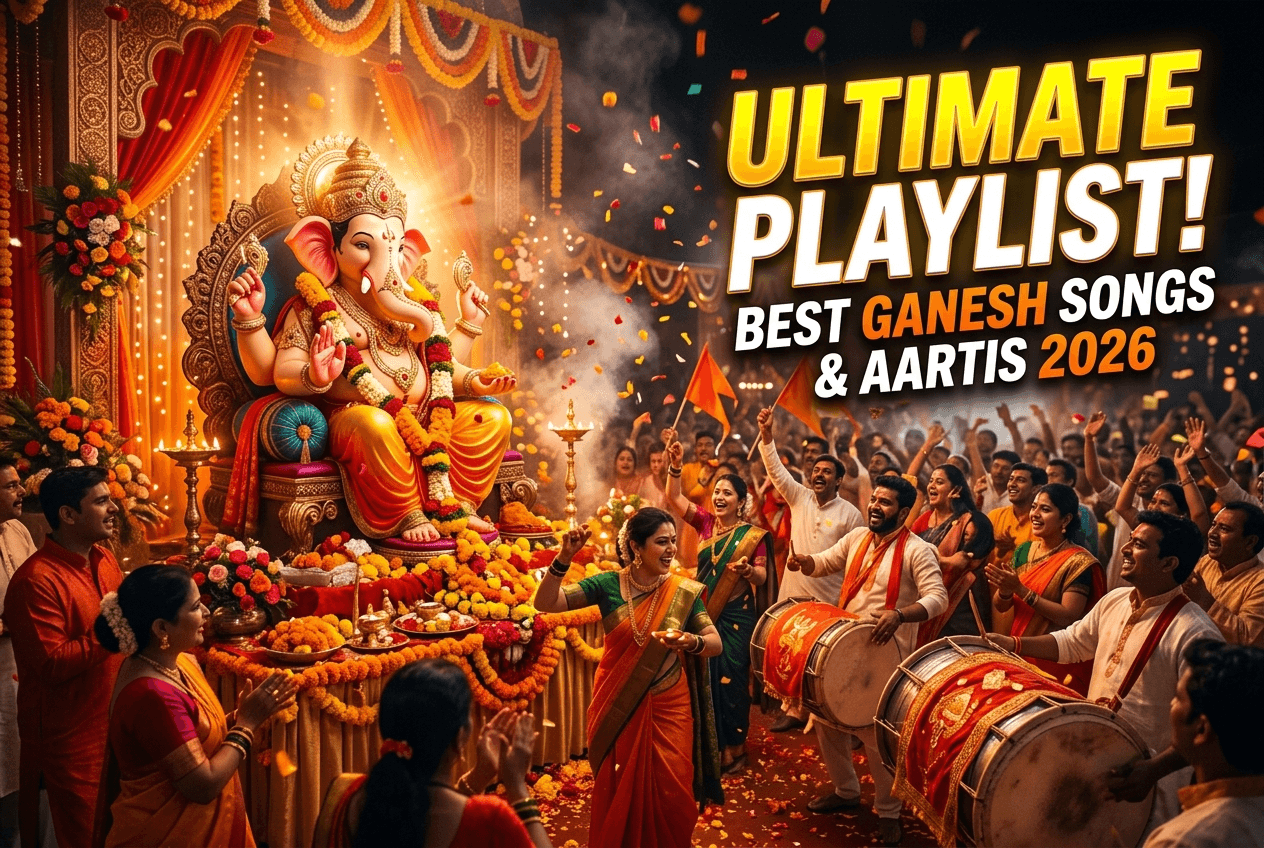
The best ganesh chaturthi songs depend entirely on when in the festival you are playing them. Ganesh Chaturthi is not one occasion, it is ten days with a defined shape, and the music changes completely across them. The sthapana on the first morning asks for something entirely different from the visarjan procession on the last afternoon, and the daily aarti sung twice a day for a week and a half is different again. Most playlists of ganesh chaturthi songs ignore all of this and hand you a shuffled list. This one is organised by moment. For the wider festive repertoire across the Indian calendar, the Bollywood celebration song guide covers the non-devotional side.
The festival in 2026 falls on Monday 14 September, with visarjan for the full ten-day observance on Anant Chaturdashi, and shorter observances of one and a half, five or seven days ending earlier. Regional panchang calculations vary slightly, so confirm locally. What follows covers the traditional aartis, the devotional repertoire, the film songs that have entered the festival, the dhol tasha tradition, and how to build a playlist that actually fits the ritual rather than sitting alongside it.
One note on the aartis specifically. These are not background music. They are participatory, sung by everyone present, twice daily, and they carry centuries of continuous practice. If you learn nothing else this festival, learn to sing the aarti properly rather than mumbling along, and the guide to breathing techniques for singers covers what group singing at that volume actually requires.
What Are the Best Ganpati Songs?
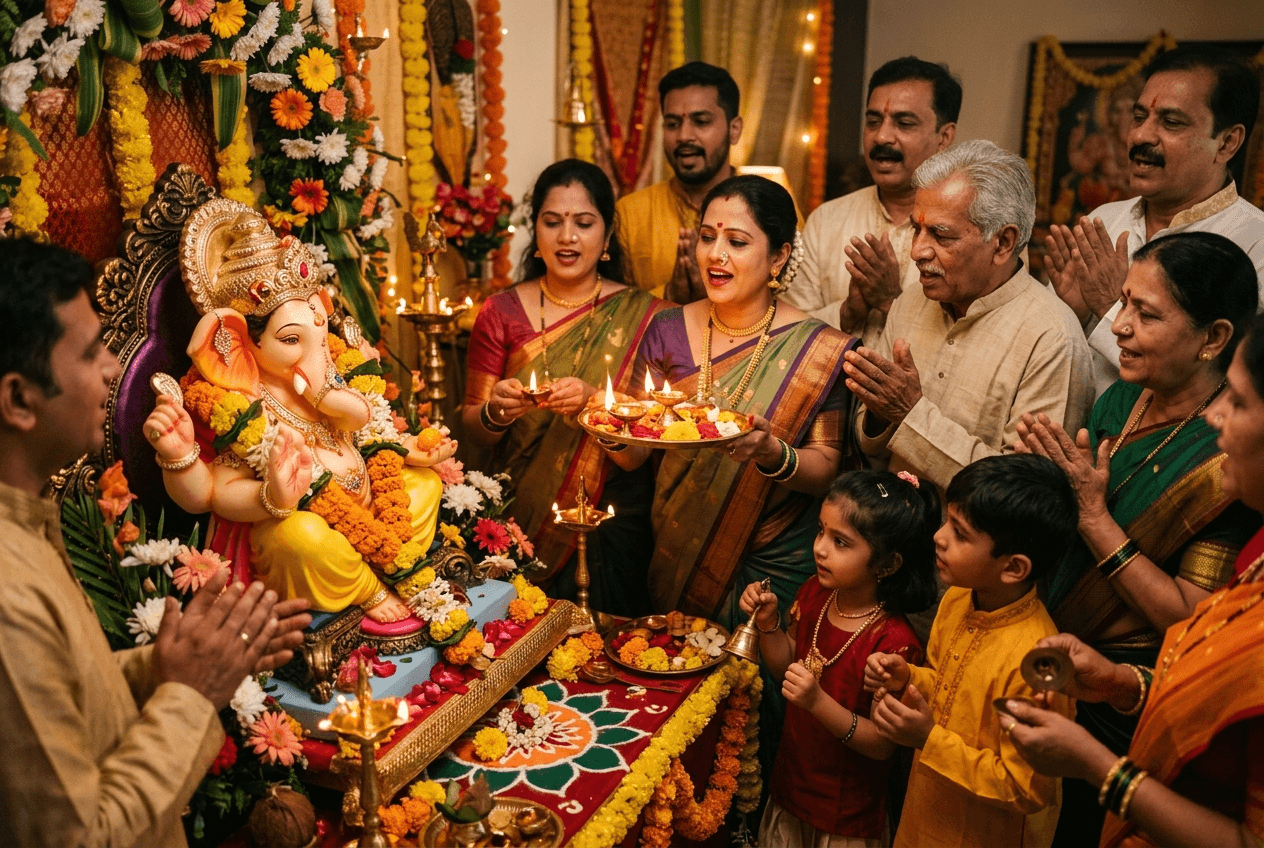 The essential ganesh chaturthi songs repertoire is anchored by the traditional aartis, principally Sukhkarta Dukhharta and Ghalin Lotangan, which are sung at homes and pandals across Maharashtra and beyond. Around them sit the devotional standards Vakratunda Mahakaya and the Ganesh Gayatri, and the film songs that have entered the festival, most prominently Deva Shree Ganesha from ABCD, Gajanana from Bajirao Mastani, and Mourya Re from Don.
The Traditional Aartis
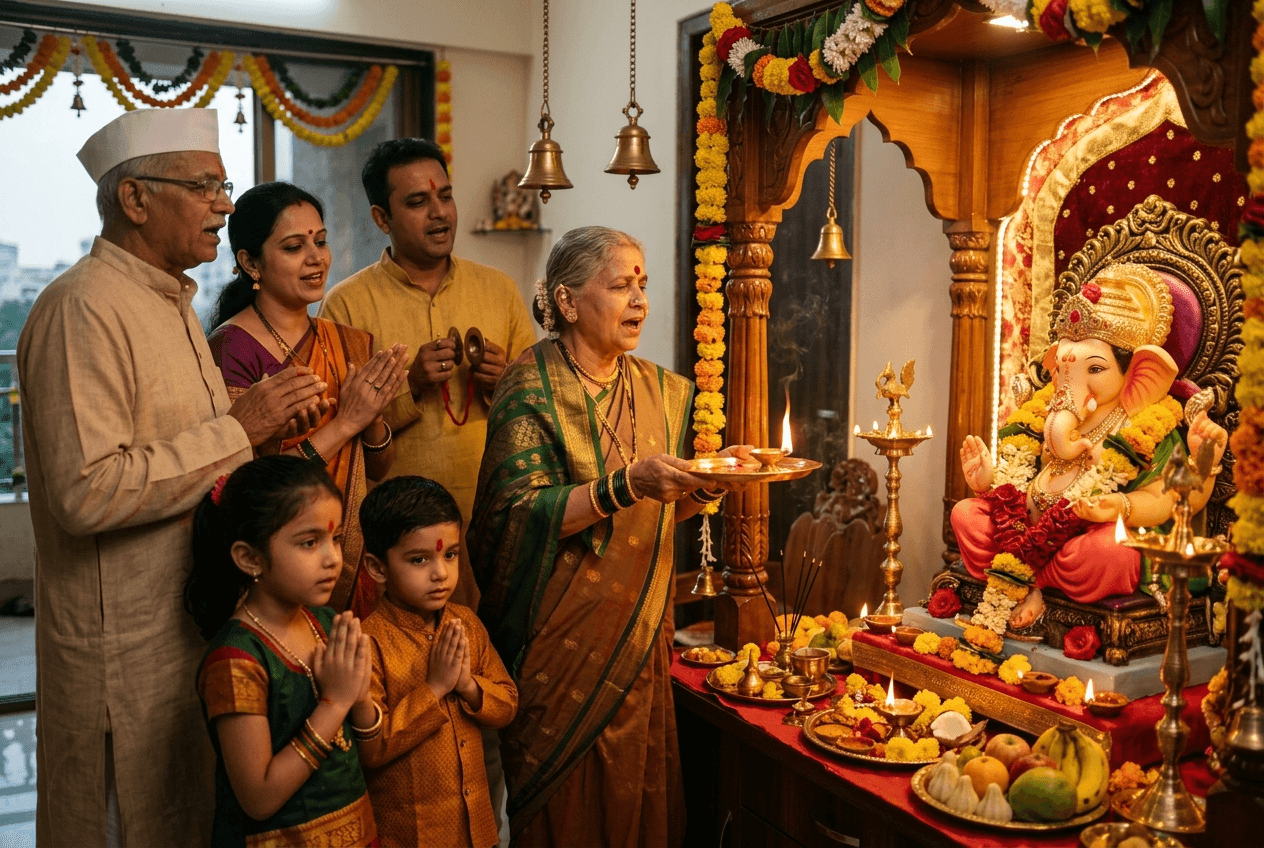
Sukhkarta Dukhharta
The central aarti of the festival and the one every Maharashtrian household knows. It was composed by Samarth Ramdas, the seventeenth century saint and poet, which makes it roughly four hundred years old and part of an unbroken performance tradition rather than a recorded song that became popular.
Its subject is Ganesha as the giver of happiness and the remover of sorrow, and its structure is a series of verses describing the deity's form and attributes, each returning to a refrain the whole gathering joins. Musically it sits in a comfortable range that untrained voices can manage, moves at a walking pace, and is designed for group singing with a bell and small cymbals keeping time. That accessibility is deliberate and it is why it has survived so long in daily use.
Ghalin Lotangan
Sung immediately after the main aarti in the standard sequence, and it functions as an act of prostration and surrender. It is a composite piece, drawing on material attributed to Sant Namdev among others, and it typically concludes with Sanskrit shlokas and the mantra pushpanjali, the offering of flowers.
Practically, this is the point in the daily ritual where the singing gets loudest and least self-conscious, and it is usually where children join in most confidently because the refrain repeats and the pace is brisk.
Shendur Laal Chadhayo and Jai Ganesh Deva
Shendur Laal Chadhayo describes the deity adorned with vermilion and is widely sung in Maharashtra alongside the main aarti. Jai Ganesh Deva is the Hindi aarti more common across North India, and households outside Maharashtra frequently use it in place of the Marathi repertoire. Neither replaces the other, and many families sing both.
Vakratunda Mahakaya
Not an aarti but a shloka, a short Sanskrit verse invoking Ganesha as the one with the curved trunk and mighty form, and asking that obstacles be removed from all undertakings. It is among the most widely known Sanskrit verses in India, recited at the start of ceremonies, examinations, new ventures and performances of every kind. At Ganesh Chaturthi it opens the sthapana.
The Film Songs
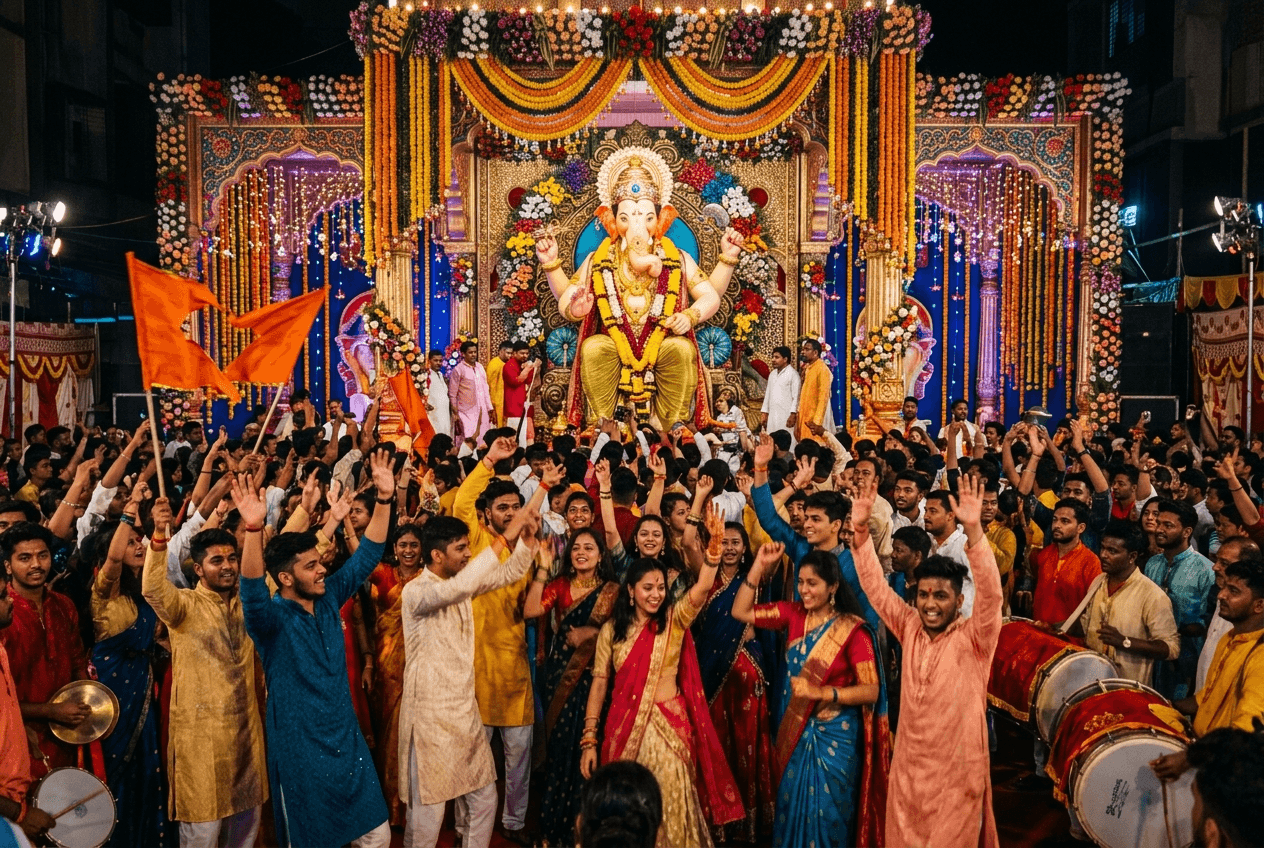 Hindi cinema has contributed a substantial modern layer of ganesh chaturthi songs to the festival, and it belongs in the celebration rather than in the ritual moments.
Deva Shree Ganesha from ABCD is the most prominent recent addition and is played at pandals across Maharashtra, built on a driving rhythm that suits crowds. Gajanana from Bajirao Mastani brings a more traditional Marathi flavour into a film production and works well as a bridge between the devotional and celebratory sides. Mourya Re from Don is older and remains a fixture. Sadda Dil Vi Tu from ABCD 2 and Bappa from Banjo both circulate widely.
A judgement worth offering, since somebody has to. These songs are excellent at what they do, which is to energise a crowd of several thousand people at a public pandal. They are not substitutes for the aarti, and using a film song at the moment of sthapana or during the daily ritual reads as a category error to older family members. Keep the two layers separate and both work better.
Dhol Tasha and the Sound of the Procession
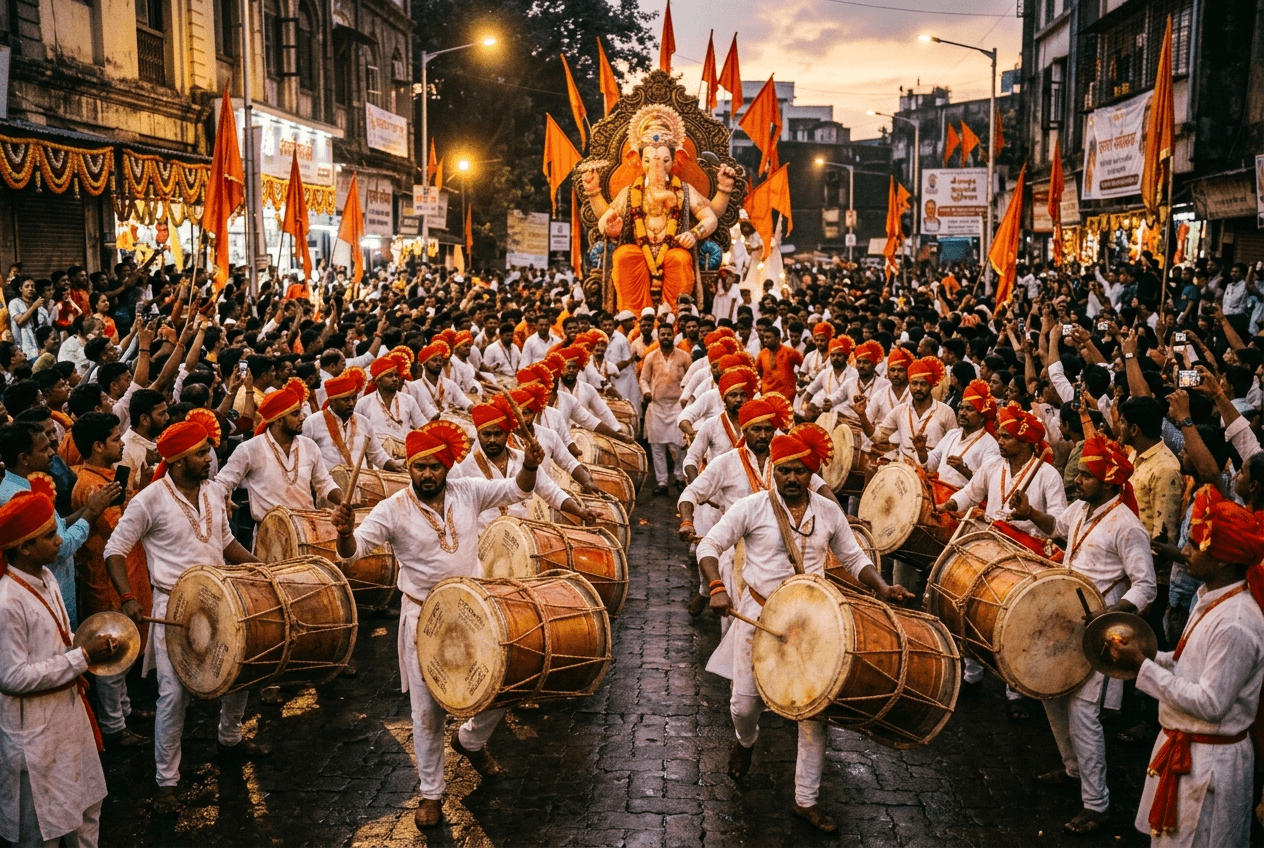 The single most distinctive sound of the festival in Maharashtra, and no recording substitutes for it.
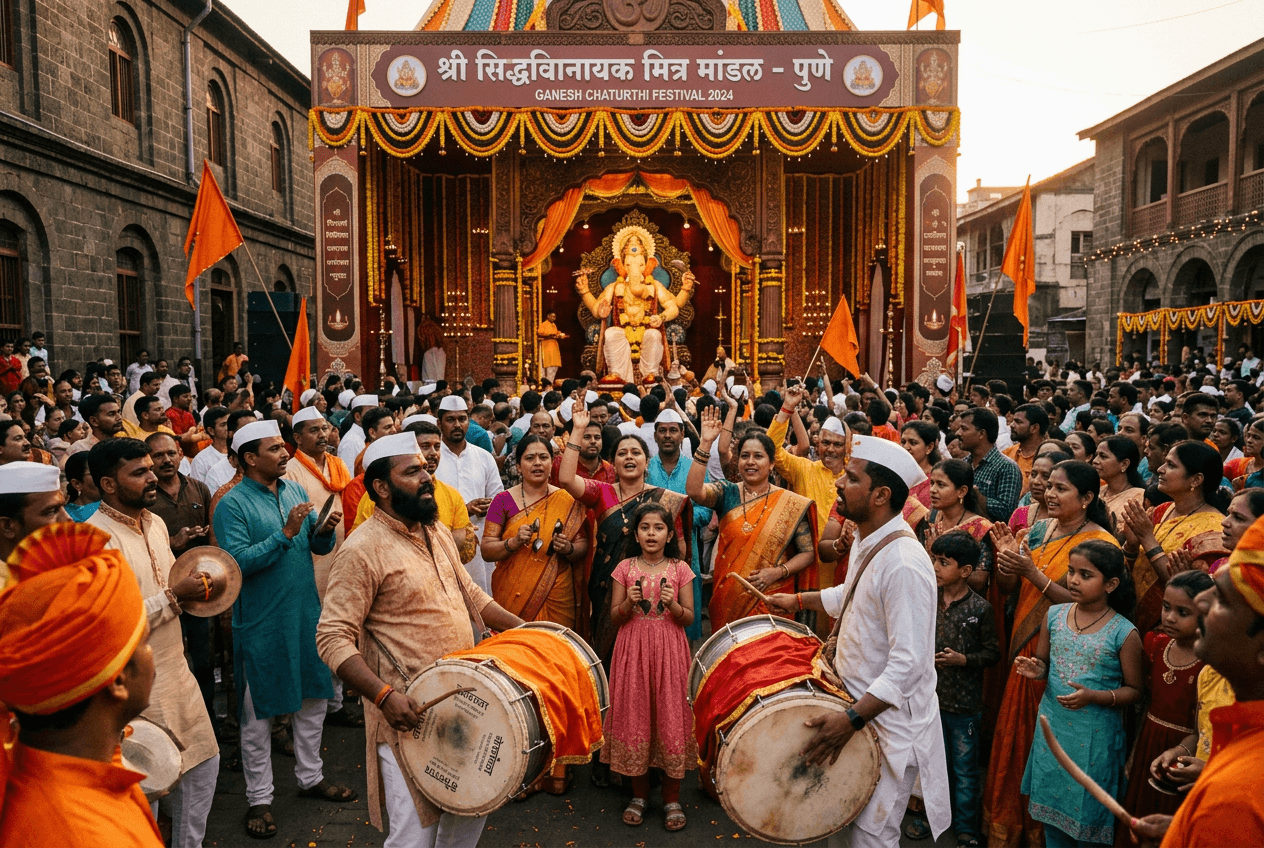
A dhol tasha pathak is an organised troupe combining the dhol, a large double-headed drum played with sticks and worn at the waist, the tasha, a smaller high-pitched metal drum played with thin canes, and the tal or cymbals. Pune in particular has a strong tradition of large pathaks, some with hundreds of players, who rehearse for months and perform at aagman and visarjan processions.
What makes them extraordinary is the coordination. A hundred drummers playing complex rhythmic compositions in unison, changing pattern on a signal, is a genuine feat of ensemble musicianship and it is performed by volunteers rather than professionals. If you have any interest in rhythm at all, standing near a good pathak during a visarjan procession is one of the most impressive musical experiences available in India, and anyone learning tabla or Indian percussion will hear the structure underneath the volume.
Lezim accompanies the drums in many processions, a rhythmic folk exercise performed with a small instrument of the same name, jangling metal discs on a stick, and it gives the procession its visual character alongside its sound. The instruments involved sit within the wider family described in the guide to Indian classical and folk instruments.
Why This Festival Is So Musical
Ganesh Chaturthi generates more public music-making than any other Indian festival, and the reason is historical rather than devotional.
Household worship of Ganesha is ancient, but the large public celebration is comparatively recent. In the late nineteenth century the festival was deliberately expanded into a public, community-organised event, with pandals, processions and collective observance, at a point when public gatherings were politically constrained under colonial rule. A religious festival was permissible where a political meeting was not, and the public Ganeshotsav became a vehicle for community organisation, cultural performance and shared identity.
The musical consequences were enormous and they persist. Because the festival became a public event organised by neighbourhood committees rather than a private household observance, it needed public performance, and it developed the pandal culture, the competitive dhol tasha pathaks, the bhajan sessions, the stage programmes and the mass processions that define it today. Very little of that infrastructure exists for festivals that remained domestic.
This is worth knowing because it explains something that puzzles visitors, which is why a religious observance produces a level of organised musical activity closer to a music festival than to a temple ritual. Both things are genuinely happening at once, and the guide to Hindustani classical music covers the classical repertoire that also finds its way onto pandal stages during the ten days.
The Bhajan Sessions
The evening bhajan session is the part of the festival most likely to involve actual musicianship, and it is where a family with musical training can contribute most.
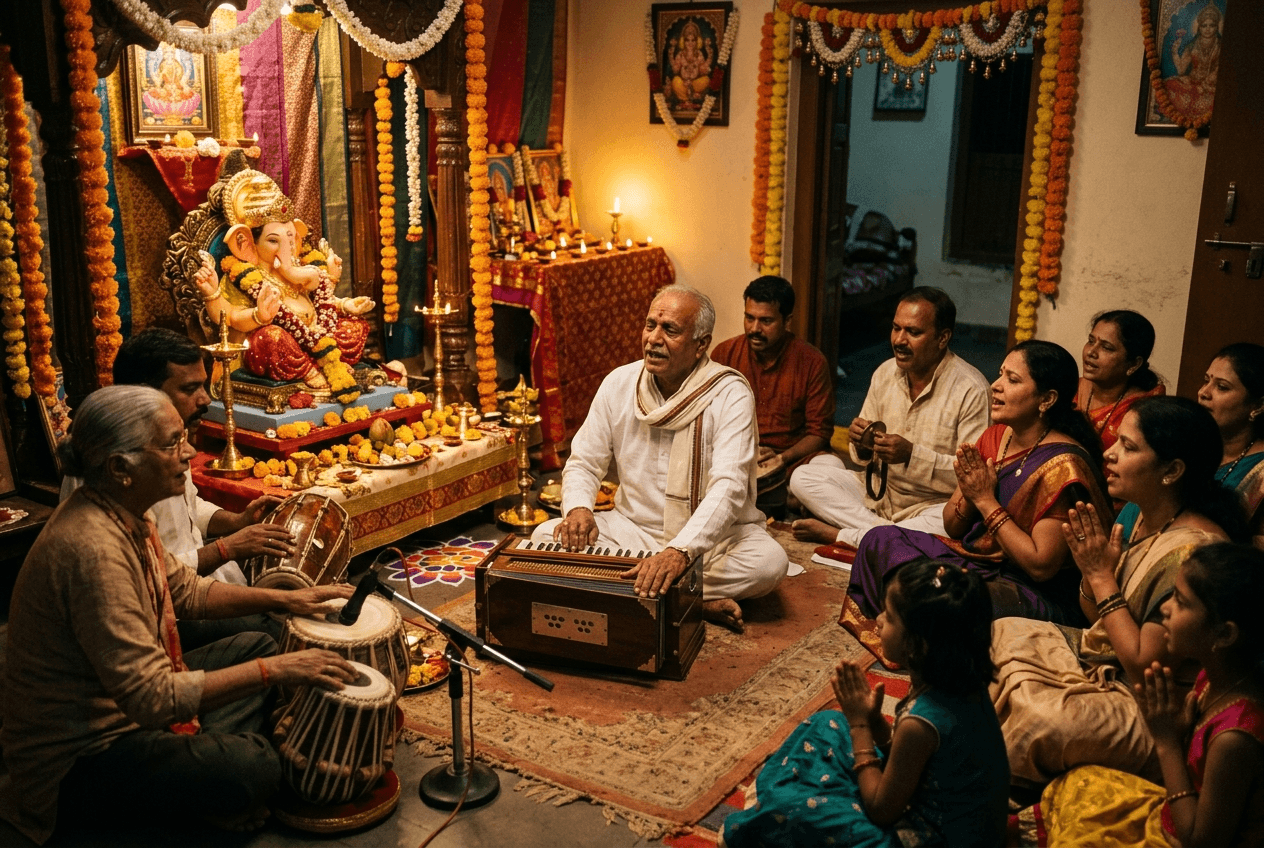
Format varies but the common shape is a lead singer with a small ensemble, typically harmonium, tabla or dholak, and manjira, with the gathering joining on refrains. Sessions run for an hour or more and move through a mix of traditional abhangs, Ganesha-specific devotional compositions, and general bhakti repertoire that is not tied to this festival at all.
Two practical notes for anyone leading one. Pitch the songs for the room rather than for yourself, since the entire point is participation and a session pitched high leaves everyone else silent. And sequence the session with an arc, opening with something familiar, building to more demanding material in the middle when attention is highest, and closing with a refrain everybody knows. The same principles that make a concert work make a bhajan session work.
How the Ten Days Are Structured
Understanding the shape helps enormously when planning music, because the emotional register moves in a definite direction.
Day one is sthapana, the installation of the idol, performed at a prescribed muhurat with shlokas, aarti and the first offering of modak. The mood is formal and reverent.
The middle days settle into routine. Aarti twice daily at fixed times, visitors arriving to offer prayers, bhajan sessions in the evening at community pandals, and in many households the arrival of Gauri partway through the festival adds its own set of observances. This is the longest stretch and the one where a repetitive playlist becomes wearing, which is an argument for live singing over recordings.
The final day is visarjan, the immersion, on Anant Chaturdashi for the full observance. Households and mandals process to water with drums, dancing and chanting, and the farewell chant that asks Bappa to return early next year is sung by everyone. The mood is genuinely emotional, and families who have hosted an idol for ten days frequently describe the immersion as a real parting.
Ganesha in Classical Music
A layer of the repertoire that almost never appears in festival playlists, and which is worth knowing about because it is where the finest music on this subject actually sits.
Carnatic music opens concerts with an invocation to Ganesha as a matter of long convention, and the tradition contains a substantial body of compositions on the deity by the major composers of the eighteenth and nineteenth centuries. Vatapi Ganapatim, by Muthuswami Dikshitar, is the best known of these and is among the most frequently performed pieces in the entire Carnatic repertoire. Hearing it once explains why the convention exists.
Hindustani music approaches the subject through bhajan and through compositions in specific ragas rather than through a fixed invocatory piece, and dhrupad in particular carries devotional material addressed to Ganesha. Devotional recordings by major classical vocalists circulate widely during the festival and represent a considerable step up in musical quality from most festival playlists.
The practical suggestion is to include one classical piece in your festival listening, ideally during a quieter moment rather than during a gathering. It requires no prior knowledge to be affected by, and for many families it becomes the thing they associate with the festival years later. The names to look for are set out in the guide to famous Carnatic musicians.
Pandal Culture
For anyone unfamiliar with the public side of the festival, the pandal is the structure around which everything organised happens, and understanding it explains the scale of the music.
A pandal is a temporary pavilion erected by a neighbourhood committee or mandal to house a public idol for the duration of the festival. The largest, particularly in Mumbai and Pune, draw enormous crowds over the ten days, and the biggest are known well beyond their cities. They are funded by local contribution, staffed by volunteers, and frequently compete informally on scale, decoration and theme.
Musically, a pandal is a venue. Evening programmes across the ten days may include bhajan sessions, classical recitals, folk performance, orchestra nights performing film music, dance items and competitions for children. For a young musician in Maharashtra, a pandal stage is frequently the first place they perform in front of an audience of strangers, which makes the festival a genuine part of the musical training ecosystem rather than simply an occasion for listening.
Building the Playlist
Separate the layers
Sort your ganesh chaturthi songs into two playlists, ritual and celebration, and do not shuffle them together.
Keep the two in different playlists and do not shuffle them together. The aarti has a fixed time and a fixed sequence. The film songs are for gatherings, arrivals and the procession. Mixing them produces awkward moments where a dance track arrives during a prayer.
Live beats recorded, at every point where it is possible
This is the strongest single piece of advice in this guide. The aarti sung by everyone present, badly and loudly, is the festival. A recording of a professional singer performing the same aarti while the family stands and listens is a completely different and lesser thing. The same applies to the procession, where live dhol is not comparable to a speaker playing dhol.
Plan for the long middle
Ten days is a long time and households routinely run out of material by day four, at which point the same twelve songs loop until visarjan. Build a longer bhajan list than you think you need, include Marathi abhangs and traditional devotional repertoire alongside the obvious choices, and vary the evening sessions.
Volume and neighbours
Public pandals in many cities operate under noise regulations and time restrictions, and these are enforced. Check local rules before planning anything amplified, particularly for late-evening sessions and for the procession route. This is a practical matter that causes genuine friction every year.
Learning to Sing the Aarti Properly
 Most people learn the aartis by absorption and never learn them properly, which is a shame given they will sing them every year for their whole lives.
Three things make an immediate difference. Learn the words accurately, because most people are approximating at least one line and have been for years, and the meaning is worth knowing rather than reciting phonetically. Learn where the phrases break, since aartis are sung at pace and people run out of breath mid-line because they have never planned where to breathe. And find your comfortable pitch rather than following whoever starts, since aartis are frequently pitched wherever the loudest person begins, which leaves everyone else straining.
For children learning them for the first time, teach the refrain before the verses. The refrain repeats, it is the part the whole gathering sings together, and a child who can join in confidently on that is participating rather than watching. The same principle applies to any devotional repertoire, and the guide to easy songs for beginner singers covers how to choose material that suits an untrained voice.
Hosting at Home for the First Time
Families hosting an idol for the first time frequently arrive at the music question late and improvise badly. A little planning removes most of the difficulty.
Decide the duration before anything else, since one and a half, five, seven and ten day observances are all traditional and the choice determines how much material you need. A ten-day observance with a twelve-song playlist becomes wearing by the fourth evening, and families consistently underestimate this.
Fix the aarti times and keep them, because the routine is what gives the ten days their shape and a household that performs the aarti whenever somebody remembers loses that entirely. Print or write out the aarti words for visitors, since guests frequently want to join and cannot, and a sheet of paper solves it. If anyone in the family plays harmonium, tabla or dholak, use them rather than a recording, even if they play badly, because live accompaniment transforms the room.
And prepare something for children specifically. A short shloka they can recite, a refrain they can lead, or simply the job of ringing the bell during the aarti. Children who have a role participate and children who do not drift away, and the difference persists into how they relate to the festival as adults.
The Environmental Conversation
It belongs in an honest guide because it now shapes how many families celebrate, and it touches the music directly.
Immersion of plaster idols and non-biodegradable decoration has a measurable effect on rivers, lakes and coastal water, and many cities now operate artificial immersion tanks, promote clay idols, and restrict certain materials. A growing number of households choose clay idols, immerse at home in a bucket and water the garden with it, or observe shorter durations.
The musical consequence is that visarjan for a great many families is now a domestic event rather than a street procession, which removes the dhol tasha element entirely. That is a real loss and it is worth substituting deliberately rather than letting the moment pass in silence. A household visarjan with the family singing the farewell chant together, unaccompanied, is genuinely affecting and asks nothing of anyone but participation. Amplified music through a speaker at the same moment is not the same thing.
Noise regulation runs alongside this. Many cities enforce decibel limits and cut-off times for amplified music during the festival, and processions require permissions. These rules are enforced and the fines are real, so check locally rather than assuming.
Regional Variations
The ganesh chaturthi songs you hear depend enormously on where you are, because the festival is celebrated very differently across India and the music follows.
Maharashtra is the epicentre, with the largest public celebration, the dhol tasha tradition, the Marathi aarti repertoire and the great Mumbai and Pune mandals. Karnataka observes it widely with its own devotional repertoire and Kannada bhajans. Andhra Pradesh and Telangana celebrate Vinayaka Chavithi with Telugu devotional songs and the Khairatabad idol tradition in Hyderabad. Goa has a distinct household observance with its own songs and a strong emphasis on family gatherings.
In Tamil Nadu the festival is observed as Vinayagar Chaturthi with Tamil devotional repertoire, and the Carnatic tradition contains a substantial body of compositions on Ganesha, several of which open concerts as a matter of convention. The beginner guide to Carnatic music covers that repertoire's structure.
If You Are Celebrating Away From India
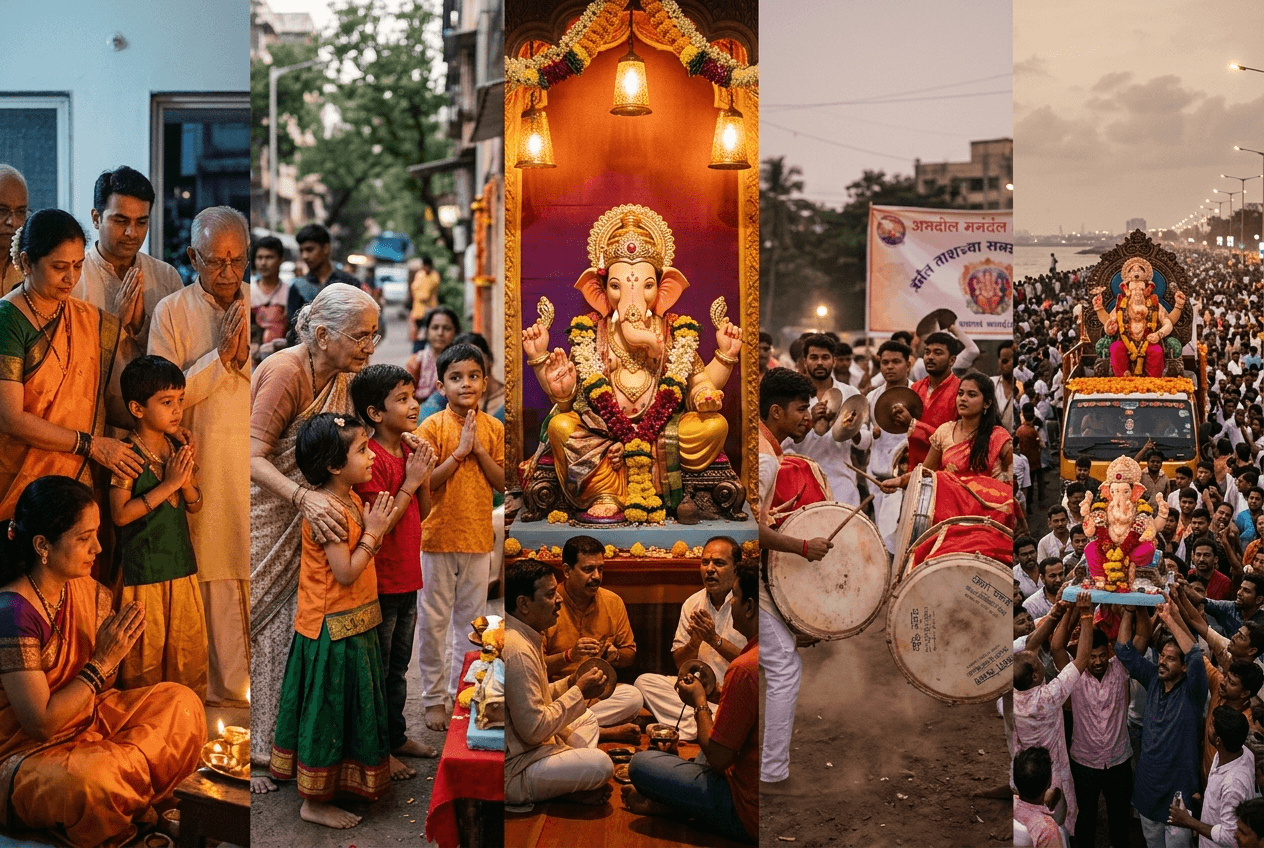 Diaspora celebrations have their own shape, and the music question is different because almost nothing can be taken for granted.
The first difficulty is that the festival falls on a working Monday in 2026 in most countries, which means household observance happens around jobs and school and the community celebration moves to the nearest weekend. Families commonly run a shortened observance of a day and a half or five days for exactly this reason, and there is nothing improper about it.
The second is that live music is harder to assemble. Dhol tasha pathaks exist in a handful of diaspora cities and nowhere else, so most processions rely on recordings, and finding someone who can lead the aarti confidently is not guaranteed. The practical response is to prepare rather than improvise: nominate whoever will lead the singing in advance, circulate the words to families attending, and if anyone plays harmonium or dholak, ask them well ahead rather than on the day.
The third is that immersion is frequently not possible in a local waterway, either legally or practically, so household immersion in a tank or a bucket is the norm. That makes the farewell moment small and domestic, which is an argument for singing it together rather than playing a recording. A dozen people singing the farewell chant unaccompanied in a living room is closer to the spirit of the thing than a speaker at volume, and children remember it.
Frequently Asked Questions
1. What are the best Ganpati songs?
The traditional aartis Sukhkarta Dukhharta and Ghalin Lotangan are the core repertoire, sung twice daily throughout the festival. Vakratunda Mahakaya opens the sthapana. Among film songs, Deva Shree Ganesha, Gajanana, Mourya Re and Sadda Dil Vi Tu are the most widely played at celebrations.
2. What is the famous Ganesh aarti?
Sukhkarta Dukhharta, composed by the seventeenth century saint Samarth Ramdas. It describes Ganesha as the giver of happiness and remover of sorrow, and it is sung twice daily in homes and pandals across Maharashtra and beyond. Ghalin Lotangan usually follows it in the standard sequence.
3. When is Ganesh Chaturthi 2026?
Monday 14 September 2026, with the ten-day observance concluding at visarjan on Anant Chaturdashi. Shorter observances of one and a half, five or seven days end earlier. Regional panchang calculations vary slightly, so confirm the date and muhurat locally.
4. Which songs are played at visarjan?
The farewell chant asking Bappa to return early next year is sung by everyone in the procession. Live dhol tasha carries the rest, along with Ghalin Lotangan and celebratory film songs. Visarjan is loud, communal and emotional, and live percussion matters far more than any recording.
5. What is dhol tasha?
A Maharashtrian percussion tradition combining the dhol, a large double-headed drum worn at the waist, the tasha, a smaller high-pitched metal drum played with canes, and cymbals. Organised troupes called pathaks, some with hundreds of volunteer players, rehearse for months and perform at aagman and visarjan processions.
6. Can we play Bollywood songs at Ganesh Chaturthi?
Yes, and they are played widely at pandals and gatherings. Keep them separate from the ritual moments, since a film song during the sthapana or the daily aarti reads as inappropriate to many families. Use the traditional repertoire for ritual and film songs for celebration and both work better.
7. How long is the daily aarti?
Typically ten to fifteen minutes for the full sequence, covering the main aarti, Ghalin Lotangan, concluding shlokas and mantra pushpanjali. It is performed twice a day, in the morning and the evening, at broadly consistent times throughout the festival.
8. What songs are good for children at Ganesh Chaturthi?
The aarti refrains, taught before the verses, since they repeat and the whole gathering sings them. Vakratunda Mahakaya is short enough for children to memorise completely. Among film songs, Deva Shree Ganesha and Gajanana are the ones children pick up fastest.
9. Is Ganesh Chaturthi music the same across India?
No. Maharashtra has the Marathi aarti repertoire and the dhol tasha tradition. Karnataka, Andhra Pradesh, Telangana, Goa and Tamil Nadu each observe the festival with their own devotional songs in their own languages, and the Carnatic tradition holds a substantial body of compositions on Ganesha.
10. Do we need live musicians for Ganesh Chaturthi?
Not necessarily, but live singing of the aarti by everyone present is the heart of the observance and a recording is a poor substitute. For processions, live dhol tasha is not comparable to amplified recordings. If the budget allows one live element, put it in the procession.
Final Thoughts
The right approach to ganesh chaturthi songs is to stop thinking of them as a playlist. Ten days have a shape, the aarti is participatory rather than performed, and the film songs belong to the celebration rather than the ritual. Sort the material into those layers and the whole festival sounds better.
If you do one thing differently this year, learn the aarti properly. Accurate words, planned breaths, a comfortable pitch. You will sing it twice a day for ten days and every year after that, and singing it well rather than approximately changes the experience of the festival more than any addition to the playlist. Art Gharana teaches Hindustani and devotional vocals live and one-to-one, with a free first class.