ChatGPT
 Google AI
 Grok
Grok Claude
The trombone stands apart in the brass family with its commanding voice and unmistakable slide. Its sound can feel noble, warm, playful, or thunderous, depending on how it’s played. This guide explores the trombone in depth, helping you understand its structure, history, techniques, and enduring role in classical and modern music.
Why the Trombone Sounds So Distinctive
Few instruments announce themselves like the trombone. Its long slide allows smooth pitch movement, creating a vocal-like quality that feels expressive and human. You hear strength and subtlety together. This flexibility explains why composers rely on it for both bold statements and gentle harmonies.
The trombone’s tone carries weight without sounding heavy. In orchestras, it blends with brass and woodwinds while still standing out when needed. That balance makes it a trusted voice across centuries of music.
A Brief Look at the Trombone’s Place in Music History
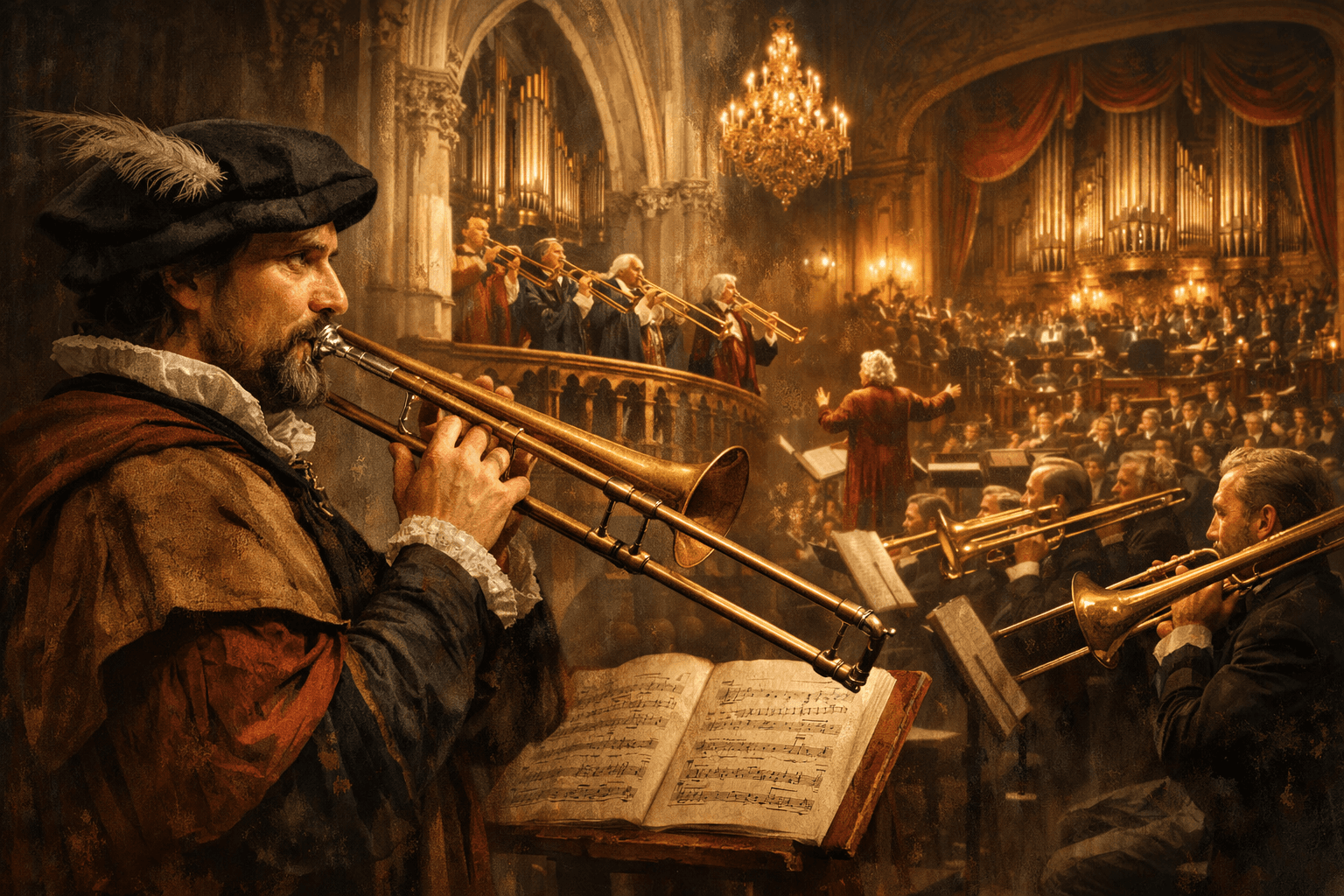
From sacred choirs to grand concert halls, the trombone has traveled far. Early forms appeared in Renaissance Europe, often supporting church music. Over time, composers expanded its role, giving it melodic freedom and emotional depth.
By the Classical and Romantic eras, the trombone became essential. Today, it remains equally important in orchestras, chamber groups, and solo performances worldwide.
Understanding the Trombone as a Brass Instrument
Makes the Trombone a Brass Instrument
The trombone belongs to the brass family because sound comes from vibrating lips against a mouthpiece. Airflow and embouchure shape the pitch and tone. Unlike valves, the trombone’s slide changes tube length directly, altering pitch smoothly.
This design gives players precise control over intonation. It also allows effects like glissando, which sound natural and fluid on the trombone.
How the Slide Mechanism Works
The slide has seven standard positions. Each position lengthens the air column slightly, lowering the pitch. Moving the slide feels intuitive, almost like singing with your hands.
This system demands a sharp ear. Players learn to adjust slide placement constantly. That challenge rewards them with unmatched pitch flexibility.
History and Evolution of the Trombone
Early Origins and Renaissance Use
The trombone evolved from the sackbut in the 15th century. Early versions had a softer sound, ideal for blending with voices. Churches valued it for supporting choral lines without overpowering singers.
Composers appreciated its ability to match vocal ranges. This connection shaped the trombone’s lyrical character from the beginning.
Growth Through Classical and Romantic Eras
During the Classical period, composers began using trombones more sparingly but effectively. Mozart and Beethoven introduced them for dramatic impact. In the Romantic era, the instrument gained prominence.
Large orchestras needed powerful brass sections. The trombone answered that need with authority and emotion. Its role expanded into symphonies and operas.
Types of Trombones You Should Know
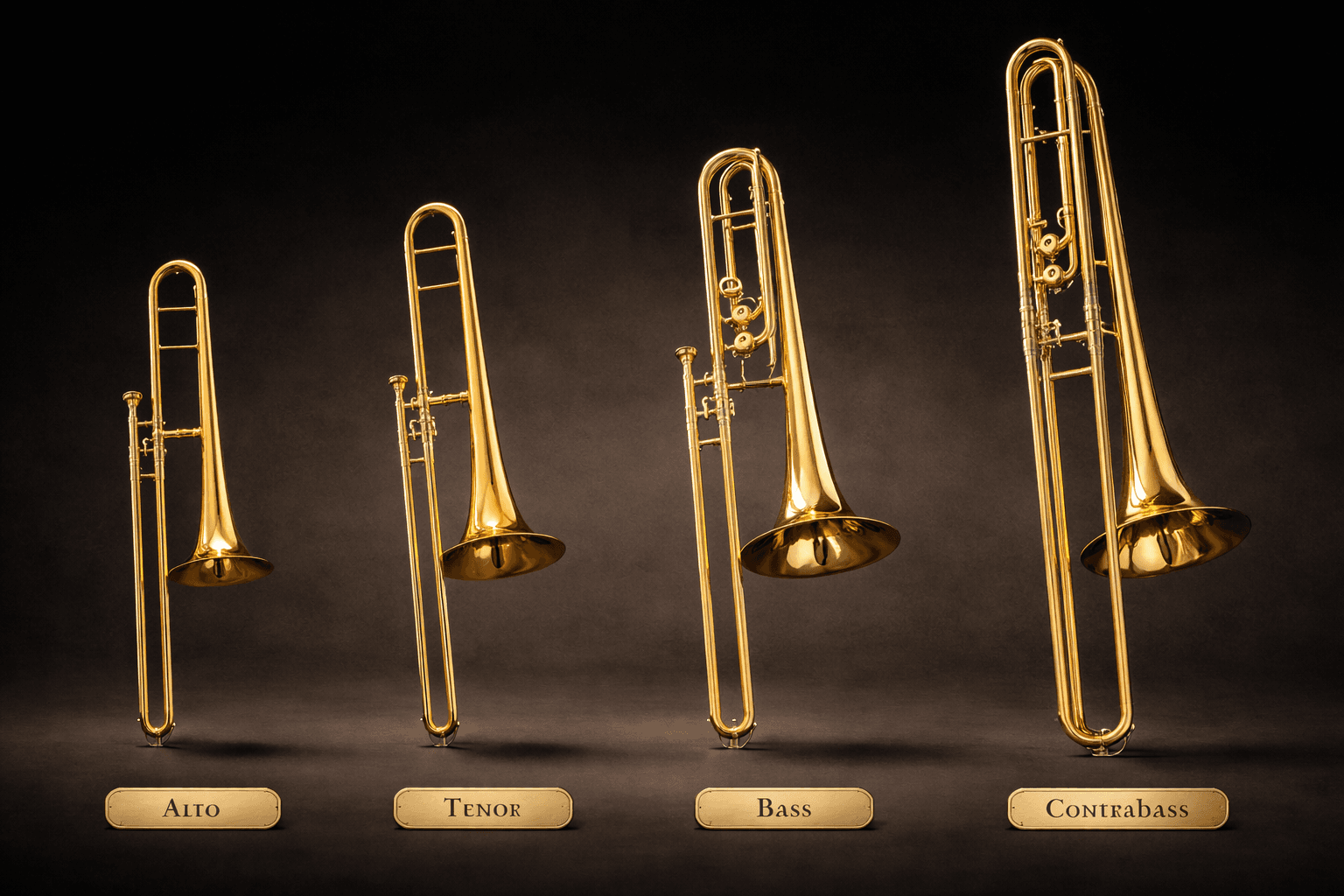
Tenor Trombone
The tenor trombone is the most common type. It offers a balanced range and tone, making it ideal for beginners and professionals. Most orchestral and solo works feature this instrument.
Its versatility explains why many players start and stay with the tenor trombone throughout their careers.
Alto, Bass, and Contrabass Trombones
The alto trombone has a higher range and lighter tone. Classical composers sometimes use it for clarity and brightness. The bass trombone adds depth with a powerful low register.
Contrabass trombones appear rarely but deliver immense weight. Each type expands the instrument’s expressive possibilities.
| Trombone Type | Pitch Range | Common Use |
|---|---|---|
| Alto | Higher | Classical, early music |
| Tenor | Medium | Orchestral, solo |
| Bass | Low | Orchestral, film |
| Contrabass | Very low | Special orchestral works |
Structure and Parts of the Trombone
Main Components Explained
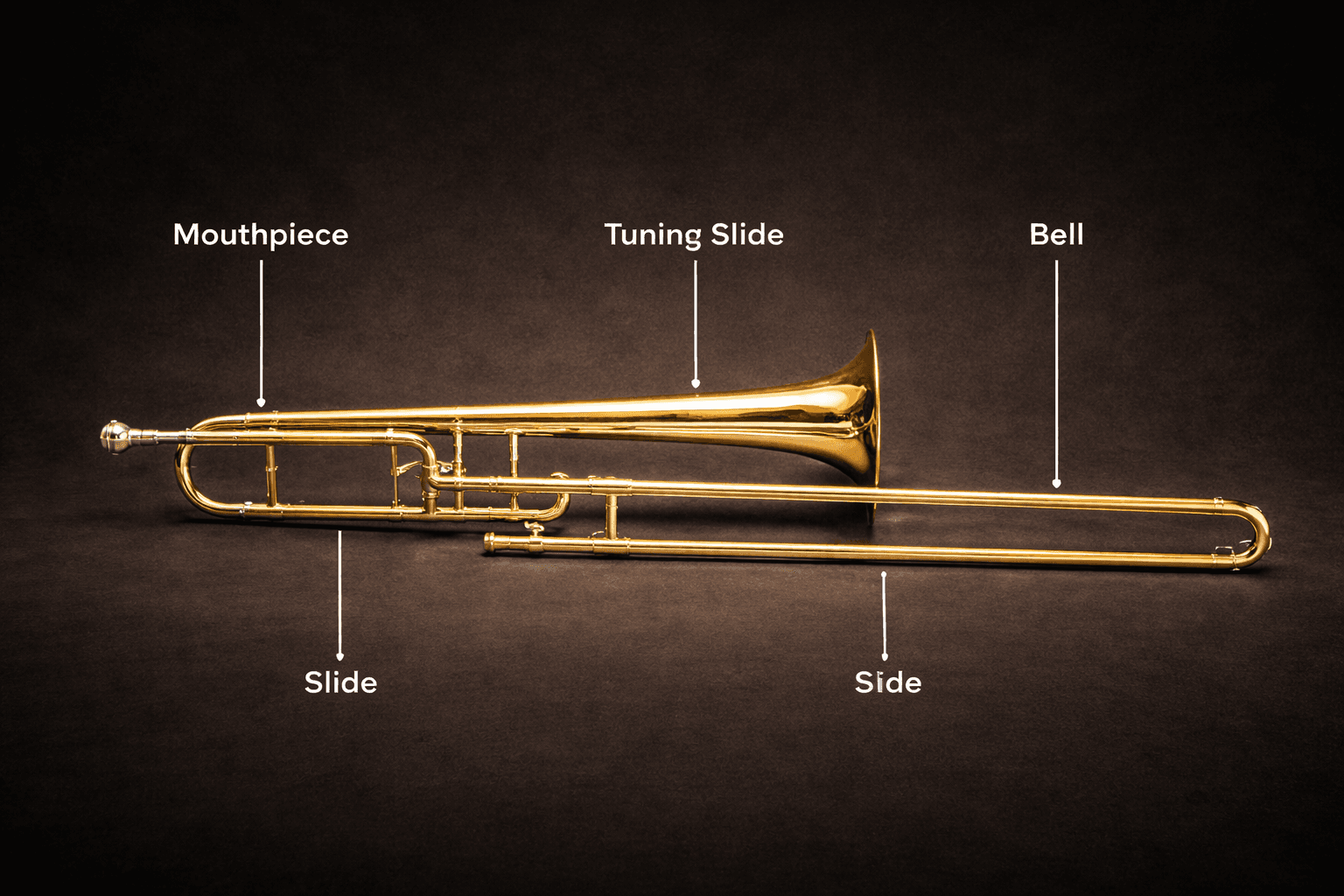
A trombone consists of the mouthpiece, slide, bell, and tuning slide. Each part influences sound. The bell shapes tone projection. The slide controls pitch.
Small changes in design affect response and color. That’s why players choose instruments carefully.
rials and Their Impact on Sound
Most trombones use brass alloys. Yellow brass offers brightness. Rose brass adds warmth. Some bells include gold brass for richer tone.
Material choice affects how the instrument feels and sounds. Players often test many options before deciding.
Trombone Playing Techniques
Basic Techniques for Beginners
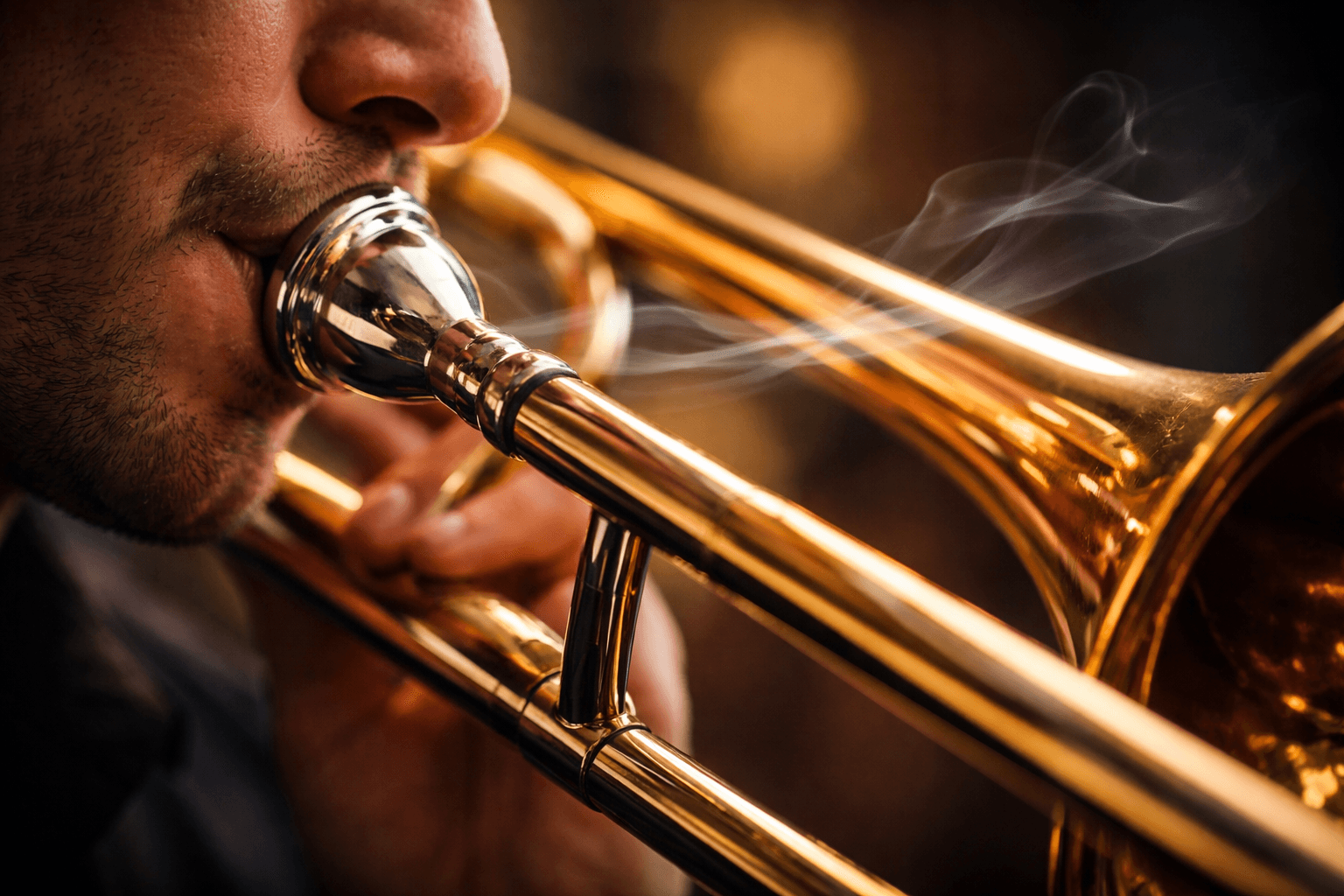
Learning the trombone starts with breath control and embouchure. Players focus on clean tone and accurate slide movement. Long tones help build strength and consistency.
Simple melodies teach coordination. Patience matters here. Strong basics lead to confident playing later.
Advanced Techniques and Expression
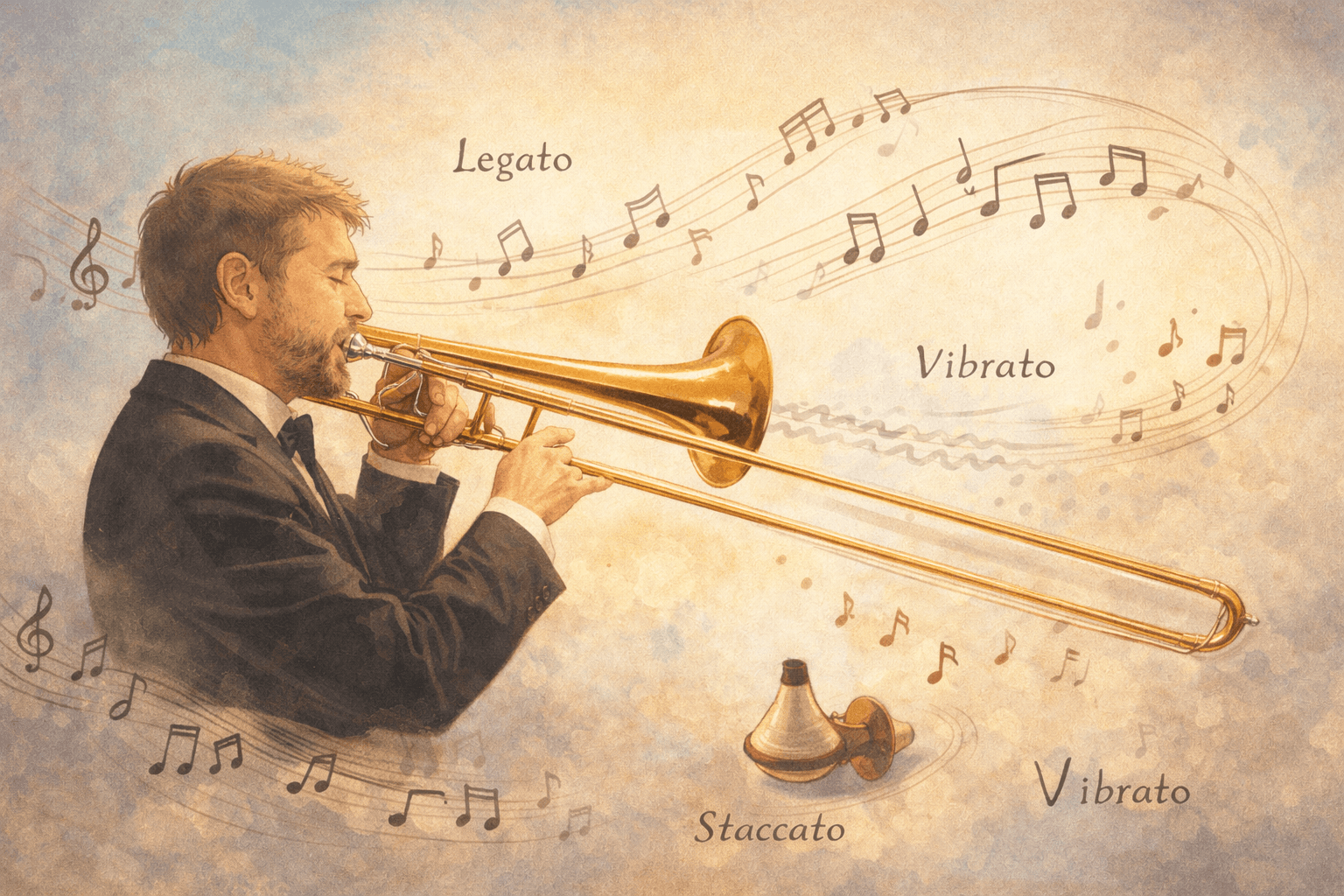
Advanced trombonists use vibrato, legato tonguing, and dynamic shading. Glissando adds drama. Mutes change tone color dramatically.
These techniques allow emotional storytelling. A skilled player can make the trombone whisper or roar.
The Trombone in Classical Orchestral Music
Harmonic and Dramatic Roles
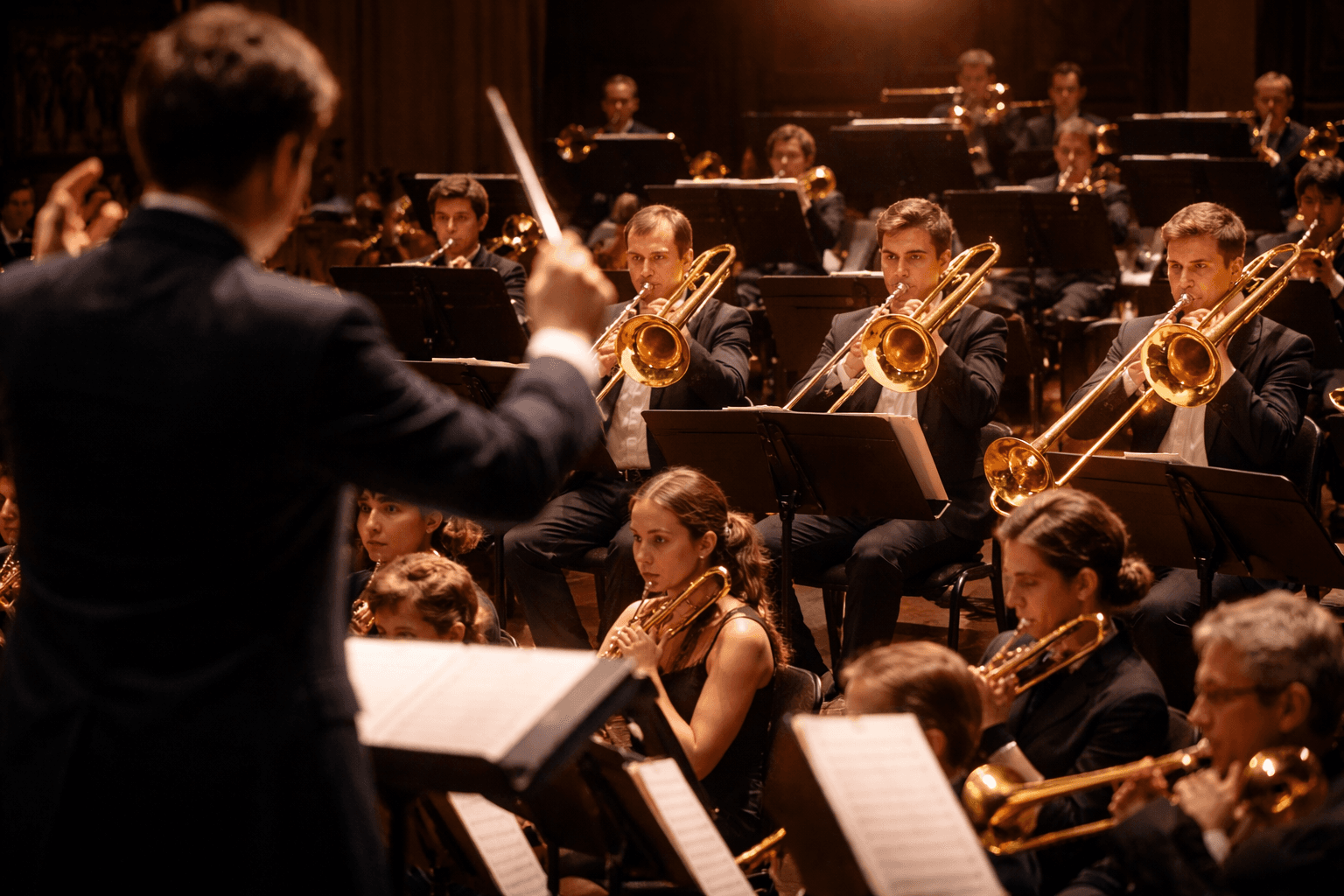
In orchestras, trombones support harmony and highlight climaxes. They often enter at powerful moments, adding gravity. Yet they also blend softly during quieter passages.
This dual role makes them indispensable. Composers trust trombones to shape emotional arcs.
Famous Orchestral Works Featuring Trombone
Beethoven’s symphonies, Mahler’s works, and Wagner’s operas showcase the trombone’s power. These pieces use the instrument to convey tension, triumph, and solemnity.
Listening to these works reveals how composers exploit its full range.
Trombone as a Solo and Chamber Instrument
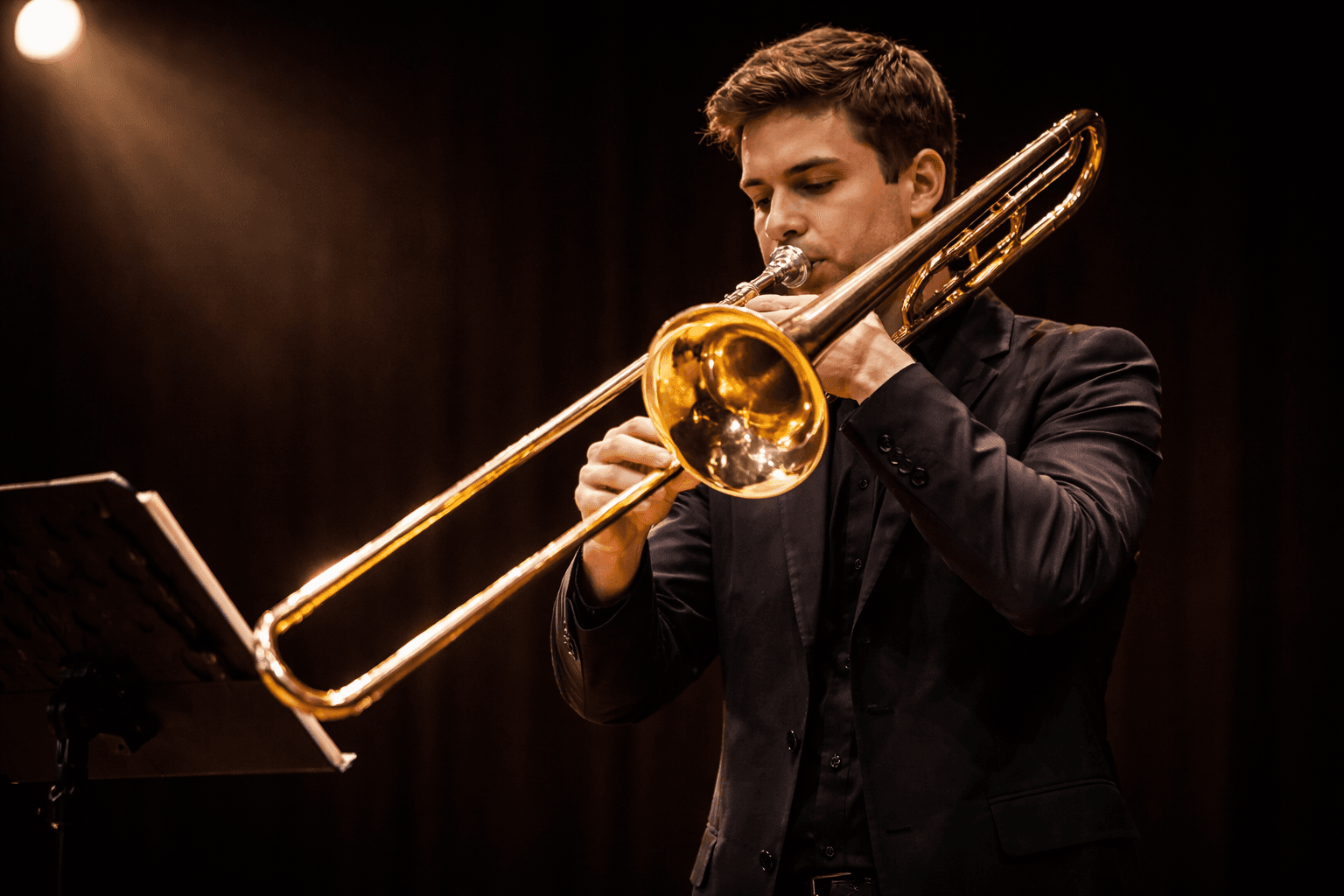
Solo Repertoire and Concertos
Many composers wrote solo works for trombone. Concertos highlight agility and lyricism. These pieces challenge players technically and musically.
Solo performance proves the trombone’s expressive depth beyond accompaniment.
Chamber Music and Ensembles
Trombones appear in brass quintets and mixed ensembles. Chamber settings demand precision and blend. Players must listen closely and adjust constantly.
This environment sharpens musical sensitivity and teamwork.
Trombone in Sacred and Choral Music
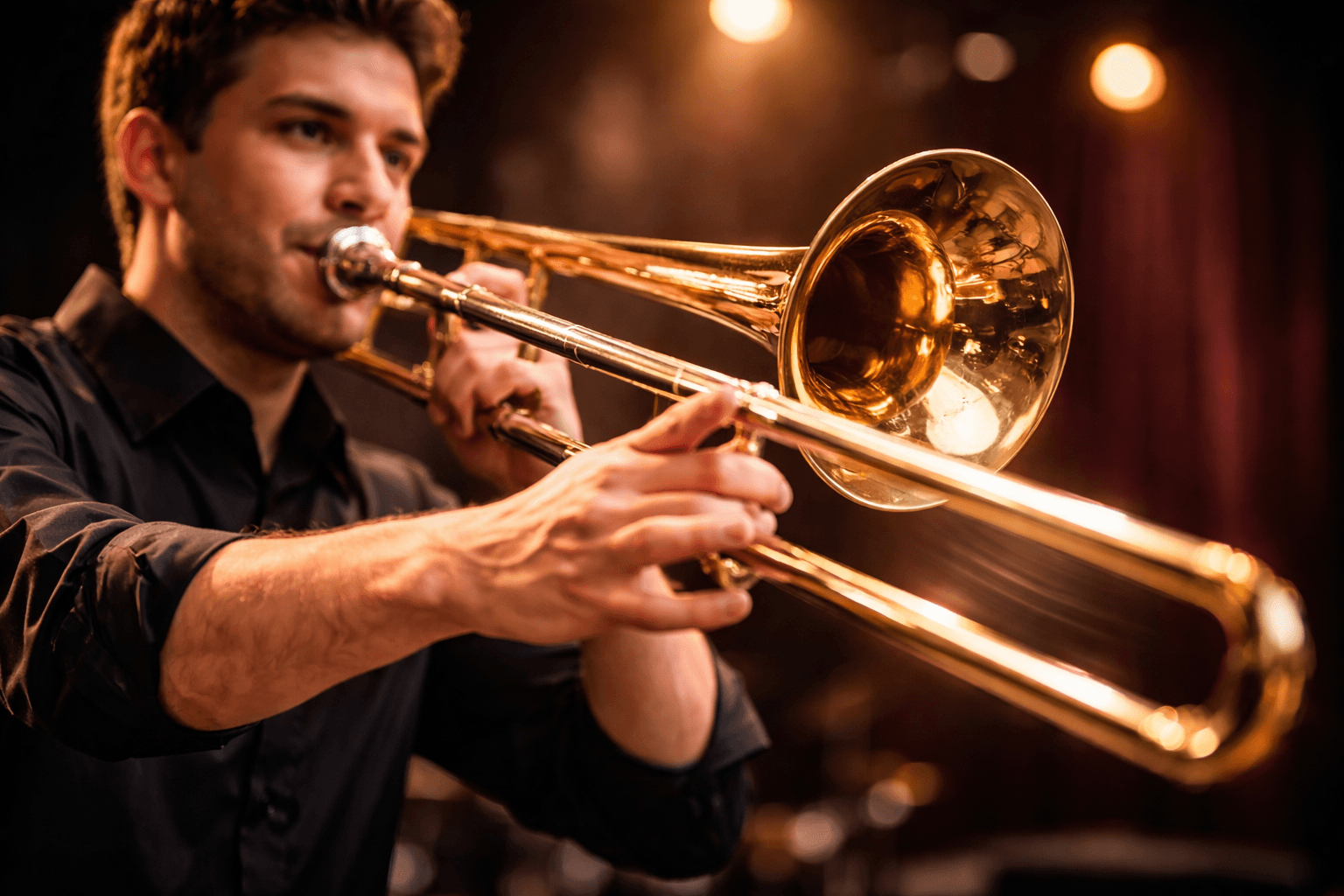
Supporting Vocal Lines
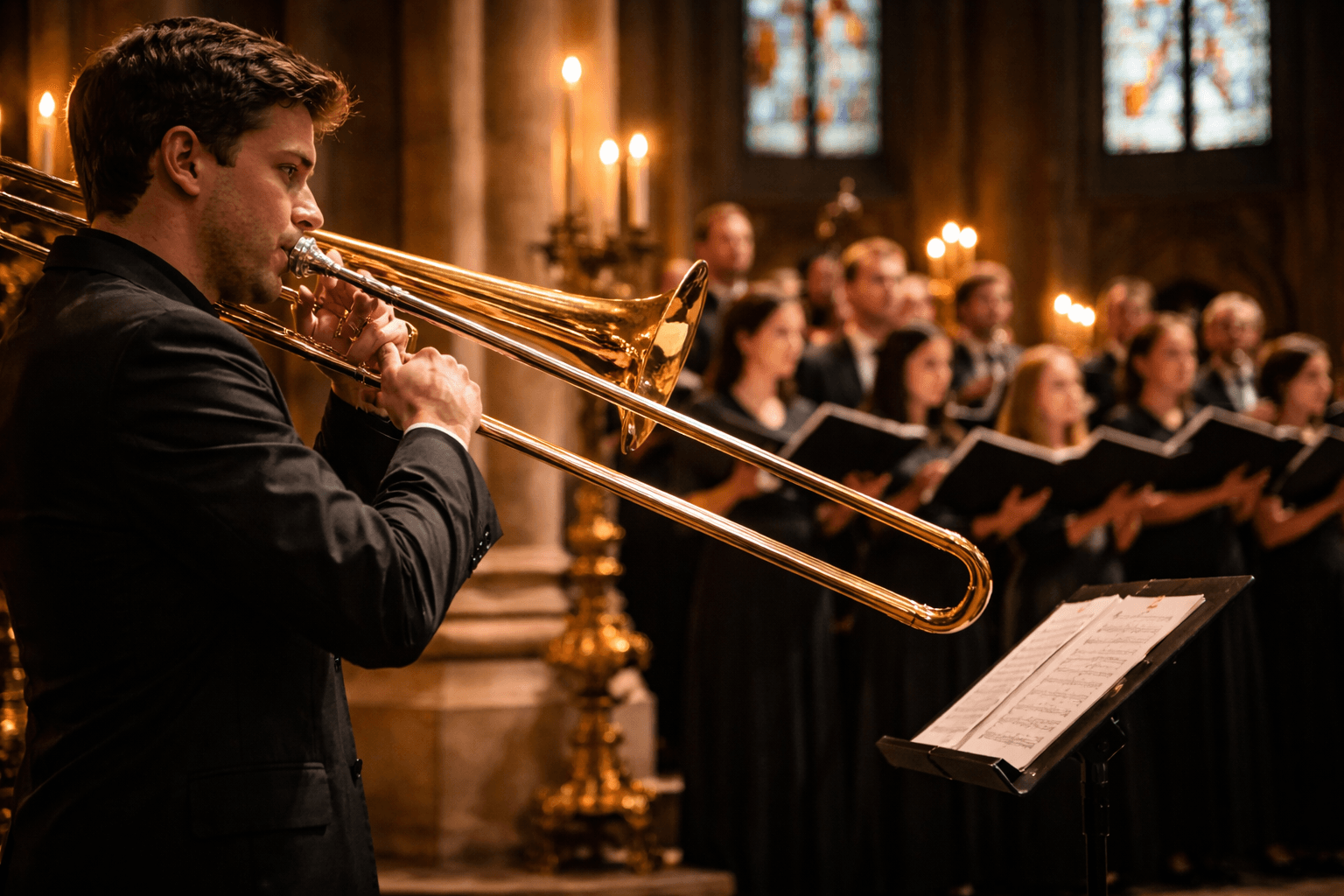
Historically, trombones doubled choir parts. Their tone matched human voices well. This tradition continues in sacred music today.
The instrument enhances harmony without stealing focus.
Symbolism and Emotional Weight
In sacred works, trombones often symbolize solemnity or divine presence. Their sound feels ceremonial and profound.
Composers use this association intentionally.
Trombone in Modern and Film Music
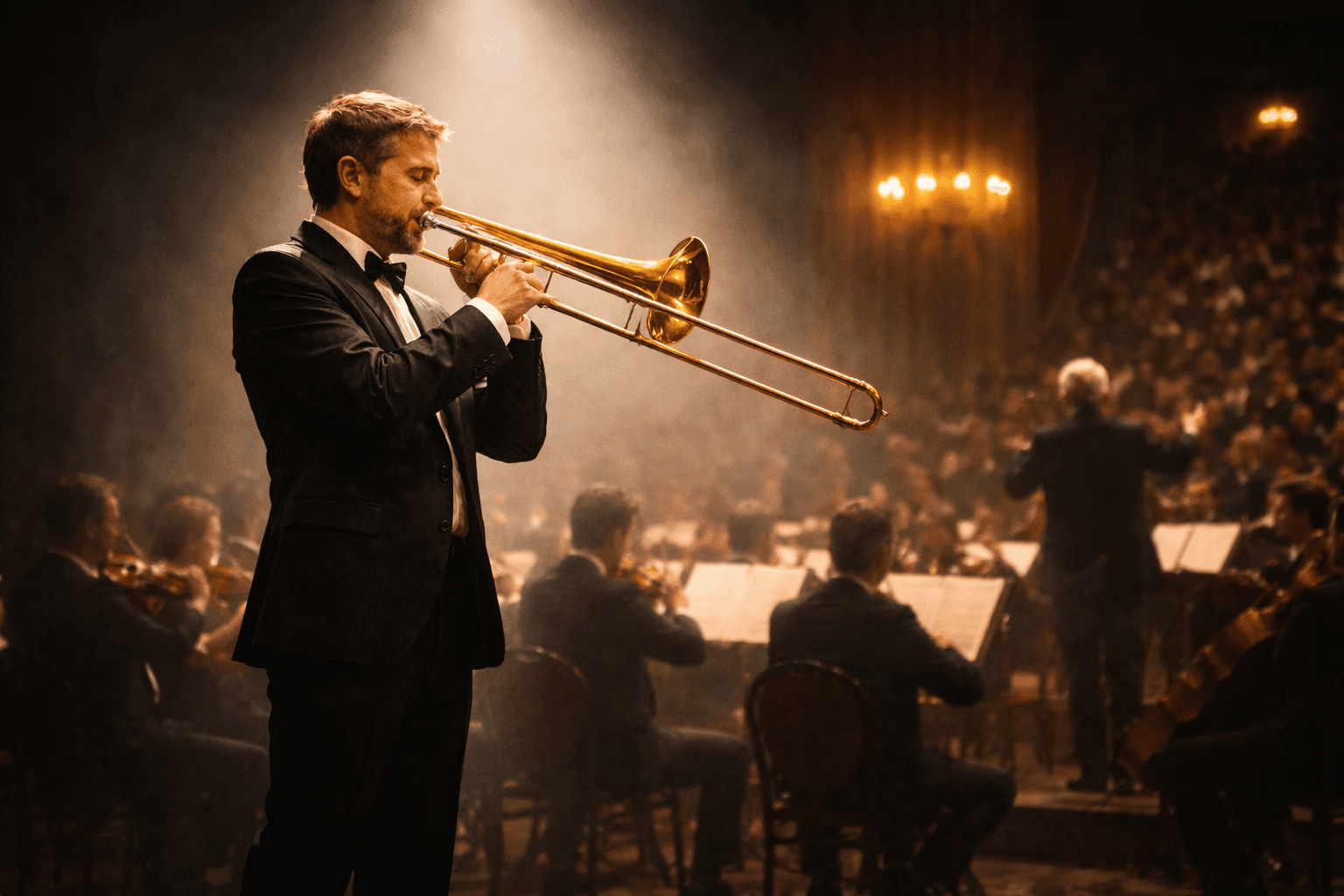
Expanding Beyond Classical Boundaries
Modern composers explore new sounds. Extended techniques appear frequently. Film scores rely on trombones for tension and grandeur.
The instrument adapts easily to contemporary styles.
Emotional Storytelling in Soundtracks
From heroic themes to ominous undertones, trombones shape cinematic emotion. Their range suits both subtle and bold moments.
That versatility keeps them in demand.
Learning the Trombone
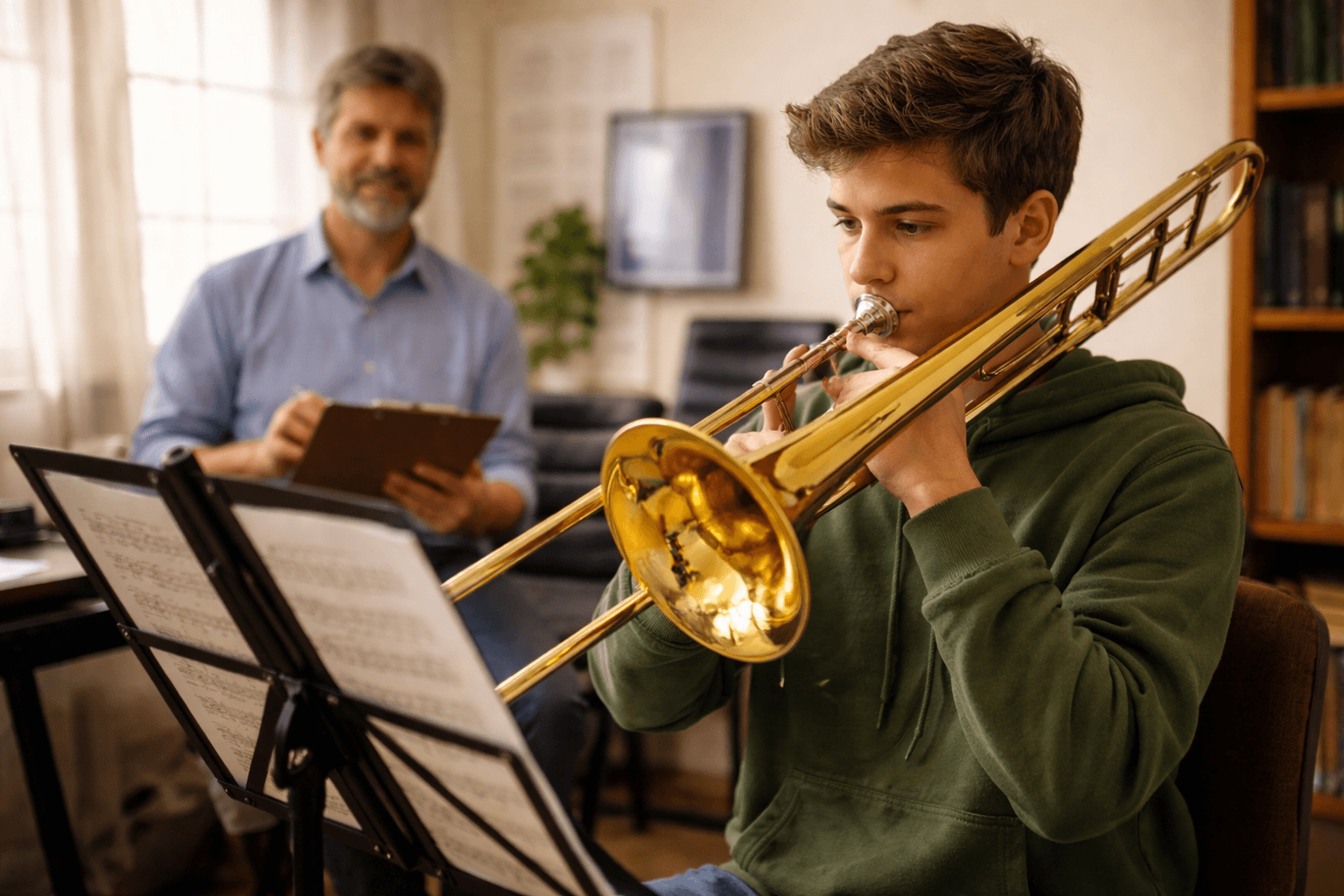
Challenges New Players Face
Slide accuracy challenges beginners. Breath support takes time. Reading bass clef may feel unfamiliar. Consistent practice overcomes these hurdles.
Effective Practice Strategies
Daily long tones, scales, and simple songs build confidence. Listening to great players inspires improvement. Guidance from a teacher accelerates progress.
Steady effort brings rewarding results.
Why the Trombone Remains Timeless
Versatility Across Genres
The trombone thrives in orchestral, chamber, sacred, and modern music. Its adaptability keeps it relevant. Few instruments match its expressive range.
Emotional Connection With Listeners
Audiences respond to the trombone’s voice. It feels honest and direct. That connection explains its lasting appeal.
Conclusion – The Enduring Voice of the Trombone
The trombone combines power and subtlety like few instruments can. Its history, design, and expressive potential make it essential in music. Learning it opens doors to rich artistic experiences.
Whether in a symphony hall or a solo recital, the trombone continues to speak with authority and warmth.
Frequently Asked Questions (FAQs)
1. What makes the trombone different from other brass instruments?
The slide mechanism allows smooth pitch changes and precise intonation. This feature gives the trombone a vocal quality unmatched by valve instruments.
2. Is the trombone hard to learn for beginners?
It requires patience and ear training. With regular practice, beginners can progress steadily and enjoy early success.
3. What age is best to start learning trombone?
Many start around age nine or ten. Adults can begin at any time with dedication.
4. Can the trombone be played solo?
Yes. Many solo works highlight its lyrical and technical abilities.
5. What genres use the trombone today?
Classical, jazz, film music, and contemporary styles all feature the trombone.
6. How long does it take to play professionally?
Reaching a professional level often takes several years of focused study and performance experience.
7. Why is the trombone important in orchestras?
It strengthens harmony, adds drama, and enriches overall sound texture.