ChatGPT
 Google AI
 Grok
Grok Claude
Understanding Easy Piano Songs for Kids
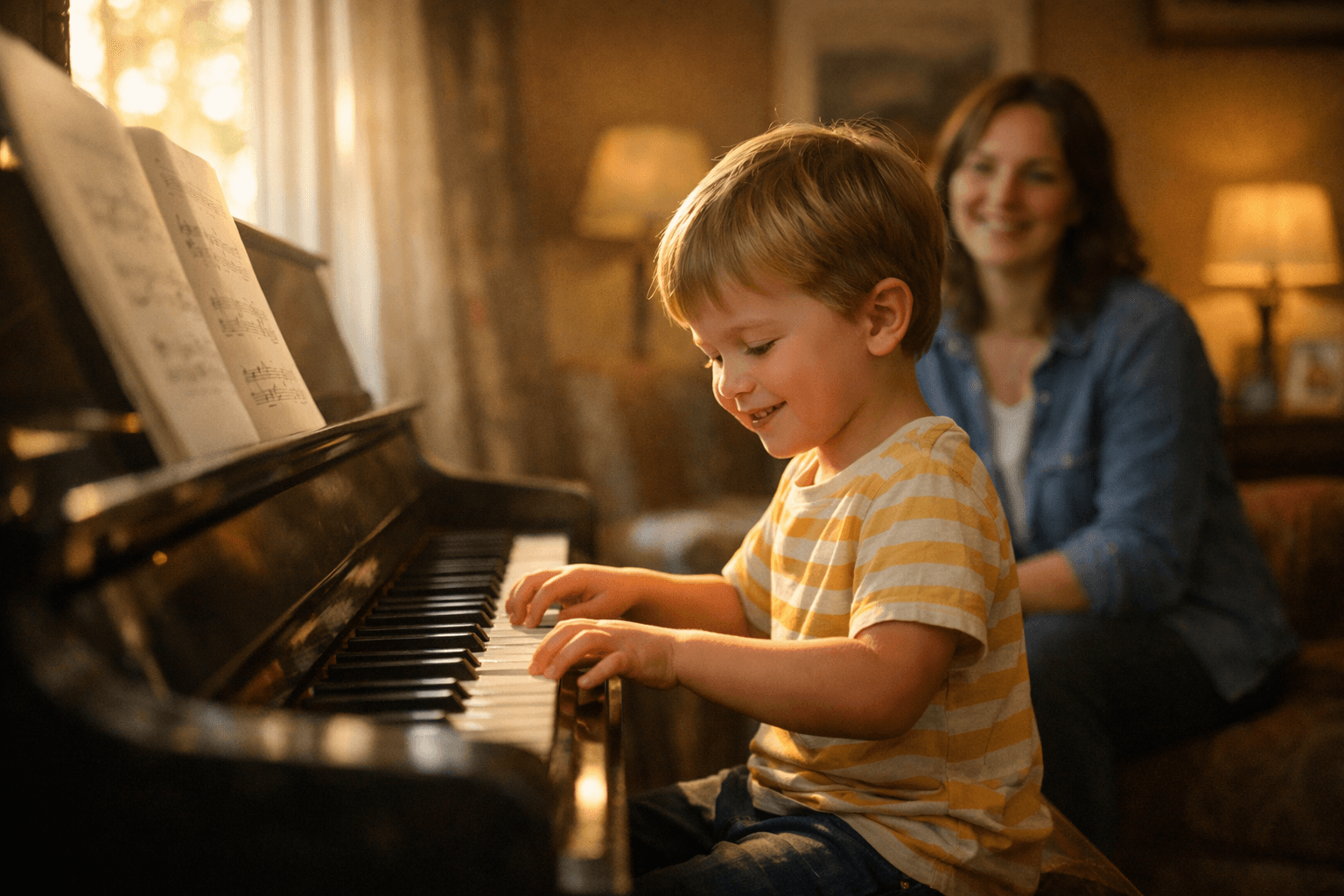 When your child sits at the piano for the first time, what do they truly need — complexity or confidence?
The answer is simple: confidence first.
That’s exactly where easy piano songs for kids make a meaningful difference. These songs are intentionally simple, repetitive, and structured to help young learners experience early success. And those early wins build motivation that lasts.
But what actually makes a song “easy” for children?
What Makes a Song Beginner-Friendly?
Not every simple melody qualifies as one of the right beginner piano songs. The best choices share specific characteristics that support early learning:
- Limited hand movement so children aren’t overwhelmed
- Repetitive note patterns that are easy to remember
- Simple rhythms without complex timing changes
- Familiar tunes children already recognize
Why Easy Songs Matter More Than You Think
Many parents ask, “Shouldn’t my child start with music theory first?”
Here’s what often works better: theory learned through songs.
When children practice easy piano songs, they naturally begin to understand:
- How notes move step by step
- How rhythm feels physically in their hands
- How repetition forms musical structure
- How both hands can coordinate gradually
Building a Strong Musical Foundation Early
The right beginner repertoire does more than teach a melody. It develops essential long-term skills:
- Finger strength and hand coordination
- Listening skills and pitch awareness
- Focus and memory retention
- Performance confidence
These foundational abilities make it easier to transition into more advanced pieces later.
If you want your child to learn with structured guidance while still enjoying the process, enrolling in professionally designed online piano lessons can help. Explore Art Gharana’s structured curriculum through their online piano & keyboard classes
You can also book a free trial class to see how guided lessons make learning beginner piano songs more effective and enjoyable
Keeping Kids Interested From Day One
Children rarely stop learning piano because it is “too difficult.” They stop because it stops feeling rewarding.
Starting with easy piano songs gives your child:
- Quick progress they can see and hear
- Songs they are excited to perform
- A sense of independence at the keyboard
When you choose the right starting songs, you’re not just teaching notes. You’re building confidence, discipline, and a lifelong relationship with music — one simple melody at a time.
Benefits of Learning Easy Piano Songs at a Young Age
 As a parent, you’re not just enrolling your child in music lessons. You’re investing in skills that shape how they think, focus, and express themselves.
But here’s the real question: Why start with easy piano songs instead of jumping straight into structured lessons or complex pieces?
Because early success builds lasting motivation.
When children begin with the right beginner piano songs, they don’t feel intimidated. They feel capable. And that feeling changes everything.
1. Confidence That Extends Beyond the Piano
Children thrive on achievement.
When your child successfully plays one of their first easy piano songs for kids, something powerful happens:
- They believe, “I can do this.”
- They’re excited to practice again.
- They willingly take on slightly bigger challenges.
2. Stronger Cognitive and Academic Skills
Learning beginner-level songs may seem simple on the surface, but the brain is working hard behind the scenes.
Playing piano improves:
- Memory retention
- Pattern recognition
- Mathematical thinking through rhythm
- Hand-eye coordination
If you want structured guidance that nurtures both creativity and cognitive growth, exploring Art Gharana’s comprehensive music instrument courses can provide your child with a well-rounded foundation.
3. Emotional Expression and Stress Relief
Children don’t always have the vocabulary to express their feelings. Music gives them that outlet.
Through easy piano songs, kids learn:
- How different notes create different moods
- How tempo affects emotional tone
- How playing music can calm and regulate emotions
4. Improved Discipline and Focus
Consistency matters more than complexity.
When children practice short, achievable songs regularly, they develop:
- Time management skills
- Patience
- Goal-setting habits
- Persistence when facing small challenges
These qualities don’t develop overnight. They grow through repetition and structured support.
That’s why guided instruction can make a meaningful difference. With expert mentors and personalized feedback, children progress faster and stay motivated. You can explore Art Gharana’s experienced faculty on their Meet Our Teachers page to understand the depth of mentorship available.
5. A Smooth Transition to Advanced Learning
Starting simple doesn’t mean staying simple.
The technical skills learned through beginner piano songs — proper finger positioning, rhythm control, note reading — create a stable foundation for advanced pieces later.
Without this foundation, children often struggle when songs become more complex. With it, they transition smoothly and confidently.
So when you choose to begin with easy songs, you’re not limiting your child. You’re strategically preparing them for long-term success.
And that preparation begins with one simple, achievable melody at a time.
Top 10 Easy Piano Songs for Kids (With Letter Notes to Play)
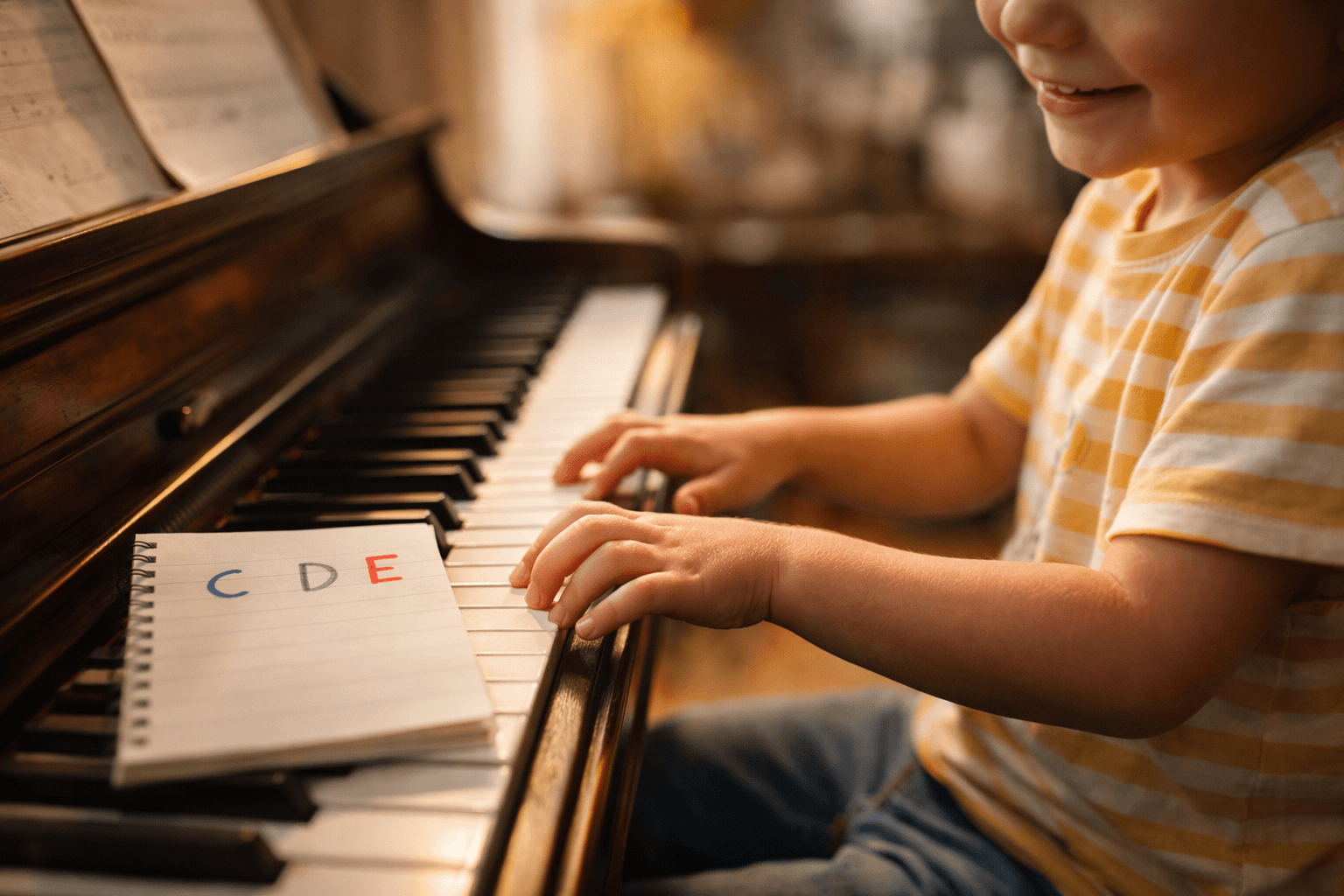 Now let’s make things practical.
Below, you’ll find simple letter notes (right-hand melody) for each of these easy piano songs for kids. These are perfect for absolute beginners who are just learning key names.
All notes are written using basic letter notation (C–D–E–F–G–A–B). Start in middle C position unless mentioned otherwise.
1. Mary Had a Little Lamb
Letter Notes:
E D C D E E E D D D E G G E D C D E E E E D D E D C
Why it’s great: This is one of the most common beginner piano songs because it uses simple step-by-step movement.
2. Twinkle, Twinkle, Little Star
Letter Notes:
C C G G A A G F F E E D D C G G F F E E D G G F F E E D C C G G A A G F F E E D D C
Tip: Keep your fingers relaxed and move smoothly between notes.
3. Chopsticks (Simple Version)
Right Hand Letter Notes:
G G A A G G A A G G A A G G A A
(Repeat rhythmically)
This fun tune builds rhythm awareness and is one of the most playful easy piano songs for kids.
4. Happy Birthday
Letter Notes:
C C D C F E C C D C G F C C C A F E D Bb Bb A F G F
Note: Bb means B flat (black key just before B).
This song builds performance confidence since kids can play it at family celebrations.
5. Canon in D (Very Simplified Melody)
Letter Notes (Main Pattern):
D A B F# G D G A
(Repeat pattern slowly)
For beginners, focus on smooth transitions. This introduces early classical structure without overwhelming young learners.
6. Jingle Bells
Letter Notes:
E E E E E E E G C D E F F F F F E E E D D E D G
Keep the rhythm bouncy and light.
7. Let It Go (Very Simplified Intro)
Letter Notes (Opening Phrase):
E F G G A A A G F E D E F
This simplified version keeps things manageable while still feeling magical.
8. Ode to Joy (Beethoven – Easy Version)
Letter Notes:
E E F G G F E D C C D E E D D E E F G G F E D C C D E D C C
This melody is excellent for building finger independence.
9. Heart & Soul (Basic Melody Line)
Letter Notes:
C C C C D E F G C C C C D E F G
This is perfect for duet practice — a wonderful bonding activity for parents and children.
10. Itsy Bitsy Spider
Letter Notes:
G C C C D E E D C D E C G G C C C D E E D C D E C
Short, repetitive, and ideal for younger learners with shorter attention spans.
How to Practice These Beginner Piano Songs Effectively
Instead of rushing through, guide your child to:
- Play slowly first
- Say the letters aloud while playing
- Practice small sections repeatedly
- Increase speed only after accuracy improves
Starting with clearly written letter notes makes these easy piano songs for kids less intimidating and more achievable.
And when children see progress quickly, they stay motivated to continue learning — which is exactly what you want at the beginning of their piano journey.
Easy Piano Songs for Kids: Choosing the Right Ones
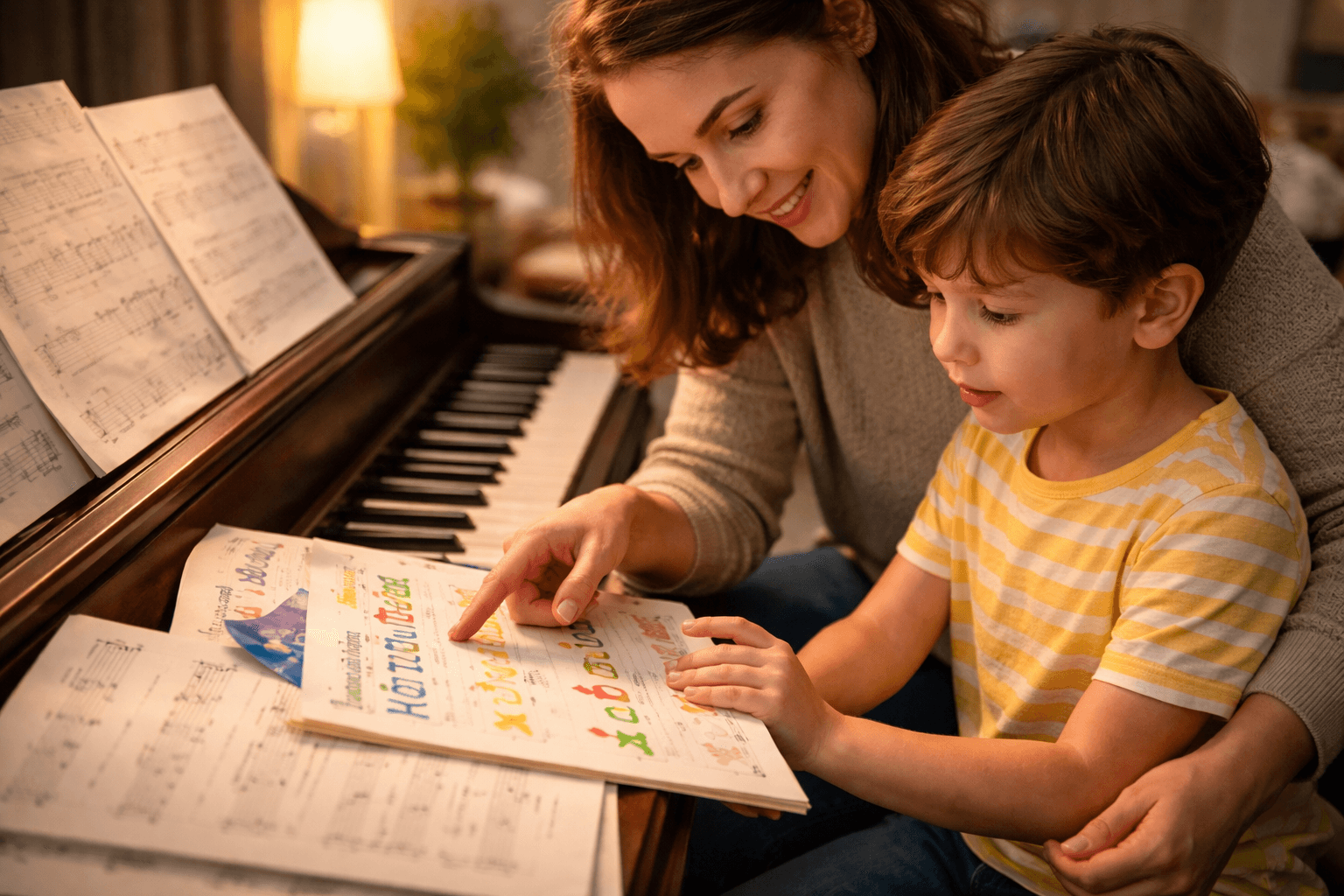 With so many options available, how do you decide which easy piano songs for kids are truly right for your child?
Not every simple tune will match your child’s age, coordination level, or attention span. Choosing wisely at this stage can make the difference between a child who practices eagerly and one who avoids the piano altogether.
Let’s break it down strategically.
1. Match the Song to Your Child’s Age and Skill Level
A 5-year-old beginner and a 10-year-old beginner are very different learners.
When selecting beginner piano songs, consider:
- Hand size and finger strength
- Ability to follow rhythm steadily
- Reading ability (letters vs. sheet music)
- Attention span during practice
The goal isn’t difficulty. It’s momentum.
2. Balance Familiar Songs with Skill-Building Pieces
Children learn faster when they already know how a song sounds.
Familiar easy piano songs allow them to:
- Predict the next note
- Self-correct mistakes
- Play more confidently
However, don’t rely only on familiar tunes. Introduce structured songs that gently challenge rhythm, hand coordination, or note reading.
If your child is still identifying keys, exploring simple note-reading strategies like these practical piano note hacks can make learning smoother and less overwhelming.
3. Keep Songs Short and Achievable
Long pieces may look impressive, but short songs build success.
Ask yourself:
- Can my child finish this song within 1–2 weeks?
- Does it repeat patterns?
- Is the rhythm manageable?
And consistency matters more than complexity.
4. Observe Motivation Signals
Watch your child carefully during practice.
Are they:
- Smiling while playing?
- Repeating the song voluntarily?
- Showing it off to family members?
If frustration appears often, the piece may be slightly advanced — and that’s okay. Step back, simplify, and rebuild confidence.
5. Know When Structured Guidance Helps
Sometimes, even the best song choices need expert guidance.
If you find yourself wondering:
- “Am I teaching this correctly?”
- “Is my child using proper finger positioning?”
- “How do we move beyond beginner piano songs?”
Professional online instruction offers:
- Step-by-step progression
- Personalized feedback
- Balanced song selection
- Long-term skill development
The Bigger Picture
Choosing the right songs isn’t about impressing others. It’s about creating a positive first experience with music.
When you carefully select beginner piano songs that align with your child’s developmental stage, you build:
- Confidence
- Technical foundation
- Practice discipline
- A genuine love for music
And that love — more than any single song — is what keeps children playing for years to come.
Conclusion: Start Simple, Start Joyful, Start Today
At the end of the day, your child doesn’t need complicated compositions to begin their musical journey. They need encouragement. They need small wins. They need songs that make them smile.
That’s exactly why starting with easy piano songs for kids is such a powerful decision.
Think about it — what happens when a child can confidently play a full song within days or weeks?
- They feel capable.
- They practice without being reminded.
- They proudly perform for family and friends.
- They begin to see themselves as “musical.”
The beauty of well-chosen beginner piano songs is that they quietly build lifelong skills — focus, coordination, memory, creativity — all while feeling fun and achievable. You’re not just teaching notes on a keyboard. You’re nurturing discipline, confidence, and self-expression.
So ask yourself:
Are we waiting for the “perfect time” to begin? Or can we start with one simple song today?
Because the truth is, musical journeys don’t begin with complexity. They begin with curiosity — and the right first melody.
If you’d like your child to learn these songs with expert guidance, structured progression, and personalized feedback, now is the perfect moment to take the next step.
Book a free trial class and see how professional mentoring can turn simple songs into strong foundations.
Start small. Stay consistent. And watch your child’s confidence grow — one joyful note at a time.
Frequently Asked Questions (FAQ)
1. What are the best easy piano songs for kids to start with?
The best easy piano songs for kids are short, repetitive, and use limited notes. Songs like “Twinkle, Twinkle, Little Star,” “Mary Had a Little Lamb,” and simplified versions of “Ode to Joy” are ideal because they build confidence quickly while strengthening coordination and rhythm.
2. At what age can my child start learning beginner piano songs?
Most children can start learning beginner piano songs between ages 4 and 7, depending on attention span and finger strength. The key is starting with simple melodies that match their developmental level rather than focusing strictly on age.
3. How long does it take for kids to learn easy piano songs?
With consistent practice (10–20 minutes a day), many children can learn simple easy piano songs within 1–2 weeks. Progress depends on practice consistency, guidance, and the child’s comfort level with the instrument.
4. Do kids need to read sheet music to play easy piano songs?
Not initially. Many beginners start with letter notes before transitioning to sheet music. Over time, learning proper notation improves rhythm accuracy and long-term musical growth.
5. Are online piano lessons effective for kids in Canada, the UK, Australia, and the US?
Yes. Online piano lessons are highly effective when structured properly. Families across Canada, the UK, Australia, and the US benefit from flexible scheduling, expert instructors, and personalized guidance — all from home.
6. How can I keep my child motivated to practice piano?
Choose familiar easy piano songs for kids, keep sessions short, celebrate small wins, and allow mini performances for family members. Structured mentorship also increases accountability and motivation.
7. What are the benefits of learning beginner piano songs early?
Learning beginner piano songs improves memory, focus, coordination, emotional expression, and confidence. These benefits extend beyond music into academics and personal development.