ChatGPT
 Google AI
 Grok
Grok Claude
The tenor clef on piano often feels mysterious at first glance. Many players meet it later in their musical journey, usually inside advanced scores or dense piano arrangements. Yet once its logic becomes clear, tenor clef reading feels practical, efficient, and surprisingly elegant. This guide explains the tenor clef in a clear, friendly way, so you can read it with confidence and connect it naturally to the piano keyboard.
Introduction to the Tenor Clef on Piano
 At first sight, the tenor clef on piano can feel like a foreign language. The symbol looks familiar, yet the note positions feel shifted and uncertain. This confusion usually appears because most early piano lessons focus only on treble and bass clef. As music grows richer, composers need a smarter way to write middle-range notes without excessive ledger lines.
That’s where the tenor clef becomes useful. It bridges the space between treble and bass clef and helps represent notes that sit comfortably in the middle register. On piano, tenor clef often appears in complex classical pieces, transcriptions, and advanced harmony writing. Learning it unlocks smoother reading and better musical flow.
What Is the Tenor Clef in Music Notation
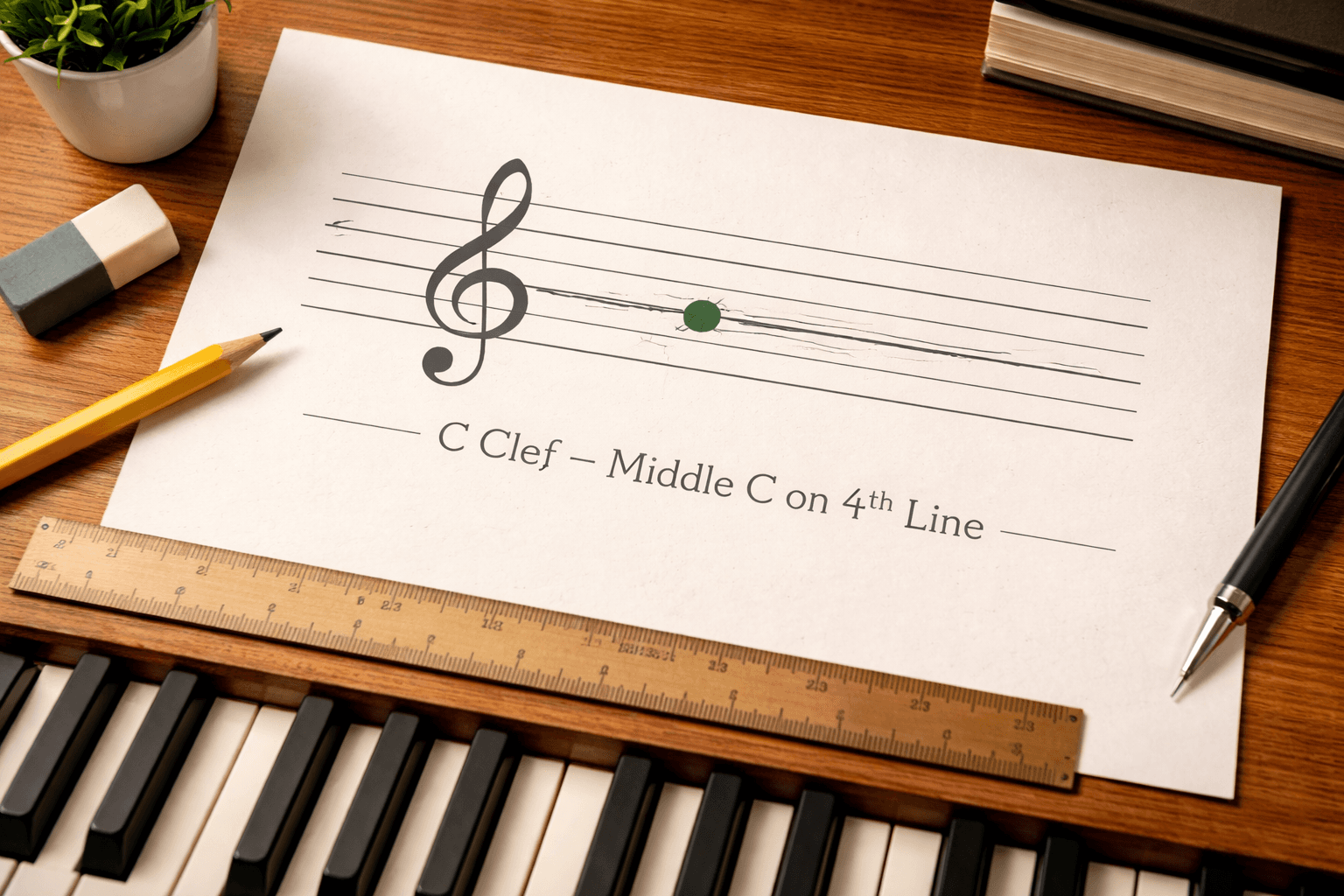
 The tenor clef belongs to the family of C clefs used in Western music notation. Unlike treble or bass clef, which fix G and F notes, the tenor clef places Middle C directly on the fourth line of the staff. This placement reduces clutter and makes mid-range notes easier to read.
In piano music notation, the tenor clef shows notes that fall above bass clef but below treble clef. Instead of stacking ledger lines, composers shift to tenor clef for visual clarity. This approach helps pianists read faster and maintain better musical continuity while playing complex passages.
Why Tenor Clef Matters for Piano Players
The piano is a wide pitch range instrument. Its keyboard stretches far beyond what a single staff can comfortably show. When music lives in the middle register, tenor clef offers a clean visual representation of pitch without constant ledger lines pulling your eyes off the page.
For piano players, tenor clef improves reading accuracy and hand coordination. It often appears in left-hand passages that move upward or right-hand passages that move downward. Understanding tenor clef allows smoother transitions between registers and supports confident sight reading in advanced repertoire.
Understanding the Tenor Clef Symbol
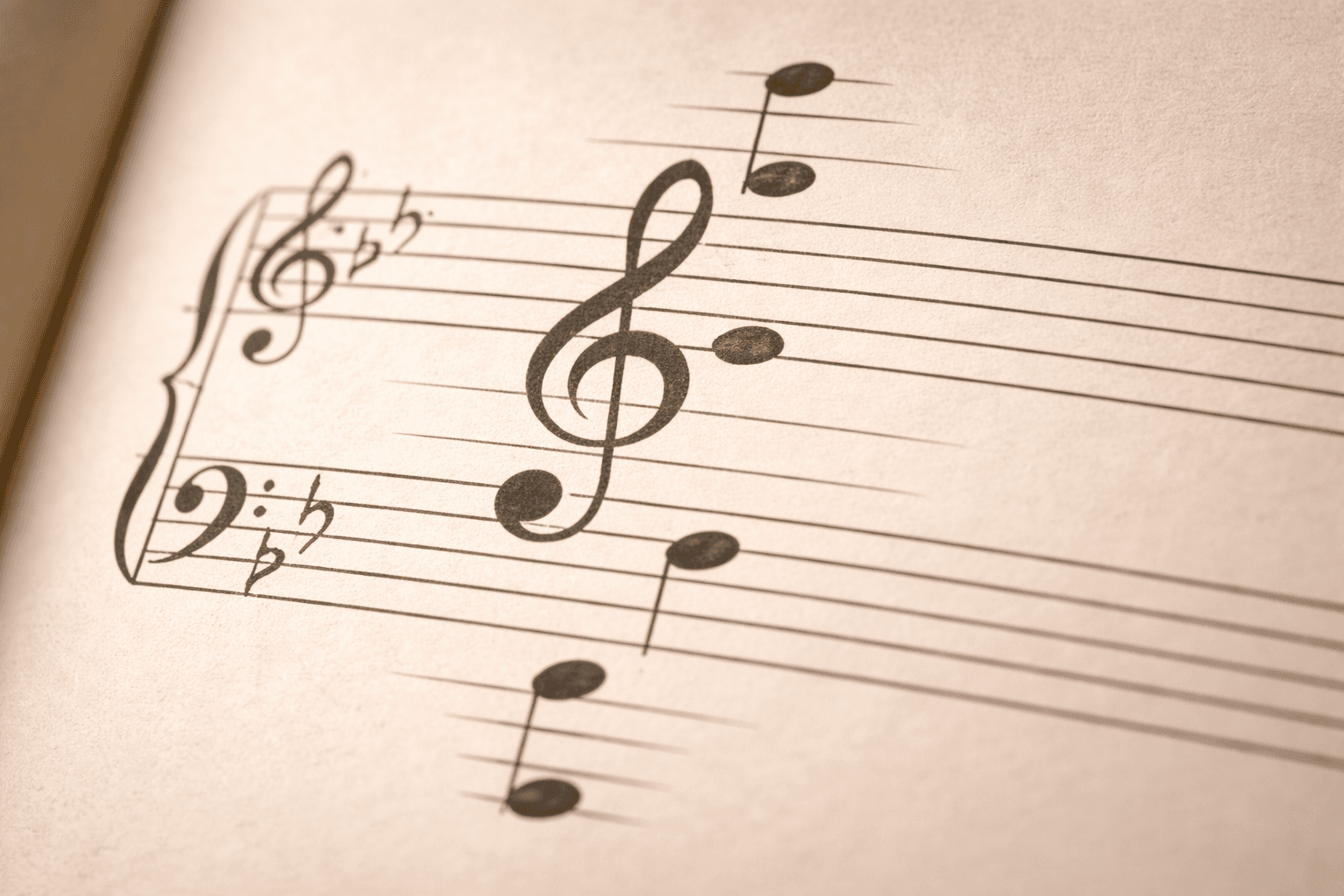 The tenor clef symbol looks similar to the alto clef symbol. Both belong to the C clef family. The key difference lies in placement. In tenor clef, the center of the symbol points to the fourth line of the staff, marking Middle C.
Once you recognize this anchor point, reading tenor clef notes becomes logical. Every note relates back to Middle C. Instead of memorizing isolated positions, you learn to navigate patterns around that central reference. This mental shift makes tenor clef note reading much easier over time.
Staff Structure in Tenor Clef
The tenor clef staff still uses five horizontal lines and four spaces. Nothing about the staff itself changes. Only the meaning of each line and space shifts based on the clef symbol. This is where many learners hesitate at first.
In tenor clef, the fourth line from the bottom represents Middle C. Notes above that line move upward in pitch. Notes below move downward. Once this layout clicks, the staff feels less intimidating and far more intuitive for reading piano music.
Tenor Clef Notes Explained Clearly
Tenor clef notes follow the musical alphabet just like every other clef. The difference lies in where each letter sits. Starting from Middle C on the fourth line, the notes move upward as D, E, F, G, and so on. Below Middle C, notes move downward as B, A, G, and further.
This structure allows pianists to identify notes quickly without guessing. Over time, your brain stops translating and starts recognizing note shapes directly. This pattern-based reading improves fluency and reduces hesitation during performance.
Middle C and Its Role in Tenor Clef
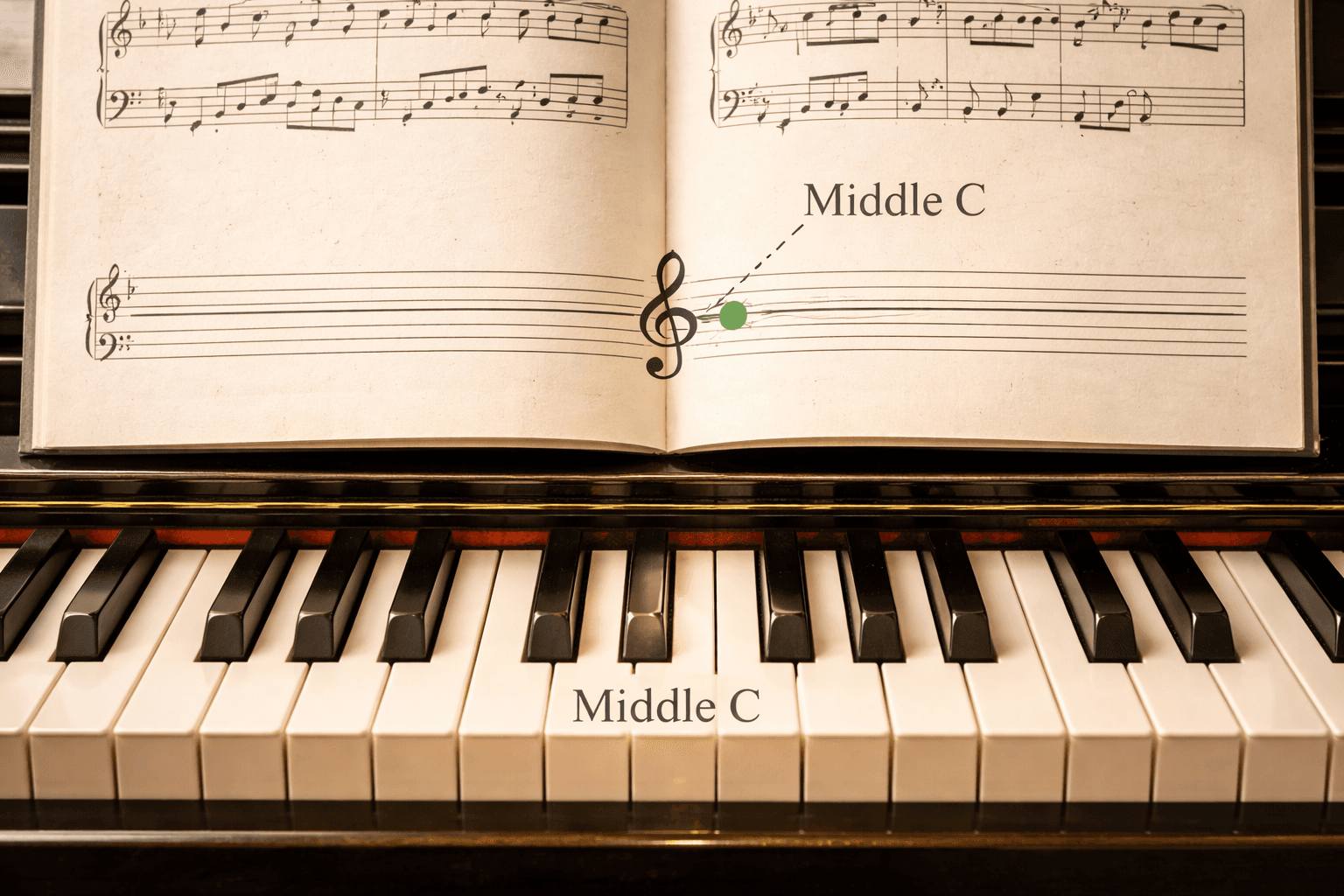 Middle C acts as the backbone of tenor clef reading. Its position on the fourth line connects treble and bass clef thinking into one unified system. On the piano keyboard, Middle C sits near the center, making it an ideal reference point.
By constantly relating tenor clef notes back to Middle C, pianists develop stronger keyboard note placement awareness. This connection strengthens piano note recognition and builds confidence when shifting between different clefs in a single piece.
Tenor Clef vs Treble and Bass Clef on Piano
Comparing tenor clef vs treble clef shows a clear difference in pitch focus. Treble clef handles higher notes played by the right hand. Bass clef covers lower notes played by the left hand. Tenor clef sits comfortably between them.
Unlike bass clef ledger lines or treble clef ledger lines that can become visually crowded, tenor clef keeps music readable. It reduces eye strain and allows smoother note flow. This clarity is especially valuable in fast passages or dense harmonic writing.
When Tenor Clef Appears in Piano Music
Tenor clef appears most often in advanced piano scores, orchestral reductions, and classical transcriptions. Composers use it when the musical line sits awkwardly between treble and bass clef ranges.
It also appears in music theory exercises, counterpoint studies, and keyboard music that mirrors orchestral writing. Pianists who understand tenor clef can approach these works with greater confidence and musical insight.
How to Read Tenor Clef Notes Step by Step
 The fastest way to read tenor clef is by anchoring Middle C first. Once that reference is secure, identify intervals instead of counting lines. Reading by interval helps your eyes move smoothly across the staff.
Next, connect each written note to its piano keyboard position. This mental mapping strengthens muscle memory. Over time, tenor clef note reading becomes automatic, just like treble and bass clef reading.
Ledger Lines in Tenor Clef
 Even though tenor clef reduces ledger lines, they still appear occasionally. Ledger lines above the staff represent higher notes approaching treble clef territory. Ledger lines below represent lower notes nearing bass clef range.
The key to reading ledger lines in tenor clef is pattern recognition. Instead of counting each line, relate them back to Middle C and known intervals. This approach keeps reading fast and accurate during complex passages.
Sharps, Flats, and Accidentals in Tenor Clef
Sharps and flats function exactly the same in tenor clef as in any other clef. Accidentals raise or lower notes by a half-step on the piano keyboard. The clef does not change how accidentals behave.
Understanding half-step movement on piano helps interpret accidentals quickly. When reading tenor clef, always consider the key signature first, then apply accidentals only where indicated. This habit prevents mistakes and supports musical accuracy.
Tenor Clef and Piano Hand Coordination
Tenor clef often appears in passages where hand roles overlap. The left hand may rise into higher notes, or the right hand may descend into lower notes. This overlap requires strong piano hand coordination.
Reading tenor clef trains your brain to separate pitch from hand position. Notes are not tied to hands but to musical range. This flexibility improves technique and supports advanced piano playing.
Sight Reading Practice Using Tenor Clef
Tenor clef sight reading becomes easier with consistent exposure. Start with slow tempos and simple rhythms. Focus on accuracy before speed. Reading patterns matters more than reading individual notes.
Over time, sight reading tenor clef improves overall piano reading skills. Many pianists notice better fluency across all clefs after mastering tenor clef. It sharpens musical awareness and boosts reading confidence.
Tenor Clef in Music Theory and Composition
In music theory, tenor clef helps illustrate inner voices clearly. It allows composers and students to see harmonic movement without clutter. This clarity supports better understanding of voice leading and chord structure.
For piano students studying harmony or counterpoint, tenor clef becomes an essential tool. It reveals how musical lines interact and helps visualize relationships between voices across the keyboard.
Why Learning Tenor Clef Strengthens Piano Skills
 Learning tenor clef expands musical literacy. It trains your brain to adapt quickly and recognize patterns across different notational systems. This adaptability translates into better performance and stronger sight reading.
Pianists who understand tenor clef feel more comfortable approaching complex scores. They rely less on guesswork and more on clear visual cues. This confidence leads to smoother practice sessions and more expressive playing.
Common Difficulties with Tenor Clef
Many players struggle at first because tenor clef feels unfamiliar. The brain tries to force treble or bass clef logic onto a different system. This causes hesitation and slow reading.
The solution lies in consistent exposure and reference-based reading. Once Middle C becomes automatic, the rest of the clef falls into place. Patience and repetition always win here.
Effective Ways to Practice Tenor Clef on Piano
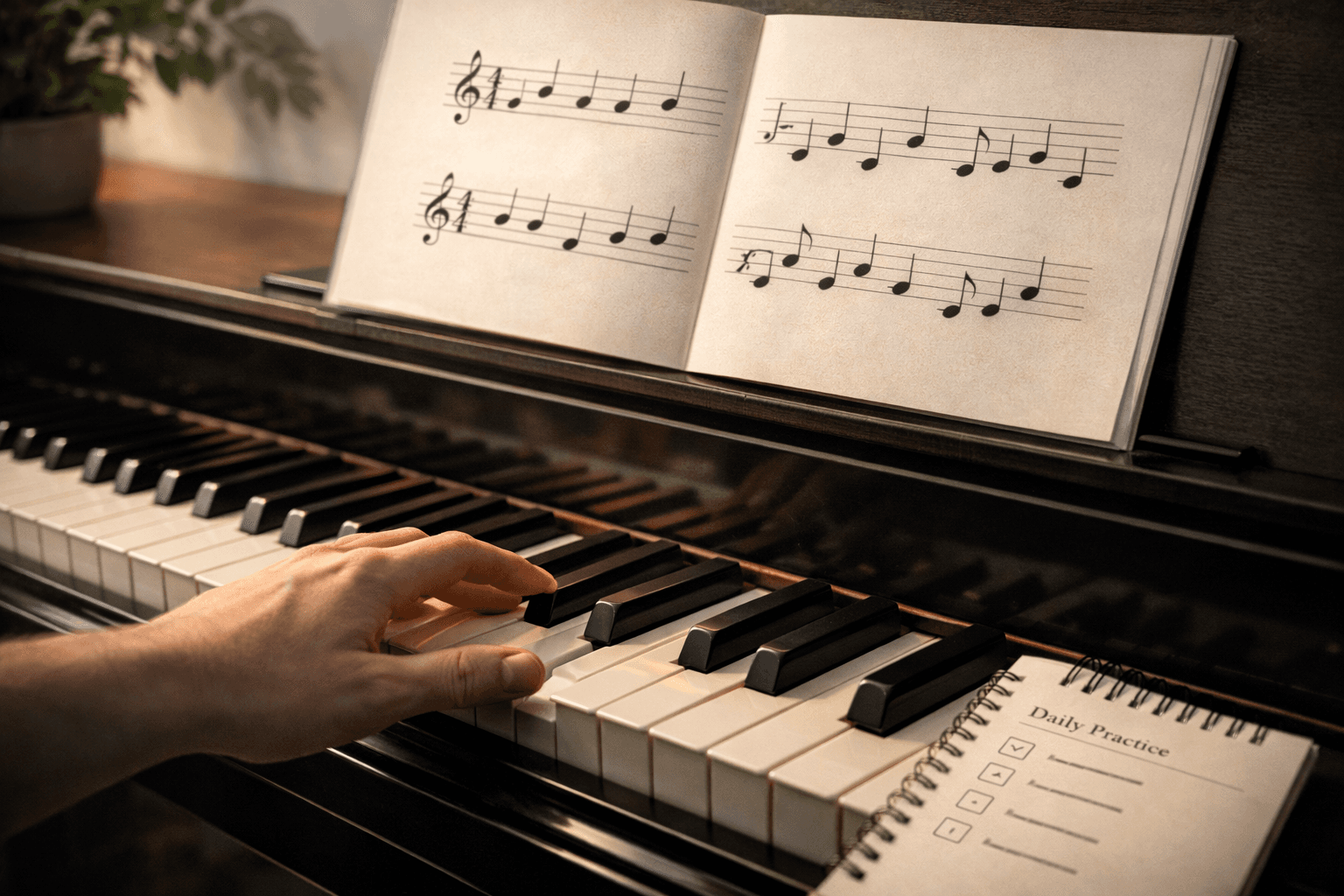
Daily short practice sessions work better than long, irregular ones. Reading simple exercises builds familiarity. Gradually introduce real piano music that uses tenor clef naturally.
Playing slowly while saying note names out loud strengthens memory. Connecting sound, symbol, and keyboard position accelerates learning and improves long-term retention.
Tenor Clef Beyond Piano Music
Tenor clef appears frequently in cello, bassoon, and trombone music. Understanding it on piano creates crossover benefits for ensemble playing and score reading.
For pianists interested in composition or conducting, tenor clef knowledge becomes essential. It allows clear reading of full scores and deepens overall musicianship.
Final Thoughts on Mastering Tenor Clef on Piano
The tenor clef on piano no longer needs to feel intimidating. With the right approach, it becomes a logical extension of piano notation rather than a barrier. Understanding its structure, purpose, and patterns transforms confusion into clarity.
Consistent practice, reference-based reading, and keyboard awareness build confidence quickly. Once mastered, tenor clef opens the door to advanced repertoire and deeper musical understanding. The effort pays off every time a complex score suddenly feels readable and musical.