ChatGPT
 Google AI
 Grok
Grok Claude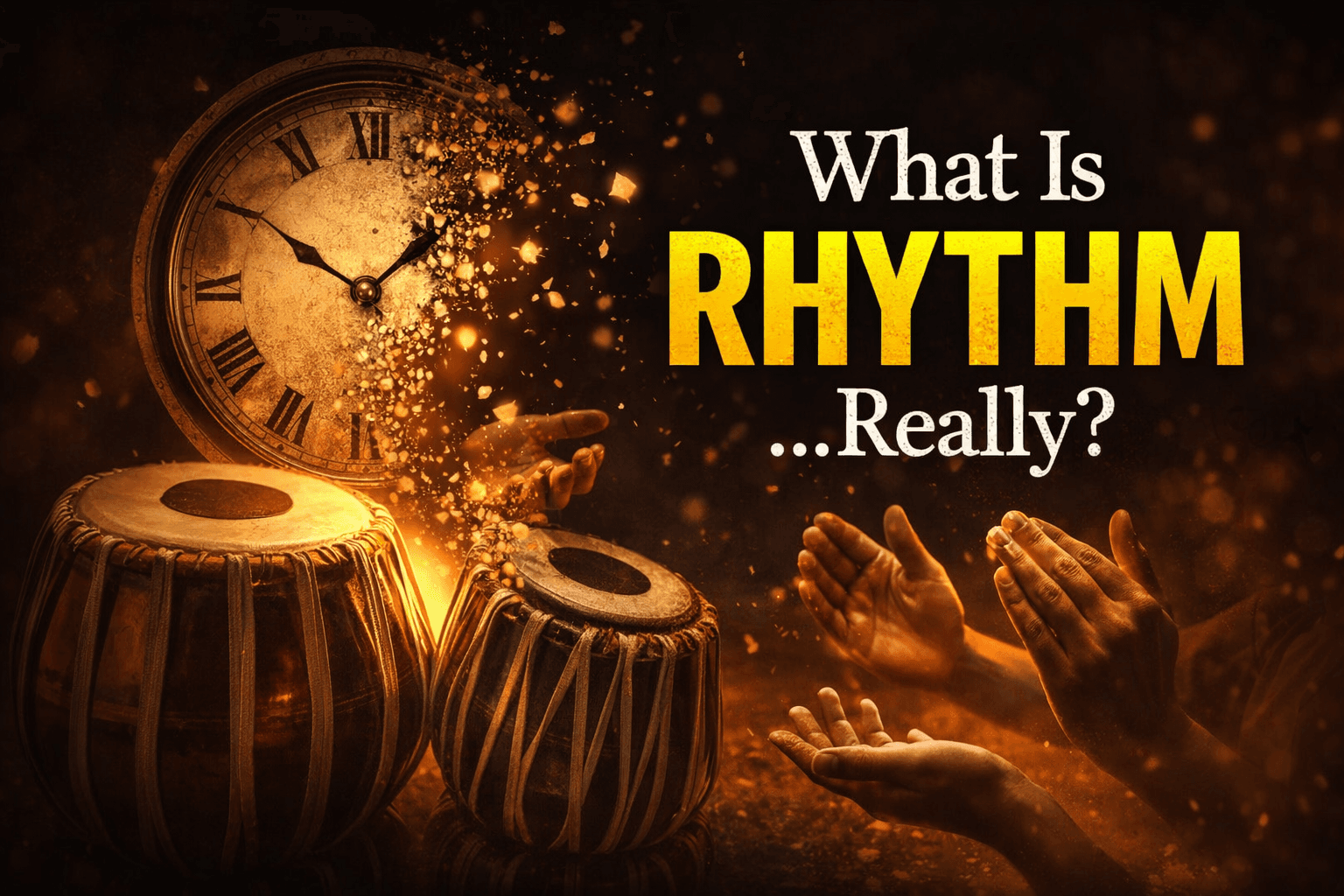
Indian classical music rhythm forms the unseen framework that holds melody, emotion, and expression together. When you listen closely, you don’t just hear notes. You feel movement, balance, and time flowing in cycles. That living pulse comes from Taal and Laya in Indian classical music, which together shape how music breathes and evolves.
Rhythm in Indian music works like a well-designed clock that never feels mechanical. Instead, it feels organic and flexible. Every composition rests on a beat cycle in Indian classical music, allowing musicians to explore creativity while staying grounded. This rhythmic foundation of Indian classical music connects performer, listener, and tradition.
Introduction to Rhythm in Indian Classical Music
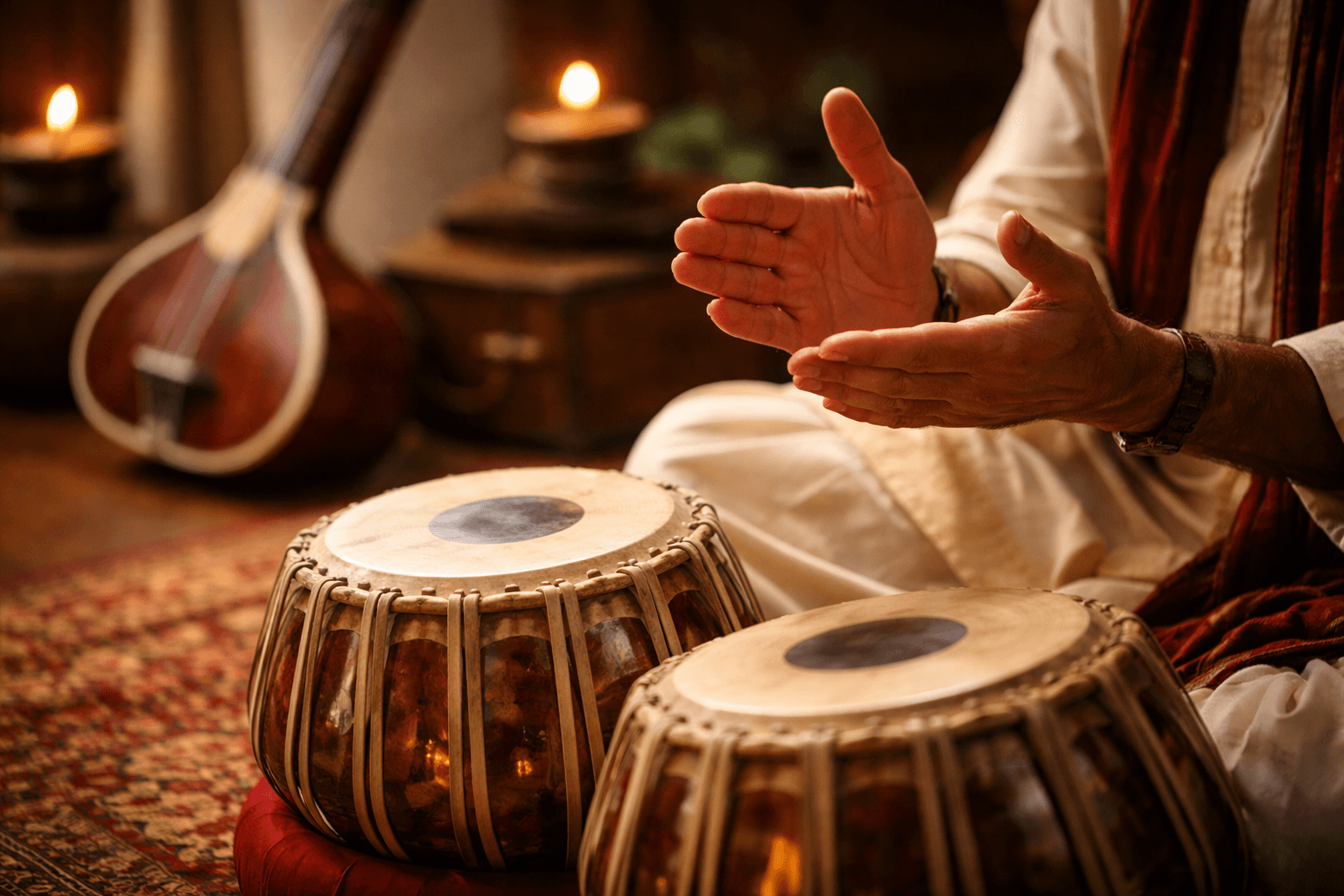 Rhythm acts as the backbone of Indian classical music rhythm because it organizes sound into meaningful time patterns. Without rhythm, melody floats without direction. In Indian tradition, rhythm guides phrasing, pauses, and emphasis, helping music move forward with clarity and intent.
Taal and Laya in music shape melody and emotion by deciding where a phrase begins, how long it stretches, and where it resolves. A slow tempo creates depth and calm, while faster movement brings excitement. This relationship between melody and rhythm defines how rhythm works in Indian music.
What Is Taal in Indian Classical Music?
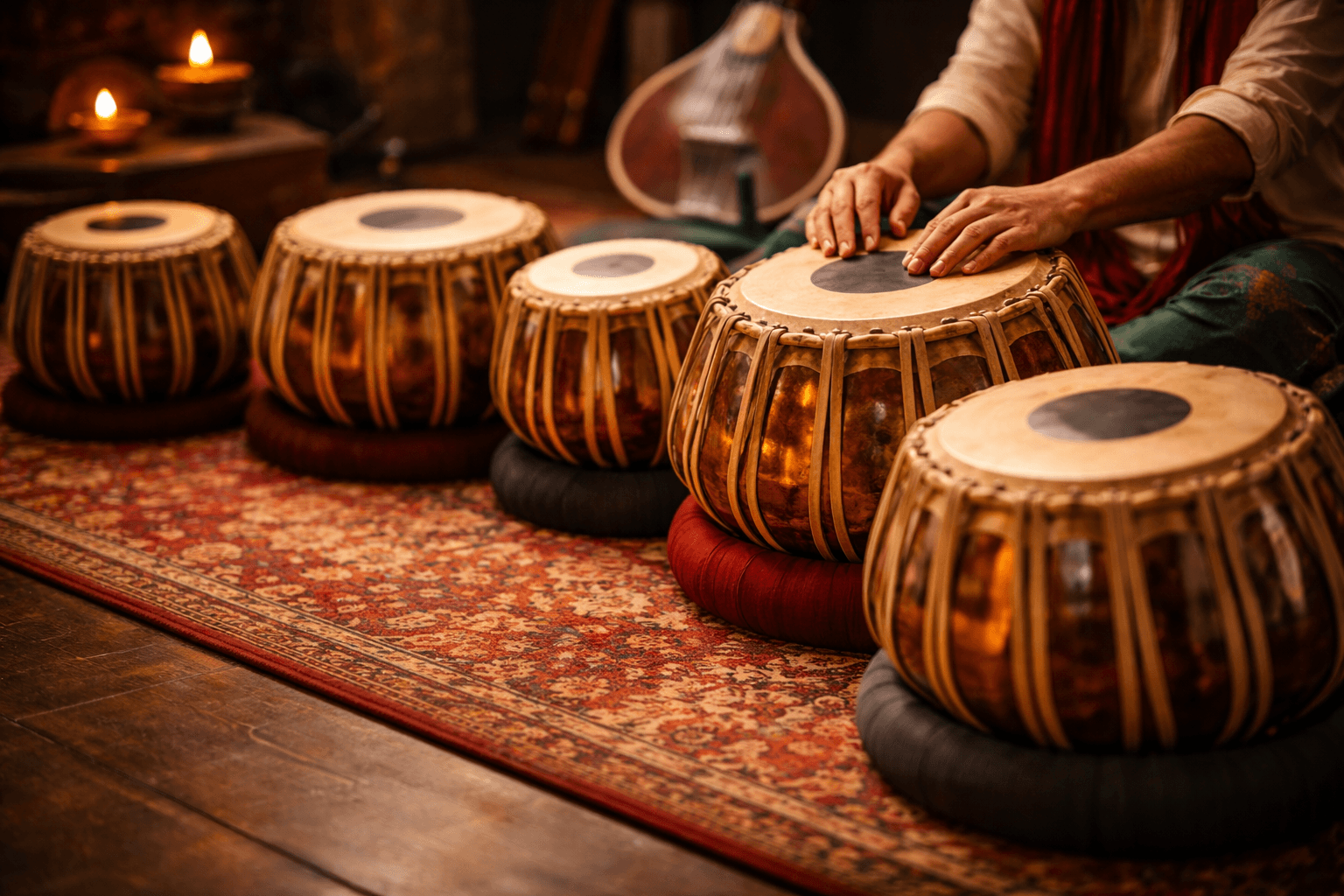 Taal is the cyclical framework that governs time in Indian music. When people ask what is taal in music, the answer lies in repetition and balance. A taal is not a single beat but a repeating cycle, known as Avartan in Taal, that musicians return to again and again.
Each cycle divides into equal units called Matra in Indian music, grouped through Vibhag in Taal. These divisions help musicians count, feel, and improvise with confidence. This classical music time structure ensures freedom without chaos.
Meaning and Definition of Taal
Taal defines how beats organize into a predictable loop. This loop repeats continuously, allowing listeners to sense order even during complex improvisation. Understanding matras and avartan helps you recognize how a taal cycle repeats without sounding repetitive.
Every beat holds equal value, yet each has a unique role. Some beats feel strong, others feel empty. This contrast keeps the rhythm alive and engaging throughout a performance.
How Taal Functions in a Musical Performance
The most important beat is Sam in Indian classical music, which marks the beginning of the cycle. Musicians aim phrases toward sam, much like returning home after a journey. Knowing how sam functions in a composition helps performers stay aligned.
Vocalists, instrumentalists, and percussion artists constantly communicate through rhythm. Tabla rhythm patterns respond to melody, while melody respects the beat cycle. This is how percussion supports melody in live performance.
Historical Evolution of Taal
The origin of taal in Indian music traces back to ancient texts and oral traditions. Early musicians passed rhythm knowledge verbally, ensuring flexibility and adaptability across regions. Over centuries, rhythm patterns matured through spiritual practice.
Temples, royal courts, and gharanas shaped the evolution of rhythm in Indian tradition. Instruments like Pakhawaj rhythm influenced dhrupad, while tabla refined Hindustani classical rhythm. This historical layering gave taal its depth and resilience.
Understanding Laya: The Speed of Rhythm
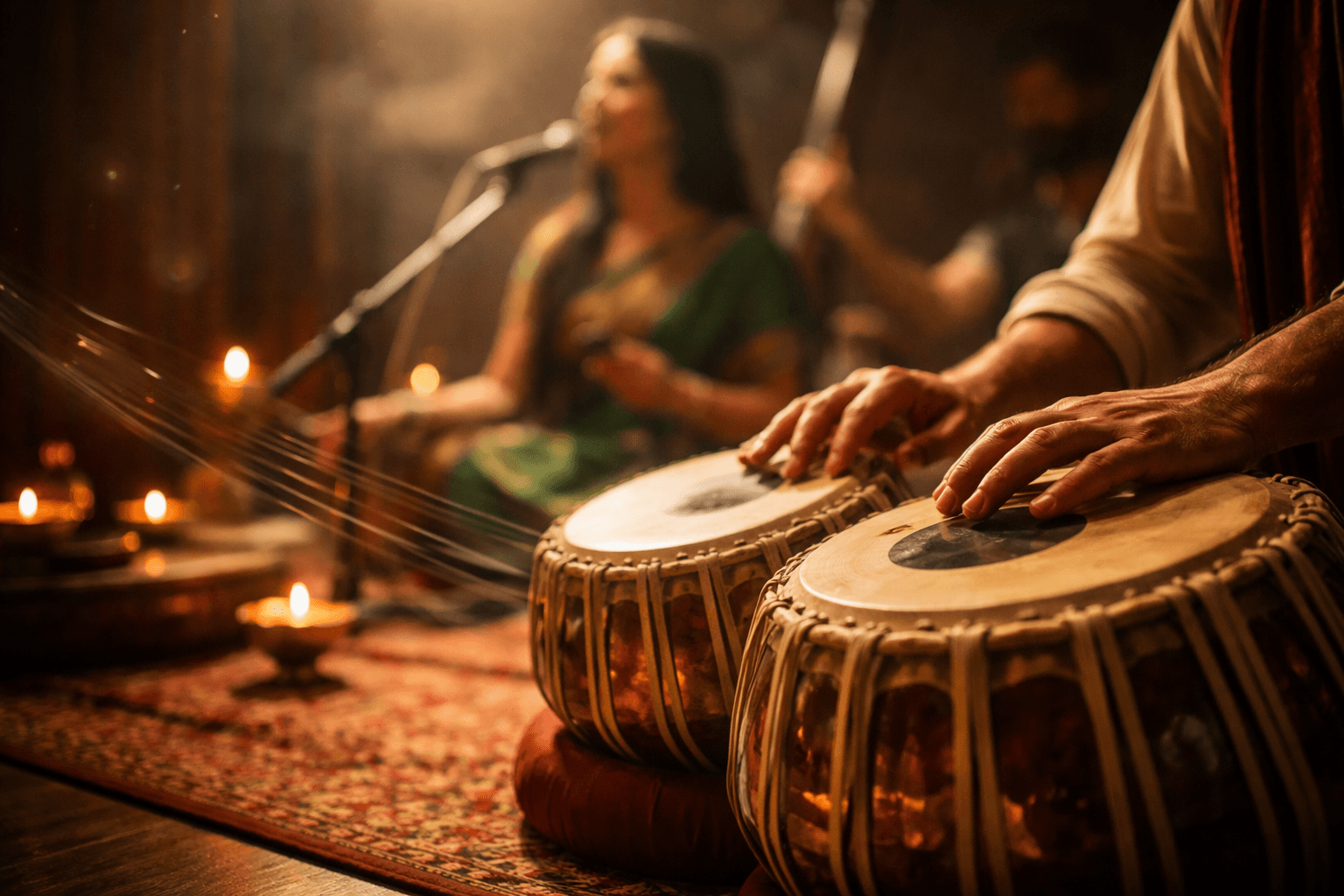 Laya refers to tempo, or how fast a composition moves through time. When learners ask what is laya in Indian classical music, the simplest answer is speed with control. Laya decides whether music feels meditative or energetic.
Tempo in Indian classical compositions remains steady within a performance, even when complexity increases. This steadiness allows musicians to explore variation without losing balance.
What Does Laya Mean in Music?
Laya represents motion within the beat cycle. It shapes how rhythm flows rather than how it counts. Understanding tempo helps you feel the music instead of mechanically counting beats.
Movement through time creates emotional texture. A steady pace calms the listener, while faster motion excites and energizes.
Types of Laya in Indian Classical Music
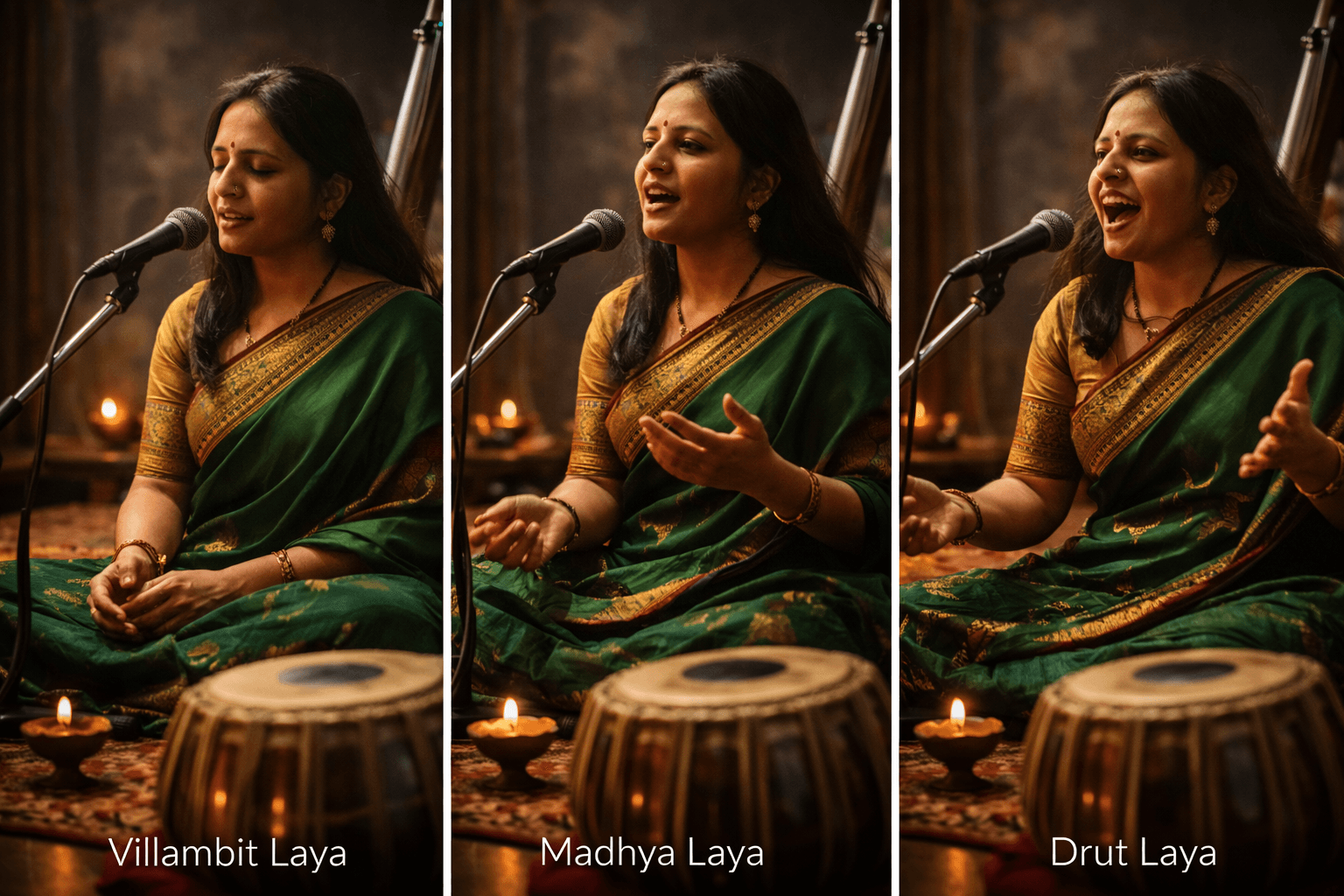
Laya types in music include Vilambit Laya, Madhya Laya, and Drut Laya. Vilambit laya unfolds slowly, offering space for exploration. Madhya laya balances clarity and movement. Drut laya delivers speed and technical brilliance.
These slow, medium, and fast tempo in music change how listeners experience the same composition. Semi classical music tempo often blends these speeds for accessibility.
How Laya Transforms a Compositio
Laya affects mood more than melody alone. A khayal gayan rhythm in vilambit laya feels expansive, especially in Bada Khayal, while Chhota Khayal in drut laya feels lively and concise.
This shift shows how laya affects mood of a song without changing its notes. Tempo becomes an emotional tool rather than a technical detail.
Relationship Between Taal and Laya
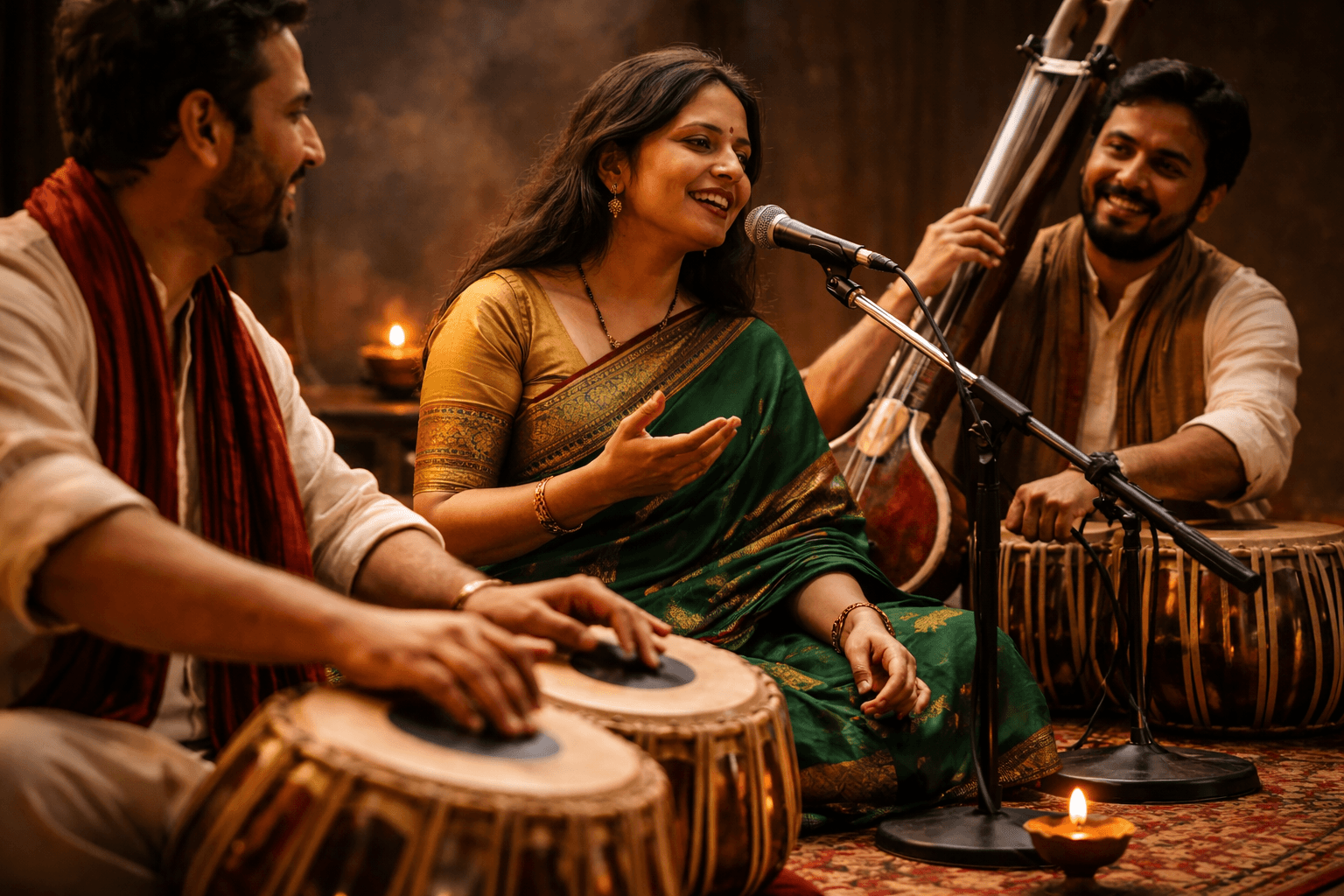 Taal provides structure, while laya brings motion. Together, they maintain rhythmic balance in performance. Without taal, tempo loses direction. Without laya, structure feels lifeless.
This relationship allows musicians to stretch phrases creatively while staying within the cyclical nature of rhythm. It explains the importance of taal and laya in every classical form.
How Rhythm and Tempo Work Together
Rhythm patterns in Hindustani music rely on fixed cycles played at varying speeds. This balance ensures clarity while allowing expression. Musicians keep time in classical music through deep internal counting.
The same beat cycle feels different at different speeds, proving how beat cycles function in music.
Role of Taal and Laya in Improvisation
Classical music improvisation thrives within rules. Through Laykari concepts, artists divide beats into patterns like Dugun Teengun Chaugun, creating rhythmic tension and release.
Improvisation within a taal feels spontaneous yet controlled. This discipline separates classical mastery from casual performance.
Types of Taal in Indian Classical Music
 Types of taal in Indian classical music vary by mood and structure. Each taal has a distinct personality that influences composition and improvisation. Some feel expansive, others playful.
The table below highlights common taals and their structure.
| Taal Name | Beats | Usage |
|---|---|---|
| Teen Taal | 16 | Most common Hindustani taal |
| Dadra Taal | 6 | Light and semi-classical music |
| Ektaal | 12 | Dhrupad and khayal |
| Jhaptal | 10 | Medium tempo compositions |
| Keherwa Taal | 8 | Folk and light music |
| Roopak Taal | 7 | Asymmetrical feel |
Taal Systems in Indian Classical Traditions
Hindustani classical rhythm emphasizes improvisation and dialogue. Tabla rhythm patterns lead interaction, while melody responds intuitively. This approach values emotional flow.
The Carnatic Taal system, also known as Taalam in Carnatic music, focuses on mathematical precision. Mridangam beats guide compositions with complex calculations and symmetry.
The Structural Elements of a Taal
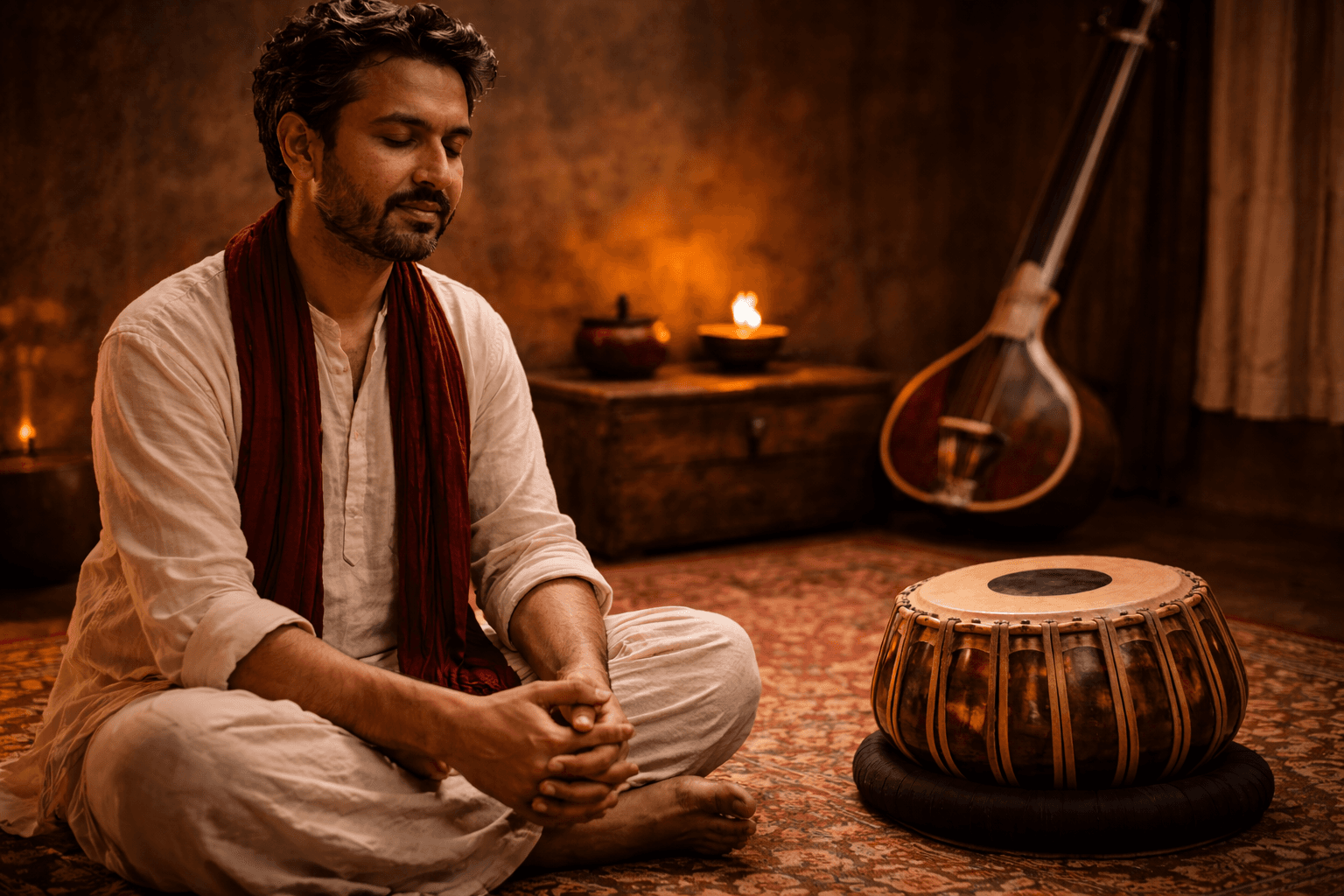 Every taal consists of identifiable parts that guide performers. These elements help musicians understand where they are in the cycle at all times.
Knowing these parts allows performers to stay grounded even during fast improvisation.
Understanding Theka, Vibhag, and Matra
The Theka of Taal represents its basic rhythm pattern. Vibhag divides the cycle into sections, while matras count individual beats. Claps and waves visually mark Taali and Khaali.
These markers help beginners internalize rhythm quickly and accurately.
Importance of Sam, Khali, and Tali
Sam signals arrival and resolution. Khali creates space and contrast. Tali adds emphasis. Together, they guide how sam functions in a composition.
This system explains how musicians keep time in classical music without written scores.
Why Taal and Laya Are Essential for Every Musician
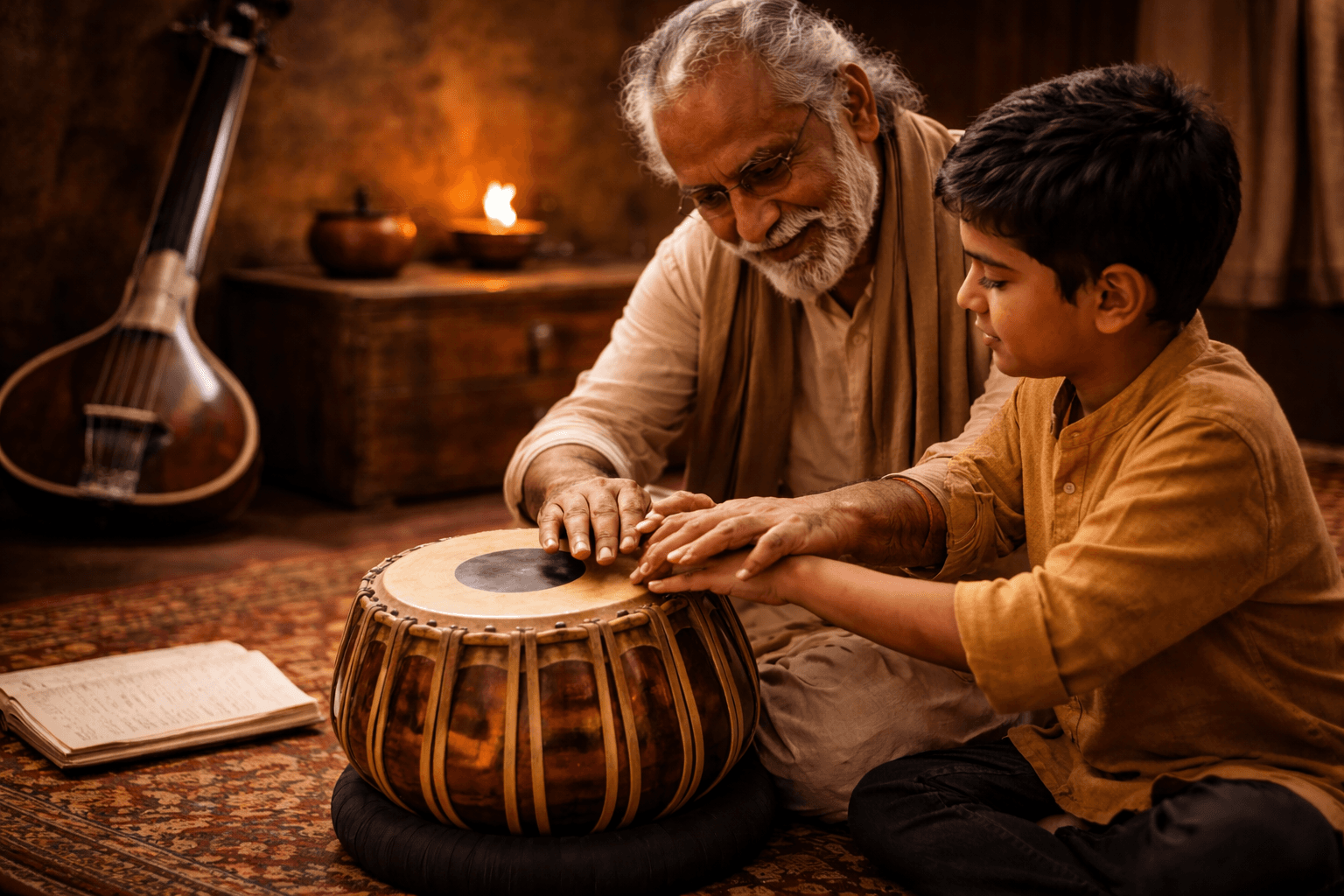 Taal and Laya in Indian classical music are not just for percussionists. Every musician relies on rhythm to shape phrases and timing.
Understanding rhythm improves listening, coordination, and musical confidence.
Importance for Vocalists and Instrumentalists
Vocalists use rhythm to pace lyrics. Instrumentalists use it to shape phrases. Percussion instruments in Indian music act as anchors, not leaders.
This shared responsibility creates unity on stage.
How Rhythm Improves Musical Accuracy
Strong rhythm sharpens timing and reduces mistakes. It helps performers recover smoothly during live concerts.
Confidence grows when rhythm feels internal rather than forced.
Learning Taal and Laya the Right Way
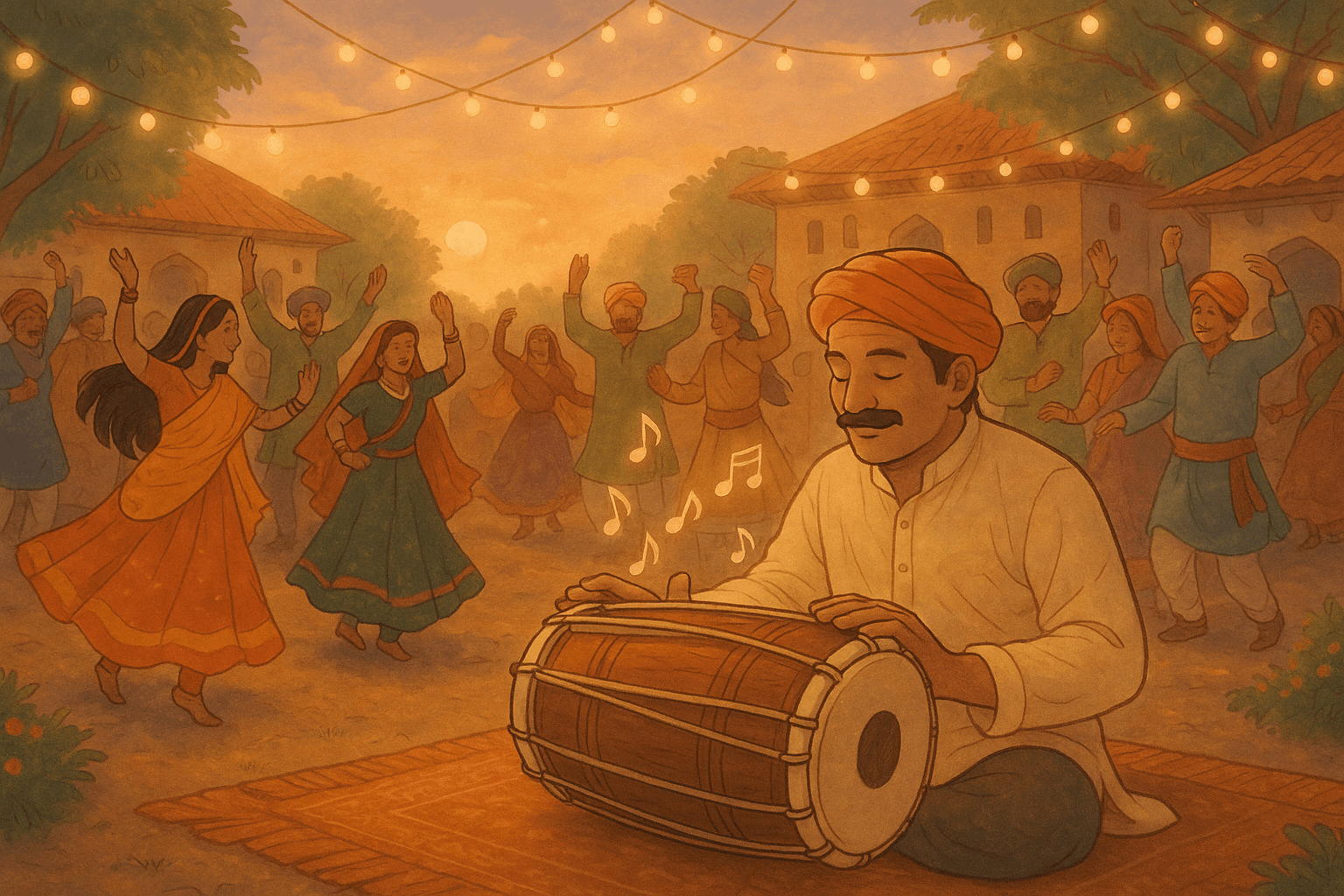 Learning rhythm requires patience and consistency. Beginners often rush tempo or lose count during long cycles.
Structured guidance prevents confusion and builds clarity early.
Common Challenges Faced by Beginners
Losing tempo happens when internal counting weakens. Complex cycles feel overwhelming without clear structure.
Understanding rhythm gradually solves these problems.
How Art Gharana Teaches Rhythm Effectively
Art Gharana uses step-by-step learning supported by real compositions. Practical exercises build comfort with beat cycles and tempo control.
Online structured training for all levels makes classical rhythm accessible across India.
Preserving the Rhythmic Heritage of Indian Classical Music
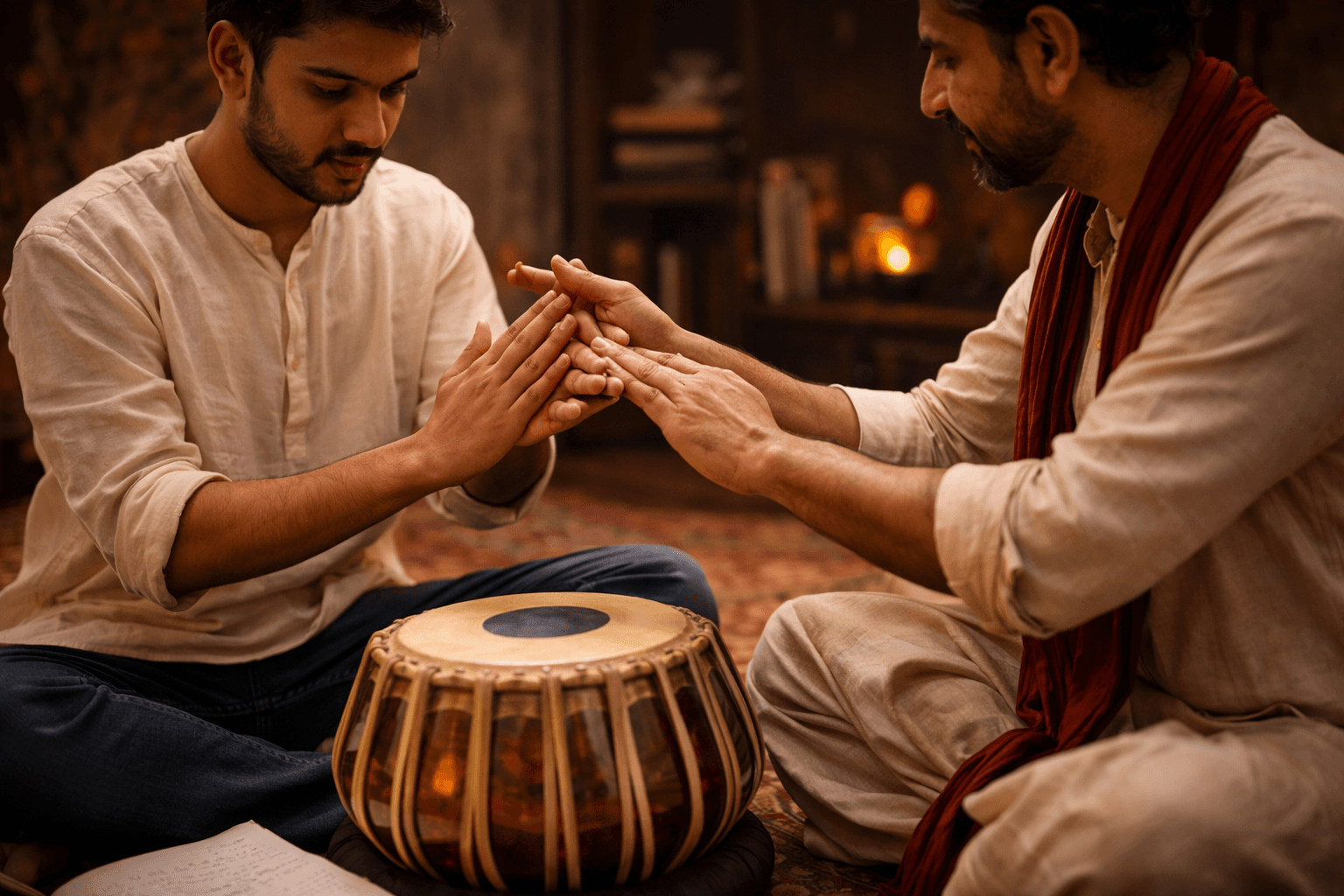 Passing tradition to future generations protects cultural identity. Rhythm carries history, philosophy, and emotion together.
Modern platforms now archive and teach rhythm globally, ensuring continuity without dilution.
Frequently Asked Questions About Taal and Laya
1. What is the difference between Taal and Raag?
Taal governs time, while raag governs melody. Together, they create complete musical expression.
2. What are the basics of Taal for beginners?
Counting matras, identifying sam, and recognizing cycles form the foundation.
3. How long does it take to learn Taal and Laya?
Basic understanding takes months, while mastery develops over years.
4. Can Taal be learned without tabla?
Yes. Clapping and vocal syllables teach rhythm effectively.
5. Why is Laya important in classical performances?
Laya controls mood, energy, and emotional impact.
Final Thoughts on Taal and Laya
Mastering rhythm unlocks true musical freedom. It strengthens expression, precision, and creativity.
Structured learning with Art Gharana helps you experience the living pulse of Indian classical music rhythm with confidence and clarity.