ChatGPT
 Google AI
 Grok
Grok Claude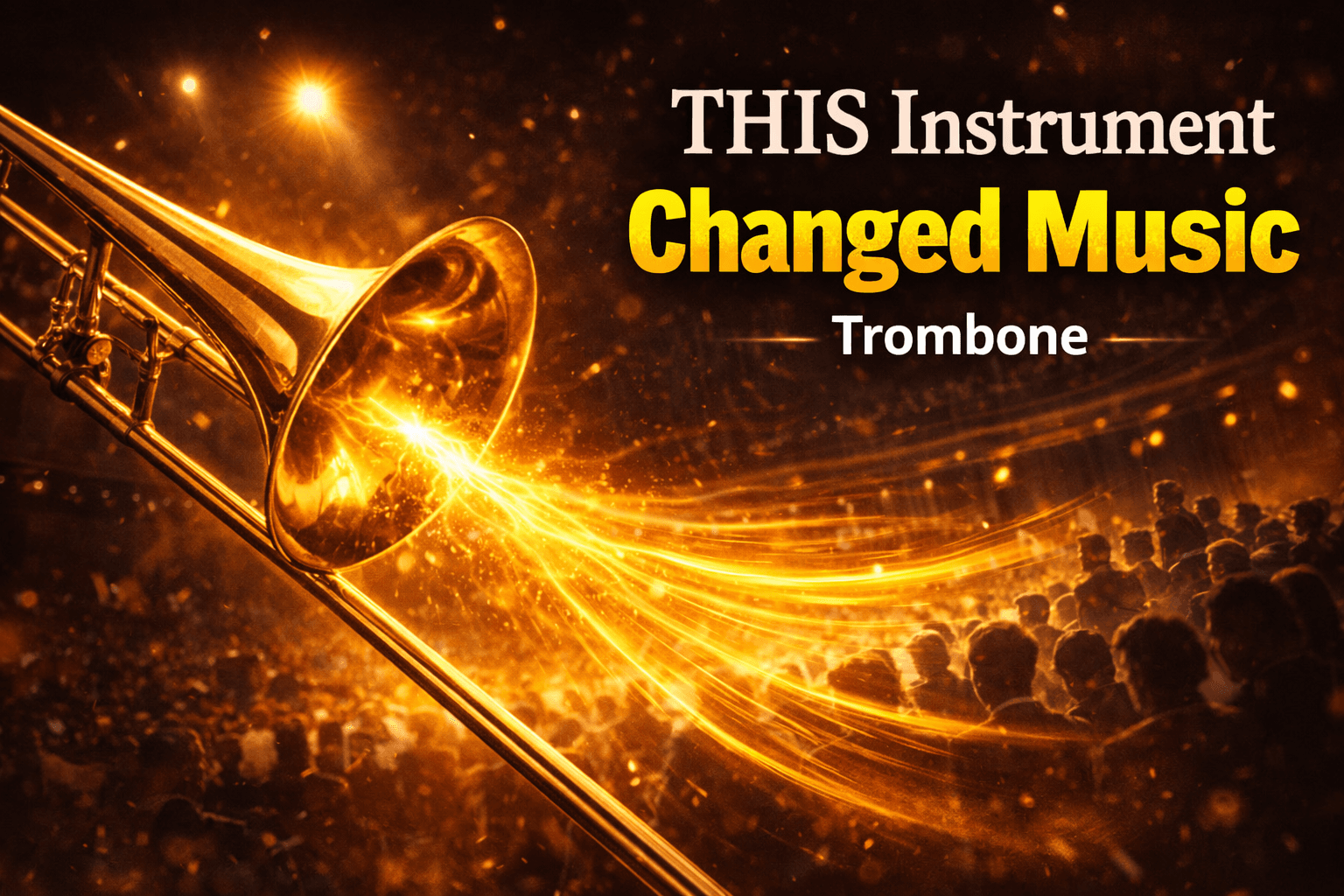
The trombone is one of the most versatile and expressive instruments in classical music. Its name comes from the Italian word “tromba,” meaning trumpet, combined with “-one,” meaning large. This double meaning indicates its bold, powerful sound. Unlike other brass instruments, the trombone has a slide mechanism, allowing players to produce smooth glissandos and precise pitches that are unique in orchestral and solo compositions. Its rich tonal palette ranges from warm and mellow to bright and heroic, making it suitable for a wide range of classical music styles.
In orchestras, trombones often provide depth to the harmonic structure, highlight dramatic moments, and support the rhythm. The instrument has a strong historical connection with sacred music, opera, and symphonies. Its ability to blend with both brass and woodwind instruments gives composers flexibility in arranging powerful and intricate pieces. The trombone is also essential in brass ensembles, chamber music, and solo works, demonstrating its adaptability in classical traditions.
History of the Trombone in Classical Music
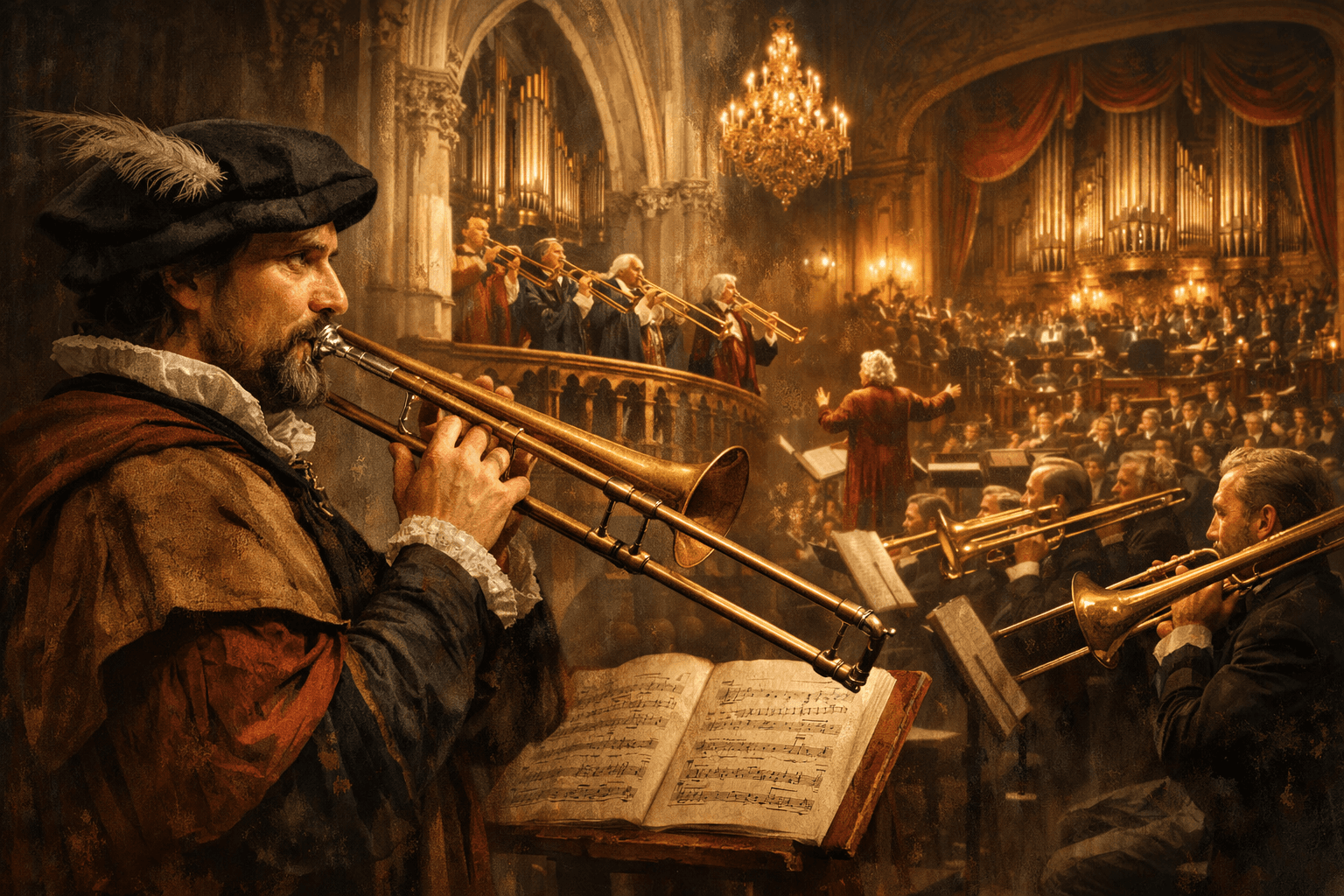
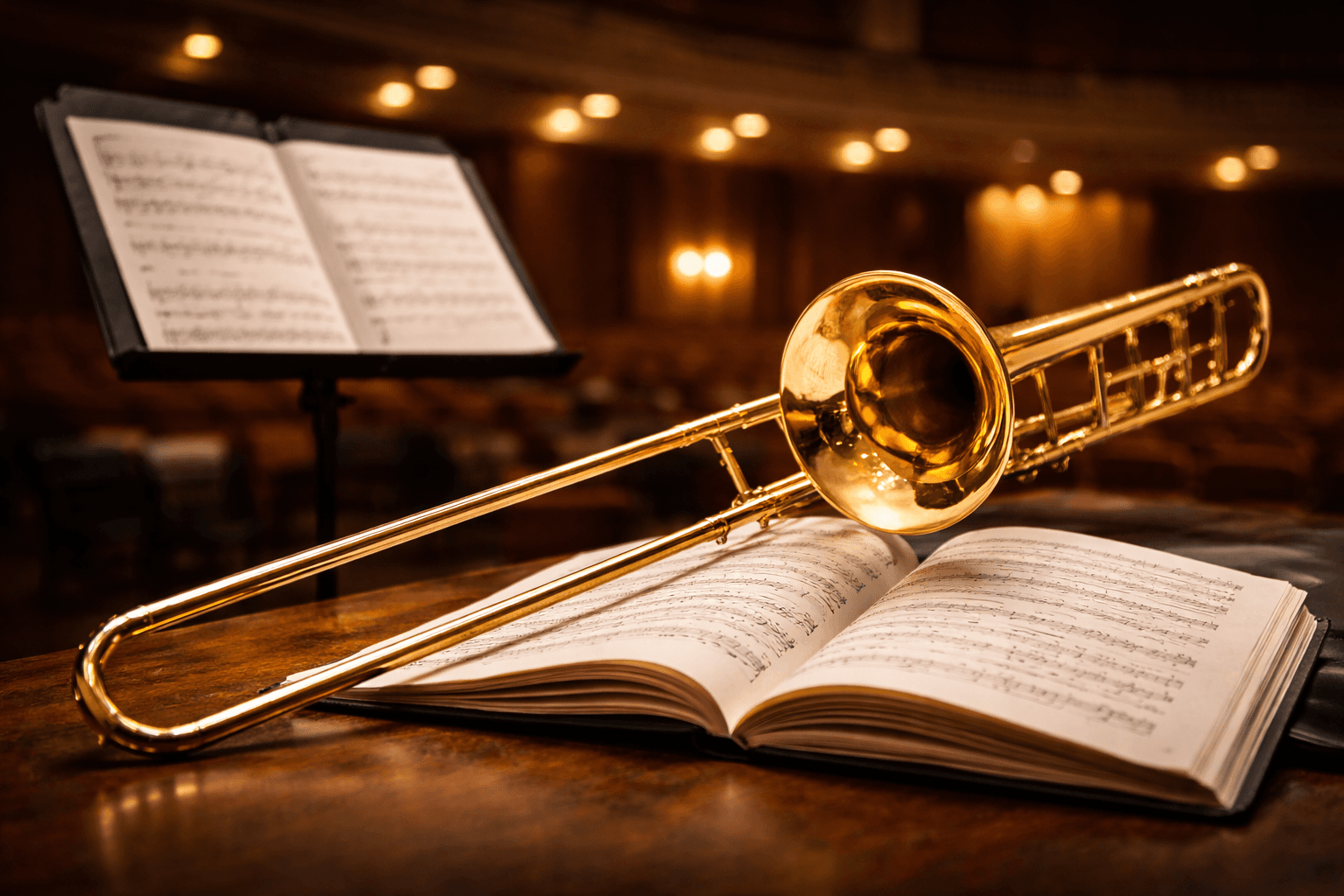 The trombone has evolved over centuries. Its earliest form, known as the sackbut, appeared in the 15th century in Europe. Early trombones were primarily used in church music to accompany vocal choirs and enhance sacred compositions. Their slide allowed precise tuning, which was critical for polyphonic music that demanded exact intonation.
By the Baroque period (1600–1750), composers like Giovanni Gabrieli began using trombones in large-scale compositions for cathedrals, emphasizing grandeur and solemnity. The Classical period (1750–1820) saw composers like Mozart and Haydn including trombones in orchestral works to add power and contrast to strings and woodwinds. By the Romantic era, composers such as Berlioz, Wagner, and Mahler expanded the trombone’s role, exploiting its dramatic and lyrical capabilities.
The trombone also adapted to solo performance, with composers like Ferdinand David and Launy Grøndahl composing concertos to showcase its expressive potential. Today, the trombone remains integral in both historical and contemporary classical music, bridging centuries of orchestral tradition.
Structure and Types of Trombone
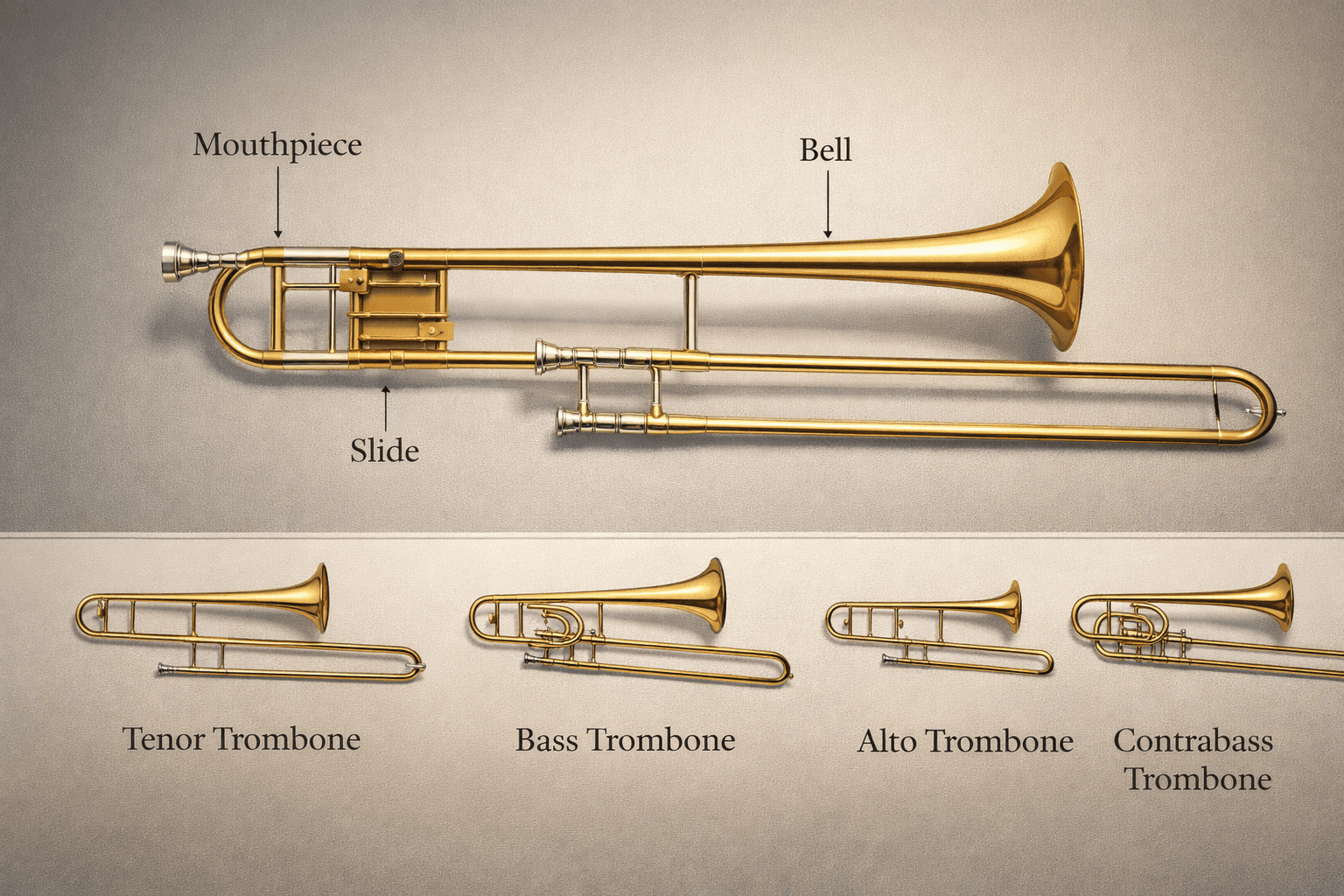 The modern trombone consists of three main parts: the mouthpiece, slide, and bell. The **mouthpiece allows for flexible lip vibration, producing sound. The slide, unique to the trombone, adjusts the length of the air column, creating different pitches. The bell amplifies the sound and gives the instrument its characteristic timbre.
There are several types of trombones used in classical music:
| Trombone Type | Key Features | Typical Use in Classical Music |
|---|---|---|
| Tenor Trombone | Most common, straight design, versatile tone | Orchestras, brass ensembles, solo works |
| Bass Trombone | Larger, wider bore, deep resonance | Symphonic bass lines, dramatic effects |
| Alto Trombone | Smaller, higher pitch, brighter tone | Classical-era symphonies and early Romantic works |
| Contrabass Trombone | Extremely low range, rare, deep, rich tone | Special orchestral effects, modern compositions |
The versatility of these types allows composers to explore diverse tonal colors, from mellow accompaniment to heroic fanfares, making the trombone a central part of classical music orchestration.
Trombone Techniques in Classical Music
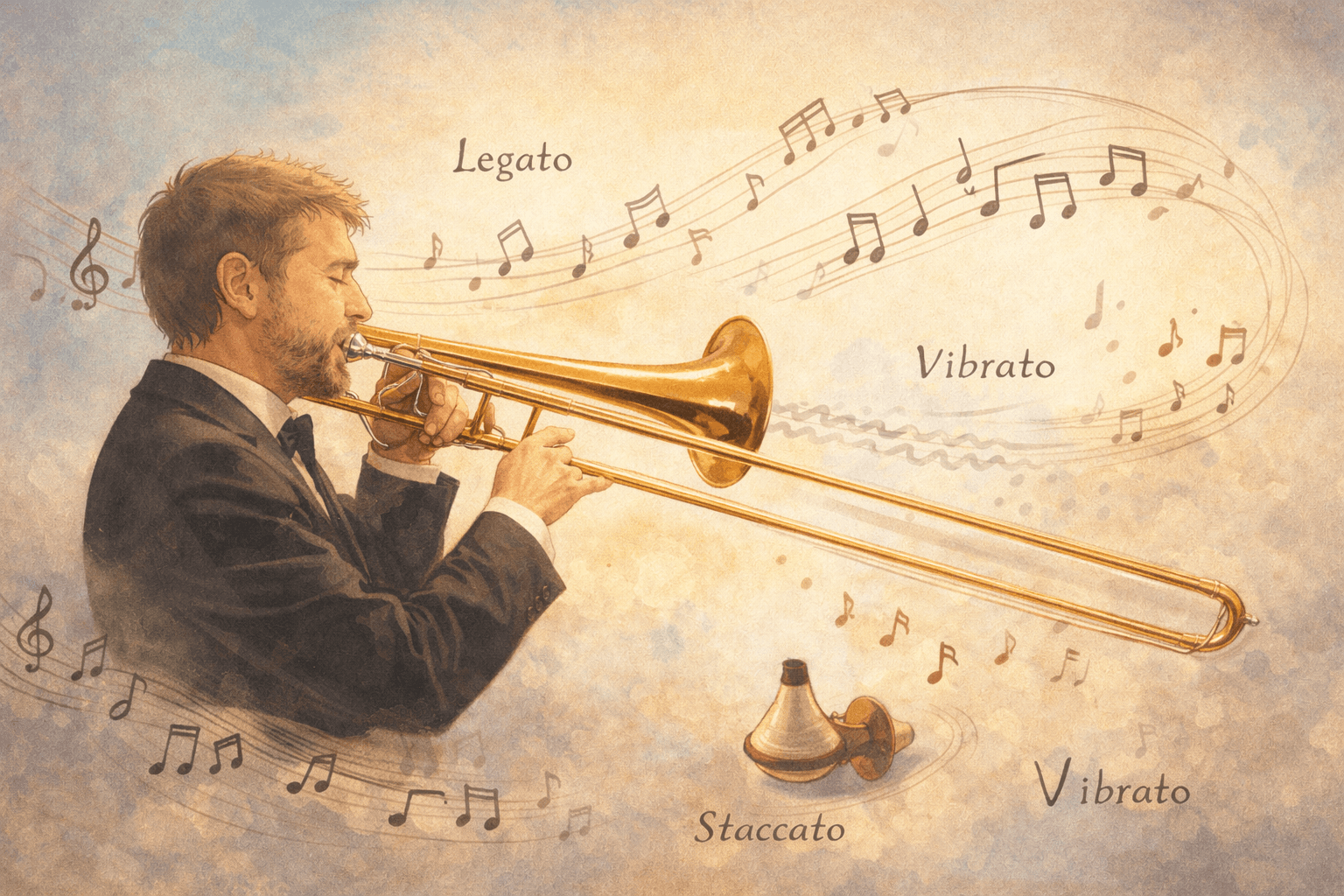
Trombone players employ a variety of techniques to express the instrument’s full potential. The slide technique enables smooth glissandos, which are particularly effective in dramatic orchestral passages. Players also use lip slurs, moving between harmonics without changing slide position, adding fluidity to melodic lines.
Other important techniques include staccato, where notes are short and separated, and legato, producing connected, smooth lines. Vibrato adds warmth to sustained notes, while muting techniques using cup or straight mutes change the tone color dramatically. Trombonists also utilize double and triple tonguing to execute rapid passages, common in Romantic and contemporary pieces.
In addition to technical mastery, trombonists must understand orchestral blending, balancing with strings, woodwinds, and other brass instruments. Proper phrasing, dynamics, and articulation are essential for classical repertoire, as the trombone can both blend harmoniously and stand out dramatically when required.
Role of the Trombone in Orchestral Music
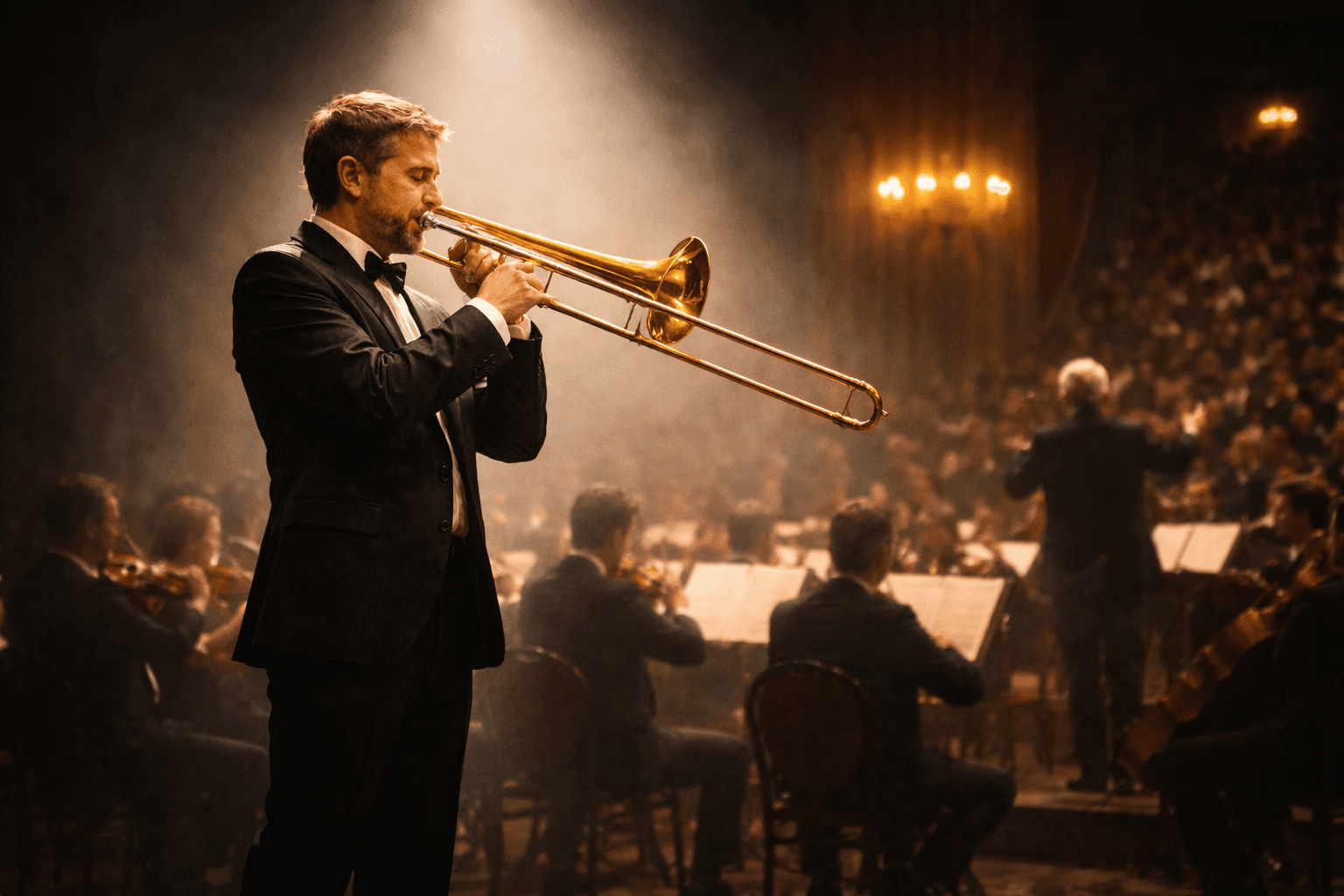
 In orchestras, the trombone serves multiple purposes. It strengthens harmonic foundations, provides rhythmic emphasis, and delivers dramatic climaxes. Composers use trombones for heroic themes, fanfares, and emotional depth. In symphonies, trombones often mark key moments, supporting the melodic line or reinforcing dramatic tension.
For example, in Beethoven’s Symphony No. 5, the trombone adds power and gravity to climactic passages. In Mahler’s symphonies, trombones contribute dark, resonant tones that heighten the emotional landscape. Trombone sections in orchestras typically include two tenor trombones and one or two bass trombones, each contributing different harmonic and melodic layers.
Trombones are also vital in opera orchestration, particularly in works by Wagner and Verdi. They highlight dramatic entrances, support choruses, and add depth to orchestral interludes. Their ability to convey both lyrical and martial tones makes them indispensable in storytelling through music.
Solo Trombone in Classical Music
 While often associated with orchestras, the trombone has a rich solo repertoire. Composers like Ferdinand David and Launy Grøndahl wrote concertos exploring the trombone’s expressive potential. These works often combine lyrical melodies with virtuosic technical passages, showcasing the instrument’s versatility.
Solo pieces often require the trombonist to master advanced slide techniques, rapid articulation, and dynamic control. The solo trombone repertoire has expanded to include modern composers, who experiment with extended techniques, including multiphonics, flutter tonguing, and pedal tones, pushing the instrument beyond traditional classical boundaries.
Trombone in Chamber Music
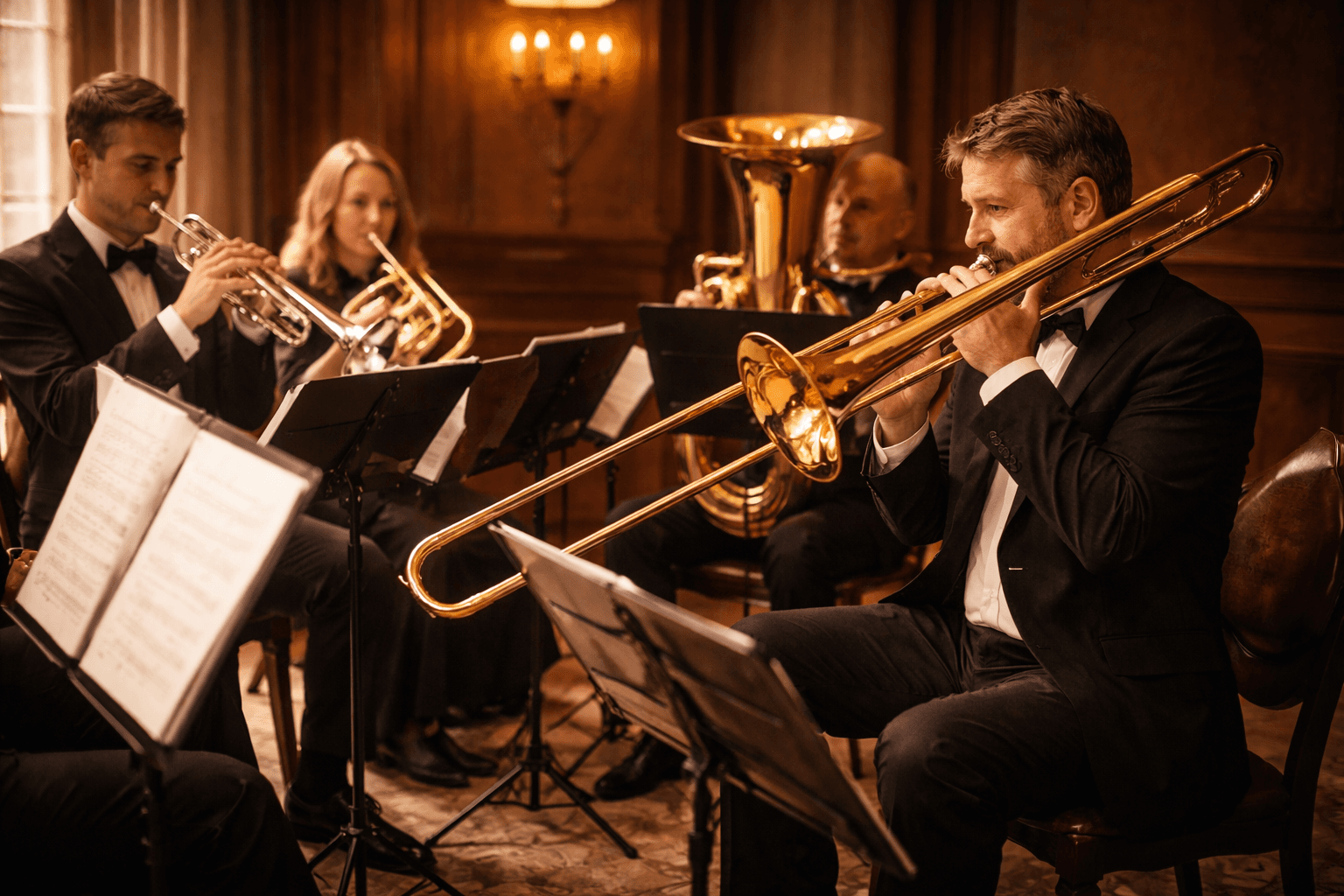
 In chamber music, trombones often appear in brass quintets, wind ensembles, and mixed instrumental groups. Their ability to blend with both brass and woodwinds allows for unique harmonic textures. In brass quintets, for instance, the trombone provides mid-range support, bridging the high trumpet and low tuba lines.
In mixed ensembles, trombones can play melodic lines, harmonic support, or rhythmic emphasis, demonstrating their versatility. Composers like Hindemith and Holst explored trombone writing in small ensembles, emphasizing its expressive and harmonic role.
Differences Between Trombone and Other Brass Instruments
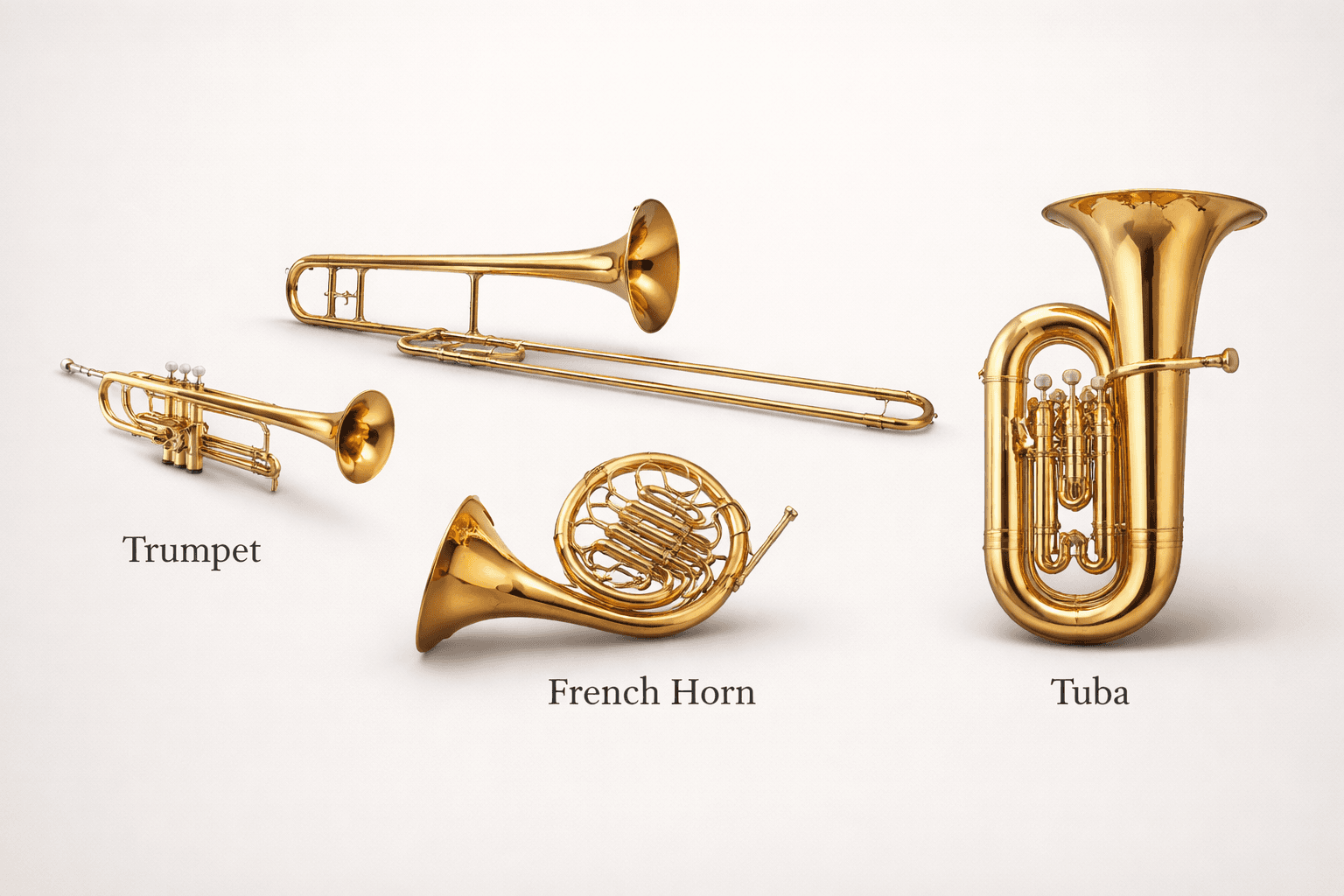 Unlike the trumpet, which uses valves to change pitch, the trombone relies on a slide mechanism. This allows for continuous pitch adjustments, producing glissandos and microtonal effects unique to the trombone. Its tone is also more mellow than the trumpet but can be just as powerful when needed. Compared to the French horn, the trombone has a more direct, bold sound and is easier to project in dramatic orchestral passages.
The tuba provides the bass foundation, while the trombone fills the tenor range, offering both harmonic and melodic flexibility. This makes it a bridge between high and low brass, critical in both orchestral and ensemble arrangements.
Trombone and Expression in Classical Music
One of the trombone’s greatest strengths is its expressive potential. It can convey solemnity, heroism, humor, or tension, depending on the musical context. In sacred music, the trombone’s warm, rich tone enhances chorales and hymns. In Romantic orchestral works, it can depict heroic or tragic characters.
The trombone’s range, from soft lyrical lines to thunderous fortissimos, allows composers and performers to explore dramatic storytelling in music. Its ability to slide smoothly between notes provides unique emotional expressiveness, unmatched by most brass instruments.
Trombone in Contemporary and Fusion Classical Music
 The trombone has adapted to modern classical and fusion contexts. Contemporary composers use it for extended techniques such as multiphonics, flutter tonguing, and glissando effects. Fusion genres blend classical trombone with jazz, electronic music, and world music traditions.
Artists like Joseph Alessi and Christian Lindberg have expanded the trombone repertoire, demonstrating its capacity for virtuosic performance and emotional expression. The instrument’s adaptability ensures it remains relevant in both traditional orchestras and innovative music ensembles.
Learning the Trombone
 Learning the trombone requires dedication and technical skill. Beginners must focus on embouchure development, slide technique, breath control, and ear training for intonation. Regular practice is essential to master the instrument’s unique slide system.
Advanced players study orchestral excerpts, solo repertoire, and chamber music. They also practice articulation, dynamics, and expression, preparing for professional orchestral or solo careers. Institutions like conservatories, music schools, and online platforms offer structured courses for trombone learners, ensuring the instrument continues to thrive.
Famous Trombonists in Classical Music
Several trombonists have left an indelible mark on classical music. Joseph Alessi, principal trombonist of the New York Philharmonic, is known for his technical mastery and expressive playing. Christian Lindberg revolutionized the solo trombone repertoire with his virtuosic performances and premieres of contemporary works. Historical figures like Ferdinand David and Launy Grøndahl expanded the trombone’s role in orchestras and solo literature, inspiring generations of musicians.
Conclusion: The Trombone’s Timeless Role in Classical Music
The trombone is a cornerstone of classical music, bridging history, technique, and expressive potential. Its unique slide mechanism, versatile tone, and broad range make it invaluable in orchestras, chamber music, and solo performances. From sacred Baroque compositions to contemporary fusion works, the trombone continues to inspire composers, performers, and audiences alike.
Its combination of power, warmth, and flexibility ensures that the trombone remains a key voice in classical music, capable of conveying subtle emotion or dramatic intensity. Understanding and appreciating the role of the trombone provides insight into the broader richness of classical music traditions.
Here’s a set of FAQs for the article “Role of the Trombone in Classical Music” that are relevant, informative, and SEO-friendly:
Frequently Asked Questions (FAQs)
Q1: What is the role of the trombone in classical music?
The trombone adds depth, power, and expressiveness to orchestras, chamber music, and solo compositions. It strengthens harmonic foundations, enhances dramatic moments, and bridges melodic and rhythmic elements in classical works.
Q2: How does the trombone differ from other brass instruments?
Unlike the trumpet or French horn, the trombone uses a slide mechanism instead of valves. This allows smooth glissandos, precise microtonal control, and unique expressive effects not possible on most brass instruments.
Q3: What are the main types of trombones used in classical music?
The main types are tenor trombone, bass trombone, alto trombone, and contrabass trombone. Each has a unique pitch range and tonal quality suitable for orchestras, chamber music, or solo performances.
Q4: Can the trombone be played as a solo instrument?
Yes, many composers have written trombone concertos and solo works. Solo performances highlight the instrument’s lyrical, dramatic, and technical capabilities, often including slides, rapid articulations, and expressive phrasing.
Q5: What techniques do trombonists use in classical music?
Trombonists use slide techniques, lip slurs, vibrato, legato, staccato, double/triple tonguing, and muting techniques to create expressive and dynamic performances. These techniques help in orchestral and solo contexts.
Q6: How long does it take to learn the trombone?
Learning the trombone depends on dedication and practice. Beginners typically require 1–2 years to master basic techniques and orchestral excerpts, while advanced performance skills can take 5–10 years of disciplined study.
Q7: Why is the trombone important in orchestral compositions?
The trombone provides harmonic support, dramatic emphasis, and melodic reinforcement. It can both blend with other instruments and stand out for solos or climactic passages, making it essential in orchestral scoring.
Q8: Who are some famous classical trombonists?
Notable trombonists include Joseph Alessi, Christian Lindberg, Ferdinand David, and Launy Grøndahl. They have contributed to solo repertoire, orchestral performance, and modern innovations in trombone music.
Q9: How does the trombone contribute to emotional expression in music?
Through slide techniques, dynamic control, and tonal variation, the trombone can convey warmth, heroism, solemnity, or humor. It enhances the mood and storytelling within classical compositions.
Q10: Can the trombone be used in modern or fusion music?
Yes, contemporary composers and performers use the trombone in jazz, world music, film scores, and cross-genre collaborations. Its expressive range makes it adaptable beyond traditional classical music.