ChatGPT
 Google AI
 Grok
Grok Claude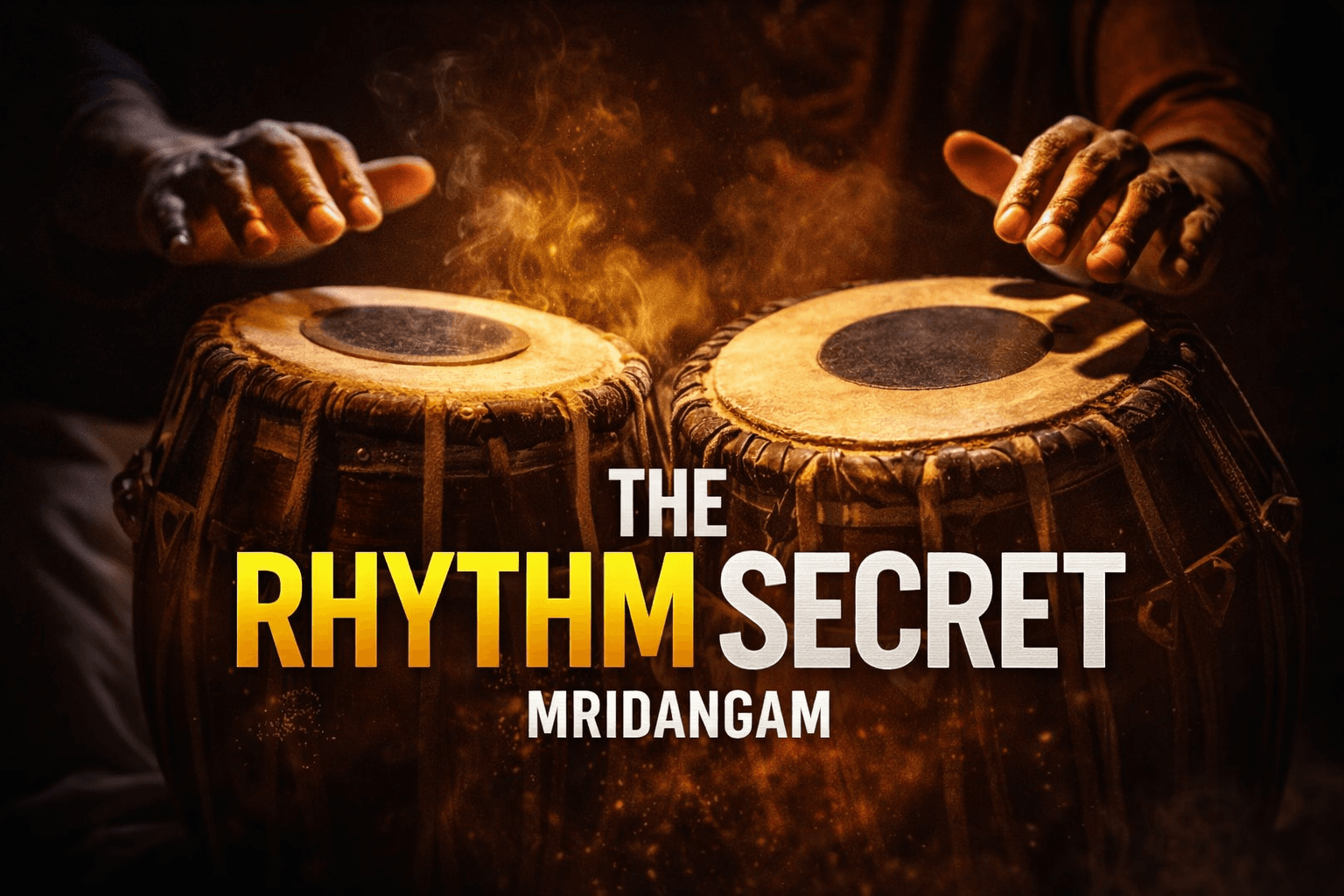
Mridangam in Carnatic music stands as the rhythmic heartbeat of South Indian classical traditions. This ancient Mridangam double-headed drum does far more than keep time. It shapes emotion, guides melody, and binds performers together through rhythm. When you listen closely, rhythm speaks before melody even arrives.
Across centuries, Indian classical percussion instruments have evolved. Yet the role of Mridangam remains unmatched in Carnatic concerts. Its voice carries devotion, discipline, and daring improvisation. For UK audiences exploring world music, Mridangam opens a powerful gateway into South Indian classical music percussion.
The Importance of Rhythm in Indian Classical Music Traditions
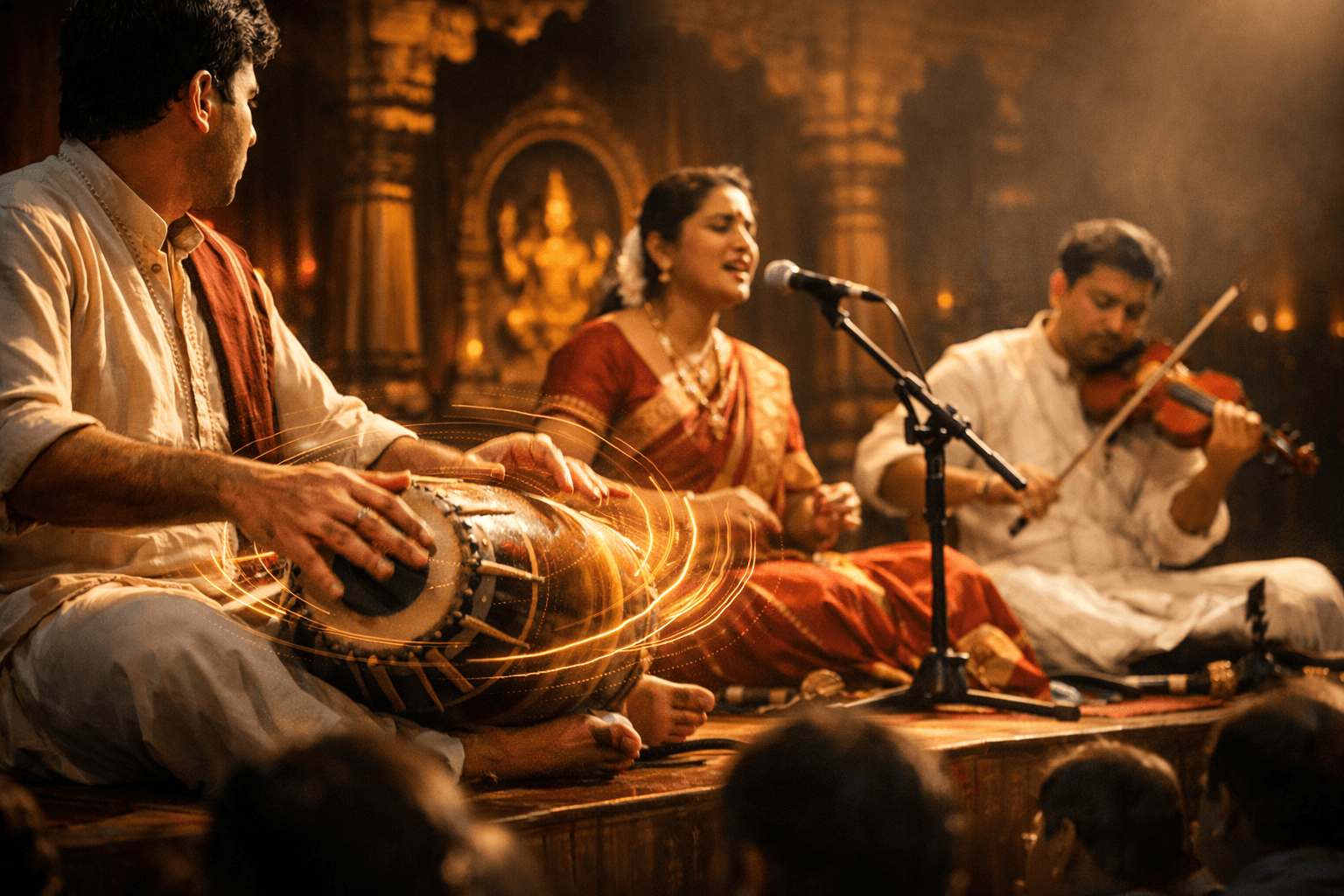 Rhythm forms the invisible architecture of Indian classical music. Without it, melody would drift without purpose. In Mridangam in Carnatic music, rhythm controls pace, tension, and release. You feel it guiding each phrase, even when it plays softly beneath the surface.
Indian temple music percussion relied on rhythm to mirror natural cycles. Day and night. Breath and heartbeat. Over time, rhythm became spiritual language. That legacy lives on today through Carnatic rhythm instruments and Hindustani rhythm instruments alike.
Understanding Laya and Taal Systems
Laya refers to tempo control. It stretches and contracts like breath. The Tala system in Carnatic music uses fixed rhythmic cycles, including Adi Tala and Rupaka Tala, Misra Chapu and Khanda Chapu. These patterns demand precision and deep listening.
In contrast, the Tala system in Hindustani music offers flexible phrasing. Yet both traditions depend on rhythmic cycles in Carnatic music and North Indian classical music rhythm to maintain balance and structure.
Percussion as the Backbone of Classical Performances
Percussion never dominates. It supports. In Carnatic compositions rhythm support, the Mridangam listens constantly. It responds to melody, breath, and emotion. This creates a living dialogue between performers.
In Hindustani raga accompaniment, tabla accompaniment follows similar principles. Percussion instruments in Indian dance, especially Kathak and Tabla, rely on this rhythmic intelligence to guide movement and expression.
Mridangam and Tabla: An Overview of India’s Premier Percussion Instruments
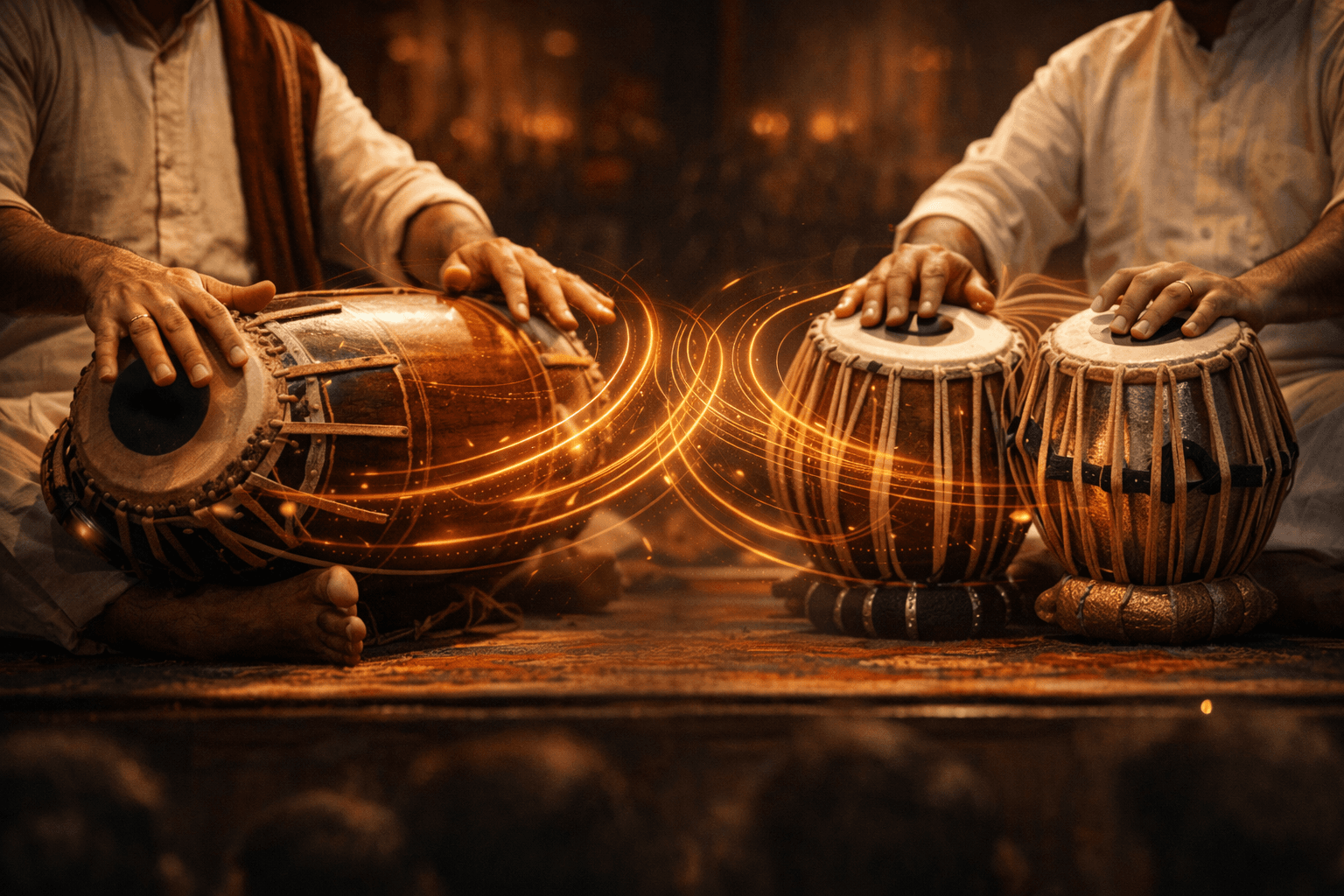 India’s rhythmic traditions revolve around two pillars. Mridangam and Tabla. Both shape classical music. Both demand mastery. Yet their philosophies differ deeply.
Mridangam in Carnatic music thrives on mathematical clarity. Tabla in Hindustani music emphasises melodic interaction. Understanding both enriches appreciation of Indian classical percussion instruments.
Position of Mridangam in South Indian Classical Music
Mridangam anchors South Indian classical music percussion. It defines tempo, supports improvisation, and elevates emotional depth. Without it, Carnatic music loses grounding.
The instrument features Valanthalai and Thoppi, producing sharp treble tones and resonant bass. This duality mirrors melody and rhythm working together.
Tabla’s Place in North Indian Musical Frameworks
Tabla history and evolution reflect courtly refinement. The Tabla Bayan and Dayan allow nuanced pitch control. This flexibility suits improvisation in Hindustani music.
Tabla bols and compositions such as Dha Dhin Tin Na create spoken rhythm. These syllables guide performance, teaching, and memory across generations.
Historical Journey of the Mridangam
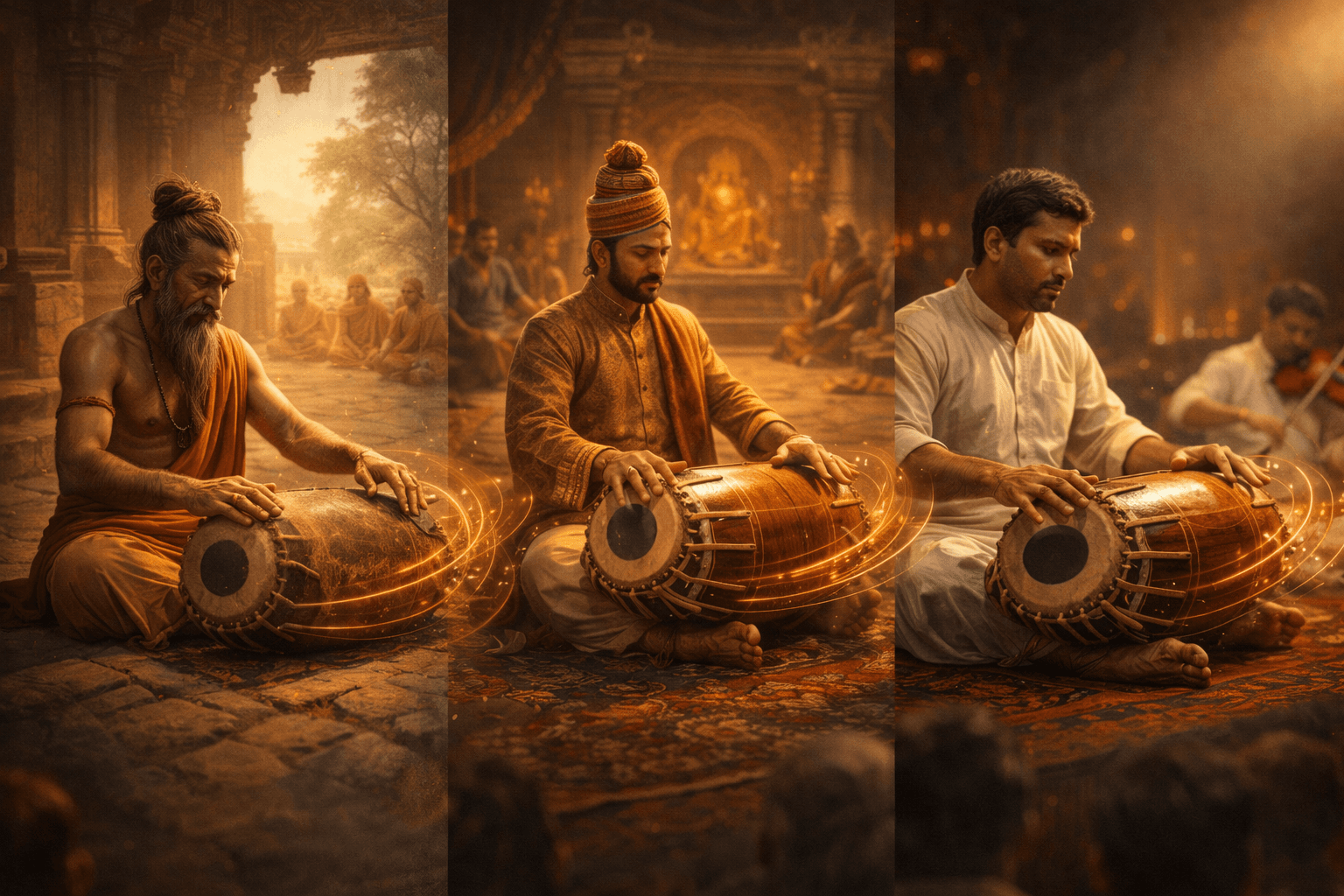 Mridangam history and origin stretch back thousands of years. Early texts describe a clay origin of Mridangam used in ritual music. Over time, the instrument transformed physically and artistically.
Today’s Mridangam carries ancient wisdom alongside modern refinement. Each stage of evolution added clarity, strength, and expressive range.
Ancient Roots and References in Scriptures
Ancient Sanskrit texts mention drum-based accompaniment in devotional Carnatic music. Early Mridangams used clay bodies and animal skin heads. These instruments resonated deeply but lacked durability.
Indian temple music percussion relied on these early forms to support chants and rituals.
Transformation During the Medieval Era
During medieval periods, artisans replaced clay with wood. Jackfruit wood Mridangam became standard. This improved resonance and longevity.
Courts and temples refined playing techniques. Rhythm gained complexity. Performers gained recognition as artists, not just accompanists.
Evolution with the Rise of Carnatic Music
As Carnatic music formalised, Mridangam techniques and styles expanded. Mathematical precision became essential. Complex tala patterns emerged.
The instrument evolved to support manodharma improvisation while maintaining rhythmic discipline.
The Golden Age of Mridangam in the 20th Century
The twentieth century transformed Mridangam artistry. Legendary performers elevated accompaniment into performance art. Korvai and Mohra in Mridangam became intellectual showcases.
Concerts introduced Thani Avarthanam percussion solo, captivating audiences with rhythmic storytelling.
Contemporary Developments and Global Exposure
Today, Mridangam reaches global stages. UK festivals feature Indian percussion in fusion music. Film music percussion instruments adopt its patterns.
World music fusion percussion blends tradition with experimentation, expanding Mridangam’s global voice.
Structural Design and Acoustic Science Behind the Mridangam
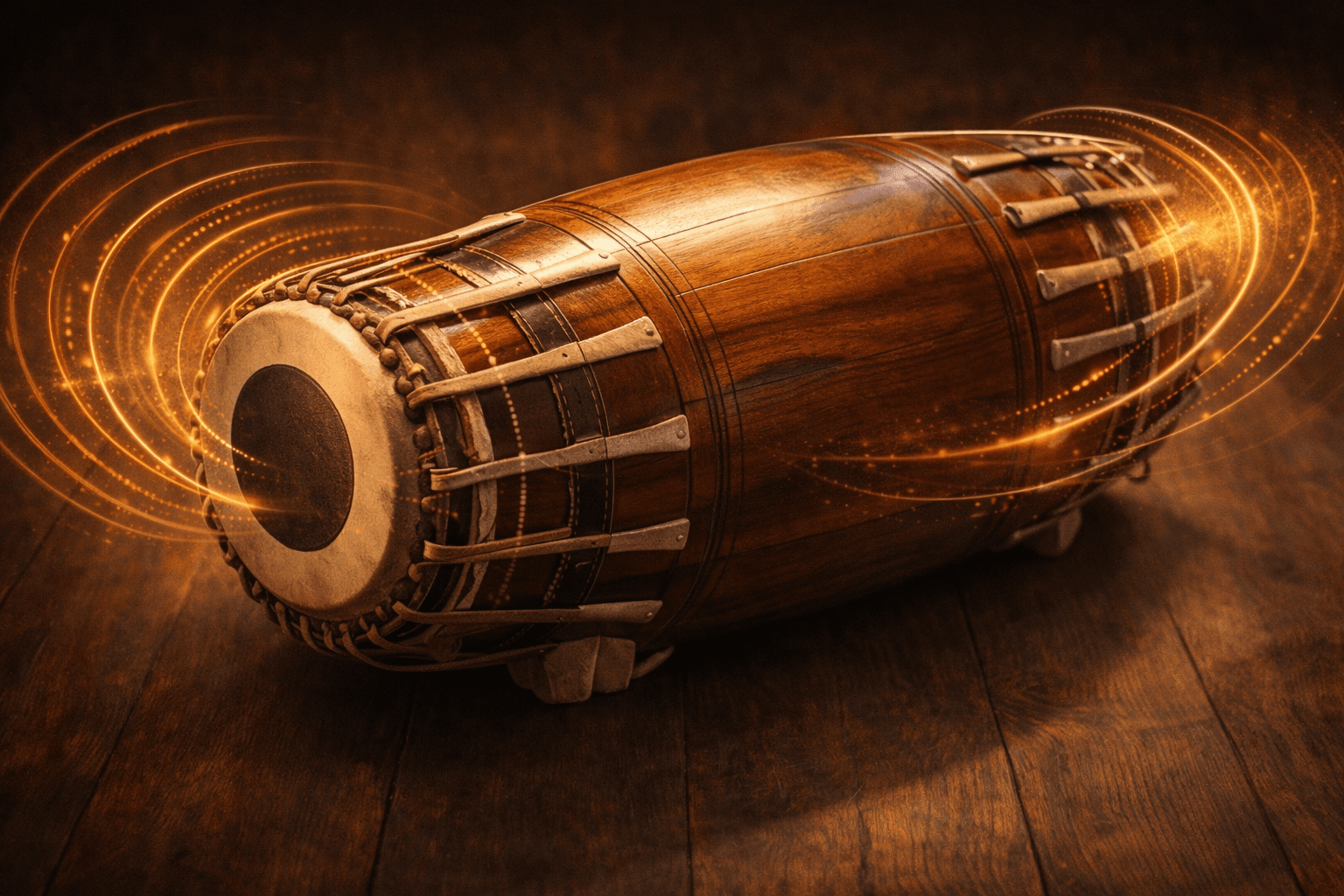 Mridangam’s sound comes from intelligent design. Every curve, skin, and strap affects tone. Its acoustic balance allows subtle support and commanding solos.
This scientific precision distinguishes it from many percussion instruments worldwide.
Materials Used in Traditional and Modern Mridangams
Traditional Mridangams use jackfruit wood shells. Natural skins create warmth. Modern versions experiment with synthetic drumheads Mridangam for stability.
Hybrid percussion instruments now combine tradition with durability.
Sound Production and Tonal Balance
The right head delivers sharp clarity. The left produces resonant bass and sharp treble tones. This balance supports shruti and laya balance.
The Mridangam tuning system allows fine adjustments before each performance.
Comparison with Tabla Construction
Tabla uses metal or wooden shells. Bayan offers bass modulation. Dayan produces crisp tones. The difference between Mridangam and Tabla lies in structure and rhythmic language.
This Mridangam vs Tabla comparison highlights cultural and musical diversity.
Why Mridangam Is Perfectly Suited for Carnatic Music
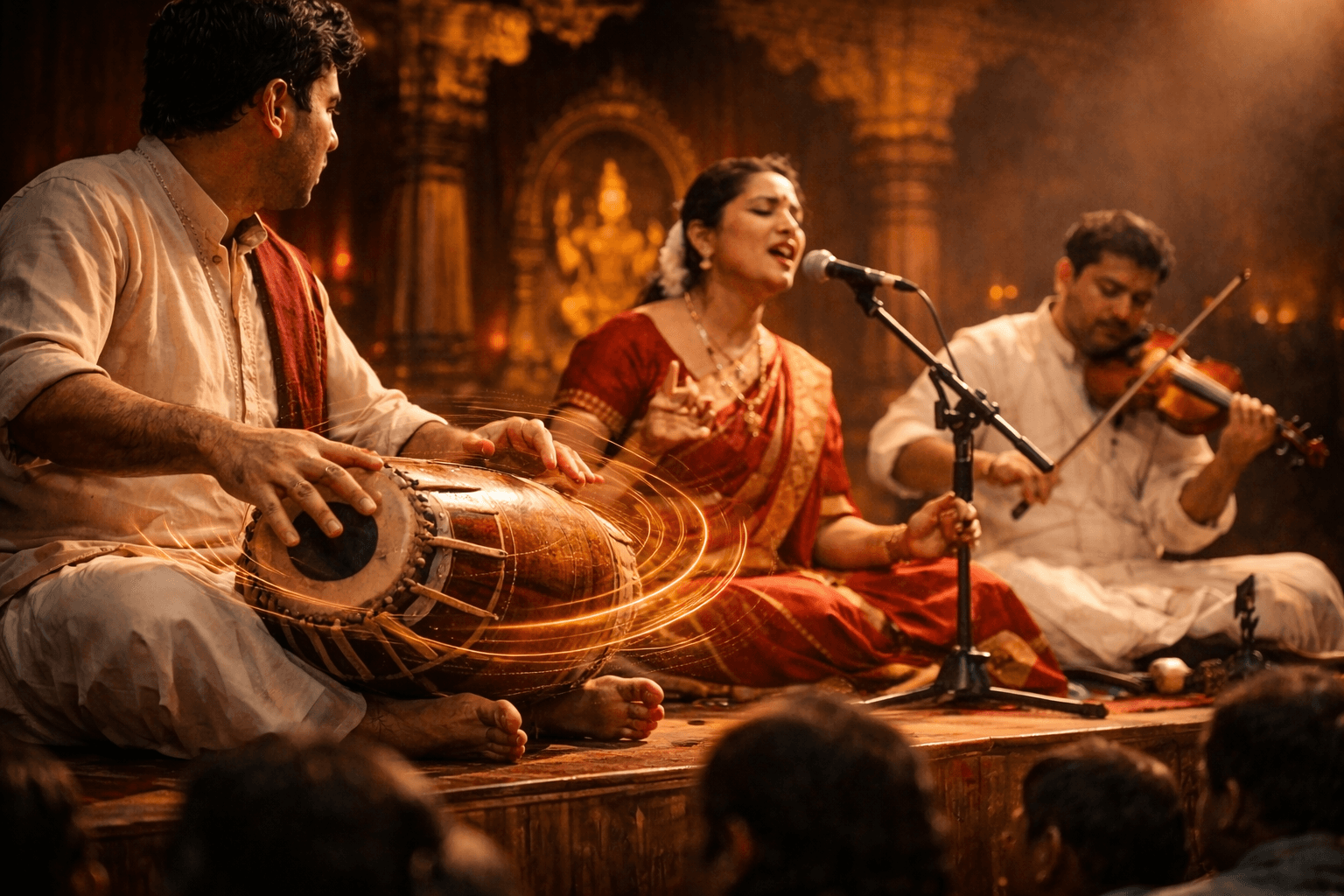 Mridangam fits Carnatic music like breath fits song. Its design, tone, and technique align naturally with melodic phrasing.
No other instrument supports Carnatic rhythm instruments as effectively.
Handling Complex Rhythmic Cycles
Carnatic music thrives on complexity. Mridangam navigates intricate talas with confidence. Patterns shift seamlessly across cycles.
This precision keeps compositions grounded and expressive.
Supporting Improvisation and Manodharma
Manodharma improvisation depends on rhythmic trust. Mridangam listens deeply. It responds instantly.
This dialogue fuels creativity during concerts.
Synchronization with Vocal and Melodic Instruments
Mridangam accompaniment mirrors vocal nuances. It anticipates pauses. It supports crescendos.
This sensitivity preserves musical balance.
Dynamic Control Across Tempos
Kalapramanam tempo changes challenge performers. Mridangam adapts effortlessly.
Slow passages feel meditative. Fast sequences feel exhilarating.
Emotional and Spiritual Depth in Performances
Devotional Carnatic music relies on rhythmic emotion. Mridangam amplifies feeling without overpowering melody.
Audiences feel rhythm before they understand it.
The Artistic Role of Mridangam in Carnatic Concerts
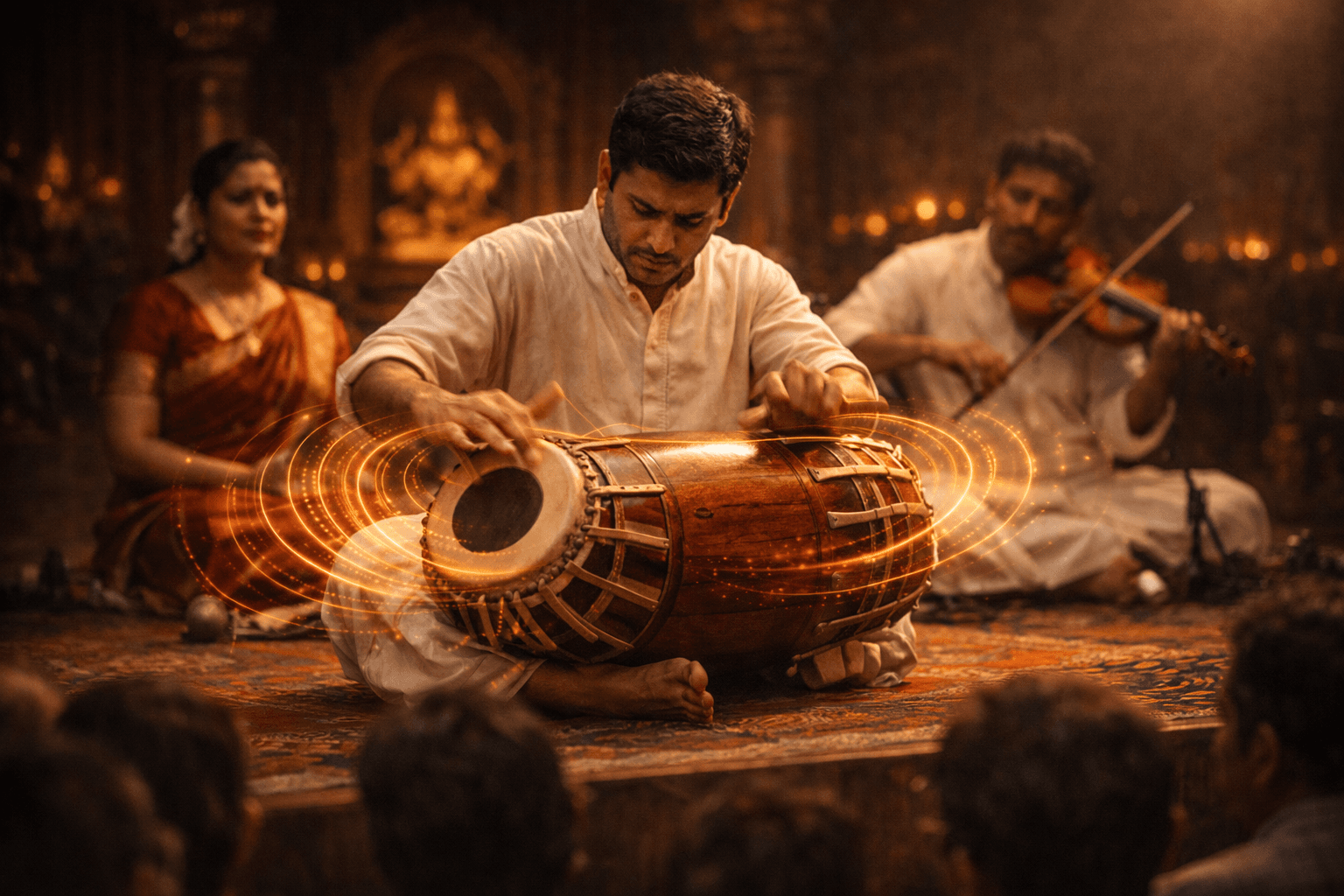 Mridangam shapes concert flow. It frames compositions. It elevates climaxes.
Listeners often remember rhythmic moments long after melodies fade.
Accompanying Kriti and Raga Alapana
During raga alapana, Mridangam stays silent. Once kriti begins, rhythm enters gently.
This restraint enhances musical storytelling.
Mridangam Solo and Tani Avartanam
Thani Avarthanam percussion solo showcases mastery. Korvai and Mohra unfold like puzzles.
Audiences witness rhythm as art.
Enhancing Audience Engagement in Live Performances
Rhythmic anticipation keeps listeners alert. Each phrase invites response.
Concert energy rises with rhythmic dialogue.
Tabla in Hindustani Music: Function and Expression
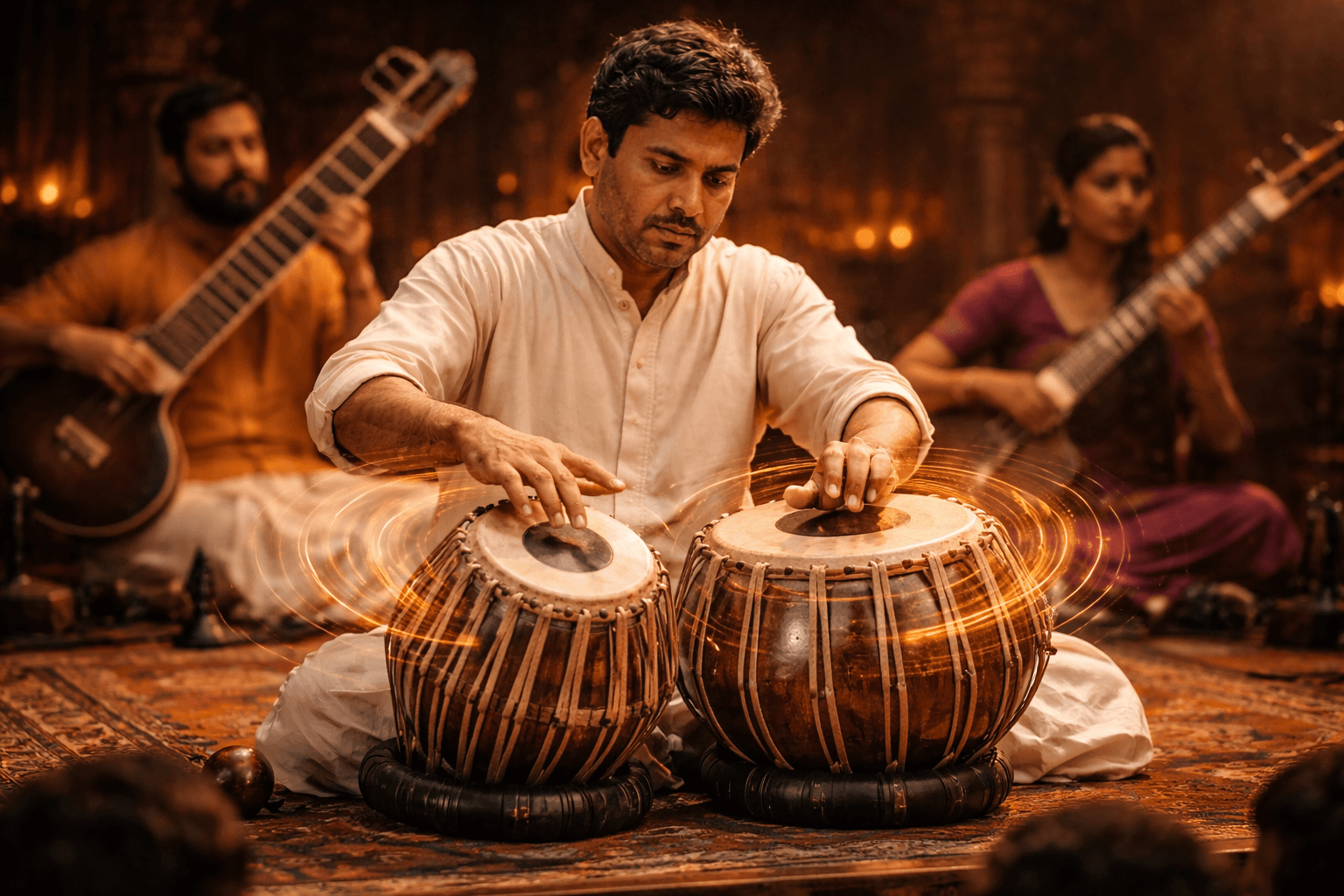 Tabla complements Hindustani music’s melodic freedom. It adapts constantly.
Its expressive range suits improvisation and lyrical phrasing.
Tabla’s Interaction with Ragas
Tabla follows raga mood closely. It supports phrasing without rigidity.
This flexibility defines Hindustani raga accompaniment.
Bols, Kaydas, and Advanced Playing Styles
Tabla bols and compositions include Tukda and Rela in Tabla. These patterns display speed and clarity.
Spoken rhythm reinforces learning and performance.
Mridangam vs Tabla: Key Differences Explained
Understanding contrasts enriches listening. Both instruments serve distinct traditions.
Each reflects regional philosophy.
Design, Materials, and Playing Technique
Mridangam lies horizontally. Tabla sits vertically. Materials differ. Techniques diverge.
These differences shape sound.
Rhythmic Language and Musical Application
Carnatic rhythm instruments rely on fixed cycles. Hindustani rhythm instruments allow fluid expansion. This distinction defines style.
Performance Contexts and Audience Experience
Carnatic concerts emphasise structure. Hindustani performances favour exploration.
Both captivate differently.
Legendary Mridangam Masters Who Shaped the Art
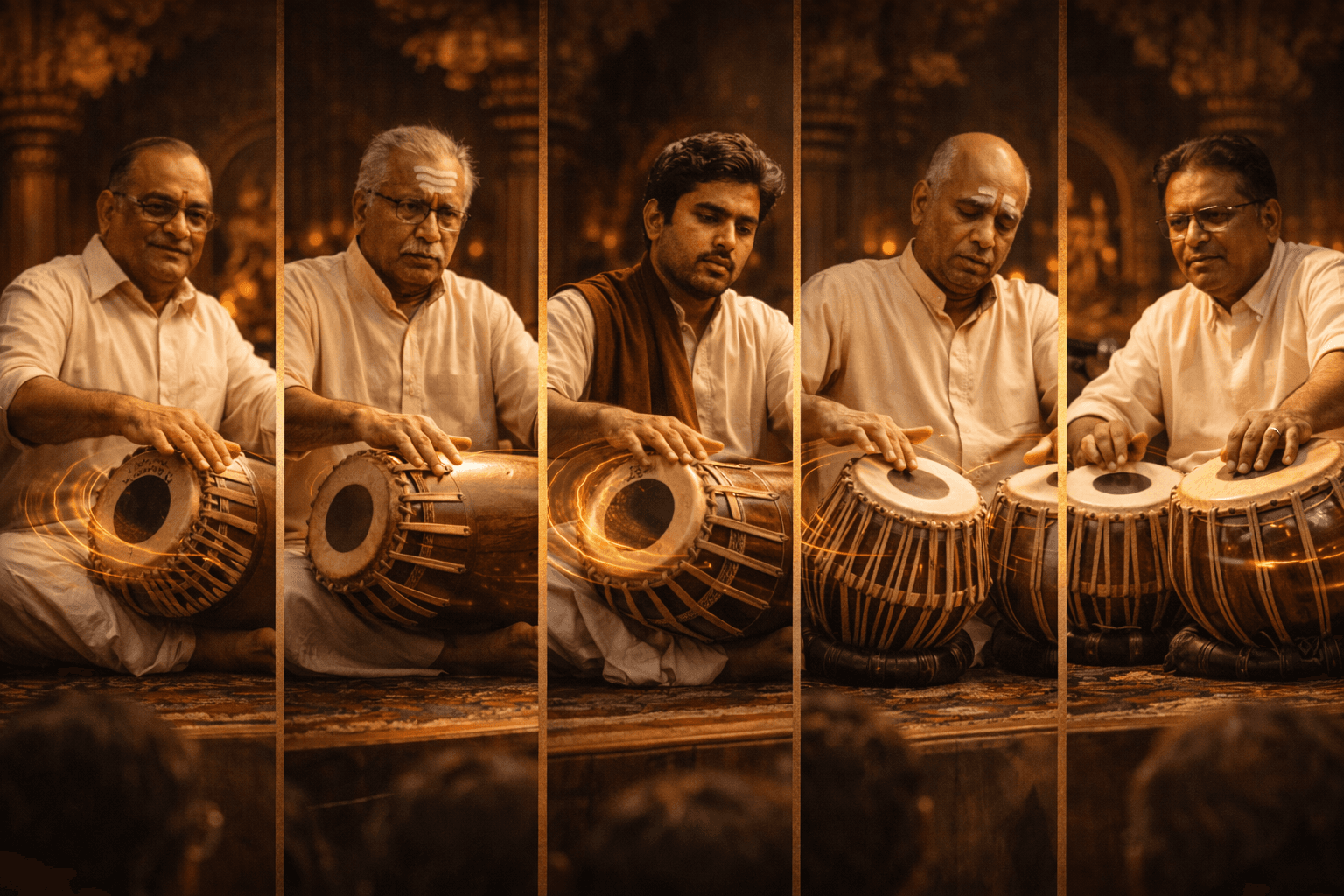 Great masters transformed technique into legacy. Their influence endures.
Each brought clarity, discipline, and innovation.
Palghat Mani Iyer
He defined modern Mridangam aesthetics. Precision met emotion.
Umayalpuram K. Sivaraman
His technique refined accompaniment artistry.
Guruvayur Dorai
He balanced subtlety and strength.
Karaikudi Mani
He expanded rhythmic vocabulary globally.
Thetakudi Harihara Vinayakram
He bridged tradition and innovation.
Iconic Tabla Virtuosos of India
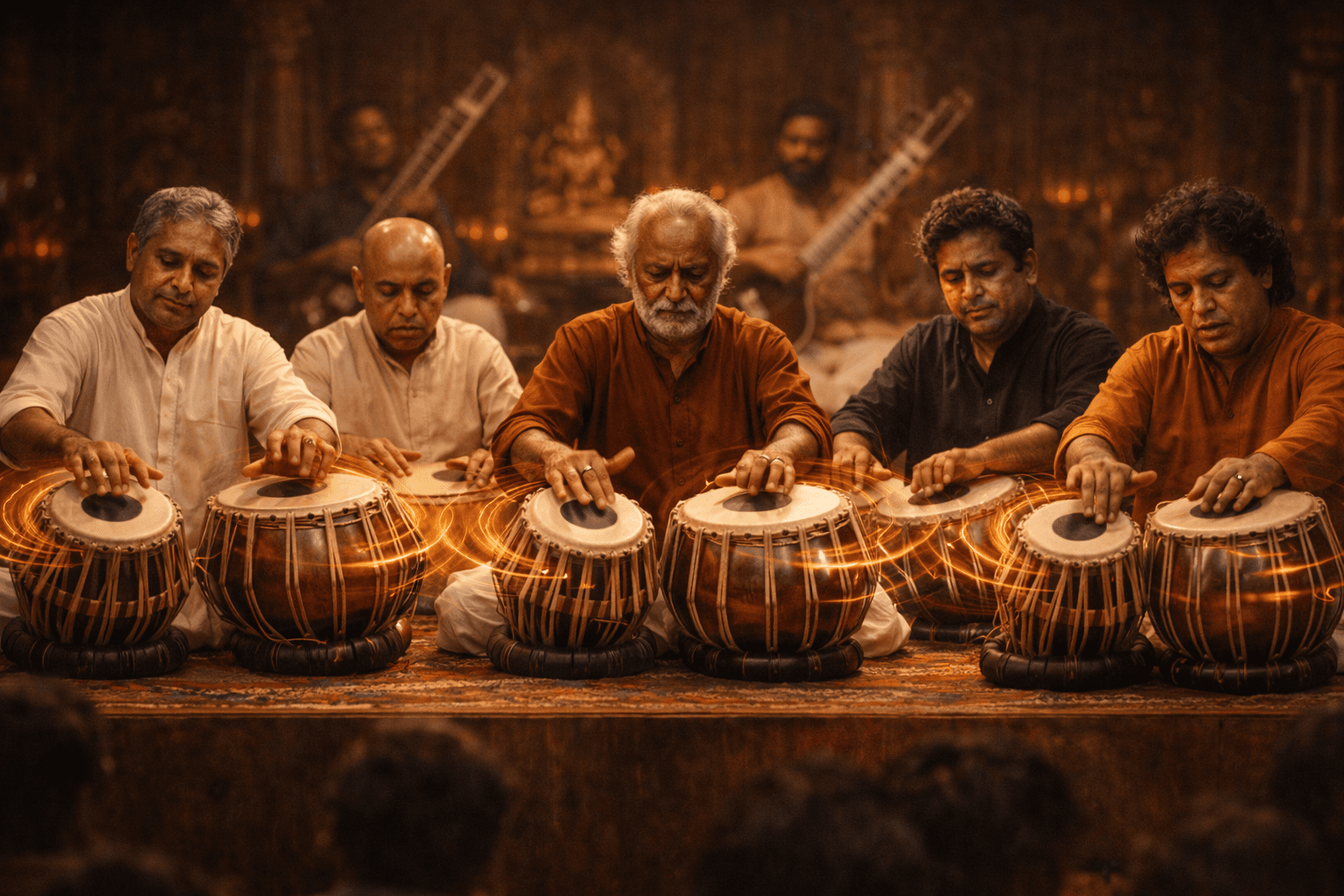 Tabla masters shaped Hindustani rhythm.
Their artistry reached global audiences.
Zakir Hussain
Global ambassador of tabla.
Ustad Allarakha Khan
Architect of modern tabla accompaniment.
Anindo Chatterjee
Known for lyrical precision.
Aneesh Pradhan
Scholar and performer combined.
Swapan Chaudhuri
Teacher and innovator.
Mridangam and Tabla in Fusion and Contemporary Music
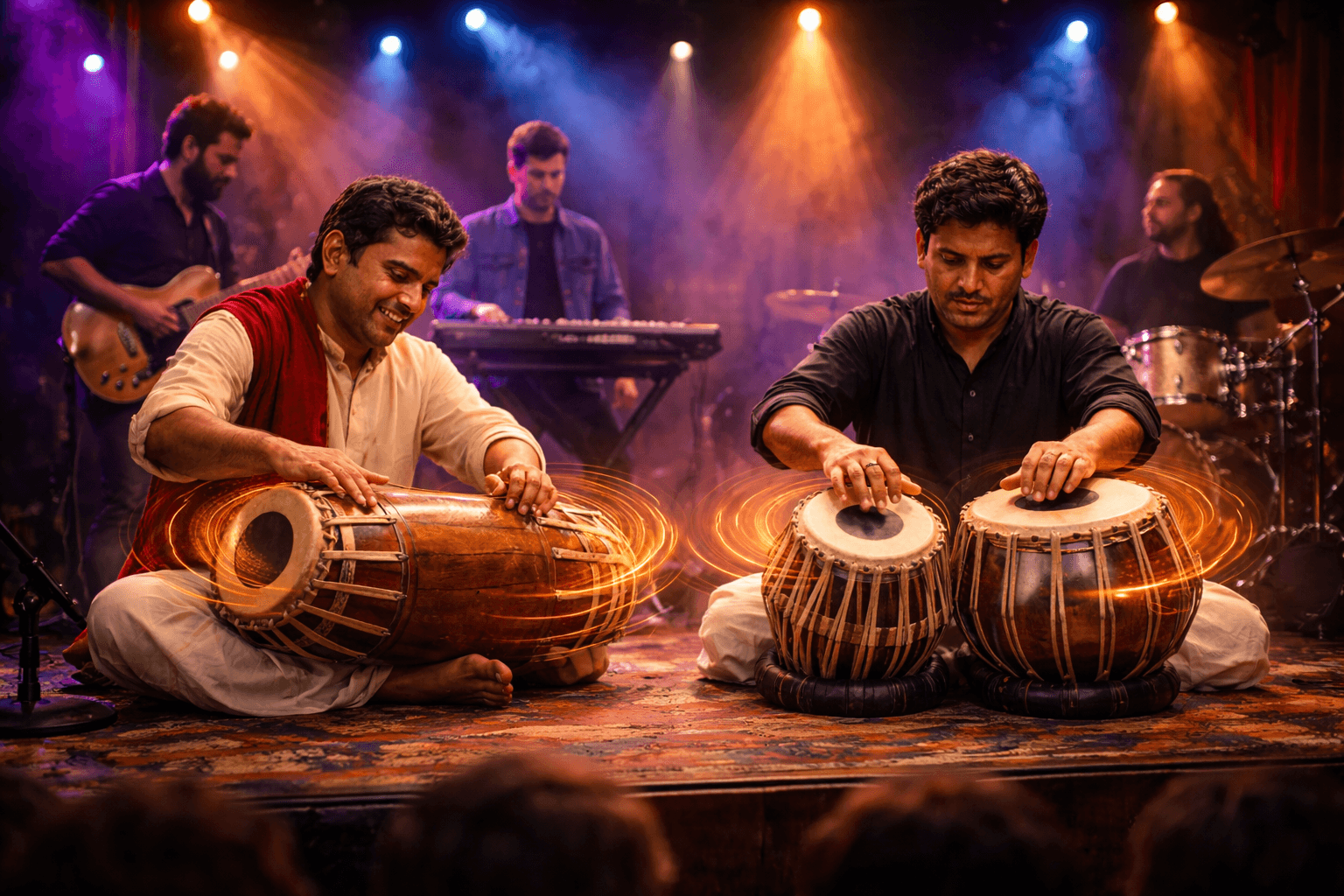 Fusion music percussion instruments blend traditions. Boundaries blur.
Indian percussion in fusion music thrives globally.
Cross-Genre Collaborations
Jazz, classical, and electronic music adopt Indian rhythms.
Role in World Music and Experimental Projects
World music fusion percussion expands creative horizons.
Modern Innovations in Mridangam Craft and Learning
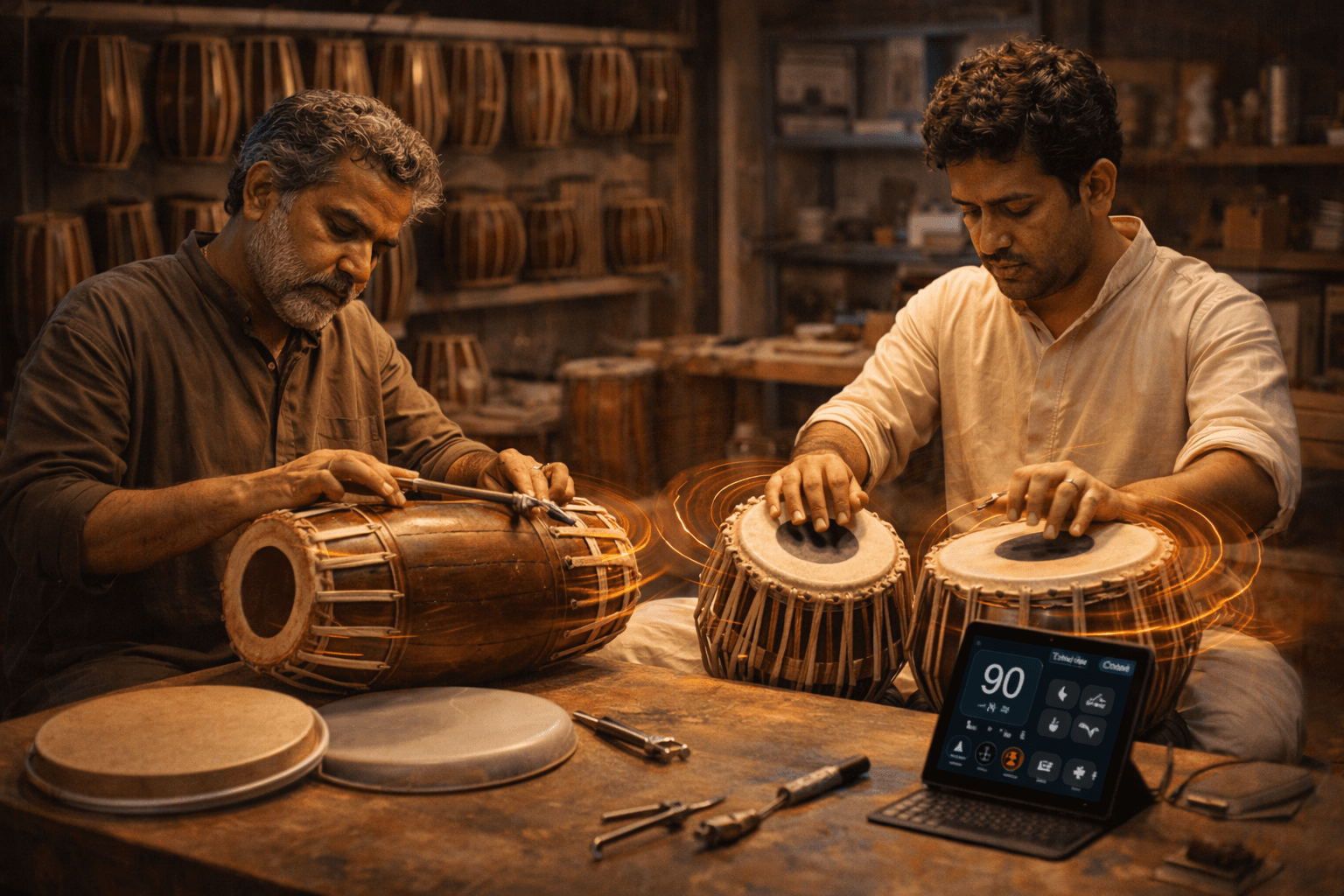 Innovation preserves relevance. Tradition adapts.
Technology enhances learning and performance.
Use of Alternative and Synthetic Materials
Synthetic skins improve durability.
Advanced Tuning and Sound Enhancement Systems
Microphones refine projection.
Digital Mridangam and Electronic Integration
Electronic Mridangam supports practice and performance.
Sustainable Manufacturing Practices
Eco-conscious materials protect forests.
Online Learning Tools and Practice Aids
Apps and recordings aid mastery.
Learning Mridangam Today: Tradition Meets Technology
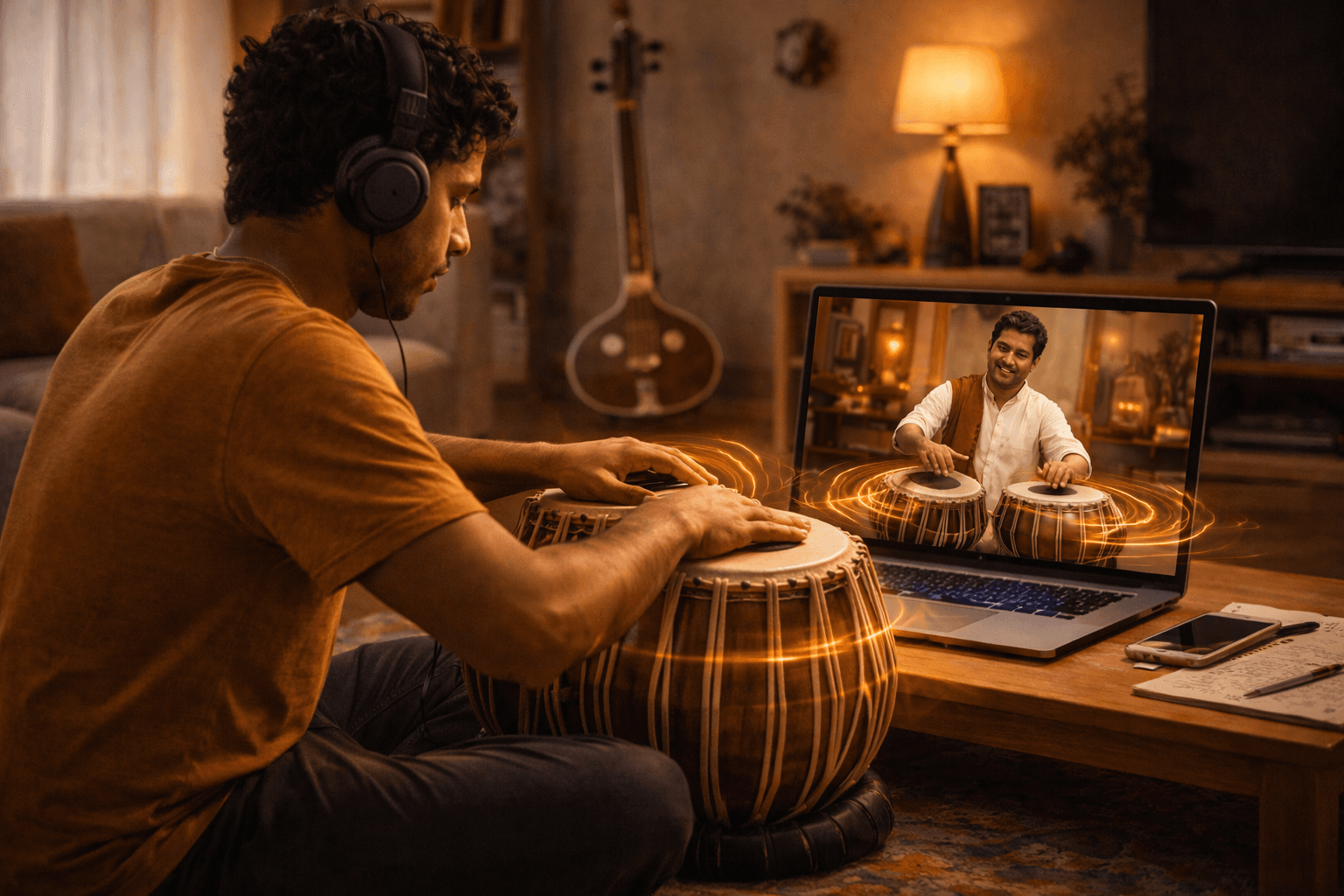 Modern learners seek flexibility. Tradition responds.
Teaching adapts without dilution.
Guru-Shishya Parampara in the Digital Age
Online platforms preserve lineage.
Benefits of Online Mridangam Training
Access expands globally.
Learning Mridangam at Art Gharana
Structured learning builds confidence. Guidance matters.
Art Gharana supports every stage.
Expert Carnatic Music Faculty
Experienced mentors guide progress.
Structured Curriculum for Beginners to Advanced Learners
Clear pathways ensure growth.
One-to-One Live Online Classes
Personal attention accelerates mastery.
Focus on Technique, Rhythm Mastery, and Performance Skills
Balanced training builds musicianship.
Global Student Community and Performance Opportunities
Community inspires consistency.
Cultural Relevance and Future of Mridangam
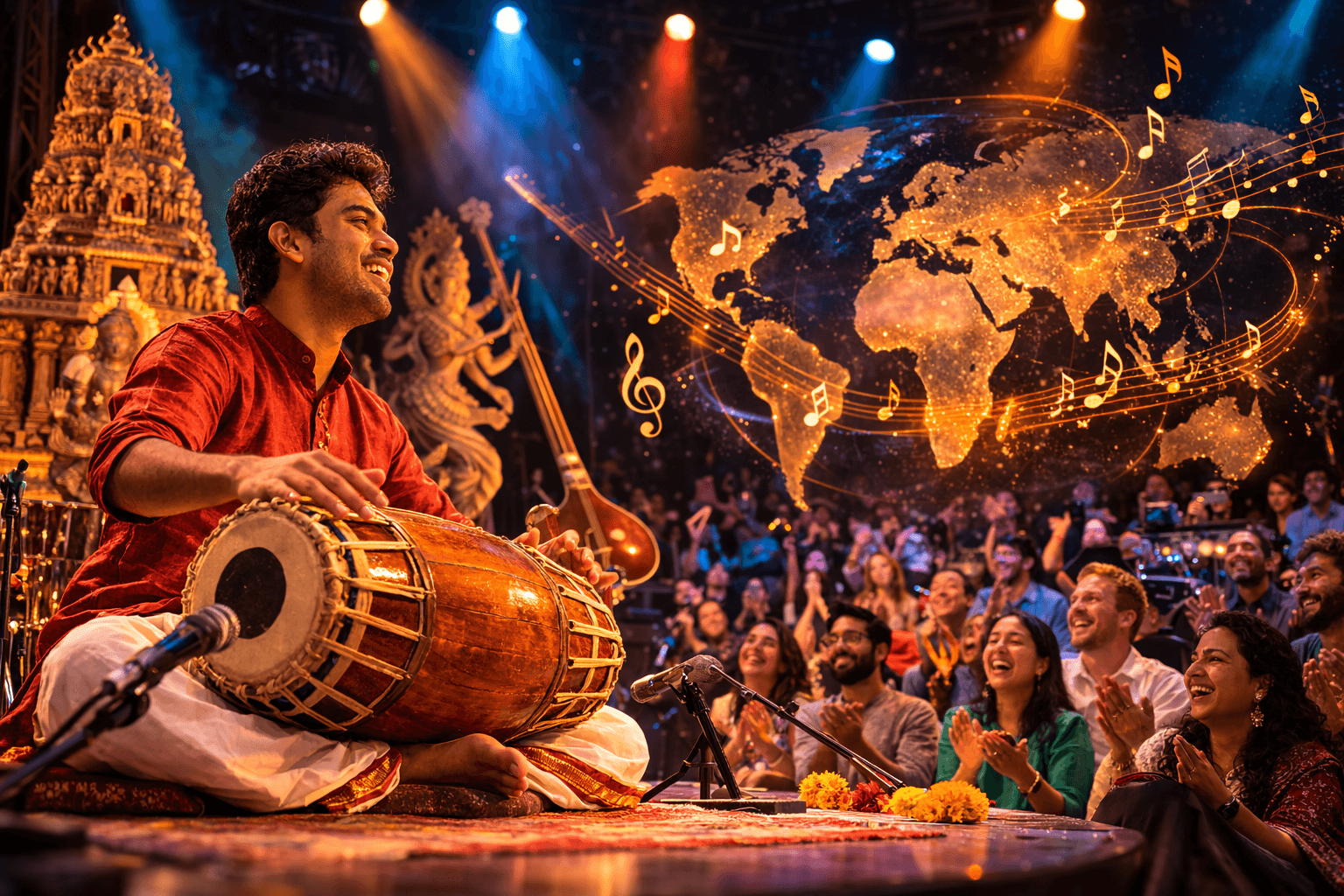 Mridangam’s future looks vibrant. Interest grows.
Global audiences listen closely.
Preservation of Heritage
Documentation protects tradition.
Expanding Global Recognition
UK audiences embrace Indian classical percussion.
Frequently Asked Questions About Mridangam
1.What makes Mridangam unique in Carnatic music?
Mridangam is unique because it controls tempo, rhythm, and structure, making it the backbone of Carnatic music performances.
2. Is Tabla harder to learn than Mridangam?
Neither is harder; Tabla focuses more on bols and taals, while Mridangam emphasizes mathematical precision and complex rhythmic patterns.
3. Can beginners learn percussion online effectively?
Yes, beginners can learn percussion online effectively with structured lessons, expert guidance, and regular practice.
4. Which instrument is better for fusion music?
Both Mridangam and Tabla work well in fusion music, but Tabla is more commonly used due to its tonal flexibility and global familiarity.
5. How does Art Gharana help students learn percussion online?
Art Gharana offers expert-led online classes, structured curricula, and personalized guidance to help students master percussion from anywhere.