ChatGPT
 Google AI
 Grok
 Claude

The tabla is the heartbeat of Hindustani classical music and one of the most captivating sounds in Indian cultural life. For Indian-Australian families from the Punjabi and Gujarati communities of Melbourne and Sydney to the Bengali and UP families of Brisbane and Perth, the tabla is the instrument that grounds their musical world. The challenge for Australian families has always been access to qualified tabla teachers who offer individual instruction rather than community group sessions, available outside specific Sydney and Melbourne suburbs.
Scattered individual tabla teachers exist in Sydney's Bankstown and Blacktown areas and in suburban Melbourne. Saraswati Mahavidhyalaya in Perth offers tabla as part of its WACE-endorsed curriculum for Years 11-12, serving senior students in Perth specifically. No provider offers live one-to-one online tabla classes nationwide with Australian time zone scheduling for children of all ages. Art Gharana fills this gap: certified Hindustani percussion teachers, live and one-to-one, available to every Australian family regardless of where they live.
The Tabla: An Extraordinary Instrument
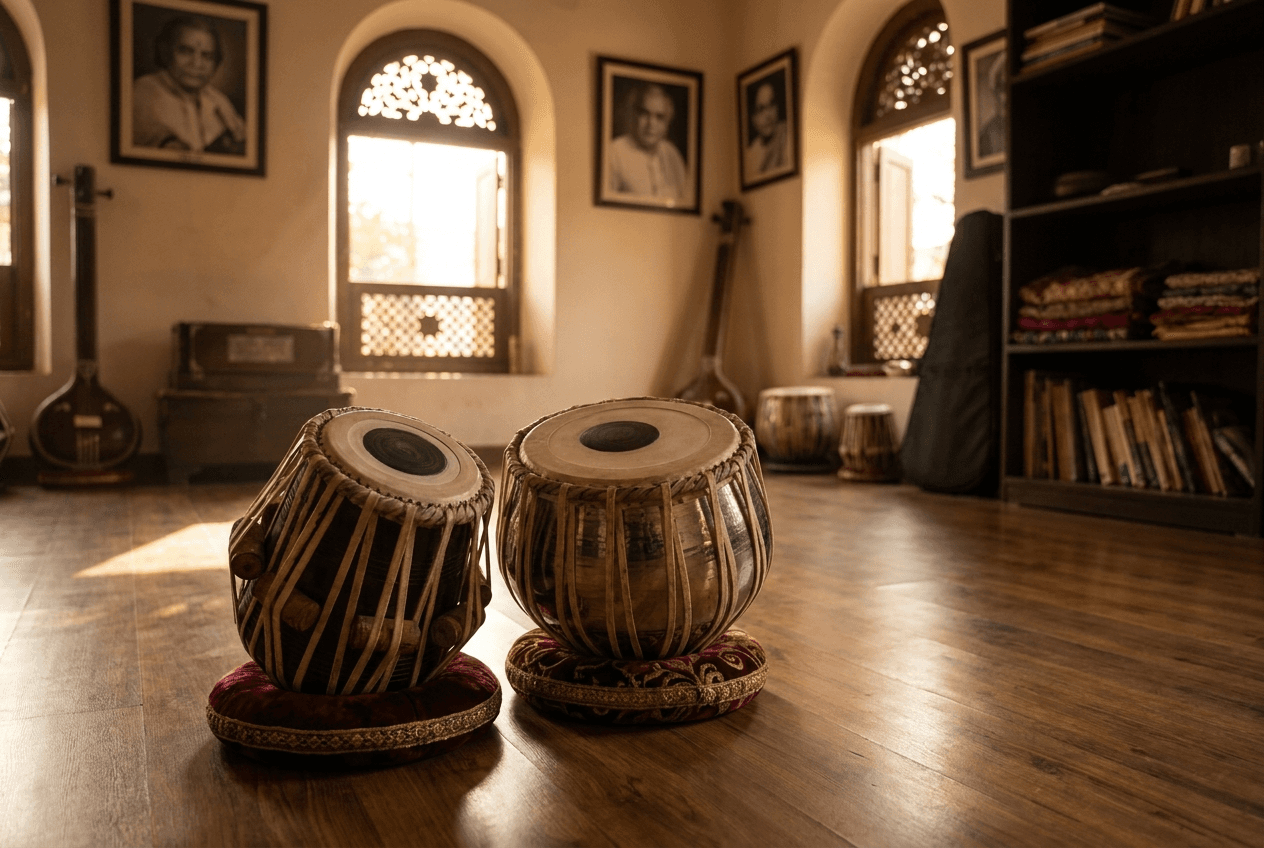 The tabla is a pair of hand drums, the smaller right-hand dhayan and the larger left-hand bayan, that sits at the centre of Hindustani classical music. The dhayan is tuned to the tonic note of the musical performance it accompanies, creating a unique sonic relationship between percussion and melody that does not exist in Western music. Together, the two drums produce an extraordinary range of distinct tones, each called a bol, that form the musical vocabulary of tabla playing.
What makes the tabla exceptional among percussion instruments is its dual role as both a rhythmic and a melodic instrument. The dhayan resonates harmonically with the vocalist or instrumentalist it accompanies while simultaneously driving the rhythmic structure of the performance. This combination of rhythmic precision and melodic sensitivity makes tabla one of the most musically sophisticated percussion instruments in the world.
Tabla in Australia's Indian Communities
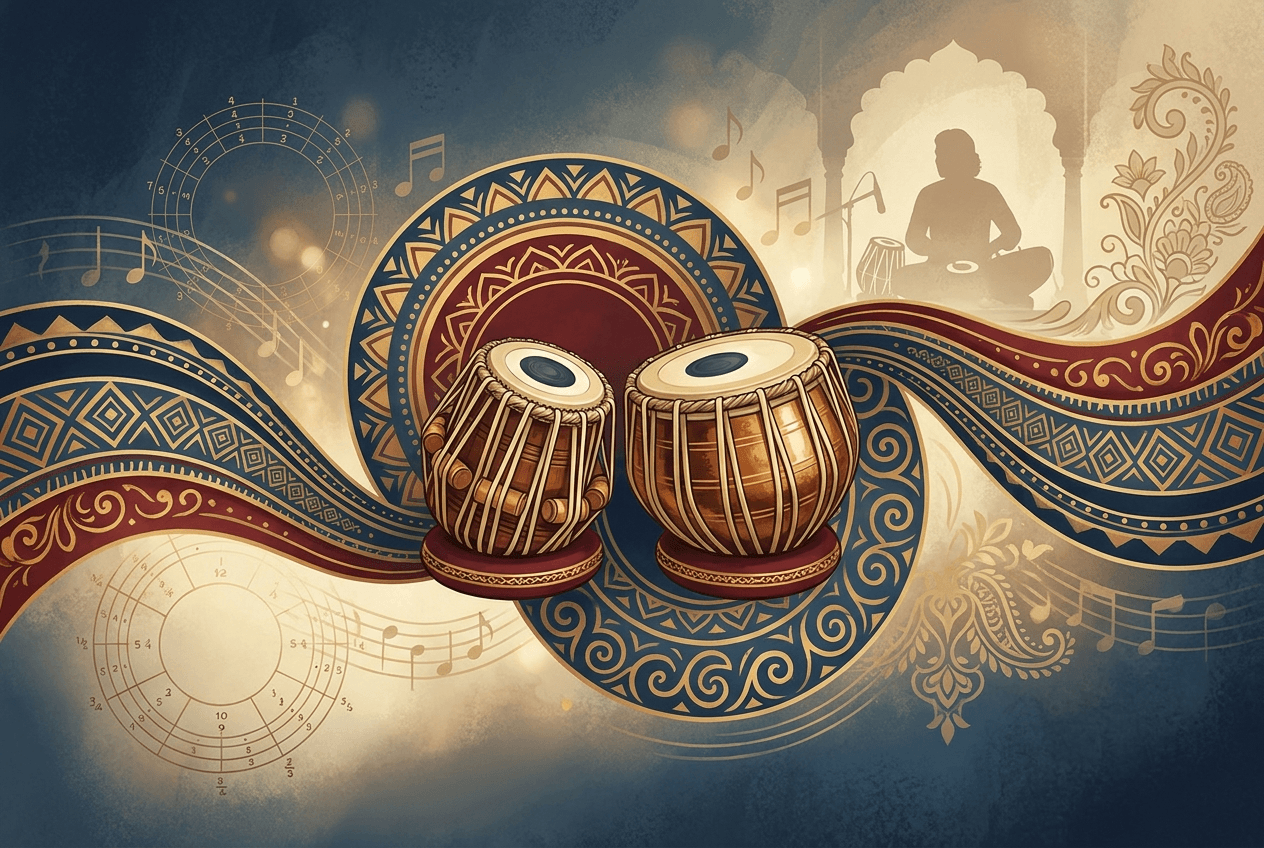
Sydney: The North Indian Rhythmic Tradition
Sydney's North Indian community has a deep relationship with tabla through temple bhajan groups, classical music circles and cultural organisations across Parramatta, Blacktown and the Hills Shire. Individual tabla teachers in Bankstown, Blacktown and Harris Park serve parts of this community, but the format is typically group classes with limited individual attention, fixed schedules and geographic restrictions. Art Gharana's online programme provides Sydney families with live one-to-one instruction from formally trained classical tabla teachers in Eastern Australian time zone scheduling.
Melbourne: Dandenong, Craigieburn and Western Suburbs
Melbourne's North Indian community is spread across Point Cook, Hoppers Crossing, Craigieburn, Roxburgh Park, Dandenong and Springvale. Individual tabla teachers serve parts of this community informally, but structured one-to-one instruction with a formally trained Hindustani percussion teacher available across Melbourne's entire geographic spread has not previously been possible without significant travel. Art Gharana's programme resolves this.
Perth, Adelaide, Brisbane and Nationwide
Saraswati Mahavidhyalaya in Perth offers tabla within its structured WACE programme for Years 11-12. This is a significant and valuable resource for senior Perth students, but it does not serve children below Year 11 or families in Perth who want private one-to-one instruction rather than classroom group learning. For the rest of Australia, dedicated tabla instruction outside Sydney and Melbourne is essentially absent. Art Gharana provides an identical quality of instruction to students in Darwin, Adelaide, Hobart, Canberra and every regional city and town across the country.
Why Tabla Is an Outstanding Choice for Indian-Australian Children
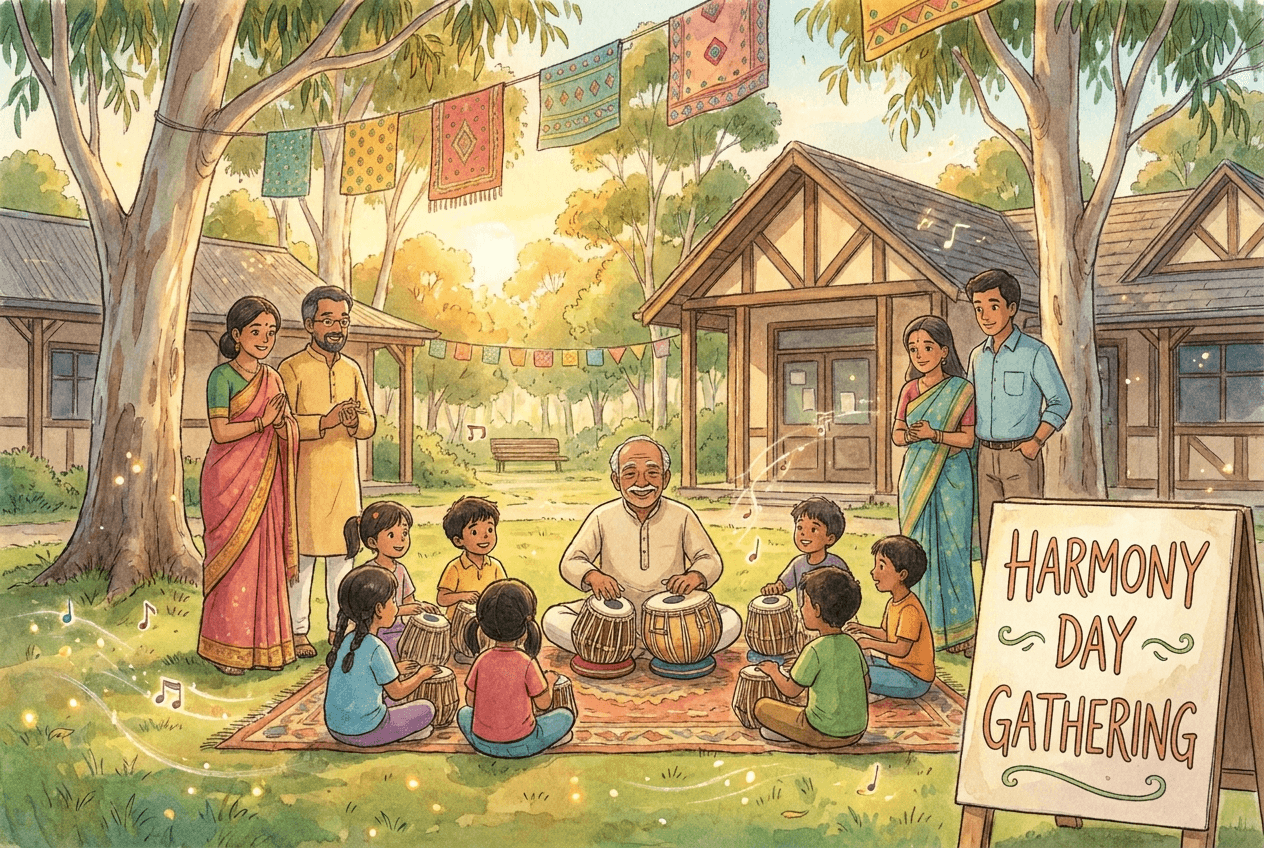
Mathematical Intelligence Through Rhythm
The tala structures of Hindustani music are among the world's most sophisticated systems of rhythmic mathematics. Learning to count, subdivide and perform within tala cycles develops mathematical pattern thinking that directly supports academic performance in numeracy and analytical reasoning. Children who study tabla seriously consistently demonstrate stronger mathematical reasoning skills than their non-music-trained peers. For Indian-Australian families who prioritise academic achievement, tabla training is not a distraction from that goal. It is a direct accelerant toward it.
Bilateral Coordination
Tabla requires the two hands to play completely independent rhythmic patterns simultaneously while remaining in perfect synchronisation. This bilateral demand develops extraordinary bilateral coordination and fine motor precision that carries benefits into every physical activity a child pursues, from sport to writing to playing other instruments. The neurological development produced by consistent tabla practice is measurable and lasting.
Cultural Heritage and Community Connection
For Indian-Australian children, the sound of tabla carries the deepest cultural resonance. It is the sound of classical concerts, bhajan evenings, Diwali performances and Bollywood films. Learning to produce that sound personally gives children an embodied connection to their heritage that is immediate, concrete and deeply meaningful. Multiple Art Gharana tabla students in Australia describe their first successful bol combination as one of the most exciting experiences of their childhood.
Academic Distinction in Australia's Competitive Educational Landscape
In competitive Australian school and university contexts, serious classical Indian instrument training is genuinely distinctive. Most students list piano, guitar or violin. A student who lists several years of serious tabla training with performance experience at cultural events and formal certifications has an extracurricular profile that stands out. Art Gharana's tabla curriculum is structured to prepare students for recognised certification examinations in the Hindustani classical tradition.
The Tabla Curriculum at Art Gharana
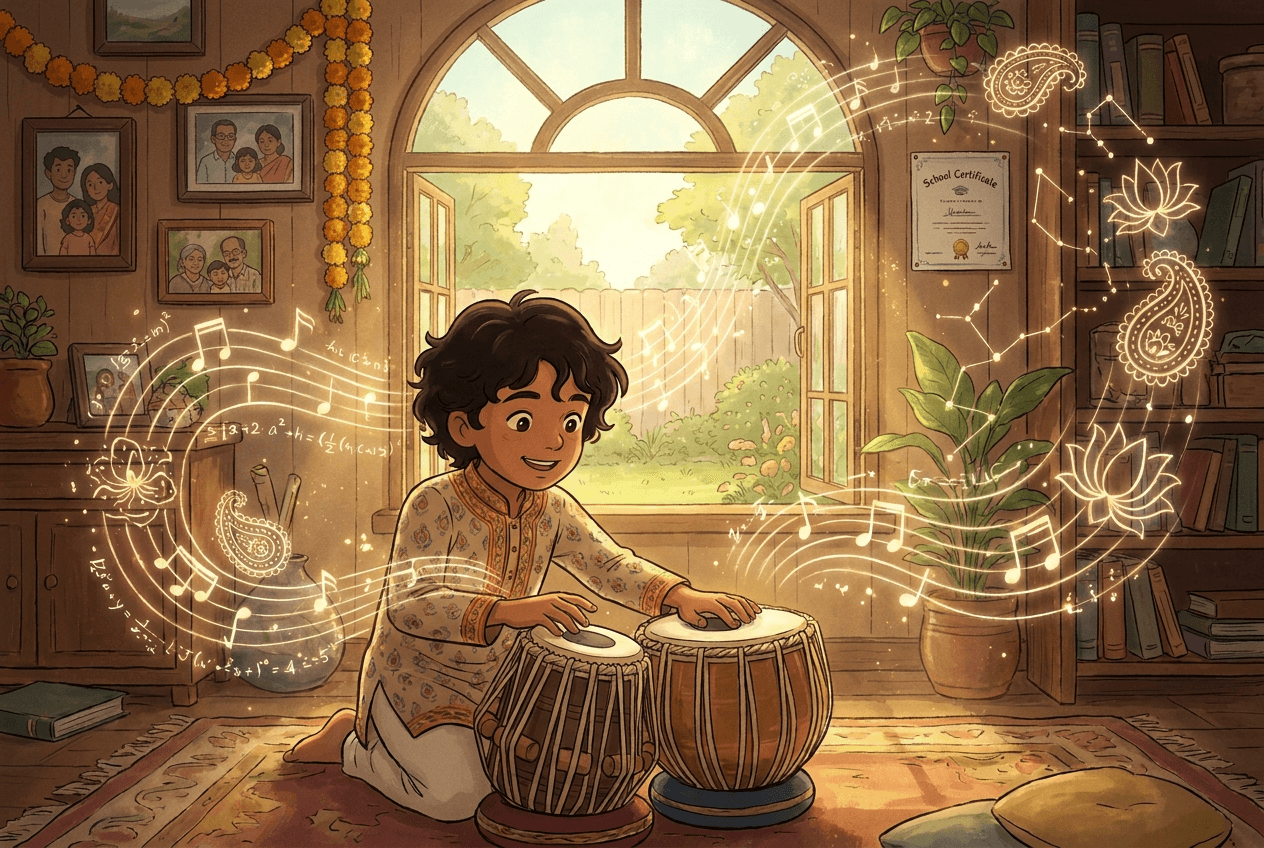
Beginner Stage, Ages 6 to 9
All tabla training begins with the basic strokes of the dhayan: Na, Tin, Te, Ti and Re, and the corresponding strokes of the bayan. Correct hand position, wrist technique and the balance of relaxation and engagement that produces a clean resonant tone are the focus of the earliest lessons. Students learn the basics of Teen Taal and develop the ability to maintain accurate timing while playing.
Elementary Stage, Ages 9 to 12
Elementary students develop their bol vocabulary, begin working on kayda compositions and start learning rela. Students work across multiple tala structures and develop the ability to maintain consistent tempo across a range of speeds.
Intermediate Stage and Beyond
Intermediate students work on complex talas and extended compositions, and develop tabla accompaniment skills: learning to support a vocalist or instrumentalist in live performance. This requires sophisticated musical awareness and responsiveness, and its development marks the transition from solo student to genuine musical collaborator.
Buying a Tabla in Australia
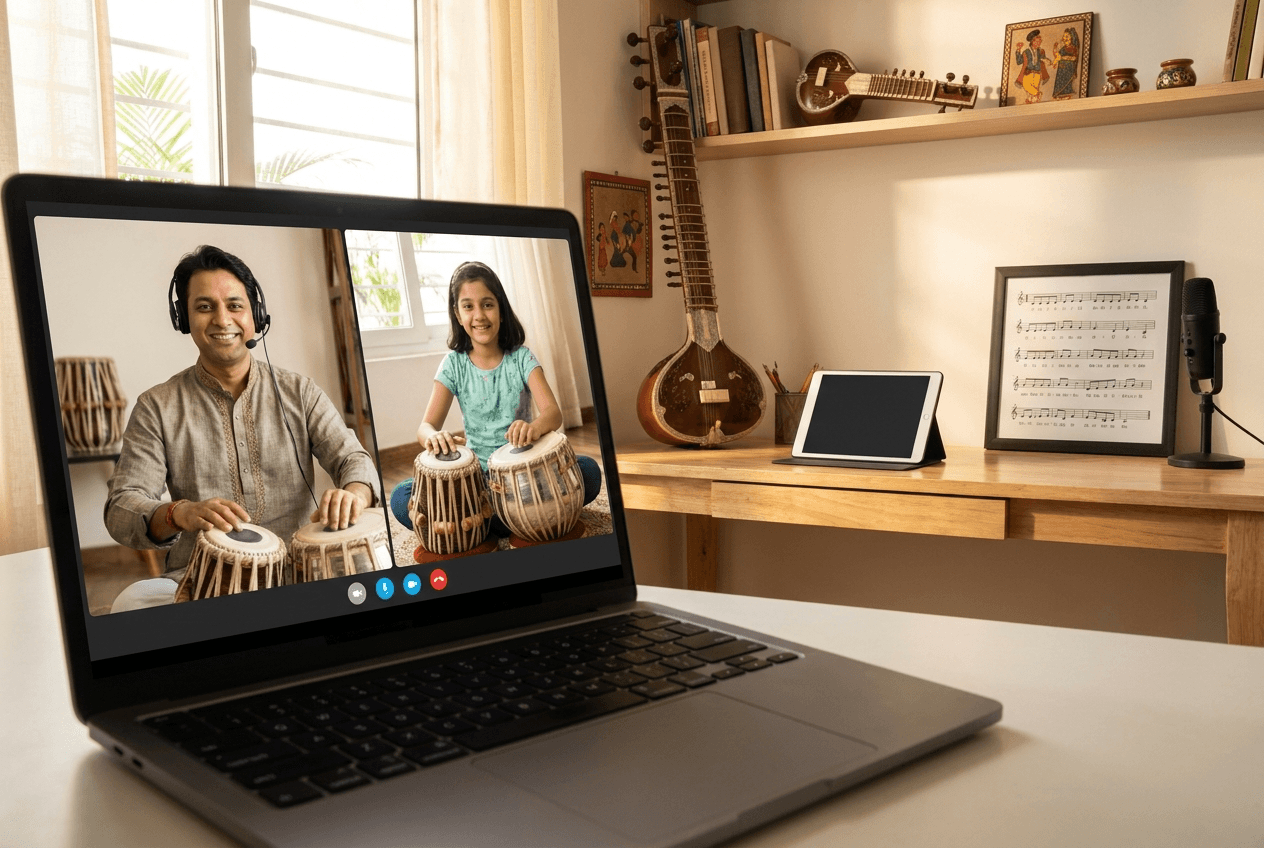 We have a detailed tabla buying guide on the Art Gharana website. For Australian families, quality student-grade tabla sets are available from Indian music suppliers in Sydney's Parramatta and Blacktown commercial areas, Melbourne's Dandenong, and from online retailers shipping within Australia. Your Art Gharana teacher will give specific recommendations based on your child's age and budget at the first class.
Tabla and Other Indian Arts
Tabla pairs naturally with Hindustani vocal classesand Kathak classes. The tala cycles of Kathak footwork are the same rhythmic structures that tabla students master, making the combination produce remarkably fast and deep musical intelligence. For South Indian families, tabla is a complementary study alongside Carnatic vocal classes. Explore our full range of courses for all options.
About Art Gharana
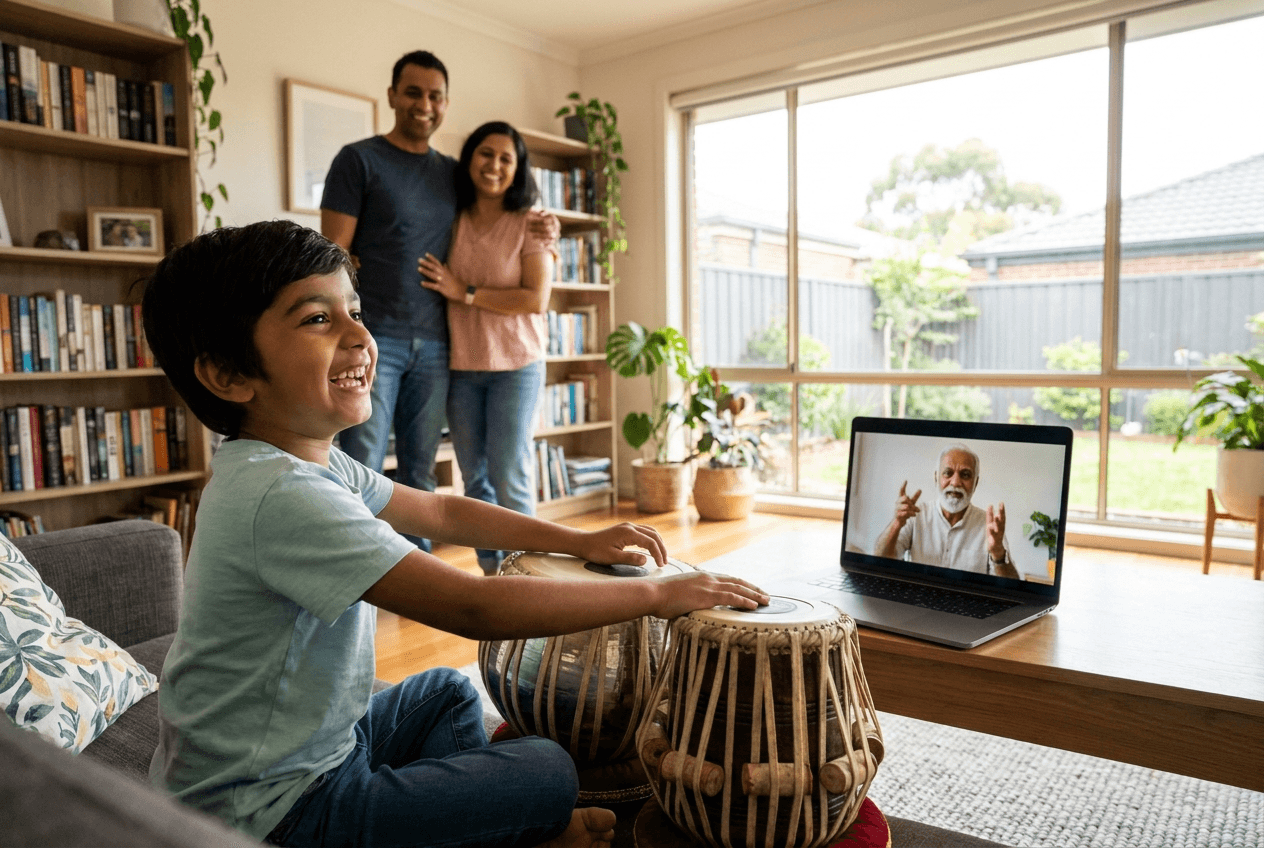 Art Gharana serves Indian-Australian families across all states and territories with live one-to-one tabla classes from formally trained Hindustani percussion teachers. Browse our teacher profiles, review our plans and pricing and head to our book a free trial class page to get started.
Frequently Asked Questions
1. Are online tabla classes available for children across all of Australia?
Yes. Art Gharana provides live one-to-one online tabla classes for families in every Australian state and territory in all Australian time zones.
2. Where can I buy a tabla in Australia?
Student tabla sets are available from Indian music suppliers in Parramatta, Blacktown and Dandenong, and from online retailers. Your teacher will give specific recommendations at the first class.
3. What age can children start tabla in Australia?
Children can begin from around age 6. Your teacher will assess your child's readiness at the trial class.
4. Can tabla be taught effectively online?
Yes. One-to-one online tabla instruction allows the teacher to see the student's hands clearly throughout the session and provide precise, real-time corrections to stroke technique and timing.
Book Your Child's Free Tabla Trial Class Today
The tabla is one of the world's great instruments. With live one-to-one classes available across Australia, certified Hindustani percussion teachers, flexible Australian time zone scheduling and a completely free first lesson, Art Gharana is ready to begin your child's tabla journey. Head to our book a free trial class page and begin today.
A Week in the Life of an Australian Tabla Student
Understanding what a week of tabla training looks like in practice helps Australian parents assess whether the commitment is realistic for their family. For a beginner student, the weekly routine consists of one 45-minute live class with their Art Gharana teacher plus 20 to 30 minutes of daily home practice. The practice session follows the plan the teacher provides after each class: typically 10 minutes of individual stroke practice on the dhayan, 10 minutes working on bayan strokes, and 10 minutes maintaining the theka of the tala cycle the student is studying.
Over time, as the repertoire grows, practice sessions naturally lengthen. By the elementary level, most students practise 30 to 45 minutes daily, and many find that they want to practise more because the experience of playing well-tuned tabla cleanly and musically is genuinely pleasurable. When practice becomes enjoyable rather than obligatory, progress accelerates dramatically. The transition from reluctant practiser to enthusiastic self-directed practitioner, which typically happens within the first six months to a year of consistent training, is one of the clearest signs of a student who has genuinely connected with the instrument.
Tabla and the Australian Indian Cultural Calendar
For Indian-Australian students who develop to an intermediate tabla level, the Australian cultural calendar provides rich opportunities for public performance and cultural contribution. Temple bhajan evenings, where a tabla student accompanies the devotional singing of their community, are among the most meaningful performance contexts available. The deep, responsive musical conversation between a tabla player and a vocalist, in which each musician responds to and influences the other in real time, is one of the most profound experiences in all of Indian music, and it is available to tabla students who develop the accompaniment skills that Art Gharana's curriculum systematically builds.
School multicultural events, Indian community cultural festivals, Diwali celebrations and family occasions all provide additional performance platforms where tabla skill earns genuine admiration from Australian audiences of all backgrounds. Art Gharana teachers prepare their Australian tabla students specifically for these performance contexts, ensuring that the training connects directly to the community cultural life that gives it its deepest meaning.
The Tabla and Australian Academic Life
In the competitive Australian school and university environment, serious training in a classical Indian instrument is genuinely distinctive. Most students list piano, guitar or violin as their instrument. A student who lists several years of serious tabla training, with live performance experience at cultural events and formal certification examinations, presents an extracurricular profile that is genuinely unusual and positively distinctive in Australian higher education applications. Art Gharana's tabla curriculum prepares students for recognised certification examinations in the Hindustani classical tradition, providing formal credential evidence of sustained achievement.
Beyond the application advantage, the cognitive benefits of tabla training are well documented. The bilateral coordination demands, the rhythmic mathematics, the sustained practice discipline and the performance experience that tabla training develops are all directly transferable to academic performance across every subject. For Indian-Australian families who prioritise academic excellence alongside cultural connection, tabla training delivers on both dimensions with exceptional efficiency.
Tabla and the Broader Hindustani Music Ecosystem in Australia
Within the Hindustani classical music tradition, the tabla occupies a position of extraordinary importance. It is the universal accompaniment instrument of Hindustani classical music, equally at home supporting a khayal vocalist, a sitar player, a bansuri flutist or a sarod artist. Tabla students who develop to a sufficient level have the opportunity to participate in musical collaborations that most young musicians never experience: the deep, responsive musical conversation between a tabla player and a classical vocalist or instrumentalist that is one of the most profound experiences in all of Indian music.
For Indian-Australian families who participate in the Hindustani music world within their communities, whether through temple bhajan groups, classical music appreciation circles or community cultural events, a child's tabla training opens doors that few other instruments can. The tabla player is not a soloist performing alongside others but an active, intelligent musical partner whose contribution shapes and elevates the entire performance. This collaborative musical intelligence is one of the most distinctive and valuable qualities that tabla training develops.
What to Expect in Your Child's First Year of Tabla Training
For Australian families new to tabla, understanding what the first year looks like helps set realistic expectations. In the first three months, a typical Art Gharana tabla student learns the correct sitting position and hand placement, masters the fundamental strokes of the dhayan, develops the basic bayan technique and begins counting within Teen Taal. The sounds they produce in the first month will be inconsistent and sometimes unclear. By the end of month three, most students are producing clean, resonant Na and Tin strokes and can maintain a simple theka at a slow tempo.
From months three to six, the student develops a broader bol vocabulary, begins working on basic kaydas and starts to develop the independence between the two hands that enables more complex rhythmic combinations. By the end of month six, most students can play a complete Teen Taal theka at a moderate tempo with consistent sound quality, and many are beginning to work on their first kayda composition. By the end of the first year, elementary students typically have command of multiple talas, a growing kayda repertoire and the ability to maintain tempo consistently across a range of speeds. The progress over twelve months of consistent weekly classes plus daily home practice is genuinely impressive to witness.
Tabla as a Path to Musical Collaboration in Australia
One of the most rewarding developments for intermediate tabla students in Australia is the opportunity to begin accompanying other musicians. Temple bhajan groups across Sydney, Melbourne, Brisbane and Perth typically welcome student tabla players who have developed sufficient technique to maintain a steady theka through a devotional song. This early accompaniment experience, even in an informal bhajan context, develops the musical listening and responsiveness skills that are the foundation of great tabla playing. The experience of playing in real time with a human vocalist, of adjusting tempo to accommodate the singer's breathing, of responding to the musical moment with intelligence and sensitivity, is transformative and cannot be replicated through solo practice.
Art Gharana tabla teachers actively support their Australian students in finding and preparing for accompaniment opportunities. A student who is ready for their first bhajan accompaniment receives specific preparation: which talas are appropriate, how to manage tempo variation, how to respond when the vocalist changes key unexpectedly, and the etiquette of the bhajan performance context. This preparation ensures that first accompaniment experiences are positive and confidence-building rather than overwhelming.
Tabla for Every Australian Indian Family
The tabla is the instrument most central to North Indian musical heritage, and no Indian-Australian family should have to go without access to quality tabla instruction because of where they live in Australia. Art Gharana's nationwide programme ensures that a family in Mackay has the same access to certified Hindustani percussion instruction as a family in Blacktown. A tabla student in Canberra receives the same quality of live, one-to-one teaching as one in Point Cook. This geographic equality, unusual in Indian arts education in Australia, is one of Art Gharana's most important contributions to the Indian-Australian cultural landscape.
For Indian-Australian families who want to give their children the gift of tabla training in 2026, Art Gharana is the clearest and most comprehensive option available in the country. Certified teachers, live one-to-one instruction, all Australian time zones, children from age six upward, structured curriculum with certificate progression, tabla buying guidance for the Australian market, and a completely free first lesson. Everything a family needs to begin is available. The only step required is to book the trial class. Head to artgharana.com today and take that step.
Tabla is one of humanity's great instruments and one of the most powerful vehicles for North Indian cultural transmission available to Australian Indian families. Art Gharana brings certified tabla instruction to every Indian-Australian family across the country, in every time zone, at every level, with a structured curriculum that produces real musical and cultural results. The free trial class is free, immediate and entirely without obligation. For families across Australia who have been waiting for this, the wait is over. Book the trial class at artgharana.com today.
For Indian-Australian families who have been searching for quality tabla instruction in 2026, the search ends at Art Gharana. The programme serves families in every Australian state and territory, from the Indian communities of suburban Sydney and Melbourne to the scattered Indian families of regional Queensland, South Australia and Western Australia. It provides the live, one-to-one instruction from certified Hindustani percussion teachers that no local community group class and no India-time-zone marketplace tutor can match. It structures the learning with clarity, celebrates the progress with recognition, and connects families to the broader community of Indian-Australian tabla students across the country. And it begins with a completely free trial class that costs nothing and commits to nothing. For every Indian-Australian family that has ever heard a tabla performance at a temple concert or a cultural event and felt the desire to give their child that music, Art Gharana is the answer that has been waiting. Book the trial class today.
Art Gharana is proud to bring certified tabla instruction to every corner of Australia. The instrument is extraordinary, the tradition is deep, and the students who commit to it consistently discover that the investment repays them many times over in cultural pride, musical capability, cognitive development and community connection. The free trial class is the door. Walk through it today at artgharana.com.
The tabla tradition has survived millennia because every generation has produced students willing to commit to the daily riyaz, the weekly class and the patient accumulation of skill that the instrument demands. In Australia in 2026, Art Gharana is here to support the next generation of tabla students in that commitment. The tradition is ready. The teachers are ready. Your child's journey is one free trial class away. Book it today at artgharana.com and give your child the music that will accompany them throughout their Australian life.
For musically inclined children drawn to melody rather than rhythm, Art Gharana's flute classes teach the bansuri in the same live one-to-one format and are a natural complement to tabla for children interested in Hindustani classical music.