ChatGPT
 Google AI
 Grok
Grok Claude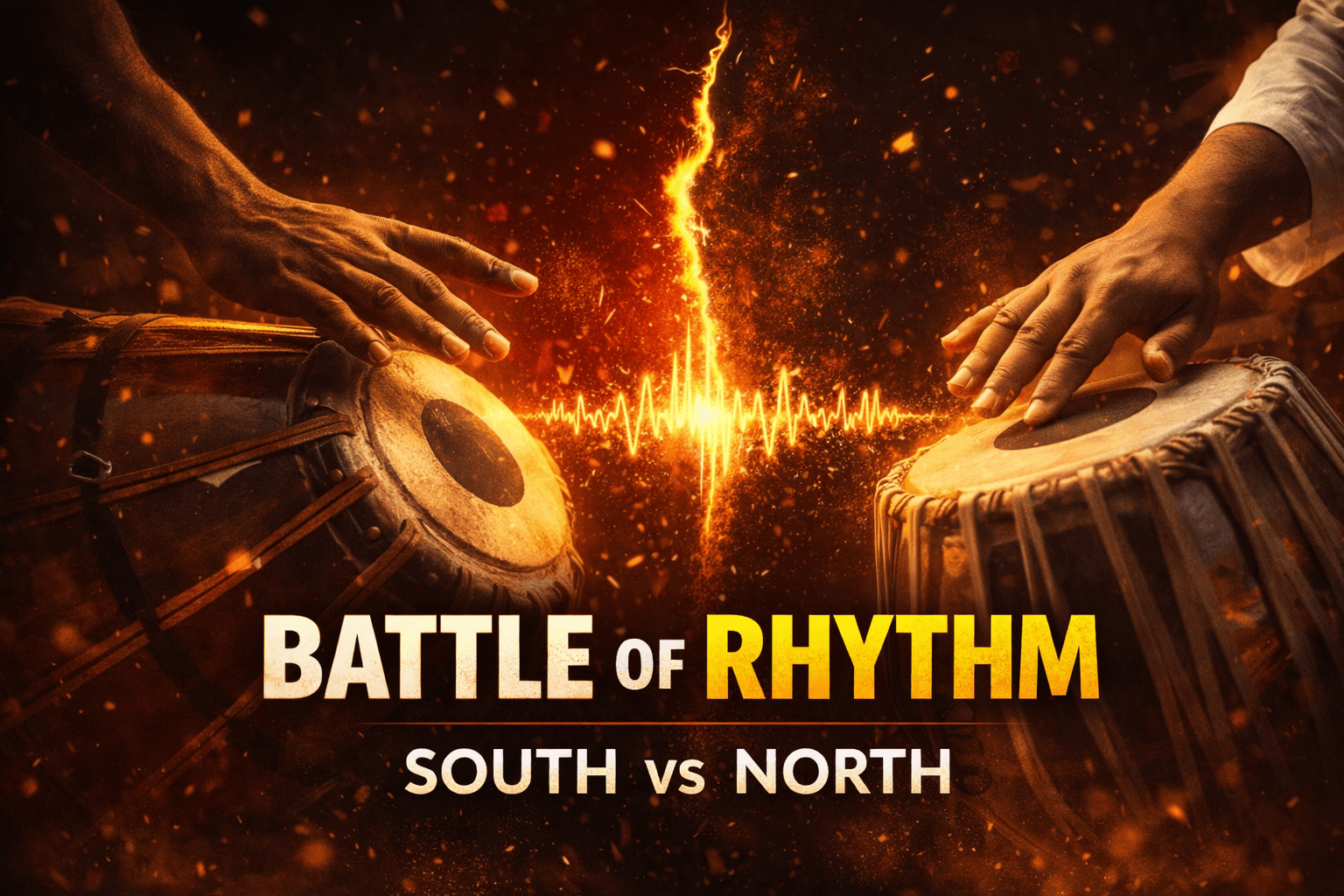
Why Percussion Is the Backbone of Indian Music
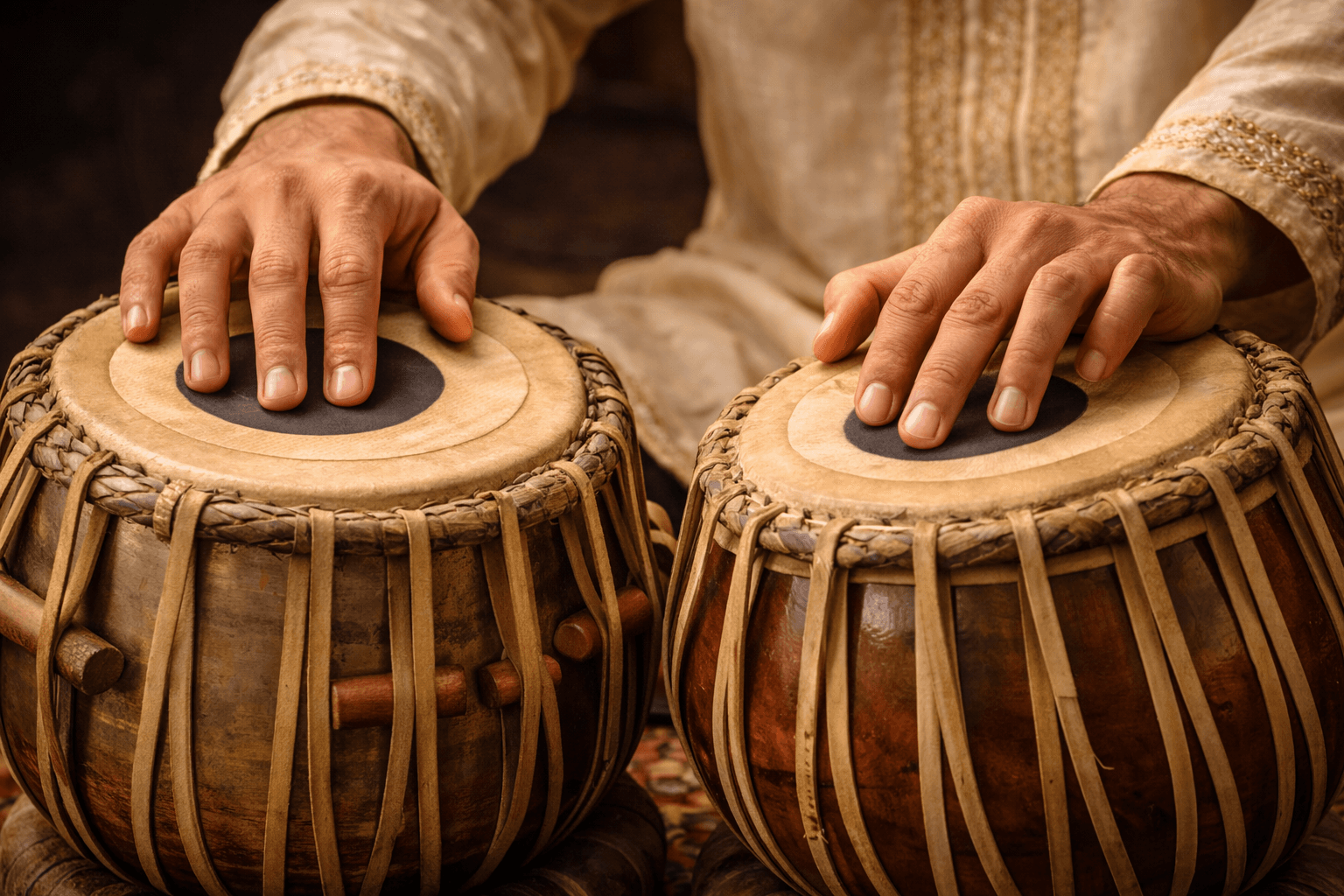 Percussion forms the heartbeat of Indian classical music. Instruments like the Mridangam in Carnatic music and Tabla in Hindustani music provide structure and pulse to every performance. They maintain rhythm, guide the melody, and support improvisation. Without percussion, compositions can feel flat and incomplete. Role of percussion in Indian classical music is not just to keep time; it brings energy, emotion, and depth to music.
The rhythmic cycles, known as talas in Carnatic music or the tala system in Hindustani music, define how compositions are measured. Each beat, or matra, fits into a repeating cycle called avartan. These cycles allow vocalists and instrumentalists to explore melody while staying grounded in rhythm. The interplay between percussion and melody ensures harmony and dynamism in performances.
Rhythm, Taal, and Laya Explained Simply
In Indian music, rhythm is expressed through Taal and Laya in music, representing beat patterns and tempo. Talas in Carnatic music often have intricate structures, while rhythmic patterns in Hindustani music can be flexible for improvisation. Laya, the tempo, can be slow (Vilambit), medium (Madhya), or fast (Drut).
Percussionists maintain these rhythms using Mridangam playing technique or Tabla playing techniques. They ensure that each composition flows naturally, and improvisations like Korvai and nadai patterns in Carnatic music or Tukda and rela compositions in Hindustani music remain in sync. Understanding these basics is essential for appreciating the depth of Indian rhythm instruments.
Understanding Indian Classical Percussion Instruments
Membranophones in Indian Music
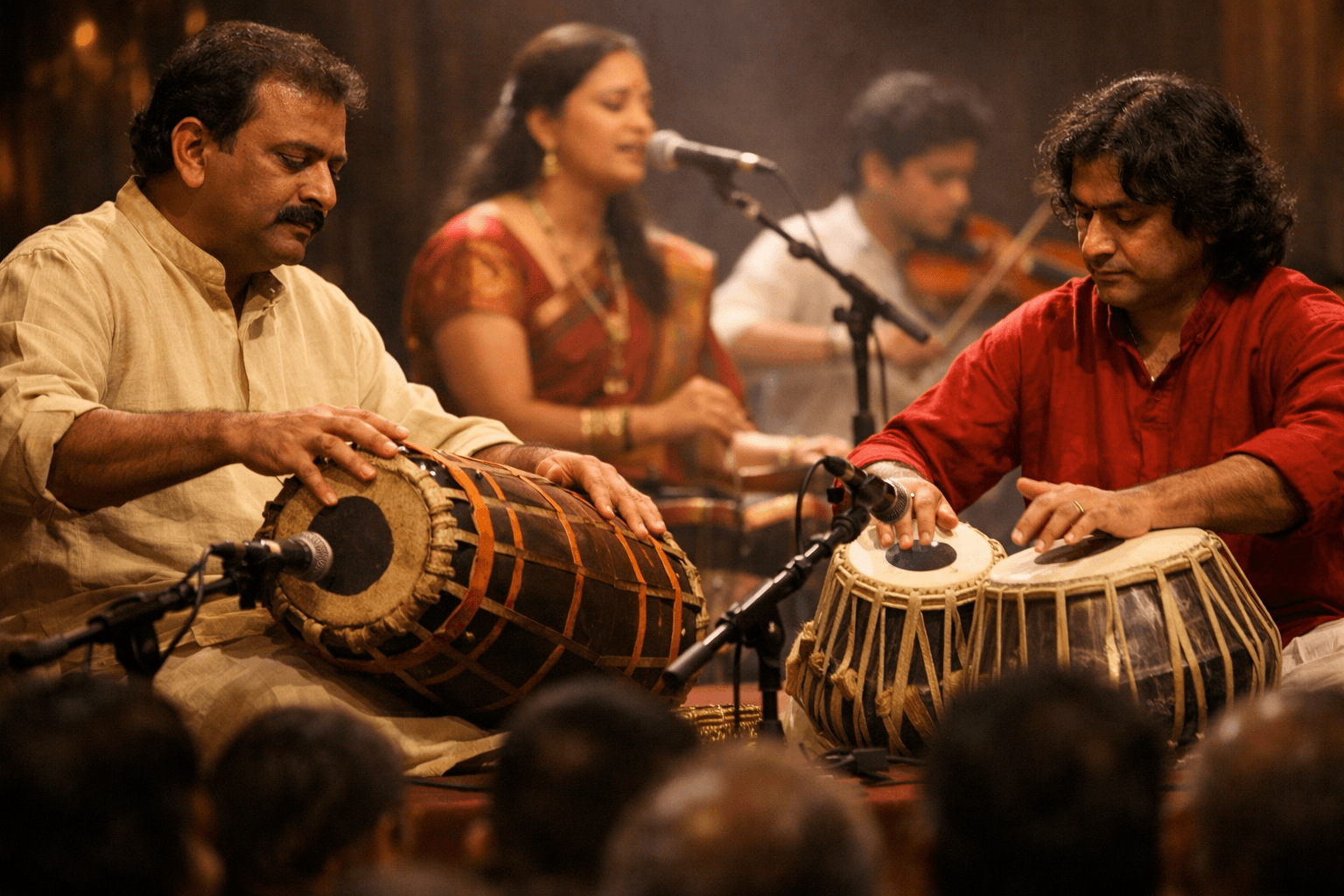
Indian classical percussion instruments mainly belong to the membranophone family. These are instruments that produce sound by vibrating stretched membranes. The Mridangam in Carnatic music and Tabla in Hindustani music are the most prominent examples. Others include Pakhawaj, Kanjira, and Ghatam, which also play critical roles in rhythm-based performances.
These instruments serve as both accompaniment and solo tools. The role of percussion in classical performances is to guide musicians through rhythmic cycles and support improvisation. Each instrument has unique tonal qualities and playing styles, shaping the overall feel of Carnatic and Hindustani traditions.
Place of Mridangam and Tabla in Classical Traditions
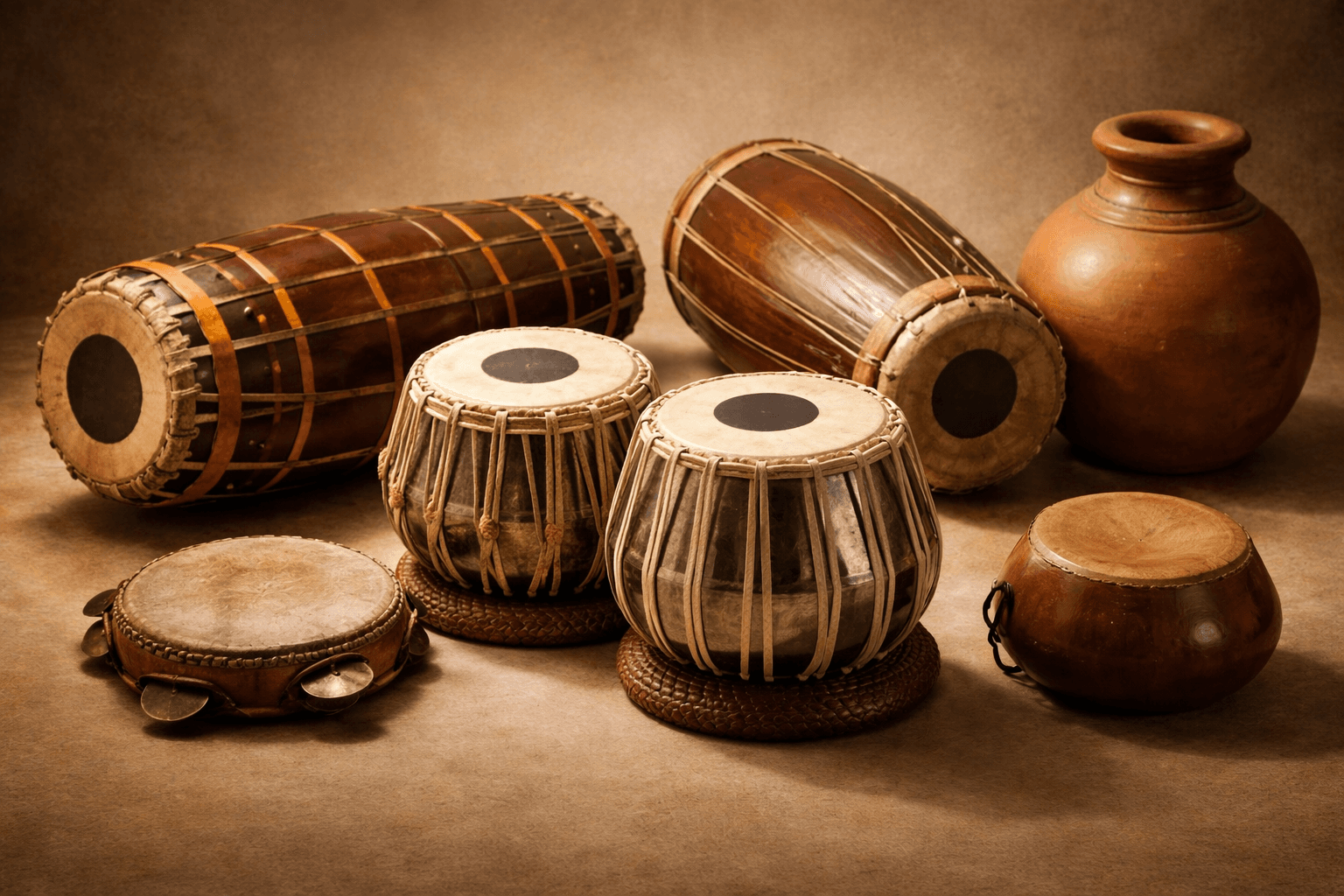 The Mridangam Carnatic compositions rely on the drum to maintain rhythmic cycles in Carnatic music, supporting melodies and enhancing tempo. In contrast, the Tabla accompaniment in Hindustani music helps vocalists and instrumentalists stay in sync during improvisation-heavy ragas.
These instruments not only mark time but also express emotions. The percussion in Indian dance music showcases how rhythm interacts with movement, tempo, and musical phrasing. Their cultural significance is immense, preserving centuries of Indian percussion heritage.
What Is Mridangam?
Meaning and Cultural Importance
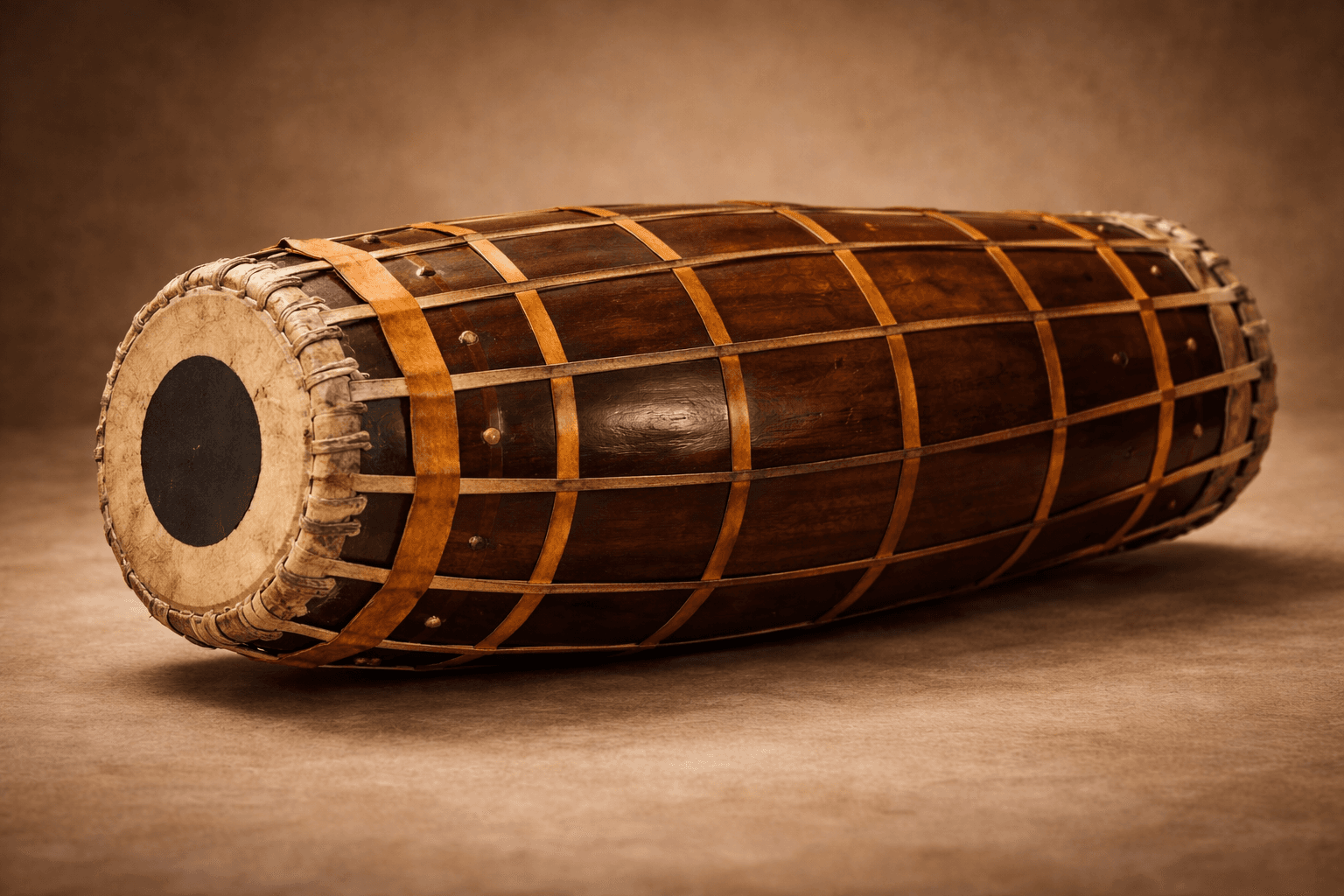
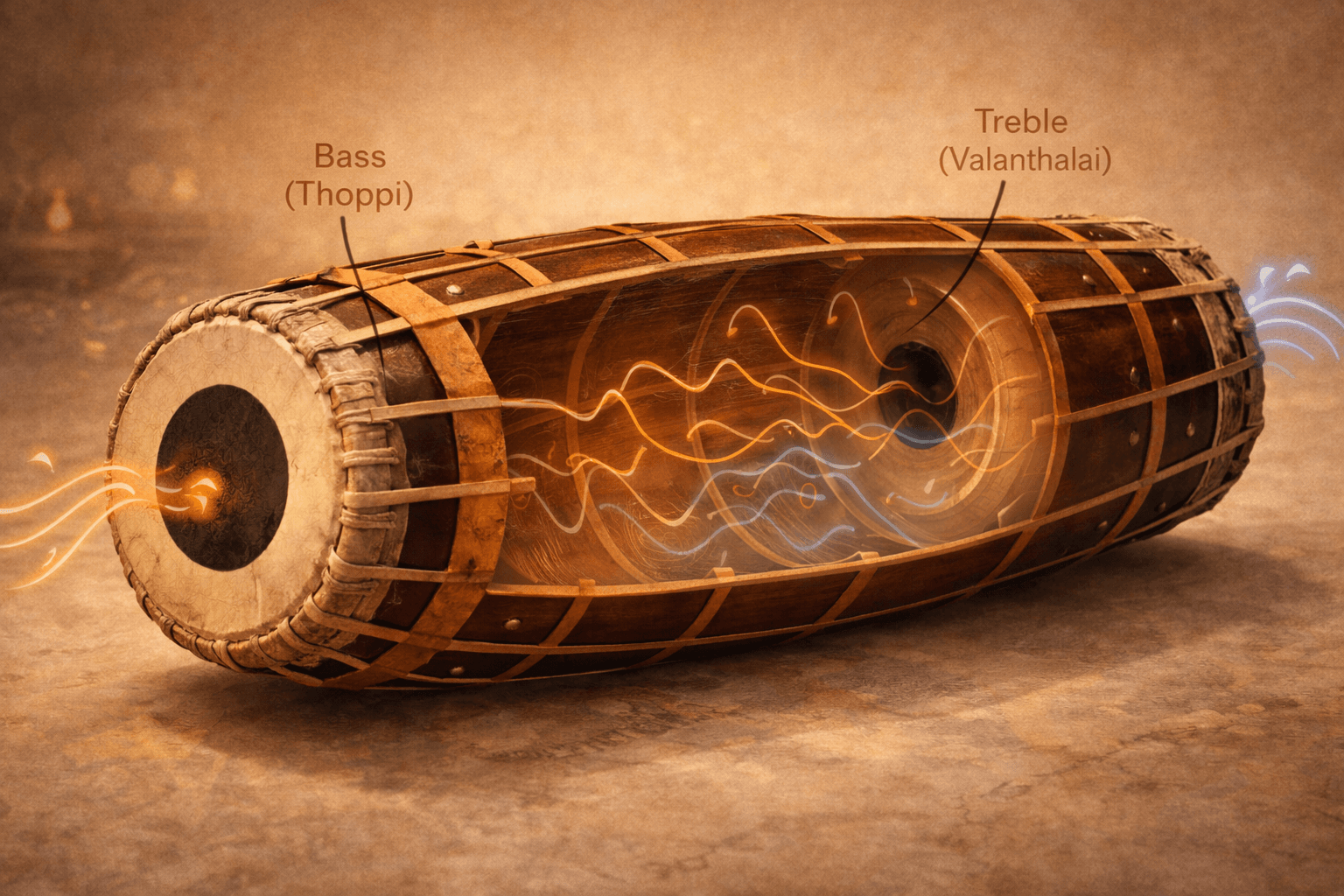
The Mridangam is a double-headed drum instrument central to South Indian classical music. It has two drumheads with distinct tones, one bass (thoppi) and one treble (valanthalai), giving it rich harmonic sounds. Historically, the Mridangam is associated with temples, concerts, and classical dance accompaniments.
Culturally, the role of Mridangam in Carnatic compositions is vital. It supports vocalists and instrumentalists by maintaining the tala and providing rhythmic dialogues. Its beats often mimic the nuances of the melody, creating a cohesive musical experience.
Why Mridangam Is Central to Carnatic Music
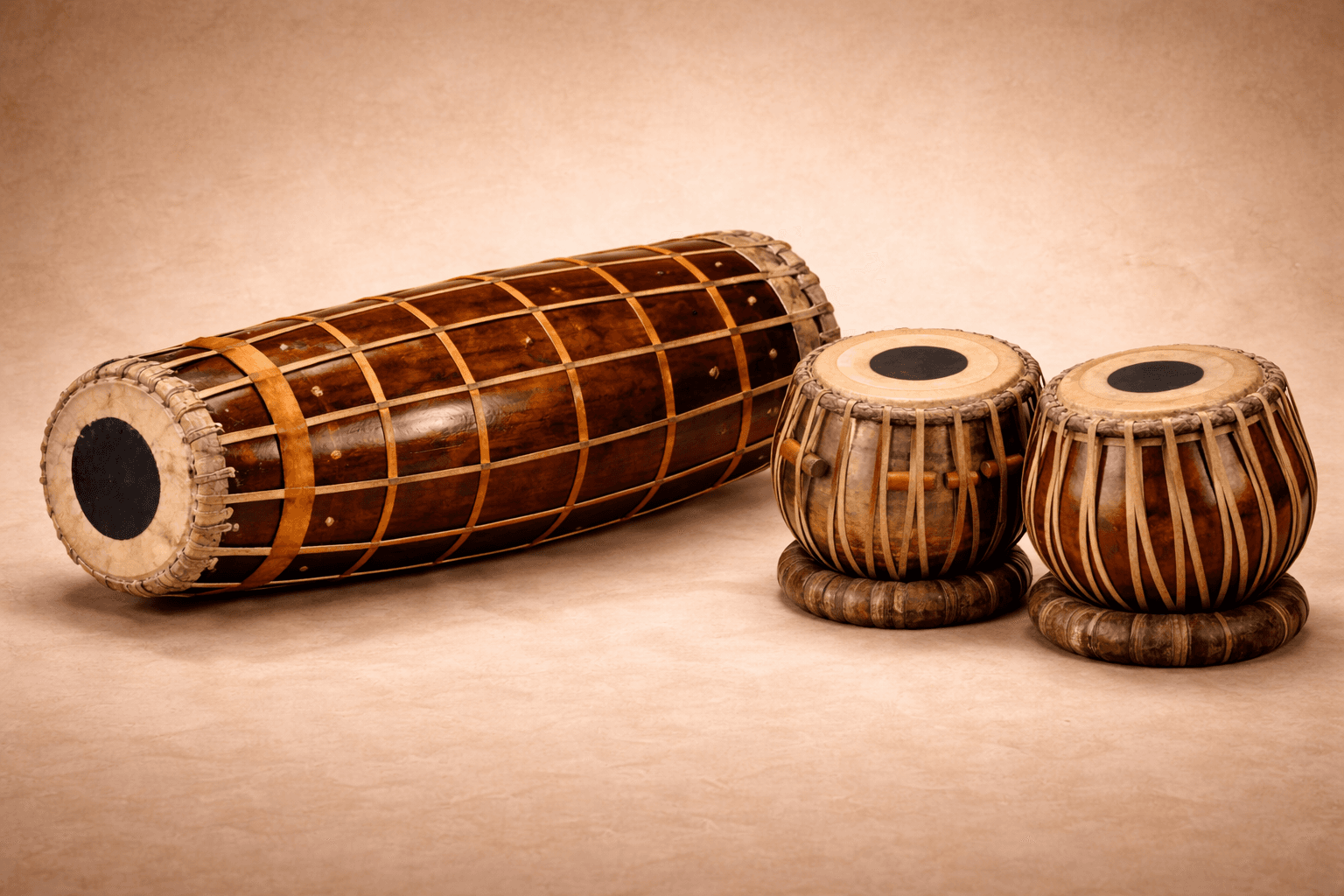 In Carnatic music, the Mridangam in Carnatic music is indispensable for maintaining tala cycles and enhancing compositions. The drum is used in kritis, varnams, and Ragam Tanam Pallavi. Its Korvai and nadai patterns add rhythmical sophistication and dynamic energy.
The Mridangam playing techniques allow for intricate improvisation while staying within defined rhythmic boundaries. This makes it a core instrument for both accompaniment and solo performances.
Historical Evolution of the Mridangam
Ancient References and Temple Traditions
The history of the Mridangam instrument traces back over two thousand years. Ancient texts, sculptures, and mythologies depict the Mridangam as a sacred instrument used in temple rituals. It was regarded as Deva Vaadyam, or the divine instrument, often associated with Lord Shiva and Ganesha.
Its presence in temple traditions shaped rhythmic patterns in Carnatic music, creating standardized talas and techniques passed down through generations.
Development Through Carnatic Music Lineage
The instrument evolved through the Carnatic rhythm system, influenced by maestros and temple schools. Mridangam playing techniques were refined over centuries, developing unique styles in regions like Thanjavur and Pudukkottai.
By the 20th century, Mridangam schools formalized training, making it accessible globally. Today, the instrument maintains its classical Indian rhythm patterns while adapting to modern performances.
Structural Design and Mechanics of the Mridangam
Materials Used in Mridangam Making
The Mridangam’s shell is usually crafted from jackfruit wood, while its two drumheads use goat or buffalo skin. A black tuning paste called syahi enhances tonal clarity. Leather straps allow pitch adjustment, creating a double-headed drum instrument with rich harmonics.
Acoustic Science Behind the Instrument
The treble head produces sharp tones, and the bass head provides resonant depth. Striking different zones with fingers and palms generates distinct sounds. This acoustic versatility allows Korvai and nadai patterns to flow naturally, giving Carnatic music its signature rhythm.
Types of Mridangam Used in Performances
Variations Based on Size and Pitch
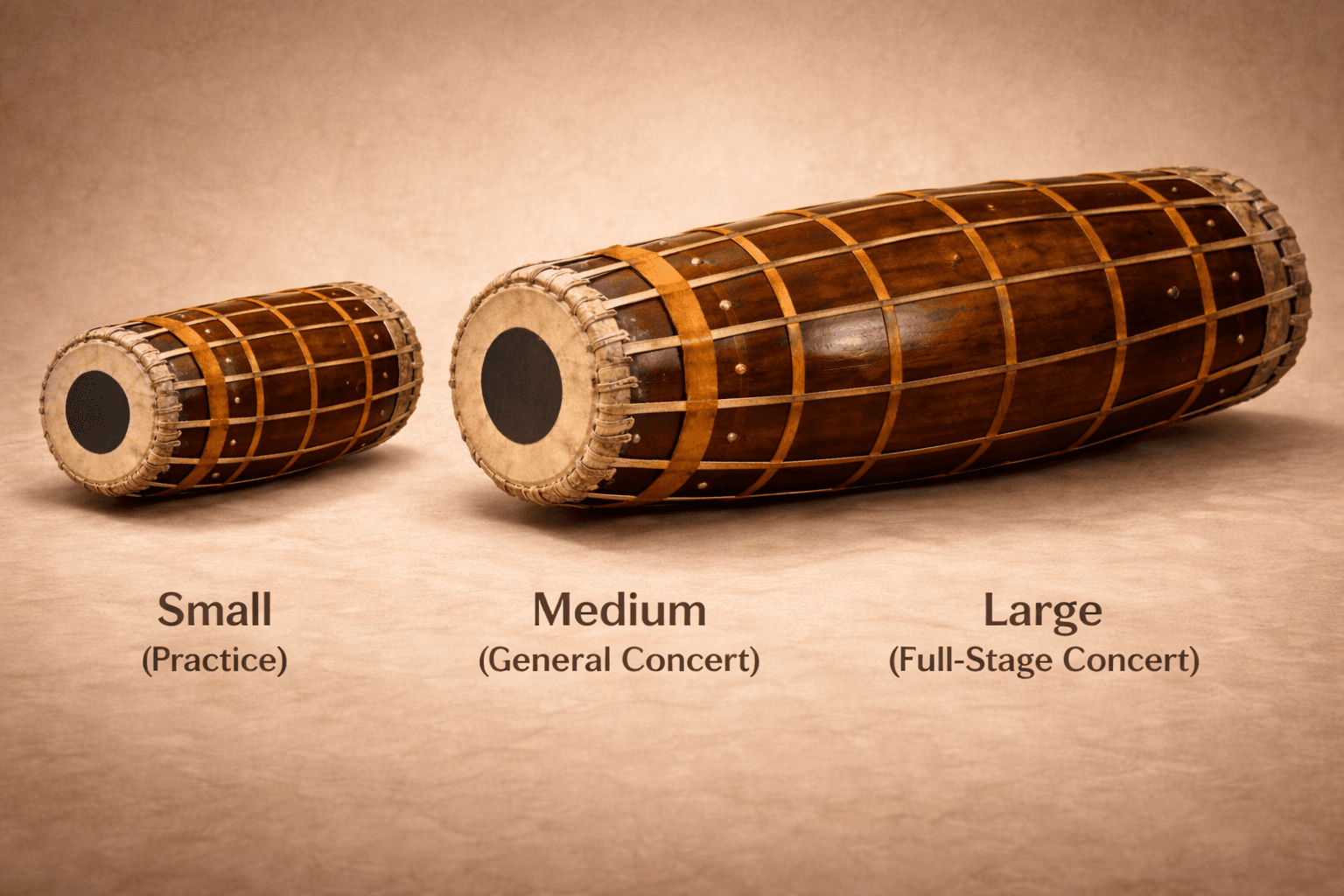
Mridangams vary slightly in size, affecting pitch and tonal quality. Smaller drums produce sharper tones, suitable for intimate performances, while larger drums offer deeper resonance for concert halls.
Mridangam Selection for Concerts and Practice
Choosing the right Mridangam depends on the performer’s style and the composition. Beginners often start with smaller, lighter drums, while professionals select instruments matching their repertoire.
Mridangam Playing Techniques and Styles
Basic Finger and Palm Techniques
Common strokes include Chapu, Dhi, Tha, and Thom, each producing a unique sound. The combination of hands and fingers creates rhythmic diversity, forming the foundation of Carnatic percussion.
Advanced Rhythmic Patterns and Improvisation
Advanced performers use Korvai and nadai patterns to craft complex rhythmic sequences. Improvisation within tala cycles allows solo performances and dynamic interplay with other instruments, highlighting the flexibility of Indian classical percussion instruments.
Role of Mridangam in Carnatic Music Compositions
Supporting Kriti, Varnam, and Ragam Tanam Pallavi
The Mridangam provides rhythmic cycles in Carnatic music, anchoring each composition. It maintains tempo, emphasizes key beats (sam in Indian classical music), and enhances the emotional impact of melodies.
Interaction Between Vocalist, Violin, and Mridangam
Percussionists listen and respond to melodic cues, creating rhythmic dialogues. This synchronization ensures that the Mridangam supports Carnatic music seamlessly, complementing improvisations and structured passages.
What Is Tabla and Its Role in Hindustani Music
Understanding Tabla as a Rhythmic Pair
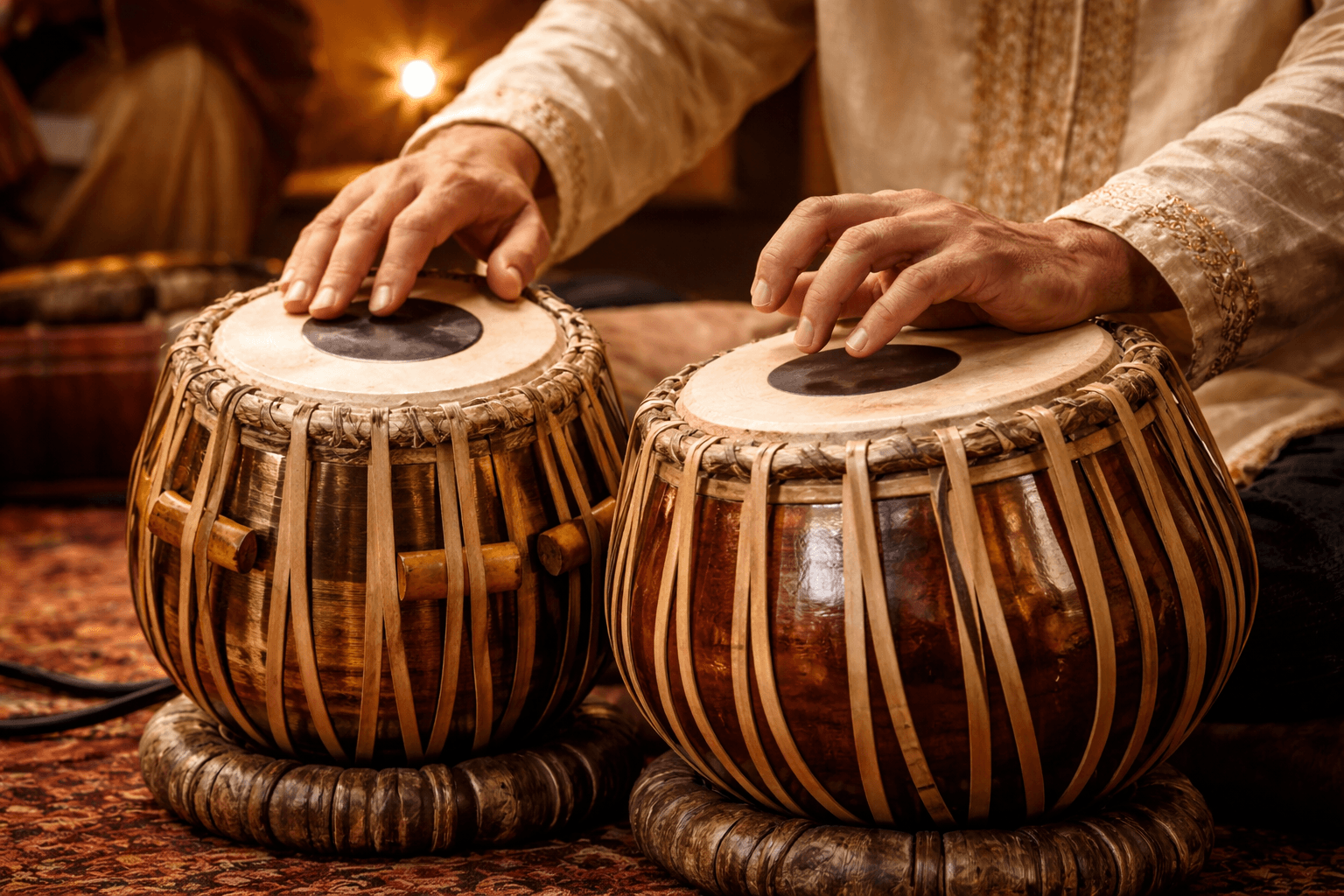
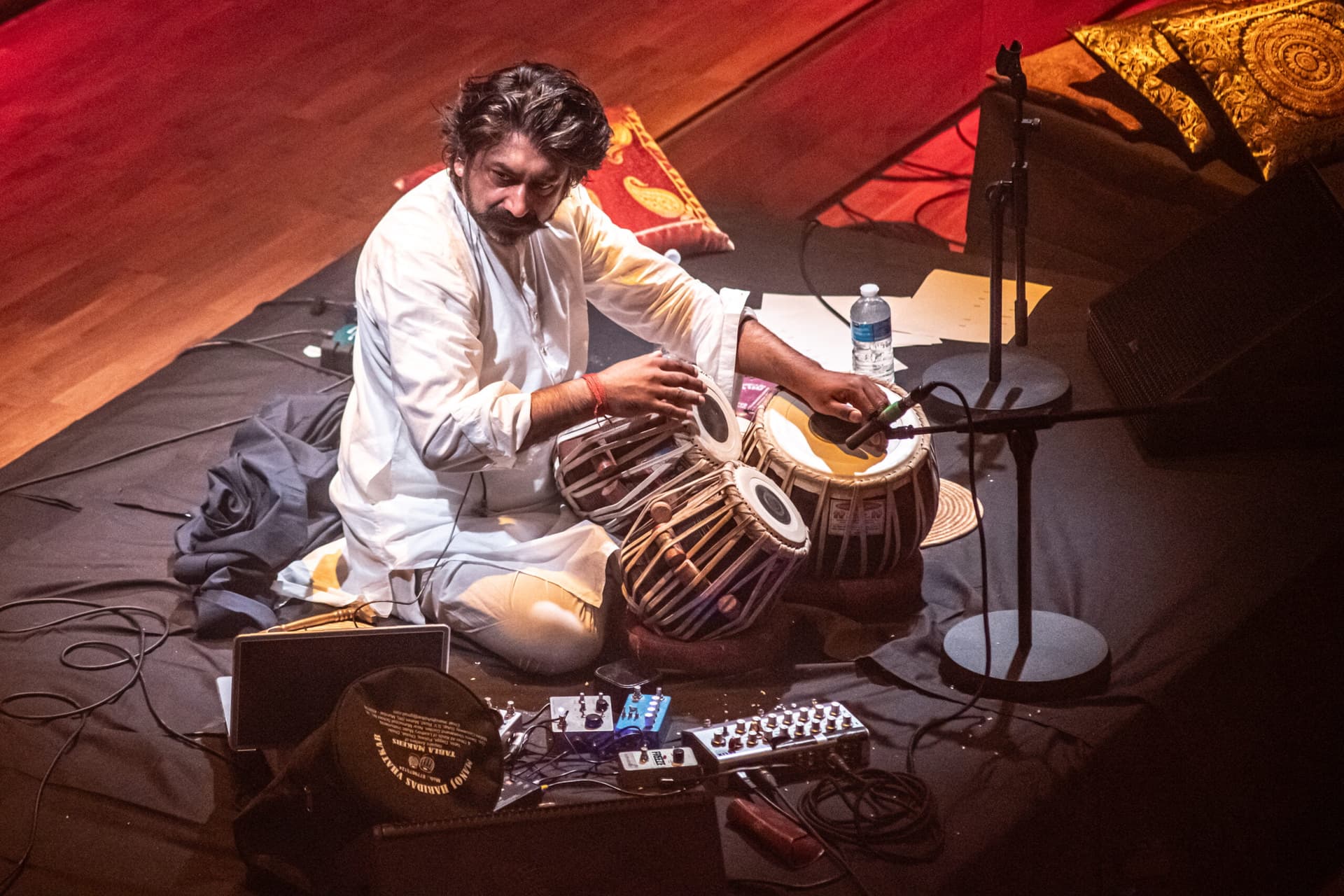
The Tabla consists of two drums: Dayan (treble) and Bayan (bass). It is the backbone of Hindustani rhythm tradition, capable of subtle tonal variations and rhythmic complexity.
Importance of Tabla in North Indian Classical Music
The Tabla accompaniment in Hindustani music guides vocalists, instrumentalists, and dancers. Through Tabla bols and compositions, performers maintain tempo, enhance melodies, and create improvisational depth.
Origins and Evolution of the Tabla
Emergence in Hindustani Music Tradition
The Tabla originated in the 18th century in North India. It evolved from the Pakhawaj and became central to Hindustani classical rhythm. Its design allowed tonal versatility and dynamic expression.
Influence of Gharanas and Performance Styles
Different gharanas, like Lucknow, Delhi, and Punjab, shaped Tabla playing techniques. Each style emphasizes unique rhythmic patterns, improvisation, and tonal qualities, preserving a rich Indian percussion heritage.
Tabla Structure, Construction, and Sound Production
Bayan and Dayan Explained
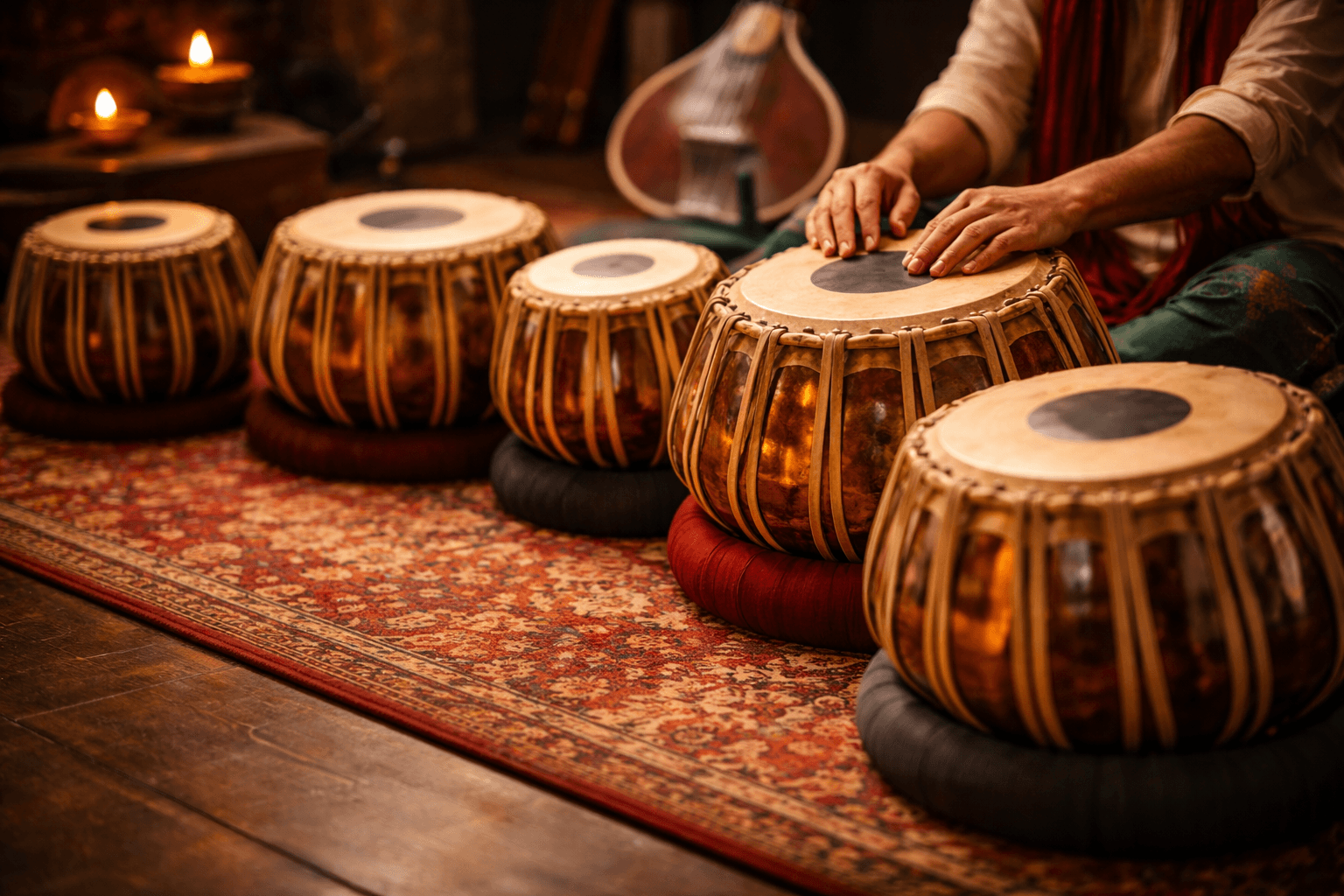
The treble Dayan produces crisp tones, while the Bayan gives deep bass. Together, they create a Tabla percussion instrument capable of diverse sounds, essential for accompaniment and solo performance.
How Syahi Shapes Tabla Tone
The black tuning paste (syahi) enhances harmonics and ensures clarity in Tabla bols and compositions. Adjusting skin tension changes pitch, allowing performers to align the Tabla with melody and tempo.
Tabla Playing Techniques and Bols
Common Bols and Their Meaning
Strokes like Dha, Dhin, Tin, and Na form the building blocks of compositions. Combining them produces Tukda and rela compositions, highlighting rhythmic mastery.
Role of Theka, Laykari, and Improvisation
Theka structures tala cycles, while Laykari concepts allow creative variations. Improvisation is a core element of Hindustani music, and Tabla players adjust rhythms dynamically during performances.
Role of Tabla in Hindustani Ragas and Forms
Accompanying Khayal, Dhrupad, and Thumri
Tabla complements melodies in vocal and instrumental forms. Its rhythm enhances emotional expression and guides tempo during improvisation-heavy ragas like Bada Khayal and Chhota Khayal.
Tabla Solo Performances and Taal Expansion
Tabla solos explore rhythmic depth, expanding tala cycles and showcasing technical skill. These performances highlight rhythmic patterns in Hindustani music and creative expression.
Mridangam vs Tabla – A Detailed Comparison
Difference in Musical Systems (Carnatic vs Hindustani)
Mridangam follows structured talas in Carnatic music, while Tabla allows flexibility in tala system in Hindustani music. Carnatic rhythm emphasizes precision, whereas Hindustani rhythm encourages improvisation.
Playing Style and Hand Techniques
Mridangam uses combined finger and palm strokes; Tabla involves precise wrist, finger, and palm techniques. Each instrument’s technique reflects its musical system and accompaniment style.
Rhythmic Approach and Improvisation
Mridangam emphasizes structured Korvai and nadai patterns, while Tabla focuses on Tukda and rela compositions. Improvisation in Tabla is often freer and adapted to melodic flow.
Construction, Materials, and Sound Texture
Mridangam is wooden with two skins, giving warm tones. Tabla combines clay, wood, and metal, producing sharp, resonant sounds. This affects how percussion supports classical music in each tradition.
Mridangam and Tabla in Contemporary and Fusion Music
Adaptation in Modern Performances
Both instruments feature in contemporary concerts, global fusion, and experimental projects. Mridangam and tabla fusion music blends Carnatic and Hindustani rhythms seamlessly.
Use in Film, Jazz, and Global Music
Percussion instruments from India enrich jazz, electronic music, and film soundtracks. They maintain classical Indian rhythm patterns while appealing to modern audiences worldwide.
Cross-Genre Collaborations in Indian Music
Mridangam–Tabla Jugalbandi Explained
A Jugalbandi pairs Mridangam and Tabla, combining Carnatic and Hindustani rhythms. Artists explore rhythmic dialogues, showcasing cross-cultural percussion collaborations.
Global Exposure of Indian Percussion
Indian percussion instruments have gained international recognition. Festivals, collaborations, and online platforms promote Indian percussion heritage globally.
Learning Mridangam and Tabla with Art Gharana
Structured Learning for Beginners and Advanced Students
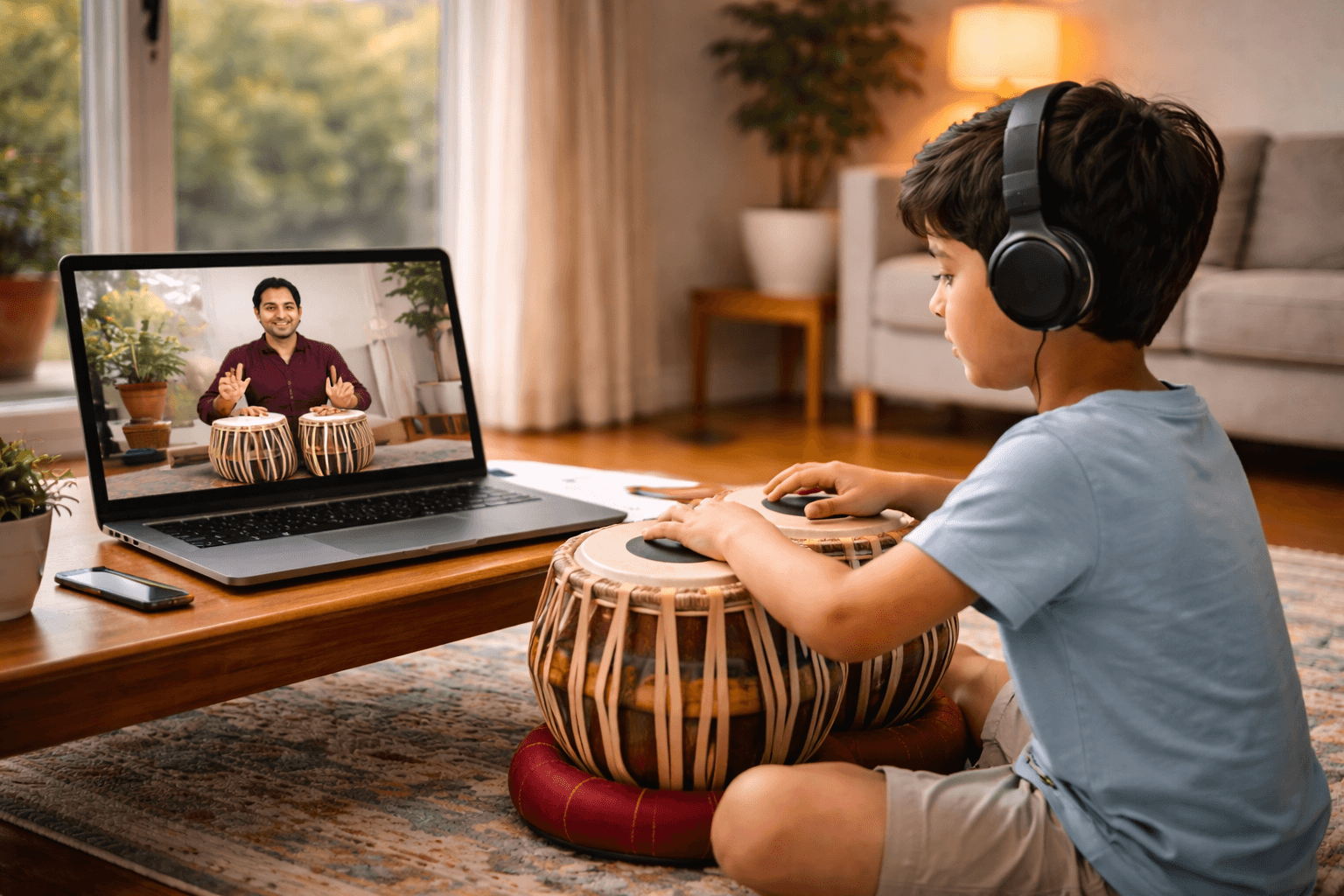
Art Gharana offers step-by-step online training for Mridangam and Tabla. Students learn rhythm, tala cycles, Mridangam playing techniques, and Tabla playing techniques efficiently.
Focus on Rhythm, Technique, and Musical Understanding
The curriculum emphasizes how Indian classical rhythm works, improving both theoretical knowledge and practical skill. Students gain confidence in solos, accompaniments, and ensemble performances.
Why Understanding Percussion Enhances Musical Mastery
How Rhythm Improves Vocal and Instrumental Performance
Rhythm training strengthens timing, coordination, and expressiveness. Both Mridangam in Carnatic music and Tabla in Hindustani music teach musicians to follow and respond to tempo accurately.
Building Strong Taal and Laya Sense
A solid grasp of rhythmic cycles in Carnatic music and tala system in Hindustani music allows performers to explore improvisation and classical Indian rhythm patterns confidently.
Conclusion – The Timeless Power of Rhythm
Mridangam and Tabla as Pillars of Indian Classical Music
The Mridangam vs Tabla comparison highlights two complementary traditions of Indian music. They preserve heritage, enrich performances, and inspire fusion. Mastering these instruments enhances musicality and deepens appreciation for Indian classical percussion instruments.
Frequently Asked Questions (FAQs)
1. What is the main role of the Mridangam in Carnatic music?
It maintains tala, supports melody, and adds rhythmic complexity.
2. How is Mridangam different from Tabla?
Mridangam is central to Carnatic music with warm tones; Tabla is for Hindustani music with sharp tones.
3. Is Mridangam older than Tabla?
Yes, Mridangam predates Tabla by over a millennium.
4. Can Mridangam and Tabla be played together?
Yes, in fusion music and Jugalbandis, combining rhythm traditions.
5. Which instrument is better for beginners?
Both are suitable, but beginners often start with smaller Mridangams or Tabla depending on interest.
6. How long does it take to learn Mridangam or Tabla?
Basic proficiency takes 6–12 months; mastery can take years.
7. Why is rhythm important in Indian classical music?
Rhythm guides melody, enhances expression, and supports improvisation in all compositions.