ChatGPT
 Google AI
 Grok
Grok Claude
Learning to play “Mary Had a Little Lamb” on piano is an excellent first step for beginners. This traditional nursery rhyme is simple, familiar, and perfect for young pianists or anyone starting piano. With the right guidance, you can master both the melody notes and chords quickly. Learning this song also builds confidence and helps develop piano hand coordination, which is essential for more complex songs later.
This step-by-step piano guide is designed for the USA audience, focusing on beginner piano songs and simple techniques. By practicing right-hand and left-hand piano practice, using a piano cheat sheet, and following interactive piano lessons, you can play this song smoothly. This tutorial also introduces C major piano chords, G major piano chords, and essential finger positions for piano beginners.
Introduction to “Mary Had a Little Lamb”
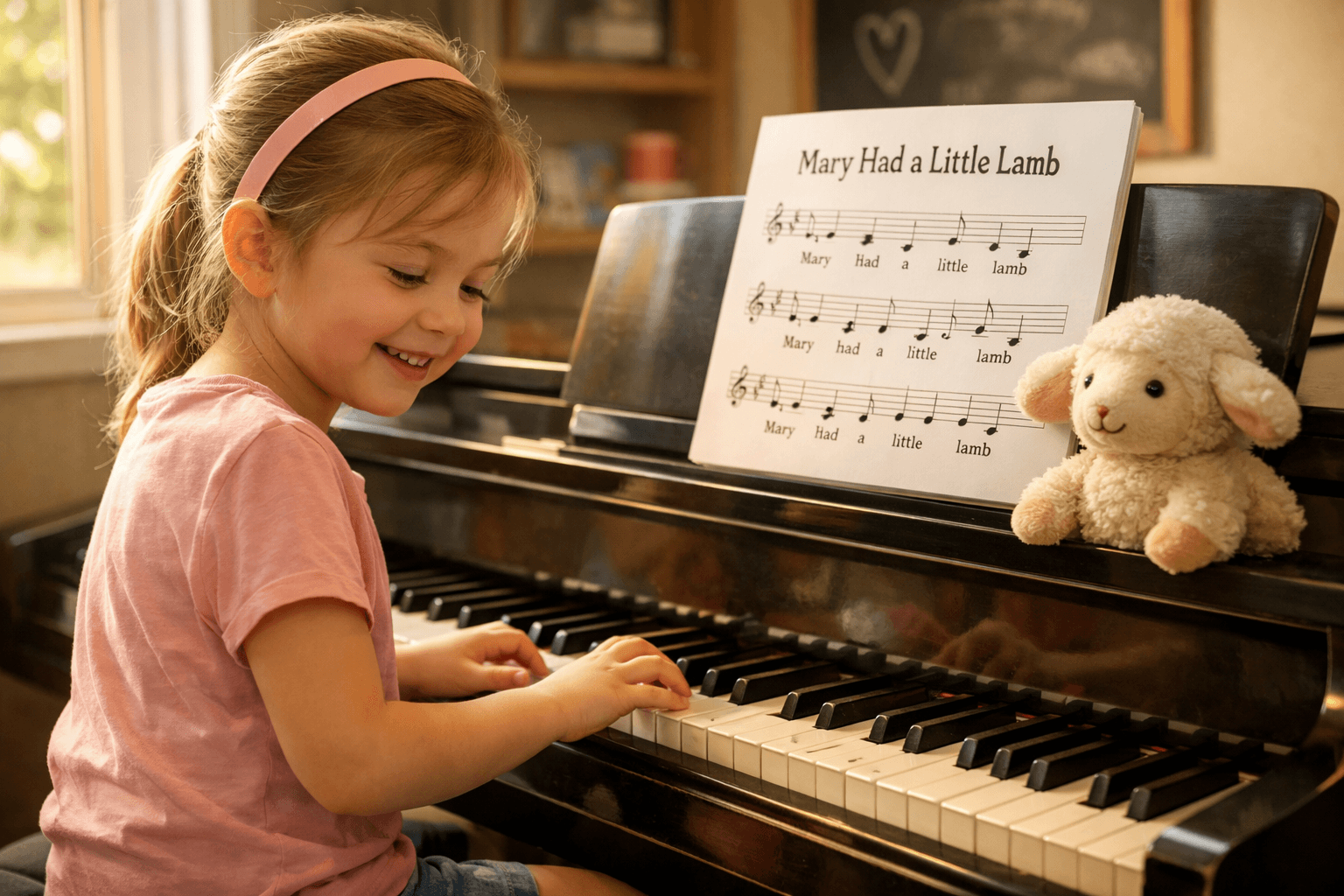 “Mary Had a Little Lamb” is a traditional nursery rhyme written by Sarah Josepha Hale in Boston, 1816. The story was inspired by Mary Sawyer, who took her lamb to school one day. This simple story became a timeless rhyme that children in the USA and around the world love. Its clear melody makes it ideal for simple piano songs for kids.
For beginner pianists, starting with a nursery rhyme like this builds foundational skills. Learning the melody notes E, D, C and basic chords improves hand coordination. Art Gharana’s approach to teaching piano to beginners focuses on structured, easy-to-follow lessons that blend early piano learning techniques with fun practice. This ensures that learners gain piano learning confidence while enjoying the song.
Understanding the Piano Notes for “Mary Had a Little Lamb”
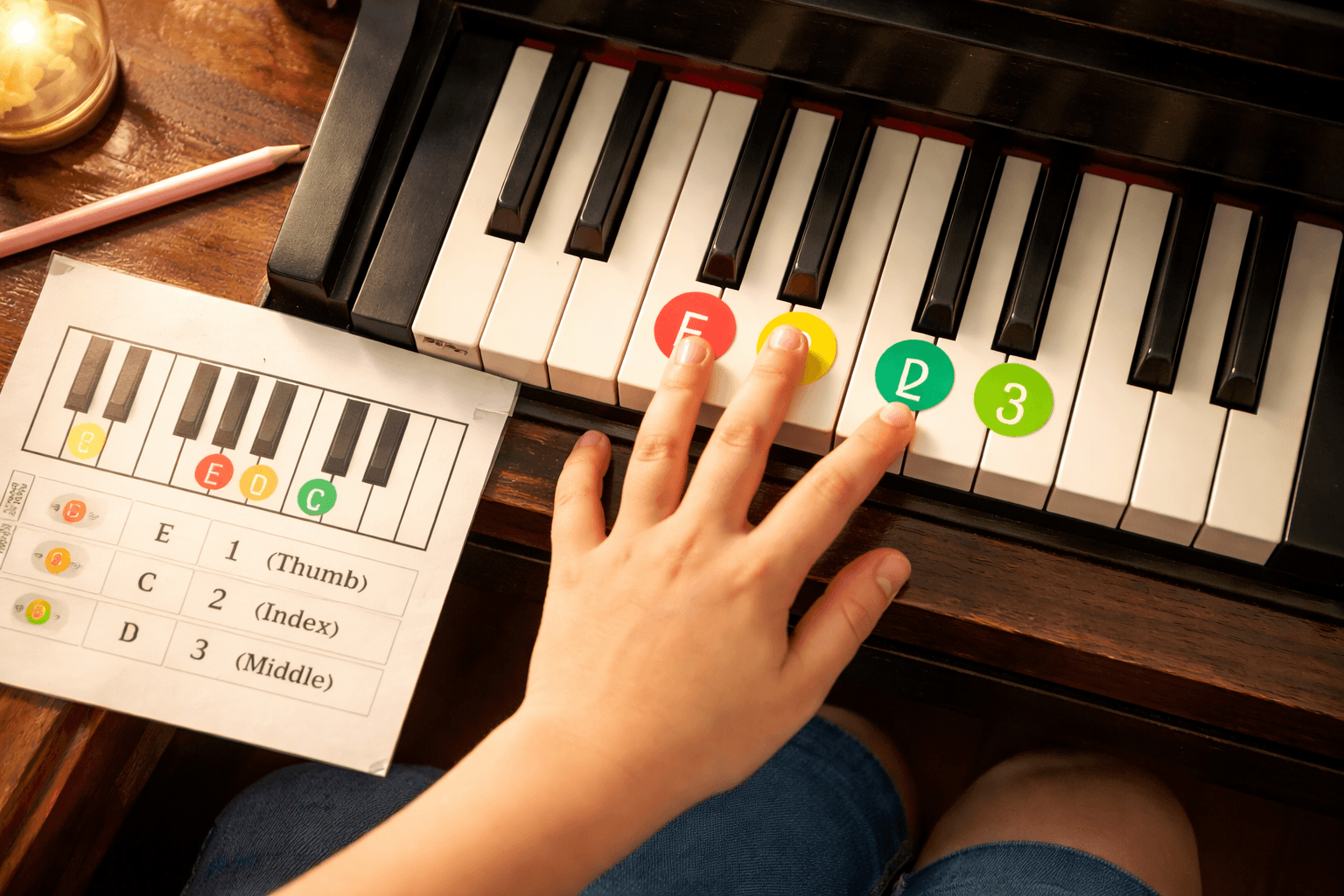
Quick Reference Cheat Sheet
A piano cheat sheet makes learning “Mary Had a Little Lamb” easier. The melody uses only three notes: E, D, C. Beginners can follow the table below to see the notes and finger numbers:
Note Finger (Right Hand) Finger (Left Hand) E 1 (Thumb) 5 (Pinky) D 2 (Index) 4 (Ring) C 3 (Middle) 3 (Middle)
This visual guide helps beginners learn piano melody notes without confusion. Using a cheat sheet makes hands separately or together practice much easier.
Finger Positions for the Right Hand
For smooth play, start with proper finger positions for piano. Use thumb on E, index on D, and middle finger on C. Practice slowly, ensuring fingers move comfortably. This prevents tension and improves piano hand coordination. Beginners should repeat practice phrases and rhythm several times before increasing speed.
Finger Positions for the Left Hand
The left hand usually plays simple piano chords for beginners. Start with basic C major piano chords and G major piano chords. Keep fingers relaxed, with the pinky on the lowest note. Practicing piano accompaniment for nursery rhymes strengthens hand independence. Slowly add the left-hand while the right-hand plays the melody for smooth hands separately or together coordination.
Step-by-Step Guide to Playing the Song
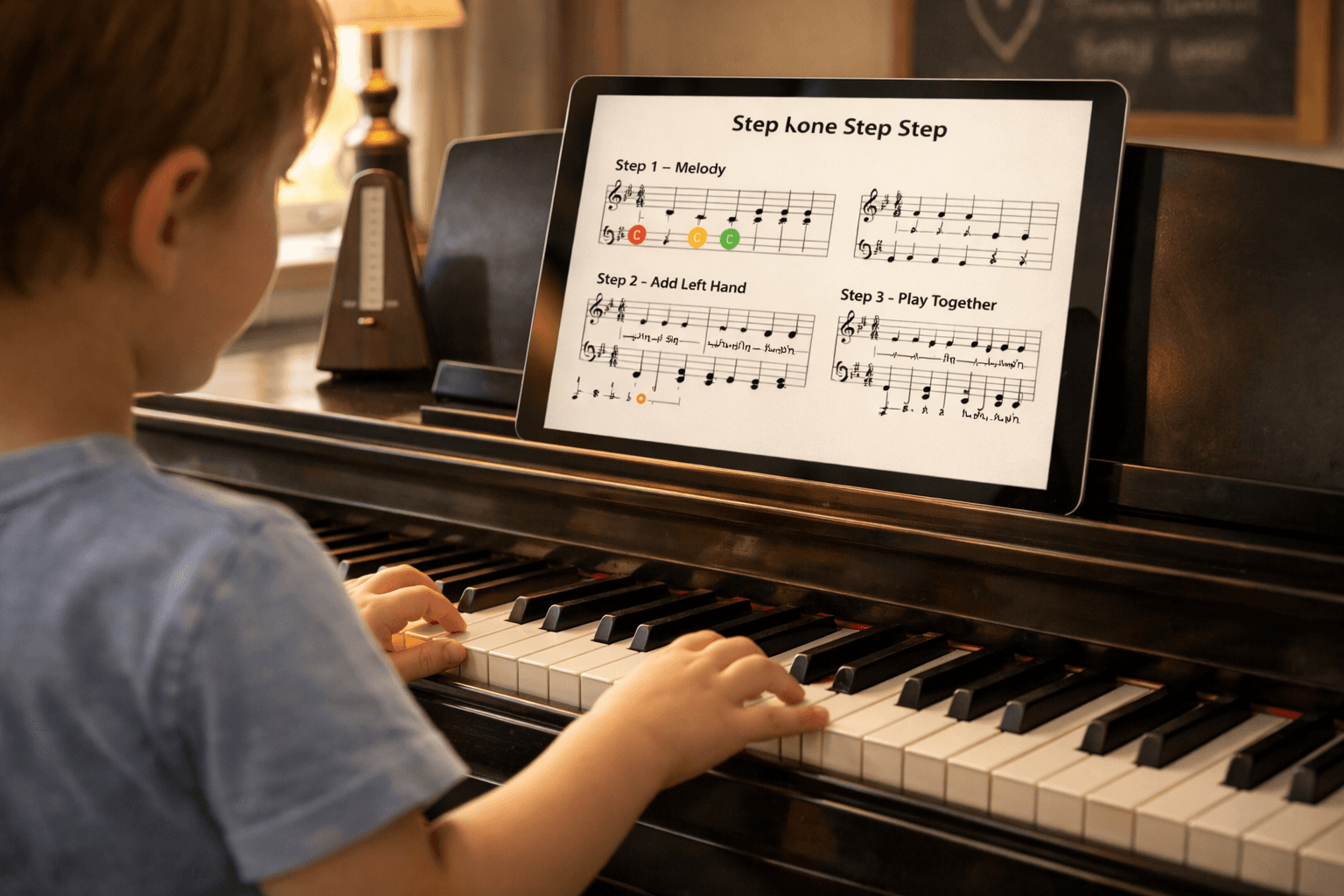
Breaking Down the Right Hand Melody
Start with the right hand only. Play notes E, D, C in the correct sequence. Focus on rhythm and timing. Avoid rushing; beginners often skip notes. Practicing in small sections helps memorization. Use metronome practice to maintain a steady pace and improve piano learning confidence.
Adding the Left Hand
Once the melody is comfortable, add the left-hand chords. Play C major piano chords in the first part, then G major piano chords when required. The left hand provides harmony and rhythm. Gradually synchronize both hands to avoid mistakes. Beginners often need several repetitions before piano hand coordination feels natural.
Combining Both Hands
Playing hands together is the final step. Begin slowly, ensuring both hands align with the melody. Focus on even rhythm and smooth transitions. Practicing step-by-step piano guide methods allows learners to play confidently and naturally. Using piano practice tips for beginners, like short daily sessions, accelerates progress.
Chords and Progressions for “Mary Had a Little Lamb”
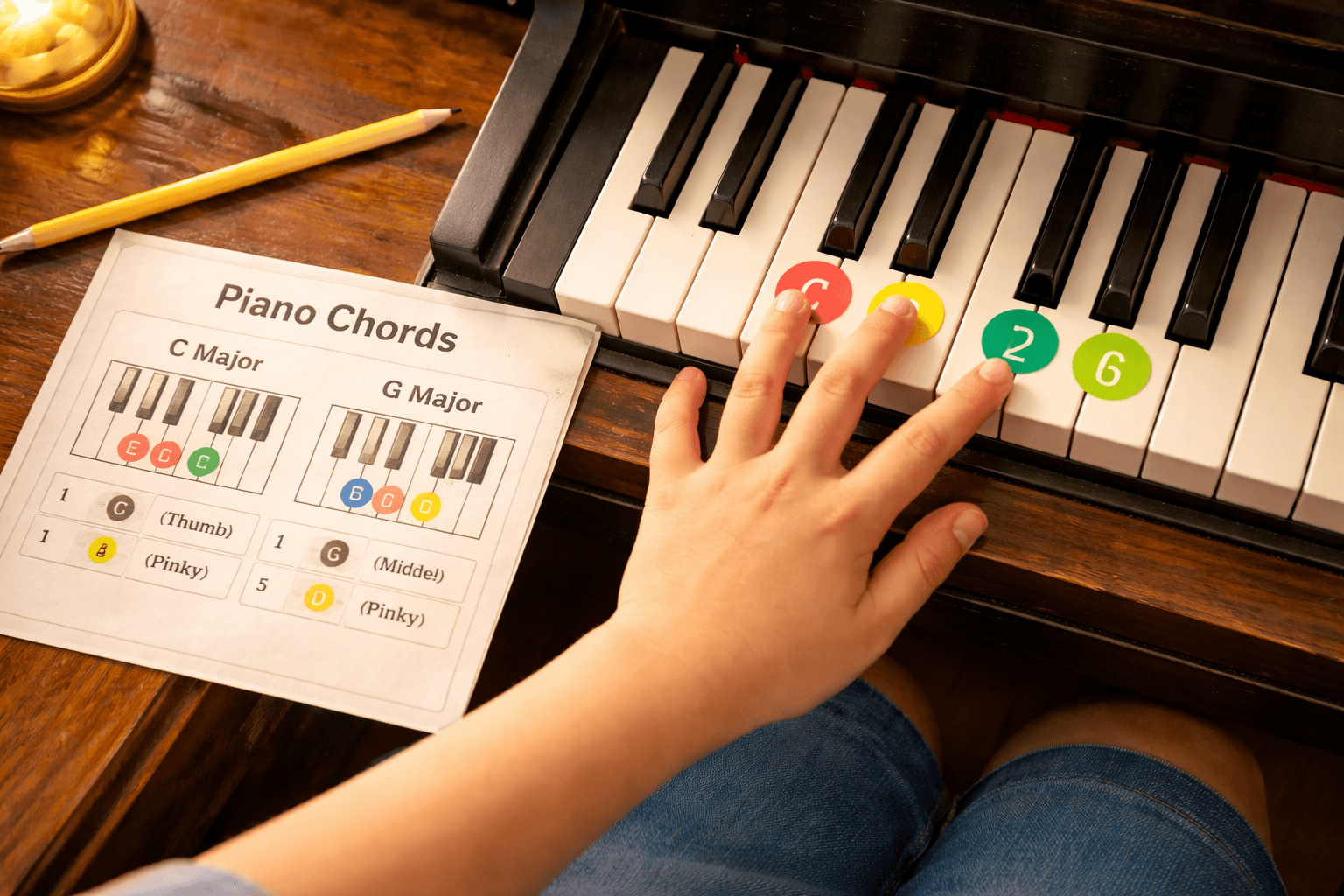 The song uses simple chords. Beginners start with C major piano chords and G major piano chords. The table below shows finger positions:
Chord Notes Finger (Right Hand) Finger (Left Hand) C C, E, G 1, 3, 5 5, 3, 1 G G, B, D 1, 3, 5 5, 3, 1
Simple chord progressions, like C → G → C, provide harmony and make easy piano songs to learn enjoyable. Memorizing chords helps improve speed and hand coordination. Using piano lesson plan techniques, learners combine chords with melody for a complete performance.
Lesson Plan for Beginners
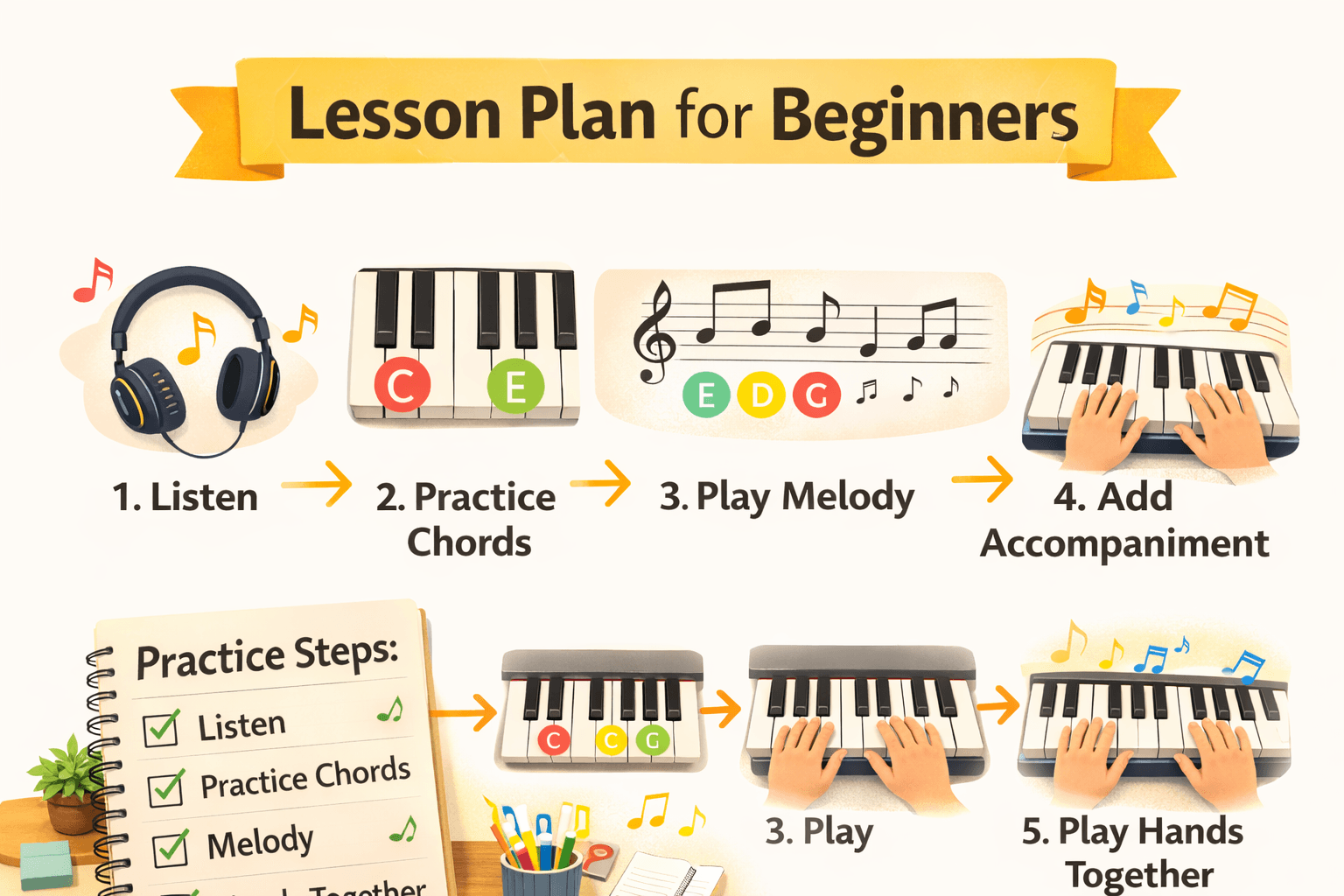
Step 1 – Listen to the Song
Listening to the original Mary Had a Little Lamb melody improves timing and note recognition. Beginners should repeat small sections while following piano sheet music for kids. Listening also reinforces practice phrases and rhythm.
Step 2 – Practice the Chords
Start with the left-hand chords only. Slowly repeat C major piano chords and G major piano chords. Finger memory improves with repetition. Early piano learning techniques recommend 10-15 minutes per session.
Step 3 – Focus on the Right Hand Melody
Practice short sections of the melody at a slow pace. Accuracy is more important than speed. Break the song into small phrases for better learning. This step builds confidence and piano hand coordination.
Step 4 – Add Left-Hand Accompaniment
Combine the right-hand melody with left-hand chords gradually. Focus on timing and synchronization. Beginners often practice slowly, then increase speed. This technique strengthens overall piano practice confidence.
Step 5 – Play Hands Together
Once both hands are comfortable, play the full song. Use piano tutorial video or guided lessons to compare accuracy. Focus on smooth transitions and rhythm. This final step completes the step-by-step piano guide for beginners.
Practice Techniques to Improve Quickly
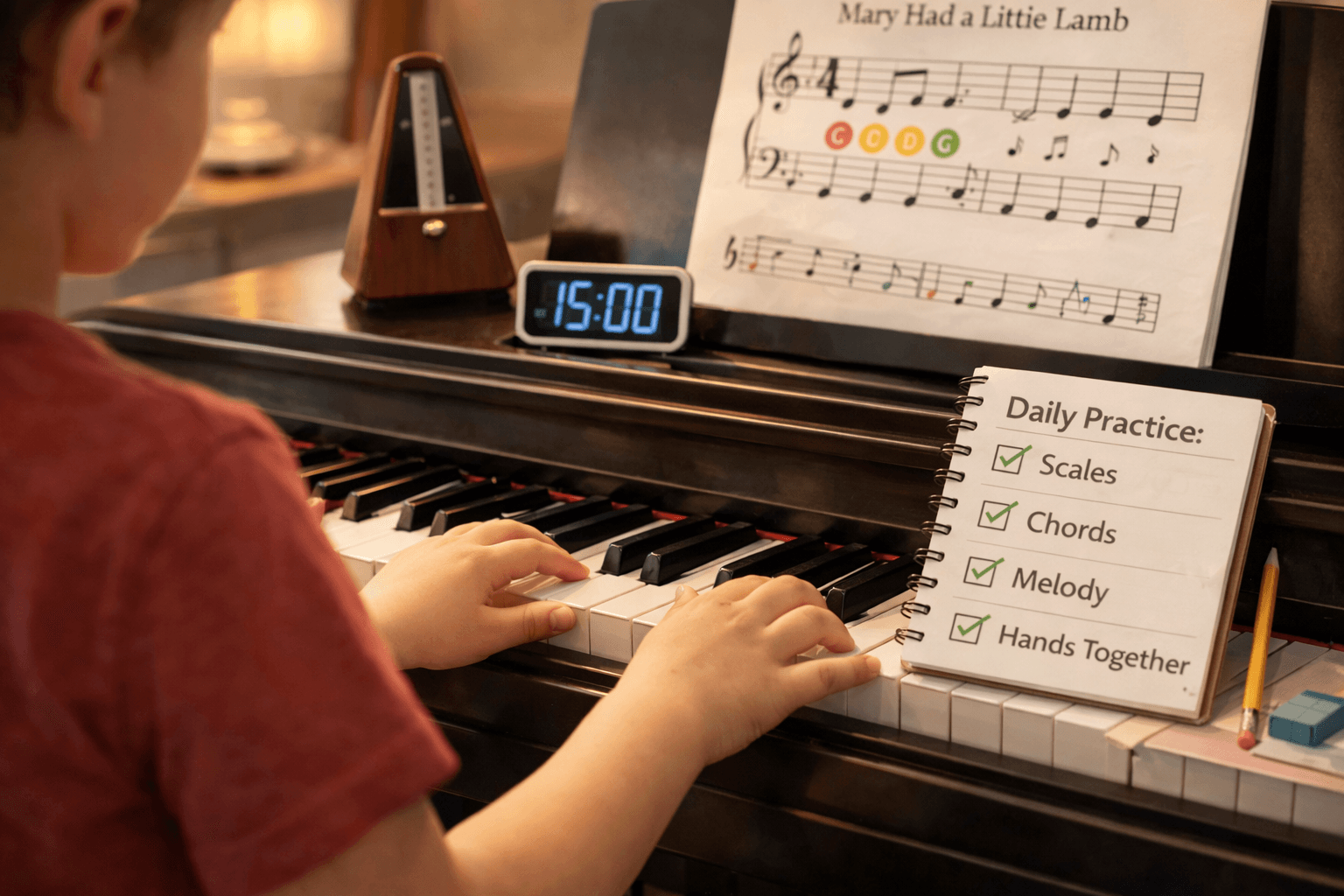 Daily practice is essential. Short sessions of 15-20 minutes work best for beginner level piano learners. Exercises for finger strength and coordination accelerate progress. Using a metronome practice or backing track helps maintain steady timing. Avoid rushing; mistakes slow learning. Repeat practice phrases and rhythm for mastery.
Next Steps After Learning “Mary Had a Little Lamb”
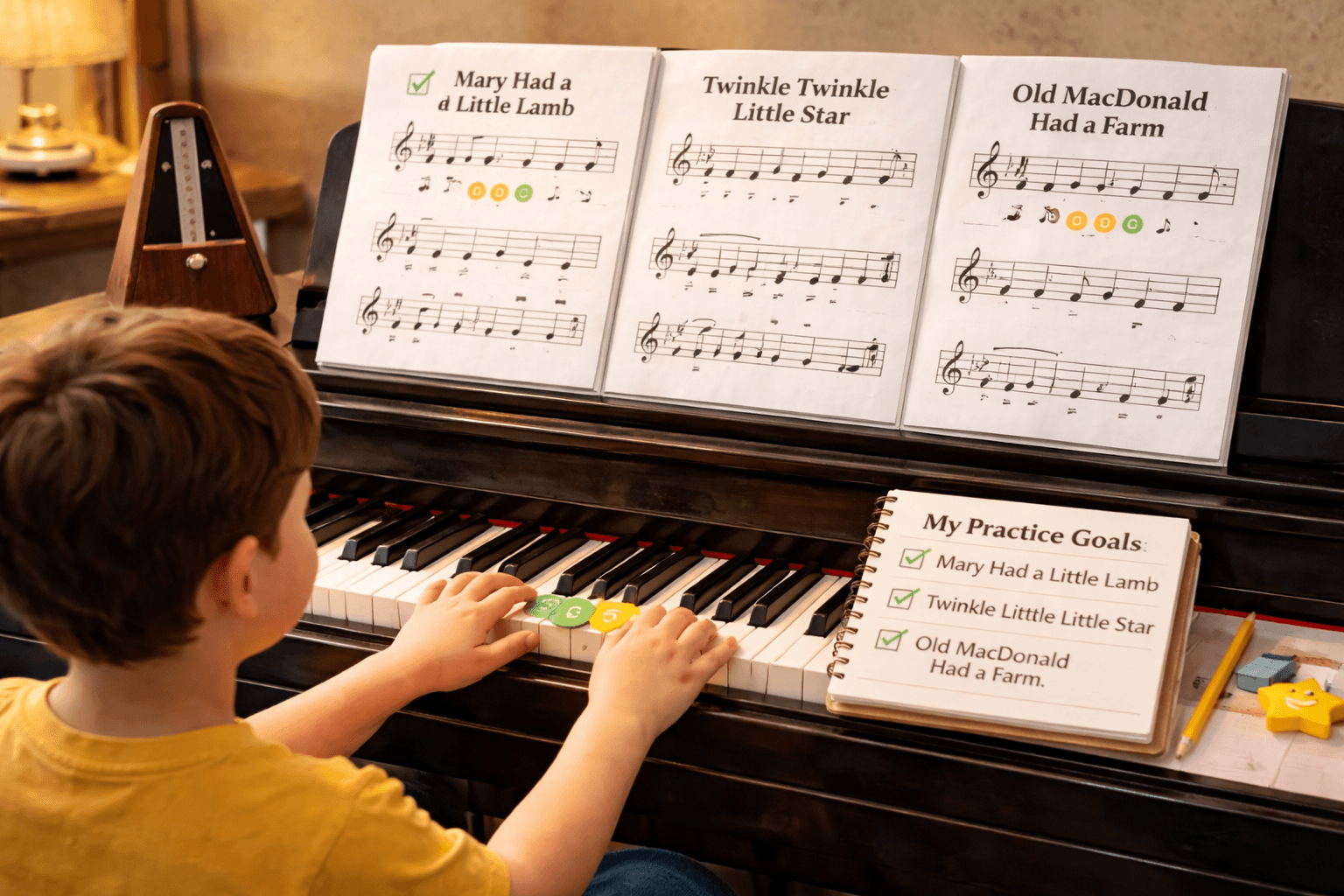 After mastering this nursery rhyme, progress to songs like Twinkle Twinkle Little Star or Old MacDonald Had a Farm. These songs build on skills like piano hand coordination, finger positions for piano, and piano chord progressions. Consistent practice develops confidence and prepares learners for more complex interactive piano lessons.
Why Choose Art Gharana for Piano Learning
 Art Gharana uses a structured approach to simplify piano learning for beginners. Lessons focus on learning piano step by step with personalized guidance. Students get support on hands separately or together, piano accompaniment for nursery rhymes, and piano melody notes. Beginners gain piano learning confidence quickly. Free sessions are available to try their method.
Conclusion
Learning to master “Mary Had a Little Lamb” on piano is achievable for any beginner. By practicing melody notes, left-hand chords, and coordinating both hands, learners gain essential piano skills. Following piano practice tips for beginners ensures steady progress. Starting with simple songs builds confidence, sets a strong foundation, and encourages exploration of more easy piano songs to learn.
FAQ’s
How long does it take to learn “Mary Had a Little Lamb” on piano?
Most beginners can learn it in 1–3 days with consistent short practice sessions.
Do I need prior piano experience to play this song?
No, it is ideal for complete beginners and children learning piano.
Which hand should I practice first?
Start with the right-hand melody, then gradually add the left-hand chords.
Can I use a metronome while learning this song?
Yes, metronome practice helps maintain steady rhythm and timing.
What chords are used in “Mary Had a Little Lamb”?
The song mainly uses C major piano chords and G major piano chords.