ChatGPT
 Google AI
 Grok
Grok Claude
The Lydian mode on piano is a bright and dreamy scale that expands a musician’s ability to explore modal music. Unlike the traditional major scale, the Lydian mode has a raised fourth note, giving it an ethereal and floating quality that works beautifully in jazz, rock, and modern piano compositions. Understanding Lydian mode music theory helps pianists analyze both melodic structure and harmonic structure in songs.
Learning the Lydian mode piano scale strengthens awareness of scale degrees, tonic note, and root note relationships. Pianists gain skills to build Lydian mode chords, play modal melodies, and improvise confidently. Once the pattern becomes familiar, the Lydian mode opens doors to expressive creativity across different keys and styles of tonal music.
Introduction to the Lydian Mode
 The Lydian mode in music is a seven-note diatonic scale similar to the major scale, but with a raised fourth. This one-note change gives the mode a luminous and open sound, often described as “dreamy” or “floating,” unlike the standard Ionian mode.
Musicians often use the Lydian mode piano scale to create uplifting and expansive melodies. Its unique sound emphasizes perfect fifths and an augmented fourth, providing a sense of tension that resolves smoothly without feeling heavy, making it a favorite in both classical and modern modal music.
What is the Lydian Mode in Music
The Lydian mode is the fourth mode of the major scale, meaning it starts on the fourth scale degree of the parent key. For example, F Lydian uses the same notes as C major scale but starts on F, creating a raised fourth interval above the tonic note, which is the defining characteristic of the Lydian mode piano scale.
Why the Lydian Mode Sounds Bright and Dreamy
The raised fourth creates a tension between the perfect fourth and the augmented fourth, giving the Lydian scale a floating, airy sound. This quality is perfect for composing melodies that feel optimistic and spacious while maintaining the familiar brightness of the major scale.
Why Pianists Should Learn the Lydian Mode
Learning the Lydian mode on piano helps pianists understand modal music theory, recognize scale degree patterns, and create fresh melodic structure. It also prepares musicians for improvisation, modern harmonies, and song analysis in western music theory.
What the Lydian Mode Means in Music Theory
 The Lydian mode in music is a core element of musical modes, derived from the major scale with a modification of the fourth note. This slight adjustment creates an augmented fourth, which distinguishes Lydian from Ionian and gives it a unique place in modal music theory.
The Lydian mode also appears in tonal music because its brightness and open sound complement dominant harmony. It is widely used in jazz, film music, and contemporary piano compositions, providing a dreamy alternative to the standard major scale.
Definition of the Lydian Mode
The Lydian mode is a seven-note diatonic scale following the interval pattern: whole step, whole step, whole step, half step, whole step, whole step, half step. This sequence includes major second, major third, augmented fourth, perfect fifth, major sixth, and major seventh, producing its distinct airy quality.
Relationship Between Lydian Mode and the Major Scale
The Lydian mode piano scale shares all notes with its parent major scale but starts on the fourth scale degree. For example, F Lydian uses all C major scale notes, but the raised fourth (B natural above F) produces the characteristic Lydian sound.
Historical Origins in Greek Modes
The Lydian mode comes from ancient Greek modes, one of the seven systems used to organize musical pitch and intervals. Later, medieval theorists adopted Lydian into church and modal music, and it now forms part of modern western music theory.
Why the Lydian Mode is Called a Raised Fourth Mode
The defining feature of Lydian is the augmented fourth interval above the tonic note, often called a #4. This note differentiates it from Ionian (major) and gives the scale its bright, floating, and slightly otherworldly sound.
Lydian Mode Formula Table
Step Interval Pattern 1 → 2 Whole step 2 → 3 Whole step 3 → 4 Whole step 4 → 5 Half step 5 → 6 Whole step 6 → 7 Whole step 7 → 8 Half step
This Lydian mode formula explains how the raised fourth differentiates the scale from the major scale.
Structure and Formula of the Lydian Scale
 The Lydian mode on piano uses the same notes as its parent major scale but starts on the fourth scale degree, giving it a raised fourth or augmented fourth. This small difference creates a dreamy, floating sound often used in jazz, film, and contemporary piano compositions.
Understanding the Lydian mode formula helps pianists build scales in any key. Once the pattern is clear, musicians can quickly recognize scale degrees, tonic notes, and the characteristic augmented fourth while improvising or composing modal music.
Whole Step and Half Step Pattern
The Lydian mode step pattern is whole, whole, whole, half, whole, whole, half. This arrangement includes the augmented fourth instead of a perfect fourth, producing the unique bright and open tonal color that distinguishes it from the Ionian major scale.
Lydian Mode Formula Explained
The Lydian mode formula can be written as 1–2–3–#4–5–6–7. It contains intervals such as major second, major third, augmented fourth, perfect fifth, major sixth, and major seventh, forming the basis for Lydian mode piano scale exercises and chord construction.
The Raised Fourth Note
The raised fourth or #4 is the defining feature of the Lydian scale. This note produces tension that resolves smoothly to the perfect fifth, giving the scale its signature airy and magical sound. Pianists quickly recognize the Lydian mode intervals by practicing scales and melodies emphasizing the augmented fourth.
Why the Lydian Mode Feels Bright and Floating
Because the Lydian mode in music removes the perfect fourth and replaces it with an augmented fourth, melodies feel lifted and open. This gives composers and pianists a wide range of expressive possibilities, particularly for dreamy, cinematic, or ethereal pieces.
Lydian Mode Formula Table
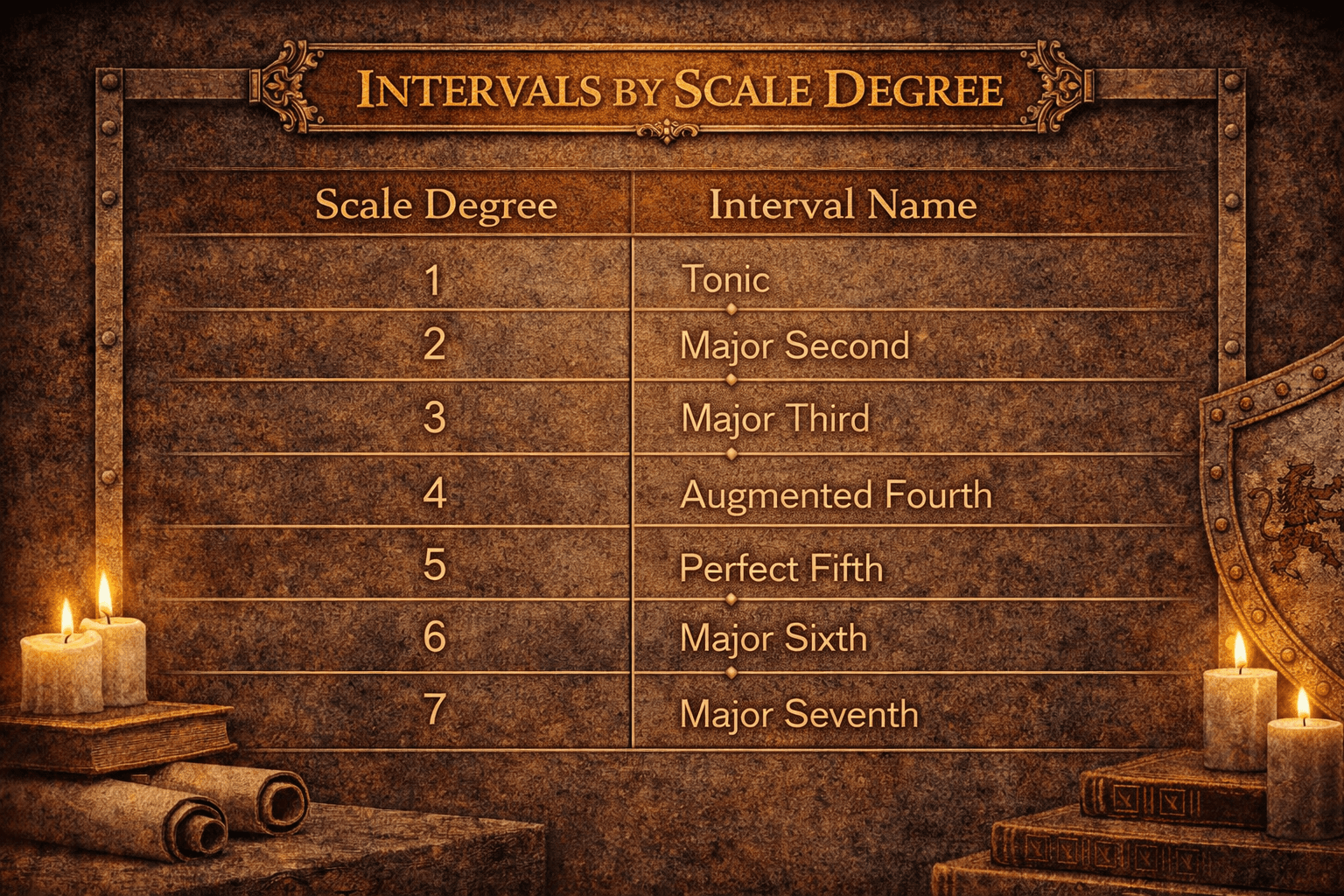
This table clearly shows the Lydian mode intervals and highlights the augmented fourth that defines its sound.
Intervals Found in the Lydian Mode
 Intervals shape the distinct personality of the Lydian mode piano scale. Each distance between notes contributes to its dreamy and floating character. Learning these intervals helps pianists understand melodic structure, harmonic structure, and improvisation possibilities in modal music.
Familiarity with Lydian mode intervals allows pianists to visualize notes on the keyboard, predict which intervals create tension, and identify stable tones that resolve naturally to the tonic note.
Understanding Musical Intervals in Piano Theory
In western music theory, an interval measures the distance between two notes. The Lydian mode features intervals such as major second, major third, augmented fourth, perfect fifth, major sixth, and major seventh, forming the framework of the Lydian scale piano.
Lydian Mode Interval Pattern
The Lydian mode interval pattern differs from the major scale because the fourth note is raised. This augmented fourth interval creates a brighter, more open sound, ideal for floating melodies or cinematic textures.
Role of the Augmented Fourth Interval
The augmented fourth is essential to the Lydian mode because it introduces a subtle tension that does not dominate the melody. This interval gives the scale its signature dreamy sound and allows composers to expand tonal harmony creatively.
Visualizing Lydian Intervals on Piano
Pianists often practice the Lydian scale for beginners by locating the augmented fourth on the keyboard. For example, F Lydian uses B natural above F instead of B♭, producing the characteristic Lydian mode piano explained sound.
Lydian Interval Example – F Lydian Mode
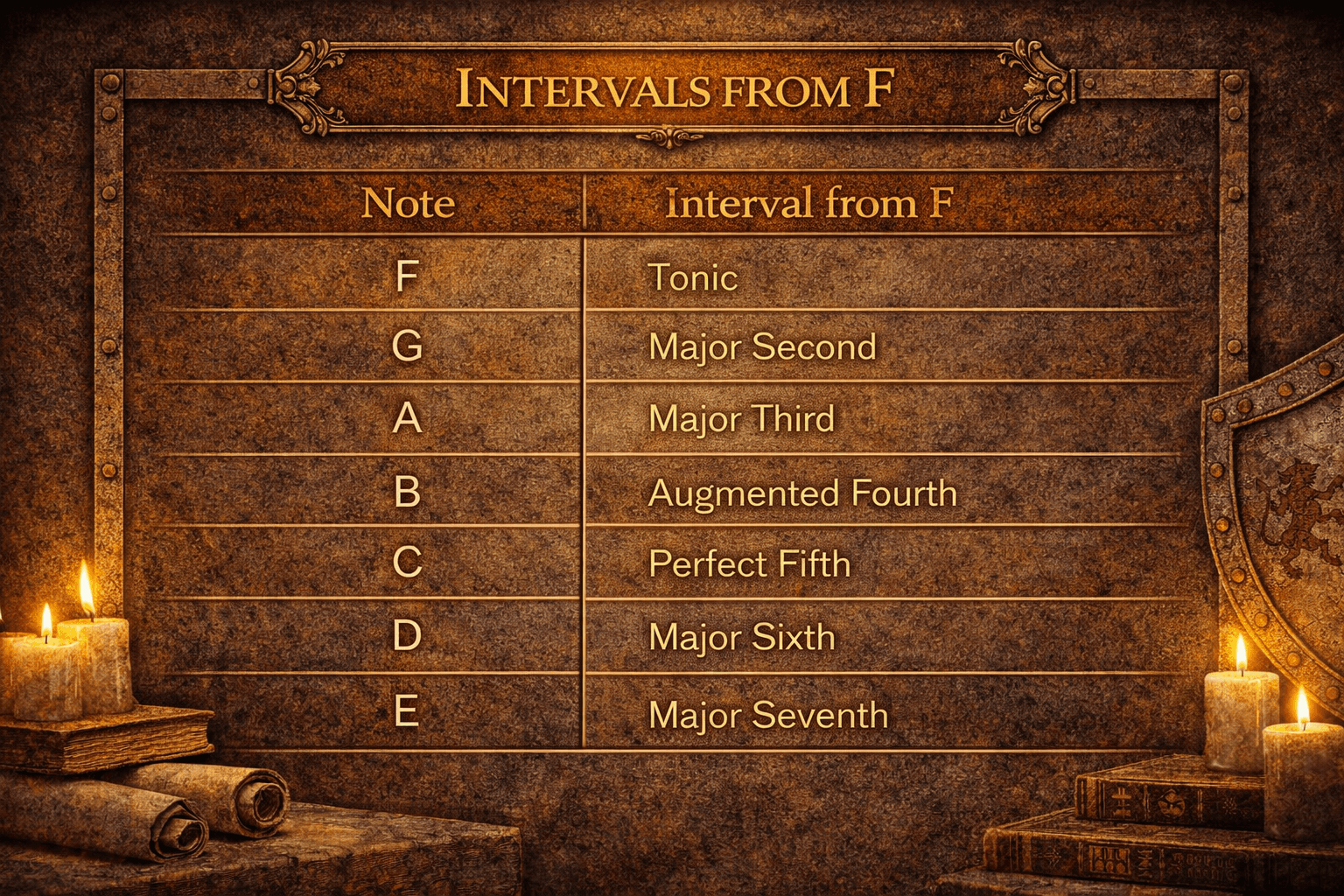
This table helps pianists visualize the Lydian mode intervals on the keyboard.
Lydian Mode Scales in Different Keys
 The Lydian mode on piano can start on any root note, producing twelve possible scales. Each scale preserves the augmented fourth interval, giving the Lydian mode its bright and dreamy character across all keys.
Practicing Lydian scales in different keys strengthens finger coordination, improves recognition of scale degrees, and reinforces understanding of Lydian mode chord progressions and melodic structure.
C Lydian Mode
C Lydian includes the notes C, D, E, F♯, G, A, B. The raised fourth (F♯) creates the characteristic dreamy Lydian sound, distinguishing it from the C major scale.
G Lydian Mode
G Lydian contains the notes G, A, B, C♯, D, E, F♯. Its raised fourth (C♯) produces the floating quality that defines Lydian mode piano scale practice.
D Lydian Mode
D Lydian includes D, E, F♯, G♯, A, B, C♯. Practicing this key helps pianists internalize Lydian mode intervals while navigating sharps effectively across the keyboard.
F Lydian Mode
F Lydian contains F, G, A, B, C, D, E. The raised fourth (B natural) highlights the unique bright tonal color, making it ideal for learning Lydian mode melodies.
Understanding Key Signatures in Lydian
Key signatures help pianists identify which notes are sharp or flat in each Lydian mode piano scale, allowing smooth improvisation and accurate execution of scale degrees and tonic notes.
Lydian Mode Keys Table
Key Lydian Notes C C D E F♯ G A B G G A B C♯ D E F♯ D D E F♯ G♯ A B C♯ F F G A B C D E
This table demonstrates how the Lydian mode scale works across multiple keys while preserving the augmented fourth interval.
Chords Built from the Lydian Mode
 The Lydian mode on piano creates unique chords because of its raised fourth. This single alteration from the major scale affects the harmonic structure, giving the mode a dreamy, floating quality ideal for jazz, cinematic music, and contemporary compositions.
Understanding Lydian mode chords helps pianists recognize modal harmony. When triads and seventh chords are built from the Lydian mode scale, they support melodic structure and improvisation while maintaining the signature bright and uplifting sound of the mode.
Triads in the Lydian Mode
Triads in the Lydian mode piano scale are formed by stacking every other note of the scale. The augmented fourth produces chords with unique tension, creating a fresh, ethereal sound for modal compositions.
The Seven Diatonic Chords
The Lydian mode chords follow the diatonic scale degrees, forming a combination of major, minor, and augmented chords. The tonic often feels brighter due to the raised fourth, giving compositions a light, floating quality.
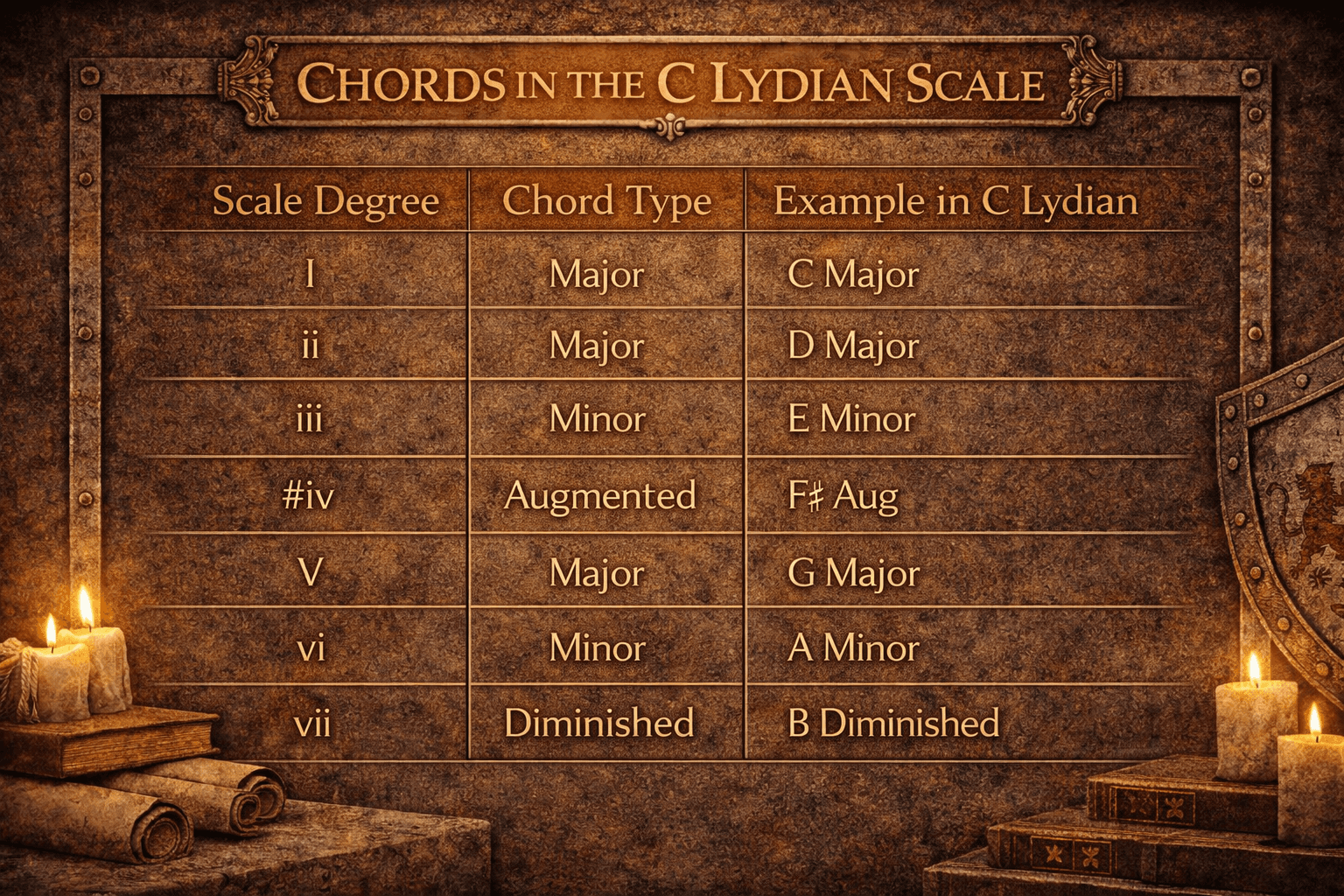
Common Chord Progressions in Lydian
Lydian chord progressions often emphasize the tonic with augmented fourth chords, producing a bright, dreamy feel. These patterns are widely used in modal jazz and contemporary piano music.
How These Chords Support Melody and Harmony
The Lydian mode piano scale allows melodies to float above harmonies because the raised fourth resolves naturally, supporting both improvisation and structured composition. Pianists can combine scale degrees, root notes, and leading tones creatively.
Step-by-Step Guide to Playing Lydian Mode on Piano
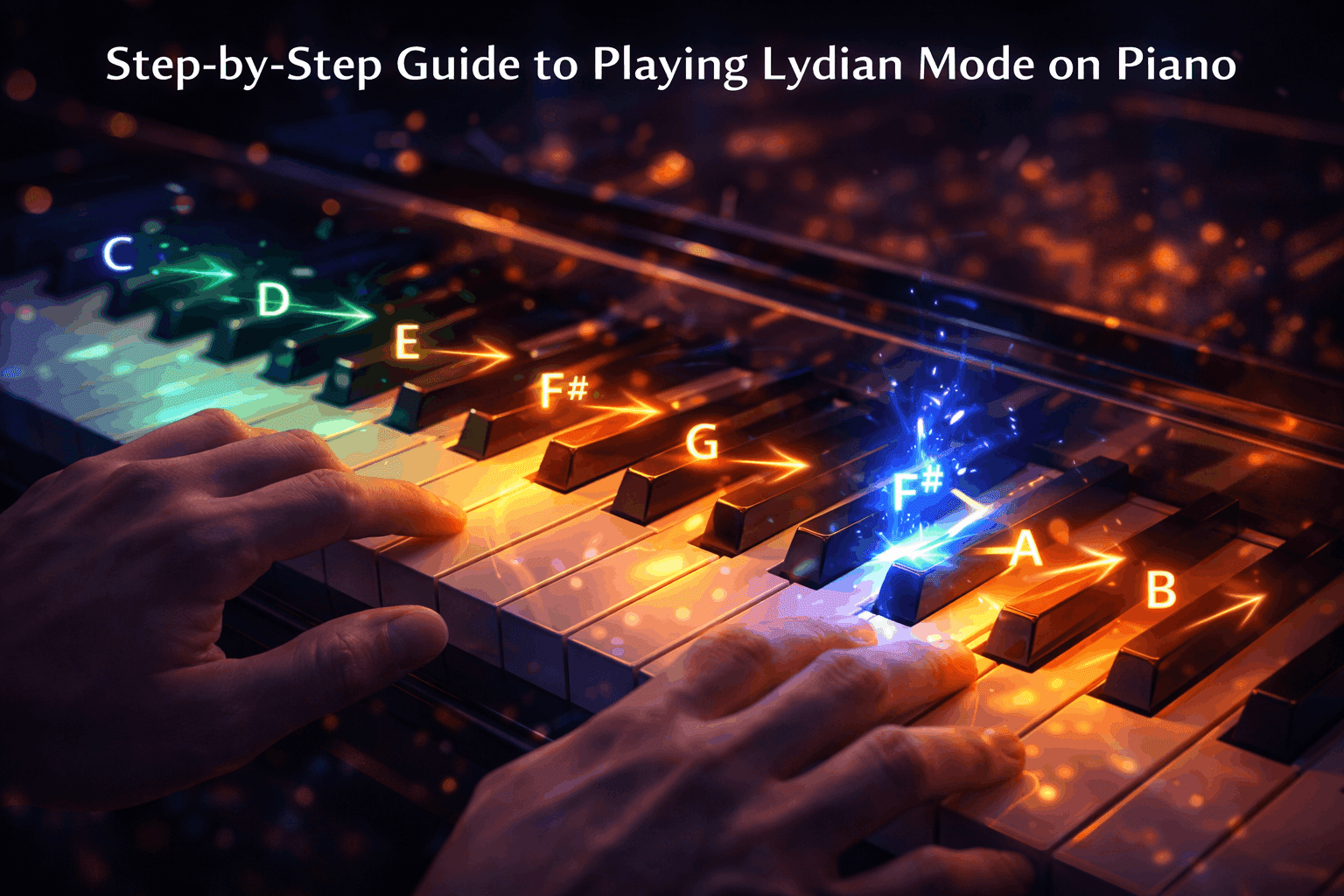 Learning how to play Lydian mode on piano begins with understanding the Lydian mode interval pattern and practicing the scale in one key before exploring others. Proper finger placement and hand technique ensure smooth execution across the keyboard.
Regular Lydian scale exercises build muscle memory for both hands and improve familiarity with scale degrees, augmented fourth intervals, and the mode’s distinctive sound. Practicing slowly at first allows precision in playing melodic structure and harmonic structure.
Start with the C Lydian Scale
The C Lydian mode piano scale consists of C, D, E, F♯, G, A, B. Pianists begin here because it clearly demonstrates the raised fourth while keeping other notes familiar from the major scale.
Correct Finger Position and Hand Technique
Maintain curved fingers and relaxed wrists while practicing the Lydian mode fingering piano. Use the thumb for the first note and cross fingers smoothly for ascending and descending scales.
Practicing the Right Hand
Starting with the right hand helps pianists memorize the Lydian step pattern without worrying about coordination. Focus on even tone and accurate intervals.
Adding the Left Hand
After mastering the right hand, add the left hand to reinforce finger coordination and internalize scale degrees and tonic notes.
Playing Hands Together Smoothly
Once both hands are comfortable, play the C Lydian mode piano scale hands together slowly, keeping even timing and tone, while emphasizing the augmented fourth interval for clarity.
Practicing the Mode in Multiple Keys
Advanced practice includes all keys to improve technique and understand key signatures. This strengthens knowledge of Lydian mode intervals, diatonic scale, and modal harmony.
Lydian Mode Fingering Example – C Lydian
Hand Finger Pattern Right Hand 1 2 3 4 1 2 3 4 Left Hand 5 4 3 2 1 3 2 1
This pattern ensures smooth execution for beginners practicing Lydian scale exercises.
How Musicians Use the Lydian Mode in Real Music
 The Lydian mode in music is popular for creating uplifting and dreamy melodies. Its augmented fourth interval adds tension and sparkle without feeling heavy, making it a favorite in jazz, cinematic scores, and modern piano compositions.
Studying Lydian mode examples in popular music shows how the mode supports both melodic structure and harmonic structure, giving musicians tools to improvise and compose effectively.
Lydian Mode in Classical Music
Composers like Debussy and Holst used the Lydian mode to create floating textures and magical atmospheres. The raised fourth provides an ethereal quality distinct from the major scale.
Lydian Mode in Jazz and Contemporary Songs
Jazz pianists use the Lydian mode over major seventh chords to introduce brightness and tension. Contemporary composers rely on it for dreamy pop or cinematic piano arrangements.
Why the Lydian Mode Feels Dreamy and Floating
The unique interval structure, especially the augmented fourth, creates a sense of suspension and openness. Pianists experience a flowing, light feeling when playing Lydian mode melodies.
Using Lydian for Melody Writing and Improvisation
The Lydian mode piano scale allows musicians to craft expressive, floating melodies while maintaining tonal coherence. Improvisation becomes easier when focusing on scale degrees, tonic note, and augmented fourth relationships.
Popular Songs That Use the Lydian Mode
The Lydian mode on piano appears in many famous compositions because of its dreamy, floating quality. Songs using this mode often emphasize the augmented fourth to create tension that resolves naturally, giving melodies a magical, uplifting character.
Understanding Lydian mode examples in real music helps pianists connect theory to practice. Observing melodic structure, harmonic structure, and chord progressions in these songs reinforces the use of the Lydian mode piano scale in performance and improvisation.
The Simpsons Theme – Musical Analysis
The iconic Simpsons Theme is a classic example of the Lydian mode in music. The raised fourth in the melody produces a playful, floating feel that immediately stands out, demonstrating the bright tonal color of the mode.
Flying in a Blue Dream – Harmonic Structure
Joe Satriani’s “Flying in a Blue Dream” uses the Lydian scale to craft soaring guitar lines and smooth chord progressions. Pianists can adapt the Lydian mode piano scale to explore similar melodic textures and modal harmonies.
Red Barchetta – Lydian Sound in Rock
Rush’s “Red Barchetta” highlights how rock musicians employ the Lydian mode piano scale for floating melodies over driving rhythms. The augmented fourth creates tension that resolves into major chords, producing a spacious, ethereal effect.
How to Practice These Songs on Piano
Practicing songs in Lydian mode allows pianists to hear the scale in context. Start slowly, isolate sections, and focus on scale degrees, tonic notes, and the augmented fourth interval to internalize the Lydian mode piano explained.
Lydian Songs Table
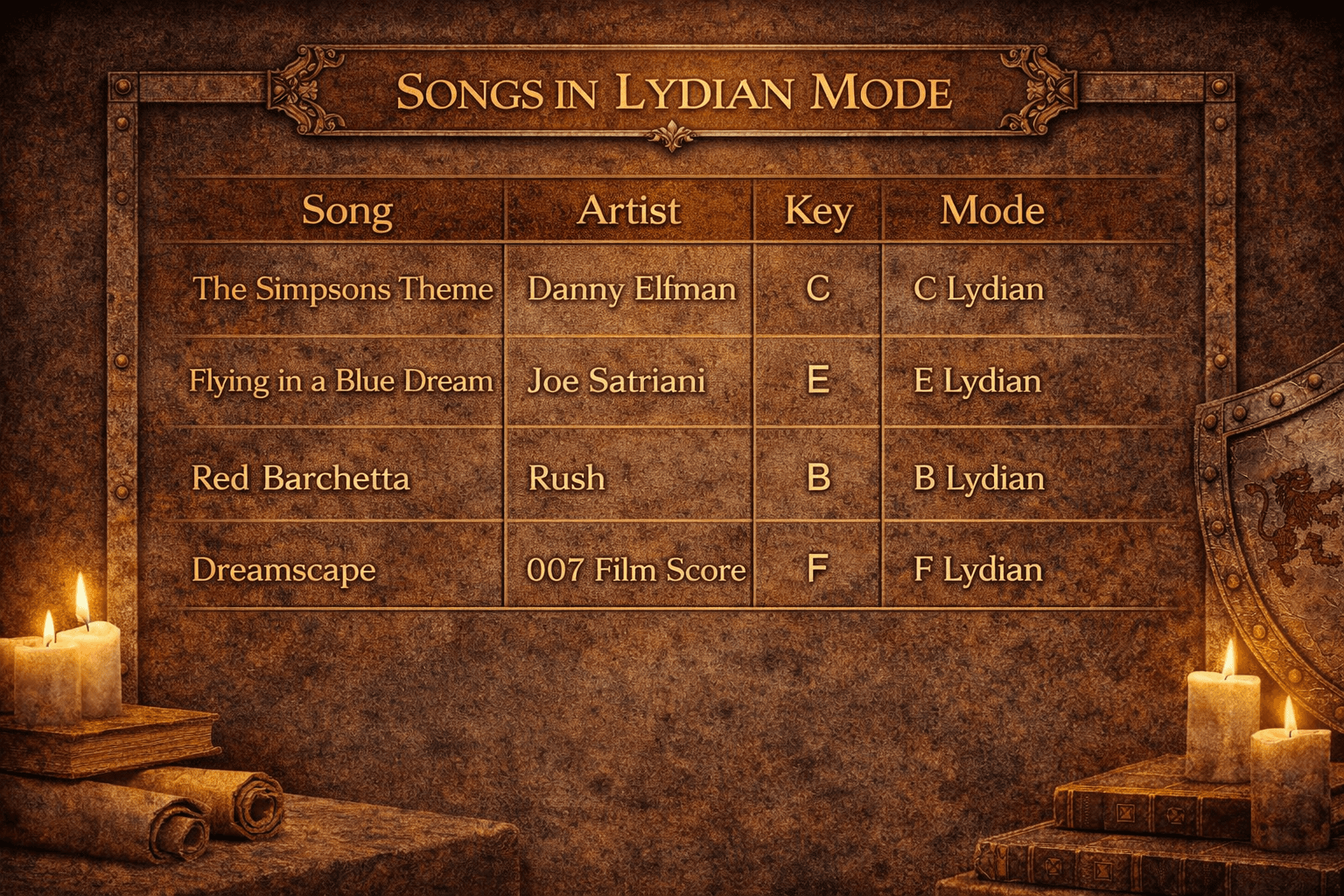 This table shows how the Lydian mode piano scale is applied across genres.
Learning the Lydian Mode with Art Gharana
 Art Gharana provides structured piano lessons to simplify Lydian mode music theory for beginners. Students learn scale degrees, augmented fourth intervals, and Lydian mode chords through practical exercises and songs.
Following Art Gharana’s approach, beginners practice Lydian scale exercises step by step. This method connects theory with hands-on piano practice, making the Lydian mode piano scale easy to understand and apply in real music.
Final Thoughts on Mastering the Lydian Mode
 Mastering the Lydian mode on piano gives musicians a fresh perspective on modal music, harmony, and improvisation. Its raised fourth produces a bright, floating sound that enhances melodic structure and harmonic structure.
Once comfortable with the Lydian mode piano scale, pianists can recognize the mode in songs, build Lydian mode chords, and improvise creatively. Learning this mode opens the door to deeper musical modes understanding, improving overall performance and composition skills.