ChatGPT
 Google AI
 Grok
Grok Claude
Learning how to read bass clef on piano often feels like stepping into unfamiliar territory. The symbols look different, the notes sit lower, and the left hand suddenly carries more responsibility. Yet, once the logic clicks, bass clef note reading becomes natural and deeply rewarding. This guide explains bass clef notes on piano in clear language, with practical insight that connects sheet music directly to the keyboard.
Piano music depends on balance. The right hand sings melodies while the left hand builds depth and harmony. That depth lives inside bass clef music notation. When you understand it, your playing sounds fuller and more confident. This article walks you through every step, from staff layout to fluent bass clef sight reading, using easy English and real musical context.
Introduction to Bass Clef Reading for Piano Players
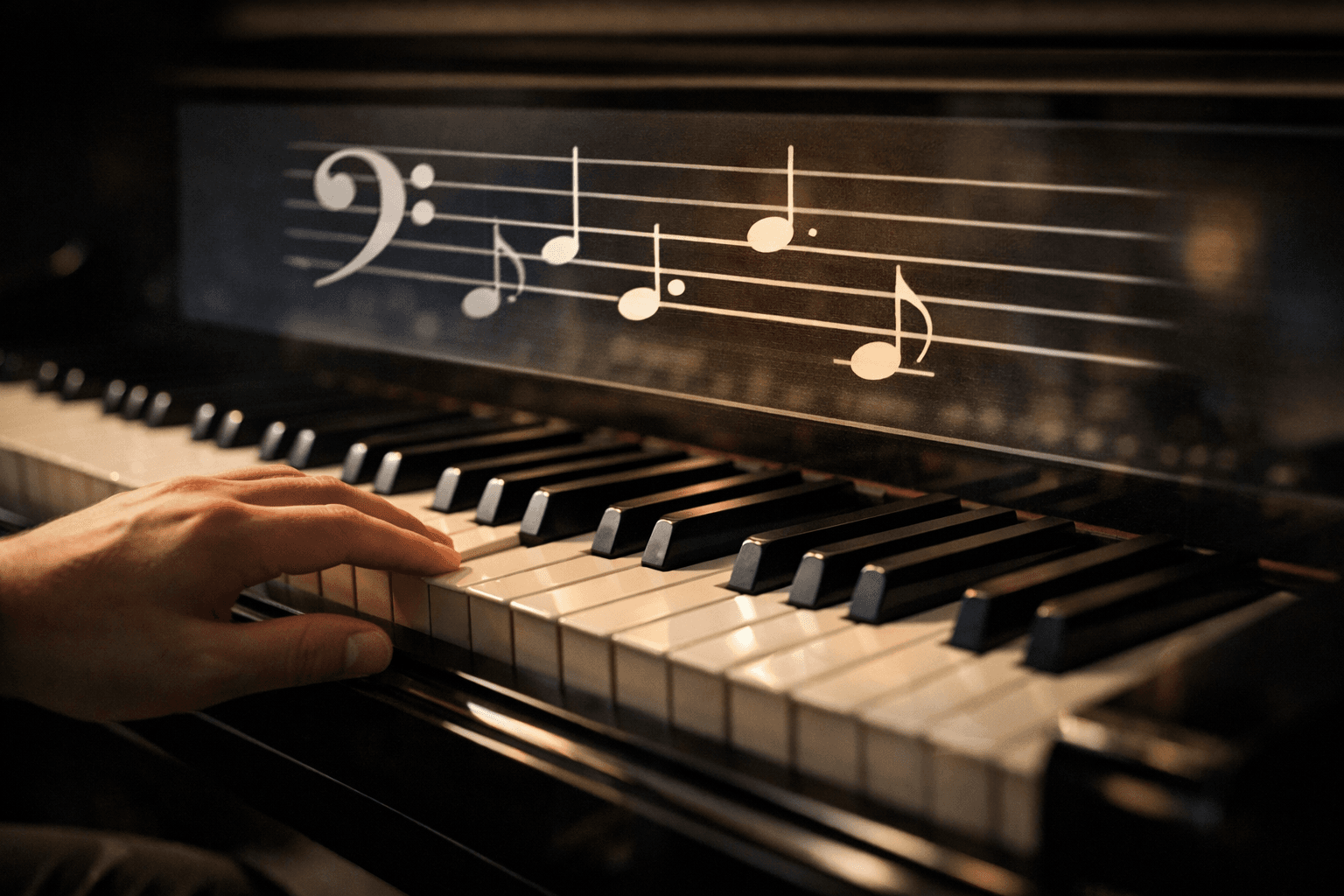 Reading piano music bass clef often feels harder because beginners meet treble clef first. The brain gets used to higher notes and familiar patterns. When bass clef appears, everything shifts lower. The note names change positions, and confusion follows. This reaction is normal, especially for adults starting bass clef for beginners lessons later in life.
Bass clef matters because the left hand shapes rhythm, harmony, and emotional weight. Piano left hand notes guide chord movement and bass lines. Strong bass clef skills improve timing, tone, and coordination. Structured bass clef piano lessons, like those used at Art Gharana, break the learning into calm, logical steps that work for beginners and adult learners alike.
Understanding the Bass Clef in Piano Music
What the Bass Clef Symbol Represents
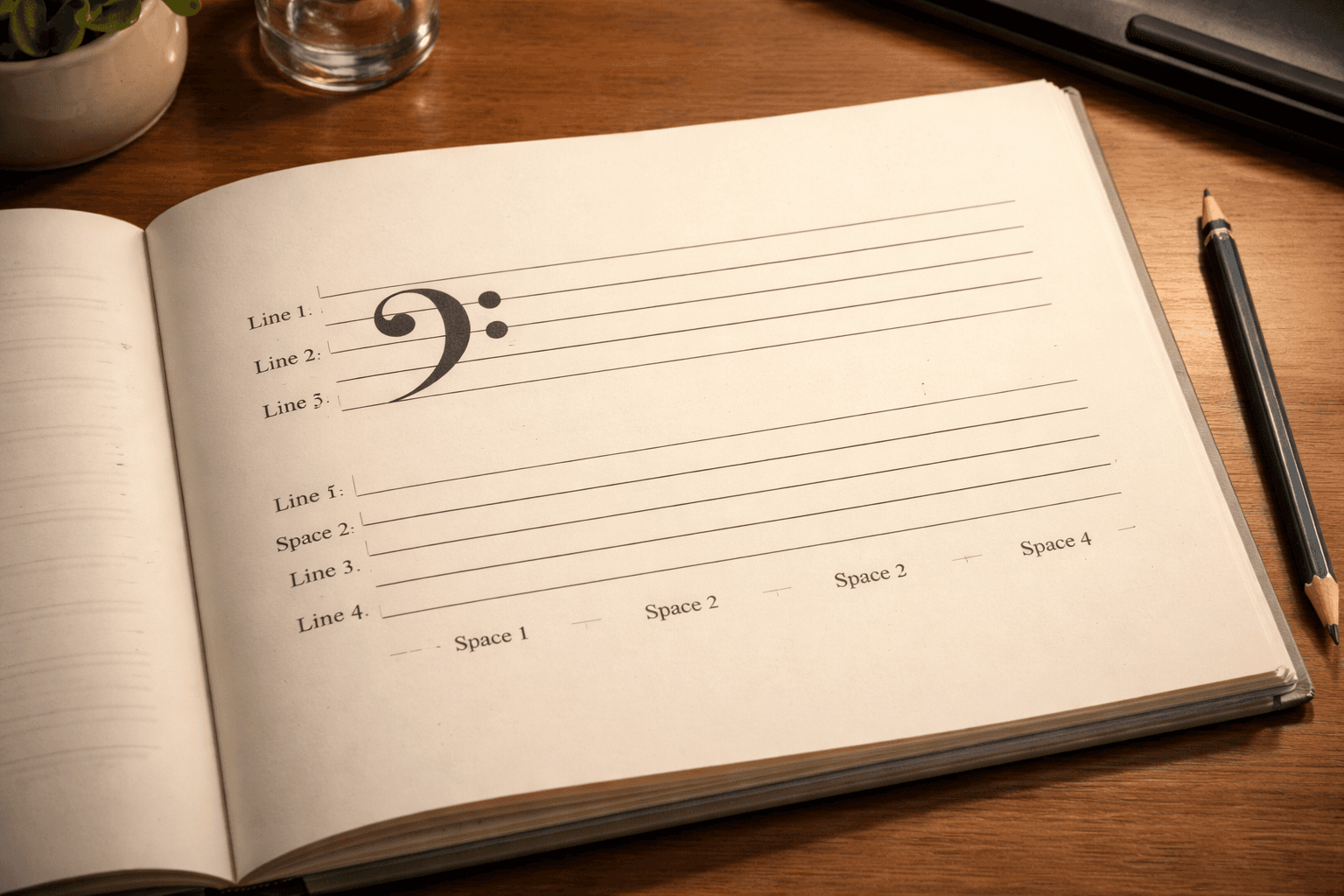
Many students ask what is a bass clef. The bass clef symbol looks like a curved comma with two dots. This symbol shows lower pitch notes. It tells you that the staff represents sounds below middle C. In simple words, bass clef shows lower pitch notes that support the music’s foundation.
The two dots of the bass clef symbol with two dots surround the F note. That placement becomes your visual anchor. Once the eye learns this landmark, identifying bass clef notes on piano becomes faster and more accurate.
Why the Bass Clef Is Also Called the F Clef
The bass clef is also called F clef because it marks the F note clearly on the staff. This F sits below middle C and anchors the entire system. Knowing this single fact simplifies bass clef notation explained in practical terms.
From that F, the rest of the notes follow the musical alphabet on piano in order. Learning bass clef is not memorization. It is pattern recognition based on one strong reference point.
Role of Bass Clef in Piano Notation
In piano notation for left hand, bass clef handles harmony and rhythm. It carries chords, broken chords, walking bass lines, and rhythmic patterns. Without it, piano music would sound thin.
When both clefs work together, the piano covers the full range of sound. This is why understanding bass clef vs treble clef matters. They are not rivals. They are partners.
Layout of the Bass Clef on the Music Staff
Five Lines and Four Spaces Explained
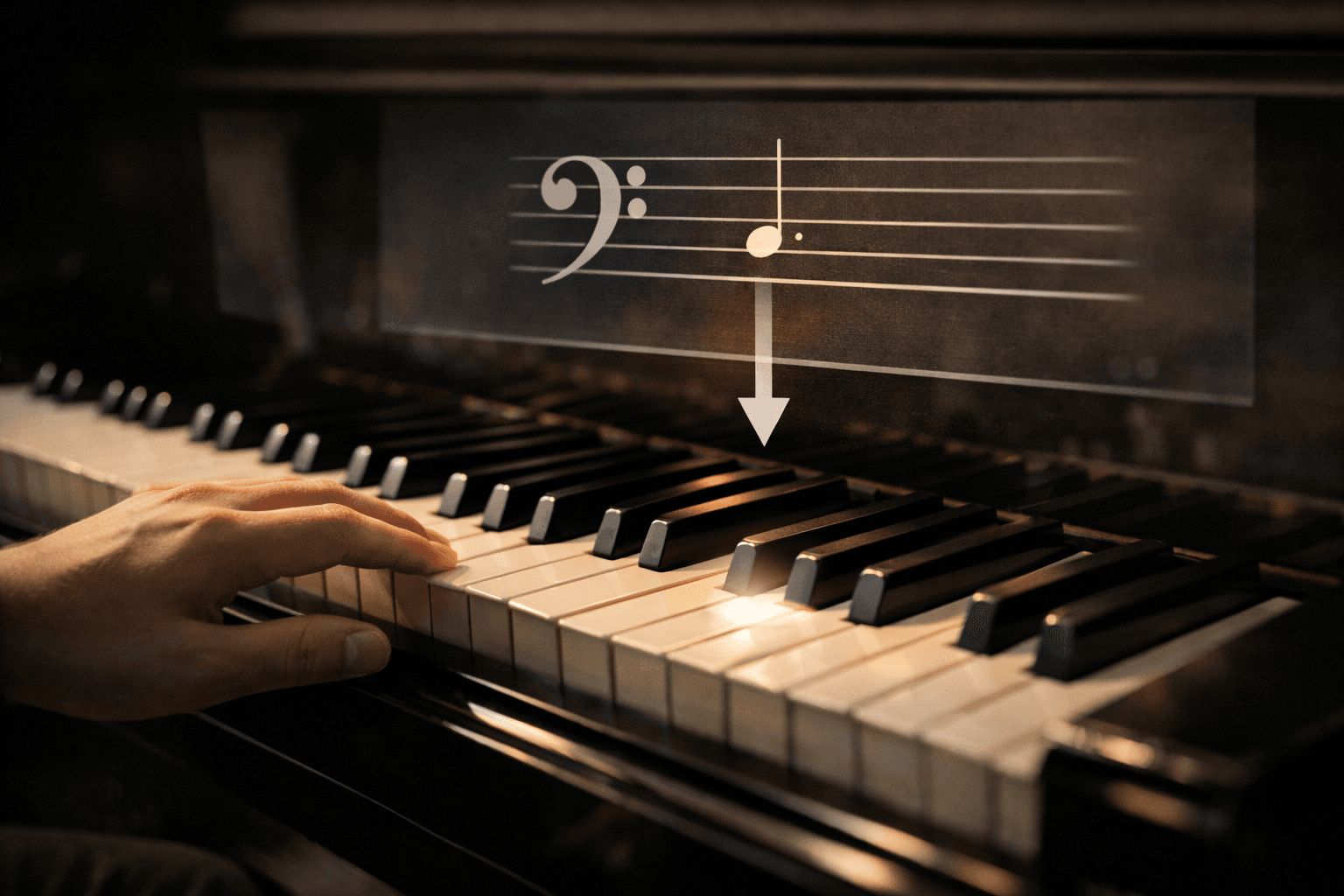
The bass clef staff uses five lines and four spaces, just like treble clef. The difference lies in note placement. Each line and space represents a specific pitch lower on the keyboard.
Understanding bass clef staff lines and spaces helps with reading notes on the staff without hesitation. The eye learns vertical movement. Higher notes sit higher. Lower notes sit lower.
Naming Bass Clef Line Notes
Bass clef line notes follow alphabetical order. A common memory phrase exists, yet relying only on words slows reading. It helps briefly, but visual recognition works better for long-term fluency.
Here is a simple reference table showing bass clef notes in alphabetical order on the lines.
Line Position Note Name Top line A Fourth line F Middle line D Second line B Bottom line G
Naming Bass Clef Space Notes
The spaces also follow alphabetical order. Together, they form a clear system. Once the brain sees patterns instead of letters, piano note recognition improves quickly.
Space Position Note Name Top space G Third space E Second space C Bottom space A
How to Read Bass Clef Notes Step by Step
Identifying Reference Notes Quickly
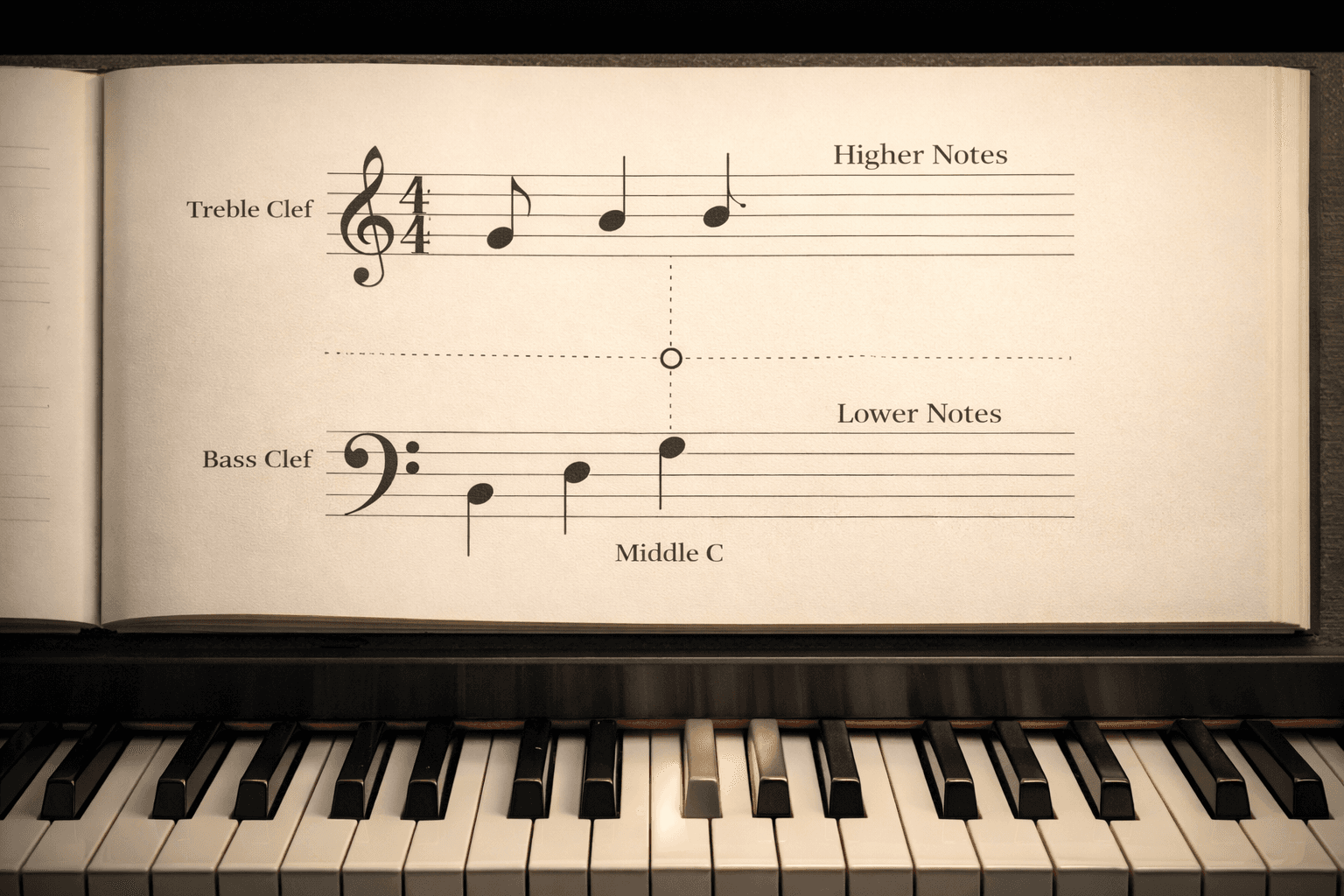
The fastest way to read bass clef is by spotting reference notes. F clef F and bass clef middle C act as landmarks. Middle C connects both clefs and helps you move confidently across registers.
This method improves bass clef reading accuracy because the brain stops guessing. It starts recognizing familiar shapes.
Using Intervals Instead of Counting Lines
Counting lines feels safe but slows everything down. Interval reading trains the eye to see distance. A step means the next line or space. A skip means one in between.
This approach builds bass clef interval recognition and strengthens piano note relationships. It mirrors how real music flows.
Matching Bass Clef Notes to Piano Keys
Reading improves when sheet music connects to the keyboard. Connecting sheet music to piano keys creates muscle memory. The hand learns shapes, not letters.
This connection turns reading piano bass notes into an automatic response rather than a mental puzzle.
Bass Clef Notes Chart and Visual Memory Aids
Commonly Used Bass Clef Notes on Piano
Most beginner music uses notes near middle C. Learning these first reduces overwhelm. Over time, the range expands naturally through practice.
A bass clef notes chart helps visualize this range and reinforces bass clef note positions.
Mnemonics That Actually Work
Mnemonics like “Good Boys Do Fine Always” and “All Cows Eat Grass” help early on. These bass clef mnemonic tools offer a temporary bridge.
However, strong readers slowly move away from bass clef lines mnemonic and bass clef spaces mnemonic toward visual reading.
Pattern Recognition for Faster Reading
Music repeats patterns. Chords repeat shapes. Scales move in steps. Recognizing these patterns improves bass clef sight reading faster than memorizing isolated notes.
As one piano teacher famously said, “Music is not letters. It is movement.”
Understanding Ledger Lines in Bass Clef
Notes Below the Bass Staff
Ledger lines extend the staff when notes go lower. Bass clef ledger lines below staff often confuse beginners because they appear suddenly.
Understanding that these are simply notes below middle C placed further down makes them logical.
Notes Above the Bass Staff
Ledger lines also appear above the staff. These notes often approach middle C and overlap visually with treble clef.
Learning notes above and below the staff improves confidence when reading advanced music.
Reading Ledger Lines Without Confusion
The key to reading ledger lines in bass clef is spacing. Each line and space continues the same pattern. Nothing changes except location.
This mindset removes fear from reading notes beyond the staff.
Bass Clef Compared with Other Clefs
Bass Clef vs Treble Clef on Piano
Bass clef vs treble clef comparison helps learners understand roles. Treble clef handles melody. Bass clef handles support.
Both clefs meet at middle C. This meeting point unites the keyboard visually and physically.
Bass Clef vs Alto and Tenor Clefs
Alto and tenor clefs appear in orchestral music. Pianists rarely use them. Still, understanding their range helps deepen piano music theory basics.
Bass clef remains the primary clef for left-hand piano music.
Why Piano Uses Both Treble and Bass Clef Together
The piano spans wide pitch ranges. Two staves allow clarity. This system makes reading piano bass notes and melodies easier at once.
Common Mistakes When Reading Bass Clef
 Mixing Bass Clef with Treble Clef Notes
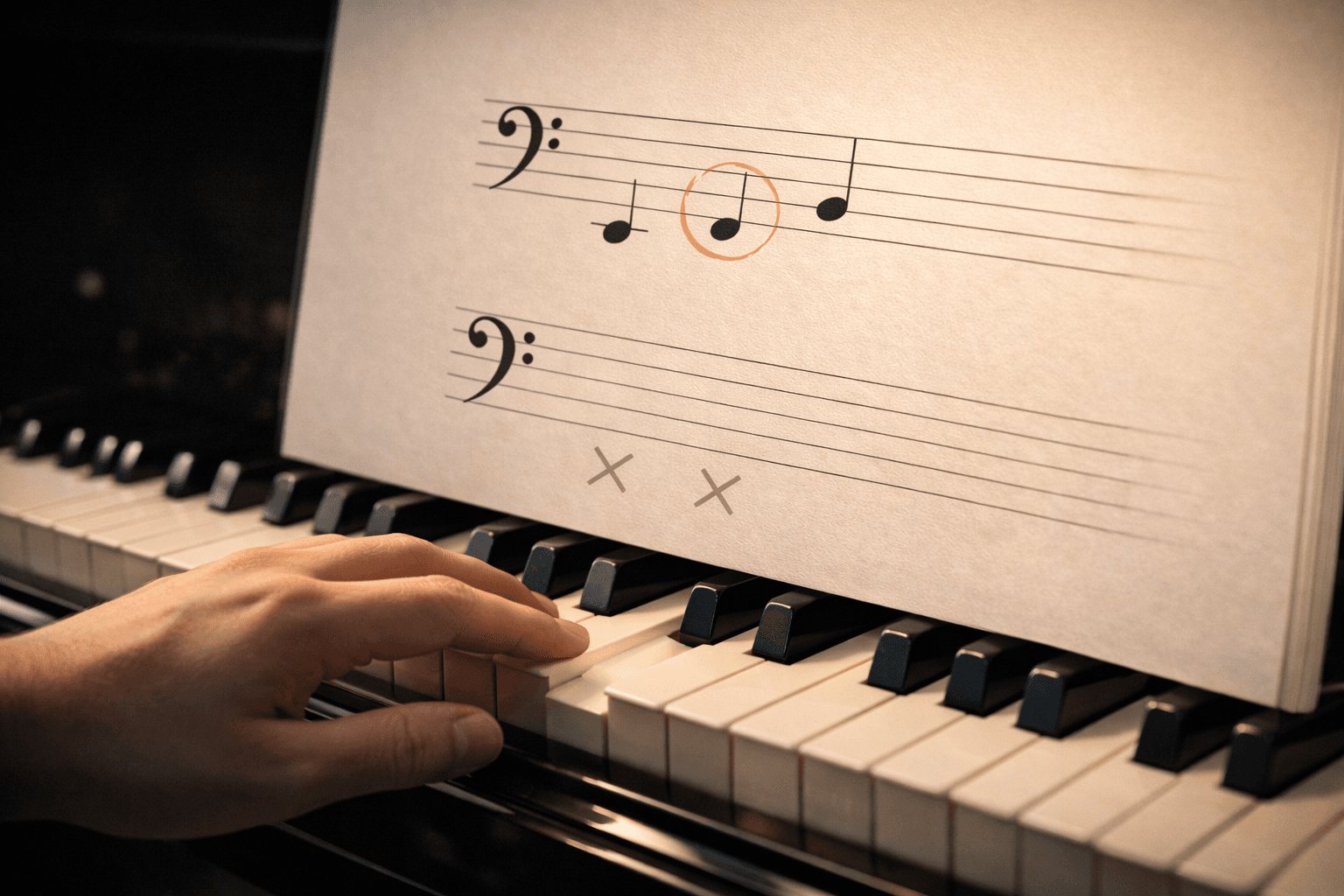
Many beginners confuse note names between clefs. This happens when reading too slowly. Speed actually reduces confusion.
Clear separation between hands improves left hand coordination piano skills.
Over-reliance on Mnemonics
Mnemonics help early but block fluency later. Real progress comes from reading shapes and intervals.
Balanced bass clef learning tips focus on understanding, not shortcuts.
Reading Notes Too Slowly
Slow reading breaks rhythm. Music flows forward. Training the eye to move ahead improves timing and confidence.
Effective Practice Methods to Master Bass Clef
 Daily Bass Clef Reading Exercises
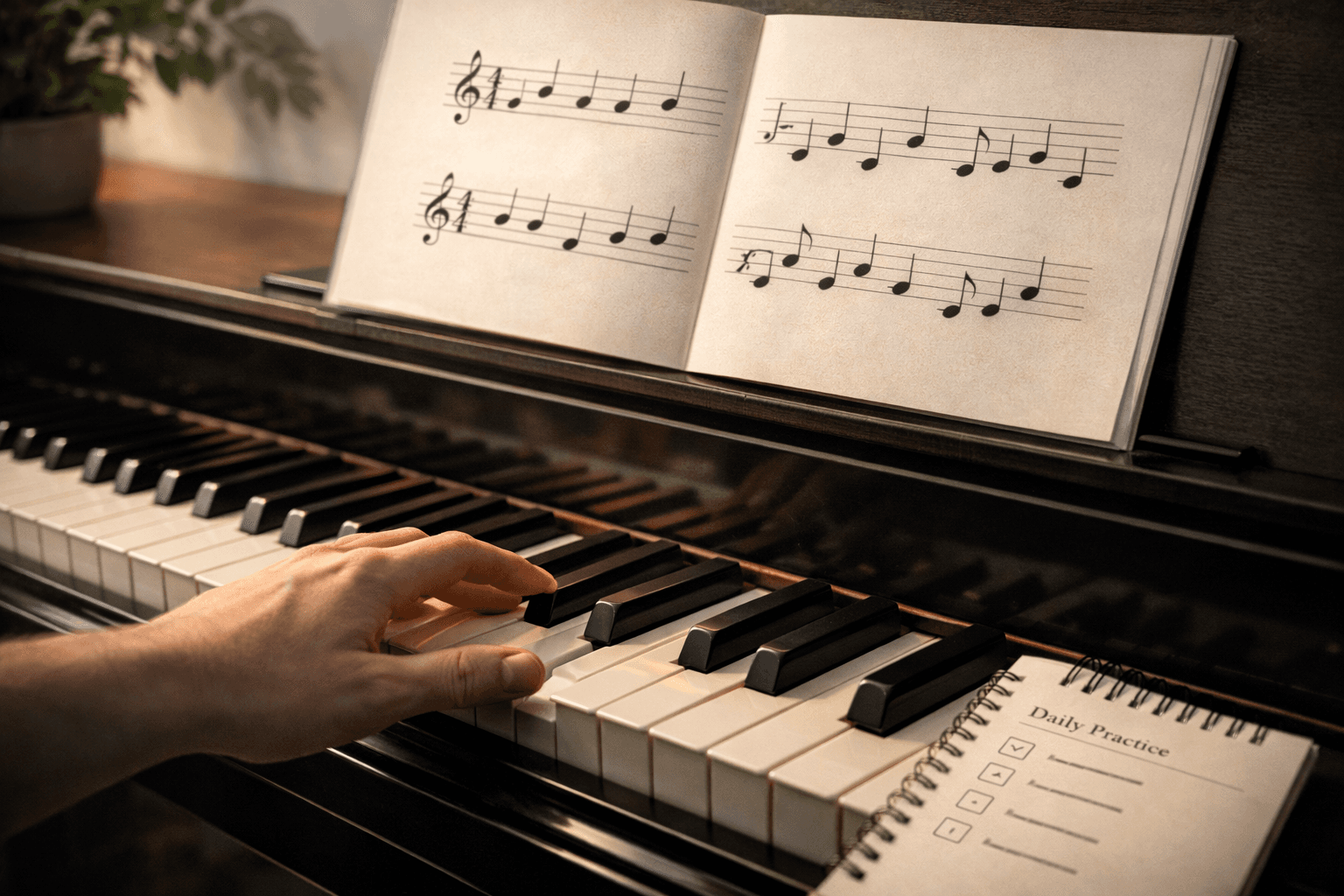
Short daily bass clef practice exercises work better than long sessions. Consistency builds neural pathways faster.
This approach supports strong bass clef piano practice habits.
Left-Hand-Focused Piano Practice
Isolating the left hand improves control. It strengthens rhythm and builds independence.
Focused bass clef exercises for piano transform weak left hands into confident partners.
Sight-Reading Strategies for Beginners
Sight-reading trains fluency. Playing without stopping teaches recovery skills.
This method strengthens bass clef sight reading and musical confidence.
Learning Bass Clef Through Real Piano Music
Simple Bass Clef Patterns in Beginner Songs
Beginner piano sheet music uses repeated bass patterns. These patterns help internalize harmony and rhythm.
Real music reinforces theory naturally.
Using Chords and Broken Chords for Practice
Chords show how notes work together. Broken chords teach movement and flow.
This strengthens reading bass clef sheet music in context.
Building Confidence Through Repetition
Repetition removes fear. Familiar shapes become automatic.
Confidence grows quietly through steady practice.
How Teachers Use Bass Clef to Build Strong Pianists
Progressive Learning Techniques
Good teachers introduce concepts gradually. Each skill builds on the last.
This avoids overload and supports long-term growth.
Hand Coordination and Rhythm Development
Bass clef training improves timing and coordination. Rhythm lives in the left hand.
Strong rhythm creates musical stability.
Art Gharana’s Structured Approach to Bass Clef Learning
Art Gharana uses step-by-step methods that suit adults and beginners. Lessons focus on clarity, patterns, and real music.
This structure helps students master bass clef note reading without frustration.
Frequently Asked Questions About Reading Bass Clef
1. How can beginners remember bass clef notes easily?
Beginners remember notes by using reference points, interval reading, and consistent practice.
2. Why is bass clef harder than treble clef?**
It feels harder because it is introduced later. With time, it becomes equally natural.
3. How long does it take to read bass clef fluently?
Most learners see improvement within weeks. Fluency develops over months of steady practice.
4. How do you find the key of a song using bass clef?
Key signatures apply to both clefs. Bass notes often reveal harmonic direction clearly.
Final Thoughts on Mastering Bass Clef on Piano
Mastering bass clef transforms piano playing. It improves rhythm, harmony, and musical confidence. Consistent practice, pattern recognition, and patience lead to fluency.
With guided learning and the right approach, reading bass clef on piano becomes clear, logical, and enjoyable.